Póngase en contacto con Masstech
« twittear twittear twittear
Línea de base contractual
Relleno de agua mineral
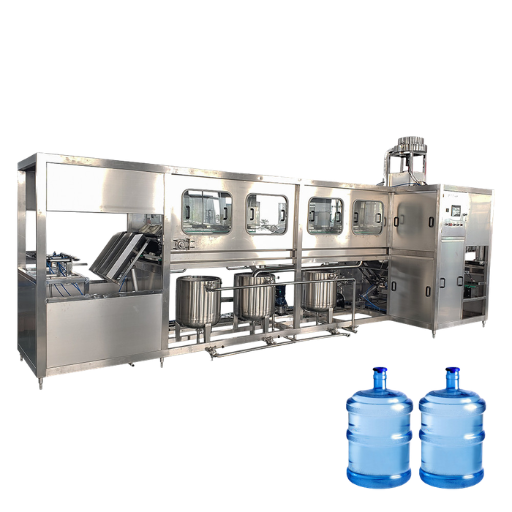
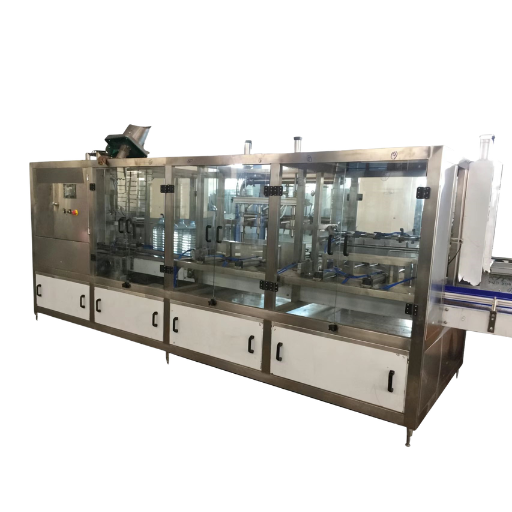
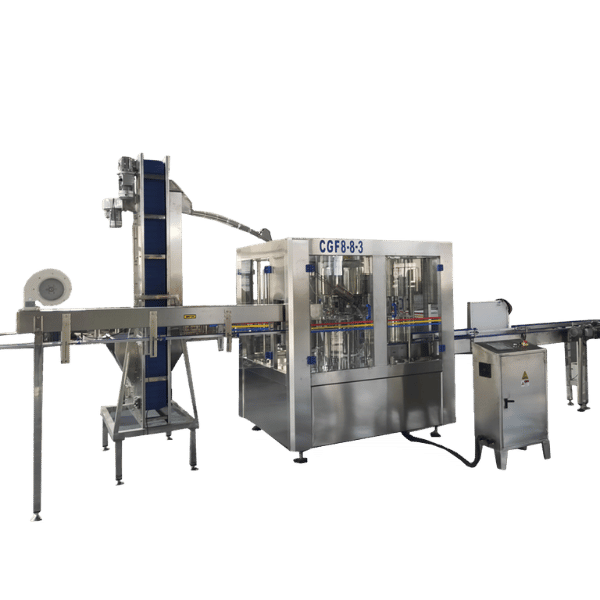
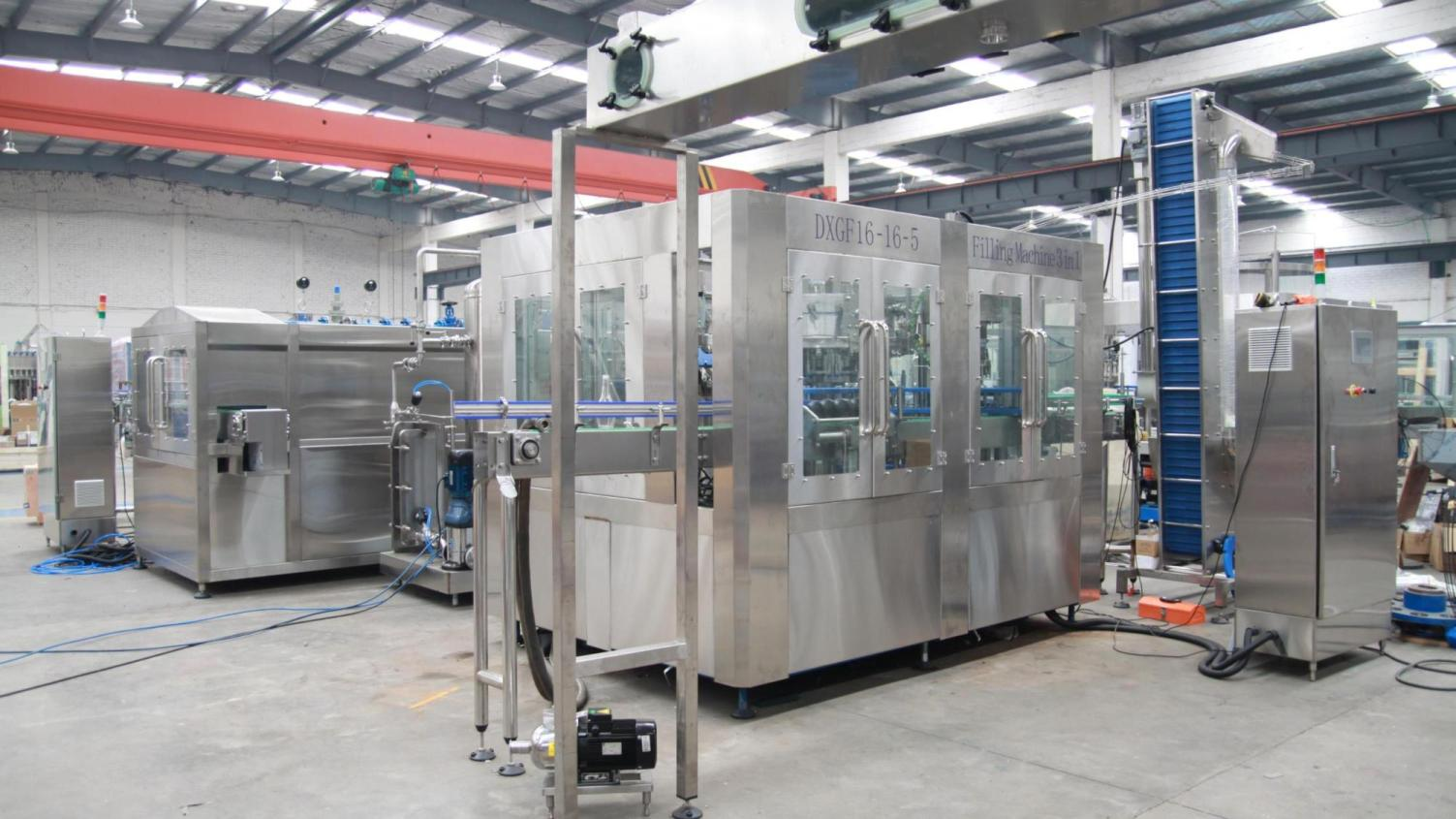
Máquina llenadora de agua mineral « Serie CGF de tecnología masiva
Una línea de máquinas llenadoras de agua mineral que se adapta a la planta, y no al revés. El monobloque CGF 3 en 1 enjuague-llenado-tapado escala de 2.500 BPH a 30.000 BPH. Envasado totalmente automático para botellas de PET con 2 años de garantía de piezas.
Solicitar cotización (respuesta 24h)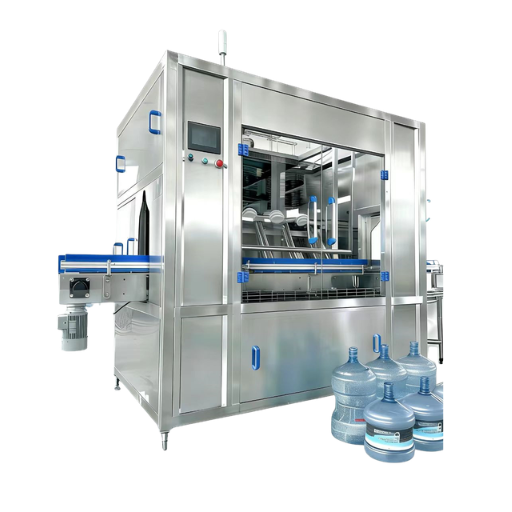
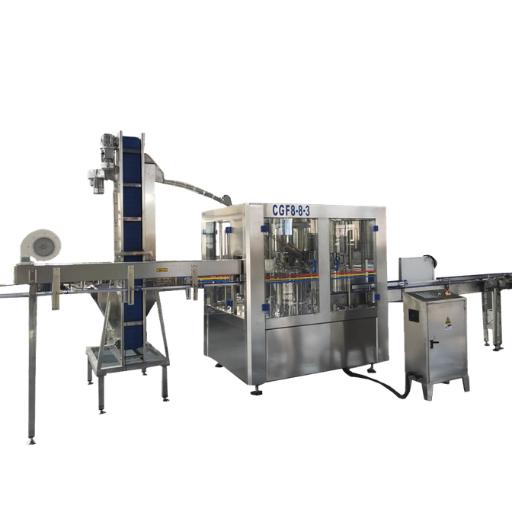
8 modelosCGF 8-8-3 →
60-60-15
60-60-15
2,5k-30kBPH @ 500ml
Capacidad
Capacidad
Tamaño flexible200ml-contra 5 Gal
Contenedores
Contenedores
2 añosGarantía de piezas
(Toți componente)
(Toți componente)
24 HorasIngeniero SLA
Tiempo de respuesta
Tiempo de respuesta
5 díasRepuestos Internacionales
Línea de base del mensajero
Línea de base del mensajero
PRODUCCIÓN
Desde embotellamiento de puntos de dolor hasta un sistema operativo completo
La mayoría de las plantas de agua embotellada fallidas no fallan porque la máquina llenadora no puede llenar las botellas.
Fallan porque no había nadie al otro lado del teléfono a las 2 de la madrugada cuando explotó el sello de una válvula, porque la junta de repuesto permaneció en la aduana durante nueve semanas y nadie documentó el procedimiento de cambio.
La mayoría de los fracasos en las primeras etapas se remontan al sistema operativo alrededor del agua - de la filtración al soporte técnico.
Configuración técnica: Monobloque CGF 3 en 1
Una arquitectura unificada que utiliza una pantalla táctil PLC y HMI. Esta integración elimina el desperdicio de espacio y minimiza los modos de falla independientes.
EL DOLOR
Plantas de nueva creación que pierden producción debido a un soporte técnico inalcanzable.
LA CAUSA
Ventas únicamente de máquinas sin un ecosistema de servicios o repuestos dedicado.
LA SOLUCIÓN
Kits estandarizados que incluyen diseño de planta, capacitación y entrega de piezas durante 5 días.
LA PRUEBA
Garantía de 2 años y respuesta SLA de 24 horas escritas en el acuerdo.
"La serie CGF ofrece al ingeniero detrás de la máquina, es decir, el diferencial entre el equipo y el sistema operativo"."
Consultar ingenieros de sistemas →
Serie CGF “8 Modelos de 2.500 a 30.000 BPH (Matriz de Decisión)
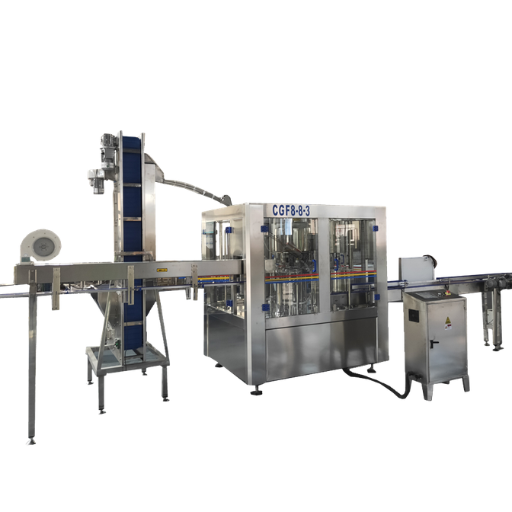
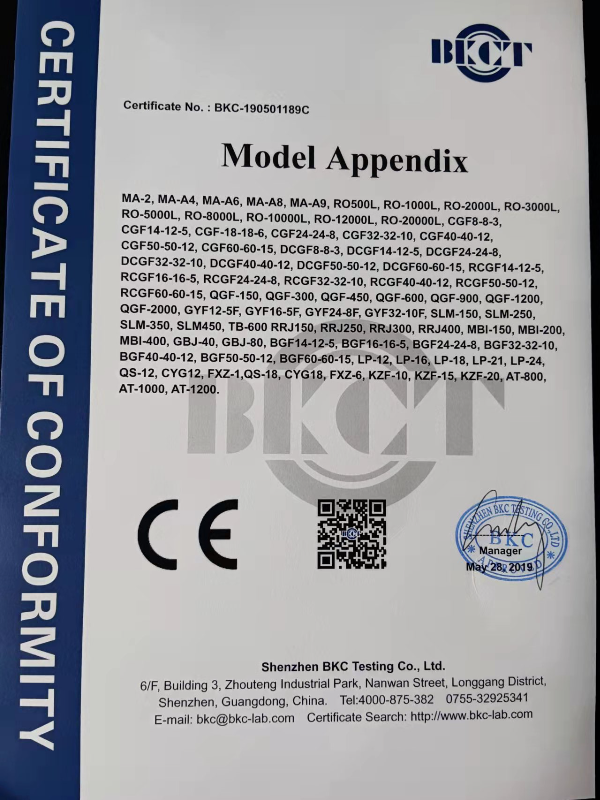
La serie CGF ofrece ocho configuraciones discretas de esta máquina embotelladora de agua mineral totalmente automática, y cada configuración se denomina por número de cabezales (cabezales de llenado, cabezales de llenado, cabezales de taponamiento). CGF 8-8-3 entrega 8 cabezales de enjuague, 8 cabezales de llenado, 3 cabezales de taponamiento. Diámetro de la botella (50-115 mm), presión de aire del compresor (0,3-0,7 MPa), presión de enjuague (>0,06 MPa, <0,2 MPa), el medio de lavado (agua aséptica) y la forma de la botella de mascota soportada (circular o cuadrada) permanecen iguales en toda la línea. Escala de potencia total y huella de la máquina según la capacidad. La máquina taponadora se integra directamente en el marco giratorio de modo que el taponamiento de la botella sea un movimiento fluido, no tres.
Dolor → Causa → Solución → Prueba: Ajustar el tamaño de la línea
Dolor:
Un comprador solicita una línea de 12.000 BPH para un mercado que requiere 4.000 BPH en la fase uno y 18.000 BPH en la fase tres; la línea de gran tamaño permanece infrautilizada (a 30%) durante 18 meses, quemando costos fijos de energía y desgaste de servo de tendencia.
Causa:
Las proyecciones del día pico, en lugar de una rampa de capacidad gradual, crearon una decisión desalineada.
Soluție:
La serie CGF oscila entre CGF 8-8-3 y CGF 60-60-15 en capacidad, permitiendo al comprador igualar BPH con la demanda de la fase uno y actualizar el monobloque, no toda la planta, en la fase tres. La siguiente matriz de decisiones rastrea las opciones de ocho líneas hasta la banda BPH, por lo que las decisiones de capacidad son mecánicas, no aspiracionales.
CGF 8-8-3
Capacidad2,5k-3k BPH
Poder3,91kw
Huella3,5 × 1,7 m
Peso2.000 kg
CGF 16-12-6
Capacidad3,5k-4k BPH
Poder4,61 kW
Huella2,2 × 1,9 m
Peso2.500 kg
CGF 18-18-6
Capacidad4,5k-6k BPH
Poder4,61 kW
Huella2,5 × 2,1 m
Peso3.500 kg
CGF 24-24-8
Capacidad8k-12k BPH
Poder5,41 kW
Huella2,8 × 2,2 m
Peso4.500 kg
CGF 32-32-10
Capacidad12k-14k BPH
Poder6,41 kW
Huella3,5 × 2,3 m
Peso6.000 kg
CGF 40-40-12
Capacidad15k-18k BPH
Poder9,63 kW
Huella4,0×3,0 m
Peso8.000 kg
CGF 50-50-12
Capacidad21k-24k BPH
Poder12,5 kW
Huella5,5 × 4,5 m
Peso10.500 kg
CGF 60-60-15
Capacidad26k-30k BPH
Poder15,0kw
Huella7,0 × 6,5 m
Peso13.000 kg
Tabla de niveles de capacidad de inversión
Los ocho modelos se agrupan en cuatro niveles de inversión prácticos para los compradores B2B que anticipan la compra de una máquina embotelladora de agua mineral:
| Nivel | Modelos | BPH @ 500ml | Poder total | Fase típica |
|---|---|---|---|---|
| Entrada | CGF 8-8-3, 16-12-6 | 2,500–4,000 | 3,91-4,61 kW | Startup fase 1, marca regional |
| Medio | CGF 18-18-6, 24-24-8 | 4,500–12,000 | 4,61-5,41 kW | Ampliación fase 2, multi-SKU |
| Alto | CGF 32-32-10, 40-40-12 | 12,000–18,000 | 6,41-9,63 kW | Distribuidor regional, pack por contrato |
| Industrial | CGF 50-50-12, 60-60-15 | 21,000–30,000 | 12,5-15,0 kW | Planta de marca nacional, de calidad para exportación |
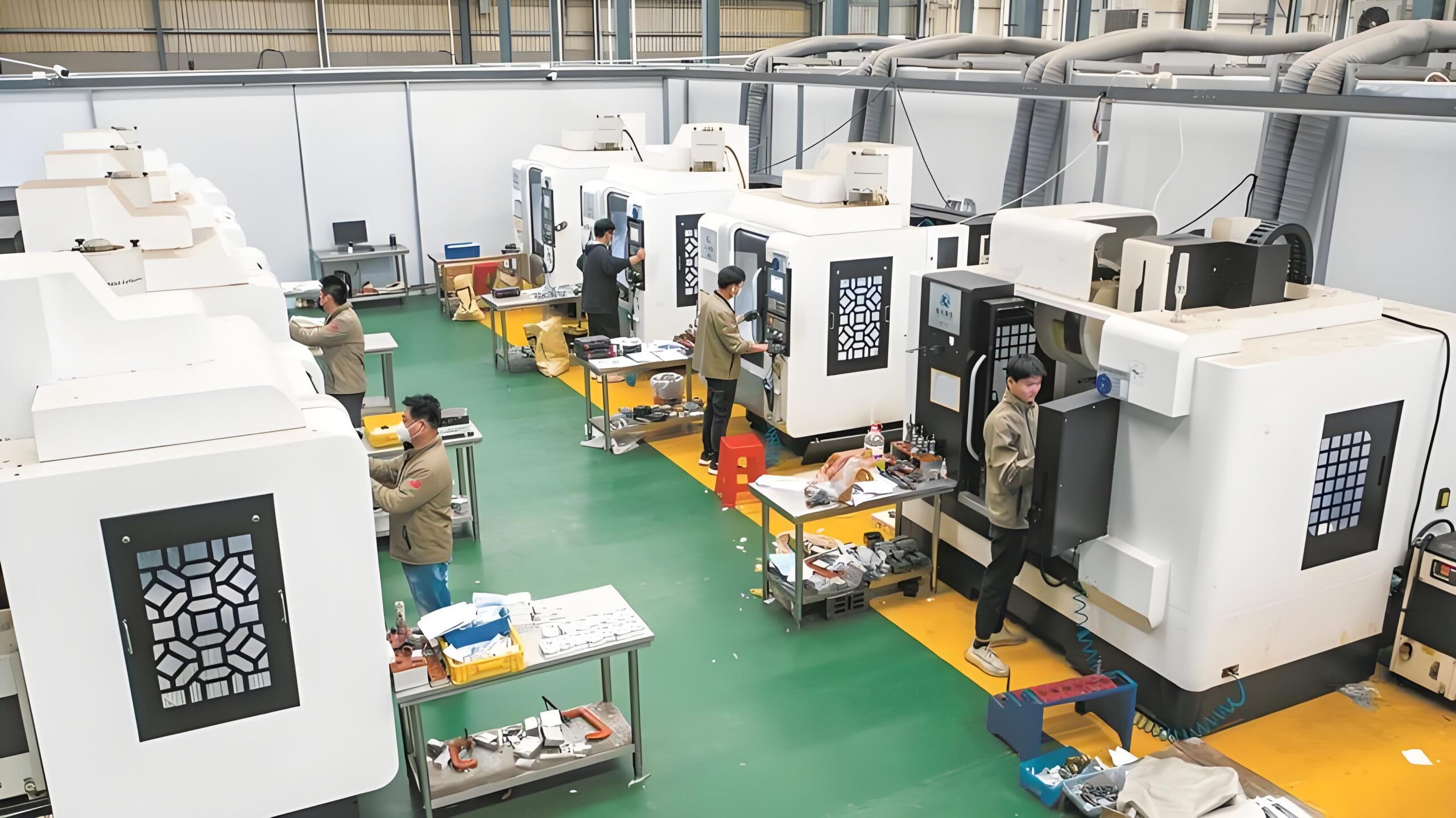
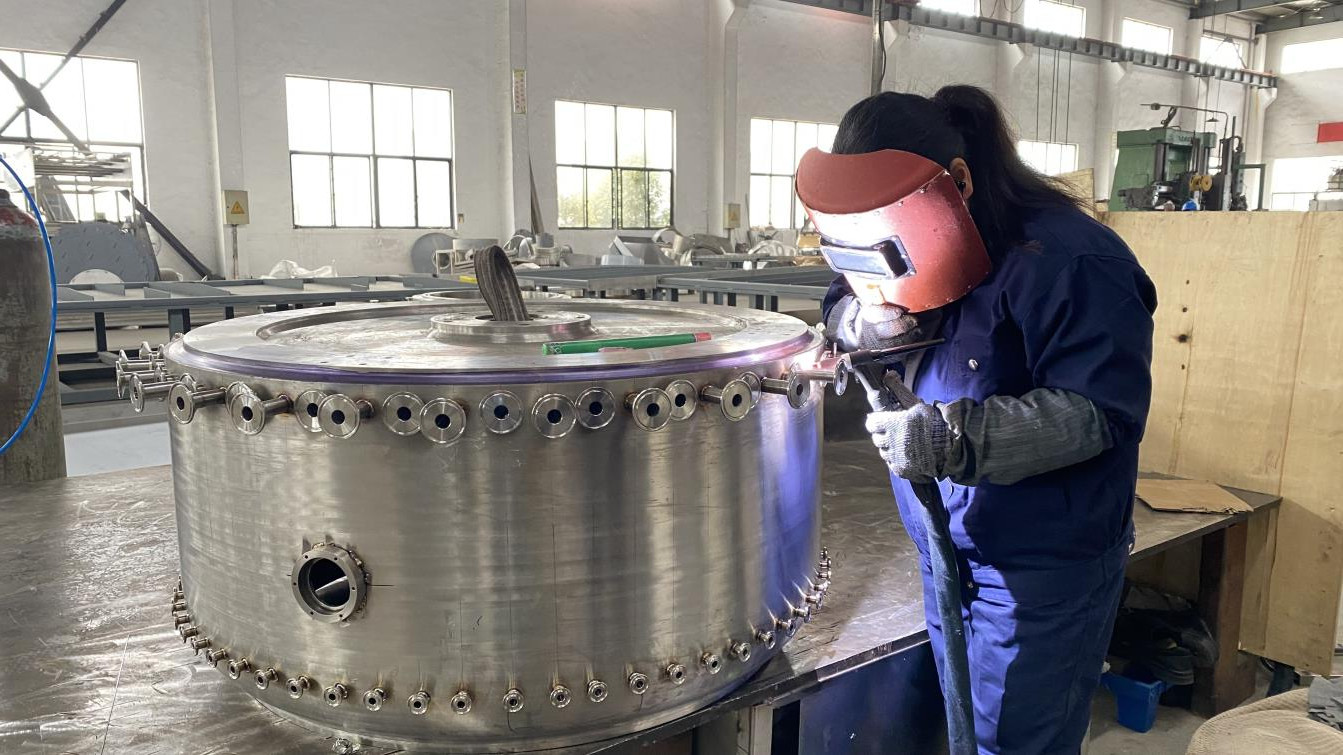
Centro de fabricación de última generación
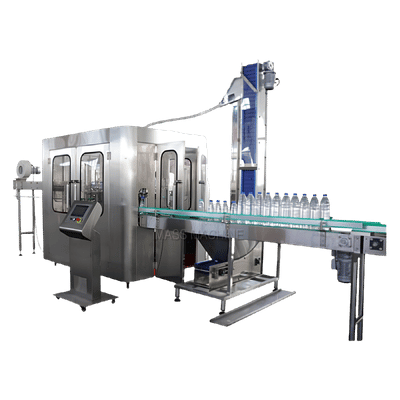
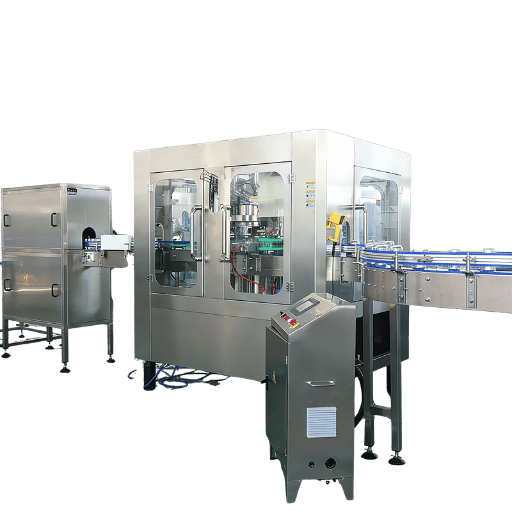
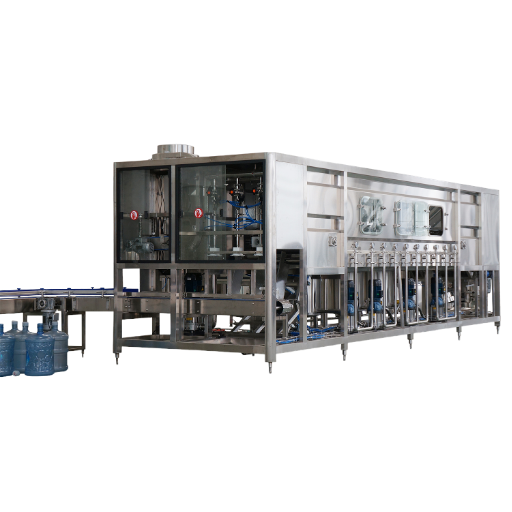
Ingeniería de precisión ejecutada a escala. Nuestras instalaciones de producción integran procesamiento CNC de alto nivel con rigurosos estándares de calidad para garantizar que cada máquina cumpla con los requisitos globales de la industria de bebidas.
Compatibilidad de contenedores y estrategia operativa
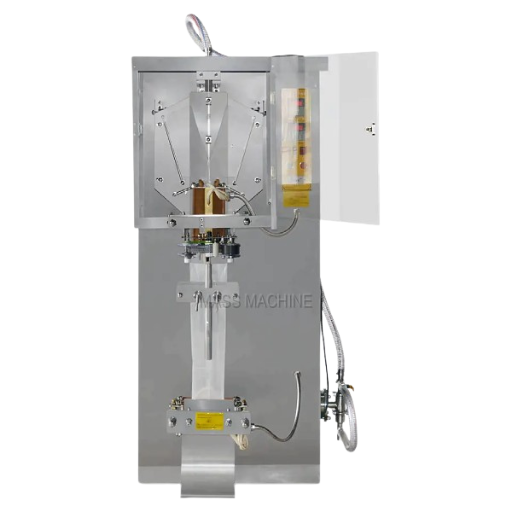
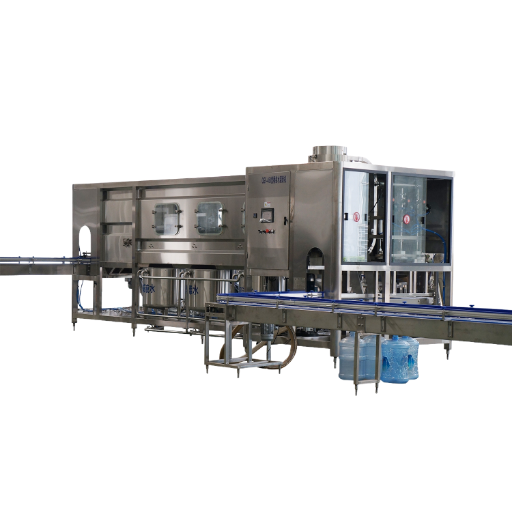
La plataforma CGF funciona como una máquina llenadora de agua potable cuando se usa en una máquina llenadora de líquidos más amplia, lo que ofrece un rendimiento eficiente en formatos de PET, galones y bolsitas en un único marco giratorio para bebidas no carbonatadas.
Especificaciones de presión: Medio de lavado con agua aséptica y ventana de presión de enjuague (>0,06 MPa, <0,2 MPa). Ideal para SKU minoristas de PET en una operación multiformato.
El diseño estándar de la planta a menudo sugiere dos líneas una al lado de la otra que comparten un sistema de purificación de agua en lugar de una sola línea bajo un rango de formato comprometedor. Las máquinas envasadoras de bolsas manipulan los SKU de las bolsitas en paralelo al relleno de la botella.
Botella de venta al por menor de PET
Volumen: 200ml -ñan 2L
Diámetro: 50 ñame 115 mm
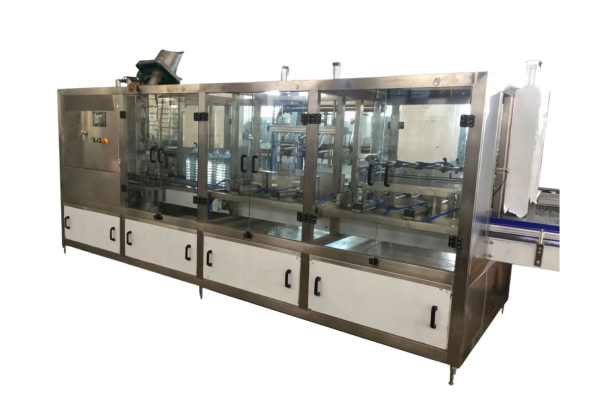
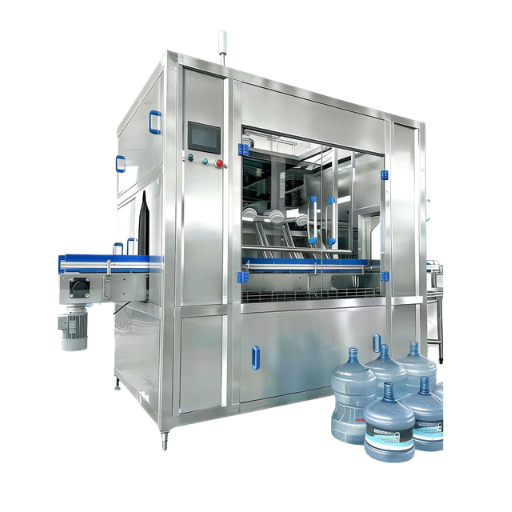
Dispensador de agua
Volumen: 3 «10L
Manejo: Dedicado de boca grande
Bolsita/bolsa
Volumen: 200 ñan 500ml
Proceso: Formulario-Relleno-Sello
30-90
Cambio de minutos
La honesta realidad del tiempo de cambio
¿cuánto tiempo se detiene la línea cuando una SKU de 500 ml se convierte en una SKU de 1,5 L? Para los monobloqueos rotativos estándar de la industria en el rango de 2500-30 000 BPH, este intervalo suele ser de 30 a 90 minutos. Cualquier línea que reclame minutos de un solo dígito es una reclamación excesiva.
Solicitar detalles de configuraciónMass Tech CGF vs Norland vs Indian Lines « La realidad del TCO a 5 años
Un fabricante estadounidense como Norland International, cuando cotiza tres veces (una vez por un fabricante estadounidense, otra por un constructor local indio y otra por Mass Technology), ve tres precios de etiqueta diferentes. La cotización estadounidense es de 3 a 5 veces la cotización de China. La cotización india puede estar en 20-30% por debajo de la cotización de China. No se debe quedar atrapado en la ecuación equivocada si se elige por precio de etiqueta.
Dolor → Causa → Solución → Prueba
Dolor: En Lagos, un director de adquisiciones elige la pegatina más barata. Después de 1,5 años y tres cortes importantes de varias semanas en los que los operadores esperan juntas de repuesto, la línea ha producido 40% de capacidad anual nominal.
Causa: El precio de etiqueta tiende a ignorar otras cuatro dimensiones de costos: frecuencia de mantenimiento de la máquina, tiempo de entrega de repuestos, pérdida de producción en tiempo de inactividad y eficiencia del operador.
Marco TCO de 5 años « Línea de llenado de agua mineral
El costo total de propiedad a cinco años para una línea embotelladora de agua mineral de nivel medio, 10.000 ñame 15.000 BPH, no es una sino cuatro dimensiones:
Dimensión 1
Precio de la pegatina
Coste de capital de la línea de llenado, franco fábrica.
Dimensión 2
Frecuencia de mantenimiento
Horario de servicio anual planificado + no planificado.
Dimensión 3
Tiempo de espera de repuestos
Días entre el fracaso y la reanudación de la producción.
Dimensión 4
Pérdida de producción en tiempo de inactividad
Botellas sin llenar × margen por botella.
La comparación de tres proveedores, uno al lado del otro
| Dimensión | Estados Unidos (clase Norland) | Constructor local indio | Tecnología de masas CGF |
|---|---|---|---|
| Precio de la pegatina (relativo) | Línea de base de China 3×-Conoce-5× | 0,7×-0,8× bază de bază China | 1,0× (línea de base) |
| Cobertura del rango de HPB | A menudo 1-2 niveles de capacidad | A menudo 1-2 niveles de capacidad | 2.500-30.000 BPH (8 niveles) |
| Mensajería de repuestos | Fuerte exportación interna, más lenta | Local fuerte, exportación limitada | 5 días laborables internacionales |
| Respuesta del ingeniero | Misma zona horaria para compradores estadounidenses | Misma zona horaria para compradores de India | Respuesta 24 h, SLA global |
| Garantía (piezas) | Varía según el proveedor | A menudo 6-12 meses | 2 años (todas las partes) |
| Traspaso del sistema operativo | Fuerte para el país estadounidense | Variable, a menudo sólo máquina | Diseño de planta → instalar → tren → servicio |
El punto contrario sobre la cita india
Los compradores que han comparado los precios de las líneas de productos chinas e indias informan que la etiqueta (Wang) de las marcas indias es realmente 20-30% más baja. Los mismos compradores, dos y tres años después, informarán que su TCO de 5 años se ha invertido: la línea india en realidad costó más una vez que se incluyeron el inventario de repuestos basado en el tiempo y los costos de tiempo de inactividad no planificados. Esto no pretende ser una acusación contra los soldadores indios: es para resaltar cómo mediciones similares a menudo son casi inútiles si una línea funciona de cinco a siete años en un mercado donde cada hora de inactividad se extiende una botella por día.
El punto contrario sobre la cita estadounidense
Norland y otros fabricantes conocidos obtienen su prima por una buena razón: un ingeniero experto que levanta el teléfono a menudo en la misma zona horaria que el comprador. Los compradores africanos y sudamericanos buscan marcas estadounidenses porque la infraestructura de soporte parece la más confiable. La solución CGF es no descartar esa señal, es replicar esa experiencia. El ingeniero SLA las 24 horas, el servicio de mensajería internacional SLA de 5 días hábiles y el canal de ingenieros de WhatsApp están implementados para que un comprador global no tenga que pagar una prima de 3 a 5 para acceder a esa experiencia de soporte.
Respuesta del ingeniero las 24 horas + Repuestos SLA de 5 días
No hay adjetivos en esta sección porque el contrato de servicio carece de adjetivos. El soporte posventa en una máquina llenadora de agua mineral Mass Technology está incluido en el acuerdo de compra y consta de cuatro compromisos de servicio definidos, todos los cuales son un número, no una opinión.
Dolor
Dificultades: una línea de embotellado en Tanzania detecta una válvula de llenado con fugas a las 2 am hora local; La producción cesa y el turno llega a las 7 am esperando botella.
Causa
Por qué: muchos proveedores de Proveedor Zacanon Vakanom funcionan con horarios de soporte que no coinciden con el horario de Vazujoov del cliente.
Solución
Dificultades: El ingeniero de Mass Technology SLA está a 24 horas de la creación del ticket, no en hora local. El servicio de mensajería de repuestos SLA es de 5 días hábiles.
Prueba
Soporte con prueba: los SLA se incluyen como hitos en el contrato de compra junto con la garantía de piezas de 2 años.
Los cuatro compromisos de servicio
Garantía de piezas de 2 años
Todo lo que figura en el archivo de la línea Gubloran Mass Technology tiene una garantía de 2 años desde la aprobación del proyecto.
Respuesta del ingeniero las 24 horas
Un boleto abierto a las 2 am hora local se aumentará dentro de las 24 horas, independientemente de la zona horaria del comprador.
Mensajería de 5 días laborables
Las piezas de desgaste estándar se envían a través de mensajería internacional dentro de los 5 días hábiles con seguimiento puerta a puerta.
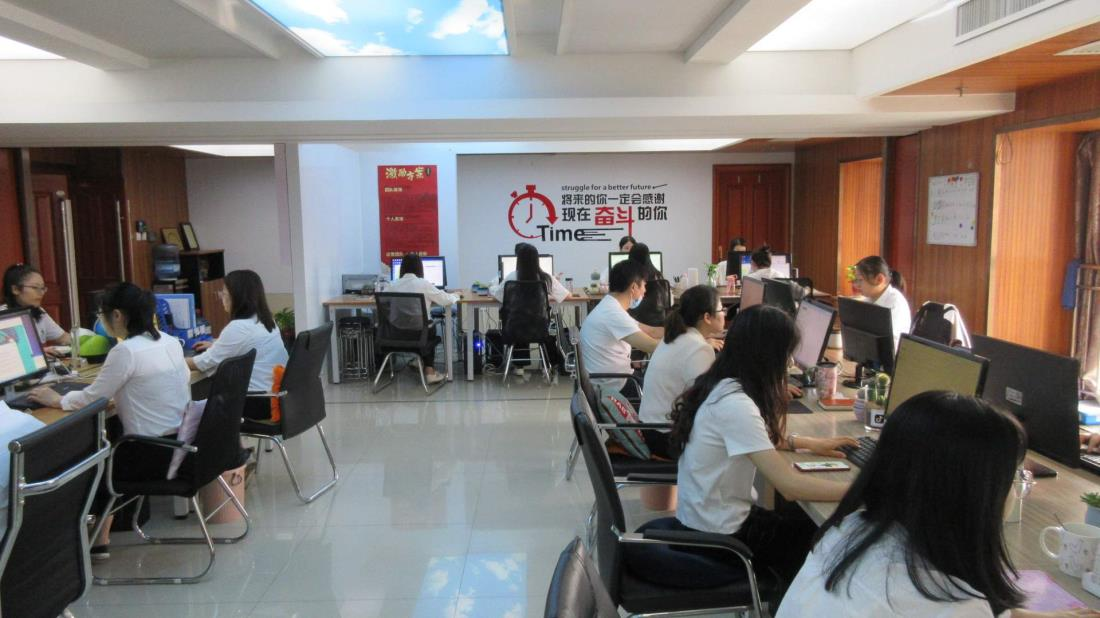
Servicio integral personalizado
Desde el dibujo del diseño de la planta hasta la supervisión de la instalación. La transferencia no es simplemente el monobloque giratorio.
TRANSPARENCIA
Lo que el SLA no promete
La respuesta SLA de 24 horas es un compromiso de respuesta pero no un compromiso de resolución. Este SLA garantiza al comprador que no esperará solo.
El SLA de mensajería de 5 días laborables depende del despacho de aduanas. Una planta de agua mineral que llama a las 2 am llama porque no se llenó una botella; este SLA debe responder a esa llamada.
Consultar términos de servicio →Resultados y estándares del cliente « Cumplimiento, certificaciones y lo documentado
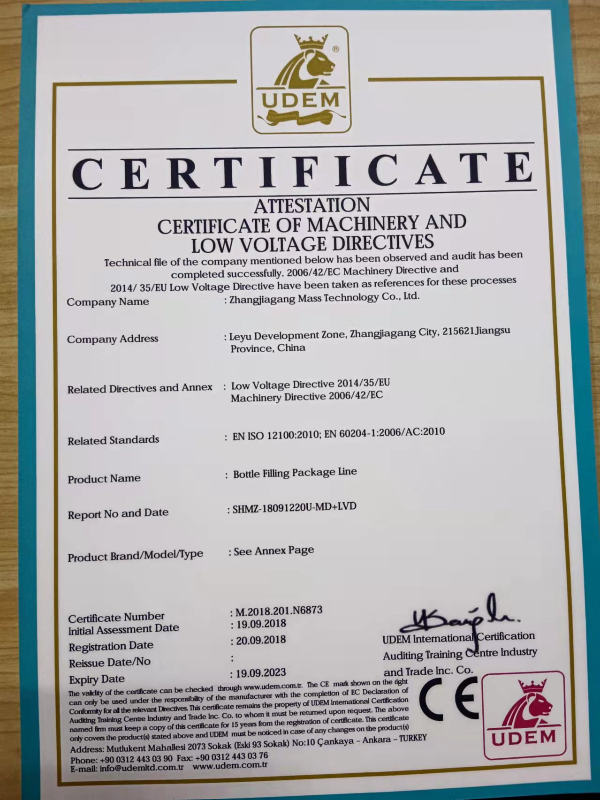
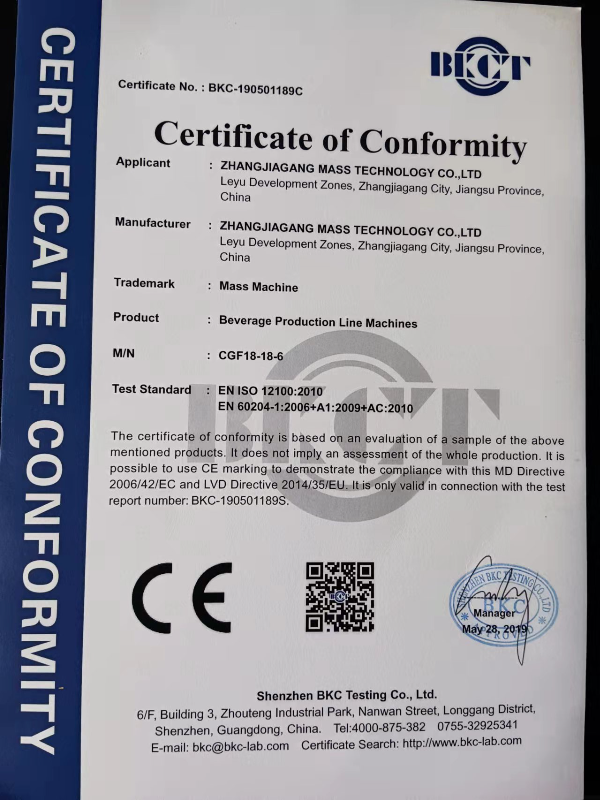
Una máquina llenadora de agua mineral no deja agua potable antes de llegar a la boca de un ser humano, por lo que el marco de cumplimiento no es opcional. La serie CGF está diseñada según una serie de reglas de contacto con alimentos, seguridad de maquinaria, gestión de calidad y calidad del agua potable, cada una documentada y cada comprobable.
El marco de cumplimiento
Dolor
Una planta embotelladora no pasa una auditoría regulatoria estatal porque la certificación del material del sello de la válvula de llenado no se puede producir cuando el auditor lo solicita.
Causa
Demasiados proveedores de máquinas llenadoras envían afirmaciones de marketing sobre certificaciones, pero no incluyen el paquete de documentación que solicitará un regulador.
Solución
Cada línea CGF se envía con un paquete de documentación que asigna cada material de la superficie de contacto a la cláusula reglamentaria correspondiente.
Prueba
La pila de estándares a continuación es el índice de documentación que se envía con el equipo.
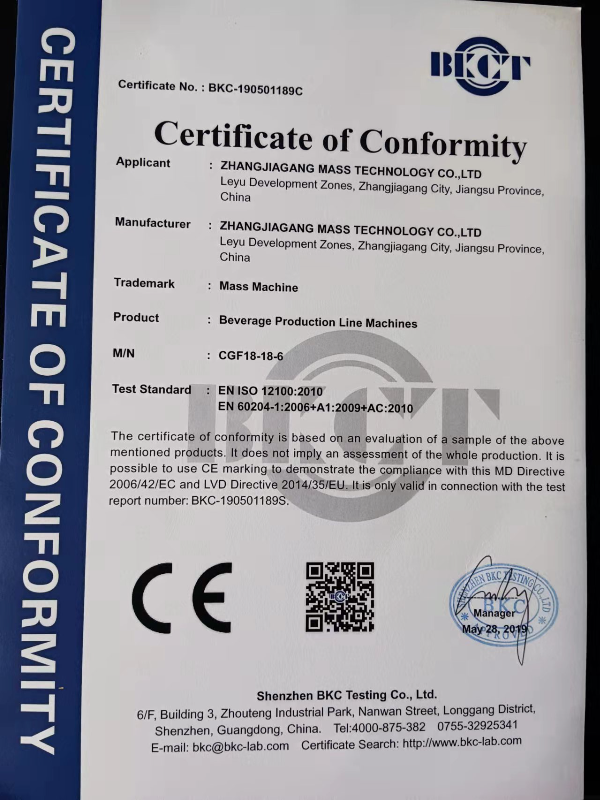
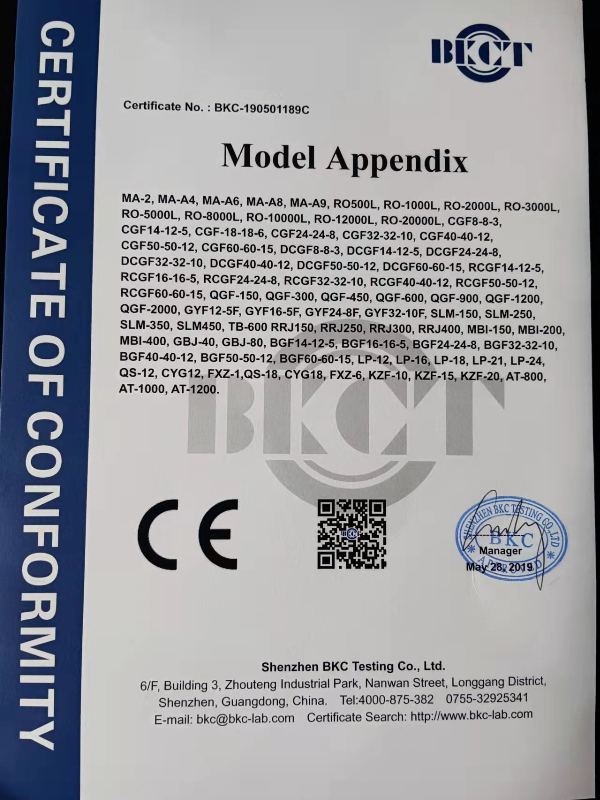
CE
Directiva de máquinas 2006/42/CE
ISO 9001:2015
Gestión de calidad
FDA 21 CFR 175
Recubrimientos resinosos
FDA 21 CFR 177
Contacto inoxidable
Directrices de la OMS
4a ed. Agua potable
HACCP
Diseño consciente del PCC
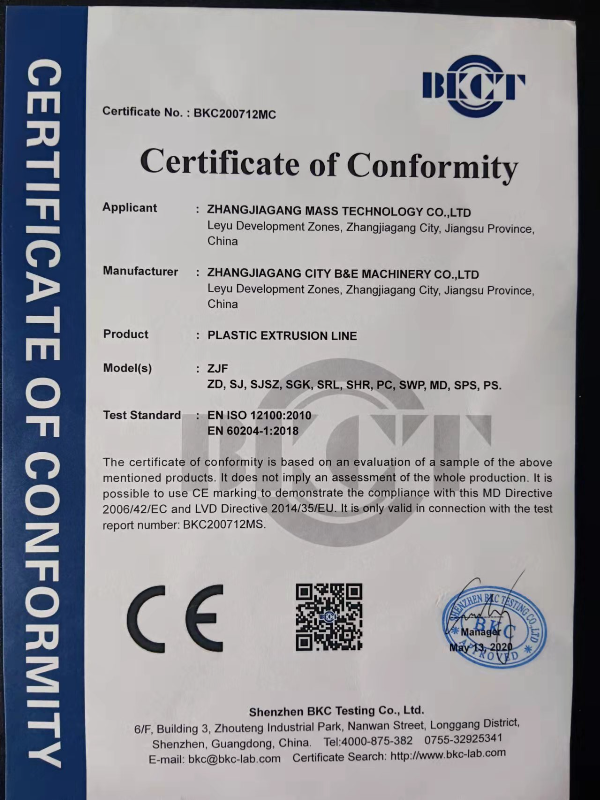
Pruebas independientes
Validación de terceros
Ingeniería de precisión
Leer correctamente la cita de la FDA
Este es un lugar donde los proveedores, incluidos algunos venerables, se equivocan en las citas en sus páginas de marketing. Los sellos de válvulas de llenado en la línea CGF cumplen con las especificaciones de FDA 21 CFR 175.300 para recubrimientos resinosos y poliméricos utilizados como superficies de contacto con alimentos; Las piezas de contacto de acero inoxidable (SS304 / SS316) siguen la serie 21 CFR 177, la cláusula correcta para el material. Emparejar "FDA 175.300" con "acero inoxidable" en una oración es un atajo común pero técnicamente falso: 175.300 se refiere a recubrimientos poliméricos y no al acero. El paquete de documentación del CGF mantiene las dos citas separadas para que un auditor regulador vea la cláusula correcta con el material correcto.
Marco de Calidad
Marcos HACCP y OMS
El sistema HACCP sigue siendo el marco dominante de planificación de la seguridad alimentaria. Se demuestran los siguientes puntos críticos de control según corresponda: monitoreo del agua cruda, tratamiento de RO/UF, esterilización UV, higiene del ambiente de llenado e integridad del ciclo CIP.
En cuanto a la calidad del agua terminada, las Directrices de calidad del agua potable de Who (4a edición) son la referencia indefinible para TDS, pH y dureza. Recomienda que el contenido de TDS en el agua potable terminada no exceda las 300 ppm en la banda "excelente", 300-600 ppm "buena", con mínimos de requisitos previos de calcio y magnesio recomendados si la fuente de agua está mineralizada naturalmente. Las líneas CGF no producirán agua potable, es decir, el paso de tratamiento aguas arriba, pero con un diseño implacable en torno al agua pura tratada entregada competirá con la botella en la entrega de asentamientos sensibles para el usuario final de agua conformada según las pautas de la OMS terminada en la botella sin contaminación secundaria.
Lista de verificación de evaluación del comprador « Cómo auditar a cualquier proveedor de máquinas llenadoras
Esta sección se lee intencionalmente para que sea útil incluso si el comprador potencial decide no comprar nunca en Mass Technology. Por el presente se incluye una lista de verificación de evaluación de 7 puntos para cada proveedor de máquinas llenadoras de agua mineral (chino, indio, estadounidense, europeo). Realice tres cotizaciones y, independientemente del proveedor que gane, el comprador habrá creado una decisión financiera racional.
Auditoría 01
Escalera BPH, no pico BPH.
Solicite toda la gama de capacidad. CGF oscila entre 2.500 y 30.000 BPH en 8 modelos, en una sola familia de productos.
Auditoría 02
Por escrito, mensajería SLA para repuestos.
"El "envío rápido" no es un SLA. "5 días laborables, mensajería internacional, seguimiento puerta a puerta" sí lo es.
Auditoría 03
Por escrito, tiempo de respuesta del ingeniero.
"24 horas desde el ticket abierto, horario calendario, global": esa es la medida que se puede negociar.
Auditoría 04
Duración de la garantía y alcance de las piezas.
CGF establece el valor predeterminado en 2 años para todas las piezas. Solicite a los proveedores competidores que coincidan con el estándar.
Auditoría 05
Alcance de la transferencia del sistema operativo.
La entrega, la instalación y la capacitación in situ son parte de la transferencia del sistema operativo, no solo la entrega del equipo.
Auditoría 06
Paquete de documentación de cumplimiento.
Solicite documentación real de FDA/CE/ISO. Confirmar citas (175.300 para recubrimientos, 177 para acero inoxidable).
Auditoría Crítica 07
Consulte las implementaciones utilizando datos de producción del primer año.
Solicite datos de clientes individuales con el país, el BPH instalado y la tasa de ejecución del primer año. Un proveedor que no pueda proporcionar esto es una bandera amarilla.
Herramientas de planificación de núcleos de plantas de agua mineral
Utilice estas calculadoras especializadas para optimizar las especificaciones técnicas de su proyecto, auditar proveedores y establecer modelos financieros precisos.
Calculadora de capacidad CGF
Ingrese sus objetivos de expansión y demanda de fase uno para generar la configuración monobloque de CGF exacta y el nivel de BPH para su planta.
Iniciar calculadoraComparación de TCO a 5 años
Calcule el costo total real de propiedad a 5 años, incluido el mantenimiento, el SLA de repuestos y los riesgos de tiempo de inactividad más allá del precio de etiqueta.
Acceda a la hoja de trabajoLista de verificación de evaluación del comprador
Audite a cualquier proveedor de máquinas llenadoras en 7 dimensiones críticas, desde los tiempos de respuesta de SLA hasta la validez de la documentación de cumplimiento.
Iniciar evaluaciónPreguntas frecuentes
Los precios de las pegatinas varían desde $5.000-$25.000 para configuraciones de nivel básico a $80.000-$300.000+ para implementaciones de plantas premium a gran escala (FOB Guangzhou). Sin embargo, recomendamos encarecidamente evaluar el Costo total de propiedad (TCO) de 5 años, que tiene en cuenta la frecuencia de mantenimiento, el SLA de repuestos y la pérdida de producción en tiempo de inactividad, en lugar de decidir únicamente el costo de capital franco fábrica.
La serie Mass Technology CGF ofrece 8 modelos discretos que se escalan desde 2.500 BPH (CGF 8-8-3) en el nivel de entrada a 30.000 BPH (CGF 60-60-15) para plantas de exportación de grado industrial, calculadas a una capacidad estándar de PET de 500 ml.
No. Intentar ejecutar todos los formatos en un solo marco giratorio da como resultado una geometría de línea gravemente comprometida. La serie CGF está diseñada con precisión para Espectro PET de 200 ml-2 L (diámetro de botella de 50-115 mm). Los formatos más grandes, como dispensadores domésticos de 3 a 10 litros o barriles HOD de 5 galones, requieren líneas complementarias dedicadas con diferentes físicas de manejo y ciclos de enjuague invertido.
Un monobloque 3 en 1 ejecuta la secuencia de enjuague, llenado y taponado un movimiento giratorio continuo. Utiliza un PLC, un HMI y un tren motriz. Las máquinas separadas requieren transportadores de conexión, lo que aumenta drásticamente el espacio, el consumo de energía e introduce tres modos de falla mecánica independientes en su línea de producción.
La industria mundial del agua embotellada se está expandiendo a una tasa compuesta anual de ~7,5%. Los datos de campo de las operaciones de nivel medio (10.000-15.000 BPH) a menudo muestran un Período de recuperación de 18 a 36 meses. Sin embargo, la rentabilidad depende en gran medida del tiempo de actividad operativa de la línea de llenado. El alto tiempo de inactividad debido a una mala logística de repuestos puede borrar los márgenes, razón por la cual un sistema operativo respaldado por SLA es fundamental.
Diseñado para más de 5-7 años de rigurosa operación comercial. Cada línea CGF incluye un contrato Garantía de 2 años en todas las piezas mecánicas y eléctricas. El mantenimiento cuenta con un gran respaldo de nuestro SLA: respuesta de ingeniero las 24 horas a nivel mundial y un envío internacional de mensajería de repuestos de 5 días hábiles.
El agua cruda se procesa mediante uso industrial Sistemas de purificación y filtración de agua (normalmente plantas de RO o UF) aguas arriba del relleno. En diseños de plantas estándar, estas unidades de filtración están prediseñadas para igualar el rendimiento exacto de BPH de su monobloque de CGF, y a menudo alimentan múltiples líneas paralelas a través de un bucle CIP central.
A escala de planta, la secuencia de llenado es la siguiente: las preformas de PET se alimentan a una máquina sopladora de botellas que forma las botellas vacías; las botellas se alimentan al monobloque giratorio CGF que las enjuaga con agua aséptica, las llena con agua mineral tratada con precisión hasta un volumen determinado y las tapas en una sola rotación continua; las botellas llenas y tapadas se alimentan a una etiquetadora y luego a una envoltura retráctil o envasadora de cartón; las cajas terminadas se paletizan para su envío. Una planta de gama media de 12.000 BPH que funcione en dos turnos puede producir aproximadamente 192.000 botellas por turno en ventanas de cambio y CIP. Más allá de la capacidad de tratamiento de agua de relleno (RO/UF) debe ser predimensionada para la línea; El embalaje posterior debe seguir el ritmo o el marco giratorio retrocede.