Get in Touch with Masstech
★★★★★
Contractual Baseline
Mineral Water Filling
Mineral Water Filling Machine — Mass Technology CGF Series
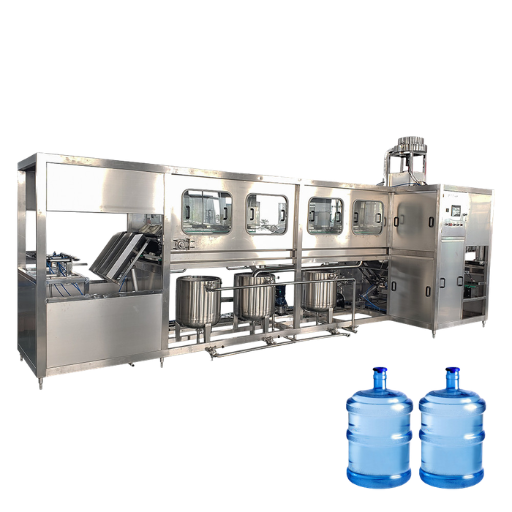
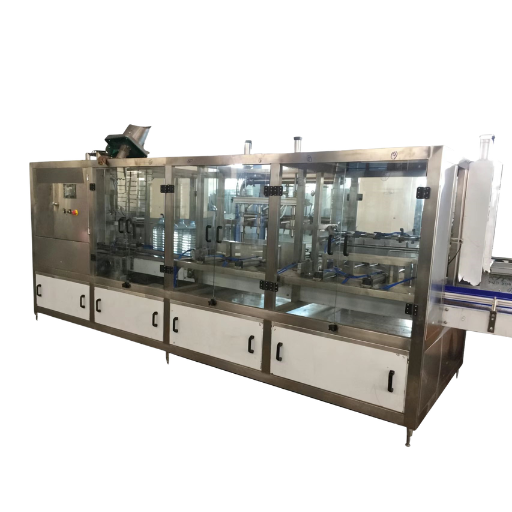
A mineral water filling machine line that fits the plant, not the other way around. The CGF 3-in-1 rinsing-filling-capping monoblock scales from 2,500 BPH to 30,000 BPH. Fully automatic packaging for PET bottles with a 2-year parts warranty.
Request Quote (24h Response)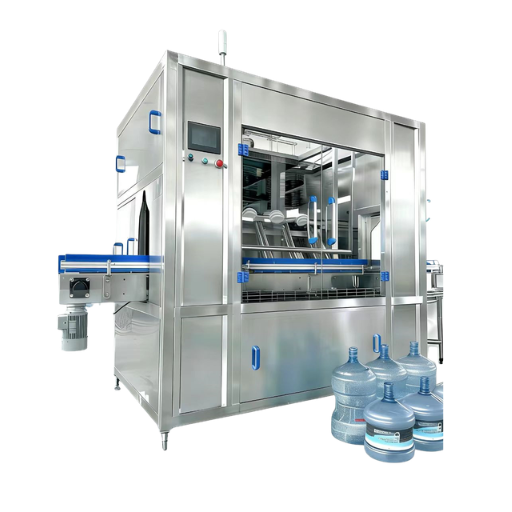
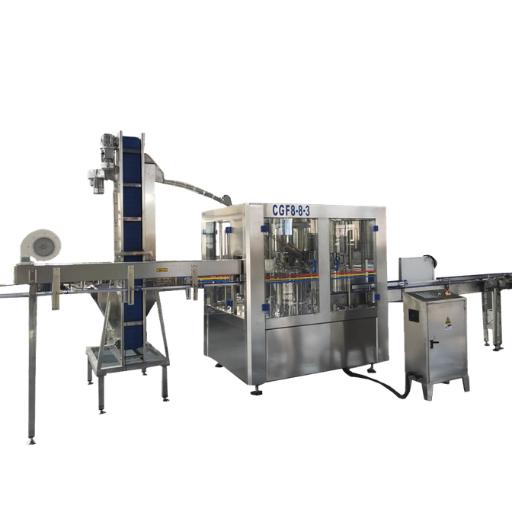
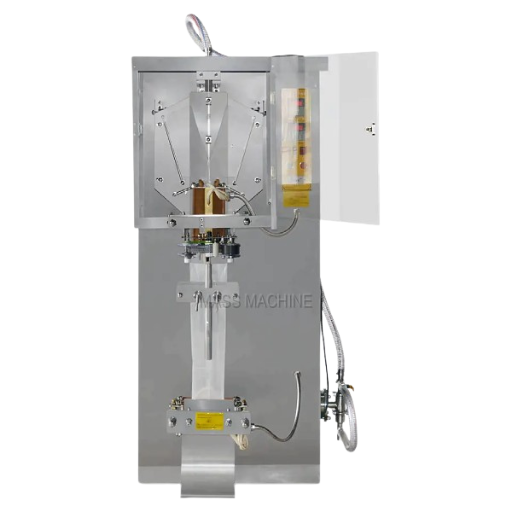
8 ModelsCGF 8-8-3 →
60-60-15
60-60-15
2.5k–30kBPH @ 500ml
Capacity
Capacity
Flexible Size200ml–5 Gal
Containers
Containers
2-YearParts Warranty
(All Components)
(All Components)
24 HoursEngineer SLA
Response Time
Response Time
5 DaysInt'l Spare Parts
Courier baseline
Courier baseline
PRODUCTION
From Bottling Pain Points to a Complete Operating System
Most failed bottled water plants do not fail because the filling machine cannot fill bottles.
They fail because no one was on the other end of a phone at 2 a.m. when a valve seal blew, because the spare gasket sat in customs for nine weeks, and nobody documented the changeover procedure.
Most early-stage failures trace back to the operating system around the water - from filtration to technical support.
Technical Configuration: CGF 3-in-1 Monoblock
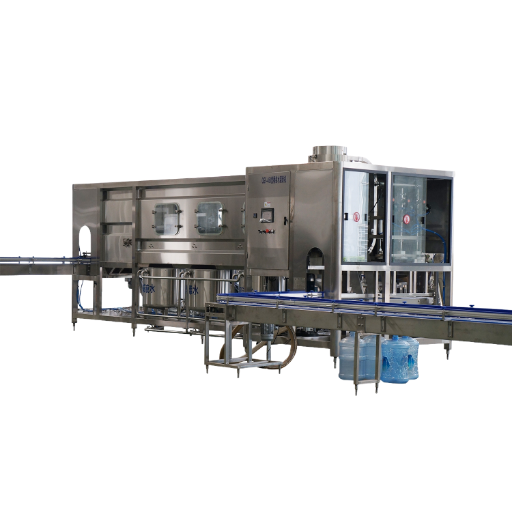
A unified architecture using one PLC and HMI touchscreen. This integration eliminates floor space waste and minimizes independent failure modes.
THE PAIN
Startup plants losing production due to unreachable technical support.
THE CAUSE
Machine-only sales without a dedicated spare-parts or service ecosystem.
THE SOLUTION
Standardized kits including plant layout, training, and 5-day parts delivery.
THE PROOF
2-year warranty and 24-hour response SLA written into the agreement.
"The CGF series delivers the engineer behind the machine - that is the differential between equipment and an operating system."
Consult System Engineers →
CGF Series — 8 Models from 2,500 to 30,000 BPH (Decision Matrix)
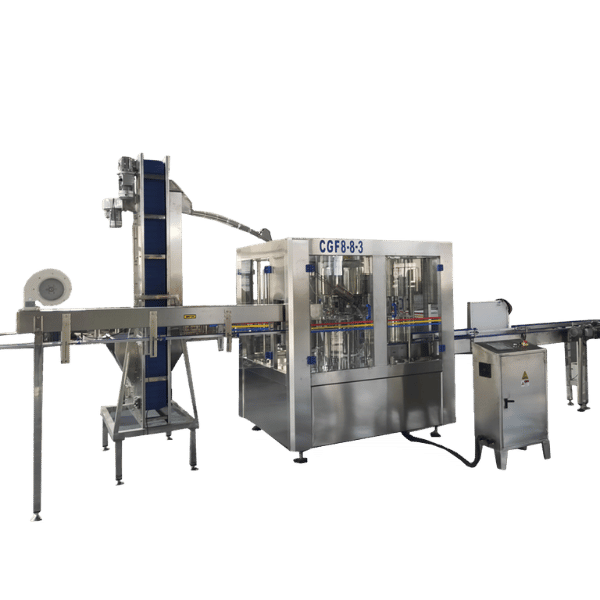
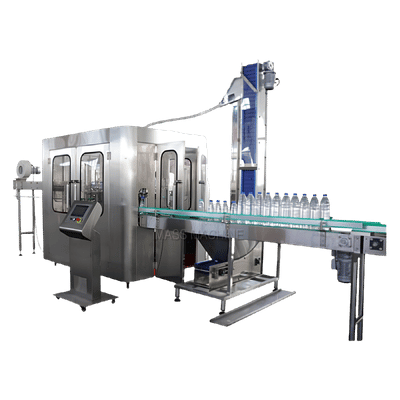
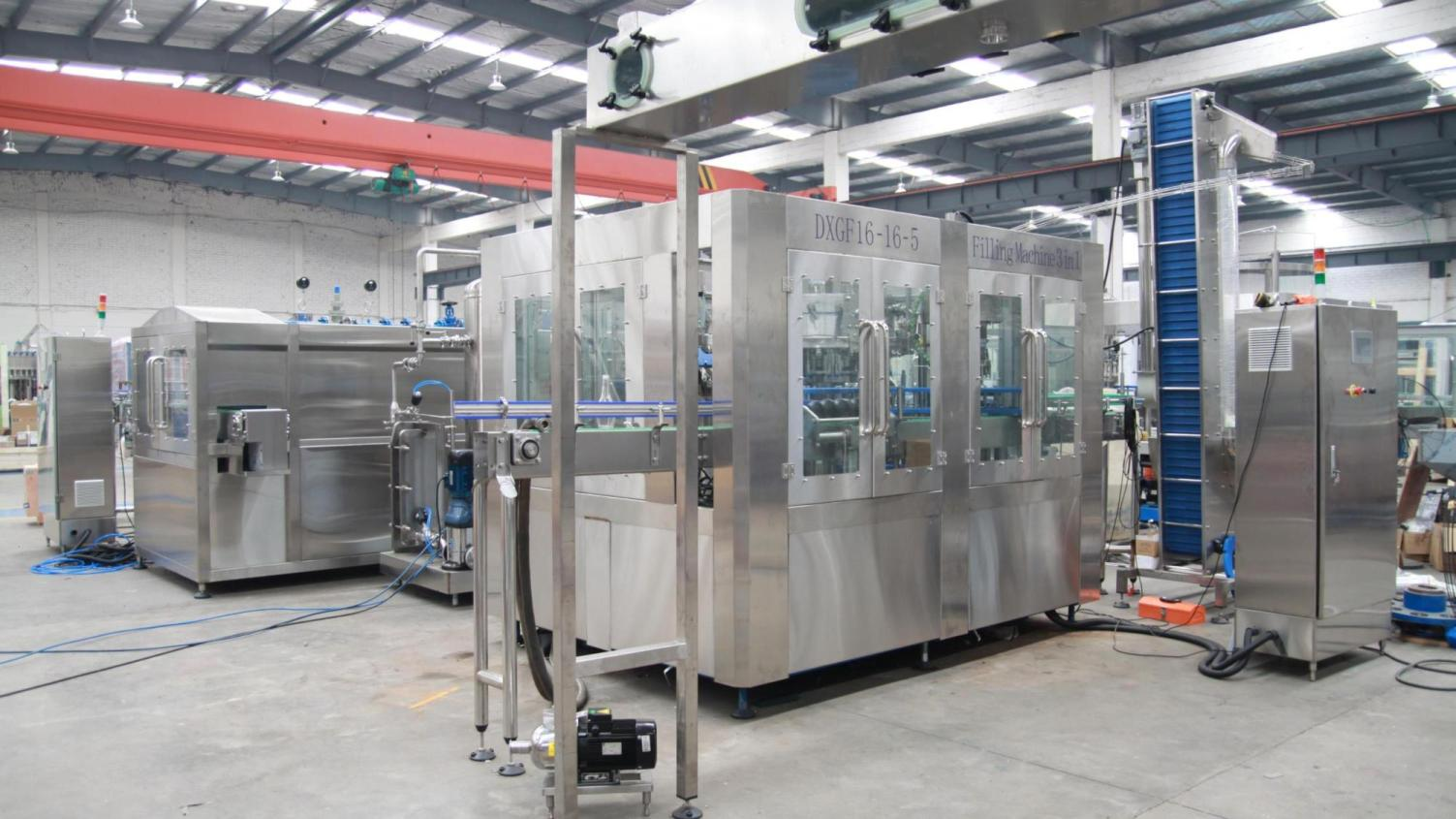
The CGF series deliver eight discrete configurations of this fully automatic mineral water bottling machine, with each configuration named by head count (rinsing heads filling heads capping heads). CGF 8-8-3 delivers 8 rinsing heads, 8 filling heads, 3 capping heads. Bottle diameter (50-115mm), compressor air pressure (0.3-0.7 MPa), rinsing pressure (>0.06 MPa, <0.2 MPa), washing medium (aseptic water), and supported pet bottle shape (circular or square) stay the same across the line. Total power and machine footprint scale according to capacity. The capping machine integrates directly into the rotary frame so that bottle filling capping are one fluid motion, not three.
Pain → Cause → Solution → Proof: Right-sizing the line
Pain:
A buyer orders a 12,000 BPH line for a market requiring 4,000 BPH in phase one and 18,000 BPH in phase three; the oversized line remains underutilized (at 30%) for 18 months, burning fixed energy costs and trending servo wear.
Cause:
Peak-day projections rather than phased capacity ramp created the misaligned decision.
Solution:
The CGF series range between CGF 8-8-3 and CGF 60-60-15 in capacity, permitting a buyer to match BPH to phase-one demand and upgrade the monoblock - not the entire plant - in phase three. The decision matrix below tracks the eight line options to BPH band so capacity decisions are mechanical, not aspirational.
CGF 8-8-3
Capacity2.5k–3k BPH
Power3.91 kW
Footprint3.5 × 1.7 m
Weight2,000 kg
CGF 16-12-6
Capacity3.5k–4k BPH
Power4.61 kW
Footprint2.2 × 1.9 m
Weight2,500 kg
CGF 18-18-6
Capacity4.5k–6k BPH
Power4.61 kW
Footprint2.5 × 2.1 m
Weight3,500 kg
CGF 24-24-8
Capacity8k–12k BPH
Power5.41 kW
Footprint2.8 × 2.2 m
Weight4,500 kg
CGF 32-32-10
Capacity12k–14k BPH
Power6.41 kW
Footprint3.5 × 2.3 m
Weight6,000 kg
CGF 40-40-12
Capacity15k–18k BPH
Power9.63 kW
Footprint4.0 × 3.0 m
Weight8,000 kg
CGF 50-50-12
Capacity21k–24k BPH
Power12.5 kW
Footprint5.5 × 4.5 m
Weight10,500 kg
CGF 60-60-15
Capacity26k–30k BPH
Power15.0 kW
Footprint7.0 × 6.5 m
Weight13,000 kg
Capacity-to-investment tier table
The eight models cluster into four practical investment tiers for B2B buyers anticipating the purchase of a mineral water bottling machine:
| Tier | Models | BPH @ 500ml | Total Power | Typical Phase |
|---|---|---|---|---|
| Entry | CGF 8-8-3, 16-12-6 | 2,500–4,000 | 3.91–4.61 kW | Phase 1 startup, regional brand |
| Mid | CGF 18-18-6, 24-24-8 | 4,500–12,000 | 4.61–5.41 kW | Phase 2 expansion, multi-SKU |
| High | CGF 32-32-10, 40-40-12 | 12,000–18,000 | 6.41–9.63 kW | Regional distributor, contract pack |
| Industrial | CGF 50-50-12, 60-60-15 | 21,000–30,000 | 12.5–15.0 kW | National brand, export-grade plant |
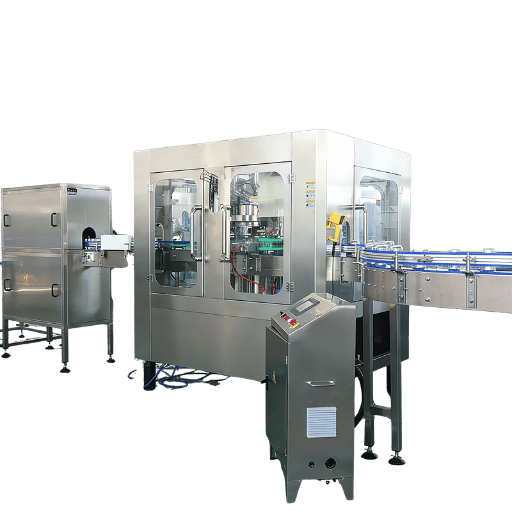
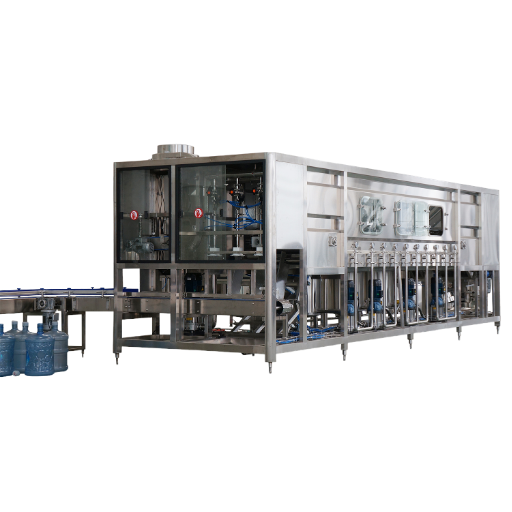
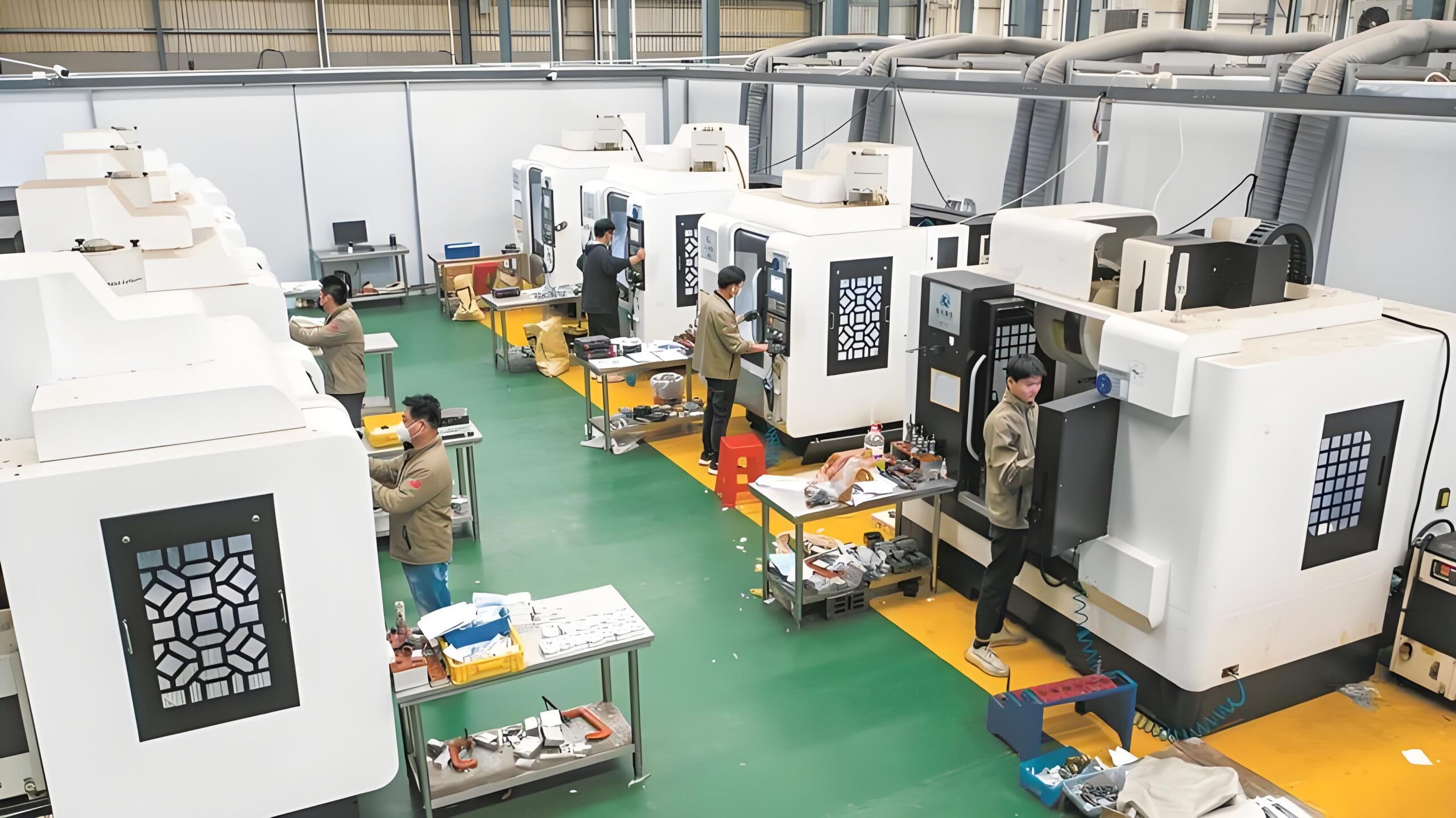
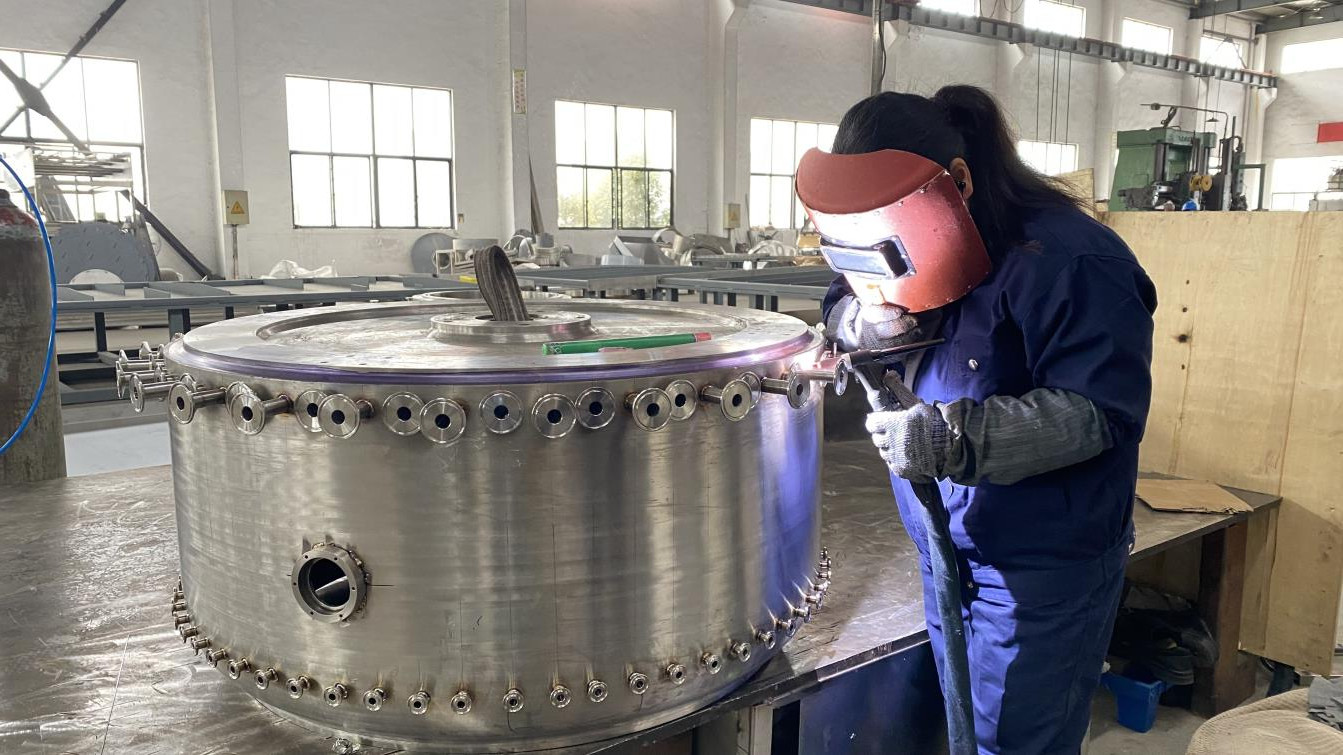
State-of-the-Art Manufacturing Hub
Precision engineering executed at scale. Our production facilities integrate high-tier CNC processing with rigorous quality standards to ensure every machine meets global beverage industry requirements.
Container Compatibility & Operational Strategy
The CGF platform functions like a drinking water filling machine when used in a broader liquid filling machine—delivering efficient throughput across PET, gallon, and sachet formats on a single rotary frame for non-carbonated beverages.
Pressure Specs: Aseptic-water washing medium & rinsing pressure window (>0.06 MPa, <0.2 MPa). Ideal for PET retail SKUs in a multi-format operation.
Standard plant layout often suggests two side-by-side lines sharing one water purification system rather than a single line under a compromising format range. Pouch packing machines handle sachet SKUs in parallel to the bottle filler.
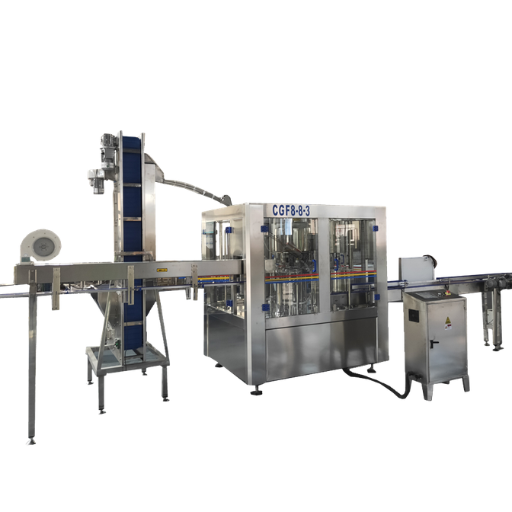
PET Retail Bottle
Volume: 200ml – 2L
Diameter: 50 – 115 mm
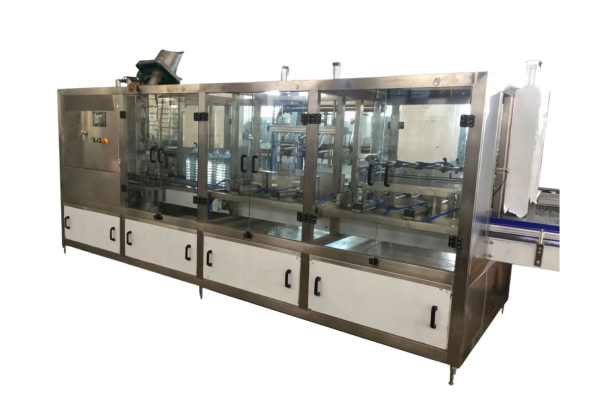
Water Dispenser
Volume: 3 – 10L
Handling: Large-mouth Dedicated
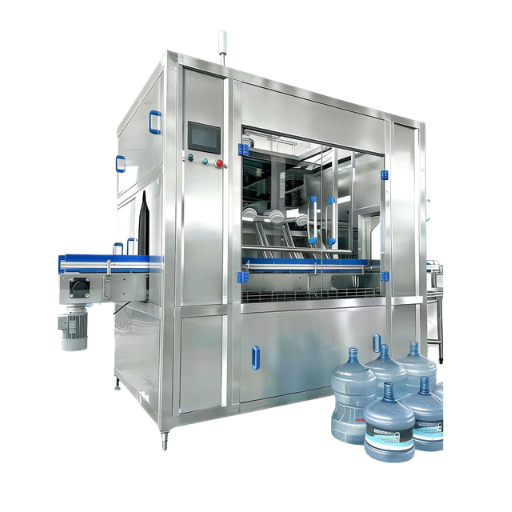
Sachet / Pouch
Volume: 200 – 500ml
Process: Form-Fill-Seal
30-90
Minutes Changeover
The Honest Reality of Changeover Time
How long does the line stop when a 500ml SKU turns into a 1.5L SKU? For industry-standard rotary monoblocks in the 2,500-30,000 BPH range, this interval is typically 30 to 90 minutes. Any line claiming single-digit minutes is overclaiming.
Request Configuration DetailsMass Tech CGF vs Norland vs Indian Lines — The 5-Year TCO Reality
An U.S. manufacturer like Norland International when quoting three times—once by an U.S. manufacturer,once by an Indian local builder, once by Mass Technology—sees three different sticker prices. The U.S. quote runs at 3-5 times the China quote. The Indian quote can come in 20-30% below the China quote. One should not get caught in the wrong equation if choosing by sticker price.
Pain → Cause → Solution → Proof
Pain: In Lagos a procurement manager choses the cheapest sticker. After 1.5 years and three major multi-week outages where operators wait for spare gaskets, the line has produced 40% of rated annual capacity.
Cause: The sticker price tends to ignore four other cost dimensions - machine maintenance frequency, spare part lead time, downtime production loss and operator efficiency.
5-Year TCO Framework — Mineral Water Filling Line
The five-year total cost of ownership for a mid-tier, 10,000 – 15,000 BPH, mineral water bottling line is not one but four dimensions:
Dimension 1
Sticker price
Capital cost of the filling line, ex-works.
Dimension 2
Maintenance frequency
Annual planned + unplanned service hours.
Dimension 3
Spare parts wait time
Days between failure and resumed production.
Dimension 4
Downtime production loss
Bottles not filled × margin per bottle.
The three-supplier comparison, side by side
| Dimension | U.S. (Norland-class) | Indian local builder | Mass Technology CGF |
|---|---|---|---|
| Sticker price (relative) | 3×–5× China baseline | 0.7×–0.8× China baseline | 1.0× (baseline) |
| BPH range coverage | Often 1–2 capacity tiers | Often 1–2 capacity tiers | 2,500–30,000 BPH (8 tiers) |
| Spare parts courier | Strong domestic, slower export | Local strong, export limited | 5 working days international |
| Engineer response | Same time zone for U.S. buyers | Same time zone for India buyers | 24 h response, global SLA |
| Warranty (parts) | Varies by supplier | Often 6–12 months | 2 years (all parts) |
| Operating-system handoff | Strong for U.S. domestic | Variable, often machine-only | Plant layout → install → train → service |
The contrarian point about the Indian quote
Buyers who have compared prices for Chinese and Indian product lines report that the sticker (Wang) on Indian brands is genuinely 20-30% lower. The same buyers two and three years later will report that their 5-year TCO was have been inverted - the Indian line actually cost more once time-based spare parts inventory and unplanned downtime costs were included. This is not meant as an indictment of Indian welders - it is to highlight how similar measurements are often near useless if a line will run five to seven years in a market place where every hour of downtime is a bottles per day extended.
The contrarian point about the U.S. quote
Norland and other well-known manufacturers command their premium for a good reason: a knowledgeable engineer who picks up the phone often in the same time zone as the buyer. AFrican and South American buyers seek out US brands because the support infrastructure feels like the most reliable. The CGF solution is not to dismiss that signal - it is to replicate that experience. 24hour engineer SLA, 5-working-day international courier SLA, WhatsApp engineer channel are in place so that a global buyer does not have to pay 3-5 sticker premium to access that support experience.
24-Hour Engineer Response + 5-Day Spare Parts SLA
There are no adjectives in this section because the service contract is short on adjectives. After-sales support on a Mass Technology mineral water filling machine is included in the purchase agreement is four defined service commitments - all of which are a number, not an opinion.
Pain
Hardship: A bottling line in Tanzania detects a leaking filling valve at 2 a.m. local time; production ceases, and the shift arrives at 7 a.m. expecting bottle.
Cause
Why: many Supplier Zacanon Vakanom vendors run on support hours that do not match the customer's Vazujoov schedule.
Solution
Hardship: The Mass Technology engineer SLA is 24 hours from ticket creation, not local time. The spare parts courier SLA is 5 working days.
Proof
Support with proof: the SLAs are included as milestones in the purchase contract along with the 2-year parts warranty.
The four service commitments
2-Year parts warranty
Everything from the file on the Gubloran Mass Technology line has a 2-year warranty from the project sign-off.
24-hour engineer response
A ticket opened at 2 a.m. local time will be escalated within 24 hours, regardless of the buyer's time zone.
5-working-day Courier
Standard wear parts ship via international courier within 5 working days with door-to-door tracking.
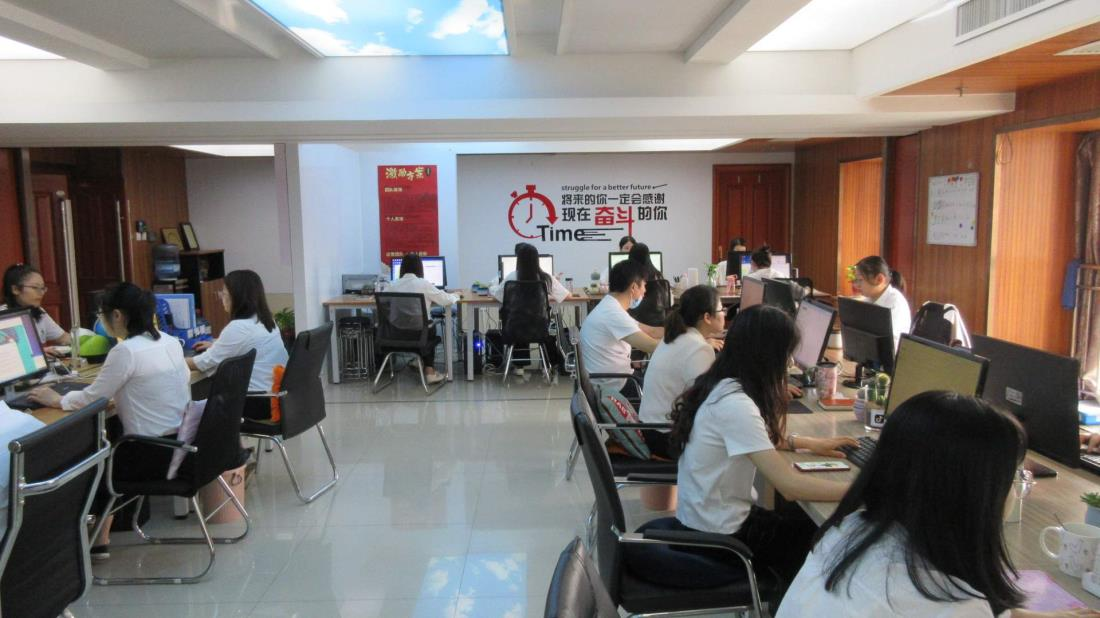
Customized one-stop service
From plant layout drawing to install supervision. The handoff is no simply the rotary monoblock.
TRANSPARENCY
What the SLA does not promise
The 24 hour response SLA is response commitment but not resolution commitment. This SLA guarantees the buyer that he will not wait alone.
The 5 working day courier SLA depends on customs clearance. A mineral water plant calling at 2 a.m. is calling because a bottle was not filled - this SLA is to answer that call.
Consult Service Terms →Customer Outcomes & Standards — Compliance, Certifications, and What's Documented
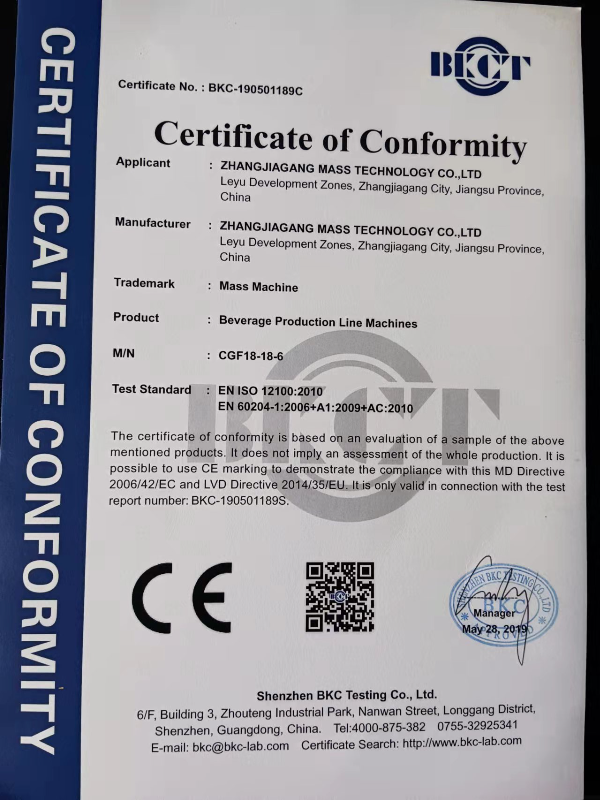
A mineral water filling machine does not leave drinking water before it reaches a human's mouth so the compliance frame is not optional. The CGF series is designed against a stack of food-contact, machinery-safety, quality-management, and drinking-water-quality rules - each documented, each testable.
The Compliance Framework
Pain
A bottling plant fails a State regulatory audit because the filling valve seal material certification cannot be produced when the auditor asks it.
Cause
Too many filling machine suppliers ship with marketing claims about certifications but do not include the documentation packet a regulator will request.
Solution
Every CGF line ships with a documentation packet mapping each contact-surface material to the relevant regulatory clause.
Proof
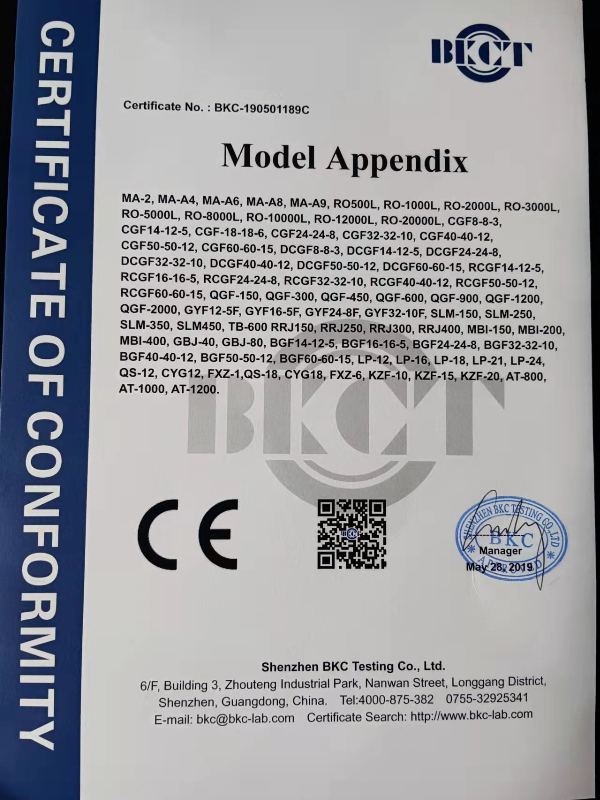
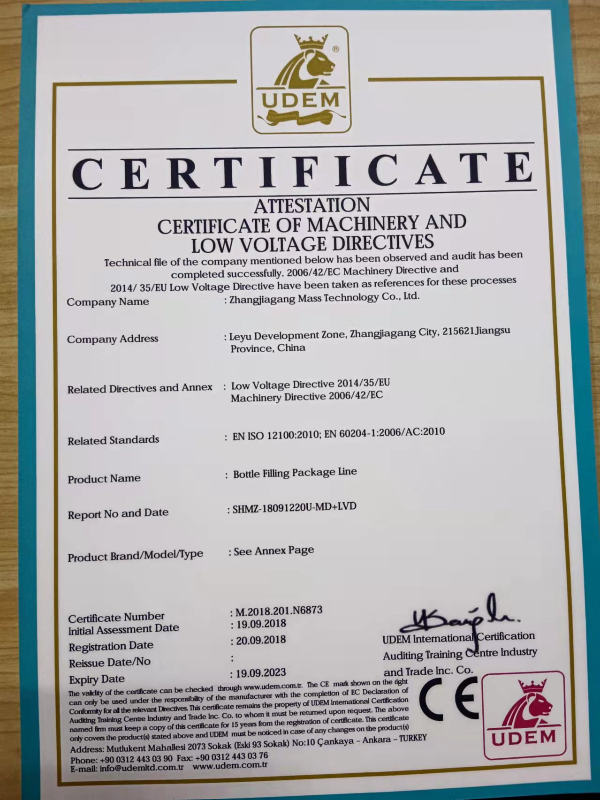
The standards stack below is the documentation index that ships with the equipment.
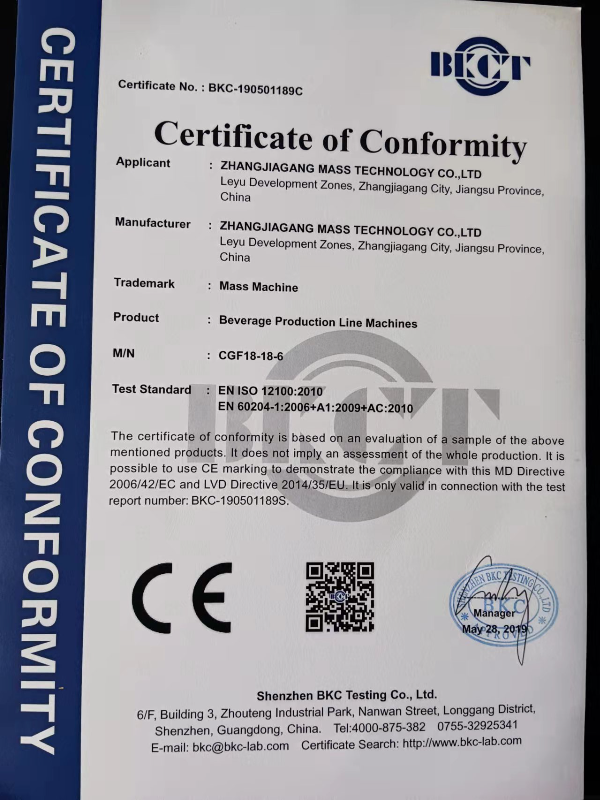
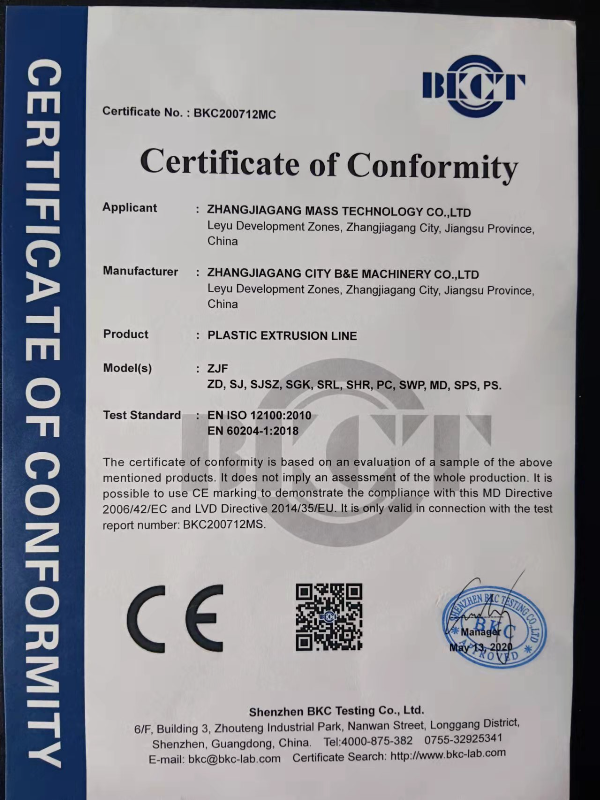
CE
Machinery Directive 2006/42/EC
ISO 9001:2015
Quality management
FDA 21 CFR 175
Resinous coatings
FDA 21 CFR 177
Stainless contact
WHO Guidelines
4th Ed. Drinking Water
HACCP
CCP-aware design
Independent Testing
Third-party Validation
Precision Engineering
Reading the FDA citation correctly
This is a place where suppliers, including some venerable ones, get the citation wrong on their marketing pages. Filling valve seals on the CGF line meet the specifications of FDA 21 CFR 175.300 for resinous and polymeric coatings used as food-contact surfaces; stainless steel contact parts (SS304 / SS316) follow the 21 CFR 177 series, the correct clause for the material. Pairing "FDA 175.300" with "stainless steel" in one sentence is a common shortcut but technically false: 175.300 refers to polymeric coatings and not to the steel. The CGF documentation packet keeps the two citations apart so a regulatory auditor sees the right clause with the right material.
Quality Framework
HACCP and WHO Frames
The HACCP system remains the dominant food-safety planning framework. The following Critical Control Points are demonstrated as appropriate: raw water monitoring, RO/UF treatment, UV sterilization, filling-environment hygiene, and CIP cycle integrity.
Regarding finished water quality, the Who drinking Water Quality Guidelines (4th Edition) are the indefundable reference for TDS, pH, and hardness. It recommends that TDS content in finished drinking water should not exceed 300 ppm in the "excellent" band, 300-600 ppm "good," with calcium and magnesium pre-requisite minimums recommended if the source water is naturally mineralized. The CGF lines will not produce drinking water—that's the upstream treatment step—but with relentless designing around delivered treated pure water will compete the bottle in delivering sensitive end-user settlements finished WHO-guidance conformant water into the bottle without secondary contamination.
Buyer Evaluation Checklist — How to Audit Any Filling Machine Supplier
This section is intentionally read-to-be-useful even if the potential buyer chooses never to purchase from Mass Technology. A 7-point assessment checklist for every mineral water filling machine supplier—Chinese, Indian, U.S., European—is herewith. Run three quotes through it and no matter which vendor wins the buyer will have created a rational financial decision.
Audit 01
BPH ladder, not BPH spike.
Request the full range of capacity. CGF ranges from 2,500 to 30,000 BPH in 8 models, in a single product family.
Audit 02
In writing, courier SLA for spare parts.
"Fast shipping" is not an SLA. "5 working days, international courier, door-to-door tracking" is.
Audit 03
In writing, engineer response time.
"24 hours from ticket open, calendar hours, global"—that is the measurement that is tradable.
Audit 04
Warranty length and scope for parts.
CGF sets the default at 2 years on all parts. Request competing suppliers match the standard.
Audit 05
Scope of operating-system transfer.
Delivery, install, and on-site training are part of operating system transfer, not just equipment delivery.
Audit 06
Compliance documentation packet.
Request actual FDA/CE/ISO documentation. Confirm citations (175.300 for coatings, 177 for stainless).
Critical Audit 07
Refer to deployments using first-year production data.
Request individual customer data with country, BPH installed, and first-year run rate. A supplier unable to provide this is a yellow flag.
Mineral Water Plant Core Planning Tools
Utilize these specialized calculators to streamline your project's technical specifications, audit suppliers, and establish accurate financial models.
CGF Capacity Calculator
Input your phase-one demand and expansion targets to generate the exact CGF monoblock configuration and BPH tier for your plant.
Launch Calculator5-Year TCO Comparison
Calculate the true 5-year total cost of ownership including maintenance, spare parts SLA, and downtime risks beyond the sticker price.
Access WorksheetBuyer Evaluation Checklist
Audit any filling machine supplier across 7 critical dimensions, from SLA response times to compliance documentation validity.
Start EvaluationFrequently Asked Questions
Sticker prices range from $5,000–$25,000 for entry-level configurations to $80,000–$300,000+ for premium, full-scale plant deployments (FOB Guangzhou). However, we strongly advise evaluating the 5-Year Total Cost of Ownership (TCO), which factors in maintenance frequency, spare parts SLA, and downtime production loss, rather than deciding on ex-works capital cost alone.
The Mass Technology CGF series offers 8 discrete models scaling from 2,500 BPH (CGF 8-8-3) at the entry tier to 30,000 BPH (CGF 60-60-15) for industrial-grade export plants, calculated at a standard 500ml PET capacity.
No. Attempting to run all formats on a single rotary frame results in severely compromised line geometry. The CGF series is precision-engineered for the 200ml–2L PET spectrum (50–115mm bottle diameter). Larger formats like 3-10L household dispensers or 5-gallon HOD barrels require dedicated companion lines with different handling physics and inverted-rinse cycles.
A 3-in-1 monoblock executes the rinsing, filling, and capping sequence in one continuous rotary motion. It uses one PLC, one HMI, and one drive train. Separate machines require connecting conveyors, which drastically increases floor space, energy consumption, and introduces three independent mechanical failure modes into your production line.
The global bottled water industry is expanding at a ~7.5% CAGR. Field data from mid-tier operations (10,000–15,000 BPH) often show an 18 to 36-month payback period. However, profitability heavily relies on the operational uptime of the filling line. High downtime due to poor spare parts logistics can obliterate margins, which is why an SLA-backed operating system is critical.
Designed for 5–7+ years of rigorous commercial operation. Every CGF line includes a contractual 2-year warranty on all mechanical and electrical parts. Maintenance is heavily supported by our SLA: 24-hour engineer response globally, and a 5-working-day international spare parts courier dispatch.
Raw water is processed using industrial Water Purification & Filtration Systems (typically RO or UF plants) upstream of the filler. In standard plant layouts, these filtration units are pre-sized to match the exact BPH throughput of your CGF monoblock, often feeding multiple parallel lines via a central CIP loop.
At the plant scale the filling sequence is as follows: PET preforms are fed to a bottle blowing machine which forms the empty bottles; bottles are fed to the CGF rotary monoblock which rinses the bottles with aseptic water, fills with treated mineral water accurately to a set volume, and caps in a single continuous rotation; filled and capped bottles are fed to a labeler then to a shrink wrapper or carton packer; finished cases are palletized for shipping. A mid-range 12,000 BPH plant operating two shifts can produce approximately 192,000 bottles per shift in changeover and CIP windows. Beyond the filler water treatments capacity (RO/UF) must be pre-sized for the line; downstream packaging must keep pace or the rotary frame backs up.