Póngase en contacto con Masstech
« twittear twittear twittear
Fabricante verificado
Máquina llenadora de agua de 5 galones « Equipo embotellador de 100-1200 BPH para agua en barriles de 18,9 L | Masa
Las máquinas llenadoras de agua de 5 galones convierten los barriles de PET retornables de 18,9 litros en un ciclo de producción 3 en 1 «lavar, llenar y tapar « funcionando de 100 a 1200 botellas por hora. Las líneas masivas de la serie QGF admiten agua pura, agua mineral y agua destilada para operadores de HOD, marcas de agua mineral y embotelladores contratados en más de 70 países.
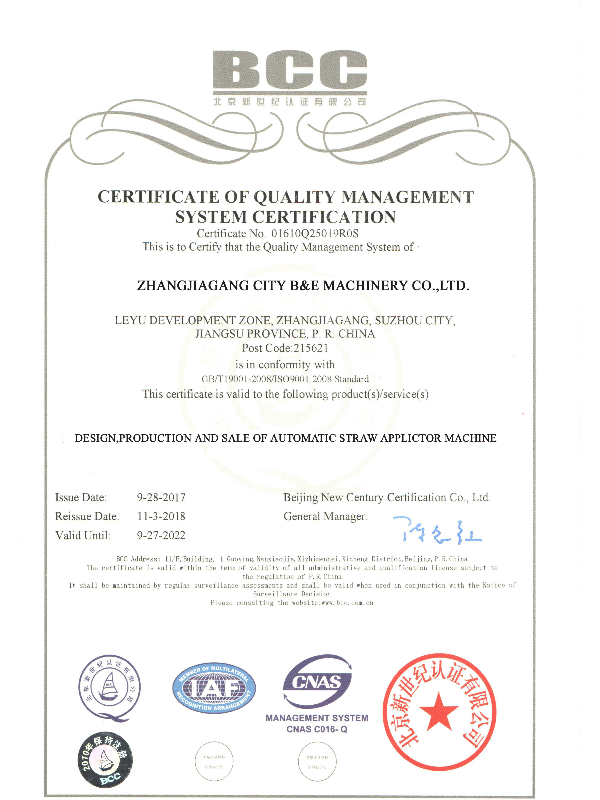
ISO 9001:2015
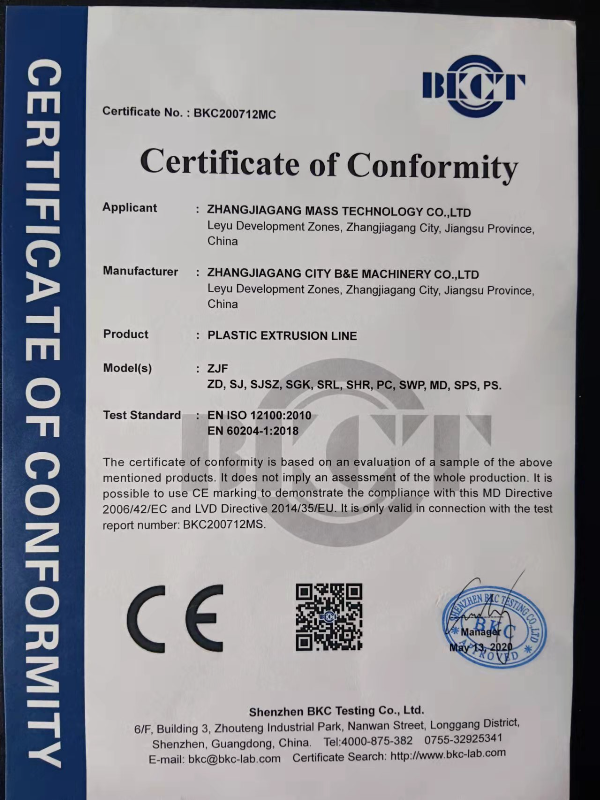
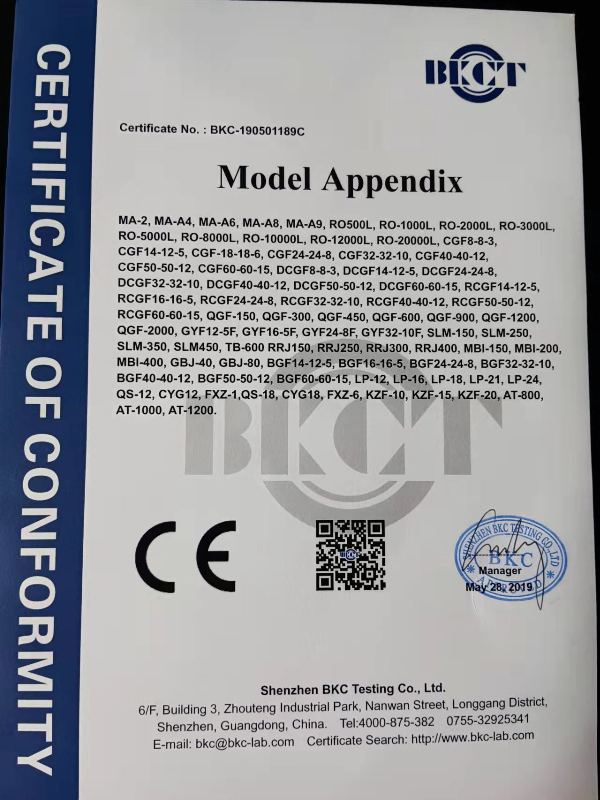
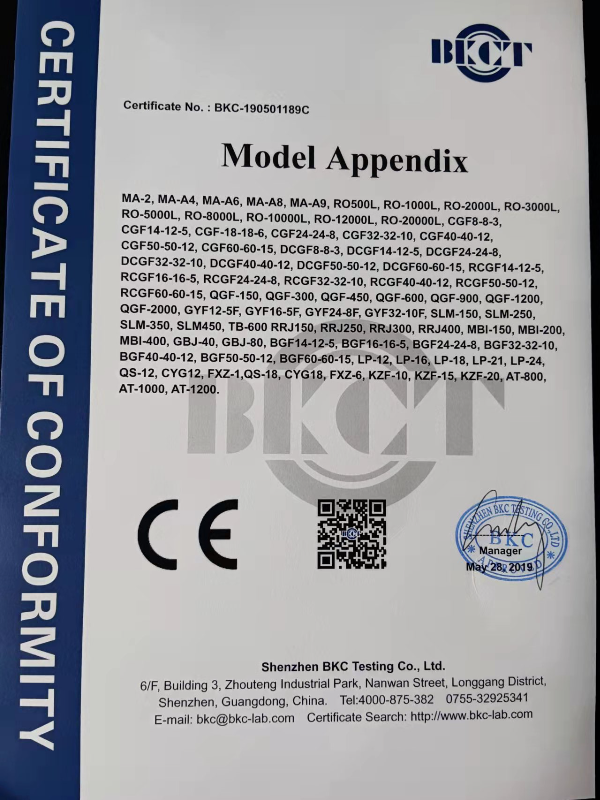
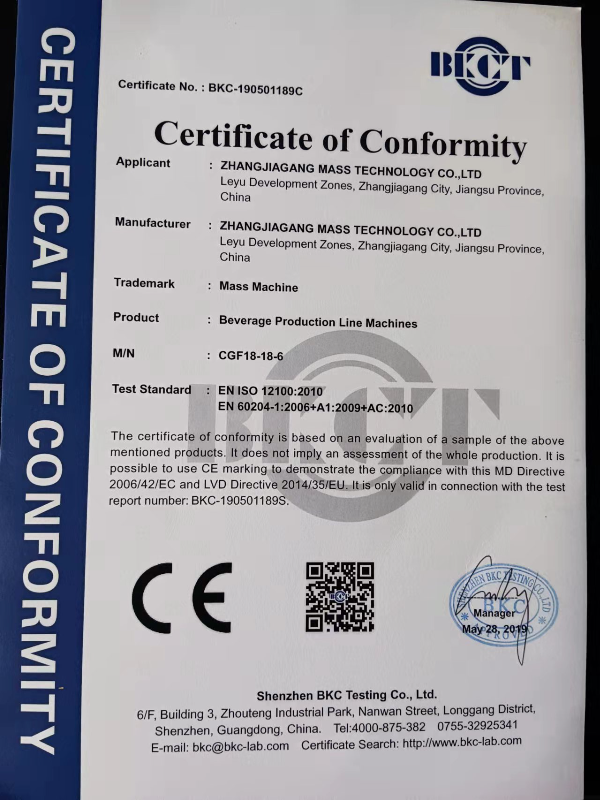
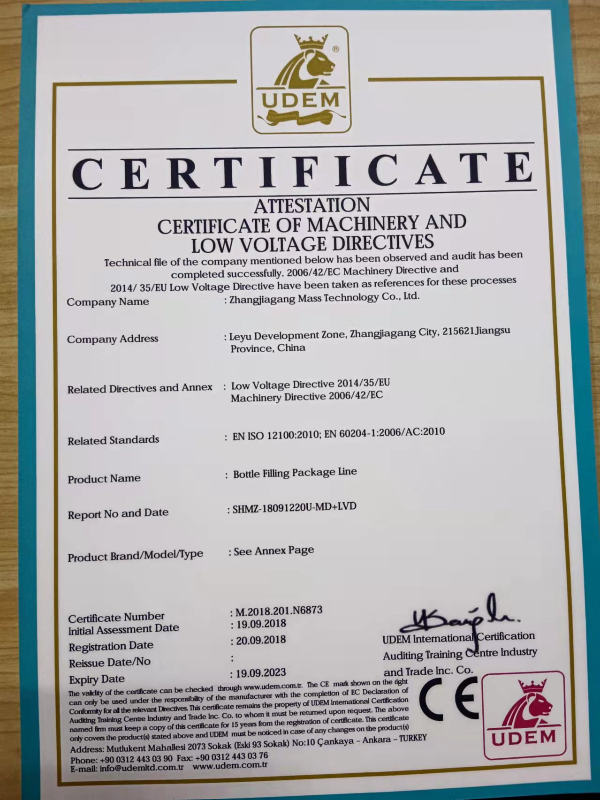
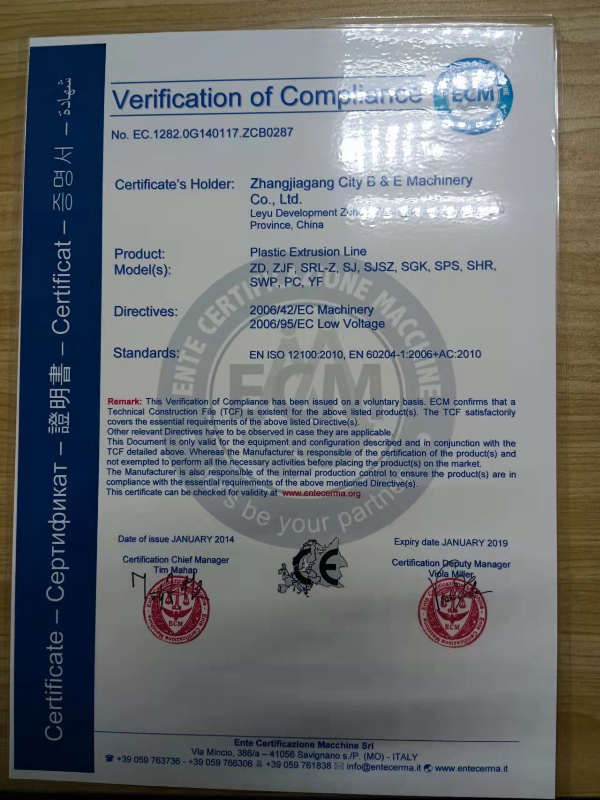
Certificado CE
SGS inspeccionado
Obtenga una cotización personalizada
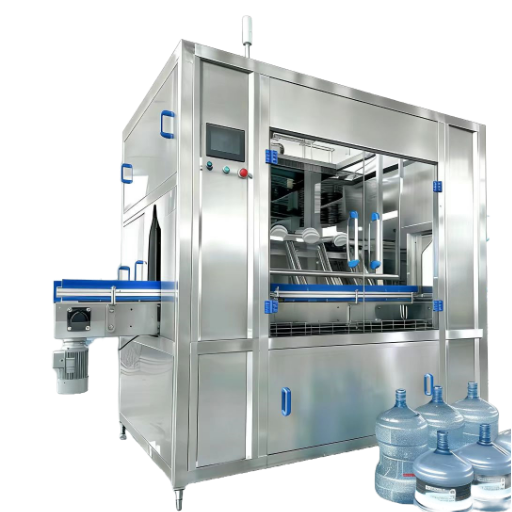
Resumen de la solución « Serie QGF de 5 galones
100-1,200
La gama BPH abarca 7 modelos
18,9L
Barril PET de 5 galones (también 19L / 20L)
3 modos
Válvula mecánica · medidor de flujo · posicionamiento láser
SS304
Construcción de acero inoxidable
2 años
Garantía + respuesta de ingeniero 24h
Más de 70 países
Instalaciones desplegadas en campo
Desde transporte de cubos hasta 1200 BPH « Por qué los embotelladores de 5 galones necesitan líneas de llenado modernas
La demanda de agua en barriles retornable de 5 galones sigue aumentando en el canal de entrega a domicilio y oficina (HOD). El consumo de agua embotellada en EE. UU. alcanzó los 16.200 millones de galones en 2024, una ganancia de 2% año tras año, y HOD y el agua vendida registraron su tercer año consecutivo de superar a las botellas de una sola porción.
Dentro de ese crecimiento, el segmento de 5 galones es el motor: un formato retornable de alto margen que depende de pesos de llenado consistentes, saneamiento de calidad alimentaria y equipos que funcionan sin contaminación introducida por el operador.
El cuello de botella
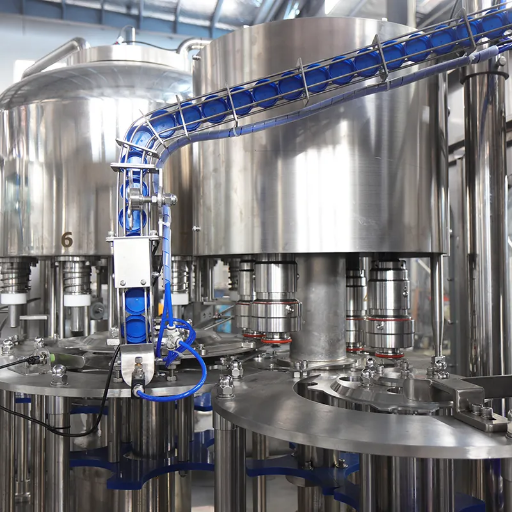
Los cuellos de botella rara vez se encuentran en la fuente de agua, sino que viven en la fila. Las configuraciones manuales y semimanuales tienen un límite de 100 a 200 barriles por turno, exponen cada barril a la contaminación del aire y obligan a los operadores a levantar jarras de 18,9 litros hora tras hora. Estas configuraciones también están muy por debajo de las expectativas sanitarias de la FDA 21 CFR 165.110, que requieren que las plantas de agua embotellada cumplan con las reglas actuales de buenas prácticas de fabricación en 21 CFR Parte 129.
La solución automatizada
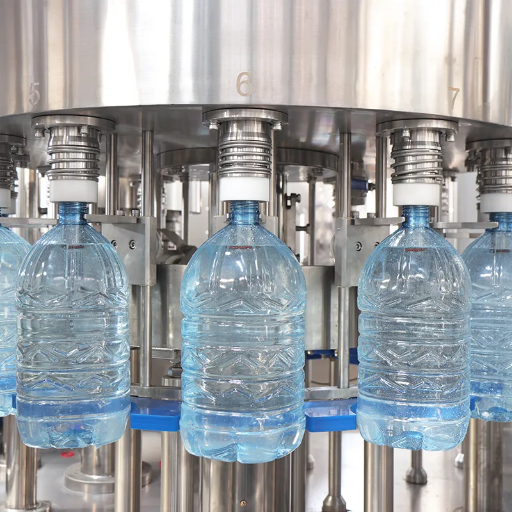
Una máquina llenadora de agua automatizada de 5 galones cierra ese vacío. Nuestra serie QGF envuelve el decapador, el cepillado, el lavado de varias etapas, la esterilización, el llenado, el taponado, la inspección luminosa, el termorretráctil y la paletización en una sola línea «convirtiendo una configuración manual de cuatro operadores en un ciclo totalmente automatizado para dos personas que funciona entre 100 y 1200 BPH. Cada barril permanece dentro de un camino sanitario cerrado, desde el destapado hasta el taponamiento, eliminando la ruta de contaminación secundaria que destruye los ingresos recurrentes de HOD cuando un cliente sabe mal sabor en su refrigerador.
Máquinas llenadoras de agua de masa de 5 galones “7 modelos de 100 BPH a 1200 BPH
QGF abarca siete niveles de capacidad construidos alrededor de un cañón común de 18,9 litros (490 × 490 mm) para que los propietarios de plantas puedan comprar lo que necesitan hoy y migrar a un modelo de BPH más alto más adelante sin rediseñar el tratamiento de agua, el moldeo por soplado y el paletizado circundantes. equipo.
Especificaciones QGF de un vistazo
| Modelo | Capacidad | Cabezales de llenado | Poder total | Huella | Altura | Peso | Presión de aire | Enjuague |
|---|---|---|---|---|---|---|---|---|
| QGF-100 | 100 BPH | 1 | ~1,5 kW | Compacto | 1,6 m | ~700 kg | 0,3-0,7 MPa | 0,37 m³/min |
| QGF-150 | 150 BPH | 1 | 1,75 kW | 2,5 × 1,1 m | 1,6 m | 800 kg | 0,3-0,7 MPa | 0,37 m³/min |
| QGF-240 | 240 BPH | 2 | ~2,8 kW | 3,5 × 1,4 m | 1,7 m | ~950 kg | 0,3-0,7 MPa | 0,37 m³/min |
| QGF-300 | 300 BPH | 2 | 3,8kw | 3.9 × 1.5 m | 1,7 m | 1,100 kg | 0,3-0,7 MPa | 0,37 m³/min |
| QGF-450 | 450 BPH | 3 | 5.5 kW | 3.9 × 1.7 m | 1,7 m | 1,700 kg | 0,3-0,7 MPa | 0,37 m³/min |
| QGF-600 | 600 BPH | 4 | 7,5 kW | 4.0 × 2.1 m | 1,7 m | 2.500 kg | 0,3-0,7 MPa | 0,37 m³/min |
| QGF-900 | 900 BPH | 6 | 9,0kw | 4.5 × 3.5 m | 3.2 m | 3.500 kg | 0,3-0,7 MPa | 0,37 m³/min |
| QGF-1200 | 1,200 BPH | 8 | ~12 kW | 5.0 × 3.8 m | 3.2 m | ~4,200 kg | 0,3-0,7 MPa | 0,37 m³/min |
Source: Mass QGF technical data sheet, 2025 revision.
Filling capacity per cycle is 10-20 L, which is why the same QGF chassis handles 5-gallon (18.9 L), 19 L, and 20 L PET or PC barrels with no mechanical changeover. All seven models share the same SS304 wetted parts, the same Φ270 × 490 mm barrel cradle geometry, and the same maintenance interval — so operators trained on a QGF-300 can run a QGF-1200 the day it arrives.
QGF Decision Matrix — Which Model Fits Your Production Profile
Selecting a 5 gallon water filling machine is rarely a pure BPH question. Plant footprint, daily run hours, water treatment capacity, and target customer mix all shift the answer. A matrix below maps each QGF model to common deployment profiles. Capacity values are nominal — site-specific factors like inlet water hardness and barrel return rates can shift effective output by 8-12%.
| Profile | QGF-100/150 | QGF-240/300 | QGF-450 | QGF-600 | QGF-900 | QGF-1200 |
|---|---|---|---|---|---|---|
| Startup HOD operator (≤500 barrels/day) | Mejor ajuste | Headroom | — | — | — | — |
| Single-shift mineral water brand (1.5-3K barrels/day) | — | Tight fit | Mejor ajuste | Headroom | — | — |
| Two-shift HOD distributor (3-6K barrels/day) | — | — | Tight fit | Mejor ajuste | Headroom | — |
| Contract bottler / private label (6-9K barrels/day) | — | — | — | Tight fit | Mejor ajuste | Headroom |
| Industrial park / municipal supply (9-12K barrels/day) | — | — | — | — | Tight fit | Mejor ajuste |
| Multi-line franchise / national brand (12K+ barrels/day) | — | — | — | — | — | Best fit (parallel) |
For HOD operators with seasonal swings (Middle East summer peaks, Southeast Asia ramadan demand), the headroom column matters more than the best-fit row. A QGF-600 sized for 3K barrels/day at 60% utilization swallows a 50% summer spike without forcing a second shift — a margin most operators lose if they buy strictly to today’s volume.
We will size the line against your barrel return cycle, water treatment capacity, and seasonal load curve.
Get a free plant layout consultation →How a 3-in-1 5 Gallon Bottling Line Works — Wash, Fill, Cap, and Beyond
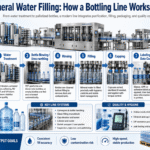
A fully equipped 5 gallon water filling run is never a single unit. It is a clean passage that carries a returned, used barrel from the loading dock to a sealed, labeled, palletized retail-ready package without ever exposing the inside surface to plant-floor air. Each QGF line links ten operating modules through a single conveyor:
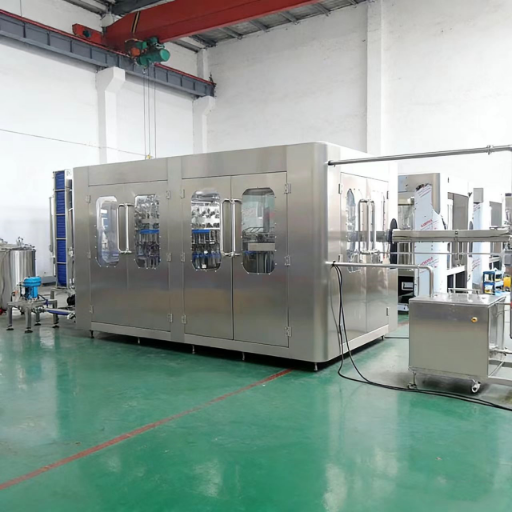
01
Decapper
— pulls residual caps off returned barrels using digital and fiber-optic detectors that flag the five most common return defects: missing cap, missing plug, partial cap, partially opened cap, and unopened cap.
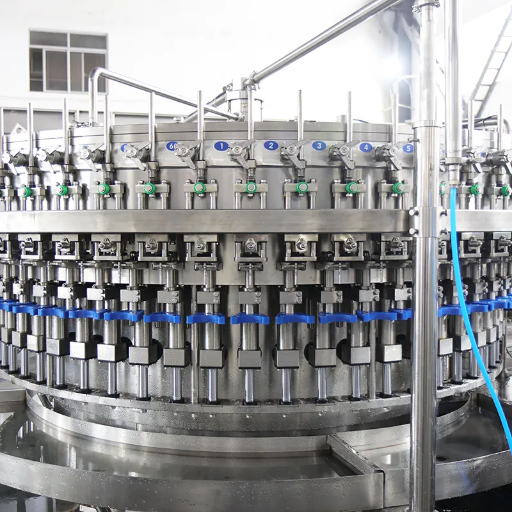
02
Inner & Outer Brush
— removes hard-water scale, algae, and biofilm before sanitation chemicals contact the surface. Skipping this step shortens the life of every downstream sterilizing solution.
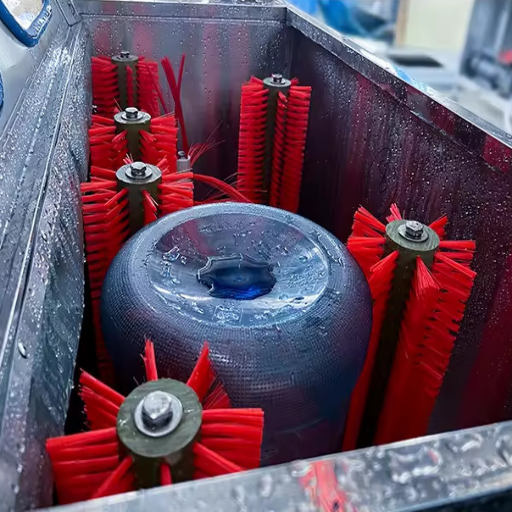
03
Multi-stage Washing
— alternating thimerosal recirculation, alkaline detergent, and pure-water rinse stages running at 0.37 m³/min. Wash and sanitize chemistry is recirculated through stainless steel filter housings to keep operating cost predictable.
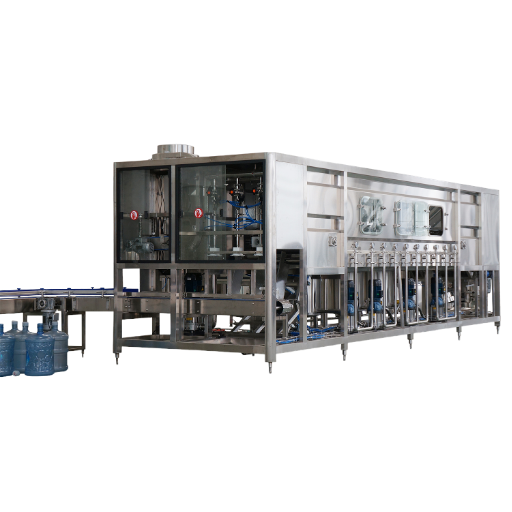
04
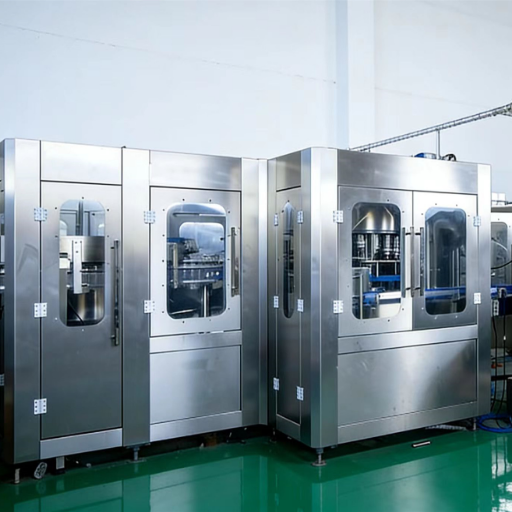
Filling Station
— non-contact normal-pressure fill heads sit above the barrel neck at a fixed gap, eliminating contact-route contamination during the bottle filling cycle. Filling capacity is 10-20 L per cycle.
05
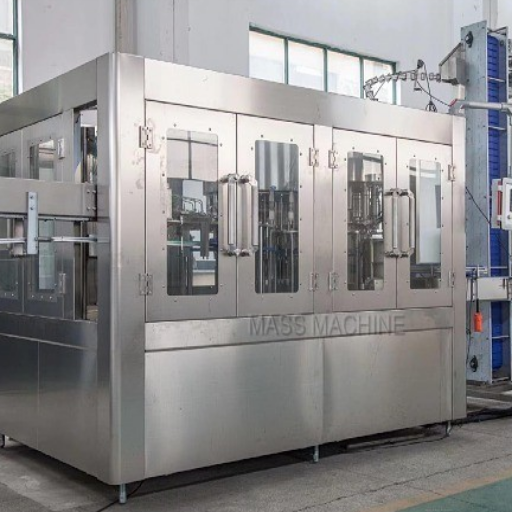
Capping
— automatic cap feeder sorts caps via overhead hopper, presents each cap under sterilizing UV or thimerosal spray, and seals at calibrated torque.
06
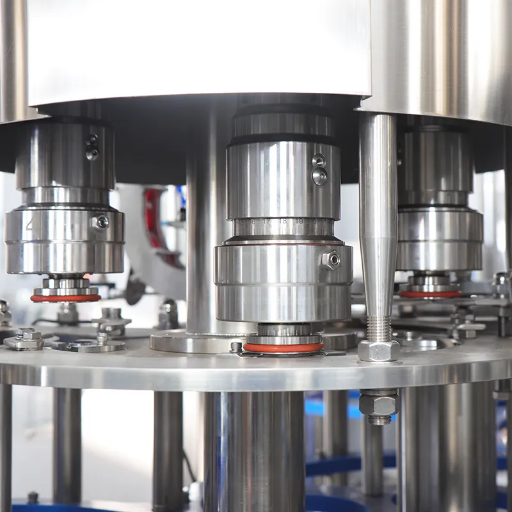
Online Inspection
— barrel-by-barrel light inspection rejects under-fill, missing-cap, and contamination defects before the unit leaves the sanitary zone.
07
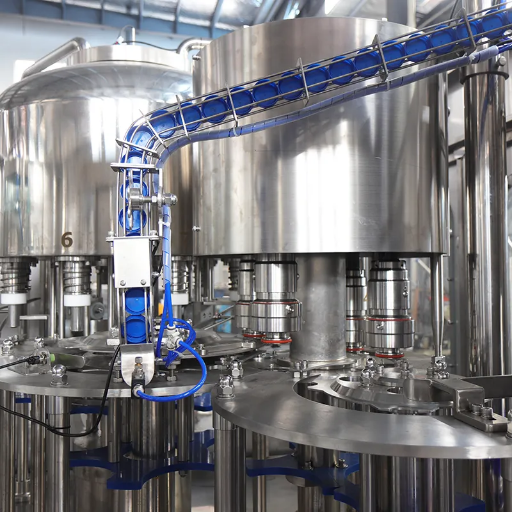
Intelligent Heat-Shrink
— applies tamper-evident sleeve to the cap-neck seal so retailers and end customers can confirm the barrel was not opened in transit.
08
Pail Bagging + Palletizer
— straight-line bagging and automated palletizing turn the line into a hands-off finish from raw barrel to forklift-ready pallet, packaging each unit for retail and HOD distribution channels.
THREE FILLING MODES — MECHANICAL VALVE VS FLOW METER VS LASER POSITIONING
The filling mode you choose is the single biggest decision separating a 600 BPH line that runs for ten years from one that needs constant intervention. Mass QGF supports three: mechanical valve, electromagnetic flow meter, and laser positioning. Each fits a different production economic.
MECHANICAL VALVE FILLING
— the workhorse modeFloat-and-spring valve trips when the barrel reaches its set fill level. Mechanically simple, virtually no electronics in the wet zone, easiest to maintain in plants without dedicated automation engineers.
- Best for: 100-450 BPH single-shift HOD operators, regional mineral water brands, plants with unreliable power quality
- Maintenance burden: low – replace valve seats every 12-18 months under continuous use
- Fill-level repeatability: typical for the mode; headspace varies more than flow-meter setups
ELECTROMAGNETIC FLOW METER FILLING
— accuracy modeAn inline flow meter measures actual volume delivered per cycle and signals the PLC to close the valve at the target. Industry-standard accuracy in well-installed flow-meter lines is typically within ±0.5% by volume.
- Best for: mineral water brands shipping to retail or export channels who require label-claim volume to match dispensed volume; private label contracts requiring customer audits for volume; plants billing per liter through a master meter
- Maintenance burden: moderate – periodic calibration of the flow meter and cleaning of PLC sensor
- Cost premium vs mechanical valve: moderate – request a quote for your target BPH
LASER POSITIONING FILLING
— precision mode for premium brandsA laser sensor samples the actual rim positioning before fill begins, and the fill volume is metered to keep the volume consistent across barrels with manufacturing tolerance variation. High-end HOD brands use this mode to maintain consistent cooler-dispenser performance across their entire fleet.
- Best for: top-end HOD brands, multi-source barrel pools where rim height varies, plants aiming at EU/Middle East high-end retail
- Maintenance burden: moderate — laser lens cleaning and recalibration
- Cost premium vs flow meter: additional – normally justified by the high-margin premium retail
Most 100-450 BPH QGF buyers start out with a mechanical valve and will not change. High-end 600-1,200 BPH QGF buyers will default to a flow meter unless their retail target is based on a documented label volume, in which case laser positioning is recommended.
“We have built and tested every QGF unit on three filling modes for over a decade. The right answer is almost never the highest-accuracy mode. It is the mode whose maintenance burden matches the Operations team of the customer. A flow meter line that is never recalibrated drifts more than a mechanical valve line that gets weekly QA checking.”
Cost Components for 5-Year Total Ownership of a 5 Gallon Water Filling Line
Buyers comparing offshore-built and locally-built 5 gallon lines often anchor on the headline equipment price and miss the components that drive 5-year cost. Every cost element below lands on the operator’s P&L framework. Specific dollar values vary by destination port, electricity rate, and barrel type, so we publish ranges and decision logic instead of single-point figures.
1
1. Equipment CAPEX
This is driven by BPH tier (100-1,200), mode of operation (mechanical / flow meter / laser), scope of integration required (fill only or entire plant including water treatment, bottle blowing, palletizing). Industry published prices range from roughly USD 8K-15K for entry 600-BPH three-in-one units to USD 55K-80K+ for complete manufacturing lines including bottle blowing.
2
2. Logistics — Sea Freight + Insurance
Container shipments 20’GP and 40’GP from ports of origin (Shanghai / Ningbo) to all major Western seaports average 25-45 days transit time. Container tariffs vary by quarter, we quote in three windows (current spot rate, three month forward, peak season) so plant owners can plan working capital.
3
3. Customs Duty + Local Tax
Bottling machinery typically clears under HS code 8422.30 in importing countries. Effective duty rate depends on origin certificate and trade agreements at the destination — buyers should verify the current rate with their customs broker before finalizing the purchase order.
4
4. Installation + Commissioning
Our team deploys engineers to the customer plant for installation and operator training. Travel and accommodation are quoted separately; remote commissioning via video assistance is available for plants in regions where on-site travel is impractical.
5
5. Spare Parts Inventory + Logistics
Field-replaceable wear components (valve seats, brush bristles, conveyor belts) are stocked at the Mass Zhangjiagang facility with international courier delivery in five working days. Plant owners should hold a baseline 6-month consumables inventory to bridge transit time.
6
6. Energy + Utilities
QGF-600 draws 7.5 kW total power; a single shift at 600 BPH consumes a predictable kWh load. Compressed air at 0.3-0.7 MPa and rinsing water at 0.37 m³/min are the other two utility lines plant owners must size against their existing infrastructure.
7
7. Operator Labor
Two operators load and unload a QGF line of any tier — a 12-fold reduction over the 24+ operators a manual setup needs to deliver the same 600 BPH equivalent over a full shift cycle.
Capacity Planning Framework Bronze tier
Capacity Planning Framework — Sizing Your 5 Gallon Bottling Line for Real-World Production
Headline ROI numbers in this category are commonly inflated. Mass publishes the inputs that drive break-even instead of a single payback figure — every operator’s local economics shift the answer materially.
A QGF 5 gallon water filling machine pays back across the following levers. The relative weight of each lever depends on whether you are a startup HOD operator buying your first line or a multi-site distributor adding capacity to an existing brand:
Operating hours per shift × shifts per day
A QGF-600 nameplate of 600 BPH delivers more than 14,000 barrels per 8-hour shift at full utilization, but most plants run 70-85% effective utilization after barrel staging and sanitation cycles.
Per-barrel gross margin
The spread between filled-barrel wholesale price and the variable cost of water treatment, cap, sleeve, electricity, and chemicals is the dominant ROI lever. HOD margins are healthier than retail single-serve in most markets.
Barrel return rate
A returnable HOD model with 90%+ return rate amortizes the barrel CAPEX over many cycles; a leakier 60% return rate forces higher new-barrel purchase volumes.
Distribution radius
A 25-km radius distributor inverts the ROI math compared to a 200-km radius operator — fuel and route labor scale differently.
Maintenance reserve
A disciplined plant sets aside roughly the equivalent of one valve-seat replacement and one brush-set replacement per year for the first five years.
Tariff and import duty at the destination
The same QGF-600 lands at materially different total CAPEX depending on the importing country’s HS 8422 duty rate and any applicable trade-agreement preference.
Tax depreciation schedule
Filling equipment qualifies for industrial depreciation in most jurisdictions — check with a local accountant for the specific schedule that applies to bottled water plants in your country.
Field deployments of QGF-series 5 gallon bottling lines have demonstrated service lives spanning eight years and beyond, with field-replaceable wear components designed for plant-floor maintenance by your operations team. Plant owners get the same rebuilt-line economics that justify continuous reuse of the chassis across multiple BPH upgrades.
Field Deployments — 5 Gallon Lines Across 70+ Countries
Mass has shipped 5-gallon bottling lines to operators across North America, the Middle East, Southeast Asia, Africa, and Latin America. Each deployment is sized against the customer’s local water source, target retail channel, and barrel return economics — not pulled from a generic catalog template. Deployment categories below describe the customer profiles we serve most often.
Tell us your destination market, target BPH, and barrel type — we will share deployment patterns and integration notes from customers in similar profiles.
Request comparable deployment notes →FDA 21 CFR 165.110, FSMA-Aligned Design, ISO 9001, CE — Compliance Built into Every Weld
Compliance for a 5 gallon water filling machine is split between two responsibility layers: the equipment maker is responsible for sanitary design, traceable construction, and documentation that supports the operator’s regulatory program; the operator is responsible for the plant-level program itself. Our equipment is engineered against the standards and frameworks below so your QC team can build a defensible regulatory file from day one.
FDA 21 CFR 165.110
Standards of Identity for 11 bottled water classifications + 90+ Standards of Quality (FDA — L1 federal regulation)
21 CFR Parte 129
Current good manufacturing practice for processing and bottling of bottled drinking water (referenced from 21 CFR 165.110)
FSMA-Aligned Design
Sanitary, cleanable, traceable construction supports HACCP and Preventive Controls implementation by your QC team (21 CFR 117 subpart B + C)
NSF/ANSI 169
Wash and rinse module sanitary design framework — special purpose food equipment sanitation standard
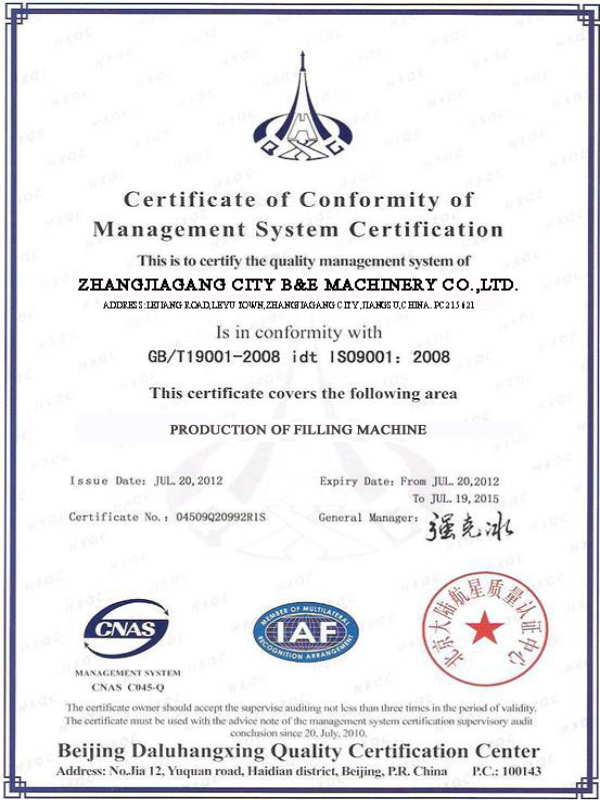
ISO 9001
Quality management system — Mass production documentation traceable per ISO 9001 process audit
Marca CE
Machinery directive compliance for EU and UKCA-aligned destination markets
How These Standards Map to Your QC File
FDA 21 CFR 165.110(a) defines bottled water identity across artesian, ground, mineral (≥250 ppm total dissolved solids), purified (per USP), spring, distilled, deionized, reverse osmosis, sparkling, well, and drinking water classifications. Section 165.110(b) sets quality standards covering more than 90 contaminants, calibrated to match or exceed the EPA’s Maximum Contaminant Levels for tap water under FFDCA Section 410. The QGF line’s SS304 wetted parts, non-contact fill heads, and recirculated sanitation chemistry support compliance with the processing rules in 21 CFR Part 129 — the cGMP regulation that 21 CFR 165.110 directly references.
FSMA shifts the compliance burden to preventive controls: each plant must build a written hazard analysis and preventive control plan under 21 CFR 117 subpart C. Our equipment is designed to make that plan defensible — every wash, fill, and cap step has documented Critical Control Points (CCPs), calibration records survive the equipment lifetime, and operator-facing HMI logs feed directly into your batch records. Mass does not certify your plant under FSMA — that is the operator’s PCQI program — but our equipment removes the design barriers that make FSMA compliance painful.
Industry trade associations like IBWA require their members to undergo annual third-party plant inspections. Equipment documentation from Mass includes the construction photos, materials traceability, and as-built drawings inspectors expect to see during an IBWA-aligned plant audit.
Procurement Guide — Pricing Components, Lead Time, Payment, Shipping & After-Sales
Most B2B competitors hide every procurement variable behind a quote-only contact form. Mass publishes the decision framework so your buying team can scope the project before the first call.
Pricing Components — What Drives Your Final Quote
A 5 gallon water filling machine quote is the sum of seven cost components: BPH tier, filling mode (mechanical / flow meter / laser positioning), integration scope (filling-only vs complete plant), customization level (PLC brand, HMI language, voltage configuration), shipping window, payment terms, and warranty extension. Tell us which combination fits your project and we return a line-itemized quote within two business days.
Lead Time Matrix |
|||
|---|---|---|---|
| Configuración | Production Lead Time | Sea Freight | Total Door-to-Door |
| Standard QGF-100/240/450 | 35-45 days | 25-45 days | ~65-90 days |
| Standard QGF-600/900/1200 | 45-60 days | 25-45 days | ~75-105 days |
| Customized line (non-standard PLC, voltage, or layout) | 60-90 days | 25-45 days | ~95-135 days |
| Complete plant (filling + water treatment + blow molding) | 75-120 days | 30-50 days | ~110-180 days |
Payment Terms
We accept T/T at 30% deposit + 70% balance against shipping documents, irrevocable Letter of Credit at sight, and project escrow for first-time international buyers above a project threshold we agree at quotation. Balance payment is not requested before the line passes factory acceptance test (FAT) at Mass Zhangjiagang.
Shipping & Customs
Sea freight is the default mode for QGF lines. Standard QGF-600 fits a single 40’GP container; QGF-900 and QGF-1200 typically ship in two 40’HQ containers. Air freight is available for time-critical commissioning trips, usually for spare parts only — full-line air freight is uneconomic in nearly every scenario. We support FOB Shanghai/Ningbo, CFR, and CIF Incoterms; DDP is available for select destinations.
Warranty & After-Sales
- Two-year warranty covers all machine parts manufactured by Mass under normal operation.
- 24-hour engineer response to technical support requests via WhatsApp, email or video conference.
- Five working days international courier for replacement parts shipped from Zhangjiagang inventory.
- Operator training at customer plant during commissioning, plus written maintenance documentation in English (other languages on request).
Engineering & Financial Planning Tools
5 Gallon Water Filling Machine FAQ — 9 Questions Buyers Ask Before RFQ
P1. ¿Cuánto cuesta una máquina llenadora de agua de 5 galones?
El precio depende del nivel de BPH, el modo de llenado y el alcance de integración. Los listados de la industria pública colocan máquinas de entrada 3 en 1 de 600 BPH en el rango de USD 8K-15K, configuraciones de nivel medio con soplado de botellas y tratamiento parcial de agua alrededor de USD 30K-65K, y líneas llave en mano con tratamiento completo de agua y paletizado en el rango de USD 55K-80K+. Mass publica una cotización detallada de su configuración específica; Póngase en contacto con Kevin Dong para obtener una cifra personalizada.
P2. ¿Cuál es la diferencia entre los modos de llenado de válvula mecánica, medidor de flujo y posicionamiento láser?
Mechanical valve filling uses a float-and-spring valve and is the simplest to maintain — best for 100-450 BPH lines without dedicated automation engineers. Flow meter filling uses an inline electromagnetic meter for tight volume control, typically delivering ±0.5% repeatability, and is the right choice for retail label-claim compliance and audit-grade volume measurement. Laser positioning reads each barrel’s actual rim height before fill begins, keeping headspace consistent across barrel cohorts with manufacturing tolerance variation — best for premium HOD brands serving cooler-dispenser customers. Our full comparison framework is in the Three Filling Modes section above.
P3. ¿Puede la serie QGF manejar tanto agua pura como agua mineral?
Sí. El chasis QGF está diseñado para manejar todas las clasificaciones de agua embotellada definidas según FDA 21 CFR 165.110, incluida agua potable, agua artesiana, agua subterránea, agua mineral (³250 ppm de sólidos disueltos totales), agua purificada (según la definición de la USP), agua de manantial, agua destilada, agua desionizada, agua de ósmosis inversa, agua embotellada con gas y agua de pozo. Las piezas mojadas SS304 y los cabezales de llenado sin contacto mantienen la misma línea compatible con las 11 categorías sin cambios mecánicos.
P4. ¿Qué especificaciones de cañón se ajustan al equipo “PC vs PET, 18,9L vs 19L vs 20L?
La cuna QGF tiene un tamaño para cañones de 490 mm × 470, que cubre los formatos estándar de PET y PC de 5 galones (18,9 L), 19 L y 20 L que se venden a nivel mundial. La capacidad de llenado por ciclo es de 10-20 L. Si su grupo de barriles se desvía de esta geometría, envíe un dibujo de muestra y citaremos una modificación de la cuna.
P5. ¿Ofrecen personalización OEM y ODM para nuestra marca?
Yes. Mass supports OEM (your brand on Mass’s standard chassis) and ODM (custom mechanical layout, PLC brand, HMI language, voltage configuration, conveyor arrangement). ODM customization adds 15-30 days to lead time and is quoted per project. We do not produce private-label machines that misrepresent the country of manufacture.
P6. ¿Cuánto dura el plazo de entrega y cuál es el proceso de pago internacional?
Estándar QGF-100 a QGF-450: producción de 35-45 días + transporte marítimo de 25-45 días. QGF-600 a QGF-1200: producción de 45-60 días + transporte marítimo de 25-45 días. Líneas personalizadas: producción de 60-90 días. Los términos de pago son T/T al 30%-70% dividido, L/C irrevocable a la vista o depósito en garantía del proyecto para compradores internacionales por primera vez. El saldo se cobra solo después de que se apruebe la prueba de aceptación de fábrica en Mass Zhangjiagang.
P7. ¿Qué certificaciones cumple Mass « FSMA, FDA 21 CFR 165, ISO 9001, CE?
Nuestro equipo está diseñado en torno a FDA 21 CFR 165.110 + 21 CFR Parte 129 (cGMP para procesamiento de agua potable embotellada), alineado con las subpartes B y C de FSMA 21 CFR 117 para respaldar los programas de controles preventivos del cliente y construido según el marco de saneamiento NSF/ANSI 169. principios para los módulos de lavado y enjuague. La producción se realiza bajo la gestión de calidad ISO 9001 con documentación de construcción rastreable, y el marcado CE a nivel de máquina está disponible para destinos con destino a la UE/UKCA.
P8. ¿Cómo cumple el proceso de lavado y esterilización de botellas con los estándares IBWA y NSF?
The QGF wash sequence runs four stages — outer rotary brush, multi-stage chemical wash, recirculated sanitization, and pure-water rinse — with chemistry residence times calibrated to deliver food-grade microbial reduction. The wash module’s sanitary design draws from NSF/ANSI 169 special purpose food equipment principles, and the construction documentation supports the annual third-party plant inspection that IBWA member plants undergo. We provide the as-built drawings, materials traceability records, and validation logs your inspector will request.
P9. ¿Se puede ampliar más adelante una línea de 5 galones hasta una planta embotelladora de agua completa, añadiendo tratamiento de agua y soplado de botellas?
Yes — and most HOD operators do exactly this within their first three years. Mass supplies the upstream water treatment system (RO + UV + ozone, 0.5-50 T/H) and PET bottle blowing machinery as separate products that integrate with any QGF line via standard sanitary connections and PLC handshakes. We commonly deliver the QGF filling line first to start cash flow, then add water treatment and bottle blowing as the customer’s distribution radius expands. Same factory, same sales engineer, same after-sales channel.
Why We Built This Pillar
We have been manufacturing 5-gallon barreled water filling lines from our Zhangjiagang factory since the early 2010s, shipping to operators in over 70 countries. Cost components, the lead-time matrix, and capacity planning framework on this page reflect Mass’s 2024-2025 project bids across HOD operators, mineral water startups, and contract bottlers. Specifications shown reflect actual delivered configurations — request a tailored quotation for your destination port, barrel type, and BPH target.
Referencias y fuentes de datos
- U.S. Food and Drug Administration — 21 CFR 165.110 — Bottled Water Standards of Identity and Quality (eCFR, current).
- U.S. Food and Drug Administration – 21 CFR Part 129 – Processing and Bottling of Bottled Drinking Water (current-cGMP).
- U.S. Food and Drug Administration – Food Safety Modernization Act, 21 CFR Part 117 (subparts B & C).
- NSF International – NSF/ANSI 169 Special Purpose Food Equipment and Devices.
- International Bottled Water Association – Regulation of Bottled Water.
- ISO 9001:2015 — Quality management systems — Requirements.
- EU Machinery Directive 2006/42/EC – CE marking for industrial machinery.
- Mass Technology – QGF Series Technical Data Sheet, 2025 revision (USER-DATA).
¿Listo para dimensionar su línea de llenado de agua de 5 galones?
Send us your destination port, target BPH, and barrel type. We return a line-itemized quote with lead time, shipping window, and customs guidance within two business days.
Get Your Custom Quote
Tendencia ahora