Entrez en contact avec Masstech

Ingénierie de précision
Machine de remplissage de vin : lignes d’embouteillage en bouteilles de verre de 2 500–15 000 BPH pour les domaines viticoles — Mass Technology
Monoblocs rinçage-remplissage-bouchage directement du fabricant pour vins tranquilles, effervescents et mutés. Cinq capacités, multi-formats de bouchons, construction AISI 304 hautement hygiénique, approbation CE, garantie de 2 ans sur toutes les pièces.
2 500-15 000
Plage de capacité en BPH (base 330 ml)
5 niveaux
Modèles MSGF, de l’artisanal à l’industriel
5 types de bouchons
Liège · T-Cork · ROPP · À vis · Couronne
Garantie de 2 ans
Toutes les pièces + réponse d’un ingénieur sous 24 h
Le goulet d’étranglement de l’embouteillage des producteurs de vin — et la solution de remplissage Mass
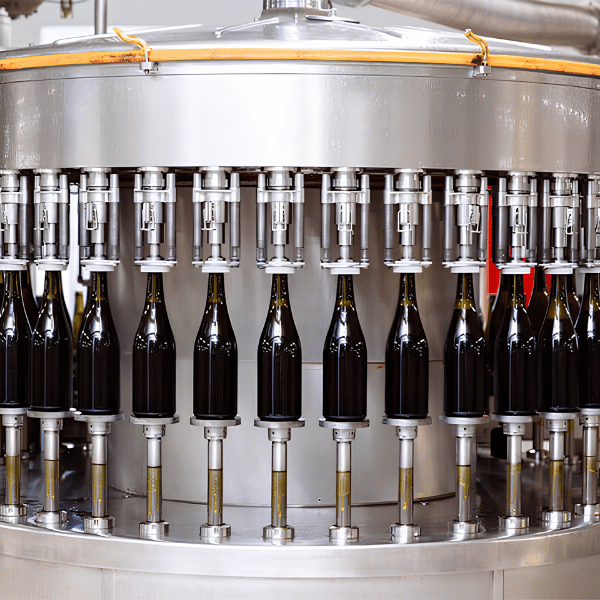
Une machine de remplissage de vin — également appelée remplisseuse de bouteilles de vin dans les petites installations commerciales, ou équipement complet d’embouteillage de vin à l’échelle industrielle — automatise le cycle rinçage-remplissage-bouchage pour le vin en bouteilles de verre, en remplaçant le remplissage manuel qui crée des contraintes de capacité dès qu’un domaine dépasse quelques milliers de caisses par an. Les causes profondes se manifestent de trois façons mesurables bien avant que la plupart des exploitants ne réalisent qu’ils ont un problème d’embouteillage.
Plafond de débit
Les remplisseuses gravitaires sont limitées à environ 250 BPH et à deux opérateurs. Un domaine produisant cinq mille caisses par an avec un équipement manuel perd plus de 20 jours de travail chaque année pour l’embouteillage.
Conformité du remplissage
Des remplissages irréguliers entraînent des violations de la règle TTB75-85-95 et des problèmes de conformité des volumes dans l’UE. Les vins remplis à la main présentent une variation moyenne de 3-5ml, tandis que les remplisseuses à pression de pointe maintiennent 1ml.
Pertes par oxydation
L’embouteillage à l’air libre entraîne un excès d’oxygène total du conditionnement (TPO). Les études montrent que même les procédés de décoloration-filtration introduisent 0,10ppm d’oxygène dissous supplémentaire, ce qui réduit réellement la durée de conservation.
Ces problèmes remontent tous à des causes profondes auxquelles même un monobloc d’entrée de gamme est confronté à 1000 BPH. La capacité d’embouteillage dépend du nombre de têtes de remplissage et du contrôle de la pression, pas seulement de la puissance du moteur. La précision du remplissage est dictée par la conception des vannes de la remplisseuse et par la qualité du nettoyage de leurs parties en contact avec le produit.
La série MSGF de Mass Technology comble cet écart avec une gamme de capacités à cinq niveaux, d’un système de 2 500 bouteilles par heure adapté aux petits domaines artisanaux jusqu’à une ligne de production industrielle de 15 000 BPH. Chaque modèle associe rinceuse, remplisseuse et boucheuse sur un châssis unique commandé par automate programmable, avec des surfaces en contact avec le produit en AISI 304 et un remplissage gravitaire ou à micro-dépression sélectionnable. Les prix sont 40-60 % inférieurs à ceux des équivalents italiens haut de gamme, tandis que les standards de fabrication respectent les exigences CE et ISO 9001:2015.
« La plus grande erreur que nous voyons chez les domaines qui débutent dans l’embouteillage est d’acheter une machine de remplissage seule en prévoyant d’ajouter une rinceuse plus tard. Avant de s’en rendre compte, ils dépensent plus que ne coûterait le monobloc intégré et ont perdu l’espace nécessaire pour l’ajouter ensuite. » La famille de systèmes MSGF a été conçue pour que même le modèle d’entrée de gamme puisse réaliser une expédition complète en caisses.
Machines de remplissage de vin de la série MSGF — cinq modèles de 2 500 à 15 000 BPH
Mass Technology fournit une famille de cinq modèles de remplissage de vin MSGF, conçus spécialement pour différents niveaux de production annuelle. Le nombre de têtes de remplissage (et donc le coût/la capacité) augmente avec la production. Toutes les versions utilisent des sous-systèmes communs (rinceuse, boucheuse, automate programmable) pour accélérer la formation des opérateurs et faciliter la gestion des pièces de rechange. Les choix d’ingénierie sont guidés par les niveaux auxquels les acheteurs passent réellement à l’échelle : producteurs artisanaux de 3 000 caisses, caves boutique de 10 000 caisses, marques intermédiaires de 30 000 caisses et embouteilleurs industriels de plus de 100 000 caisses.
| Modèle | BPH (330 ml) | Têtes (rinçage-remplissage-bouchage) | Puissance totale | Encombrement (mm) | Poids | Application idéale |
|---|---|---|---|---|---|---|
| MSGF 14-12-5 | 2 500-3 000 | 14 / 12 / 5 | 2,75 kW | 2700×1500×2300 | 2 800 kg | Domaine artisanal (3-5K caisses) |
| MSGF 18-18-6 | 4 500-5 000 | 18 / 18 / 6 | 3,18 kW | 3012×2012×3260 | 3 800 kg | Boutique (8-15K caisses) |
| MSGF 24-24-8 | 8 000-9 000 | 24 / 24 / 8 | 4,18 kW | 3280×2420×3200 | 5 000 kg | Échelle intermédiaire (25-50K caisses) |
| MSGF 32-32-8 | 12 000-13 000 | 32 / 32 / 8 | 7,68 kW | 4430×2800×3200 | 6 800 kg | Embouteilleur régional (60-120K caisses) |
| MSGF 40-40-10 | 14 000-15 000 | 40 / 40 / 10 | 7,68 kW | 4650×3200×3200 | 8 800 kg | Industriel (150K+ caisses) |
Spécifications communes — tous les modèles MSGF
Gamme de bouteilles
Hauteur 160-340mm, diamètre 50-100mm, incluant la plupart des bouteilles bordelaises, bourguignonnes, Hock, effervescentes et de nombreuses bouteilles de vins mutés.
Méthodes de remplissage
Micro-dépression (vide) ou remplissage gravitaire, programmables par lots via l’automate programmable.
Plage et température de remplissage
Plage de remplissage : 0,15-0.5Mpa réglable. Plage de température de remplissage : 0-30C en standard, personnalisée pour les applications de remplissage à chaud.
Pression d’eau et matériaux
Pression d’eau (rinceuse) : 0,25-0.3Mpa. Matériaux en contact avec le produit : acier AISI 304 (AISI 316 en option pour les vins de fruits très acides.)
Logique de décision
Choisissez un système dont l’embouteillage pendant votre mois de pointe (charge de pointe de 12 mois de caisses) représente 60-70 % du débit horaire du système. Embouteiller à 100 % du BPH par poste, toute la journée, toute la nuit et toute l’année use plus vite l’équipement ; prévoyez une marge de capacité, l’assurance la moins coûteuse lors de l’achat d’un équipement industriel. Pour les viticulteurs produisant 5 000 caisses par an et visant 30 000 caisses à l’année 5, le MSGF 18-18-6 avec module de changement de bouchons est généralement plus performant qu’un ajout ultérieur pour « grandir ».
Besoin d’aide pour faire correspondre votre volume annuel à un modèle ?
Utiliser le calculateur BPHMatrice de décision des méthodes de remplissage — gravitaire, sous vide ou isobare pour votre vin
Choisir la mauvaise méthode de remplissage coûte toujours plus cher que de choisir la mauvaise remplisseuse. Une remplisseuse gravitaire utilisée pour le champagne perd son CO en quelques secondes. Un système isobare sur un vin rouge tranquille consomme de l’énergie de pressurisation et risque de faire mousser les bouteilles. Les quatre méthodes commerciales d’embouteillage du vin correspondent chacune à une chimie du vin et à un objectif de conditionnement adaptés.
Remplissage gravitaire
Le vin s’écoule de la cuve d’alimentation vers la bouteille par gravité, en utilisant un tube d’évent pour évacuer l’air déplacé. Optimal pour les vins tranquilles (rouges, blancs, rosés) présentant une tolérance modérée à l’oxygène et un budget d’investissement limité. Coût d’équipement le plus bas, maintenance la plus simple, compatibilité maximale avec les gammes de marques.
Remplissage à micro-dépression (sous vide)
La bouteille vide est placée sous un léger vide avant d’être remplie par déplacement de l’air, ce qui élimine la majeure partie de l’espace de tête riche en oxygène. La prise d’oxygène est réduite de 60-80 % (comme le montre un TPO plus faible) par rapport au remplissage gravitaire. La série MSGF utilise par défaut ce procédé pour les vins tranquilles haut de gamme et les blancs sensibles à l’oxydation.
Remplissage isobare
La bouteille et la cuve de la remplisseuse sont mises à l’évent à la même pression (généralement 1-3 bar), ce qui maintient le CO dissous dans le vin pendant le remplissage. Obligatoire pour les champagnes, vins effervescents et proseccos. Le coût d’investissement plus élevé est incontournable pour les produits gazeux — un remplissage gravitaire rend le prosecco complètement plat dans la bouteille.
AOX (faible pression avec gaz inerte)
Un compromis : remplissage à basse pression (<0,5 bar) avec injection d’azote ou d’argon dans l’espace de tête. Typique des lignes italiennes haut de gamme telles que Bertolaso. La série Mass MSGF peut être configurée avec un ajout AOX pour les clients visant un TPO très faible.
| Type de vin | Gravitaire | Sous vide | Isobare | AOX | Application idéale |
|---|---|---|---|---|---|
| Rouge / blanc tranquille (gamme intermédiaire) | ✓ | ✓ | — | ✓ | Gravitaire (coût optimal) |
| Vin tranquille haut de gamme (sensible à l’oxydation) | — | ✓✓ | — | ✓✓ | Sous vide ou AOX |
| Effervescent / champagne | — | — | ✓✓ | — | Isobare obligatoire |
| Prosecco / pet-nat | — | — | ✓✓ | — | Isobare |
| Vin muté (Porto, Sherry) | ✓ | ✓ | — | ✓ | Sous vide (réaction alcool-O₂ réduite) |
| Vin de fruits (pH faible) | ✓ | ✓✓ | — | ✓ | Sous vide (sensible à l’oxydation) |
| Vin de riz / vin jaune | ✓ | ✓ | — | — | Gravitaire ou sous vide |
Pourquoi le TPO compte plus que la vitesse de remplissage
De nombreuses recherches du secteur montrent que les 2 ans moyens d’élevage en cave d’un vin haut de gamme et les 5 ans d’élevage en cave d’un vin haut de gamme sont souvent séparés de deux ans dans l’effet de l’exposition en bouteille au moment du remplissage, plutôt que par le véritable programme d’élevage en cave. Un oxygène total du conditionnement supérieur à 1,5 ppm au remplissage constitue un signal d’alerte rouge dans le secteur. Le mode à micro-dépression MSGF vise un TPO inférieur à 1,0 ppm tout en injectant des gaz inertes.
La méthode de remplissage n’est pas un paramètre fixe : la série MSGF dispose d’un bouton de changement en cours de lot permettant à un domaine produisant à la fois un vin tranquille et une cuvée reserva haut de gamme de passer du gravitaire au sous vide, ou inversement, au milieu d’un lot.
Vous ne savez pas quelle méthode convient à votre gamme de vins ?
Répondre au quiz de recommandation de méthode de remplissageChoix du format de bouchon — liège, T-Cork, ROPP, bouchon à vis : quand utiliser lequel
Les bouchons relèvent du marketing habillé en ingénierie. Le liège naturel reste synonyme de « digne d’être élevé en cave » sur la majorité des marchés des vins haut de gamme. Le bouchon à vis est le choix dominant en Australie et en Nouvelle-Zélande et gagne du terrain dans le segment intermédiaire des vins de table aux États-Unis. Chaque format impose des exigences particulières au secteur du bouchage de votre monobloc.
Liège naturel
Positionnement haut de gamme, potentiel d’élevage de 5-15 ans, $0,30-1,50 par bouchon selon le grade. Nécessite une action de bouchage sous vide : la machine évacue l’espace de tête de la bouteille, comprime le liège puis le libère à l’intérieur de la bouteille. La boucheuse MSGF traite en standard les lièges de 24×38 mm, avec des mors en option pour les formats plus grands.
T-Cork (bouchon)
Conçu pour les vins mutés tels que le Porto, le Sherry et le Madère, ainsi que pour certaines huiles d’olive. Il offre une fermeture refermable avec un dessus à collerette permettant un retrait manuel. Son insertion de type bouchon à vis ne nécessite pas la compression complète d’une boucheuse à liège — assurez-vous que l’outillage T-Cork est inclus dans la spécification de votre monobloc si cette option est prévue.
ROPP (capsule aluminium inviolable à sertissage par rouleaux)
Capsule en aluminium roulée sur un col de bouteille fileté, avec une bande inférieure détachable servant de témoin d’effraction. Standard pour les spiritueux et de plus en plus utilisée pour les vins haut de gamme à bouchon à vis. Les modèles MSGF 24-24-8 et supérieurs prennent en charge les modules ROPP ; les niveaux inférieurs peuvent recevoir une ROPP comme boucheuse dédiée après la remplisseuse.
Bouchon à vis (Stelvin)
Capsule en aluminium avec joint interne (Saranex ou Saran-Tin), coût $0,10-0,30 par capsule. Obligatoire pour l’exportation vers les marchés australien et néo-zélandais, et de plus en plus choisie par les producteurs américains de gamme intermédiaire pour une constance de conservation. La boucheuse MSGF traite toute la gamme Stelvin (BVS 30×60 en standard).
Capsule couronne
Utilisée pendant la phase de seconde fermentation des vins effervescents de méthode traditionnelle, puis remplacée par un bouchon en liège après le dégorgement. Si votre ligne d’embouteillage doit traiter des effervescents, prévoyez l’outillage pour capsules couronne dès l’approvisionnement initial afin d’éviter une coûteuse adaptation ultérieure.
| Vin + segment de marché | Liège | T-Cork | ROPP | À vis | Couronne |
|---|---|---|---|---|---|
| Rouge haut de gamme élevé | ✓✓✓ | — | — | — | — |
| Vin tranquille de gamme intermédiaire | ✓ | — | — | ✓✓✓ | — |
| Vin muté (Porto / Sherry) | — | ✓✓✓ | — | — | — |
| Effervescent (fermeture finale) | ✓✓✓ | — | — | — | ✓ (intermédiaire) |
| Spiritueux / vin muté à haut degré | — | — | ✓✓✓ | — | — |
| Exportation vers AU / NZ | — | — | — | ✓✓✓ | — |
| Gamme de consommation quotidienne | — | — | — | ✓✓✓ | — |
Conseils pratiques d’achat
Prévoyez au minimum deux formats de bouchons dès le jour 1 si vous vous développez sur plusieurs segments de vins. Le changement de bouchon sur la série MSGF prend 12-18 min avec un opérateur formé ; une seule machine peut donc fonctionner avec du liège au premier poste et un bouchon à vis au 2e poste, en évitant la fatigue de l’opérateur.
Résultats clients — du manuel à 12 000 BPH sur trois continents
La méthode la plus claire pour prévoir le retour d’une ligne d’embouteillage consiste à appliquer la formule de budget d’équipement reconnue par tout le secteur et à la comparer aux solutions de remplacement. Le texte de référence est tiré des revues de WineBusiness Monthly, historiquement utilisées par les sociétés de crédit-bail d’équipements.
Appliquée à une échelle donnée, cette formule conduit à la comparaison budgétaire suivante :
| Caisses annuelles | Budget recommandé | Recommandation MSGF | Alternative d’embouteillage mobile (5 ans) |
|---|---|---|---|
| 3 000 | $24 000 – $30 000 | MSGF 14-12-5 (entrée de gamme) | $33 000 – $37 500 (mobile) |
| 10 000 | $80 000 – $100 000 | MSGF 18-18-6 standard | $110 000 – $125 000 (mobile) |
| 30 000 | $240 000 – $300 000 | MSGF 24-24-8 avec options | $330 000 – $375 000 (mobile) |
| 100 000 | $800 000 – $1 000 000 | MSGF 32-32-8 + auxiliaires | $1 100 000+ (mobile) |
L’utilisation d’une ligne MSGF à chaque niveau du système multi-niveaux dépasse le coût de l’embouteillage mobile sur 5 ans, soit $2,20-2,50 par caisse, et reste un actif pendant son programme MS. Selon l’enquête 2025 de WineBusiness Monthly sur les équipements, le secteur est à peu près partagé entre lignes en propre et embouteillage mobile, laissant encore la moitié du marché accessible évaluer la même décision d’achat.
Cas 1 — Domaine viticole boutique d’Amérique du Sud
Point de départ : remplissage manuel, puis plafonné à environ 800 caisses par an avec 3 personnes. Le nouveau MSGF 14-12-5 avec option de remplissage sous vide a été choisi pour les cuvées de réserve haut de gamme. Après 18 mois, la production a atteint environ 4 500 caisses/an ; le retour sur investissement par rapport au coût de l’équipement a été atteint au 14e mois selon des études de retour basées sur la marge additionnelle par caisse.
Cas 2 — Producteur d’Europe de l’Est à échelle intermédiaire
Point de départ : monobloc italien d’occasion âgé de 10 ans, avec 4-6 jours d’embouteillage perdus par trimestre pour réparer les pannes. Installation de modèles améliorés avec rinceuse intégrée. Résultat : montée à 90 000 caisses/an, temps d’arrêt réduit d’environ 60 % selon le manuel de service de la première année, coût installé récupéré après transport en 26 mois.
Cas 3 — Producteur asiatique de vin de fruits
Point de départ : trois lignes d’embouteillage manuelles sur 3 sites produisant des SKU mixtes, avec un taux élevé d’erreurs lors des changements de bouchons. Regroupement sur une seule ligne grâce à l’installation d’un modèle amélioré avec module de changement de bouchons pour liège, capsules ROPP et bouchons à vis. Résultat : 150 000 caisses/an avec 4 SKU, temps de changement de bouchons réduit d’environ 90 min à moins de 20 entre les lots.
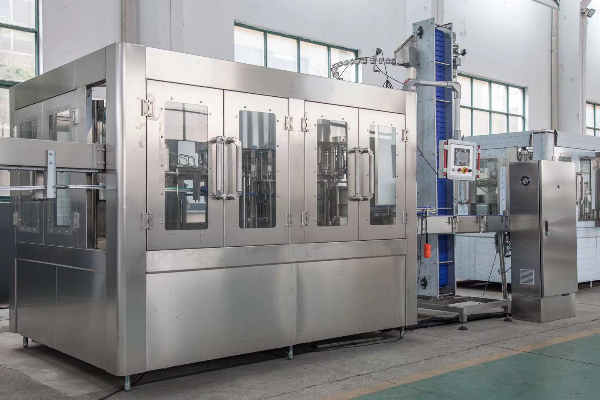
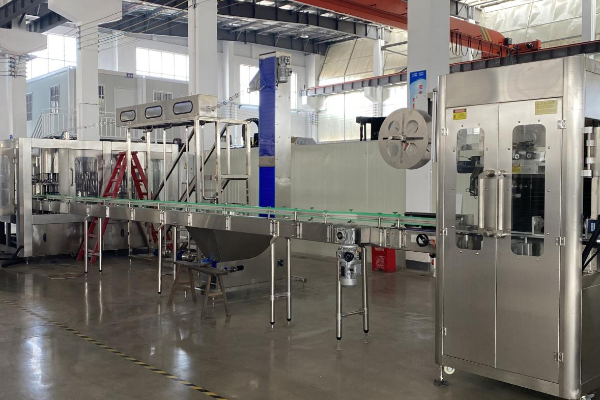
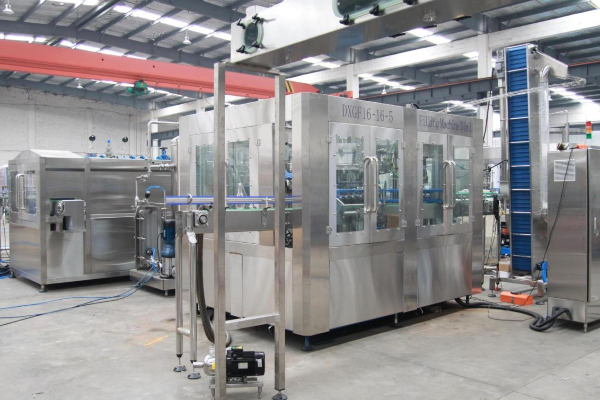
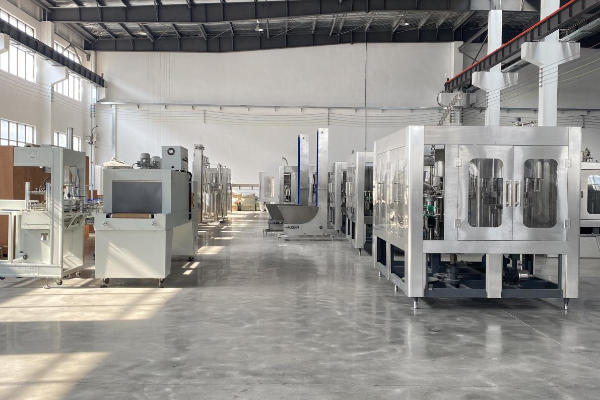
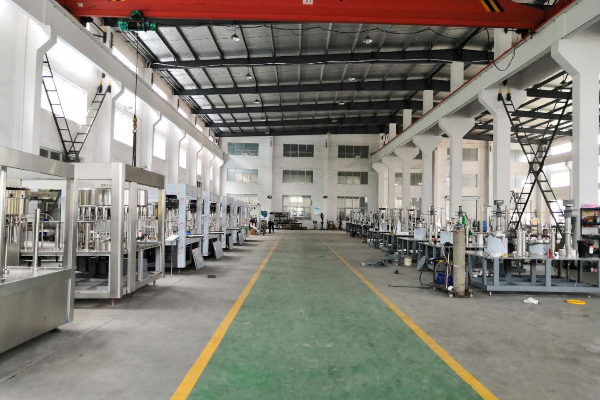
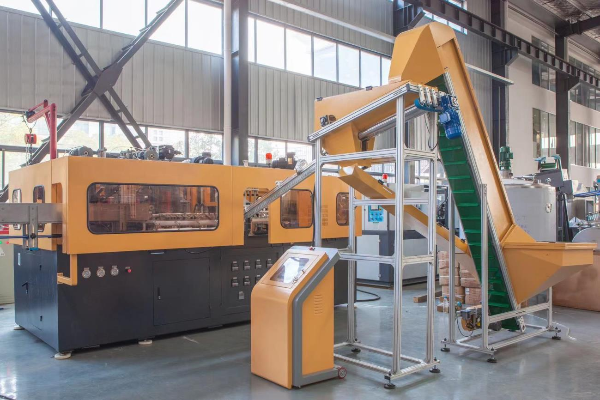
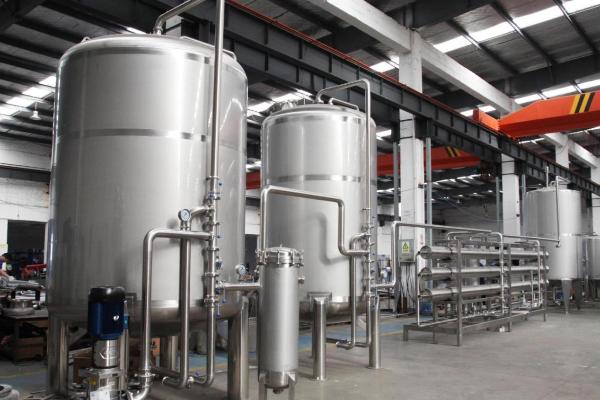
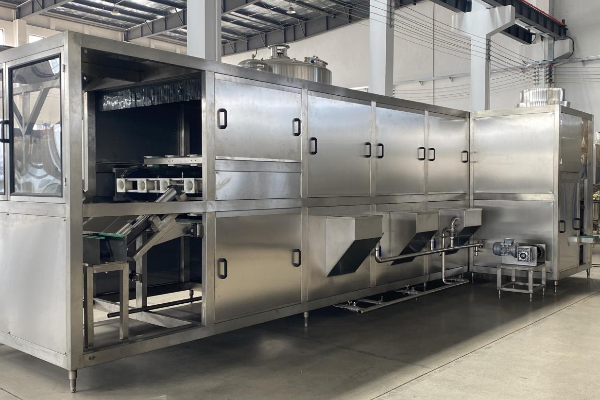
Atelier d’usine et assemblage de production
×
![]()
Certifications et conformité — CE·ISO 9001:2015·aligné sur les GMP·matériaux compatibles FDA
Le respect des exigences réglementaires peut sembler sec et fastidieux jusqu’au jour où il ne l’est plus. Une ligne incorrectement conforme au marquage CE peut être immobilisée dans n’importe quel port d’entrée de l’UE. Des normes élevées pour les éléments en contact avec les produits peuvent déclencher un rappel sur les expéditions américaines contiguës. Mass Technology construit selon ces standards de base, jamais comme une option supplémentaire.
Marquage CE
Conformité à la directive européenne Machines 2006/42/EC — obligatoire pour toutes les installations européennes
ISO 9001:2015
Système de management de la qualité de fabrication, audité chaque année
Aligné sur les GMP
Conception hygiénique pour la manipulation de fluides de qualité alimentaire : vin, jus, produits laitiers, vinaigre
Compatible FDA
Matériaux en contact AISI 304/316 approuvés pour le contact direct avec les aliments
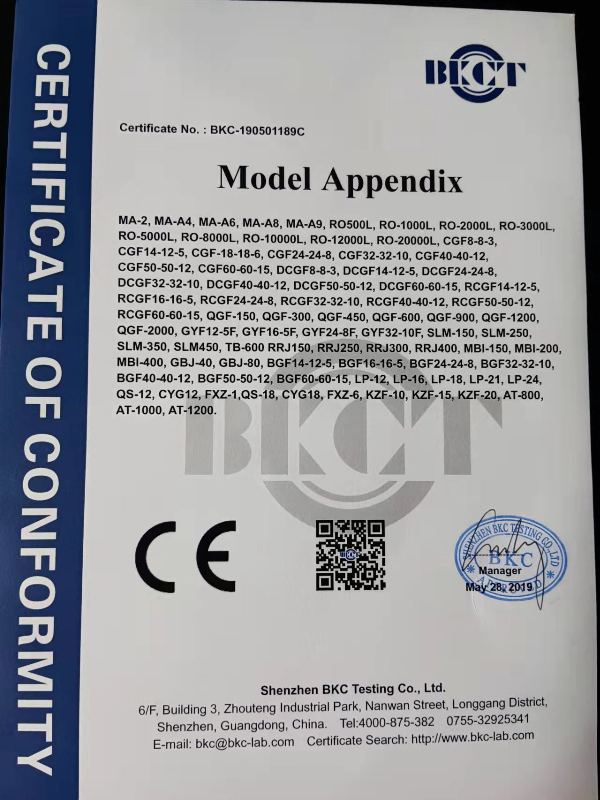
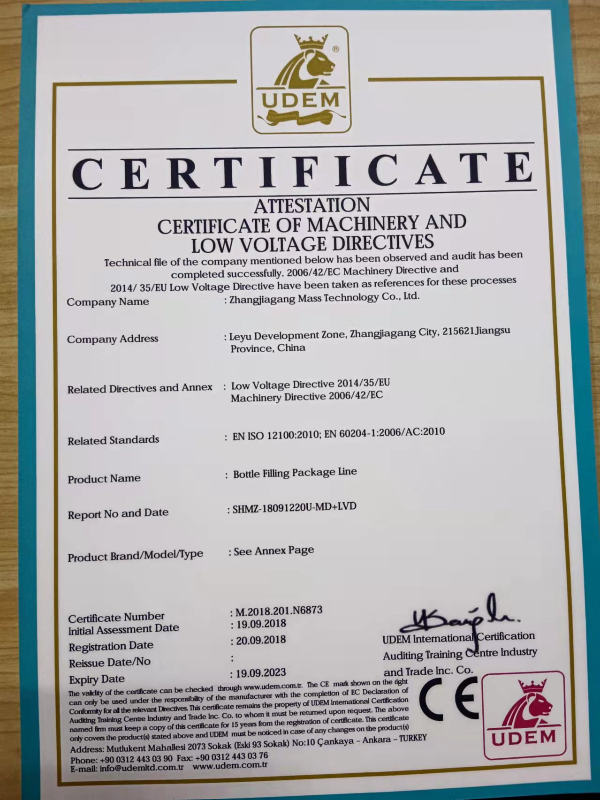
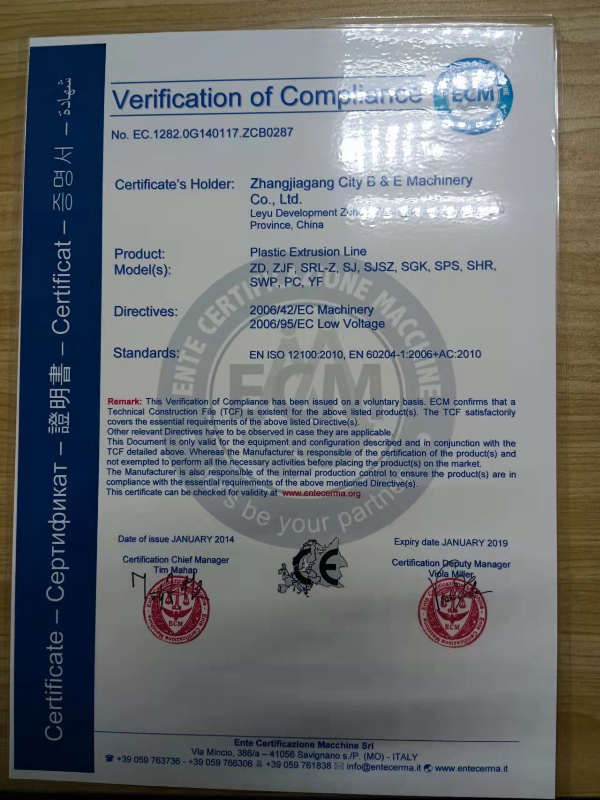
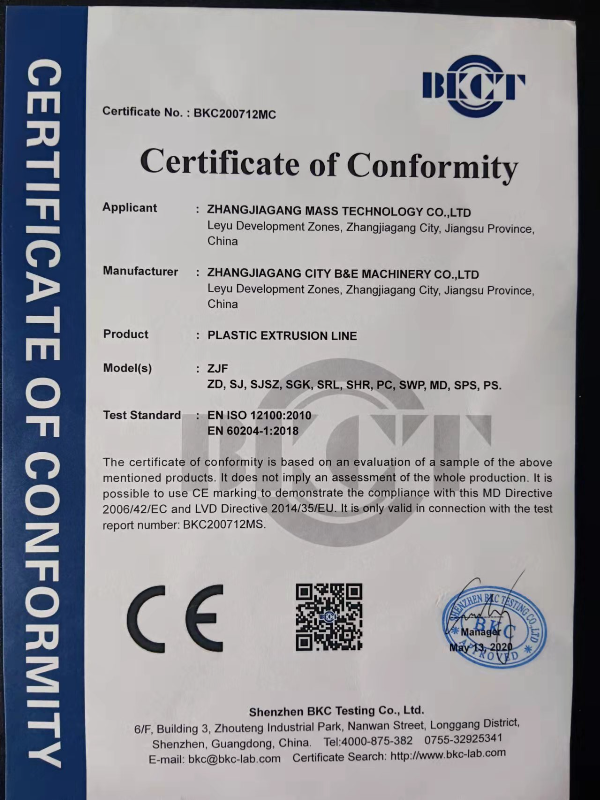
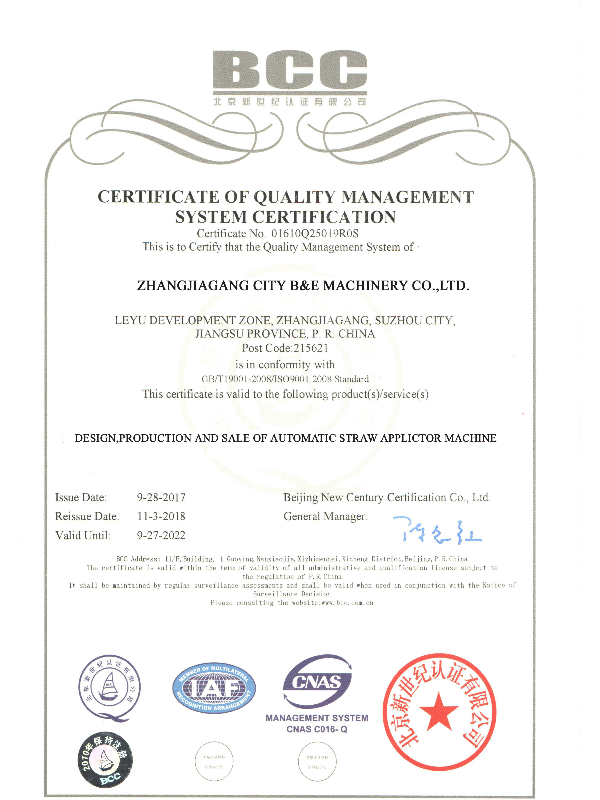
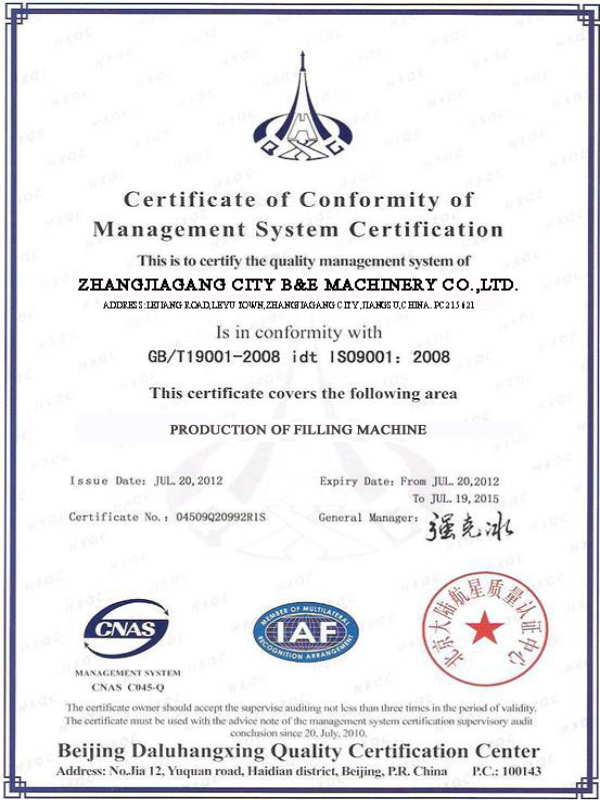
Détails des matériaux et de la conception hygiénique
- Surfaces en contact avec le produit : AISI 304 en standard, AISI 316 en option pour les vins de fruits à pH faible et les produits mutés acides. Toutes les soudures sont polies à Ra ≤ 0,8 µm afin de respecter les normes sanitaires 3-A.
- Dispositifs CIP (nettoyage en place) : ports d’injection de désinfectant intégrés sur la rinceuse, la cuve de remplissage et chaque module de vanne de remplissage. Compatibles avec la soude (1-2 %) et les options de désinfection au PAA.
- Pression de rinçage : méthode standard de rinçage à l’eau chaude à 0,25-0,30 MPa, module optionnel à eau acidifiée pour les résidus difficiles.
×
![Certificat détaillé]()
Guide d’approvisionnement d’une ligne d’embouteillage de vin — prix, délai de livraison, coût rendu et service après-vente
C’est lors de l’approvisionnement que la plupart des projets de lignes d’embouteillage avec un fournisseur se heurtent à la réalité habituelle. Pour les équipes d’achats internationales, le prix, le délai de livraison et le coût rendu, terriblement opaques, constituent la critique la plus fréquente de nos groupes de clients à l’étranger. Les fourchettes ci-dessous sont publiées à l’avance comme référence de comparaison ; le devis final dépend de la configuration et du rendez-vous.
| Modèle | Fourchette de prix FOB (USD) | Configuration standard incluse |
|---|---|---|
| MSGF 14-12-5 | $42 000 – $58 000 | Monobloc de base + module de bouchage liège |
| MSGF 18-18-6 | $58 000 – $75 000 | + convoyeur d’alimentation automatique + jeu de vannes de rechange |
| MSGF 24-24-8 | $75 000 – $108 000 | + module ROPP + kit de pièces de rechange pour 1 an |
| MSGF 32-32-8 | $108 000 – $145 000 | + module de changement de bouchons + pack de diagnostic à distance |
| MSGF 40-40-10 | $145 000 – $185 000 | + exportation de données Industry 4.0 + tables d’accumulation |
Cadre du coût rendu — principaux marchés d’exportation
Pour le coût rendu, clients internationaux : environ 60-75 % de l’équivalent du coût rendu au départ FOB (ajouter ensuite le fret, les droits, l’installation et la formation des opérateurs). Fourchettes typiques sur 16 de nos principaux marchés d’exportation :
| Composant de coût | Fourchette typique | Remarques |
|---|---|---|
| Fret maritime (conteneur 40HQ) | $3 800 – $8 500 | 1×40HQ pour MSGF 14-24, 2×40HQ pour MSGF 32-40 |
| Droits d’importation | 0 % – 12 % | Varient selon le pays ; UE/AU souvent 0 %, États-Unis environ 3 %, certains pays d’Amérique latine plus élevés |
| Dédouanement + manutention | $800 – $2 500 | Courtage propre au pays |
| Installation sur site | $4 000 – $8 000 | Déplacement d’un ingénieur Mass + 5-10 jours sur site |
| Formation des opérateurs | $1 500 – $4 000 | Programme de 3 jours, en anglais ou en espagnol |
Délai de livraison et paiement
Le délai de production standard est de 60-90 jours à compter de la confirmation de commande, plus rapide que le délai de 90-120 jours habituel chez les fournisseurs européens haut de gamme. Les conditions de paiement sont un acompte de 30 % à la confirmation de commande, puis le solde de 70 % réglé contre copie du connaissement avant le départ du navire. Le paiement par lettre de crédit à vue est pris en charge pour les acheteurs exigeant un règlement bancaire.
Point de vue du secteur
Une découverte INATTENDUE issue de nos entretiens avec les acheteurs en 2025 : certains domaines internationaux qui utilisaient des camions d’embouteillage mobiles pour servir leurs clients rencontraient des problèmes de flexibilité de service, et non de coût d’investissement, qui les empêchaient de posséder une ligne. L’approche avec SLA de 24 heures et pièces de rechange en stock est conçue spécifiquement pour éliminer cet obstacle.
SLA du service après-vente
Engagements de service — inscrits dans chaque contrat
Garantie
Garantie de 2 ans sur toutes les pièces de la ligne MSGF complète, couvrant les vannes de remplissage, les têtes de bouchage et les commandes de l’automate programmable.
Réponse de l’ingénieur
Réponse technique sous 24 heures par e-mail, WhatsApp ou appel vidéo planifié — tous fuseaux horaires.
Livraison des pièces de rechange
Courrier international sous 5 jours ouvrés (DHL / FedEx) pour toutes les pièces d’usure standard. Les pièces critiques sont stockées à l’usine de Zhangjiagang.
Formation des opérateurs
Programme de 3 jours sur site inclus avec l’installation, avec rappel annuel à distance disponible.
Calculez votre coût rendu exact pour votre port d’entrée.
Utiliser l’estimateur de coût rendu
Outils et calculateurs de planification de projet
Utilisez notre suite d’outils d’ingénierie interactifs pour dimensionner précisément votre équipement, estimer le ROI du projet, sélectionner la méthode de remplissage idéale et calculer les coûts rendus précis de votre ligne d’embouteillage de vin.
Calculateur BPH
Faire correspondre la production annuelle au modèle MSGF
Ouvrir le calculateur →
Calculateur de ROI
Ligne MSGF en propre ou camion d’embouteillage mobile
Ouvrir le calculateur →
Quiz de recommandation de méthode de remplissage
Déterminez la technologie idéale selon le profil spécifique de votre vin.
Commencer le quiz →
Estimateur de coût rendu
Calculez les coûts de livraison finaux estimés vers votre région.
Ouvrir l’estimateur →
Prêt à définir votre ligne d’embouteillage de vin ?
Indiquez-nous votre volume annuel de caisses, les formes de bouteilles et vos marchés cibles ; nous vous répondrons sous 24 heures avec un devis configuré et une estimation du coût rendu.
La série MSGF de Mass comprend cinq modèles, avec des prix FOB allant de $42 000 (MSGF 14-12-5 d’entrée de gamme, 2 500 BPH) à $185 000 (MSGF 40-40-10 haut de gamme, 15 000 BPH). Les recommandations du secteur publiées par WineBusiness Monthly suggèrent une formule budgétaire de $2 par caisse × production annuelle × amortissement sur 4-5 ans, ce qui correspond étroitement à nos tarifs pour les cinq niveaux.
Dimensionnez la machine pour 60-70 % du débit nominal pendant le mois de pointe. Un domaine produisant 10 000 caisses/an, avec l’essentiel de l’embouteillage concentré au T3-T4, devrait viser la MSGF 18-18-6 (4 500-5 000 BPH) — faire fonctionner la machine à son débit nominal à chaque poste accélère l’usure et ne laisse aucun temps de récupération lorsqu’une panne imprévue survient.
Le remplissage par gravité utilise la pression atmosphérique pour faire couler le vin dans la bouteille et convient aux vins tranquilles. Le remplissage isobare égalise la pression entre la bouteille et la cuve de la remplisseuse (généralement 1-3 bar), afin que le CO₂ dissous reste en solution — obligatoire pour les vins effervescents, le champagne et le prosecco. Utiliser la gravité pour un vin effervescent provoque un dégazage du CO₂ et donne un produit éventé en quelques heures.
Oui. Tous les modèles MSGF acceptent des hauteurs de bouteilles de 160-340 mm et des diamètres de 50-100 mm, y compris les formes Bordeaux, Bourgogne, Hock, effervescentes et la plupart des formes de bouteilles de vins fortifiés. Le changement de format entre bouteilles prend 20-30 minutes avec un opérateur formé et consiste principalement à remplacer les godets de manutention des bouteilles et à régler la hauteur de la tête de remplissage.
Le délai de production de la série MSGF de Mass est de 60-90 jours à compter de la confirmation de la commande, auxquels s’ajoutent 30-45 jours de fret maritime vers la plupart des grands ports. À titre de comparaison, la fabrication chez les fournisseurs européens haut de gamme prend 90-120 jours. Le fret aérien est disponible pour les commandes urgentes moyennant un coût supplémentaire — il réduit généralement le transport de 25-30 jours.
Les lignes MSGF correctement configurées et entretenues auront une durée de vie de 15+ ans. De nombreux monoblocs de concurrents, achetés dans les années 1980 /1990, sont encore en production aujourd’hui, ce qui laisse penser que la technologie fondamentale a atteint sa maturité. Mass utilise une architecture similaire de vannes de remplissage et d’automates PLC ; nous estimons donc que la durée de service est comparable aux normes du secteur.
Oui. Un ingénieur de terrain de Mass se rendra sur votre site pendant 5-10 jours pour l’installation et la mise en service lors de l’achat d’une ligne (jusqu’à $50 000 FOB). La formation des opérateurs est dispensée en anglais ou en espagnol, avec un interprète en option, puis assurée à distance chaque année.
Marquage CE (conformité à la directive européenne relative aux machines 2006/42/EC), fabrication conforme aux normes du système de management de la qualité ISO 9001:2015, conception sanitaire conforme aux bonnes pratiques de fabrication (GMP), matériaux en contact AISI 304/316 conformes aux exigences fonctionnelles de la FDA, etc. Nous fournissons les certificats originaux, les rapports d’essais des matériaux et la déclaration de conformité à la livraison, et pouvons organiser sur demande des inspections avant expédition par des organismes tiers tels que SGS ou BV.