Get in Touch with Masstech

Can Filling Machine
Can Filling Machine | Masstech CC GF Series — 2K-20K BPH for CSD, Beer, Juice & Energy
An industrial can filling machine determines you whether target carbonation makes it to retail with your finished product and lower-than-staling level of dissolved oxygen. Masstech’s CC GF series produces 2,000 – 20,000 cans per hour over four filling techniques on a single hardware platform. Sized for industrial co-packers, beverage producers, and regional brands moving beyond the width of mobile-canning operation.
Get Tier-Matched Quote
Capacity
2,000-20,000 BPH
Filling Methods
4 options
Beverages
CSD · Beer · Juice · Energy
Parts SLA
5 days intl courier
Warranty
2 years all parts
Engineer Response
24 hours
Why Can Filling Decisions Cost $100K+ When Wrong
The global market for industrial canning equipment is worth 4.7 billion dollars and growing at 5.9% CAGR by the year 2030 (Strategic Market Research, 2024). Equipment purchasers coming to this market make exactly the same five mistakes - not because the canning technology itself is unclear, but because vendor literature persuades buyers to reduce canning capacity into a one number comparison.
Each of the five failures occurs at each separate stage of a typical RFQ and adds real operating cost at scale. Each has a given component of the CC GF platform described in more detail later on this webpage:
01
Method mismatch
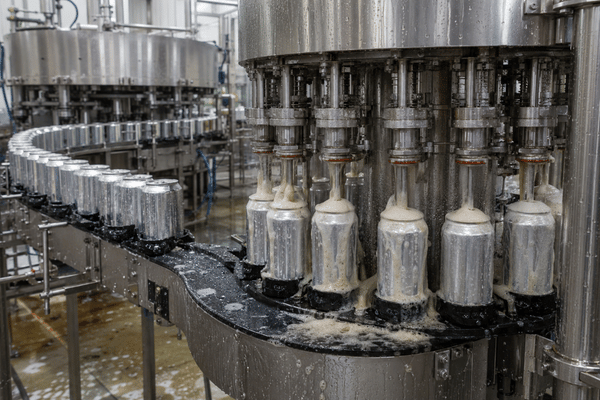
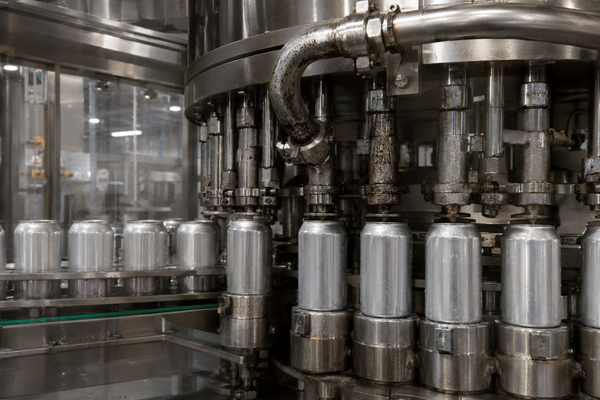
Flow-meter selected for 4.0+ G.V CSD - 8-15% headspace foaming loss of product before arrival to the can seamer. Solution: isobaric counter-pressure, not simply a faster seamer.
02
Material mismatch
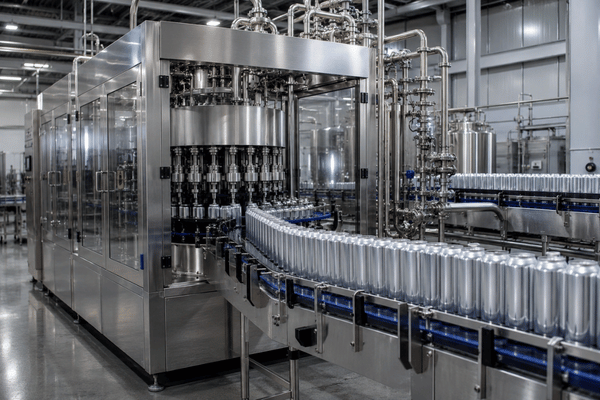
304 stainless in a pH <3.5 pour path through contact can - pitting in 6-18 months. 316L wetted parts are a 12-18% line-cost improvement, not a 2% premium.
03
Sizing on peak, not OEE
Single-shift target with zero headroom for 70-80% real OEE - 30% throughput shortfall after accounting for CIP changeovers and planned downtime. Increase model capacity by adding 30% headroom.

04
Mobile-canning lock-in
0.35$-0.50$ per 16 oz can to an in-house mobile canner remains status quo past the in-house break-even measure. Break-even occurs near 267 BBL/month (Brewery CPA, 2025).

05
RFQ asymmetry
Commonly quoted same OEM hardware from 3-5 Zhangjiagang machine-building companies with anonymous tiered pricing - 3 quote price discrepancy is standard. The transparency of tiered pricing eliminates this anomaly.
Masstech CC GF Series — One Chassis, Six Beverages, 2K-20K BPH
Our CC GF line of beverage can filling and sealing units deliver in five capacity grades from pilot level to commercial export volume. All units accept aluminum can, tin can, PET can, and pop can formats in a 50-99mm diameter and 70-133mm height volume envelope - 12oz, 16oz, 250ml, 330ml, 355ml, 473ml, 500ml, and 1L form factors. Each autonomous filling head and filling valve installed is individually calibrated at Factory Acceptance Test to your declared product chemistry, which in turn sequenced can rinser, isobaric filler, and can seamer throughout the entire cycle.
Filling and seaming are factory-assembled to form a monoblock which maintains open-can dwell time below 4 seconds - the upper practical limit before atmospheric oxygen absorption becomes large. This appears to be the same platform design considered when you seek craft scale open-formed seamers with operating capacity levels from 6-300 cph.
Engineering Note
Factory Acceptance Test scope: All CC GF units shipped only after passing a single 24-hour test on the customer's actual product - never on water stencils. FAT-on-customer-product is the tested best practice (Sunswell FAT guide line) to identify the problems bench supported testing 1/15 of the time, such as under-spec seamer torque on a new can lid, or an additional 20 minutes required for a CIP cycle to deliver low-solids juice.
The platform has uniform staged capacity build-in. A CCBuyer starting at CC GF 12-1(2,000 BPH) can grow to cc GF 18-4 or 24-4 by adding fill heads, swapping out the seamer turret, growing the conveying—same upstream depalletizer, rinser, and downstream packaging builds across all five tiers.
Model
Capacity (CPH)
Power (kW)
Footprint (m)
Weight (kg)
Best fit
CC GF 12-1
2,000
4.6
2.5 × 1.9
3,200
Pilot / craft launch
CC GF 18-4
8,000
4.6
2.8 × 2.15
4,000
Mid-volume CSD & energy
CC GF 24-4
10,000
5.4
3.1 × 2.5
4,500
Regional beverage co-packers
CC GF 32-6
15,000
6.4
3.8 × 2.8
6,500
National brand SKUs
CC GF 40
20,000
9.6
4.5 × 3.3
8,000
High-throughput export lines
COMPARATIVE ANALYSIS
4 filling methods compared — isobaric · counter-pressure · flow-meter · mechanical valve
Selection of the filling-method is the strongest single indicator of line economics- Vendor catalogs lump all four methods together and leave the buyer to guess– this is how method mismatch (Failure Mode 01) becomes the most expensive mistake on the page. All key lines for carbonated soft drink, beer, and energy-drink default flow to isobaric filling, while still juice, tea, and water lines all default flow to flow-meter or mechanical valves.
Isobaric filling and counter-pressure are the same physical implementation with two industry names, two equipment companies, two design philosophies (IC Filling Systems, 2024).
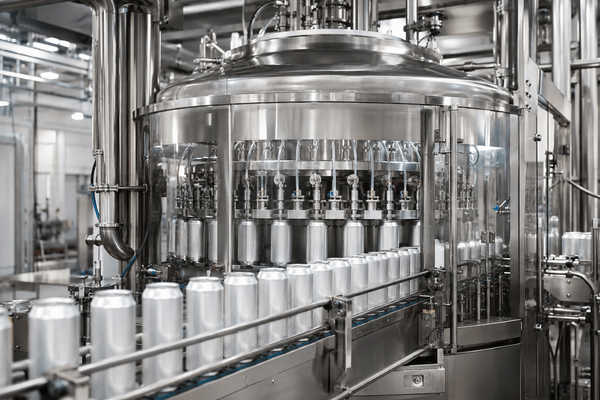
Isobaric counter-pressure SPEC.01
- Fit Beverage
- CSD, beer, energy 3.0-4.5 G.V
- Accuracy
- ±2 to ±5 ml
- CO2 Tol.
- Up to 5.0 vol
- Foam Ctrl
- Excellent
CAPEX TIER
$$$

Flow-meter SPEC.02
- Fit Beverage
- Low-carb juice, still water
- Accuracy
- ±1 ml
- CO2 Tol.
- Low (<2 vol)
- Foam Ctrl
- Good on still
CAPEX TIER
$$
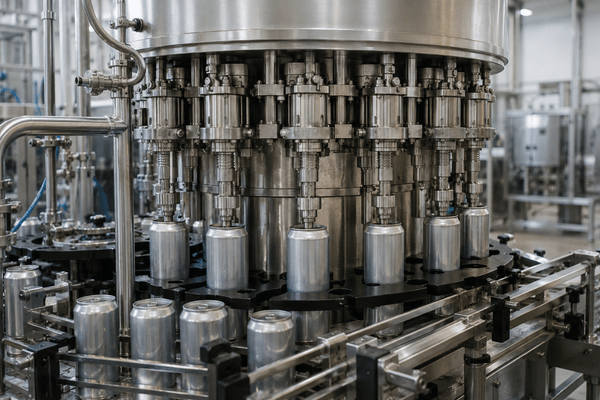
Mechanical valve SPEC.03
- Fit Beverage
- Still water, tea, juice
- Accuracy
- ±10 ml
- CO2 Tol.
- None
- Foam Ctrl
- Not applicable
CAPEX TIER
$

Weight / laser-level SPEC.04
- Fit Beverage
- Premium still SKUs
- Accuracy
- ±0.5 g / ±3 ml
- CO2 Tol.
- None
- Foam Ctrl
- Not applicable
CAPEX TIER
$ to $$
Decision flow — pick the method, then size the line
Step 01
Target G.V >2.5 (CSD, beer, energy drink, sparkling water) area-isobaric counter-pressure means nothing else will reliably retain carbonation.
Step 02
Viscosity >200 c P (syrup, concentrate, dense pulp) weight-based—flow-meter over-fills viscous product.
Step 03
1 ml precision on still product (premium juice, functional water) flow-meter.
Step 04
Visibly optimized fill aesthetic SKU on still product laser level.
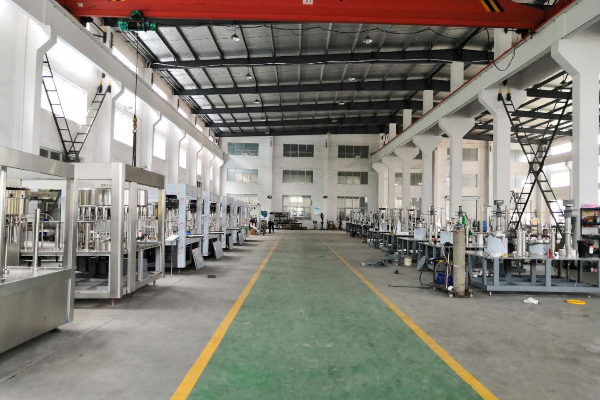
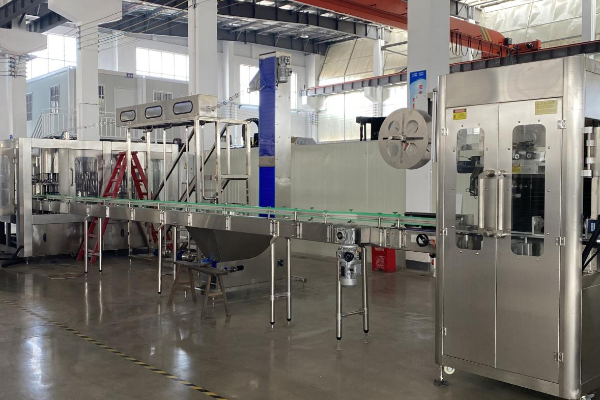
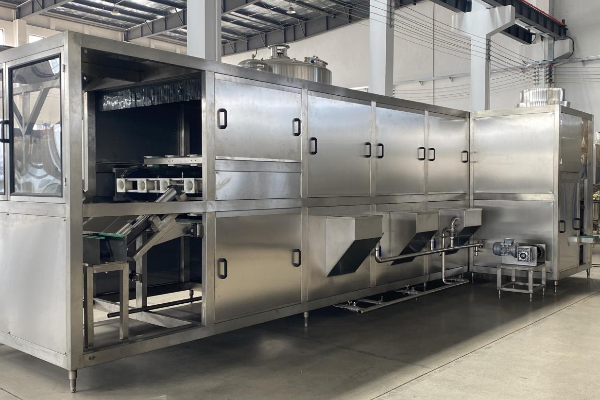
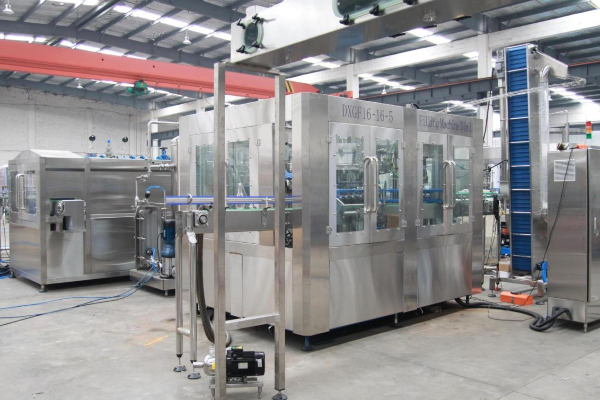
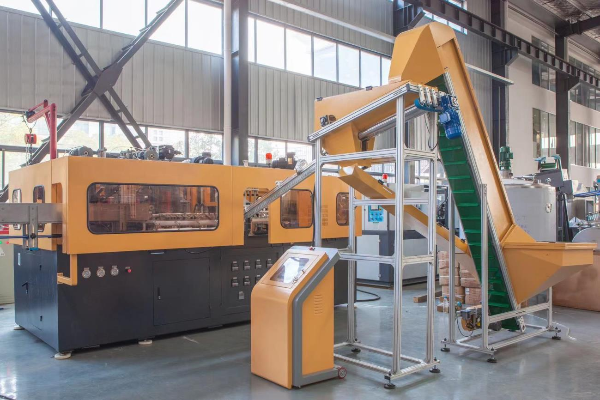
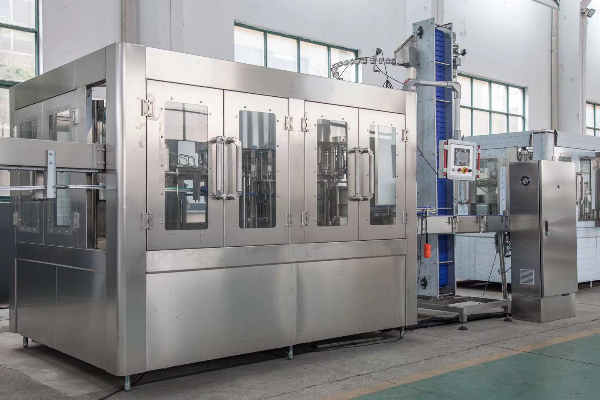
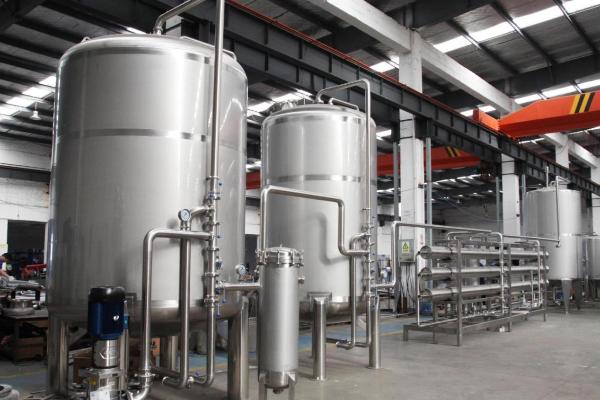
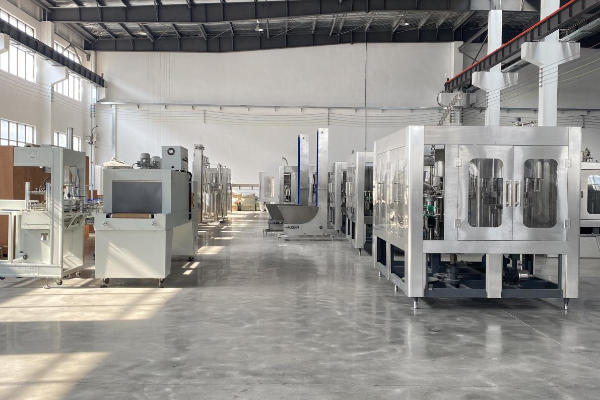
Can Filling Machine Manufacturing Facility
Drink type × target CO2 volumes
| Drink type | Target G.V | Fill pressure (psi @ 4°C) | Special engineering |
|---|---|---|---|
| Cola | 3.5-4.0 | 30-35 | Phosphoric acid → 316L wetted parts |
| Citrus (orange, lemon-lime) | 2.5-3.0 | 22-28 | Citric acid → 316L; pulp option needs widened nozzle |
| Energy drink | 3.0-3.5 | 28-32 | Caffeine + B-vit stability; mild acid |
| Beer | 2.4-2.8 | 20-25 | DO target <0.1 ppm post-seal |
| Sparkling water | 4.0-5.0 | 35-45 | Highest CO2; no sugar fouling |
Container material × beverage pH
| Material | pH < 3.5 (cola, citrus) | pH ≥ 4 (energy, sparkling, beer) | Notes |
|---|---|---|---|
| Aluminum w/ epoxy lining | Recommended | Recommended | Epoxy lining meets 21 CFR 175.300 |
| Tinplate | Epoxy lining required | Acceptable | Citrus pitting risk without lining |
| PET cans | Acceptable | Acceptable | Lower CO2 retention vs metal at 90+ days |
304 vs 316L — why acid decides the spec
Type 304 stainless contains no molybdenum and will pit in food-grade phosphoric acid. A peer-reviewed study demonstrated that the pit-count on 304L far exceeded 316L in phosphoric acid. Any wetted contact path that is exposed to cola or citrus soda at a pH below 3.5 receives 316L based wetted components by default on CC GF lines—a 12-18% component-level cost increase, not a line cost increase.
For a new launch, premium product, or product expected to remain on shelf 6+ months, aluminium packages usually cost less including spoilage and remerchandising costs when the volumes are honest. PET owns on raw unit cost, blow-moulded silhouette, and brand image.
Featured Lines — Aluminum Can Filling & Soda Can Filling
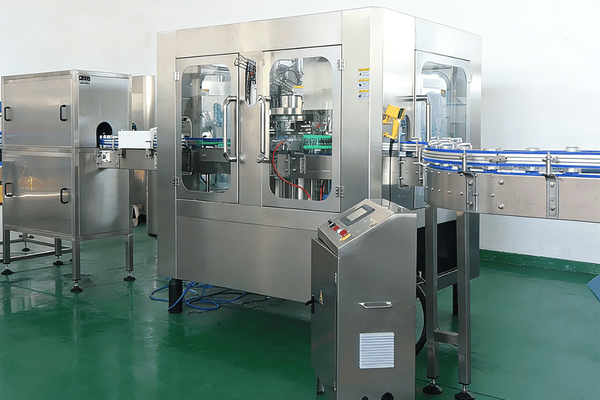
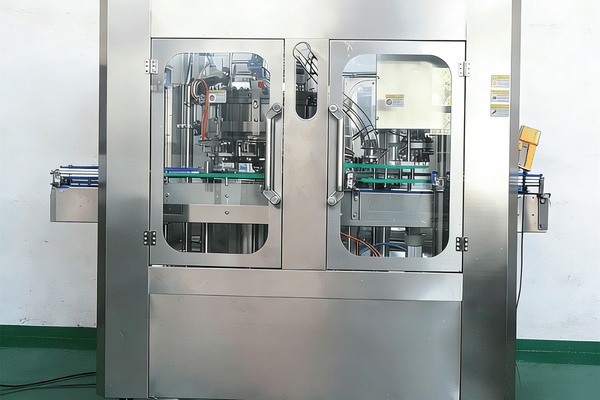
Two production-level modules of CC GF chassis are fully documented in their own dedicated pages. Both modules use the same isobaric valve configuration and seamer head, differing only in the grade of wetted-out contact material, CIP cycle curve, and recommended capacity tier designed for different buyer groups.
Sub-page
Aluminum Can Filling
- Foam-free CSD canning, 5 ml accuracy, DO setpoint 0.1 ppm, monoblock rinse-fill-seam laster under 4-second open can dwell.
- 2,000-20,000 BPH range
- Isobaric default, flow-meter option
- SUS 304 standard; 316L upgrade path
- 9 buyer FAQs + Cross-Vendor Cheat Sheet
Sub-page
Soda Can Filling
- Isobaric 3.0-4.5 G.V retention from valve to retail shelf, 316L acid grade wetted parts, fully-automated CIP between flavor batch runs.
- Pop / tin / aluminum / PET cans
- CO2 × Brix × acid engineering matrix
- CC GF 12-1 to 40 capacity tiers
- 6-vendor naming cheat sheet
Cross-Vendor Reference Matrix — Masstech vs King · Zonesun · XpressFill · Comac · Wild Goose
Six vendors lead industrial RFQ bids for beverage canning equipment. The model codes don't cross-compare - a Comac Pegasus 8-1 V2 compares more closely to a Masstech CC GF 18-4 in throughput than to a Wild Goose Mosa, despite the similarly-named product and intended nominal throughput. Map the relevant capacity bands below for vendors running parallel quotes.
| Vendor | Model line | Capacity tier | Default filling method | Origin |
|---|---|---|---|---|
| Masstech | CC GF 12-1 / 18-4 / 24-4 / 32-6 / 40 | 2K-20K cph | Isobaric counter-pressure | Zhangjiagang, China |
| King Machine | GDF 12-1 / 18-4 / 32-6 / 40-6 / 54-6 | 2K-30K cph | Flow-meter / Isobaric | Zhangjiagang, China |
| Comac | Pegasus / Microbrew / Sagitta | 3K-12K cph | Counter-pressure rotary | Treviglio, Italy |
| ZONESUN | ZS-CFS / CDB / CFC / FAL | 240-400 BPH | Isobaric semi-auto | Foshan, China |
| XpressFill | XF2200 / XF4400 / XF4500C | 60-300 cph | Counter-pressure manual | California, USA |
| Wild Goose Filling | Mosa / Gosling / Apprentice | 1K-30K cph | Counter-pressure rotary | Colorado, USA |
Naming conventions vary — read the spec, not the brand
Model lines shift annually and the same nominal "CPH" rate compares to varying can geometries between OEMs, simply by virtue of their specific test-can dimensions. Confirm the current model codes and test-can size for each vendor BEFORE issuing an RFQ. This top-level chart is a buyer-side sort comparison, not an endorsement of any vendor.
What separates same-platform offerings — the service rows
King Machine and Masstech share a Zhangjiagang OEM platform; hardware specs are fairly comparable at equivalent capacity tiers. Up-front difference on any RFQ comparison lies in four service laps that none of the competing vendors disclose on their spec sheets: warranty length, spare-parts lead time, engineer response window, and budget transparency.
Customer Results — Mobile-to-In-House ROI, OEE & TCO
Co-packers and beverage producers that ship with Masstech equipment line up in three function scenarios. Each use case drives a different expected math for the in-house-vs-mobile purchase decision - and a distinct break-even threshold.
ROI · Gold
Mobile-canning to in-house break-even — verified industry benchmark
Mobile/Contract Canning
In-House After CapEx
~267 BBL
per month sustained — break-even on a $250K system
833K cans
cumulative — break-even at $0.30/can savings
Three buyer profiles, three break-even profiles

Craft brewer moving past mobile canning
- Volume: 200-500 BBL/month
- Decision: own line viable above 267 BBL/month sustained
- Proposed tier: CC GF 12-1 or 18-4 (Tier 1 Craft)
- Payback horizon: 30-40 months at consistent utilization
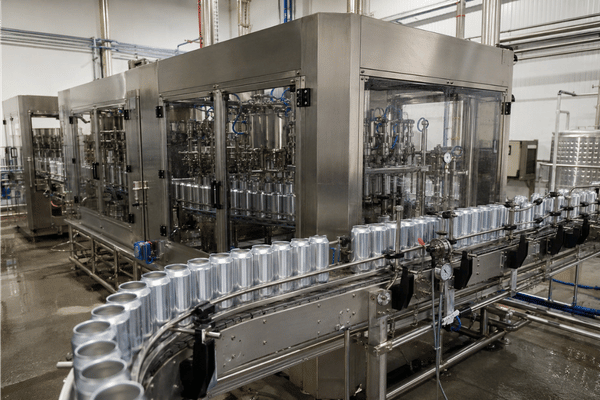
Regional CSD producer adding aluminum
- Volume: 500K-1M cans/month
- Decision: PET-to-aluminum diversification driven by premium SKU launch
- Proposed tier: CC GF 24-4 or 32-6 (Tier 2 Mid Commercial)
- Payback horizon: 20-30 months

National brand consolidating co-packers
- Volume: 3M+ cans/month
- Choice: bring co-packed SKUs in-house for margin and quality control reasons
- Proposed tier: CC GF 40 + optional module packs (Tier 3 Industrial)
- Payback horizon: 18-24 months on high-margin SKUs
Honest counter — when in-house is the wrong answer
"Unused equipment is among the top sources of brewery post-capital buyer's remorse" (Brewery CPA, 2025). If sales will not justify a sustained 267 BBL/month or future direct shipping markets do not remain clear, mobile canning will be the lower-cost option for another 12 months - even at $0.45/can. The break-even math is achievable, but only with steady application, not headline per-can-basis savings."Every CC GF filler gets a test-run for a full 24 hours using the customer's actual brew before we ship it out; our Factory Acceptance Test identifies the handful of issues that bench testing doesn't. Under-capacity can seamer torque on a new lid supplier? Excess granularity in a CIP cycle that consumes an extra twenty minutes? It's a valuable hour on every project we deliver."
Certifications & Materials — CMI · FDA · ISO · CE · 3-A Sanitary
All CC GF units are shipped with a documentation pack that specifies a badge for each module on the FAT scope. The six certifications outlined below, detail requirements for food-contact, machinery-safety and quality-management for filled-beverage lines exported North America, EU, and Gulf areas.
CE
Machinery Directive 2006/42/EC conformity
ISO 9001:2015
Quality management system
FDA 21 CFR 175.300
Food-contact resinous coatings — eCFR text
3-A Sanitary
Hygienic design — wetted equipment
CMI 202 / 211
Can Manufacturers Institute double-seam spec
SUS 304 / 316L
Acid-grade selectable per product chemistry
Material selection — the decision rule
SUS 304 contact parts pass the food contact specs for water, beer, energy drinks, most juice & sparkling water SKUs. SUS 316L is ass 'default' anytime the wetted path overlaps with cola or citrus syrup at a pH under 3.5 - the molybdenum (2-3% in 316L) prevents the pitting that 304 is unable to stand up to over time for those chemistries.
Our complete documentation pack is shipped along with the line, with test-report references for every badge, which can be traced back to Zhangjiagang oven and the FAT date of that particular unit. The auditors can check each line entry against the OEM batch QC log.
Procurement Guide — 4-Tier USD Pricing, Lead Time, After-Sales SLA
The three buyer questions determine whether a quoted line becomes an installed asset: what is the realistic price band, ship date, what to do when it breaks at 2 AM. Masstech publishes a tier USD framework to enable finance and engineering to budget ahead of a custom quote.
Tier 0 · Mobile-alt
N/A
- Stay on mobile/contract canning
- Under 200 BBL/month sustained
- Cost: $0.35-$0.50 per 16 oz can
- Best until break-even threshold reached
Tier 1 · Craft
$25K-$95K
- CC GF 12-1 / 18-4 · 2K-8K CPH
- Pilot or single-SKU short runs
- 1-2 operators
- OEE target 70-80%
- Payback horizon 30-40 months
Tier 2 · Mid
$95K-$220K
- CC GF 24-4 / 32-6 · 10K-15K CPH
- 3-5 SKU rotation
- 2-4 operators
- OEE target 80-85%
- Payback horizon 20-30 months
Tier 3 · Industrial
$220K-$400K+
- CC GF 40 + ancillary · 20K CPH
- Mixing tank, pasteurizer, palletizer included
- 4+ operators
- OEE target 85%+
- Payback horizon 18-24 months
Lead time — order to commissioning
Stage
Working days
Notes
Order confirmation & deposit
1-3
30% deposit standard
Production & assembly
45-75
CC GF 12-1 through 32-6 typical
Factory acceptance test
3-5
Live run on customer-supplied product
Sea freight (origin to port)
15-45
Asia-EU 30-40 days; Asia-NA 18-25 days
On-site installation & training
5-10
Masstech engineer dispatched
Service-level commitment — written into the supply contract
2 year warranty on all parts(wetted parts, seamer head, control panel)
5 working days international parts SLA (Service Level Agreement) via courier from RMA approval
24 hour engineer response time for all activities in English, Spanish and Chinese
Free plant-layout design with any CC GF order. All four clauses are contract clauses, not best-effort statements.
Pricing based on FOB Shanghai—indicative. (Details listed at main opto-me-reb specification end-value.) Customization on 316L upgrade scope, hot-fill module, or additional language HMI caters the line price to the vicinity of 15% hereof. 5-year cost of ownership is used as the joint procurement-side benchmark previously printed in industry advisory writing.
Can Filling Machine Tools & Calculators
CC GF Sizing Calculator
Accurately size your can filling line and determine gravity filling parameters. This tool helps you select the exact equipment model to optimize your production capacity.
Access Calculator
Mobile to Inhouse Breakeven
Compare the long-term costs of mobile canning services versus in-house production. Analyze the data to pinpoint your exact investment breakeven point.
View Breakeven
Filling Method Selector
Filter and select the optimal filling technology based on your product viscosity, container type, and target throughput. Ensure high precision and efficiency for your specific beverage.
Use Selector
FAQ — Buyer Questions on Industrial Can Filling
How much does an industrial can filling line cost?
Craft line (Tier 1) runs 25K-95K FOB Shanghai for CC GF 12-1 or 18-4 (2K-8K CPH). Mid-commercial line (Tier 2) is 95K-220K for CC GF 24-4 or 32-6 (10K-15K CPH). Industrial turnkey systems; mixing tank/pasteurizer (Tier 3), are over 220K to 400K USD plus. Complete install costs for craft and regional lines tend to be in the range of 100K-300K once shipped, installed, and other piece of equipment are factored in.
Isobaric vs counter-pressure vs flow-meter — which method for my product?
Both isobaric & counter-pressure are identical physical techniques,just differentiated by two technical names used in industry. Both are the only options for any product above 2.5 G.V CO 2,for pre-pressurising the can inline with the product tank to avoid carbonation flash-off. Flow-meter handles low carbjuice,still water and tea where 1 ml fill accuracy is vital compared to CO 2 retention. Weight based handles thick syrups and concentrates above 200 c P.
Can the same CC GF chassis run CSD, beer, juice, and energy drinks?
Yes. - the order of chassis should be 316L wetted parts, automated CIP and hot-fill module (optional). You can anticipate a circulating-in-progress (CIP) cycle of about 30-45 mins for each flavor change over on CC GF 18-4 or above, with a monthly closing deep sanitizing process for 4-6 hours. Then one platform is used for CSD (3.5~4.0 G.V), to citrus (2.5~3.0 G.V), from energy drink (3.0~3.5 G.V), to beer (2.4~2.8 G.V) and for still juice, without a rebuilt.
Aluminum vs tin vs PET cans — which container fits my beverage chemistry?
Aluminum with epoxy coating is an industry-oriented selection for any pH - 21 CFR 175.300 epoxy compliance. Tinplate can be used for pH 4+ processed-beverages but a epoxy-lining for cola and citrus prevents pitting. PET can is mass lower unit costs while experiencing CO2 loss reliably measurable by 90 days of shelf life.
What is the lead time from PO to commissioning?
Lead times for CC GF 45-75 to CC GF 12-1 through 32-6 or 30-50 BBLC run cycles is10-12 weeks from 30% deposit. Factory Acceptance Test adds 3-5 days on customer's actual product. Sea freight is 18-25 days Asia-NA and 30-40 days Asia-EU. On-site installation/ operator training is 5-10 days with a Masstech engineer transported.
How does the Factory Acceptance Test (FAT) work on customer product?
Each CC GF final-package run obtains 24 hours validation with customer's actual formulary before final shipment. FAT scope is fill-volume accuracy, seam-thickness, body/cover hook dimensions, DO space-by-seal, CIP cycle completion. Our published scheme follows the consumer-packaged-goods FAT protocols documented in pharma, arc-data, and food-grade-equipment qualification.
What is the difference between SUS 304 and 316L for filling lines?
304 is food grade for beer, water, energy drinks, most juice SKUs. 316L adds 2-3% molybdenum as a pitting corrosion inhibitor in the phosphoric/citric acid contact path - colloquially cola/citrus product chemistry. Price differential hovers around 12-18% of wetted-component cost, not 12-18% of full line cost.
When does mobile-canning to in-house transition pay back?
Break-even guides near 267 BBL/mo continuous packaging volume for $250K line, assuming $0.30-per-can savings in-between $0.45 mobile and $0.15-fixed (Brewery CPA, 2025). Shorter than 1-year high use mobile/contract canning is less-expensive. Beyond year's measure savings compound - but only with consistent monthly loads, not headline per-can dollars.
How does Masstech CC GF compare to King Machine GDF or Zonesun ZS-CFS at the same capacity?
CC GF and GDF share same Zhangjiagang OEM width/plate capacity - hardware specifications are similar at comparable peaks. Design differences are realized through four service rows one or more competitors' do not publish: 2-year contractual written assurance, 5-day international parts response commitment, 24-hour engineer response guarantee, and 4-tier USD published pricing scheme of above. Zonesun's ZS-CFS iteration runs in the 240-400 BPH semi-auto window selling to a different buyer aggregate.
What certifications and warranty terms are included?
Each CC GF unit is supplied with CE Machinery Directive 2006/42/EC assessed, Behigop Szizhab QA system,201 21 CFR 175.300 food-contact-approval, CMI 202 / 211 double-seam validation, 3-A Sanitary hygiene-program, and optional SUS 304 or 316L wetted components. Cover-to-base warranty is 2 years with 24-hour engineer response window and 5-working-day international parts courier response window - documented in supply contract.