Get in Touch with Masstech

ISO 9001 Certified
OPP Hot Melt Labeling
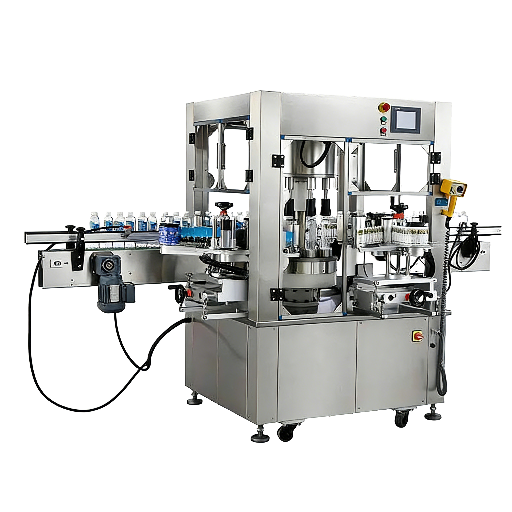
OPP Hot Melt Labeling Machine — Cost-Effective High-Speed Bottle Labeling for Beverage Lines
Mass OPP hot melt labeling machine applies OPP and BOPP film labels to beverage bottles at 3,000-20,000 B/H with ±0.5 mm placement accuracy – twice the industry standard 1 mm baseline at full line speed.
Schneider PLC & Servo
SICK Sensors Setup
OMITER Drive Integration
Water, Juice, Beer & CSD Ready
Capacity
3K-20K B/H
100ml-1500ml bottles
Accuracy
±0.5 mm
at full line speed
Glue Cost
~$5 / 100K bottles
1 kg @ 50mm label height
Warranty
2 years
parts + labor + 24h response
Why Beverage Lines Choose Hot Melt OPP Over Cold Glue and Pressure-Sensitive
Dairies, juice facilities, micro-breweries ship into cold-chain channels every day. Beer to retail coolers, juice to refrigerated DC pallets, yogurt drinks to dairy aisles. Labeling methods that survive that survived the bottling line at 21 °C often fails the moment a wet, chilled bottle hits the shelf. Mass OPP hot melt labeling machine combines thermoplastic hot melt adhesive at 120-160 °C glue temperature with ultra-thin, moisture resistant OPP and BOPP label film stock so the two stay bonded 4 °C cooler cases, condensation, and rough handling.
For beverage and beauty brands seeking ice-chill stability – beer, juice, yogurt drinks, CSD, mineral water, premium personal care – hot melt OPP labeling offers the lowest bottle-to-label costs and the strongest cold-chain adhesion. In the following sections, hot melt OPP is pitted against cold glue, pressure-sensitive, and shrink sleeve methods at the head-to-head level, followed by a step-by-step comparison of Mass configuration options.
Mass OPP Hot Melt Series — Models, Specs & Decision Matrix
The three configurations of the OPP hot melt labeling machine are constructed to span common production requirements; each option has three capacity configurations. The suggested glue station count (1-4), servo configuration, and maximum and minimum production line windows differ, but the core hot melt glue system, Schneider PLC controls, ±0.5 mm placement accuracy, and 380V/50Hz/8 k W power envelope remain static between tiers.
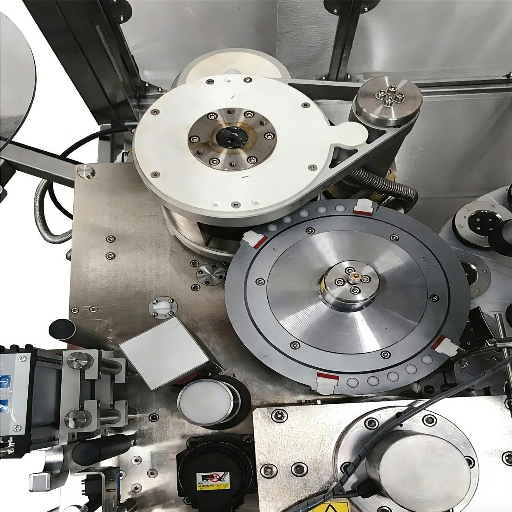
Entry Single Station Labeling Machine
Entry — Single Station
3,000-6,000 B/H
Founded on standard small batch, multi-SKU, craft run beverage production rounds. Hot melt machine with one or two labeling stations. Ideal for round bottles 40-105 mm, 80-350 mm height, label width 20-150 mm.
- 1-2 labeling stations
- Standard Schneider PLC pack
- Lower changeover footprint for multi-SKU plants

Mid Dual Station Labeling Machine
Mid — Dual Station
6,000-12,000 B/H
The typical beverage configuration – water bottling, beer, juice. 2-3 labeling stations with Schneider 1.5 Kw servo upgrade, front-and-back labeling optional. Same ±0.5 mm placement accuracy through a complete speed band.
- 2-3 labeling stations
- + Schneider 1.5 kW servo upgrade
- Front/back labeling on round, oval, flat containers

High Triple Station Labeling Machine
High — Triple Station
12,000-20,000 B/H
For high volume CSD, large mineral Water facilities and turnkey beverage lines incorporating mass filling and capping machinery. Full Schneider PLC + servo + inverter pack incorporating SICK encoder and label sensor for the same 0.5 mm precision at 20,000 B/H.
- 3 labeling stations
- Full Schneider PLC + servo + inverter pack
- Mass turnkey beverage line integration
Decision Matrix — Configuration vs. Production Window
| Tier | Capacity | Bottle Range | Label Window | Stations | Best Fit |
|---|---|---|---|---|---|
| Entry | 3,000-6,000 B/H | Φ40-105 mm × 80-350 mm | 20-150 mm × 125-320 mm | 1-2 | Multi-SKU, craft beverage, regional water |
| Mid | 6,000-12,000 B/H | Φ40-105 mm × 80-350 mm | 20-150 mm × 125-320 mm | 2-3 | Mainstream beer / juice / mineral water |
| High | 12,000-20,000 B/H | Φ40-105 mm × 80-350 mm | 20-150 mm × 125-320 mm | 3 | CSD lines, high-volume bottled water, turnkey integrated lines |
Why ±0.5 mm at full line speed matters:
Industry buying guides advise procurement to question label placement tolerance at maximum operating speed, not just nominal accuracy. Lower-grade systems hold ±1 mm accuracy at half speed but drift at full throughput. Mass holds ±0.5 mm placement accuracy across the entire 3,000-20,000 B/H window — the spec is consistent, not conditional.
Looking to compare two specific Mass tiers equally for your application?
Mass OPP Hot Melt Tier ConfiguratorHot Melt OPP vs Cold Glue vs Pressure-Sensitive vs Shrink Sleeve — Data Comparison
Hot melt OPP labelstocks, cold glue (wet glue), pressure-sensitive labels (PSL/self-adhesive), and shrink sleeving each have their own function – but they do not use the same tools to do it. For comparison, here is a matrix each for the four major criteria driving a beverage line labeling decision: line speed, unit insert cost, cold chain durability, container variability, changeover time, adhesive type.
| Dimension | Hot Melt OPP | Cold Glue (Wet Glue) | Pressure-Sensitive (PSL) | Shrink Sleeve |
|---|---|---|---|---|
| Maximum line speed | 3K-36K+ B/H | 6K-20K B/H | 3K-30K B/H | 3K-20K B/H |
| Consumable unit cost (typical) | ~25-40% lower | baseline | ~2-3× higher | ~1.5-2× higher |
| Cold / wet environment adhesion | Excellent | Good | Variable — needs cold-grade adhesive | Excellent (mechanical fit) |
| Container shape flexibility | Round, oval, square (wrap) | Round (classic glass) | All shapes | All shapes (incl. complex) |
| Typical changeover time | 30-60 min | 60-90 min | 5-15 min | 60-120 min |
| Adhesive / set system | Hot melt @ 120-160 °C | Water-based, room temp | Pre-applied PS adhesive | Shrink heat tunnel + steam |
| Liner / waste stream | None | None | Silicone release liner (25-40% extra waste) | Trim scrap |
Customer Outcomes — Beer, Juice & Yogurt Cold-Chain Bottling
Across the beverage markets, the hot melt OPP labeler goes into beer filler lines, premium mineral water operations, juice, fruit tea, vegetable protein drinks and dairy/yogurt drink applications. A commonality between applications – from the heat-shrink application-system integration to every filler-to-labeler handoff – is the labeler is integrated into an existing line configuration, retains ±0.5 mm placement at full line speed and cuts down dramatically on labeling material costs versus PSL competitors.
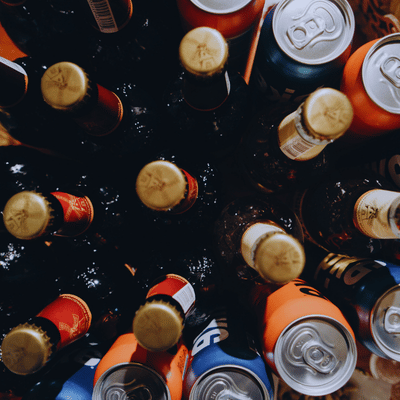
Application — Cold-Chain Beer Bottling (Round Glass)
Typical brewery line running 12000 B/H 65 m/m 200m/m beer bottles would use a Mid-tier configuration, with 2-3 labeling stations. Hot melt OPP labels endure the cooler-case condensation cycle that PSL often fails. Operator change label position via the touchscreen (50-150mm), and change wrap geometry via the Schneider PLC touchscreen – 330ml to 500ml SKUs take less than 45 minutes total, including starwheel change, label roll change.
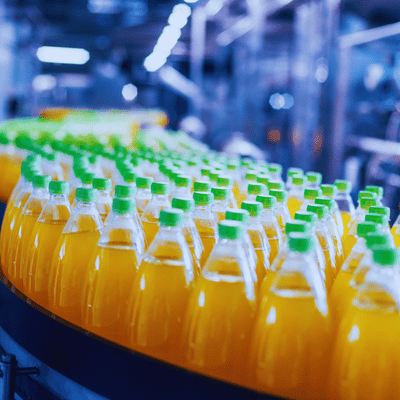
Application — Juice & Yogurt Drink Lines (PET)
PT lines for PET bottle juice and yogurt drinks run roll-fed moisture- and tear-proof OPP/BOPP film labels for the damp, sappy environment of fruit-content beverages. A scratch-proof infeed system (polished SUS 304 vs. nylon screws) prevents damage to the glossy PET from PSL applicators. Cold insulation (below 4 °C in juice, below 8 °C for yogurt drinks) preserves the label adhesion through the entire cold chain.
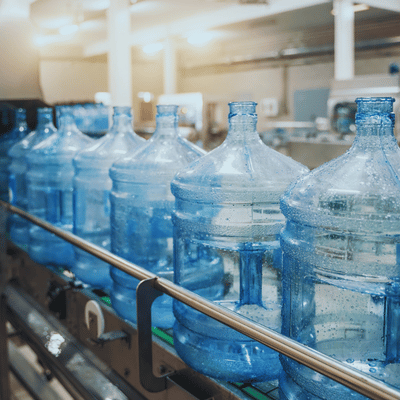
Integrated Mineral Water and CSD Lines
Factory modification of this Mid-tier hot melt labeling machine to High-tier, with Mass complete water treatment (0.5-50 T/H), filling and heat-shrink packaging production lines (2000-36000 bottles/hour), and PET bottle blowing equipment results in a turnkey beverage line from raw water through to empty-to-covered pallet. Factory integration avoids sequential registration delays, and provides a structural advantage no single-supplier labeling machine source can match.
Gold-Tier ROI Card
Annual Consumable Cost — Hot Melt OPP vs PSL on a 25M-Bottle Line
Design production (100k bottles/day × 250 days/year)
25,000,000 bottles/year
Mass hot melt OPP glue cost ($5/kg | 1kg/100k bottles)
~=$1,250/year
Corresponding PSL consumables ($1.20-2.00 per 1000 labels)
$30,000 – $50,000/year
~$28,750 – $48,750 annual material cost saving
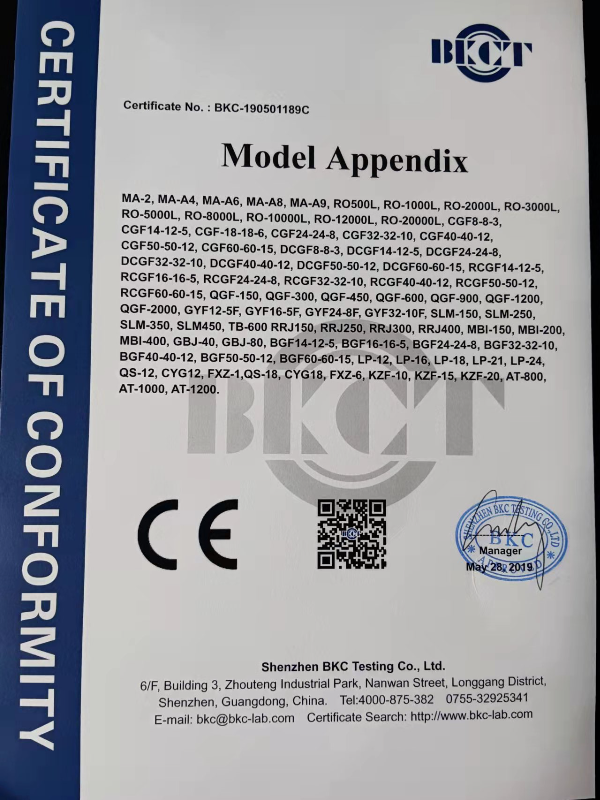
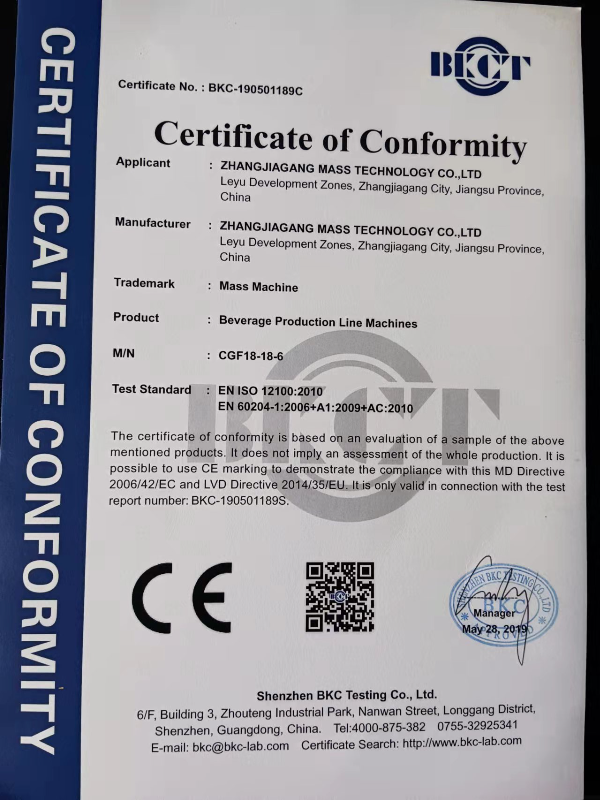
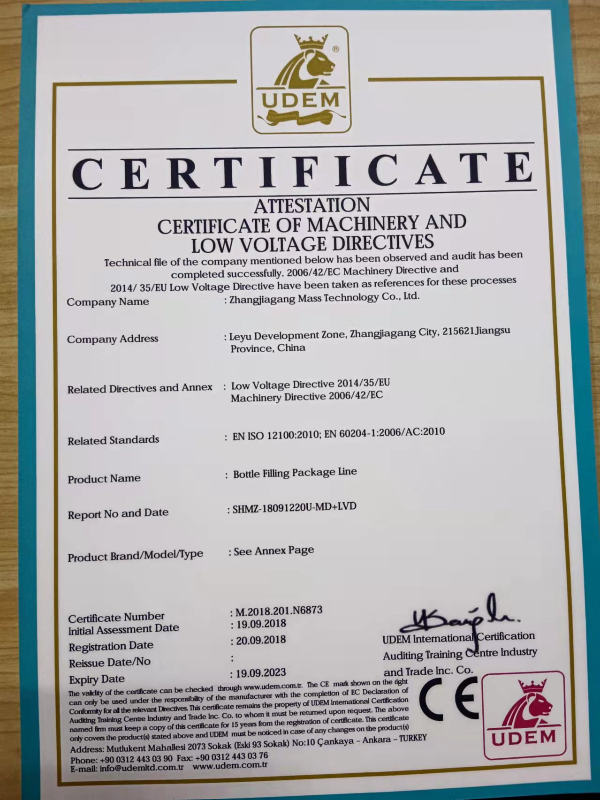
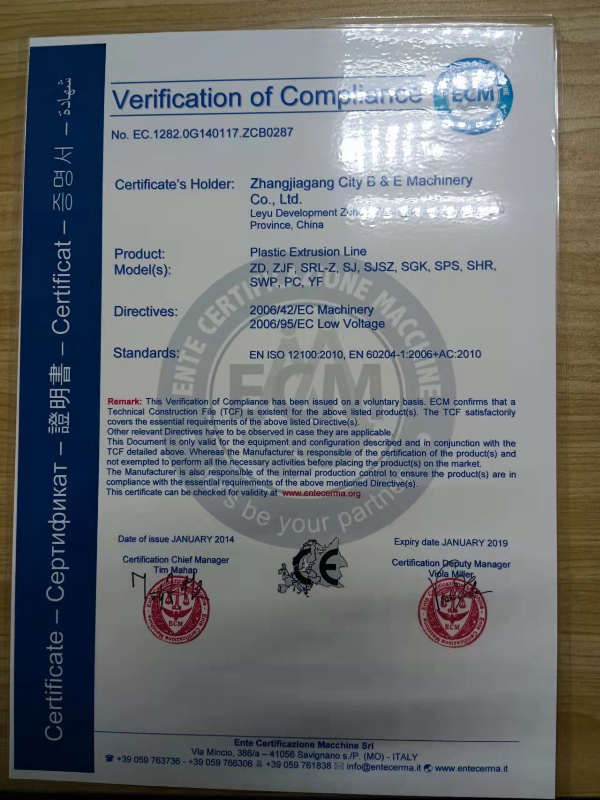
Engineering Inside — Certifications & Compliance
Design choices for this hot melt OPP labeler are based on the same controls and motion parts used by European and American premium label machines. Mass production can source replacement parts globally via standard supply channels—no private-label supply chain that holds your bottling line hostage if an idler wheel misses a sensor.
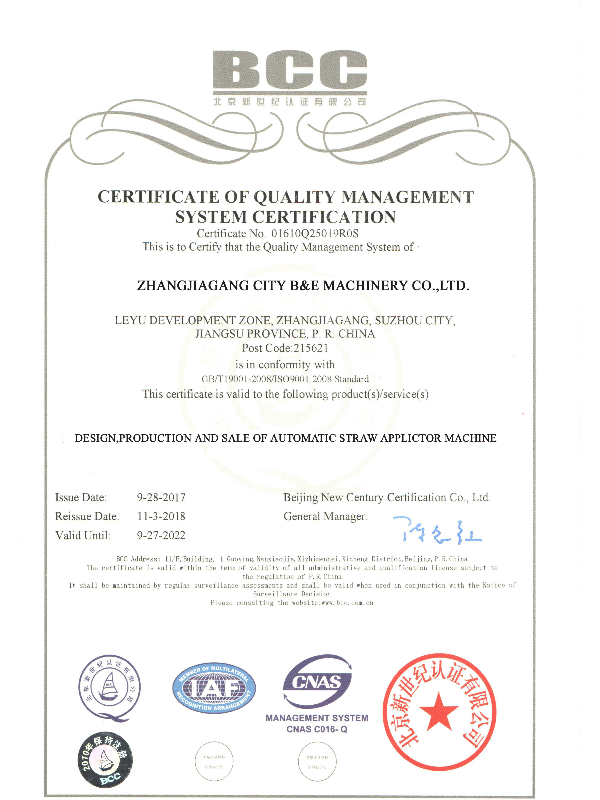
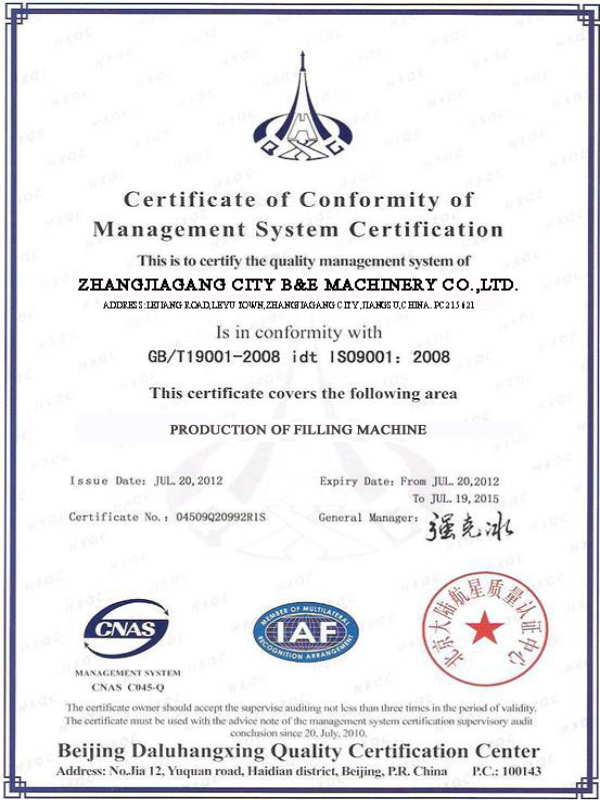
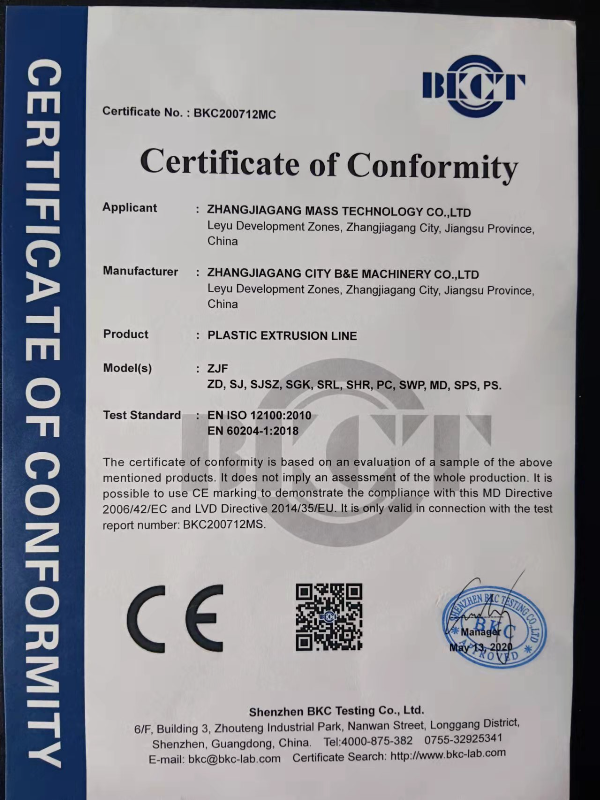
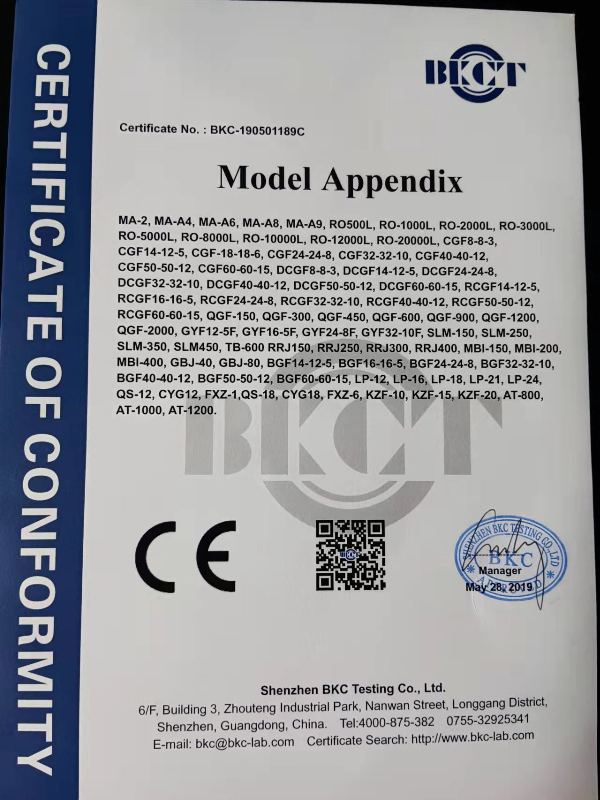
Where the Components Earn Their Keep
Schneider PLC plus touchscreen HMI operators select speed, glue temperature, and change-over recipe from one screen. Fault diagnosis displays the failure point in plain language; no separate handheld diagnostic device needed.
1.5 kW Schneider servo motor powers the labeling station. Closed-loop control maintains accuracy to 0.5 mm even at 20,000 B/H, where lesser stepper systems tend to drift.
SICK label sensor with transducer registration of the photoelectric label to the OPP/BOPP roll. Automatic control of the film tension + feedback to each cycle.
Integrated CNC-machined glue tank in a steady state it has an even temperature profile of 120-160 °C. The carbon deposit in all four corners is a typical failure mode of welded tanks, by machining the tank from one billet the weld lines that fail when always working at high temperature are removed.
Roll-fed system with servo-driven label transfer Maintains high speed operation without the start-stop cycles of cut&stack systems. Web tension controls and static eliminators preserve the flatness of OPP/BOPP film through the cutting drum.
Optional integrations encompass coding printer (batch/date/lot printing), vision inspection cameras, conveyor handoffs, sealing machine downstream interface, blow molding machine downstream handoff(in-line PET preform to label sequencing), and upstream filler integration. Technology in each module is chosen for replacement availability – a packaging line’s efficiency depends more on spare-parts response than on paper-spec horsepower. Aluminum guide rails and SUS 304 frame components can be obtained from common industrial suppliers, and the labeling machine integrates evenly with downstream packing machine equipment without custom controls/configuration glue logic. Protocols are compatible with Modbus and Ethernet/IP communication which can be used to provide plant-controls integration.
For multi-stage production lines integrating filling machines, capping machines, packaging machines, and conveyor cells, the labeling station handoff timing is set on the same Schneider PLC envelope, which keeps line production speed predictable across SKUs and addresses the cosmetic, beverage, and FMCG sector requirements alike.
×
![Enlarged Certification]()
Procurement Guide — Pricing Variables, Lead Time, MOQ & After-Sales
Most labeling machine web sites publish the spec sheet and stop. This handbook is for the purchasing person who must justify the purchase to a CFO, a Plant Manager and an Engineering Director – by defining the variables that actually drive the complete cost of ownership, lead time and life cycle support.
Five Pricing Variables
Capacity tier
Entry (3K-6K B/H), Mid (6K-12K B/H), or High (12K-20K B/H). Each tier has different servo configuration and no. stations.
Number of labeling stations
1, 2 or 3 stations. Front-and-back labelling, or wrap-around or part-wrap.
Kontroll: Paketebene
Standard-PLC aus dem Hause Schneider, mit Servo-Upgroup, plus komplett Schneider modulbaum (Steuerung +Servo + Inverter + Encoder).
Additional depth in integration
Standalone labeler, or integrated with Mass conveyor, capping, filling, blowing equipment up to a turnkey beverage line.
Customisation
Bottle envelope (40-105 mm 80-350 mm), label width (20-150 mm) with respective food choice of pack seal stainless, industry-specific food or pharmaceutical-grade fittings.
Mass publishes configuration-based pricing of sum against quote – real price would depend on bottle envelope, target capacity, label width, integration scope, etc. to the beverage line engineering team at Mass — as a bottle labeling machine manufacturer for a quote against application.
Worry-Free After-Sales
2-Year Full Warranty
All machine parts, parts and labor coverage
24-Hour Engineer Response
Phone, video, chat — global time-zone coverage
5-Working-Day Parts Delivery
International courier, off-the-shelf component availability
Operator Training
Onsite + HMI-resident video tutorials
Mass Vertical Integration — A Procurement Advantage
It’s not just labeling, the company actually produces entire water-treatment equipment (0.5-50 T/H), hot-fill juice machine systems, empty bottle filling lines for water, soda, high-end juice and beer, vinegar, soy sauce, and wine (2,000-36,000 B/H), 5-gallon barrel filling lines, capping machines (50-2,000 barrels/h), 140-800 T injection molde and preform mold-makers and bottle blow mold-makers, PET preforms, and even PET bottle convenient bottle design production equipment.
If the procurement group is purchasing a labeling equipment and combining it with capping equipment, filling equipment, blow molding equipment, packaging equipment, or other beverage packaging line equipment for a new line, the company can offer the entire bottling line from a single sourcer – single point of responsibility and accountability, single FAT, single aftersales point of contact.
Ready to configure your line?
Connect with our engineering team via our secure popup configurator.
Get Instant QuoteInteractive ROI & Procurement Tools
Hot Melt OPP vs PSL Annual Savings Calculator
Estimate your consumable cost savings when you switch from pressure-sensitive labels (PSL) to OPP hot melt labeling on a beverage line. Based on industry-validated 25-40% consumable cost differential.
OPP Hot Melt Labeling Machine Procurement Checklist
Score each procurement question against your shortlisted vendor. Strong = answered with measurable specifics; Weak = vague or missing; Unknown = not yet asked. Output: ownership risk score and gaps to close before final purchase.
FAQ — Hot Melt OPP Labeling Buying Decisions All Buyers
A BOPP / OPP hot melt labeling equipment applies BOPP label and OPP label media — biaxially oriented polypropylene (BOPP) or oriented polypropylene (OPP) film surfaces to bottles with a hot melt glue. The hot melt glue is in the 120-160 °C range within the hot-pressing tank, transferred to the OPP/BOPP label, and reflected over the bottle as it spins through the labeling station. A fast delling, durable adhesive bond best designed for beverage bottles, food packages, or home and personal care merchandise in cold-storage.
Pricing is based on capacity tier, quantity of labeling stations, controls package, and integration depth. Five parameters impact pricing: listed in the “Procurement Guide” above. For specific price, (specify bottle envelope(diameter height), target throughput, label width, lens) Two integrated options (standalone label or integrated line) across options are priced exclusively for your application.
BOPP signifies biaxially oriented polypropylene. This is a polypropylene web stretched in two directions (biaxially) which gives it high strength, clarity and picture-stability. BOPP wraps are moisture-proof, with stand oil spattering, and are resistant to tears (suitable for beverage and personal-care cans/ glasses). Works immediately in damp, frozen, or air-conditioned environments. OPP wraps (oriented polypropylene) are in one direction (unidirectionally), and are equally moisture-slick, oil resistant, and tear resistant however labels are called in the marketplace interchangeably, the packaging machinery.
One labeling cycle: bottles are fed through the infeed star/outer ring, and positioned precisely through the upper and lower pressure type plates. A precursor roll web feeds through the cutting drum, and slits the labels and feeds them down the line. The cut label is transferred over the glue roll, which applies the glue through a targeted film of hot-glue (120-160 °C ). The glues label heads emerge around the circumference of each fast-spinning bottle, the label wraps the bottle. Web tension regulators and ion barriers keeps the label flat, photo-eyes check positioning, and the labeled, spinning bottle exits through the discharge star.
Yes. At High-tier the OPP hot melt labeling machine is rated for 12,000-20,000 B/H with 3 labeling stations and a full Schneider PLC +servo + inverter pack. The ±0.5 mm placement accuracy is achievable through the full operating range – at 20,000 B/H the spec is identical to 6,000 B/H. Industry buying guides recommend having equipment procure 0.5 mm accuracy at maximum operating speed rather than nominal equipment operating speed; this machine passes that test.
Yes – the machine is rated for round bottle diameter 40-105 mm and height 80-350 mm in a single envelope. Changeover from one environment to the other usually means changing the infeed star wheel feeding system, central guiding rail, holders, and outfeed star wheel; the parts under the holders remain unchanged because Mass uses a belt-drive concept as opposed to multiple gearboxes. Typical SKU changeover is in the 30-60 minute range.
A standalone labeling machine is supplied; and recommends industrial-grade hot melt adhesive specifications based on the glue tank operating range (120-160 °C ). Adhesive procurement is usually local to save on international freight and keep purchasing tight with local suppliers – a 1 kg / 100,000 bottles at 50 mm label height translates into relatively cheap local spending. However adhesive recommendations (in terms of grade and hot melt parameters) are shared during the commissioning process.
Modbus and Ethernet/ip are supported via the Schneider PLC for plant controls integration. Optional Profinet hardware can be specified at quote stage. The control system is a standard industrial platform with nothing proprietary about the software (no license fees, no lock-in subscription). PLC backups, recipe access, and software maintenance can be retained in-house.
Hot Melt OPP Labeling Spec Reference
For engineers benchmarking system specs across venders, the following table brief summarizes the operating specs that should occur in any RFQ: and how the Mass OPP hot melt labeling machine compares to typical industry ranges.
| Process Parameter | Typical Industry Range | Mass Configuration | Reference Standard |
|---|---|---|---|
| Labeling placement accuracy | ±1.0 mm | ±0.5 mm | — |
| Hot melt glue temperature | 120-180 °C | 120-160 °C | ASTM D816 |
| Roll-fed cut accuracy | ±0.5-1.0 mm | ±0.5 mm | — |
| Label material thickness (OPP/BOPP) | 30-80 µm | 35-60 µm typical | FINAT |
| Compressed air supply | 4-8 bar / 0.1-0.3 m³/min | 5-8 bar / 0.2 m³/min | ISO 8573-1 |
| Power input | 5-12 kW @ 380V/50Hz | 8 kW @ 380V ±10% / 50Hz | — |
| Bottle diameter range | Φ30-120 mm | Φ40-105 mm | — |
| Glue consumption (50 mm label) | 1.0-4.5 kg / 100K bottles | 1 kg / 100K bottles | — |