Get in Touch with Masstech

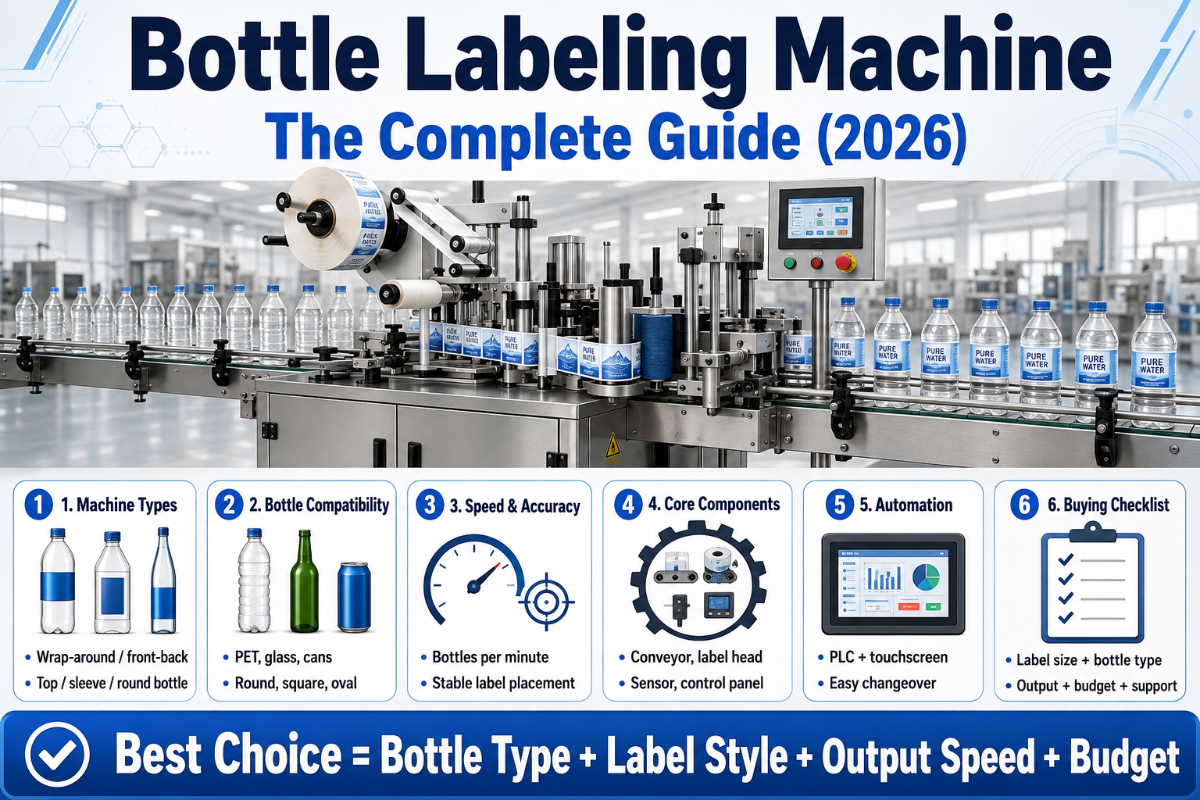
A bottle labeling machine can be the determining factor in running your line at label plate speed or suffering two hours of micro-stops and skewed labels every day. This manual explains the five labeling techniques, the three automation levels, all of the container shapes each applies to, the label stock used for each process, a seven-factor choice matrix, the leading five label quality issues and their true root causes, as well as the implications of the 2026 EU PPWR and FDA DSCSA regulations on purchasing choices over the coming year and a half.
Quick Specs — Bottle Labeling Machine at a Glance
| Throughput range | 8–20,000 bottles per hour (manual to fully automatic) |
| Placement accuracy | ±0.5 mm (servo) to ±1.5 mm (entry-level) |
| Container diameter | 14.75–125 mm; height 20–350 mm |
| Label cost per bottle | $0.005 (hot melt) to $0.080 (premium pressure-sensitive) |
| Capital range | Sub-$1,500 manual bench unit to $85,000 sleeve-and-tunnel line |
What Is a Bottle Labeling Machine? (Working Principle & Sub-Systems)
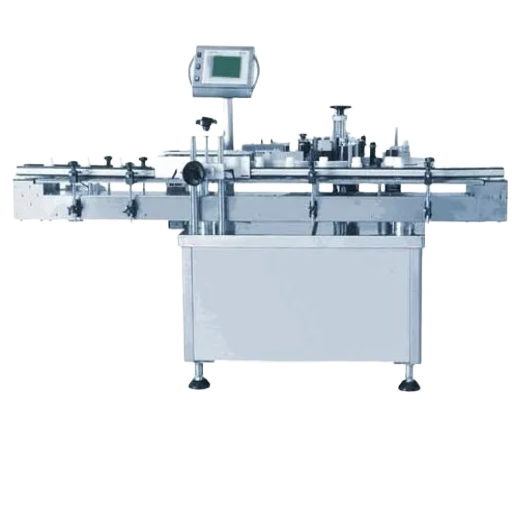
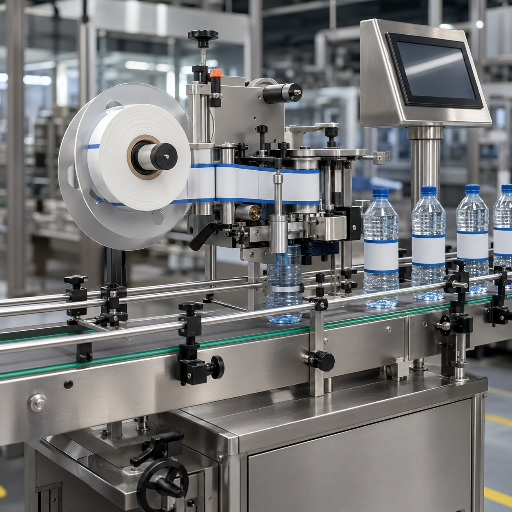
A bottle labeling machine, or bottle labeling equipment, is packaging machinery which pulls a roll or stack of labels over a series of rollers, peels each label off one by one and applies the label to a bottle, jar, vial or any other container as it passes by on a conveyor in a production line. Label applicators can be dispensers that peel a pressure-sensitive label from the liner and applies it to the container, a hot-melt unit, which wraps the OPP film of the tubular sleeve around each bottle and bonds it with thermoplastic adhesive on the film, or a sleeve dropper, which drops the tubular sleeve around the bottle and passes it through a shrink tunnel to pull the film tight.
Within almost every bottle labeler, whatever brand or method, are four sub-systems,
- Unwind and label dispense- pulls label stock from a reel, peels it at the peeler plate, and then feeds it to the applicator— control of web tension in this area will determine whether the label is flat or wrinkled downstream.
- Registration/ Sensor system—photoelectric or fiber sensor detects bottle arrival and fires applicator at the right millisecond. SICK or Keyence sensor stacks are common on industrial bottle labeler machines. Entry level units are often cheap, standard photo-eyes.
- Applicator head – component that applies the label on the product. Four main applicator types exist: wipe-down rollers, tamp-blow heads, vacuum drums (skin or wrap-around) and sleeve droppers (shrink sleeve).
- Conveyor synchronization – a servo or stepper drive maintains conveyor and dispensing belt in phase. 1mm conveyor speed drift produces 4mm label position error at high speed.
📐 Engineering Note
Servo driven label applicator systems are accurate to 0.5mm at nameplate speed. Stepper driven entry level systems will drift to 1.5mm once the labels per minute exceed 60. Accuracy difference comes from a sensor-and-servo combination, not from the applicator head itself – you can purchase a great head and still get poor placement if your sensor latency exceeds five milliseconds.
If you’re interested in how all four sub-systems are implemented in a production quality package, Mass Technology puts out its 3-family industrial bottle labeling machine set with the bill of material for every part in the system and accuracy specs for each model.
Five Labeling Methods Compared
Many buyer guides for the open web only list 2 options (pressure sensitive versus shrink sleeve) or three (add hot melt). There are five canonical sets, each winning in its own operating window. Our comparative table below triangulates public cost-per-bottle ranges from packaging trade press with throughput envelopes published by major OEMs.
| Method | Throughput | Cost / bottle | Tamper-evident built in | Best fit |
|---|---|---|---|---|
| Hot-melt OPP/BOPP wrap | 3,000–20,000 BPH | $0.005–$0.015 | No | Round-bottle beverage mass production |
| Pressure-sensitive (self-adhesive) | 1,200–12,000 BPH | $0.030–$0.080 | No (add band) | Cosmetics, daily-chemical, short runs |
| Shrink sleeve (PVC, PET-G, OPS) | 3,000–9,000 BPH | $0.020–$0.045 | Yes (full neck band) | Pharma, premium SKUs, tamper-evident requirements |
| Wet-glue cold-glue | 10,000–60,000 BPH | $0.003–$0.010 | No | Beer and returnable glass; legacy high-volume bottlers |
| In-mould labeling (IML) | 10,000–50,000+ BPH | $0.040–$0.090 | Embedded (no liftable edge) | Injection-moulded HDPE/PP bottles; premium retail |
Total bottle cost of ownership is the hot-melt label cost difference. Label material itself is the largest single line item in total cost of ownership is the hot-melt labelcost difference. Seven hundred fifty 10,000-BPH 16-hour factory lines per year, for instance, results in forty million bottles annually. Even a two-cent label-cost differential between a hot-melt OPP label and a self-adhesive label results in $800,000 a year for label material alone – a sum that often surpasses the capital cost differential within twelve months.
What is the difference between hot melt and shrink sleeve labeling?
Hot-melt applies a uniform film 150mm wide ‘o’ around the circumference of a round bottle and then bonds the trailing edge with a strip of thermoplastic adhesive. Shrink sleeve drops a tubular pre-printed sleeve over the entire bottle and uses a steam or electric tunnel to shrink it into place. Hot-melt is less expensive per bottle but can only be used on round bottles; shrink sleeve can be used on any shape and offers 360-degrees branding, plus tamper-evident neck bands, at approximately three times the label cost. One rule of thumb most plants follow: use hot-melt labeling for water and carbonated drinks on top-10,000BPH round bottles, use a shrink sleeve labeling machine when full-body graphics, tamper-evident bands are desired and container shape is non-round; use pressure sensitive when change-over times drive throughput rates. For high-volume round-bottle beverage lines and tight label-to-joint applications the reliable workhorse is the OPP hot melt labeling system line.
Three Automation Tiers — Manual, Semi-Automatic, Fully Automatic
Automation tier should match volume, not your available budget. Clients who install manual labeling solutions because they look least expensive and then run 800 bottles per day will pay for the difference in operator hours within four months.
| Tier | Throughput | Accuracy | Operator load | Indicative price |
|---|---|---|---|---|
| Manual bench | 8–15 bottles per minute | ±1–2 mm | One operator, full attention | $450–$3,000 |
| Semi-automatic | 20–200 bottles per minute | ±1 mm | One operator, intermittent | $3,000–$18,000 |
| Fully automatic | 3,000–20,000 BPH | ±0.5 mm | Supervisory only | $25,000–$85,000 |
Industry consensus across multiple OEMs sets a practical guideline: under 500 bottles per day buy manual; from 500 BPH to 3,000 BPH buy semiautomatic; over 3,000 BPH buy automatic, as the operator-attended cost of labeling exceeds the machine cost within twelve to eighteen months. Installing low-cost manual labeling solutions seems cheap on day one, but rapidly becomes the size of a bottleneck on the line by the six-month mark. Cost is not in the label applicator itself – it is the attendant workhours requirement.
Container Shape Compatibility — What Each Method Handles
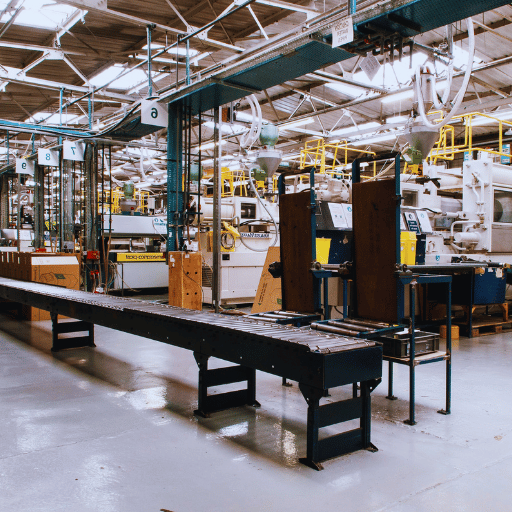
Different bottle shapes call for specific label applicators. Our chart shows which applicators can be used with what shapes without the need for custom tooling.
| Container shape | Hot melt | Pressure-sensitive | Shrink sleeve | Wet-glue |
|---|---|---|---|---|
| Round (cylindrical) | ✓ Best | ✓ Best | ✓ | ✓ Best |
| Oval | ⚠ Limited | ✓ | ✓ Best | ⚠ Limited |
| Square | ✕ | ✓ Best (front/back) | ✓ | ✕ |
| Polygonal / faceted | ✕ | ✓ Best | ✓ | ✕ |
| Tapered / conical | ✕ | ⚠ Edge lift risk | ✓ Best | ✕ |
| Flat / pouch-like | ✕ | ✓ Best | ⚠ Limited | ✕ |
For companies whose bottle portfolio contains a mix of round and non-round shapes the practical choice will usually be two appli-cators in the same labeling solution instead of one applicator with a different set of custom tooling for each shape.
Industry Applications Across Eight Verticals
The product, the label, and the regulations differ by industry. Our matrix maps eight industries to the typical labeling method and placement specification specs necessary for auditor approval.
| Vertical | Typical method | Throughput | Regulatory note |
|---|---|---|---|
| Beverage (water, CSD, juice) | Hot-melt OPP/BOPP | 6,000–20,000 BPH | EU PPWR Article 12 pictograms from Aug 2026 |
| Wine and spirits | Pressure-sensitive front/back | 2,000–6,000 BPH | TTB approval; precise placement ±0.5 mm |
| Pharmaceutical vials | Wrap-around PSL with serialization | 100–600 ppm | FDA DSCSA Stabilization Period through Nov 2026 |
| Cosmetics and skincare | Sticker labeling, double-side | 40–120 ppm | Frequent SKU changeover < 5 min |
| Personal care | Pressure-sensitive or sleeve | 2,000–6,000 BPH | Tamper bands optional |
| Household chemicals | Pressure-sensitive, freezer-grade adhesive | 3,000–8,000 BPH | GHS pictogram compliance |
| Food jars and condiments | Hot-melt or wet-glue | 4,000–12,000 BPH | Direct food contact adhesive class |
| Dietary supplements | Pressure-sensitive PSL | 2,000–5,000 BPH | FDA labeling compliance + lot/batch coding |
Are bottle labeling machines suitable for pharmaceutical vials?
Yes, with two caveats. First, the vial diameter floor on most bottle labeler machines is 14.75 mm. For anything smaller than that a dedicated vial labeler is needed. Secondly, all US pharmaceutical packaging is now on the FDA Drug Supply Chain Security Act (DSCSA) compliance mode with unit-level serialization support and 2D data matrix printing on or before label application. Pharma-suitable lines therefore include a wrap-around label applicator (such as HERMA 132M HC class units, which run up to 600 vials/min) together with a thermal-transfer or ink jet printer incorporated into the applicator. When selling dietary supplements not within the scope of DSCSA, a standard semi-automatic high-throughput bottle labeling system setup is normally sufficient.
“The 2025 packaging line readiness studies bring the same general picture across verticals- investing in labeler upgrades pays back more quickly when buyers specify accuracy and changeover time over peak BPH. Buyers who chase the highest nameplate speed tend to ignore the changeover envelope and lose more man-hours to setup than they gain in throughput”.
— Synthesized from PMMI 2025 Performance Optimization Insights for Packaging Line Readiness
Label Materials & Adhesives — A Buyer’s Education
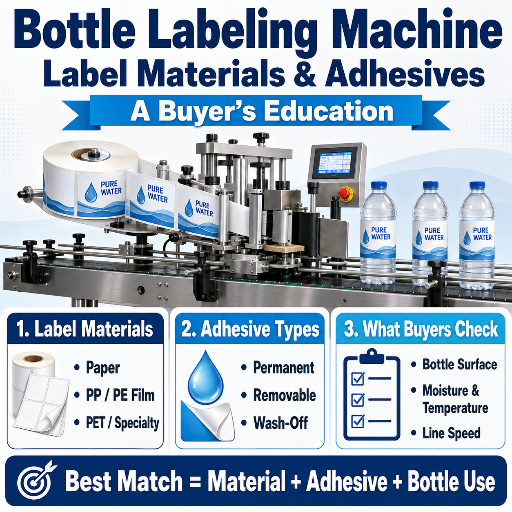
Label material is the second axis of machine selection. Pressure-sensitive applicators cannot run a 25 m PET-G sleeve and a hot-melt machine cannot wrap a 90 m heavy-duty wine label without dwell-time correction. Five face-stock families encompass nearly all broad-shoulder bottle labels on a global retail shelf. For the pressure-sensitive route, compare self-adhesive label stock from Guanma against the applicator's liner, roll and adhesive requirements; this material route is separate from shrink sleeves and hot-melt wrap-around film.
| Face-stock | Thickness | Moisture resistance | Typical application |
|---|---|---|---|
| OPP film | 50–60 µm | High | Beverage hot-melt wrap |
| BOPP | 50–70 µm | Very high | Cold-chain and ice-bath applications |
| PE film | 75–100 µm | Medium | Squeezable cosmetics bottles |
| Paper PSL | 60–90 µm | Low (uncoated) to medium (coated) | Wine, spirits, premium packaging |
| PET-G shrink sleeve | 30–50 µm | Very high | Tamper-evident pharma, premium beverage |
Adhesive class is the second dimension. Permanent acrylic for normal retail; removable acrylic for promotional point-of-sale labels; freezer-grade for cold-stored products; food-direct-contact for primary-contact food labels. Container surface energy also matters – a PE bottle with surface energy below 36 dyne/cm requires an extra formulation adhesive class for the label to stay affixed beyond seventy-two hours.
How to Choose — A 7-Factor Selection Framework (Specification & RFQ Guide)
Below is a framework combining public guidance within the industry with PMMI’s 2025 packaging-line-readiness specifications. This becomes a checklist for pulling funding, not a prescriptive calculation. Compare each criterion to your own manufacturing environment.
The 7-Factor Selection Framework
- Throughput goal (BPH): for now and predictable eighteen months into the future.
- Application placement tolerances: 0.5 mm versus 1.5 mm, whether driven by retailer order or regulatory body.
- Rate of SKU changeover: frequency per shift and minimum time on each.
- Range of container forms: a single shape or varied ones, six diameters, or 2 to 8.
- Range of label stock: can the applicator accommodate paper PSL, OPP, and sleeve, or only one type.
- Five-year TCO: or the sum of label cost, spare parts, electricity, drink-the-line downtime, not simply capital outlay.
- Level of line integration: conveyor height, power supply, PLC handshake, vision system mounting points.
Within this framework hides a principal named that might be borrowed for procurement discussions – the 80/15/5 Rule for Labeler ROI. About 80% of ROI from a labeling machine is throughput-plus-accuracy, 15% changeover time of SKU, and 5% everything else (touch screen, specific applicator brand, warranty bells-and-whistles list). This rule is a framework, not a fact; the ratios are our anecdotal experience gleaned from packaging line readiness studies, not a huge variable-controlled, set-entry experiment. However, it’s the right ordering; throughput and accuracy override the ROI calculation, and temptation to chase the wrong feature is the most usual procurement mistake.
If you’d be interested to compare this framework to a working product-line and related price-typings, Mass Technology’s three engineered bottle labeling machine families target throughput envelopes and accuracy specs, with a Labeling Method Selector Tool.
Common Labeling Problems & Root-Cause Fixes (Roller, Sensor, Web Tension Triage)
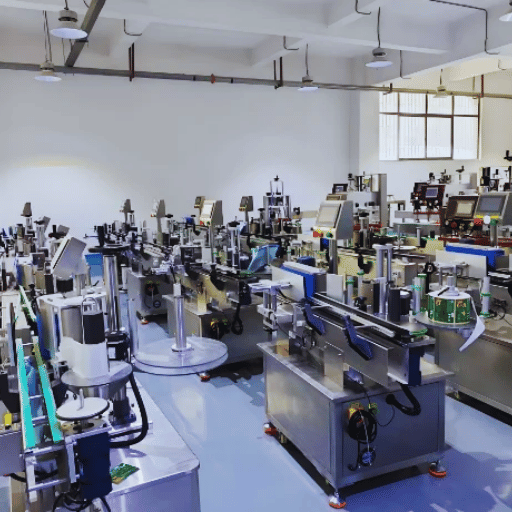
Most articles on labeling-line troubleshooting open with operator-training advice. But field experience and forum crawls indicate otherwise. When just-in-time micro-stops are accurately time-stamped and traced back to the root cause, the three top factors are sensor latency, web-tension drift, and roller-wear- not operator setup. One pattern from r/TheBrewery threads is operators bag-and-boards pre-x-y shifting the label roll and eye sensors for days or weeks before calling the maintenance department over to inspect a worn bearing or a peeler-plate bolt it’s taking up space in a part bin.
⚠️ Don’t blame the operator first
Industry reports suggest through over 50% of label-line micro-stops originate from sensor, web, or adhesive root causes, not operator setup – resolving the malfunction often requires hardware diagnosis over re-training the operator.
- Web tension drift – measure tension each shift; recalibrate when the label batch changes.
- Sensor fogging or latency – in humid environments, clean the photo-eye daily; replace fiber if response exceeds five milliseconds.
- Adhesive temperature off spec – in hot melt glue reservoirs, drifting; inspection of thermocouple every month.
- Conveyor phase-lock-up – one-millimeter deviation in drive pace can yield four-millimeter error in label position.
- Label stock variance – 15 micron variability in incoming stock-to-stock is typical; servo drive compensation necessary.
- Operator setup – verified first, not last.
One maxim worth logging in maintenance records: sensors fog first, operator tires last – both ought be measured. Oftentimes, the more affordable diagnostic is situated upstream of the operator.
Industry Outlook 2026+ — What’s Changing
Four industrial-shifting dynamics are poised to reshape bottle labeling from here to 2028, and three of them have set-in regulation deadlines worth penciling into the capex budget.
EU PPWR becomes control 12 August 2026. Replacing the 1994 Packaging Directive, the new Packaging and Packaging Waste Regulation mandates material-sign gauge painting on packaging under Article 12. Earmarking 1 January 2030 Article 7 is searching in a decade long 10-35% recyclable material normalization in plastic packaging components; including label face-stocks when relevant. Export manufacturers into the EU would do well to challenge face-stock providers to deliver mono-material P- P or P- P stocks today, so the manufacturing line is qualified before the recycled-content mandate arrives.
FDA DSCSA serialisation enforcement is scheduled out to November 2026. FDA’s DSCSA implementation order defines a duration called the Stabilization Period during which some provisions of the new law can go unenforced until November 2026, allowing pharmaceutical trading partners to send and receive the data in a wholly interoperable manner. After that, reading a unit-level traceability with a 2D data-matrix code becomes a financial floor for US pharma marketers packaging—including vial-labeling lines—so if your line isn’t already wrapping with a thermal-transfer or inkjet print-and-apply system, now’s the time to start budgeting it.
Vision-system 100% inspection going mainstream. Where a single fixed photo-eye once registered every label on a mid-tier production line, line-scan cameras quickly integrate at the discharge to detect wrinkles, skew and missing labels at full nameplate speed. Integration prices have recently dropped to almost the cost of a mid-tier servo upgrade.
PET-G replacing PVC in shrink sleeves. European retailer pressure to reduce recyclability concerns is steadily pushing PET-G sleeves, as sleeve stock, replacing PVC. Consumers planning sleeve lines in 2026 should specifically specify a tunnel that handles PET-G shrink profiles, not simply PVC, so the line remains adaptable in the future.
Frequently Asked Questions
Q: What is a typical price range for a bottle labeling machine?
View Answer
Semi-automatic pressure-sensitive sticker labelers run $3,000 to $18,000 depending on speed and double-side capability. Fully automatic hot-melt OPP systems run $25,000 to $65,000 with BPH targets, with a significant component of conveyor integration scope. Shrink-sleeve applicators with a tunnel run $30,000 to $85,000,, with tunnel power source (steam versus electric) comprising the dominant cost. Manual bench units start under $1,500. Voltage config, HMI language and FOB destination spec move the band another 15 to 20 percent.
Q: How fast can a bottle labeling machine actually run?
View Answer
Manual bench labelers move 8 to 15 bottles per minute. Semi-automatic labelers move 20-200 bottles per minute. Fully automatic hot-melt blow-molded bottle line manufacturers move 3,000-20,000 BPH. Older wet-glue legacy systems on returnable beer bottles can pack more than 60,000 BPH but are relatively uncommon as a specification for new lines that are not legacy systems.
Q: What is the difference between manual, semi-automatic, and automatic bottle labelers?
View Answer
Manual labelers require an operator to precisely manually put each bottle into the system and push go. Semi-automatic systems automatically apply labels once each bottle is physically loaded into place, in contrast. Fully automatic setups accept a proper inbound conveyor of bottles, separates it into individual bottles and apply labels to each one without operator intervention—essentially turning the human operator into a supervisor overseeing multiple lines, rather than simply someone manning a single.
Q: Can one bottle labeling machine label round, square, and tapered bottles?
View Answer
Possibly, if there are other constraints. Pressure-sensitive sticker labelers, including double-side mode, can handle round, square, polygonal and flat shapes without changeovers. Shrink-sleeve labelers handle virtually every shape, including tapered bottles. Hot-melt OPP labelers, optimised for round bottles, 40-105 mm diameters, is not optimal for packaging other shapes. Often, the cleaner solution if a mix of shapes is to deploy two labelers on the same conveyor that do not try to be clever in the same piece of equipment.
Q: What maintenance does a bottle labeling machine need to keep accuracy?
View Answer
Daily: photo-eye cleanliness, inspection of glue-pot on hot-melt systems, check web-tension at label-roll changes. Weekly: assess wear of servo-belt and roller. Monthly: sensor and encoder calibration, inspect for shrink-tunnel temperature uniformity.
Q: How do I know if I need shrink sleeve or pressure-sensitive labels?
View Answer
Two decision drivers settle this decision quickly. First, do you need a tamper-evident neck band or 360 degree branding on a non-round container? If so go with shrink sleeve. If not pick pressure-sensitive which is almost always cheaper per bottle and faster for change-over. Second, what is your annual label volume? Under five million units a year the per bottle cost delta is not big enough to prefer a sleeve plus tunnel; over twenty million units a year the delta becomes the dominant line item and method choice should be data driven rather than aesthetic.
See Mass Technology’s engineered bottle labeling series
If this guide narrowed your method selection two next step resources can help you fast-track the next decision:
- Try the Labeling Method Selector quiz—three questions, one method recommendation.
- Open the 5-Year Labeling Method TCO Calculator—hot-melt versus sleeve versus self-adhesive for your bottle line.
About This Bottle Labeling Machine Guide
Throughput, label-cost, and method-comparison figures in this guide have been compiled from Mass Technology field commissioning experience from 2017 onward, cross-verified against PMMI 2025 packaging-line-readiness figures, EU PPWR Articles 7 and 12, and FDA DSCSA time lines. When a number could not be confirmed to a Tier 1 document it is provided as a working range rather than a precise data point.
References & Sources
- EU Packaging and Packaging Waste Regulation (PPWR)—European Commission, Directorate-General for Environment
- Drug Supply Chain Security Act (DSCSA)—U.S. Food and Drug Administration
- 2025 State of the Industry Report—PMMI, The Association for Packaging and Processing Technologies
- 2025 Performance Optimization: Insights for Packaging Line Readiness—PMMI
- 2025 Beverage Industry Packaging Trends—PMMI
Related Articles
- Shrink Sleeve Labeling—The Complete Guide—materials, equipment, tunnel selection
- OPP Hot Melt Labeling—A Practical Guide—the wrap-around bottle labeling process explained
- How to Start a Water Bottling Business—cost, steps, and FDA basics
- Water Filling Machine—the upstream equipment most labeling lines integrate with