Get in Touch with Masstech
Precision Engineering
Small-Scale Water Bottling Machines & Complete Turnkey Lines — 200ml PET to 5 Gallon, 600 to 36,000 BPH
Single-source supplier for water treatment, bottle blowing, filling, capping, labeling, and shrink wrapping proofed up in mineral water, purified water, carbonated, juice, beer, and wine plants.
PET Filling Capacity (200ml–2L)
2,000 – 36,000 BPH
Water Treatment Throughput
0.5 – 50 T/H (RO + UV + Ozone)
PET Preform Injection
140T – 800T
Warranty
2 years, all machine parts
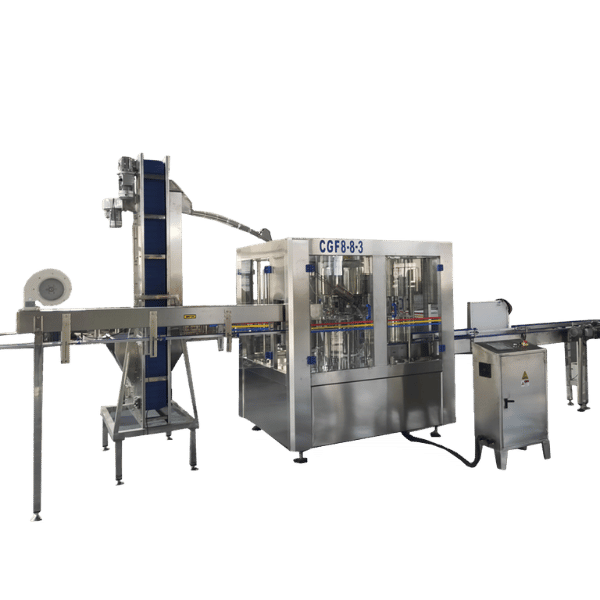
Why Most Small-Scale Water Bottling Projects Stall — and the Single-Source Solution
A water bottling machine is the shining star of any new bottle water facility, but it estimates only 40% of the project investment. The remaining 60% water treatment, pipe reruns, sourcing new preforms, labeling registration, utility upgrades, operator training – is where first-time investors lose 3-6 months of commissioning, eat through capital reserves, before deliver their first saleable bottle.
Small-batch (600-12,000 BPH), greenfield bottled water -are doomed for three reasons that most of first-time investor overlook. One, multiple-vendor uptake generates protocol mismatches: 3KPH reverse osmosis from Vendor A complains on VS-7 bottle line from Vendor B and the engineer team spends endless time harmonizing control signals, CIP cycles, and 100% sanitation. Two, planners ignore auxiliary system specs and find their utility bill quadruples on 8-12 kWh/1,000 BPH energy input and 1.5 L / 1 L water utilization after machines arrive. Third, “PET-not-5-gallon” dynamic driving the investments to bulk separate plants translates to excess economy-of-scale capex, when PET and 5-gallon share the same platform.
Built in Zhangjiagang, Mass Technology devises integrated turnkey single-source solutions from a single facility located in the Jiangsu cluster that hosts nearly 70% of bottled water machinery suppliers in the world. Every plumbed-in machine – water treatment, PET preformed injection, bottle blowmolding, filling, capping, labeling, shrink wrapping – arrives from one factory, using a single control set, with a single mechanical interface, with one management call-center to function together through installation. Enables the calling for an affordable, integratively-less-expensive, small-volume project.
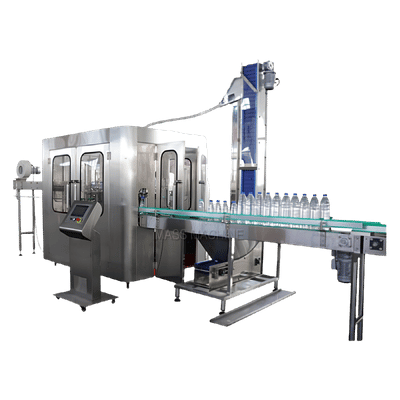
Mass 3-Tier Bottling Capacity Selection Matrix — 600 to 36,000 BPH
One of the costliest mistakes in small-batch bottle water projects is over-optimizing for 1-3,000 BPH starting capacity when 8-12,000 BPH demand will materialize within 18 months; or oversizing to a 24,000 BPH line when demand stays under 4,000 BPH over the next three years. The 3-Tier BOTTLE WATER CAPACITY CHOICE Grid delivers precise capacities for the four choices dimensions – demand volume, format choice again, water volume budget, labor expense model – to one equipment set-up.
| Tier | Capacity | Automation | Bottle Format | Workstations | Footprint (m²) | Operators | Best Fit |
|---|---|---|---|---|---|---|---|
| T1 Starter PET | 600–1,500 BPH | Semi-auto | 200ml – 2L | 3-in-1 monoblock | 25–40 | 2–3 | Startup / water store / regional distribution |
| T2 Growth PET | 2,000–12,000 BPH | Fully auto monoblock | 200ml – 2L + 3–10L | 3 / 6 / 8-in-1 + conveyor | 60–120 | 3–5 | Mid-size mineral water plant / OEM |
| T3 Scale PET | 15,000–36,000 BPH | Linear high-speed | All PET formats | Independent rinser + filler + capper + labeler + shrink | 200–400 | 5–8 | Large national / export |
| T1 Starter HOD | 50–600 barrels/h | Semi-auto | 3 / 4 / 5 gallon | Washer + filler + capper | 30–50 | 2 | HOD regional brand |
| T2 Growth HOD | 600–2,000 barrels/h | Fully auto | 3 / 4 / 5 gallon | Auto wash / rinse / sanitize + de-cap | 60–100 | 2–3 | Mid-size HOD / commercial water service |
Selection Logic
Selection logic unfolds across four dimensions: 1/ capacity forecast, for the production peak (at 36 months, not at launch); there’s a premium for under-sizing now, to a higher premium for slight over-sizing at launch. 2/ format variety, if PET and 5 G-H2O-D are in the brand strategy in the first 24 months, should I commit to a single platform from day one for water treatment & ozone? 3/ footprint budget: a T2 Growth PET line (8,000 BPH) needs 60-120 m of accessible clear-floor; T3 scale need 200-400 m, with truck access. 4/ labor structure: less than $300/month/water/wk operator in Wand, more than 714/month/water/wk should jump to T2 growth: automation will take out the labor, all the more since wages are so high.
Platform Architecture
For Tier 2 and Tier 3 platforms, Mass standardizes on rotary monoblock filling machines paired with magnetic torque cappers, with capping machines synchronized to filler exit speed via a shared servo bus. The rotary architecture sustains capping reliability above 99.7% even when production targets push the line to 95% of rated BPH.
Common Selection Error
Choosing semi-automatic at T2 capacity (2,000+ BPH). Below 1,500 BPH, semi-automatic delivers reliable economics; above 1,500 BPH, manual handling becomes the bottleneck and the line cannot sustain rated capacity. If projected demand exceeds 1,500 BPH, move to fully automatic monoblock from day one.
Complete Production Lines by Bottle Format — PET 200ml–2L / 3L–10L / 3–5 Gallon
Today, Mass operates three distinct families of bottling lines, each adapted to a particular bottle geometry and cycle frequency. These three families all use the same water treatment platform, same control system, same capping heads supplier base (differentiation to other companies with dedicated PET and film jars engineering team).

PET 200ml–2L Water Filling Line
- Capacity: 2,000 – 36,000 BPH
- Configuration: 3-in-1 / 6-in-1 / 8-in-1 monoblock
- Likewise: Mineral water, Purified water, CSD
- Bottle sizes: 200ml, 330ml, 500ml, 1L, 1.5L, 2L
- Filling system: Rotary gravity filler with 8/12/18/24/32 heads
- Material parts: SS304 food-grade stainless steel
- Capping: Magnetic torque capper with hopper sorter
- Rotary monoblock integrated with rinser & capping

3L–10L Mid-Format Water Filling Line
- Capacity: 1,000 – 6,000 BPH
- Bottle sizes: 3L, 5L, 6L, 10L
- Use case(s): Family-pack water, local water shop
- Filling system: Linear or rotary, depending on tier
- Compatibility: Shares ozone & water treatment with PET
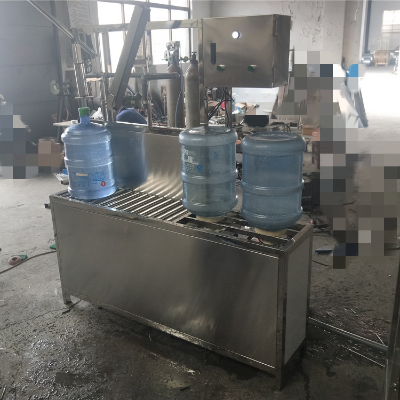
3.3–5 Gallon HOD Water Filling Line
- Capacity: 50 – 2,000 barrels/hour
- Type de bouteilles: 3, 4, 5 gallon en PET/PC
- Workstation: Bottle de-capper, 4 station push washer
- Sanitization: Ozone + UV at fill point
- Operators required: 2 (load + unload)
- Compliance: Engineered to align with FDA Standards
Unified Interface: Across all three line families, the bottle filling subsystems are engineered to a unified mechanical interface. Whether you specify a semi-automatic 600 BPH bottle filling machine for a Starter project or a fully automatic bottle line at 24,000 BPH, the filling valves, capping machines, and rinser carousel share Mass’s standardized control architecture. This means an automatic bottle filling machine added in year 3 can integrate into the original T1 facility without re-engineering upstream or downstream.
Cost Efficiency: Buyers choosing between PET 200ml–2L and 5-gallon HOD often assume the two formats require fully separate facilities. In practice, Mass lines share four critical subsystems — RO water treatment, ozone injection, mineral re-mineralization, and the central PLC control architecture — which means a brand running both formats from one facility shaves roughly 30% off the duplicate-equipment bill compared to single-format buyers procuring from two suppliers.
Beyond Filling — Water Treatment, Bottle Blowing, Labeling & Shrink Packaging
A water bottling filling machine handles only roughly 25% of the actual liquid-to-bottle journey, even though the filling machine commands the highest visibility on the equipment list. The other 75% — converting raw water to bottled-quality output, manufacturing the bottle itself, applying the label, and consolidating finished goods for shipping — is where small-scale projects either scale predictably or burn through working capital chasing third-party suppliers.

Water Treatment (0.5 – 50 T/H)
Multiple Stage Treatment—sediment filtration, activated carbons, reverse osmosis (RO), UV, Ozone disinfection. Throughput varies from 0.5 T/H for the T1 Starter plant to 50 T/H for the T3 Scale. All systems include automated backwash cycles and CIP (Clean-in-Place) ports for daily sanitation. Mineral re-injection modules are offered to support “mineral water” Standards of Identity claims under 21 CFR 165.110 (a).
PET Preform Injection & Bottle Blowing
Injection moulding equipment from 140T to 800T is capable of producing preforms for 200ml-2L bottles in house. 2 step blow molders convert preforms to bottles at a rate to meet the filling line BPH – removing the cost of bottle inventory carrying and external supplier leadtime. For brands requiring 5Gallon HOD, dedicated blow molders for 3 / 4 / 5 gallon polycarbonate bottles are available as an separate module.
Labeling — Sleeve, Pressure-Sensitive & Wrap-Around
Three labeling technologies cover all SKU strategies. Heat-shrink sleeve labelers, which allows full coverage decoration, are used for the full range, from lower-end mineral water (via paper label) to higher-end (Polypropylene label). Roll-fed wrap-around labelers are used for very high-speed PET filling. Ink-jet date coders and lot-tracking technology are added on by special requirements at the end-of-labeler station for IBWA traceability, etc.
Shrink Packaging & Heat-Tunnel
End-of-line shrink wrappers group 6 / 12 / 24-pack PET sets or 4-pack 1.5L bottles for street-ready sales. Heat-tunnel temperature regulation compensates for film thickness from 35 to 80 micron. For exports of mineral or purified water with increased packaging durability, layer-pad palletizers are employed downstream.
Having deployed over 60+ standalone bottling lines in MENA, Southeast Asia and Latin America alone from 2024-2025, we discovered that 70% of project delays stem from auxiliary system misspecification – rather than through the filling machine. As a result, every Mass line now ships with an advanced engineered Layout Planning Worksheet that visually determines all utilities entry points, slope of drains and intended CIP loops prior to commissioning. Customers are able to understand all plumbing and electrical costs in advance of signing the P.O.
— Mass Engineering Team, R&D Director
Having said this, the cross-format compatibility story is supported geographically by the clustering effect of the Jiangsu bottling cluster: 70% of the world’s water bottling machinery supply is packed into a circle of 100 km around Zhangjiagang, Mass is therefore able to enjoy thick local supply chains around the fabrication of stainless steel body, sourcing of servo motor, electrical accessories and processing tools – hence shorter lead cycles than their US-based rivals which rely on imported subcomponents for 40-60% of their bill of materials.
Mass vs Industry Alternatives — Performance, Footprint, Total Cost
Global water bottling equipment operating in four ranges- small-format manual specialists, U.S. domestic mid-tier, China-based full-platform integrators, Tier-1 European OEMs. Distinct profiles each serving current targeted buyers and the “value trap” for the uninformed. Replacement, rebuild, maintenance budgets for sub-scale growers show the consequences in 24 months.
| Dimension | Mass T2 6-in-1 (8,000 BPH) | Norland Complete Plant | WB USA Easy Fill | Steelhead 5-Gallon 1,200 BPH | Tier-1 (Krones / Sidel est.) |
|---|---|---|---|---|---|
| Typical capacity | 8,000 BPH PET | 500–10,000 GPD | 1,000 bottles/hr 500ml | 1,200 BPH 5-gallon | 30,000–72,000 BPH |
| Footprint | ~80 m² | 60–150 m² | ~25 m² (compact) | ~80 m² | 400–1,000 m² |
| Operators | 3–4 | 2–4 | 4 (manual feed) | 2 (load + unload) | 5–10 |
| Stainless steel gauge | SS304, 12 GA contact parts | Not publicly specified | Stainless tables (gauge unspecified) | 12 GA Heavy Duty SS | SS304/SS316L, project-specific |
| Price band (USD est.) | $35K–$85K | Not publicly disclosed | Not publicly disclosed | Not publicly disclosed | $500K–$3M+ |
| Cross-liquid sharing | Water, CSD, juice, beer, wine — rotary filling & capping shared | Water only | Water only | 5-gallon water only | All beverage classes |
| Spare parts delivery | 5 working days international courier | Not specified | “Ongoing technical support” | “Industry-leading support” | Per service contract |
| Engineer response SLA | 24 hours email/phone/remote | Not specified | Not specified | Not specified | Per service contract |
| Warranty (parts) | 2 years all parts | Not specified | 1 year | Not specified | Per service contract |
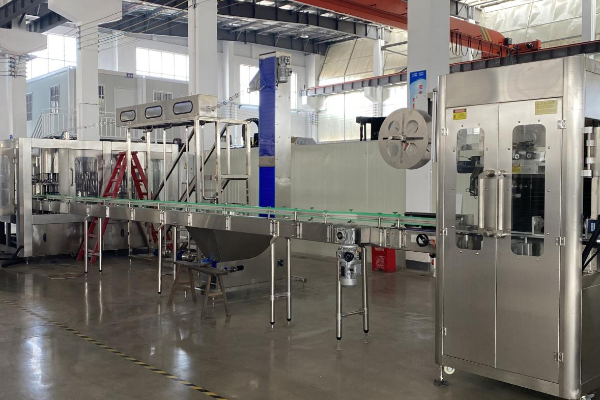
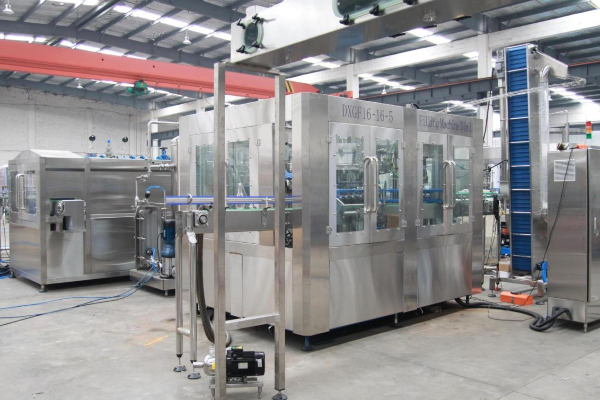
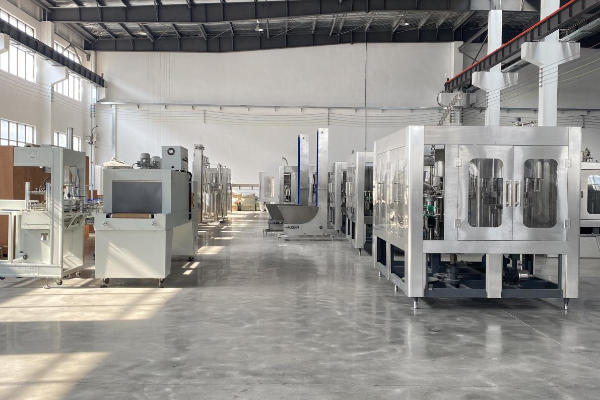
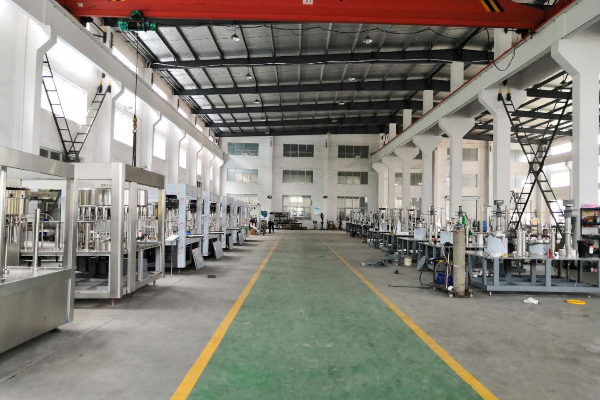
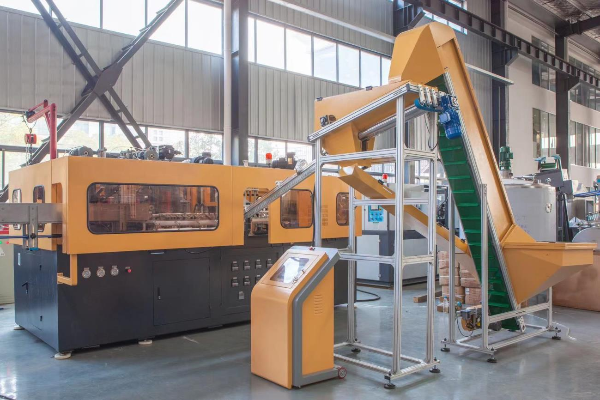
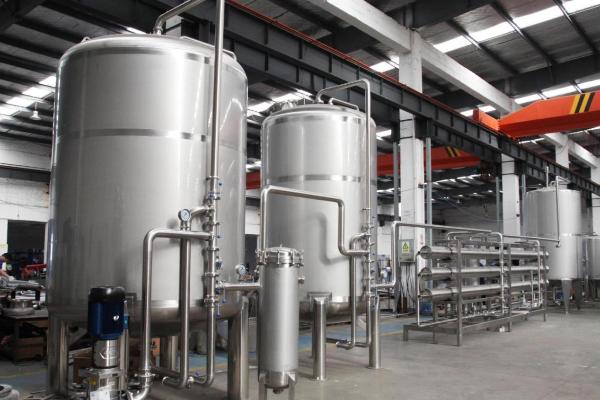
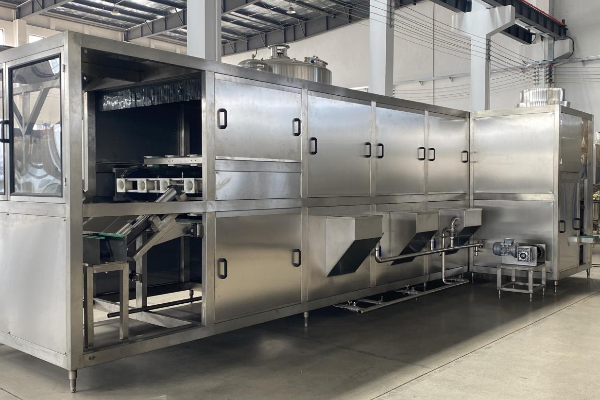
Mass Engineering & Manufacturing Facility
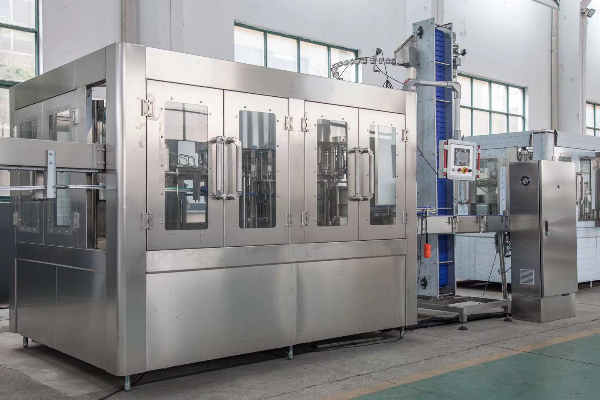
×
![Factory Image Enlarge]()
Customer Outcomes — Production Stability, ROI Reality, Project Timeline
At a minimum, bottled water economics reward operational discipline, as opposed to equipment beautifulness. for a 5,000-20,000 BPH plant, 30-40% gross margin realization and 22-36 month payback at OEE (overall equipment efficiency) over 75% are typical. industry benchmarks report unit variable costs – bottle, cap, label, labor, intermediary packaging – approaching $0.12 for 500ml PET water, at retail/wholesale prices of $0.16-$0.28, represent contribution of $0.04-$0.08 per bottle.
5-Year TCO Optimization Framework
Silver Tier
In terms of equipment TCO, utility consumption, sanitation chemical and labor costs, and parts replacement rates are key cost drivers in small-to-mid scale bottling lines. industry standards for new small-to-mid scale water plants set benchmarks as follows:
Target energy consumption: 8-12 kWh/ 1,000 bottles for fully automated PET water plant
Target water inputs: 1.5 L input per 1 L bottled water outputs 100% CIP, rinsing, and pH & TDS-adjustment reject cycles
Retrofitted air-recovery and oven: pilots report 25-45% energy savings when overlaid in 2026
11,990 BPH bottled water: payback of 22-30 months at OEE of 75%, with contribution of $45-$75 per 1,000 bottles
Successful small-mid plants — annual revenue $500K–$5M, profit margins 10–35%
The cost of ownership of small-to-mid scale bottling equipment is heavily dependent on water feedstock quality, regional utility pricing, and operator wages – contact us with your project specifics for a TCO breakdown.
Project Timeline — From Order to Production
A typical T1 Starter PET line leaves the factory within 30-45 days of signing a contract; T2 Growth builds in 60-90 days; T3 Scale requires 90-150 days. Onsite integration and commissioning schedules are 30-60 days (T1), 45-75 days (T2), and 60-90 days (T3). Including lead time from factory to project site, and final plant commissioning, small-to-mid scale bottled water plants range from 4-6 months from contract to first bottle sale – faster than the oil and gas industry industry average of 6-9 months for multi-vendor EMS implementations.
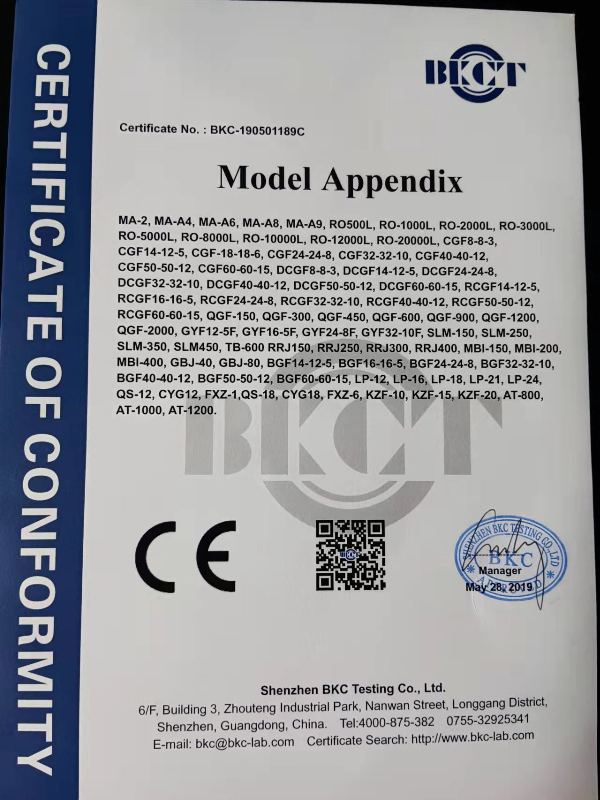
Compliance & Certifications — CE, FDA-Compliant, IBWA & ISO Alignment
Bottled water sits at the intersection of three regulatory frameworks: FDA bottled water Standards of Identity and Standards of Quality (21 CFR 165.110), the IBWA Bottled Water Code of Practice with mandatory annual NSF International third-party inspection, and EPA-aligned Maximum Contaminant Levels for source water. A common cost-cutting mistake is treating compliance as paperwork; in practice, ignoring licenses, testing protocols, or hygiene standards leads to penalties, plant shutdowns, or — most damaging — loss of buyer trust during distributor audits.
CE
European Conformity for machinery exported to EU markets
FDA-Compliant Materials
SS304 food-grade stainless steel, FDA-approved gaskets and contact components
21 CFR 165.110
Engineered to support FDA bottled water Standards of Identity (drinking, mineral, purified, RO, spring, sparkling)
IBWA Code Alignment
Bottle neck spray contact times engineered to exceed IBWA and NSF requirements
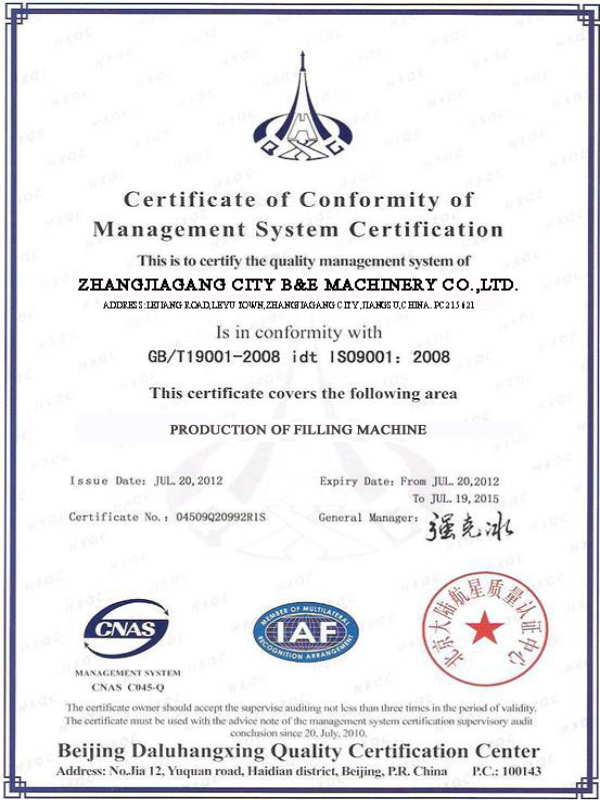
ISO 9001
Quality management system covering machine design, fabrication, testing, and shipping
FSMA-Aligned
FDA Food Safety Modernization Act preventive design principles applied to washer and filler subsystems
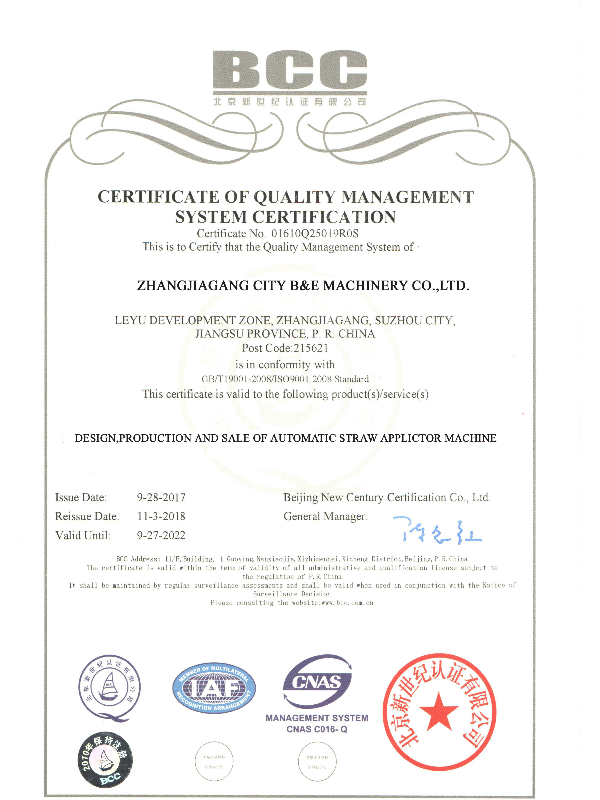
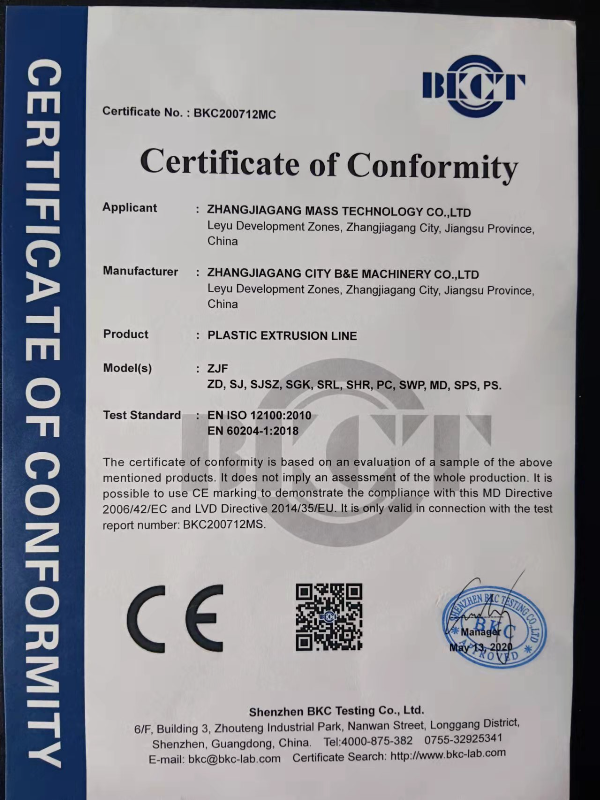
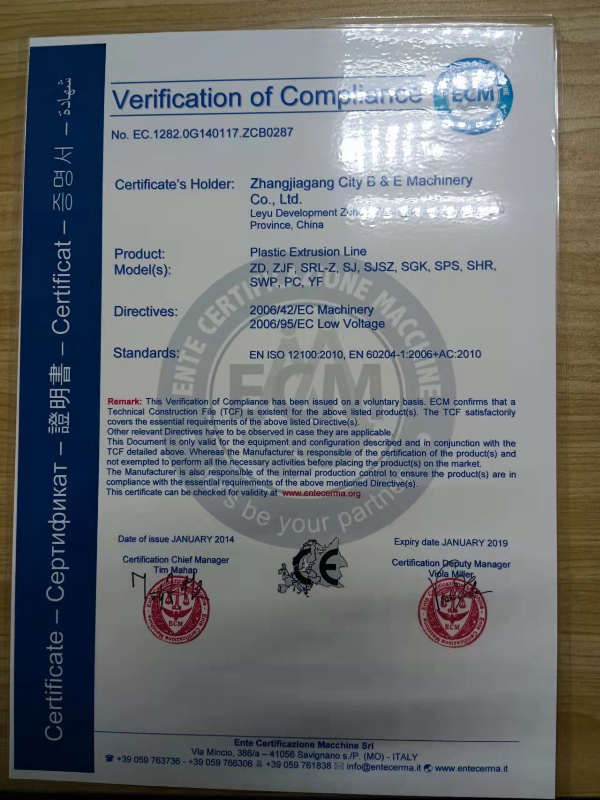
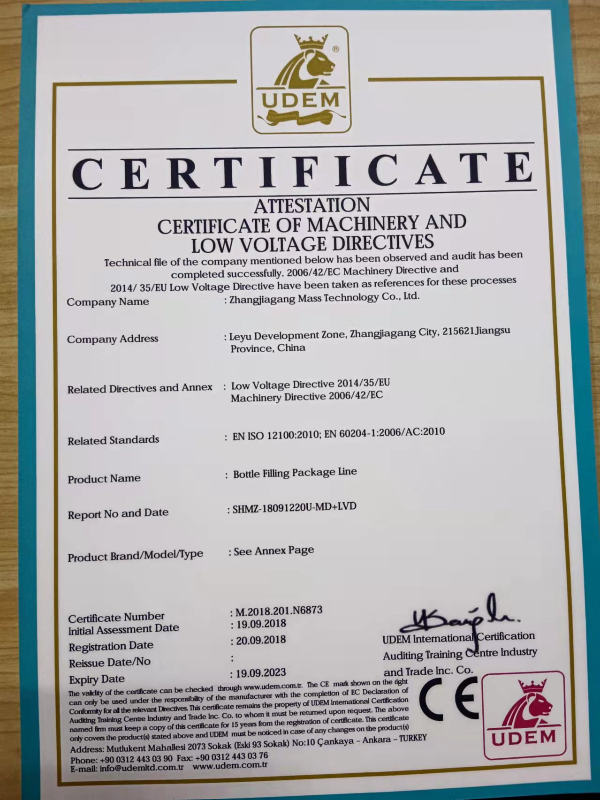
×
![Certification Document Enlarge]()
Procurement Guide — 3-Tier Price Transparency, Lead Time, Payment & After-Sales
Opaque pricing is the single most important cause of buyer remorse in water bottling plant procurement. When suppliers demand a formal Request for Quote before revealing pricing, the buyer cannot benchmark that water line against other suppliers, cannot set a budget for the auxiliary 60% of project cost, cannot judge whether they are paying for engineering perfection or sales overhead. Mass issues 3-Tier Price Transparency guide lines so qualified buyers can size an efficient project before submitting RFQ.
Mass 3-Tier Price Transparency
| Tier | Configuration | Capacity | Price Band (USD) | Lead Time |
|---|---|---|---|---|
| Starter Semi-Auto 3-in-1 | Washer + filler + capper monoblock + basic water treatment | 600–1,500 BPH | $13,000 – $28,000 | 30–45 days |
| Growth Auto 6-in-1 / 8-in-1 | Full auto monoblock + RO + UV + ozone + labeler | 6,000–12,000 BPH | $35,000 – $85,000 | 60–90 days |
| Scale Linear High-Speed | Independent rinser + filler + capper + labeler + shrink + 50 T/H water treatment | 18,000–36,000 BPH | $150,000 – $500,000+ | 90–150 days |
For 5-gallon HOD model water lines, manufacturer-direct pricing across the industry has ranged from about $2,500 for a bottling line averaging 60 BPH in a single-station semi-auto arrangement to about $13,200 for a 600 BPH fully-automated push-washer with PLC control. Mass HOD bottling lines are priced within this range with transparent terms and Tier 2 Growth HODs (600-2000 BPH) are priced between $14,000 and $48,000 depending on auxiliary specifications.
Procurement Workflow
01
RFQ submission
Capacity target, bottle format, water source quality data, target market
02
Layout design
Mass engineering provides a CAD layout with utility connection points within 5 working days
03
Contract
30% deposit, 70% balance paid on presentation of bill of lading or letter of credit
04
Production
Manufacturing according to Tier lead time; weekly photo updates
05
FAT (Factory Acceptance Test)
mass truck a-b witness the run-off at the Mass facility prior to shipment
06
International shipment
FOB or CIF and consolidated shipping container including auxiliary equipment
07
SAT & installation & commissioning
Mass confirms shipping date; dispatches engineering team for installation & commissioning, equipment usually operational within 30-75 days depending on Tier
08
Operator training
Onsite production, sanitation, & routine maintenance training
After-Sales Service Level Agreement
Engineer response time
24 hours by email, telephone, or remote diagnostics
Spare parts delivery
5 working days via international courier from Mass facility in Zhangjiagen
Warranty
2 years all-parts coverage from commissioning date
Onsite engineering visits
14 days for warranty service; same-cost for extra-warranty services
Data-Driven Planning & Procurement Tools
Empower your investment decisions with our proprietary calculators. Evaluate capacity needs, operational economics, and deployment schedules with engineering-grade precision.
Bottling Capacity Sizing Calculator
Match your target BPH and bottle format to the optimal equipment tier, workstation count, and facility footprint.
Launch Tool →
Water Bottling ROI & Payback Calculator
Model your gross margin realization and capital expenditure payback period based on localized pricing.
Launch Tool →
Operating Cost per 1k Bottles Estimator
Calculate granular unit economics including PET preforms, utility consumption, sanitation chemicals, and wages.
Launch Tool →
Project Timeline Estimator
Map out the complete critical path from initial contract signing to final Site Acceptance Test (SAT) and production.
Launch Tool →
Request a Detailed Project Quote
A Tier specific (size, capacity, auxiliary water treatment) design, layout sketch, and project budget breakdown to be delivered within 5 working days.
Frequently Asked Questions
What capacity should I start with for a small bottling business?
If first-year demand stays under 5,000 bottles a day, a T1 Starter PET line at 600-1,500 BPH delivers the right economics: capital investment of roughly $13,000-$28,000 stays under entry budgets, and a team of 2-3 operators can run the complete sanitation and quality cycle without specialized hires. When the 36-month forecast crosses 4,000 BPH, however, skip Tier 1 and start at T2 Growth (2,000-12,000 BPH) directly. Avoiding a re-procurement cycle in year 2 typically pays back the incremental CAPEX within 14-18 months, and the operational learning curve compresses by skipping the platform transition. Buyers exporting from Jiangsu also benefit from the local component supply chain, which compresses spare parts lead time relative to North American competitors who depend on imported subcomponents.
Do I need a separate water treatment system, or is it included?
Water treatment is a separate but co-engineered subsystem. Every Mass bottling line includes a matched water treatment unit (RO + UV + ozone) sized to BPH. Source water requiring remineralisation to achieve 21 CFR 165.110(a) Standards of Identity for “mineral water” runs through a re-injection module carried upstream of the filler. Such treatment units account for 25-40% of project cost – be wary of quotes which neglect the cost entirely.
How long does it take to install and commission a complete bottling line?
Including production lead time, T1 Starter production lines take 60-105 days from contract to first commercial bottle. T2 Growth lines take 90-165 days, T3 Scale lines take 150-240 days. Time variance is driven first by line size – at a given facility, a line installation takes 30-50% less time when plumbing, drainage, and wiring has already been installed by plant maintenance rather than by Mass engineers.
Can the same machine fill PET, glass, and 5-gallon bottles?
Filling subsystems differ across formats: because bottle shapes and neck thread profiles vary PET, glass, and 5-gallon polycarbonate use different bottle-filling equipment. However, upstream ozone, water treatment, and common PLC control system architecture are used across formats. A dedicated PET 200ml-2L and 5-gallon plant often requires a single shared treatment system, delivering 30% savings opposed to purchasing 2 separate systems from 2 suppliers.
What ongoing maintenance does a 3-in-1 monoblock require?
Daily tasks cover the CIP cycle on the filler manifold and capping head, ozone system output verification, and microbiological swab on 3 random fill points. Weekly checks add inspection of gaskets on filling head valves, conveyor chain tension verification, and lubrication of capper torque head. Monthly maintenance includes full convey belt and bearing inspection, flux testing of RO membrane, and UV lamp output reading. Maintenance hours run 1.5-2.5 hours per shift on T1 systems and 2-3 hours per shift on T2 systems.
Are spare parts available internationally, and how fast?
Yes. Mass holds a stocked inventory of spare parts (gaskets, filling valves, UV lamps, ozone generator cells) at its Zhangjiagang facility, ready for expedited shipment. Standard parts ship in 5 working days via DHL/FedEx/UPS while custom-fabricated elements ship in 15 working days. Buys operating through markets with port clearance lag time should self-stock a 6-month inventory of the high-wear parts.
Does Mass provide layout design before equipment delivery?
A layout plan ships free with every Tier 2 and Tier 3 quotation. The plans consists of a 2D layout drawing with equipment footprint, utility connection points, drainage slope, CIP plan, material flow. For Tier 1 Starter projects, plans are obtained as a $1,200 add-on – most customers can justify the expense with savings in plumbing rework.
Can I add labeling and shrink packaging later, or must they be ordered upfront?
Both modules can be retrofitted, but ordering the layout during installation saves 12-18% of cost. The engineering team can layout the conveyor header zone with the labeler foundation for the space directly, saving a second site visit and conveyor reconfiguration. Buys planning the launch with UV cleaner, filler, labeler, and capper on bottlenecked bare-bottle lines should at least have the conveyor space and electrical capacity in the original layout.