Get in Touch with Masstech
Beer Bottling Machine
Beer Bottling Machine — Isobaric Counter-Pressure | 3,500–18,000 BPH for Glass Bottles | Masstech
Masstech beer bottling machine A 3-in-1 rinser-filler-capper monoblock using isobaric (counter-pressure) filling, 5 MSGF-series models every 3,500 – 18,000 BPH at 500 ml, engineered for craft, regional, contract breweries with “actual capacity” single-product operation, low TPO, predictable lead time, best-value price point. Supported by a 2-year warranty, 24-hour service engineers, 5-working-day global parts courier.
- 2.2–3.0 bar CO₂ filling pressure
- AISI 304 food-grade contact
- 2-year all-parts warranty
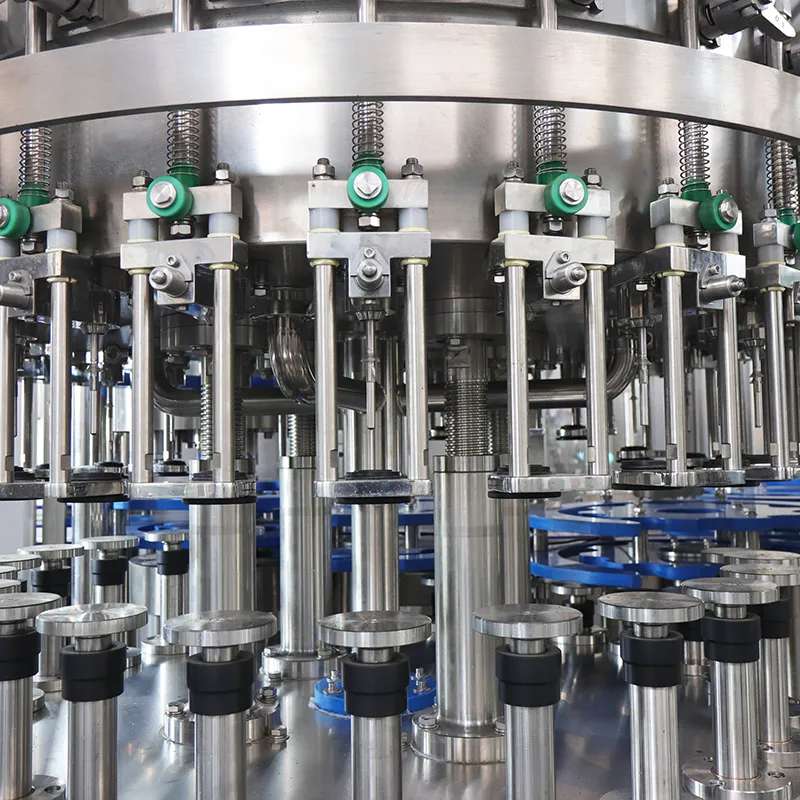
3.5K–18K
BPH @ 500 ml glass
5
MSGF models
$25K–$400K
USD FOB Shanghai range
Why Beer Filling Is Different — and What Most Buyers Get Wrong
Beer bottling fails at the wallet, not the warehouse. CO2 that escapes during filling becomes flat shelf returns; oxygen pickup at that exact moment becomes off-flavor complaints two months later. Brewers Association and ASBC both treat Total Package Oxygen (TPO) — dissolved oxygen plus headspace oxygen at the moment of capping — as the single number most predictive of packaged-beer freshness, with CO2 retention as the other side of the same physics.
The 40–100 ppb authority benchmark
A 2018 IC Filling Systems guide by Giovanni Solferini puts a “good range” at 40–100 ppb TPO. Hit higher than that and shelf life shrinks from six months to two; hit lower and you bought yourself headspace insurance for hop-forward styles.
The three numbers that decide beer shelf life
01
TPO (Total Package Oxygen)
– target 40-100 ppb at the filler exit (per IC Filling Systems’ field guidance)02
HSO (Headspace O2)
— ASBC packaging-quality sets a 0.5 mL warning limit on the four-bottle headspace average03
CO2 pickup variation
– within 0.05 vol across a sustained 8-hour shift to prevent foam variationCounter-pressure (isobaric) filling is the engineer’s solutio. Pressure inside the bottle are held equal to pressure on the beer in the bowl, so CO stays in solution during movement of liquid. A standard cycle on the MSGF series uses double pre-evacuation – vacuum pulled twice before CO purge – to bring residual oxygen close to zero before any beer enters the bottle.
Masstech MSGF Series — 5 Models from 3,500 to 18,000 BPH
Model nomenclature:
MSGF [rinsing heads]–[filling heads]–[capping heads]
All five share an identical modular architecture — isobaric filling, AISI 304 stainless steel product-contact surfaces, and a 3-in-1 monoblock layout with consistent hygiene and sanitation behaviour across the line; only the head count, throughput, and footprint scale up.
| Model | 16-12-6 | 18-18-6 | 24-24-8 | 32-32-10 | 40-40-12 |
|---|---|---|---|---|---|
| Capacity 500 ml (BPH, sustained) | 3,500–4,000 | 4,500–6,000 | 8,000–12,000 | 12,000–14,000 | 15,000–18,000 |
| Bottle volume | 200–2,000 ml (glass round or square) | ||||
| Bottle height | 160–320 mm | ||||
| Compressed air | 0.3–0.7 MPa | ||||
| Wash medium | Aseptic water | ||||
| Rinsing pressure | 0.06–0.2 MPa | ||||
| Total power (kW) | 4.61 | 4.61 | 5.41 | 6.41 | 9.63 |
| Footprint (m × m) | 2.5 × 1.9 | 2.8 × 2.15 | 3.1 × 2.5 | 3.8 × 2.8 | 4.5 × 3.3 |
| Height (m) | 2.5 | 2.5 | 2.5 | 2.5 | 2.6 |
| Weight (kg) | 3,200 | 4,000 | 4,500 | 6,500 | 8,000 |
Capacity figures are sustained 8-hour numbers at 500 ml standard glass and 2.6 vol CO₂. Peak rates run 8–12% above these. Source: Masstech MSGF engineering datasheet.
Decision Matrix — pick the model from your annual brewery volume
MSGF 16-12-6
Brewery Size
250–1,500 hL/yr
Sustained BPH
3,500–4,000
Footprint
2.5 × 1.9 m
MSGF 18-18-6
Brewery Size
1,500–5,000 hL/yr
Sustained BPH
4,500–6,000
Footprint
2.8 × 2.15 m
MSGF 24-24-8
Brewery Size
5,000–15,000 hL/yr
Sustained BPH
8,000–12,000
Footprint
3.1 × 2.5 m
MSGF 32-32-10
Brewery Size
15,000–30,000 hL/yr
Sustained BPH
12,000–14,000
Footprint
3.8 × 2.8 m
MSGF 40-40-12
Brewery Size
30,000+ hL/yr
Sustained BPH
15,000–18,000
Footprint
4.5 × 3.3 m
Filling-method and cap-format flexibility — automatic and semi-automatic options
Fill valve can be ordered four ways depending on beer packaging formats and composition: mechanical valve, flow meter, weight-based, laser level – most beer-only lines order mechanical valve; lines extended with cider, kombucha, or seltzer more often order flow meter for SKU changeovers.
Cap-species changeover is combined-operate operation via bridge operator means; is performed in under an hour, without removal of the monoblock from the line. Both automatic and semi-automatic modes are supported by the same PLC + HMI control panel for the cap formats below:
Cap-species changeover is combined-operate operation via bridge operator means; is performed in under an hour, without removal of the monoblock from the line. Both automatic and semi-automatic modes are supported by the same PLC + HMI control panel for the cap formats below:
- Caps – the “run-all” for almost all bottled beer: 26 mm pry-off
- ROPP screw caps – for specialty and export bottles where tamper evidence is key
- T-corks and wooden corks – for sour, barrel-conditioned, and specialty release styles
- Twist-off / screw caps – when moving product base into malt beverages or hard seltzers
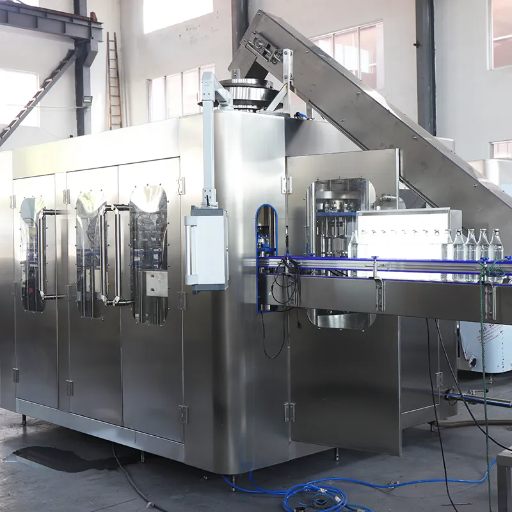

Isobaric Vs Gravity Vs Mechanical-Valve Filling For Beer
| Method | Best for | CO₂ retention | Fill accuracy | Speed (BPH/valve) | Capex impact |
|---|---|---|---|---|---|
| Isobaric (counter-pressure) | Beer, sparkling, kombucha, hard seltzer | High | ±2 mm fill height | 700–1,200 | +30–40% |
| Mechanical valve | Beer, wine, non-pressurised | Mid–High | ±2 mm | 600–900 | baseline |
| Flow meter | Wine, spirits, mixed product runs | Mid | ±1% | 500–700 | +10–15% |
| Weight-based | Premium spirits, oils | Mid | ±0.5% | 300–500 | +20–25% |
| Gravity | Still products only | Low | ±5 mm | 400–600 | −15–20% |
When To Choose Which (Decision Tree)
01
2.4 vol CO beer
isobaric required
02
Mechanical valve
acceptable for budget builds of session beer at <2.4 vol CO
03
Flow meter
for beer + cider + seltzer mixed runs for SKU flexibility and easier changeover
04
Bottle-conditioned beers
with secondary fermentation gravity or mechanical valve because C0 is dosed-in-bottle, not on the line
IC Filling Systems standard counter-pressure cycle specifications: bottle sealed, double pre-evacuation, C0 purge at 2.2-3.0 bar, valve opens, beer flows as C0 vents, fine warm-water foam spray to displace neck oxygen, cap set, external bottle wash. Anyone trying to sell you a “counter-pressure” filler that skips the pre-evacuation step is fronting you a pressure filler (known as a pressure filler in homebrew/microbrew sites). Terminal pasteurization downstream is optional but common for retail beer – the bottling line itself is sterilization-friendly via CIP loops without on-line pasteurization.
“We tested mechanical-valve and isobaric configurations on the same MSGF 24-24-8 frame. For pale lager at 2.6 vol CO₂, mechanical-valve gave us TPO around 110 ppb. Adding double pre-evacuation pulled it under 70 ppb on the same line, same shift. The mechanism really is the lever.”
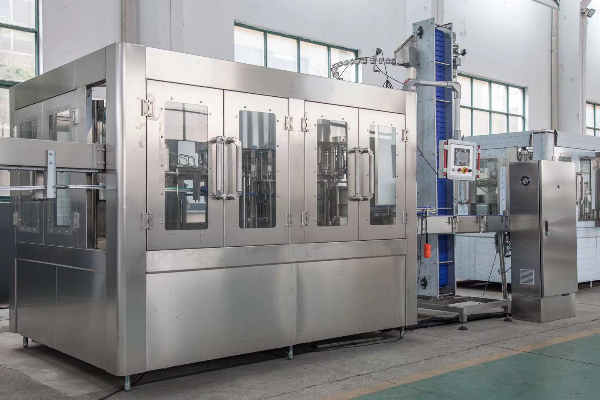
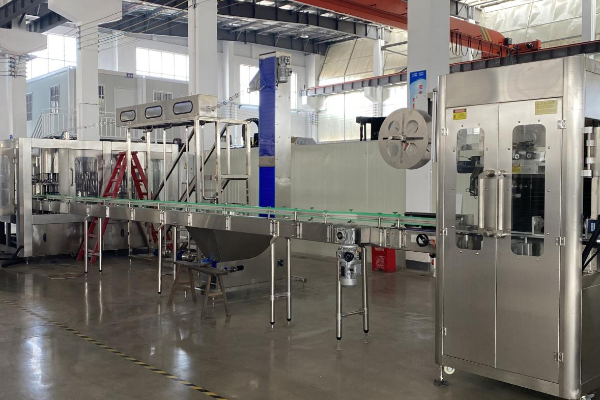
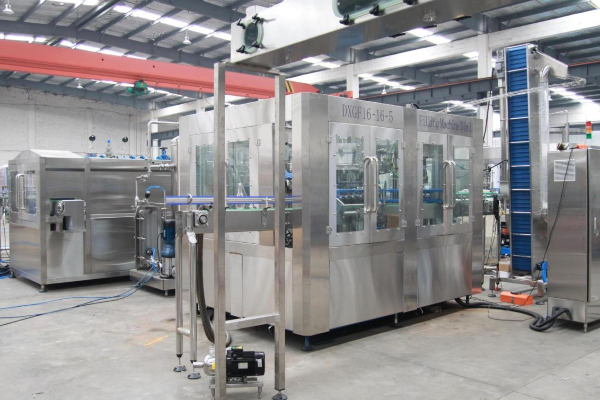
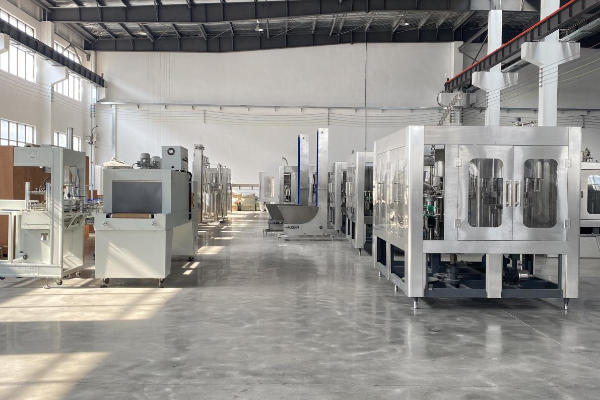
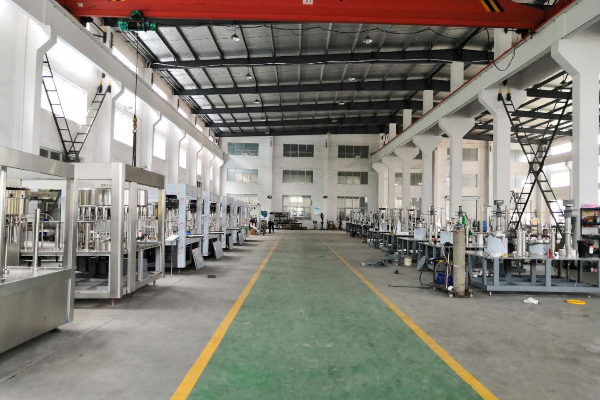
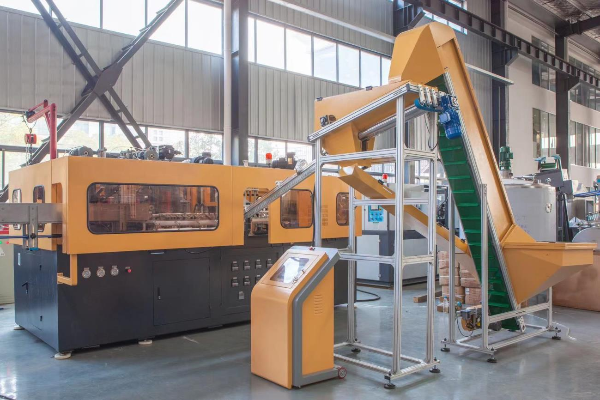
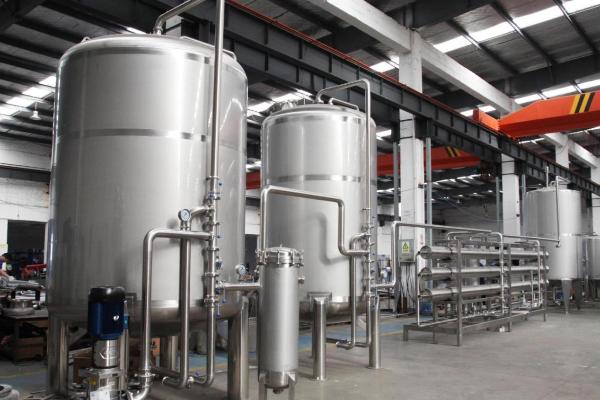
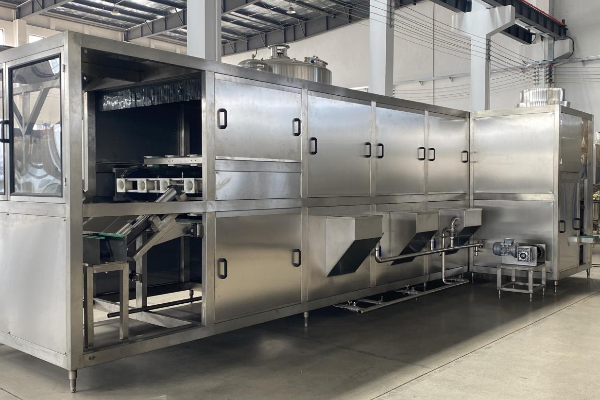
Beer Bottling Machine Manufacturing Facility
Cross-Vendor Reference Matrix — Masstech vs Krones, KHS, Sidel, Comac, ABE, IC Filling
B2B procurement teams tend to choose a certain set of filler vendors as their “go to” line every time, but no vendor provides a side by side comparison – for clear reasons. Use the matrix below to inform, not determine, your list, and always verify each vendor’s current datasheet before any RFQ.
Naming conventions, model series, and BPH ratings vary by vendor and configuration. Indicative USD ranges below reflect industry-typical bid amounts for mid-tier configurations and are intended for shortlist scoping — not as final quotes.
| Vendor | Country | Filling tech (beer) | BPH range typical | Cap formats | Indicative USD (mid model) |
|---|---|---|---|---|---|
| Krones | DE | Modulfill (mech-electronic isobaric) | 30,000–130,000 | crown / ROPP | $1.5M+ |
| KHS | DE | Innofill Glass DRS | 20,000–90,000+ | crown / ROPP | $1.2M+ |
| Sidel | FR/IT | EvoFILL Glass | 15,000–72,000 | crown / ROPP | $900K+ |
| Comac | IT | Sagitta / Master series | 3,000–90,000 | crown / screw | $200K–$1M |
| ABE Equipment | US | GlassPak rotary | small-craft (≤ 4,000) | crown / cork | $150K–$400K |
| IC Filling Systems | UK / IT | 442/551/661 monoblock | 1,500–12,000 | crown / ROPP | $100K–$350K |
| Masstech (MSGF) | CN | Isobaric monoblock | 3,500–18,000 | crown / ROPP / T-cork / screw | $25K–$400K |
Total Cost of Ownership — Net Cost-per-Bottle Math
Bottling-machine buy decisions are five-year net-cost-per-bottle decisions, not CapEx line items. What follows is a reference case, not a quote - replace the assumptions with your numbers in a real-world evaluation.
MSGF 24-24-8 / 8-hour shift × 250 working days × 5 years / mid-size craft brewery / sustained 12,000 BPH at 500 ml / electricity at $0.10/kWh / beer cost ≈ $0.20/bottle. Adjust for your local rates.
| Cost line | Year 1 | 5-year cumulative | Notes |
|---|---|---|---|
| CapEx (machine + commissioning) | $185K–$220K | $185K–$220K | One-time |
| Power (12,000 BPH × 5.41 kW × 2,000 hrs/yr) | ~$13K | ~$65K | Industry-typical reference |
| Compressed air | ~$3K | ~$15K | Estimate based on 0.3–0.7 MPa duty |
| Spare parts (years 1–2 covered by warranty) | $0 | ~$20K | Years 3–5 typical |
| Maintenance labour (1 part-time tech) | ~$5K | ~$25K | Internal cost |
| Beer loss at 0.2–0.5% (industry-typical) | ~$24K | ~$120K | The hidden cost |
| 5-Year TCO | $430K–$465K | Net Cost-per-Bottle (24M bottles) |
~$0.018–$0.019
Excluding bottle, cap, label
|
Reference figures are industry-typical ranges for craft-scale glass-bottle filling at the assumptions above — actual TCO depends on utility rates, cap format, run schedule, and CIP frequency.
Why beer-loss is the hidden TCO lever
What decides this calculation is not power or labour — it is beer loss; a 0.5% loss line at $0.20/bottle × 24M bottles over five years costs $240K, while the same line at 0.2% costs $96K. That $144K delta is roughly the price difference between a Tier 1 entry monoblock and a mid-scale Tier 2 in the pricing table that follows. Counter-pressure with double pre-evacuation tightens the loss range because there is less foam-out at the filler exit, and Master Brewers Association of the Americas has documented IPA shelf-life extension from roughly one month to six months in breweries that drove packaging DO down.
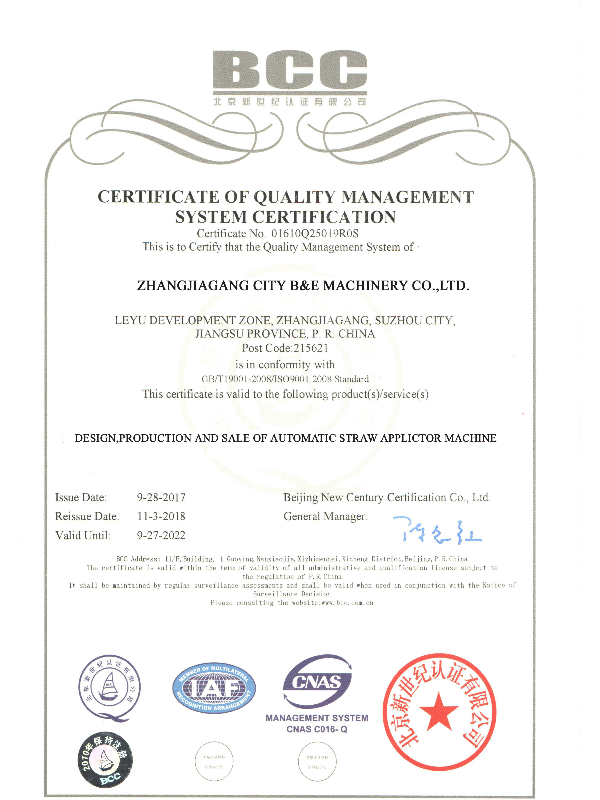
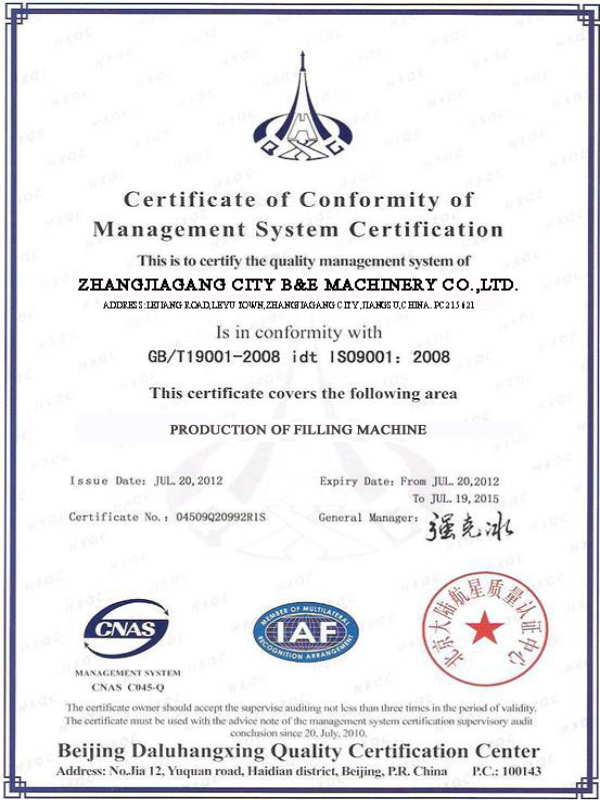
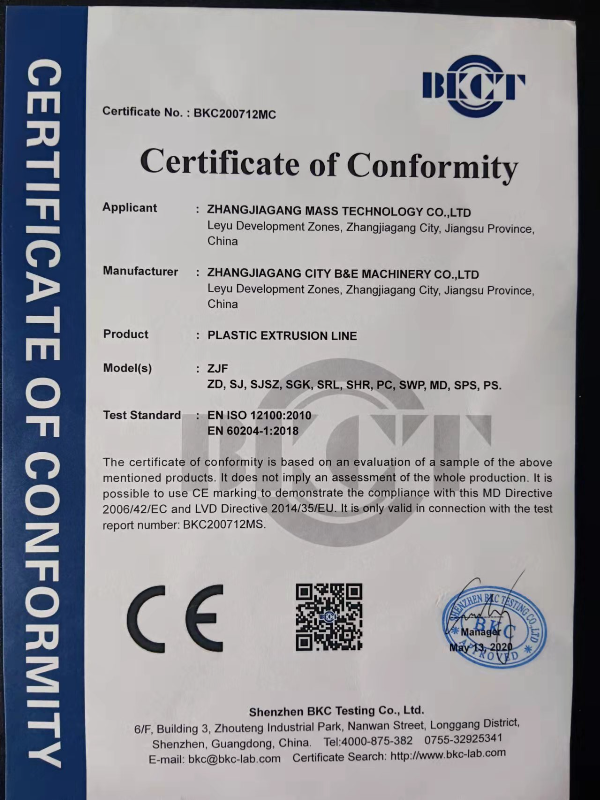
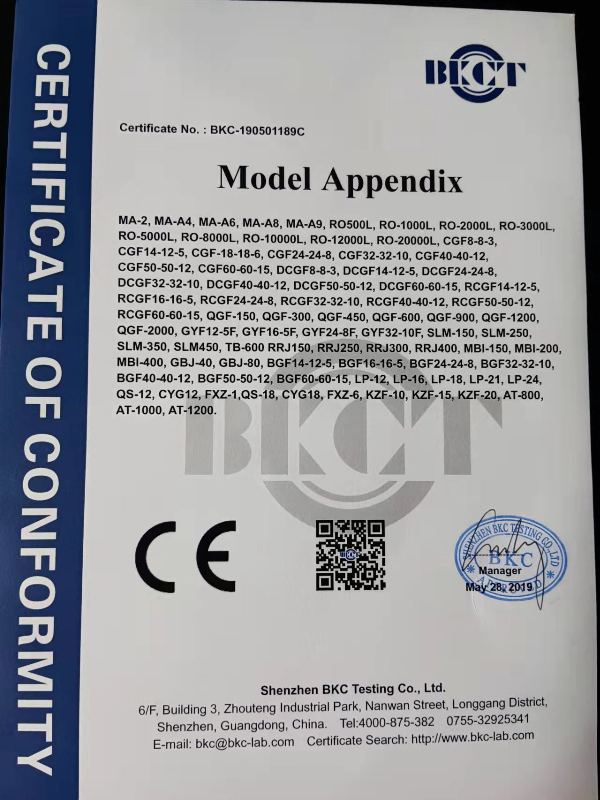
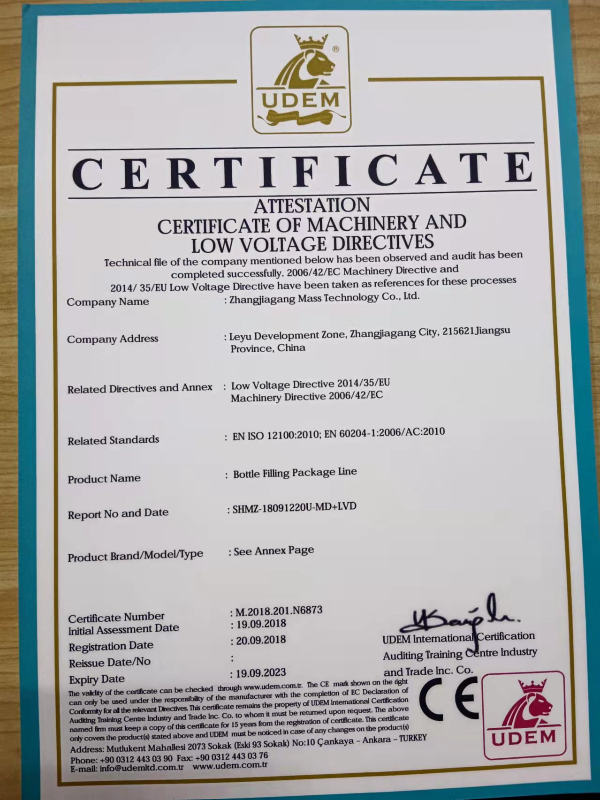
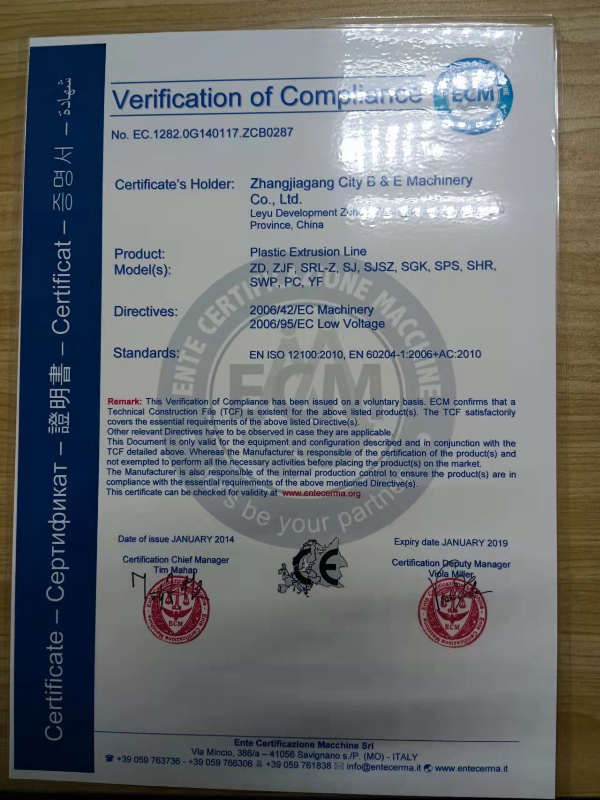
Certifications, References & Transparency Statement
Material grade, scope of certifications, and inspection-participate parameters dominate badge count.
CE — machinery directive
ISO 9001 — quality management
AISI 304 — food-contact stainless
2-yr warranty (all parts)
FOB Shanghai / Ningbo
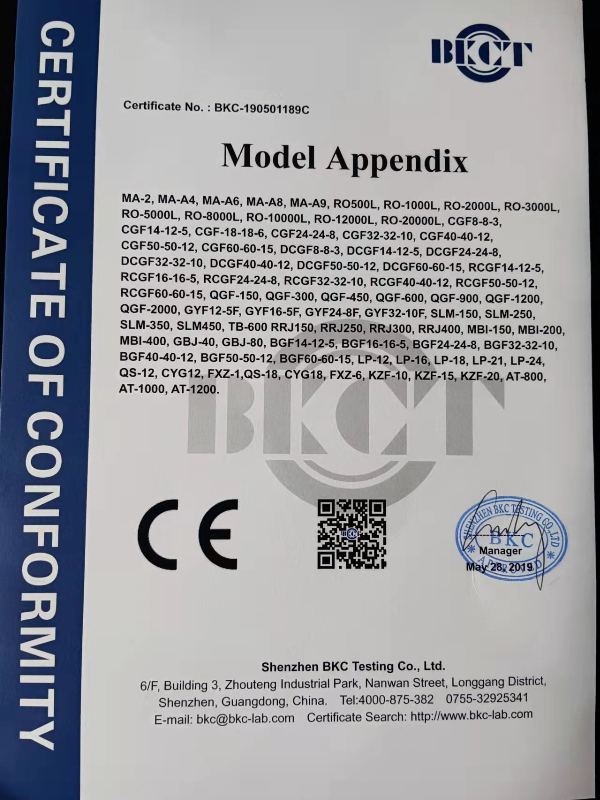
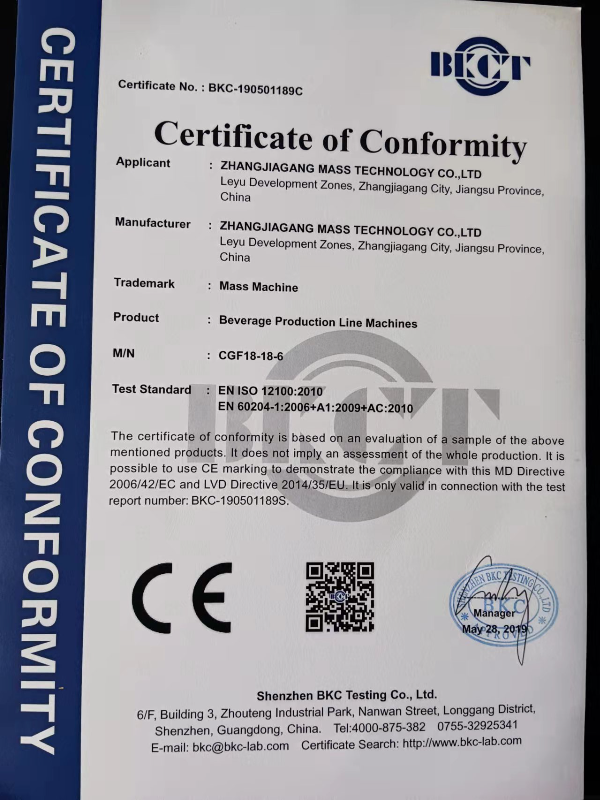
Procurement Guide — Pricing Tiers, Lead Time, Delivery, Warranty
Most overseas microbreweries spend 2-3 weeks chasing opaque RFQs over six suppliers before they get a real number. We publish the tier ranges below so you can fit Masstech to your line in a shorter conversation.
Tier 1 — Entry / Microbrewery
$25,000 – $80,000 USD
- FOB Shanghai or Ningbo
- Models: MSGF 16-12-6 / 18-18-6
- 3,500–6,000 BPH at 500 ml
- Scope-of-work: rinser + filler + capper + control panel
- Single-bottle-format at order; reformat option later
Tier 2 — Mid-Scale / Craft & Regional
$80,000 – $220,000 USD
- FOB Shanghai or Ningbo
- Models: MSGF 24-24-8 / 32-32-10
- 8,000–14,000 BPH at 500 ml
- Adds: PLC upgrade, neck-handling option, optional saturator
- Multi-bottle-size changeover engineered in
Tier 3 — Industrial / Co-Packer
$220,000 – $400,000+ USD
- FOB Shanghai or Ningbo
- Model: MSGF 40-40-12 + line integration
- 15,000–18,000+ BPH
- Adds: tunnel pasteurizer, depalletiser, full PLC/SCADA
- Plant layout drawings included pre-deposit
Indicative USD ranges for typical configurations. Final quote depends on cap format, PLC tier, voltage, glass-vs-PET line option, ancillary saturator/pasteurizer, and shipping terms. Request a configured quote for line-specific pricing.
Procurement process — what happens after you submit RFQ
Step 1
Submit RFQ
Production volume, bottle spec, cap format, target start date.
Step 2
Engineering proposal
Layout drawing + price proposal in 3–5 business days.
Step 3
Production
30% deposit triggers 60–90-day build window.
Step 4
FOB shipping
Sea freight 25–40 days from Shanghai or Ningbo.
Step 5
Install + train
On-site commissioning + 5-day operator training.
Warranty & after-sales
2 Year Warranty on all parts (covers wear surfaces, valves, sensors, control board).
24 Hour Engineer Response via WhatsApp, WeChat, or email- most issues resolved without site visit.
24 Hour courier for replacement parts (DHL / FedEx / UPS) - 5 working days to most destinations for us.
Plant layout, manufacture, install, training, and after-sales off a single project window - no second-tier supplier hand-off.
Beer Bottling Machine Engineering tools
Six Number RFQ Checklist
Ensure you have all the critical technical parameters ready before requesting a quote. Use this checklist to streamline your communication with manufacturers and secure accurate equipment sizing.
TCO Cost Per Bottle Calculator
Evaluate the long-term ROI of your filling line investment. Our interactive calculator helps you estimate the Total Cost of Ownership (TCO) per bottle based on your operational inputs.