Get in Touch with Masstech

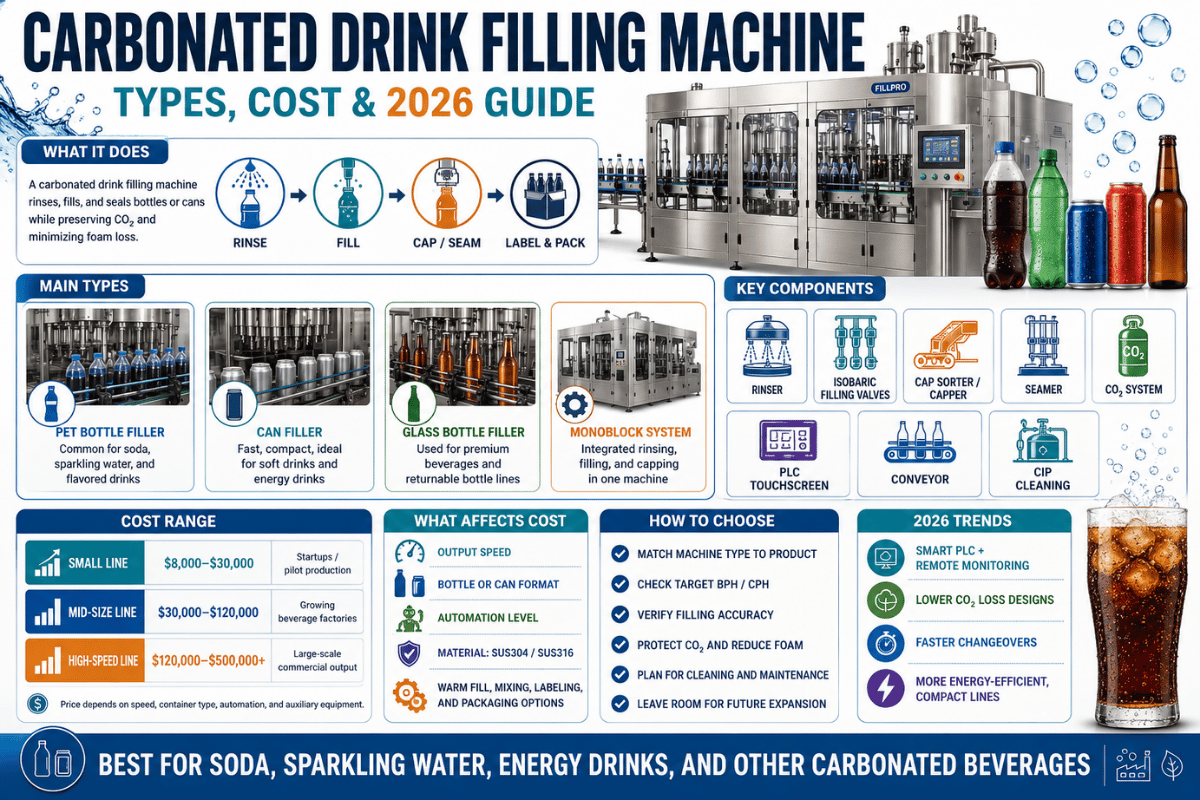
A carbonated drink filling machine is the beverage filling machine that’s critical to the entire carbonated drink filling line – namely the machine that adds a bubbly, carbonated beverage to a can or bottle while preventing the carbonation from “fizzing out.” Filling soda is quite a different challenge than filling still water. When carbonated beverage is subject to reduced pressure, entrained CO, which has been held in suspension in the beverage, escapes as foam and “goes flat” in a process called “fobbing.” In this guide, you’ll learn about how this “counter-pressure” filling process works, how a filling line is adapted for cans, PET or glass bottles, what CO2 level is suitable for each beverage, how to determine the capacity and cost of a filling line, and the si× factors that distinguish effective and ineffective carbonated beverage fillers. We’ve aimed this content at procurement managers and engineers sourcing a carbonated drink filling line rather than filling you in on specifications.
Quick Specs: Carbonated Drink Filling Machine
- Filling method: isobaric (counter-pressure), cold-fill
- Typical fill temperature: 2–5 °C (slightly above freezing)
- Containers: PET bottle / glass bottle / aluminum can
- Capacity range: 2,000–36,000 BPH (line-dependent)
- Typical carbonation: 2.0–4.5 volumes of CO₂ by drink type
- Automation tiers: manual · semi-automatic · fully automatic monobloc
What a Carbonated Drink Filling Machine Actually Is (and Why It’s Not Just a Filler)
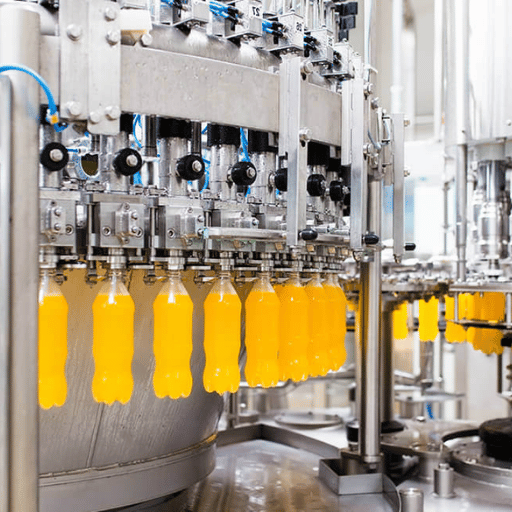
The unit filling the carbonated beverage bottle is a counter-pressure filling machine, which maintains the pressure in the container to equal that of the drink being filled, the mechanism described in USPTO patent US20060283518A1. The filler manage pressure, not volume. Still water fillers merely drop liquid into the container, which results in significant fobbing when filled with beverage.
The consequences of selecting the wrong machine can be financially significant: start ups which select less expensive still-water fillers to economize capital and subsequently switch to beverage filler lose money, scratch a considerable investment and must rebuild the line within a month to “fill in” flat beverage. This teaches a costly lesson that’s why the filler selected must be suited to the product’s carbonation and its fill weight. A far more appropriate name for this machine is a “pressure-management device” rather than simply a “filler.” It’s this device that ensure the bottled drink retains its carbonation and freshness. Any filler, be it manual bench-top or automatic filling equipment designed for the beverage industry, must perform this primary job. Let’s follow the CO₂ from its release from the filler valve against the container to the point where the can or bottle is sealed and capped.
How Isobaric Filling Works: The 4-Stage Counter-Pressure Fill Cycle
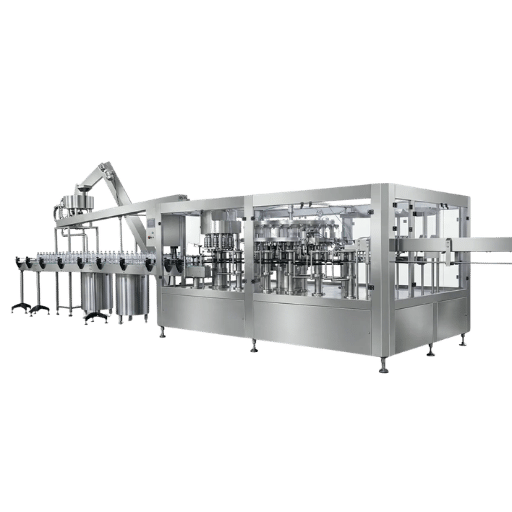
Counter-pressure filling “equal pressure” – simply matches pressure between the container and product before releasing the beverage. This zero-pressure differential allow the beverage to fill the container in a relaxed state, with no incentive for CO to break free. Counter-pressure filler patents (USPTO US20060283518A1) describe this four-stage process, used in rotary fillers:
The 4-Stage Counter-Pressure Fill Cycle
- Introduce pressure. After the filler valve seals against the container opening, CO gas is “puffed” into the container until pressure equals that of the beverage storage tank.
- Equal-pressured fill. The filler introduces beverage at a controlled rate, using gravity or the pressure of a moderate level of product in the storage tank. Both pressures are balanced, so liquid movement is calm.
- Settle. It slowly reduces the fill rate as it nears its target. It then keeps the liquid still and turbulance off the fill-pipe.
- Snift (decompress). The back pressure is released slowly to avoid foam at the filler so the container can be carried to the capper and remain non-foamy (as an excess of foam indicates a loss of carbonation).
That differs in two methods that are inappropriate for soda. As there’s no backpressure from gravity filling, CO2 escapes from the filler without pause (gravity filling applies back pressure on a still beverage). As back-pressure is used by Vacuum filling this system (as backpressure is inappropriate) creates a partial vacuum that’s opposite of what a carbonated liquid need. This also explains why old descriptions of filling machines as the old ‘plunger vs. pump’ fills will explain a soda machine that’s either isobaric, or at what pressure, not what type of mechanism controls fill flow.
What Is Isobaric Filling?
Isobaric machines apply counter-pressure to the beverage at rest equal to the pressure on beverage in a vessel prior to liquid filling, this way backpressure doesn’t enable CO2 escape as foam; such machines operate well above atmospheric conditions and CO2 actually goes in the beverage bottle/can under pressure well prior to fill (typical conditions for Coke, the sparkling water, and tonic lines).
Whycold?CO2 solubility is the rationale for a 2C to 5C cold fill of CSD beverages as, per Henry’s law; temperature in reverse proportionality. Research conducted at Rutgers independent of any manufacturer shows CSD’s filled at a temperature just above freezing. Our firm uses this Henry’s Law constant. So 3.5 volume cola poured into 20 C can be highly agitated and the same is poured into 3 C can relatively calmed while maintaining same head pressure.
⚠️ Important: cold is the rule, but not the whole story
Cold fill should be the standard practice, but it ‘not always’ necessary: a cold filler can fill CSD beverage at room-temp; a beverage machine with enhanced engineering and extra high pressures can fill room temperature with the necessary care(e.g.: Sidel’s EvoFILL Can), though factors such as CO2 Pre-Purge, Nucleation points etc also affect beverage, and operators report that capping on foam still loses about 0.1 to 0.3 volumes of CO2 even with an isobaric machine.
PET Bottle vs Glass vs Can: How the Line Changes by Container
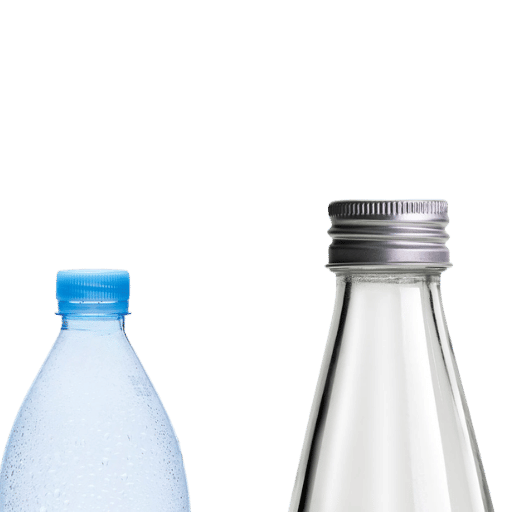
Containers the main factor for filler design, is never “just a different bottle cap.” Switching from pet to an Al canister changes filling to closing machine, modifies head pressure limitations as well as barrier properties of the package itself; this Container-Format Build Sheet may explain some of the relevant design change:
| Line element | PET bottle | Glass bottle | Aluminum can |
|---|---|---|---|
| Filler module | Isobaric, light-weight valve | Isobaric, heavy-duty valve | Isobaric can filler |
| Closure | Screw cap (capper) | Crown or ROPP cap | Double seamer (not a capper) |
| Container pressure rating | Moderate; bottle can flex | High; rigid, heavy | High; thin wall, internal pressure holds shape |
| Typical fill temp | 2–5 °C | 2–5 °C | 2–5 °C (ambient possible on newer fillers) |
| Foam / snift control | Critical (flexible neck) | Critical | Critical; CO₂ injected, then valve seals can top before fill |
| O₂ / light barrier | Fair | Good | Best (opaque, full barrier) |
| Upstream forming | Needs PET blow molding | Pre-made glass | Pre-made cans + lids |
| Line-speed ceiling | Up to 36,000 BPH | Up to ~24,000 BPH | Up to ~24,000 CPH |
| CIP cycle | 30–60 min | 30–60 min | 30–60 min |
| Changeover effort | Low–medium | Medium | Higher (seamer setup) |
In practice, a soda bottling machine and a soda can filling machine share the same isobaric principle but are different machines at the closing end. If you expect to run both, plan a multi-format line from the start rather than retrofitting a seamer later.
CO₂ Volumes by Drink Type: The Drink-to-CO₂ Volume Target Chart
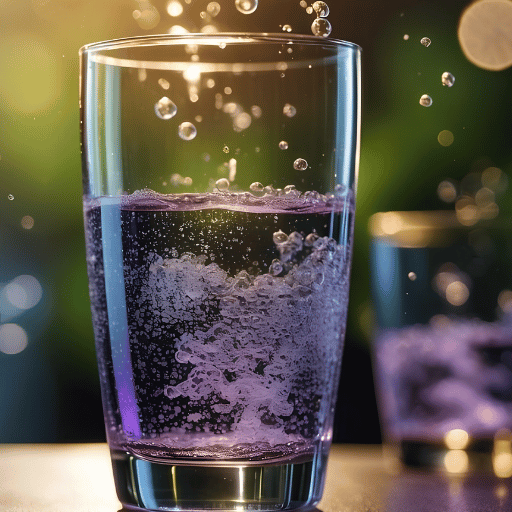
“Volumes of CO” (CO2). this is simply the volume of the gas, under standard conditions, contained in volume of the drink. This “target” determines the temperature and pressure that will need to be maintained in your machine. According to the University of Florida IFAS Extension, typical commercial beverages like tonic water are generally in the range of 3 to 3.5 volumes, whereas hyper-carbonated soda may be higher. Here are industry “average” ranges – the “target” will be specific to the particular beverage so use as an estimate only:
| Drink type | Typical CO₂ (volumes) | Fill temp | Notes |
|---|---|---|---|
| Cola | 3.0–4.0 | 2–5 °C | Measured ~3.1 in-can (Cask); high-carb class 3.5–4 (UF IFAS) |
| Diet / zero cola | 3.5–4.0 | 2–5 °C | Often carbonated a touch higher than sugar cola |
| Lemon-lime | 3.7–4.5 | 2–5 °C | Among the most carbonated sodas |
| Ginger ale | 3.5–4.0 | 2–5 °C | High, sharp bite |
| Tonic water | 3.0–3.5 | 2–5 °C | UF IFAS reference point |
| Club soda / seltzer | 3.5–4.5 | 2–5 °C | High fizz, no sugar buffer |
| Sparkling water (premium) | 3.0–4.0 | 2–5 °C | Brand-dependent |
| Hard seltzer | 2.5–3.2 | 2–5 °C | Cask measured craft band 1.9–3.3 |
| Energy drink | 2.5–3.0 | 2–5 °C | Moderate carbonation |
| RTD coffee / cocktail | 1.9–2.8 | 2–5 °C | Lower; varies widely by recipe |
| Lightly sparkling (detect floor) | ~0.6 (threshold) | 2–5 °C | Below ~0.6 vol, most people cannot taste the fizz |
You need good CO and high quality too.The food itself must be food-grade. FDA 21 CFR 184.1240 covers CO as something suitable and palatable in food, and the compressed gas Association has a Commodity Specification for Beverage Grade CO (CGA G-6.2) which dictates how much CO can be in there.You must qualify your gas supplier just as rigorously as your machine- A filler with 3.8 volumes of off-spec CO will still have unsellable goods.
Manual vs Semi-Automatic vs Fully Automatic: Matching the Tier to Output
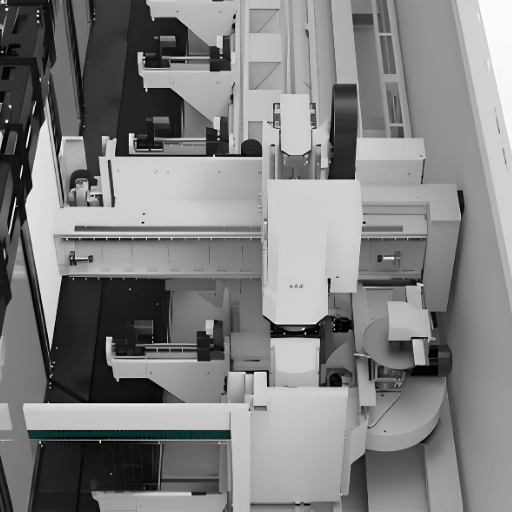
automation level = real throughput target & labour cost , not … The 3 levels can be matched against our throughput:
| Tier | Output band | Operators | Best fit |
|---|---|---|---|
| Manual / bench | < ~500 units/hr | 1–2 | Pilot batches, R&D, micro-brands |
| Semi-automatic | ~500–2,000 BPH | 2–3 | Regional start-ups below the automatic-line floor |
| Fully automatic (rinser-filler-capper monobloc) | 2,000–36,000 BPH | 2–4 (line-wide) | Commercial bottlers and co-packers |
A fully automatic monobloc machine integratws rinser, isobaric filler, and capper on a single frame with common servo control; therefore, a modular platform can afford to have the one fill-tip, bearing cross the carbonated-, mineral-, and juice- lines. A full line would have inline QC: Pressure sensors on each filling valve register a “bad bottle from the pressure drop”, USPTO patent US6474368B2. Around 2,000 BPH the semi-automatic line is more “honest” than a fully automatic one – The automation surcharge can’t be repaid.
Sizing the Line: From Bottles-Per-Day to BPH (a worked example)
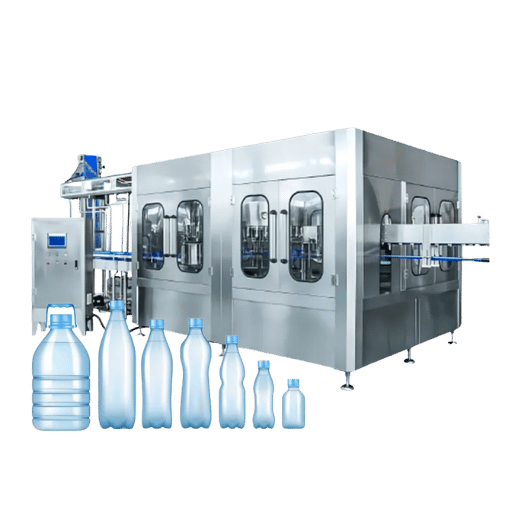
Capacity is quoted in bottles per hour (BPH), but most buyers think in bottles or cases/day. Convert before you shop, or you’ll buy too much. Conversion math is simple:
Worked example: daily target → BPH
Effective BPH= no of product manufactured/(number of hours of shift utilization)
- 5,000 bottles/day, one 8hr shift, 0.8 utilization 5,000 (8 0.8) = ~780 BPH. This places us below the auto-line floor of ~2,000 BPH so a semi-auto is possible.
- Expected demand 50,000 bottles/day, 1 shift, 0.8 utilization 50,000 6.4 = 7,800 BPH. Which puts us somewhere in the mid-range automatic line (roughly the 6,000-18,000 BPH level).
Always Size to peak shift and a believable utilization (changeovers, CIP, and breaks typically don’t yield more than 0.85). Don’t purchase your average daily number; that provides zero buffer for growth and zero buffer for downtime. Consider a CSD production line capacity reference before making a tier commitment.
What a Carbonated Drink Filling Machine Costs: Price Tiers & TCO Drivers
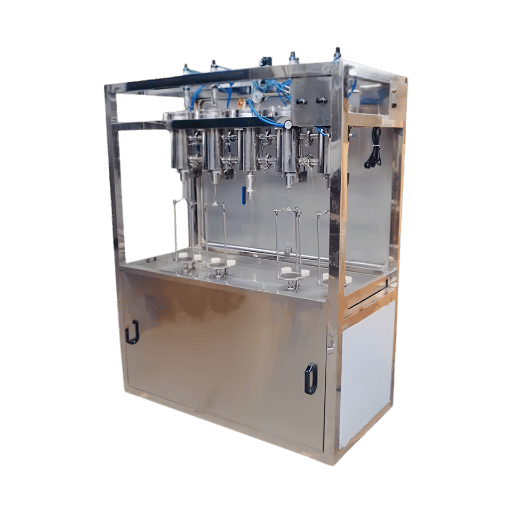
Gear costs are open-market, per project and so any single figure to an unknown you should treat with suspicion – the real answer is a level and a set of factors, not a price tag. By way of example of the orders of magnitude we look at cost scaling according to 3 factors – class of capacity, class of container, scale of the project – a single machine vs a turnkey line.
ROI & TCO framing (directional, not a quote)
The price tag on a headline machine seldom represents the largest cost over five years. The total cost of ownership will be impacted most by CO loss, CIP water and energy (the recurring cost of the cleanability FDA 21 CFR 117.40 requires), spare-parts logistics, downtime during changeover, and operator time. An inexpensive, less well-built line that over flows and require extensive, routine valve service could easily cost more per case than a high-end line in under two years of operation. Ask any supplier to detail their spare-parts lead times and after-sales support response-these figures are far more important in the calculation of true cost of ownership than the machine’s unit cost.
Lead Time Estimates and Scope by Machine Tier:
Craft / regional lines: 2,000 – 6,000 BPH install time: ~45-75 days
Multi-liquid lines: 6,000 – 18,000 BPH install time: ~75-105 days
High-volume combiblocks: 18,000 – 36,000 BPH install time: ~90-150 days
*Note: Install time estimates are illustrative. Please consult the individual vendor quotation for container type, capacity, and project-specific time lines.*
How to Choose: The 6-Point CSD Filler Selection Gate
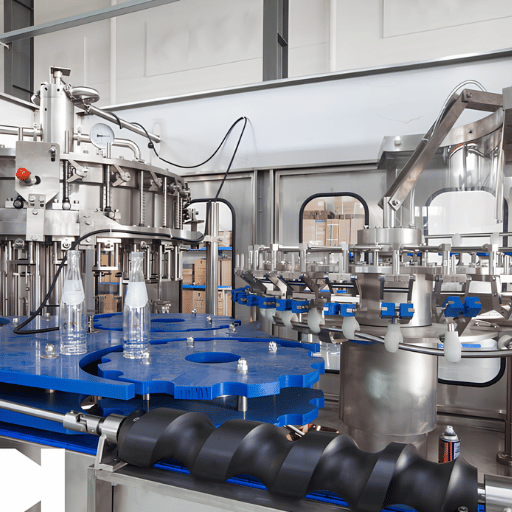
Evaluate any potential supplier or machine with a series of six critical assessments before considering the cost on your carbonated beverage filling machine. The first four evaluations define the essential technical criteria – your drink type, its container, output levels, and carbonation protection. The final two assessments represent plant-level due diligence that the typical machinery quotation won’t explicitly address, and they often prove the undoing of systems after installation.
- 1. Carbonation Content (Banding) of Your Drink. Make certain the filler can maintain desired fill levels in your specific container at your chosen BPH.
- 2. Container Characteristics and Format. Consider container material – glass, plastic or can – and whether multi-format changeability is desired (now or in the future; a capper may not be interchangeable with a seamer).
- 3. Output / BPH Requirements. Specify the filler capacity for your highest-shifting needs, rather than simply your average daily output.
- 4. Carbonation Loss and Foam Control. Key components of this element are valve design, cleaning, and back-pressure stabilization – the determining factors between a beverage of the targeted 3.8 volumes and a flat-tasting flat product.
- 5. Hygienic Design and Cleanability. Food contact surfaces are required to be safe, nontoxic, and cleanable under 21 CFR 117.40 and must be sanitizeable in accordance with 117.35, while utilizing appropriate hygienic geometry as per 3-A Standards. Request the CIP Validation – beyond a mere “food-grade” assurance.
- 6. Carbonation Supply and Safety. Filling a carbonated soft drink requires the use of a bulk CO2 installation. Both OSHA and NIOSH caution against exposure to elevated levels of CO2 due to the asphyxiation risk in confined and below-grade areas. Develop adequate ventilation strategies, establish gas monitoring within areas, and ensure operators are trained appropriately on safety protocols as part of your CO2 purity specifications. Equipment vendors generally won’t bring this safety element to your attention, leaving it as buyer responsibility.
⚠️ Common buyer mistakes
Feedback from the field and online discussions regarding issues: Undersizing machine capacity to fit budgetary constraints. Delaying discussion of CO2 loss and accepting flat product after shipment. Mismatching the drink pressure with a container’s integrity. Deeming CIP a lower-priority item during the selection process. Operators using can filling machines will frequently discuss days spent battling overflows and excess foam until back pressure and fill-level configurations were correctly dialed-in; you need to factor adequate time and budget for this tuning.
“On a carbonated line, the filler is only half the job. The other half is everything that protects the CO after it – the snift profile, a clean fill-head, the right cold-chain, and a CO supply that is both pure and safely vented. Buyers who score those alongside BPH end up with a line that still makes sellable product in year three.”
Mass Technology engineering team
Where Carbonated Filling Is Headed: The Shift to Cans & Multi-Format Lines (2026)
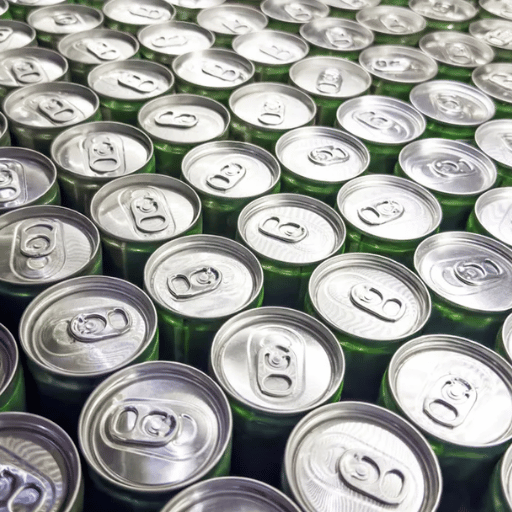
“If you’re specifying a line you’ll run for the next three to five years, two shifts should shape the decision. First, packaging is moving toward the aluminum can. Cans are the fastest-growing carbonated-beverage format, helped by recyclability and the ready-to-drink boom, and analysts expect canned CSD to keep gaining into 2027. That said, plastic bottles still lead beverage packaging by total units today – the shift is real but not finished, so don’t write off PET.
Second, lines are getting more flexible. Trade coverage describes “versatile canning lines that handle multiple product types, from carbonated soft drinks to craft beers,” and counter-pressure canning systems now run seltzer, soda, RTDs, and kombucha on one frame. The buyer implication is concrete: if a can format or a second beverage type is even plausible within five years, specify a line with can-format capability or a modular bottle-to-can changeover now – adding a seamer to a bottle-only line later is the expensive path. The market numbers (mobile and modular canning growing at a high-single-digit CAGR) are context; the decision driver is format optionality. The other moving target is the hygienic-design bar: the 3-A Sanitary Standards are being modernized, so a line specified today should meet the current cleanability and material requirements, not a decade-old interpretation.
Frequently Asked Questions
Q: What is isobaric (counter-pressure) filling?
View Answer
Isobaric filling equalizes the pressure inside the container with the carbonated product tank before liquid flows, so dissolved CO₂ cannot escape as foam. The container is first pressurized with CO₂, then filled across a zero pressure differential, then slowly decompressed (snifted) before capping. It is the standard method for cola, sparkling water, tonic, and energy drinks because it preserves carbonation that gravity or vacuum filling would lose.
Q: Can one filling line run both still water and carbonated drinks?
View Answer
Yes, on a modular platform. The rinser, capper, conveyor, frame, and CIP loop are shared across water and carbonated soft drinks; what swaps is the fill head (to an isobaric module) plus a CO₂ dosing stage and a chiller to reach the 2–5 °C cold-fill window.
A module swap with a shared CIP cycle is usually a 30–60 minute changeover. For two or three liquids the modular route pay back; for a single dedicated drink, a purpose-built single-liquid line is simpler.
Q: How much does a carbonated drink filling machine cost?
View Answer
Pricing is project-specific and open-market, driven by capacity class, container format, and whether you buy a single machine or a turnkey line. Rather than a misleading single figure, compare total cost of ownership: CO₂ loss, CIP water and energy, spare-parts logistics, and changeover downtime usually outweigh the headline price over five years. Ask each vendor to quantify spare-parts lead time and after-sales response before comparing quotes.
Q: PET bottle, glass, or can, which is best for carbonated drinks?
View Answer
It depends on brand and barrier needs: cans give the best oxygen and light barrier and suit the can-format trend; glass suits premium positioning; PET is the lowest-cost, highest-speed format. Remember that cans require a seamer rather than a capper, so a multi-format line must be planned up front.
Q: How is the CO₂ volume controlled across different drinks?
View Answer
CO₂ level is set upstream in the carbonator/mixer and then preserved by the isobaric filler. The carbonation target (volumes of CO₂) determines the fill pressure and temperature the line must hold: higher-carbonation drinks like lemon-lime (3.7–4.5 volumes) need more pressure and colder product than a 2.5-volume energy drink.
Because solubility rises as temperature falls (Henry’s Law), most lines fill at 2–5 °C. On the line, CO₂ volume is verified with a carbonation tester, and the snift profile is tuned so the filler does not foam off the gas the carbonator just dissolved. Beverage-grade CO₂ purity (per CGA G-6.2 and FDA 21 CFR 184.1240) is part of the same control loop.
Q: What capacity (BPH) do I need for my output target?
View Answer
Convert your daily target to BPH: divide daily output by (shift hours × utilization, usually 0.75–0.85). A 5,000 bottles/day goal is only about 780 BPH (semi-automatic territory); 50,000/day is roughly 7,800 BPH (a mid-volume automatic line). Size for your peak shift with headroom for growth.
About This Guide
The carbonation targets and isobaric fill-cycle details here are drawn from university extension research, USPTO counter-pressure filling patents, and food-equipment standards, cross-checked against operator experience. The capacity tiers, lead times, and modular-platform details reflect Mass Technology’s own engineering and 2020–2025 export project data for carbonated and multi-liquid lines. This is a machine-selection guide, not a beverage-formulation guide, ingredient and recipe safety are out of scope.
References & Sources
- A Guide to Carbonating Beverages at Small Scale (FS379)University of Florida IFAS Extension
- Rapid De-Carbonation in Canned Carbonated Soft Drink BeveragesRutgers University Libraries
- 21 CFR 117.40, Equipment and utensils (CGMP)U.S. FDA / eCFR
- 21 CFR 184.1240, Carbon dioxide (GRAS)U.S. FDA / eCFR
- Carbon dioxide, Henry’s Law dataNIST Chemistry WWebBook
- US20060283518A1, Counter-pressure filling device and methodUSPTO
- 3-A Sanitary Standards (hygienic equipment design)3-A SSI
Related Articles
Reviewed by the Zhangjiagang Mass Technology Co., Ltd. technical team.