Get in Touch with Masstech
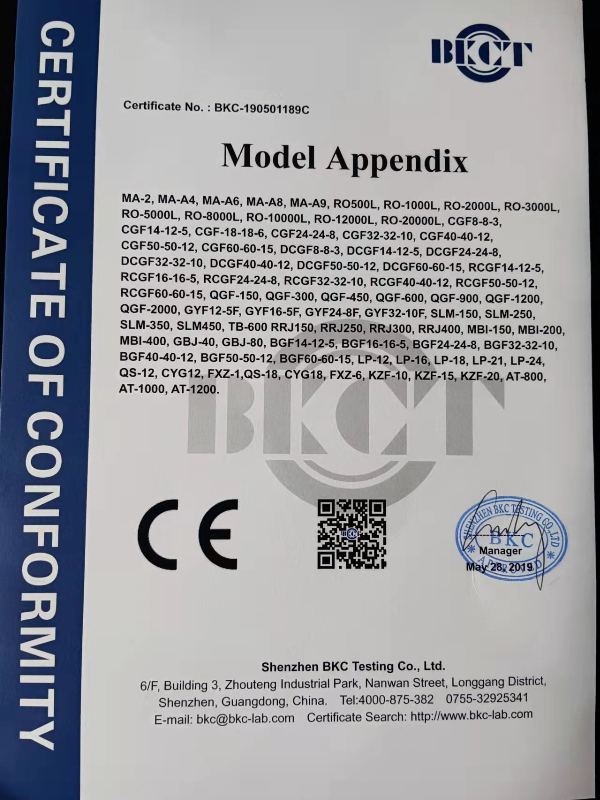
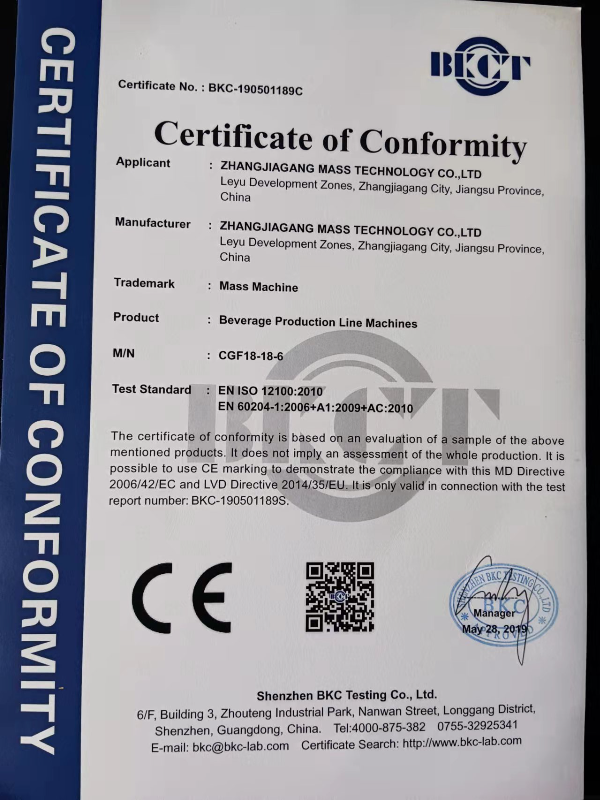
FDA/CE/ISO 9001/ NSF/3a
Carbonated Drink Filling Machine
Carbonated Drink Filling Machine: 2,000–36,000 BPH PET / Glass / Can Lines (2026 Buyer Guide)
B2B Industrial Beverage Equipment · Zhangjiagang Mass Technology
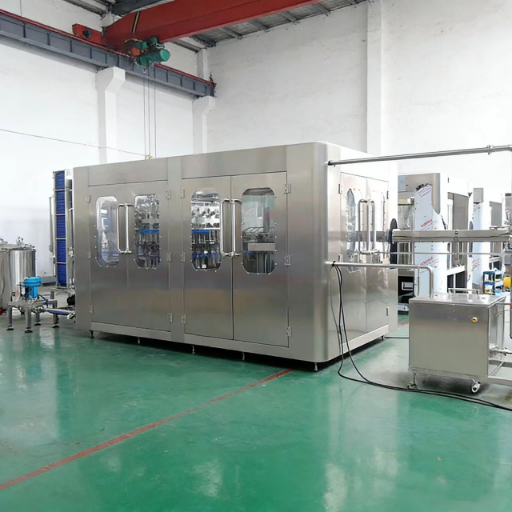
Series of industrial CSD (cola, flavors , fizzy drinks) filling machine for CSD, flavored water, energy drink etc.
The masstech engineers designed isobaric counter-pressure CSD lines for PET,GLASS & aluminum-can making-line s:220+ installed in35 countries with everyone-approved documents as FDA/CE/ISO 9001/ NSF/3a, supplied with 24h engineering support& 5 working-day spare-parts delivery.
- Containers: PET (200 ml – 2 L) · Glass (200 – 2000 ml) · Aluminum can (250 – 500 ml)
- Capacity Range: 2,000 · 5,000 · 8,000 · 12,000 · 15,000 · 18,000 · 24,000 · 36,000 BPH
- Filling Technology: Mechanical valve · Electronic valve · Flow-meter · Laser-level
- Construction: 304 / 316L stainless steel, food-contact compliant
- Service SLA: 2-yr parts warranty · 24-hr response · 5-day parts dispatch
- Compliance: FDA 21 CFR 175.300 · CE · ISO 9001:2015 · NSF · 3-A Sanitary
220+
installed in35 countries
36,000
BPH
24h
engineering support
5 working-day
spare-parts delivery
From CO₂ Loss to Foam Control:
How Isobaric Filling Solves Carbonation Challenges
A suitable carbonated beverage filler can make or break a product with one number: dissolved CO2 retention from tank to capping. Miss it and shelf life is compromised, double the typical foaming at the filler and customer complaints of flatness escalate within weeks of launch.
Three problems cause just about every production floor carbonation failure. All three are present in PET, glass and can lines, no matter the origin of the brand:
CO₂ Slip at Capping
Pressure drop between filling valve and crowner releases dissolved gas. Industry benchmarks show overflow fillers lose >15% of dissolved CO₂ before the cap seats.
Foam-Out Rejects
Vacuum fillers cannot pre-pressurize the bottle, which forces foam to form during fill. Reject rates of 3-8% are common at high speed.
Fill-Height Drift
Mechanical valves without snift control lose volumetric accuracy as carbonation rises. Drift translates directly to label-claim compliance risk.
Isobaric counter-pressure filling accomplishes all three. The bottle has previously been pre-pressurized to the same pressure as the product tank, dissolved CO stays in solution, and snift valve releases excess head pressure cleanly when cap-seat pressure is attained.
Independent benchmarks confirm this. A 2024 study of bottling filler technologies (xmfiller industry analysis) found 95-98% CO retention for isobaric counter-pressure systems compared with 90-93% for vacuum and less than 85% overflow at similar speeds.
From this point forward, we are assuming you have chosen technology: isobaric counter-pressure will be the basis for all durable carbonated beverage operations worth their weight. The other choices to be made involve the capacity tier, choice of containers, a sub-type of fill valve, and the total cost of ownership over the 7-10 year operating span.
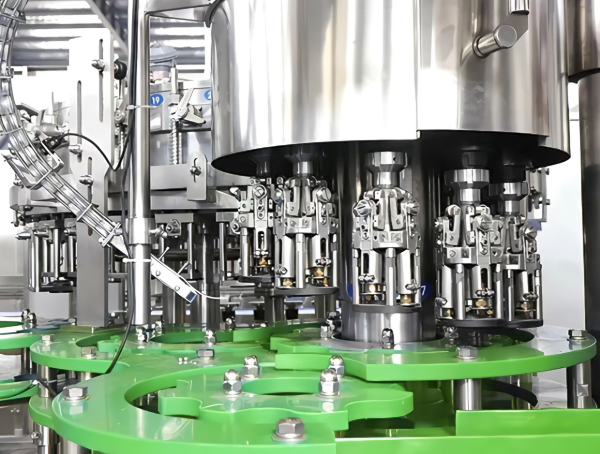
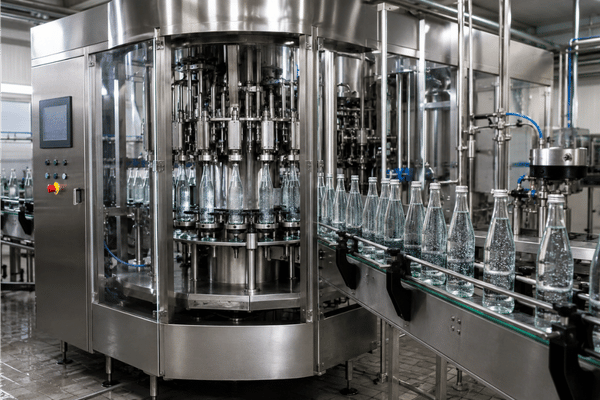
A fully equipped carbonated beverage filler is in fact a rinser-filler-capper as all these 3 operations are integrated in one single rotary block. The vast majority of contemporary CSD plants employ for PET either a 3-in-1 filling machine (rinser-filler-capper triblock) or a 4-in-1 monobloc for glass in case, when another stage of cooler or labeler respectively is sharing the same synchronized drive. We will discuss triblocks versus monoblocks at cross-vendor level below.
Masstech Carbonated Filling Lines — Capacity & Container Matrix
Masstech establishes 3 separate carbonated filling platforms—each ranged to a defined capacity band and a single mode of container: so your choice is by application, not by sales pitch.
PET Bottle Line — DC GF Series
2,000–20,000 Bottles Per Hour
Our DC GF platform is the workhorse for cola, sparkling water, energy drinks and flavored CSD in PET. Five model sizes have a common valve platform to reduce the skew in spare-part inventory at mixed-capacity plants. Stainless construction includes 304 on tank interiors and 316L on all product contact surfaces.
Each DC GF unit combines synchronised bottle rinsing, isobaric filling and capping in a single rotary frame driven by servo drive motors. This servo control overcomes the cam driven jitter of the mechanical predecessor when operating at high rpm, and provides accurate titration control for each filling valve. PLC control with a 10″ colour HMI manages recipes, alarms and FAT data, the operators transfer between SKUs without too much trouble.
| Model | Capacity (500 ml) | Heads | Power |
|---|---|---|---|
| DC GF 16-12-6 | 3,500–4,000 BPH | 16 / 12 / 6 | 4.24 kW |
| DC GF 18-18-6 | 4,500–6,000 BPH | 18 / 18 / 6 | 5.03 kW |
| DC GF 24-24-8 | 8,000–12,000 BPH | 24 / 24 / 8 | 6.57 kW |
| DC GF 32-32-10 | 12,000–14,000 BPH | 32 / 32 / 10 | 8.63 kW |
| DC GF 40-40-12 | 15,000–18,000 BPH | 40 / 40 / 12 | 9.63 kW |
Glass Bottle Line — 3-in-1 Triblock Series
3,500–18,000 Bottles Per Hour
Our glass platform accommodates round and square bottles from 200ml to 2,000ml. It supports four filling-valve options, all of which can be specified/measured in-house with deposition tests: mechanical valve filling, flow-meter, weight-based, and laser-level. Our closure options include crown cap, plastic cap, and aluminum cap and depend on the brand specifications in packaging.

Aluminum Can Line
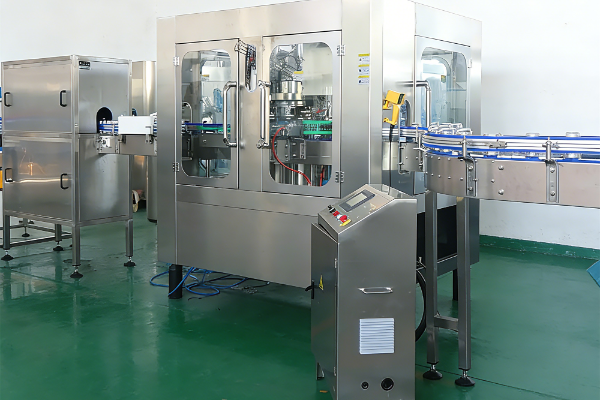
See our dedicated soda can filling line for aluminum-can production, which reaches 500-18,000 cans per hour with isobaric filling, CO2 flush, and seamer integration.
Explore aluminum can filler →
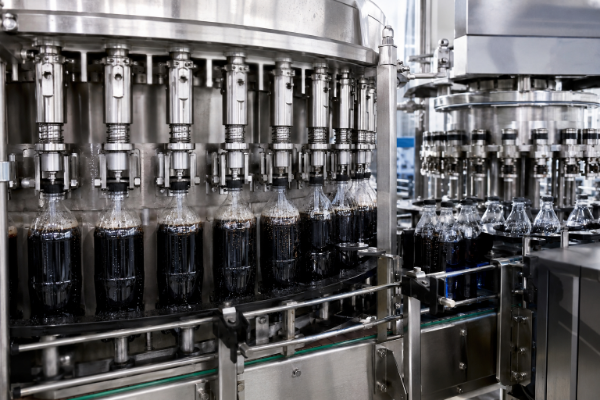
Soda Bottling Machine Deep-Dive
Breakdown of all factors in material selection for aluminum can manufacturing into bottle-specific filling-valve selection, snift configuration, and 500 mL to 2 L changeover.
Explore soda bottling specs →
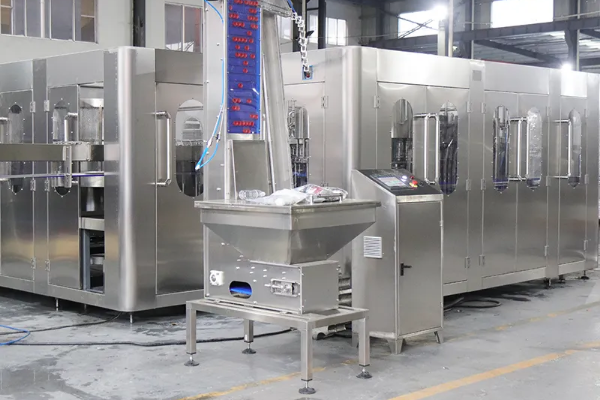
Complete CSD Production Line
Complete turnkey layout including water treatment, syrup mixer, bottle blowing, filler, labeler and shrink-pack.
See complete production layout →
Authority Hook A4 — Container Selection Matrix
Naming conventions are country-specific (US ASBC regarding EU ISO standards). Our specifications match formulation-target, shelf-life requirement, and unit-economics rather than simply vendor specifications.
| Decision Factor | PET | Glass | Aluminum Can |
|---|---|---|---|
| Typical CO₂ volume tolerance | 3.0–4.5 vol | 3.0–5.0 vol | 2.5–4.0 vol |
| Shelf life at 25 °C | 3–6 months | 9–18 months | 9–15 months |
| CO₂ permeability | Moderate (gradual loss) | Near-zero | Near-zero |
| Per-unit packaging cost | $0.07–0.15 | $0.18–0.40 | $0.06–0.12 |
| Premium positioning | Standard | High | On-the-go / convenience |
| Best filling tech | Isobaric electronic valve | Isobaric flow-meter or mechanical | Isobaric + N₂ purge |
The choice of food-contact material is subject to its guarantee of compliance with the relevant rules and regulations, and the grade selection for materials at the filler is part of that decision. Common Grade Standard is, 304, and 316L is recommended if your solution defines in its specifications the usage of chloride-containing cleaners or aggressive sanitizers, based on available published guide lines for the usage of food-contact stainless steels.
Carbonation Engineering Decision Matrix — CO₂ Volume × Container × Capacity
The most difficult mechanical-to-electromechanical control selection process. This single choice of specification requires three interacting variables; no single factor emerges as a walk-away do-it-yourself standard.
Most North American cola/sparkling-water clients are looking to 3.0-3.5 volumes of CO2 (volumes of dissolved CO2 based on typical small-scale carbonation calculations). For CO2 levels higher than about 3.7, you need electronic valve filling infrastructure with active snift control and a dedicated vacuum degasser before the carbonation tank.
Fitting capacity and CO2 target columns into a matrix of effective filling architecture. That counter-argument is what influences reject rate. Too little back pressure, excessive foam and losses with foil. Too much back pressure delays cycle and cuts throughput.
These variables act as system leads-in to the long-term choice of filling-valve subtype. First is syrup Brix (sugar percentage, on finished CSD usually between 11-14 Brix), which affects the foaming at the filling valve. Second is presence of an in-line chiller to drop the bottle’s temperature down to 2-4 °C and maintain the level of dissolved gas within the process. Missing one of these two precursor variables results in tuning to be done later, which drives reject rate higher.
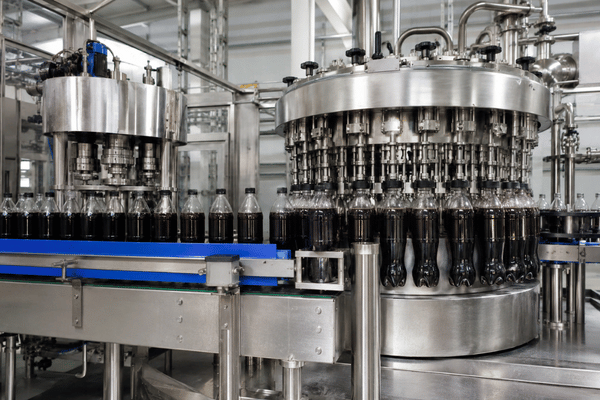

01 / 02
Decision Matrix: Valve Type by Application
Low CO₂ · Low BPH
Sparkling juice ~2.5 vol, <6,000 BPH → mechanical valve, gravity-assisted isobaric. Lowest capex, simplest CIP.
Medium CO₂ · Mid BPH
Standard cola 3.0–3.5 vol, 6,000–15,000 BPH → electronic valve, single-stage snift. Sweet spot for most regional bottlers.
High CO₂ · High BPH
Energy drink or tonic 3.5–4.5 vol, 15,000+ BPH → electronic valve + active snift + dual pre-pressurization stage.
Glass · High CO₂
Glass bottle >3.5 vol → flow-meter valve + secondary vacuum pull. Glass tolerates higher head pressure but demands precision dosing.
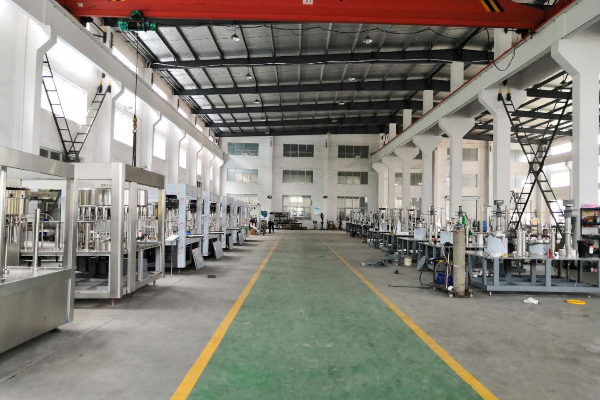
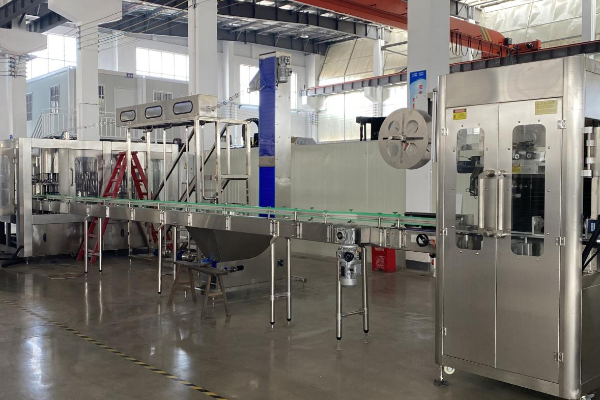
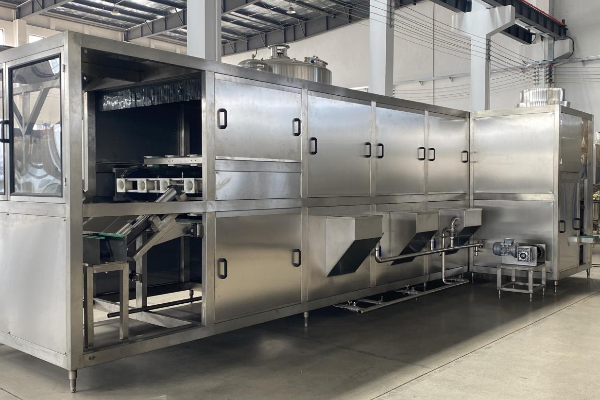
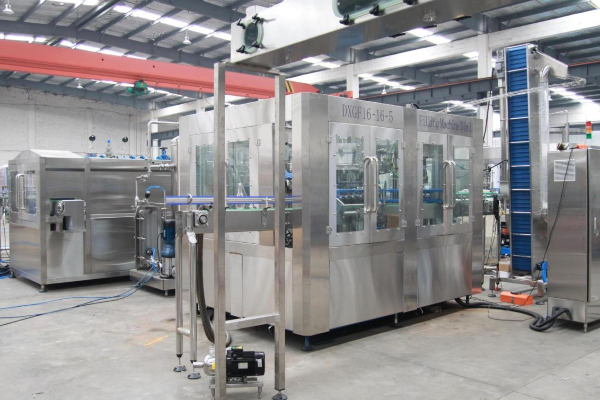
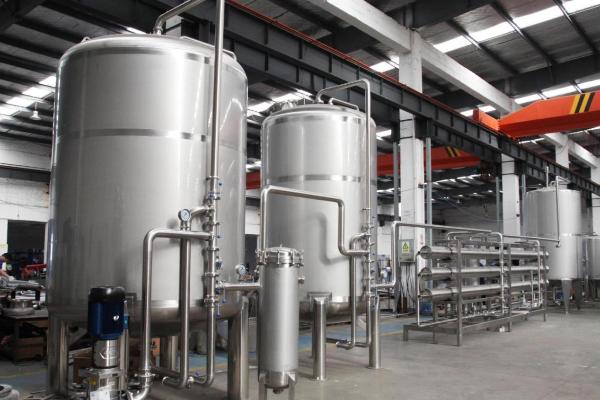
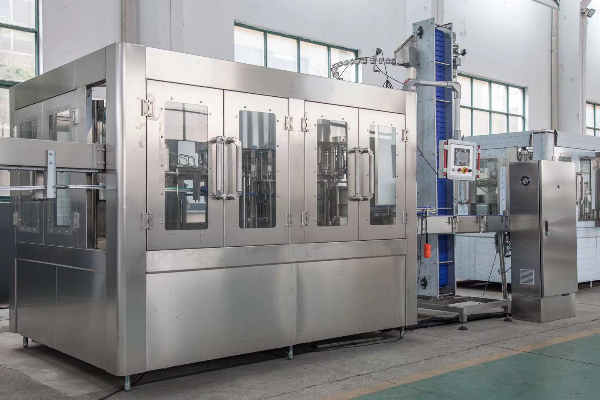
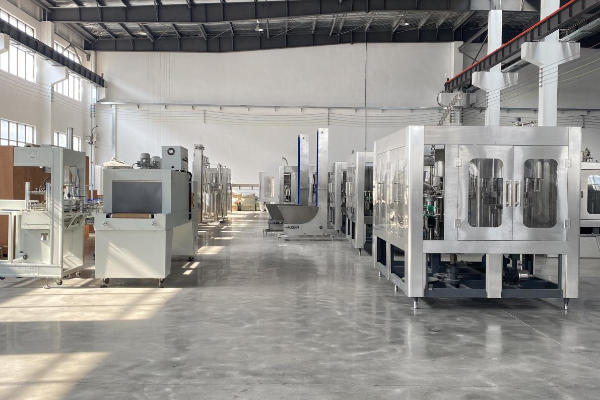
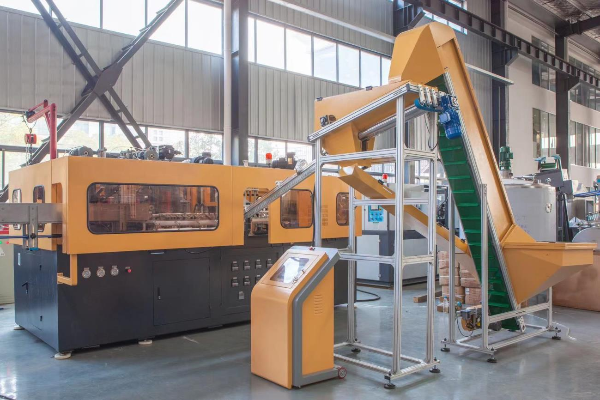
Carbonated Drink Filling Machine Manufacturing Facility
Masstech vs King Machine vs Reliable vs Comac vs Sidel — Cross-Vendor Comparison
Three of our direct industrial competitors are same place in… by operating in the Zhangjiagang OEMand throughout the European premium segment, the model-naming conventions of the six vendors are different, so really comparisons apples-to-apples are tough for the buyers. Vendor SKU codes are not named consistently. Match similar models in capacity, vessel, filling technology and head count, not just by name. Sample table contains culling information derived from public product pages and used- equipment listings. Verify specifications with each brand prior to purchase.Read more
| Concept | Masstech | King Machine | Reliable | Comac (Italy) | Sidel / KHS / Krones | XpressFill (US) |
|---|---|---|---|---|---|---|
| Entry PET (≤3,000 BPH) | DC GF 16-12-6 | 3000bph 3-in-1 | 3000BPH 3-in-1 | Pegasus 8-1 V2 (cans) | — | XF2500 |
| Mid PET (5K–8K BPH) | DC GF 18-18-6 / 24-24-8 | 5000bph / 7000bph | 5000BPH / 8000BPH 3-in-1 | Sagitta 12-12-1 P | — | — |
| Production PET (12K–18K) | DC GF 32-32-10 / 40-40-12 | 3-in-1 12K / Glass 4-in-1 | 12000BPH / 15000BPH | Master PET | Sidel Combi 22K | — |
| High-Speed PET (≥24K BPH) | DC GF 40-40-12 + parallel | 24000-30000bph CSD | 20000BPH rotary | Master PET (up to 70K) | Krones Modulfill / KHS | — |
| Glass triblock | 3-in-1 glass series (5 models) | 4-in-1 glass washing-filling-capping | Triblock CGFD12-12-6 | Sagitta 12-12-1 P (glass) | Krones glass lines | — |
| Aluminum can | Soda-can-filling line | CSD can filling | Cola seaming machine | Microbrew 20-4 | KHS 36K-120K cans/h | XF4500C |
Customer Results — 220+ Carbonated Lines Across 35 Countries
Since 2003, Masstech has supplied isobaric carbonated filling lines to 35 bottlers and contract packers around the world. Of all deployments, three realization patterns show where the platform is best suited:

Middle East · 12,000 BPH PET Cola Line
Regional cola brand attempting to switch out an aged filler running 9500 BPH nameplate but only 6800 BPH actual at 9500 isobaric CO retention. Masstech DC GF 32-32-10 + inline blower provided 11400 BPH sustained for a 6 month measurement period with isobaric CO retention measured at 96.1% average.
South America · 5,000 BPH Glass Sparkling Water
A premium sparkling water company having previously outsourced co-packing to a 3-in-1-triblock glass line at 5,000 BPH per hour sourced an in house manufacturer. After thirteen months of operation, the line was running +8.4% above name plate with reject rates less than 0.6%.
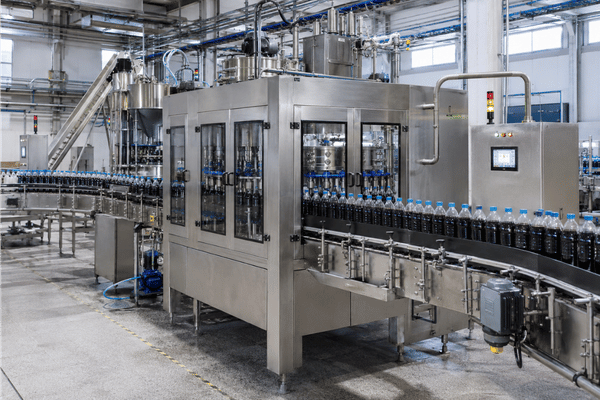
Southeast Asia · Turnkey CSD Plant
A startup bottler has ordered a turnkey package: water treatment (10 T/hr RO), blowmoulder, DC GF 24-24-8, labeler, shrink-pack and palletizer. Contract signed in Q1, FAT in Q3, first commercial production in Q4 - 11months order-to-commercial.
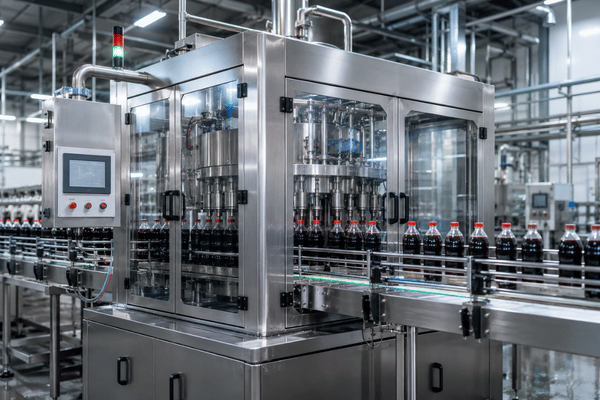
The economics of deployment strongly support a judicious choice of capacity. Industry studies of capacity-intensive bottling plants of 20,000 BPH place overall CAPEX at some USD 1.99mn (USD’000 level) with five-year OPEX near the USD 12.7mn band, while mid-tier soft-drink plant core-machinery capital investment is in the vicinity of USD 410,000. The sweet spot in size for your throughput concept prevents over-zation of the line as well as under-utilization.
Operating economics favors right size lines in another way. A 20,000 BPH operation at current PET lightweighting would buy in excess of USD 300,000 worth of resin annually; therefore, the bottle-blower, preform spec and filler all have to be specified as one package. We size lines as integrated systems, not stand alone machines.
The worldwide market size (USD) for beverage contract bottling and filling in 2025 was USD 11.06 billion. It is a sufficiently attractive total addressable market so the buyers can choose others as long term partners.
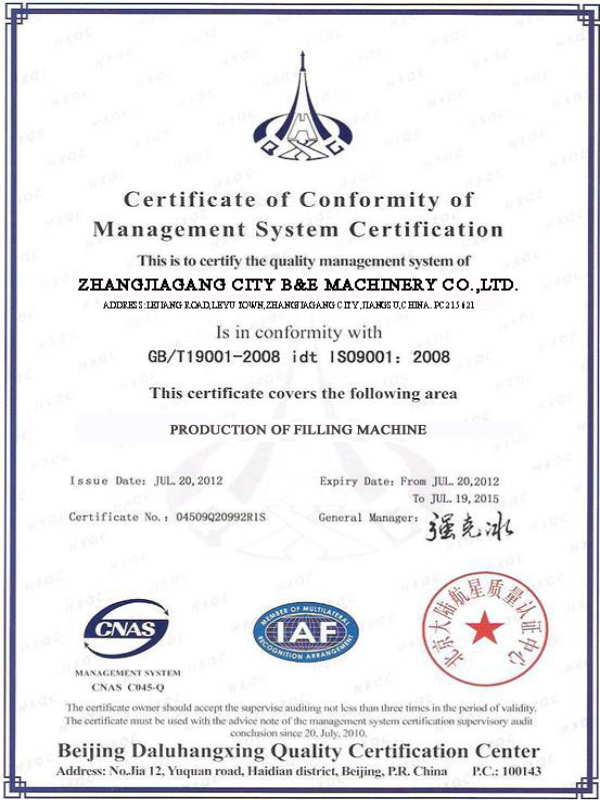
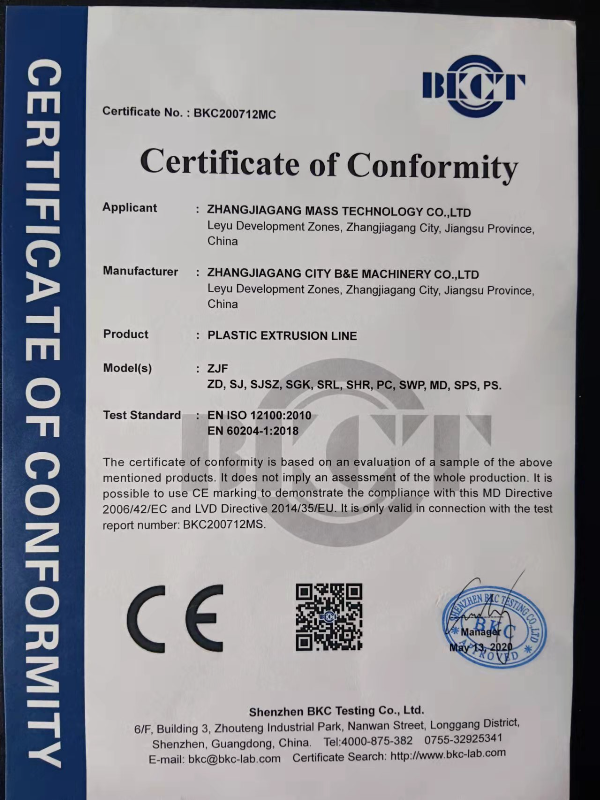
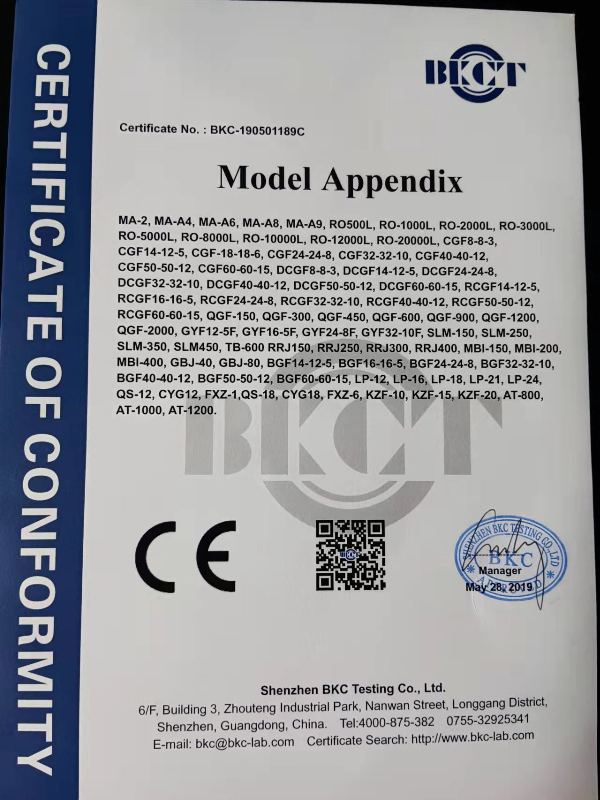
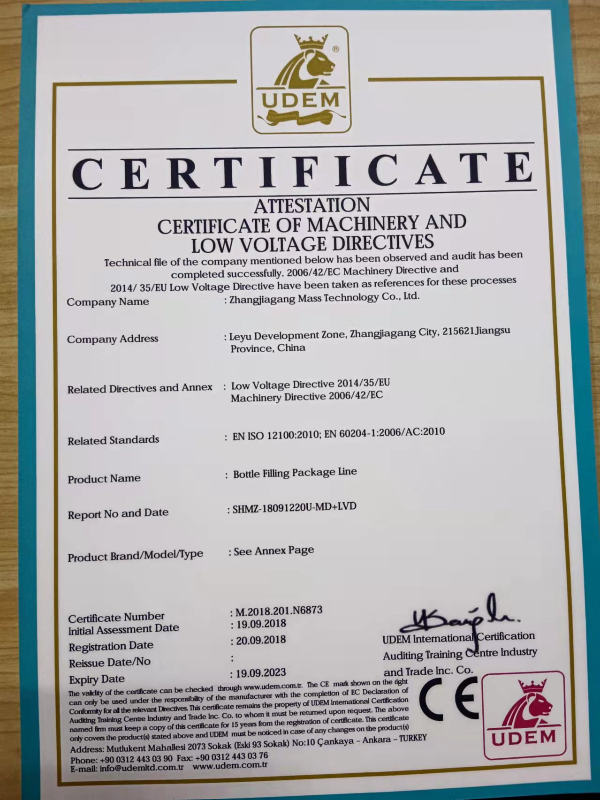
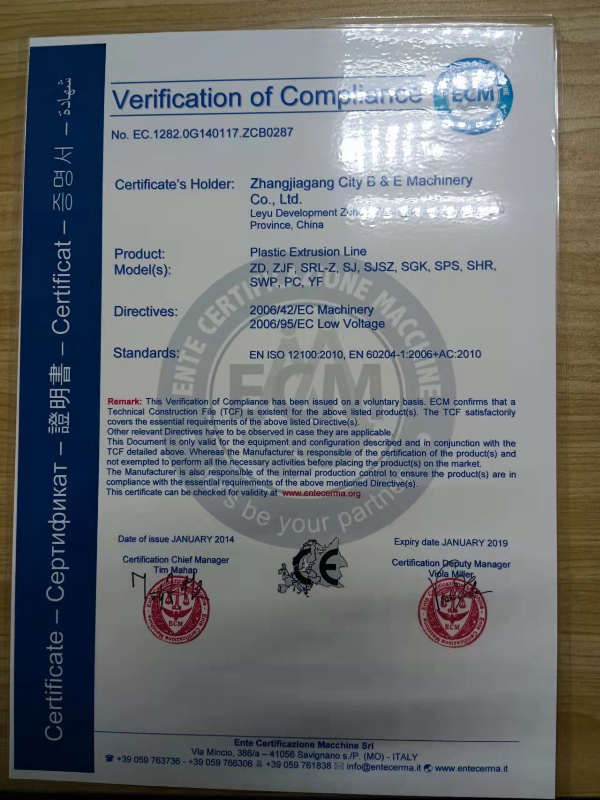
Certifications & Compliance — FDA / CE / ISO 9001 / NSF / 3-A
Choice of export-regulatory pathways—Avoid having to complete additional documentation by choosing markets that have required the import regulations (Export-market regulatory chains). All of the CSD lines in Masstech's are designed to carry the requisite documentation that American, EU, GCC and ASEAN protectors look for, the integrated CIP circuit is documented to allow for normal sanitation audits.
FDA
21 CFR 175.300CE Marking
Machinery DirectiveISO 9001:2015
Quality SystemNSF
Food Equipment3-A Sanitary
Hygienic DesignASBC Aligned
CO₂ Methods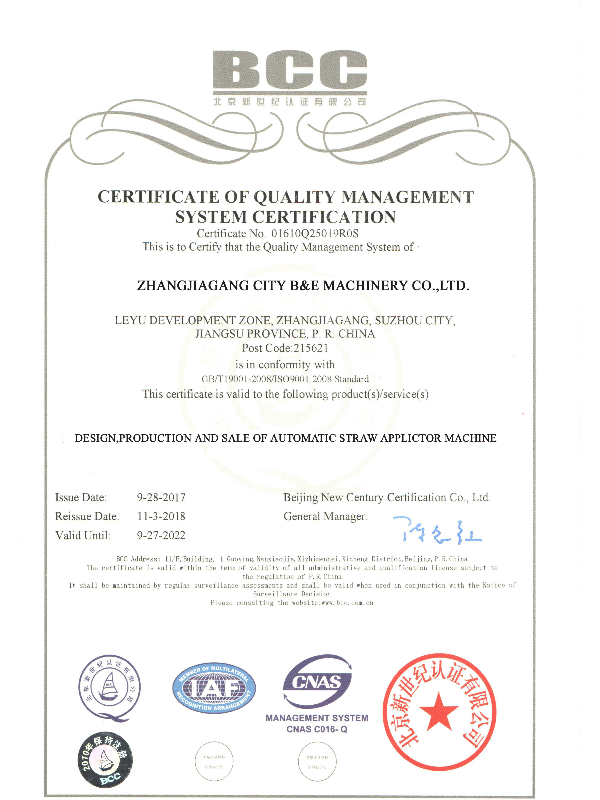
Material Compliance Detail
| Surface | Material | Reference |
|---|---|---|
| Product-contact filling valves | 316L stainless steel | FDA 21 CFR 175.300 compatible |
| Tank interiors and CIP loops | 304 / 316L stainless steel | FDA 21 CFR 175.300 + NSF/ANSI 2 |
| Resinous coatings (gaskets, O-rings) | Food-grade EPDM or PTFE | FDA 21 CFR 175.300 indirect contact |
| Hygienic welds | 3-A compliant orbital weld profile | 3-A Sanitary Standard 02-12 |
Carbonated Drink Filling Machine Pricing — Transparent USD Tier Ranges
Authority Hook A2 — Tier Pricing Matrix (USD, FOB)
Tier
Capacity
Container
Filling Machine Price Envelope
Suited For
Entry / SMB
1,500–3,000 BPH
PET or glass, small format
$15,000 – $35,000
Startups, regional craft brands, contract packers entering CSD
Mid Production
5,000–10,000 BPH
PET 3-in-1, glass 3-in-1
$50,000 – $95,000
Regional manufacturers, single-brand exporters
Production
12,000–18,000 BPH
PET / glass 4-in-1
$130,000 – $220,000
Mid-tier national brands, multi-SKU bottlers
High-Speed
24,000–36,000 BPH
PET + integrated mixer
$280,000 – $500,000
Major bottlers, regional Coca-Cola / Pepsi partners, exporters
Additional Project Cost Components (not in filling-machine envelope)
Water treatment system (0.5-50 T/h): $10,000 -$50,000, depending on the quality of raw water and type of treatment.
Bottle blowing machine(PET preform bottle):KONOUICK-MAVAL JOUH for 2-cavity to 6-cavity system0
Syrup mixer / proportioning: $15,000-$45,000 for inline mixers; standalone batch mixers lower
Labels to be applied on machine( OPP hot-melt / with sleeve/ with sticker): $8,000—$25,000versus operation technology
Shrink-pack / palletizer: $15,000–$40,000 for shrink-wrap; full palletizers higher
FAT, installation, commissioning, training: $15,000–$30,000 usually billed separately
Procurement Guide — Lead Time, Installation & Service SLA
A carbonated filling line is a five to eight month journey from order signature to first commercial run. The timeframes inform you regarding when to align packaging acquisition, distribution contracts and launch advertising.
Standard Project Timeline (90–120 Days from Order to FAT)
Day 1–5
Order confirmation, engineering review, final specification freeze.
Day 5–75
Manufacturing — frame, valves, electronics, control cabinet assembly.
Day 75–82
Factory Acceptance Test (FAT) — water run + CO₂ retention validation.
Day 82–120
Shipping (25–40 days, destination-dependent).
Day 120–140
On-site installation, commissioning.
Day 140–150
Operator training (5–10 days on-site).
One-Stop Turnkey Scope
We can take as much scope as buyers want included in our turnkey. Our standard scope involves: preliminary plant layout, pack line and mechanical manufacture, installation, on-line operator training, after-sales technical back-up. Buyers can select sub-packs, machinery-only or machinery + installation or installation + training depending on their own internal resources.
Service SLA — Quantified, Not Promised
2-Year Parts Warranty
All machine parts covered for a full two years from commissioning. Coverage applies to wear parts only on consumables schedule.
24-Hour Response
Initial technical response from our engineering team within 24 hours of ticket submission, regardless of buyer time zone.
5-Day Spare Parts
Replacement spare parts dispatched via international courier within 5 working days of order confirmation. Critical-spare buffer kits available at FAT.
Carbonated Drink Filling Machine Engineering Tools
Capacity TCO Estimator
Accurately calculate production line capacity and Total Cost of Ownership (TCO). Use engineering data to optimize your carbonated beverage plant investment.
Launch Estimator Tool
Container Valve Selector
Determine the exact filling valves and machinery configurations required. Tailor the equipment selection perfectly to your specific PET, glass, or can specifications.
Launch Selector Tool
Frequently Asked Questions
What is the realistic capacity range of a Masstech carbonated drink filling machine?
Our PET DC GF is availible in 5 model sizes from 2000-20000 BPH. Our 3-in-1 glass triblock runs from 3,500-18,000 BPH. Where bottling requirements exceed (24,000-36,000 BPH) the product is produced across multiple parallel lines or the DC GF 40-40-12 in tandem with an integrated blower.
Can a single line fill both PET and glass bottles?
Certainly. PET and glass filling-thin-wash-fining require separate filling valve platforms (different geometry), different bottle handling systems (bottle star and rinser geometry), different bottle neck handling (dosing-gear holes) and downstream filler arrangements. Sharing a line between the two involves changeover delays as well as risk and accident liability in keeping food safety standards. For dual-format brands, we recommend dedicated PET and glass lines with shared upstream water treatment and syrup blending.
What CO₂ volume range does the machine maintain reliably?
There are several variables, but only one is the dominant one. Running the new valve design: 2.5-3.2 vol performance, or active snift handle 3.0-4.5 vol performance, levels dictate which technology type (mechanical 2.5-3.2 or electronic 3.0-4.5) the final project runs with. FAT validation is end-to-end retention against the agreed performance target.
What is the typical lead time from order to first production?
Data points. Under the standard project scope, we execute from order sign-off to FAT within 90 to 120 days, plus shipping time (usually 25-40 days) and 2-4 weeks on-site. Total order-to-beverage producing windows of 5-7 months are typical. Custom configurations or non-standard subsystems take longer.
How does Masstech differ from King Machine and Reliable Machinery on the same Zhangjiagang OEM platform?
3 points. Where the valve geometry we used on our DC GF in 2022 had the drive to reach recommended aggressive 3.0-4.5 CO handling, competitor line has the original configuration 2.2 lower-CO valve. Our SLA is a measured 24 hr telephone call response, 5 day parts back-up, 2 year warranty; competitors tend to promise only 'responsive' service. Our documentation pack provides full cert numbers, material test reports and FAT protocols at quote stage - competitors commonly share only after payment.
What certifications do you carry for EU, US and GCC export markets?
We can certify to the following standards: FDA 21 CFR 175.300 for food-contact surfaces, CE Machinery Directive for EU placement, ISO 9001:2015 for quality system, NSF for food equipment, 3-A Sanitary Standards for hygienic design, ASBC approved methodology for CO validation. Specific cert numbers and approval validity dates are with every quotation.
What is the typical price range for a 10,000 BPH PET carbonated line?
Filling only: USD 50,000-95,000 depending on valve type, container range and automation. Complete line (water treatment + blower + filler + labeler + shrink pack + palletizer + installation): USD 180,000-340,000 depending on the line (averaged out at 10,000 BPH). We provide configured quotations within 5 working days of accepting the buyer's order spec.
Do you provide turnkey services including water treatment and bottle blowing?
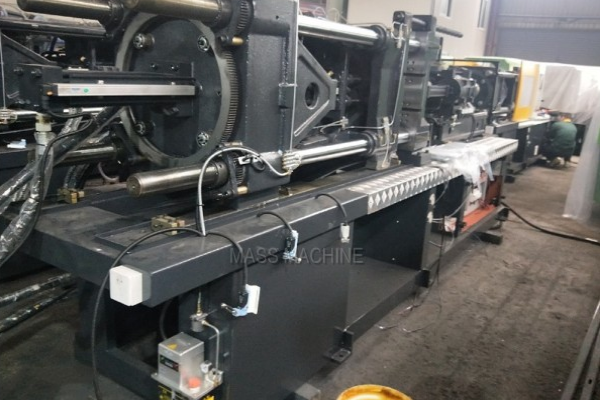
Certainly. Masstech produce a range of complete turnkey production lines including water treatment (0.5-50 T/h range), PET preform injection molding (140-800T range), bottle blowing, filling, labeling and palletizing. Buyers purchasing at the complete line level can choose to buy a full solution or any combination of subsections. We manage vendor interfaces and communication for partner vendors if required.
What is your spare parts strategy for production-line uptime?
At FAT we recommend a critical-spare buffer kit covering valve seals, snift O-rings, sensor heads, drive belts and capper torque clutches. Routine spare parts ship via international courier within 5 working days from order. For 24,000+ BPH lines, we recommend a 6-month consumables inventory on-site to prevent reliance on courier for critical-path parts.