Get in Touch with Masstech
Fully Auto Blowing
Fully Automatic Bottle Blowing Machine — Masstech Q-Series PET Solutions
240-12,000 BPH. 0.1L-5 Gal. 2-9 Cavity. 2-Year warranty + 24-Hour Engineer Response.
✔ ISO 9001 quality system
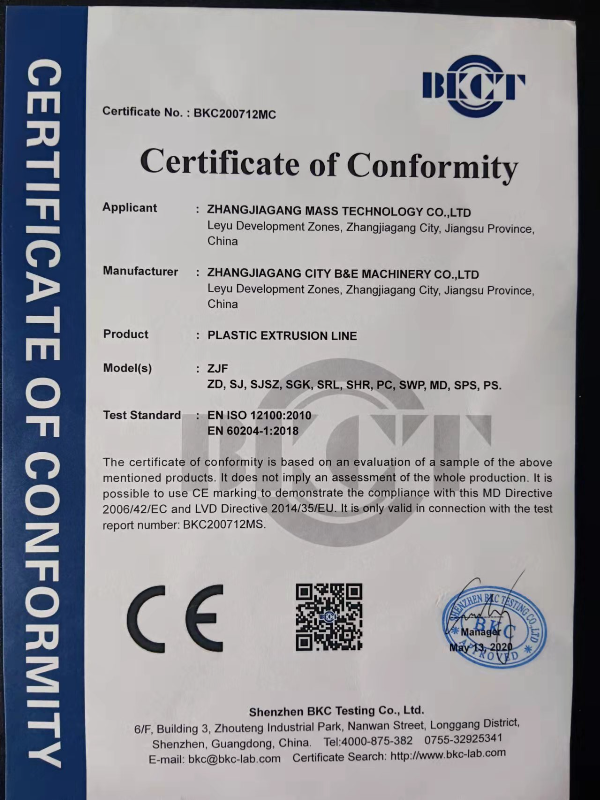
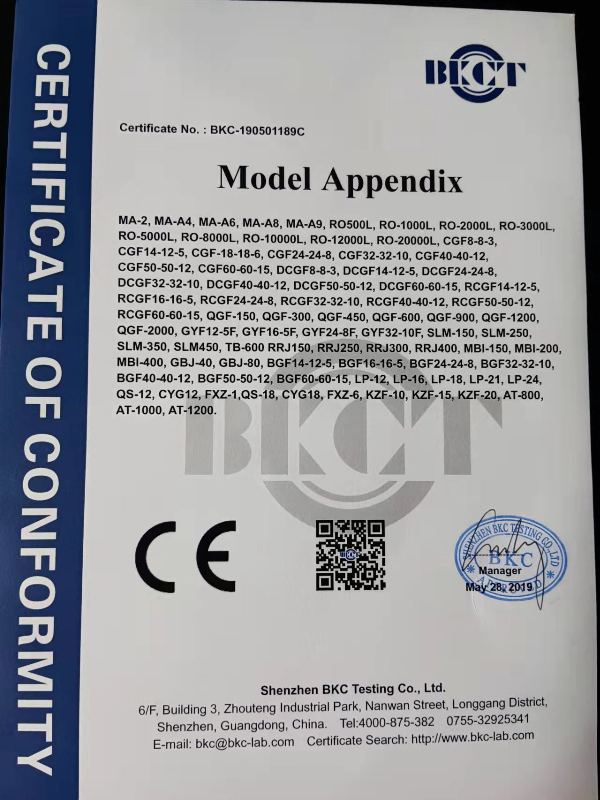
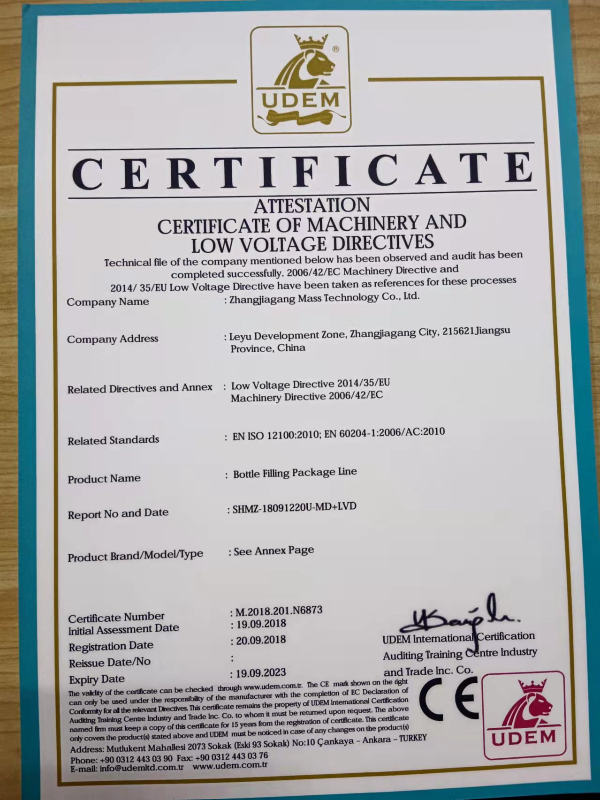
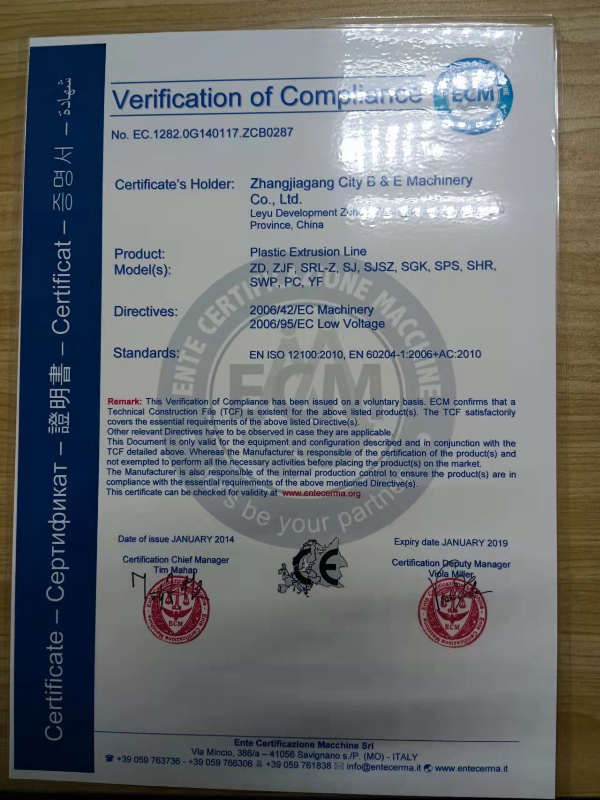
✔ CE machinery directive
✔ FDA-grade contact materials

When Outsourcing Empty PET Bottles Costs You Margin and Lead Time All Roles
Economics for fully automatic bottle blowing machine turned in the year 2024-2026. PET resin prices in Europe registered a hike of 28.6% YoY to USD 1.71/kg; North America followed the trend at +8.5% (businessanalytiq, April 2026). Beverage producers who buy empty PET bottles from third-party blow houses absorb every spike themselves, with no price-negotiation pull.
Three pains every beverage and edible-oil producer feels
Margin distortion
– preform/empty-bottle suppliers re-quote when PET fluctuates; your retail price generally cannot.
Over-lead-time exposure
– peak-season orders remain queued in third-party blow houses behind larger accounts.
Design lock-in
– proprietary bottle forms and lightweight construction prove tedious to externally commission without revealing your proprietary IP.
PET stretch blow molding produces the empty bottle onsite via two procedures: a two-step (also called two-stage) blow moulding process – preforms injection-molded independently, then reheated and stretch-blown – or a single-step ISBM procedure where raw resin material becomes finished bottle directly in the equipment. Two-step methodology allows flexible scheduling and lower per-cavity CapEx; single-step methodology allows shorter floor space and higher CapEx per bottles per hour delivered. Most beverage manufacturers worldwide employ two-step methodology for SKU breadth, which is the same architecture used in our Q-Series bottle making machine platform.
Masstech’s Q-Series brings this methodology in-house at the ideal size for mid-tier beverage and packaging plants. We dimension the line to your automated line throughput, supply compatible preform tooling, and synchronize it with your existing filling and capping equipment so empty-bottle cost also becomes under your control.
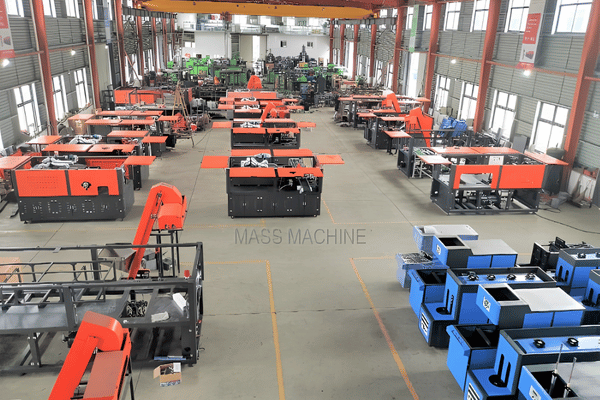
Masstech Q-Series Range — Five Models Spanning 240 to 12,000 BPH
Our Q-Series covers semi-automatic entry capacity through 9-cavity high-speed lines on a single platform. Cavity scaling, neck-finish options, and infrared heating zones stay identical across models, so operator training and spare parts migrate cleanly between sizes. Bottle types span formats from 100 ml beverage bottles up to 5-gallon water carboys.
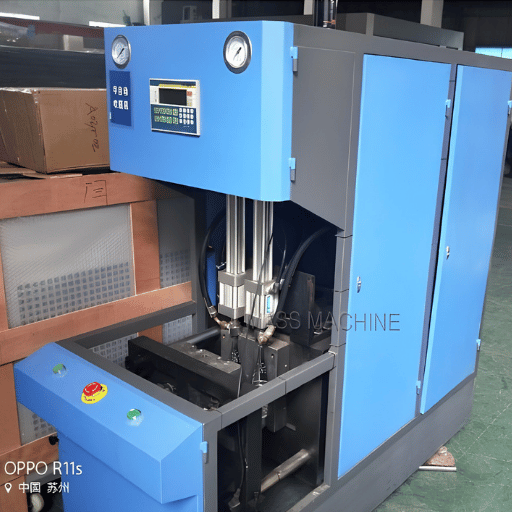
Semi-Automatic MS-Series — Entry CapEx, 240–800 BPH
Single- or double-station semi-automatic with infrared heating chamber, double-crank four-bar mould lock, and dual airflow resources isolating actuation from blow pressure. Defining dimensions for 0.1-5 L PET bottles, inclusive of tiny pesticides, scented cosmetics, and edible oils. The blow molding cycle remains controlled directly by operators rather than program logic so production rate scales with shift discipline.
- Output
- 240–800 BPH
- Bottle range
- 100 ml – 5 L
- Mould lock
- Double crank 4-bar
- Operation modes
- Semi-auto + step-by-step

Q3000 Two-Cavity Auto — Mainline 3,500 BPH at 500 ml
Two-step automatic stretch blow with a 28-63 mm neck diameter range, 100 mm maximum bottle diameter, 330 mm maximum height, and a 2 L maximum bottle volume. Validated for carbonated beverages, mineral water, juice, edible oils, and large-mouth packaging. The Q-platform scales from 2-cavity to 8-cavity within one chassis family, with toggle-style mold clamping shared across the line.
- Output
- 3,500 BPH @ 500 ml
- Cavities
- 2 (scalable 2–8)
- Power
- 72 / 50 kW actual
- Work pressure
- 7–9 kg/cm²
- Blow pressure
- 25–35 kg/cm²
- Air consumption
- 1,500 L/min HP
- Cooling water
- 30 L/min @ 10°C
- Footprint
- 2.25 × 1.6 × 1.7 m

Q6000 Four-Cavity Servo Linear — 6,000–6,500 BPH
Servo-driven preform feeding, microprocessor touchscreen temperature regulation, and no compressed-air actuation on the machine axes – this energy-efficient design draws roughly 50% less actual power than older pneumatic-driven 4-cavity machines. Quick-change mould architecture supports SKU rotation in under an hour. Designed for the 500 ml-2 L beverage workhorse format.
- Output
- 6,000–6,500 BPH @ 500 ml
- Cavities
- 4
- Neck range
- 28–38 mm
- Power
- 43 / 21.5 kW actual
- Bottle max
- 2L / 100mm dia
- Footprint
- 4.5 × 1.6 × 1.9 m
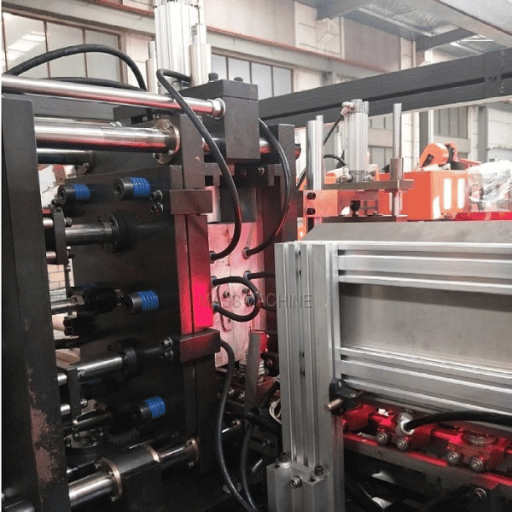
Q-Series 6 / 9-Cavity High-Speed — Up to 12,000 BPH
6- and 9-cavity Q configurations bring beer and CSD lines into automatic concurrent bottle blowing and filling throughput stations. Output per cavity equates to nearly 1,000 BPH at 500 ml giving a 9-cavity Q configuration a capacity towards the 12,000 BPH band a typical mid to large sized beverage production facility. Pair with Masstech filling equipment for monoblocked capability.
- Output
- up to 12,000 BPH @ 500 ml
- Cavities
- 6 / 9 configurations
- Best fit
- Water / CSD bottling
- Pairs with
- CSD / water filling line

3-5 Gallon MS-Series — Large Container Specialist
Dedicated large-container blow molder for 3-gallon, 5-gallon, Wide Mouth formats. Neck finish range 15-200 mm covers the broad-mouth carboy formats. Compact footprint is optimal for water plant and bubble-top distributors.
- Bottle range
- 3 gal / 5 gal carboy
- Neck finish
- 15–200 mm
- Mould lock
- Double crank 4-bar
- Operator
- Single operator capable
Decision Matrix — Which Q-Series Model Fits Your Production Profile
Four production-profile bands map cleanly onto the Q-Series. Use throughput, SKU diversity and CapEx tolerance to find your tier. Auxiliary equipment requirements scale with cavity count.
Below 1,000 BPH and a single-SKU launch
— Semi-Automatic MS-Series. Lowest CapEx, lowest CapEx-to-revenue ratio for pilot production, seasonal lines, or specialty oil/cosmetic SKUs. Pays back in 12–18 months in regions where labor cost stays below the labor-automation break-even point (industry TCO analysis cited in References). Three operators per shift typical.
1,000 to 4,000 BPH with 2–3 SKU flexibility
— Q3000 two-cavity. Quick mould changeover supports mineral water + juice + edible oil rotation on the same line. Best fit for distributors moving from outsourced bottles into in-house production.
4,000 to 7,000 BPH on the 500 ml workhorse format
— Q6000 four-cavity servo linear. Servo drive on stretching and clamping cuts actual power consumption by roughly 50% versus equivalent older pneumatic-driven 4-cavity machines (21.5 kW actual vs 50 kW on Q3000). Standard pick for mid-tier water plants and CSD producers.
7,000 to 12,000 BPH integrated with filling and capping
— Q-Series 6/9-cavity. Designed for blow-fill-cap monoblock integration where line balancing matters more than CapEx per BPH. Pairs with the Masstech CSD production line, soda bottling line, and full water/juice filling lines.
Cavity-scaling rule
- 1 cavity 1,000 BPH at 500 ml; 750 BPH at 2 L.
- Linear scaling holds up to 9-cavity for two-step Q machines on standard PET preforms.
- Hot-fill formats (88C resistance) and large 5-gallon shift the cavity-to-BPH math – quote separately.
Auxiliary equipment ladder
Air compressor, air dryer, air filter, air tank and chiller scale roughly 15-25% of machine CapEx. Compressors must deliver both low-pressure pneumatic action air (7-10 bar) and high-pressure blow air (25-35 bar). Air recovery systems redirect post-blow exhaust into the low-pressure ring, cutting energy by as much as 30% (per industry energy-management studies cited in References).
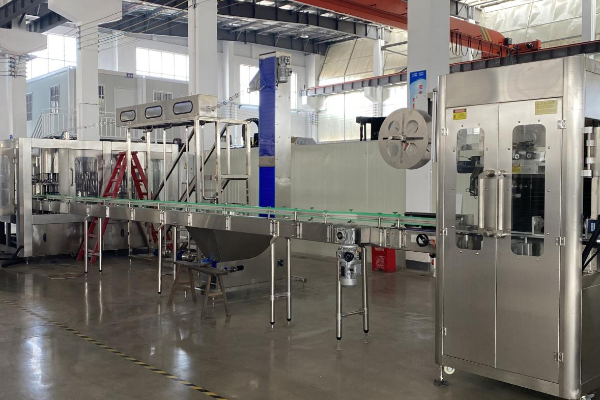
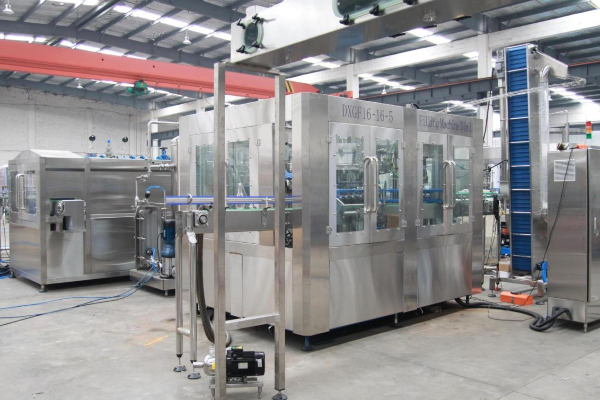
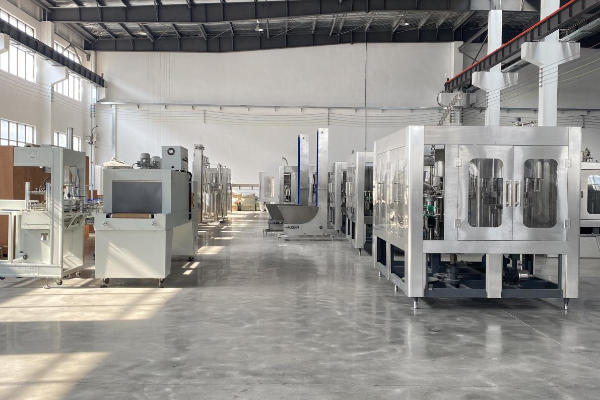
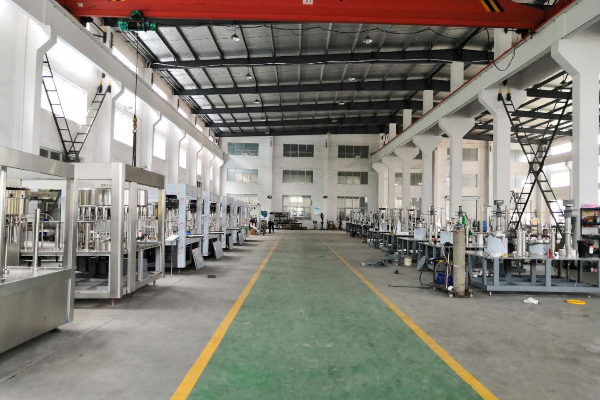
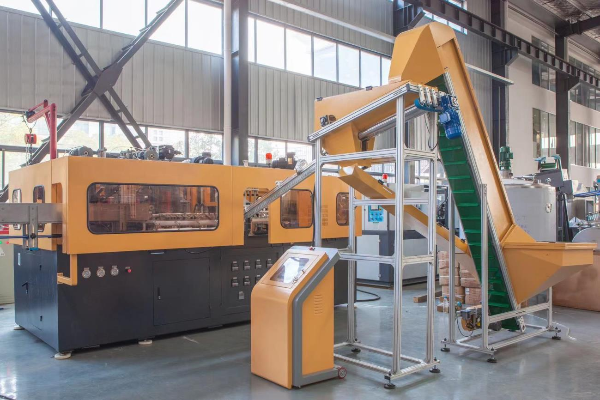
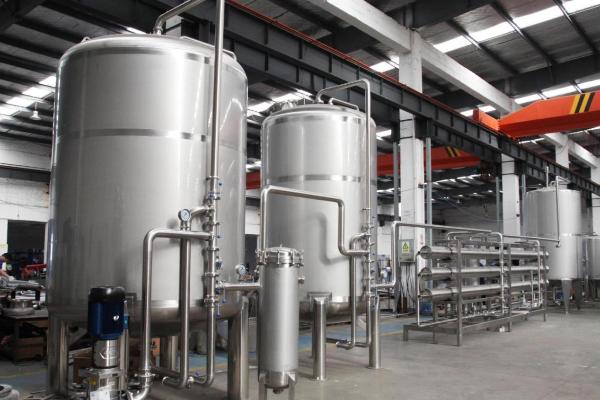
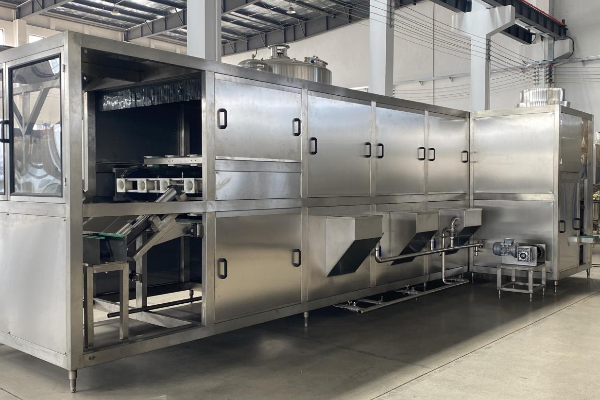
Fully Auto Blowing Manufacturing Facility
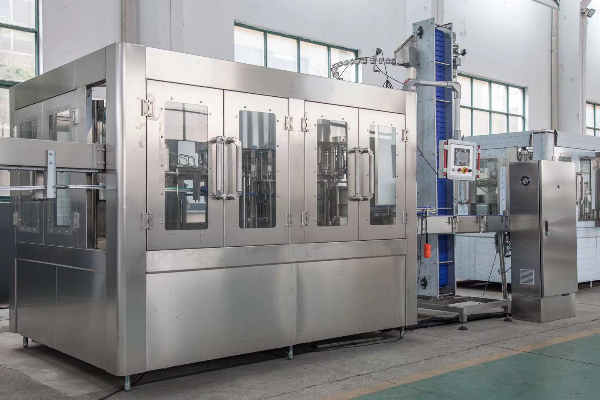
Q-Series vs Sidel, Krones, KHS — Honest Range and Cross-Vendor Naming Cheat Sheet
Premium European OEMs publish on their own websites; Chinese cluster OEMs share a Zhangjiagang manufacturing platform that produces overlapping cavity counts and bottle specifications. The naming conventions differ – Sidel indexes models as “SBO + cavity number”; Krones counts “blowing stations”; and most China OEMs use cavity-numeric codes. Buyers benchmark against the same throughput band, but reach for different model codes.
Cross-Vendor Naming Cheat Sheet
Naming conventions are different at each vendor – cross reference cavity count, bottle size output BPH for true equivalency. Sidel, Krones series codes verified directly from manufacturer pages May 2026.
| Tier | Masstech | Stable | Shyam | King | Sidel EvoBLOW | Krones Contiform |
|---|---|---|---|---|---|---|
| Entry / Semi-Auto | Semi MS-Series 240–800 BPH |
—— | KM-1 ≤120 BPH |
—— | 2-cavity / small auto | |
| Q3000 | 3,500 BPH | SEGS-2 2,000–2,200 BPH |
SPSB 02-1 3,600 BPH |
KM-2 ~2,000 BPH |
SBO 6 (linear) 13,500–63,000 BPH |
Contiform 4-station 4,000+ BPH |
| 4-cavity workhorse | Q6000 servo 6,000–6,500 BPH |
SEGS-4 4,000–5,500 BPH |
SPSB 04-2 5,600–7,000 BPH |
KM-4 ~4,000 BPH |
SBO 10–12 23,000–64,400 BPH |
Contiform 8-station ~8,000 BPH |
| High-speed 6/9-cav | Q-9 up to 12,000 BPH |
SEGS-9 12,000 BPH |
(custom) | KM-6 ~6,000 BPH |
SBO 22–34 52,800–81,600 BPH |
Contiform 14–28 up to 70,000 BPH |
| 5-gallon special | MS 3-5 Gallon | Large Bottle | SPSB 01-5L 800 BPH |
KM-5G | specialty config | specialty config |
Honest performance and TCO comparison
| Dimension | Q-Series | Sidel EvoBLOW / Krones Contiform |
|---|---|---|
| BPH range | 240 – 12,000 | 13,500 – 81,600 (Sidel) / 4,000 – 70,000 (Krones) |
| rPET compatibility | Up to ~50% standard | Up to 100% (Sidel EvoBLOW with rPET expertise) |
| Production efficiency (real-world) | ~75–85% typical | Up to 98% (Sidel EvoBLOW data sheet) |
| Scrap rate | typically <1% | <0.1% (Sidel claim) |
| Mould changeover | 30–60 min (manual) | 2 min → 30 sec (Sidel Robotised Bottle Switch); auto MouldXpress (Krones) |
| CapEx tier | see Tier Pricing below | typically 4–8× Q-Series equivalent |
| Lead time | 30–60 days production | 4–8 months typical |
| Warranty (machine parts) | 2-year Masstech standard | 1–2 year industry standard |
Customer Outcomes — Capacity, Payback, and the Energy ROI Lever
Standard sales narratives on a blow molder stop at “BPH and CapEx.” Real payback for a fully automatic line stems from three stacked levers: throughput cost dilution, energy and lightweighting savings, and working-capital effects from shortening empty-bottle inventory. Industry TCO benchmarks confirm raw materials drive 60-70% of per-bottle cost while energy adds 15-20%, leaving CapEx and labor as secondary cost categories (TCO analysis in References).
ROI levers we work with at FAT and commissioning
Throughput cost dilution
every 0.1 second cycle-time reduction at 6,000 hours per year on 4-cavity adds approximately 3.6 million bottles annually without raising your fixed-cost base.
Lightweighting
neck-finish migration (PCO 1810 PCO 1881) plus base FEA can shed 1-2 g per bottle. At 50 million bottles per year, that is 50,000-100,000 kg of PET resin saved annually – significant at USD 1.13-1.71/kg regional resin prices.
Compressed air recovery
high-pressure exhaust (25-35 bar CSD blow pressure) diverted into the plant’s low-pressure pneumatic ring (7-10 bar) reduces secondary compressor load by as much as 30% (Sidel EvoBLOW air-recovery datasheet, References).
Working capital release
all you are doing is stopping holding costs for three to six weeks’ worth of empty-bottle inventory and third-party freight.
Three deployment patterns — anonymized field cases
The patterns below reflect typical FAT-and-commissioning data from our 2024–2026 deliveries. Specific customer names withheld for confidentiality; numbers represent observed ranges across multiple installations in each segment.
Mid-tier mineral water plant, Southeast Asia / Middle East
- Deployed
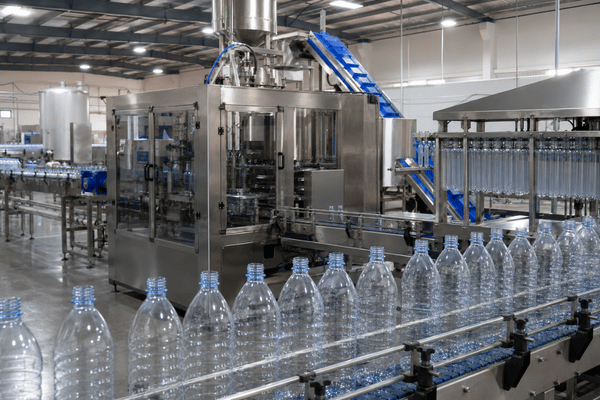
- Q6000 4-cavity servo + matched Masstech water treatment 5 T/h + filling line. Bottle SKU: 500 ml + 1.5 L mineral water rotating mid-week. Replaced previous practice of buying empty bottles from a regional blow house.
- Throughput observed
- 6,000–6,200 BPH on 500 ml during steady run; ~4,800 BPH on 1.5 L
- Per-bottle cost shift
- outsourced bottle ~USD 0.045–0.055 → in-house ~USD 0.022–0.028 (resin + energy + amortized CapEx)
- Estimated payback
- 14–22 months at typical regional resin pricing
- Energy lever
- air recovery system reduced compressor draw ~25% vs initial commissioning baseline

CSD bottler scaling from outsourced bottles, Latin America
- Deployed
- Q-Series 6-cavity high-speed integrated with existing CSD filling line. Bottle SKU: 500 ml + 600 ml CSD. Driver: peak-season empty-bottle queue at third-party blow house was capping production growth.
- Throughput observed
- 8,500–9,200 BPH on 500 ml; CSD blow pressure 28–32 kg/cm² matched filler input
- Working-capital effect
- empty-bottle inventory dropped from ~3 weeks to ~2 days; cash freed for SKU expansion
- Lightweighting
- PCO 1810 → PCO 1881 saved ~1.6 g per bottle, ~115,000 kg PET resin annually at this volume band
- Estimated payback
- 18–28 months including auxiliary equipment
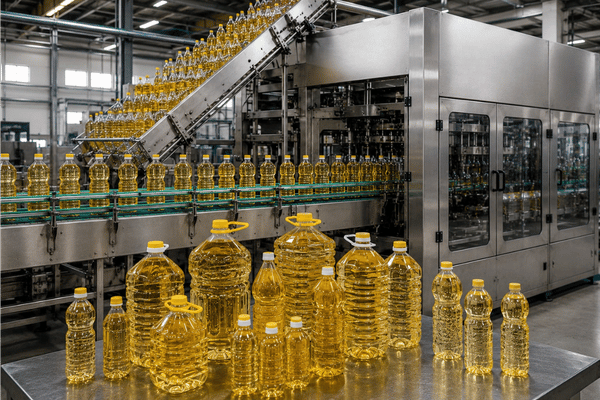
Edible-oil specialist with multi-SKU rotation, Africa / South Asia
- Deployed
- Q3000 2-cavity with multi-mould toolkit (4 bottle SKUs ranging 500 ml–2 L cooking oil + vinegar). Driver: regional empty-bottle freight cost made outsourcing untenable above 30 M bottles/year.
- Throughput observed
- 3,500–3,800 BPH on 500 ml oil bottle with 28–63 mm wide-mouth neck range
- Mould changeover
- ~45 minutes between SKUs (manual quick-change, no robot system)
- Procurement flex
- switched preform supplier twice in year 1 without spec changes — in-house blow molding decoupled bottle quality from preform supplier reliability
- Estimated payback
- 16–24 months at typical regional resin and labor cost
Five application bands and what they imply for sizing
Mineral water and purified water (100 ml–5 L)
Q3000 to Q6000 typical; integrate with reverse-osmosis water treatment 0.5–50 T/h. Lightweighting matters most here (commodity price competition).
Carbonated soft drinks (CSD), sparkling beverages
Q6000 servo or higher; blow pressure 25–35 kg/cm² standard. Hot-fill compatibility (up to 88°C) where required for fruit-juice CSD blends.
Juice, fruit tea, vegetable protein drinks
Q3000 or Q6000; hot-fill grade PET preforms required. Integrates naturally with Masstech juice and tea filling line equipment.
Edible oil, vinegar, soy sauce, wine
Q3000 with extended neck-finish range (28–63 mm) supports wide-mouth oil bottles. Lower BPH band (2,000–6,000) typical for these segments.
5-gallon water bottles, large containers
MS 3-5 Gallon dedicated machine; 100–200 BPH range; serves bubble-top distributors and water plants with carboy formats.
Quality, Certifications, and Service SLA — How We Compare on After-Sales
Machine quality is a yes/no vote at FAT — either bottles meet your spec sheet or they do not. After-sales service is where Chinese-OEM buyers most often discover hidden cost. Masstech’s service profile removes that discovery risk before you sign, not after.
Certifications
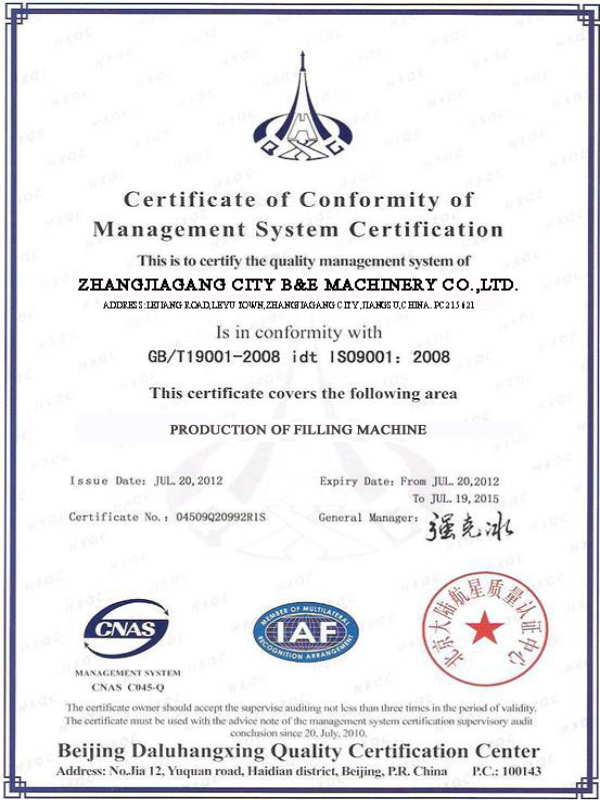
ISO 9001
Quality management systemCE
Machinery directive 2006/42/ECFDA grade
21 CFR 177.1520 contact materialsHACCP-ready
Food-contact hygiene design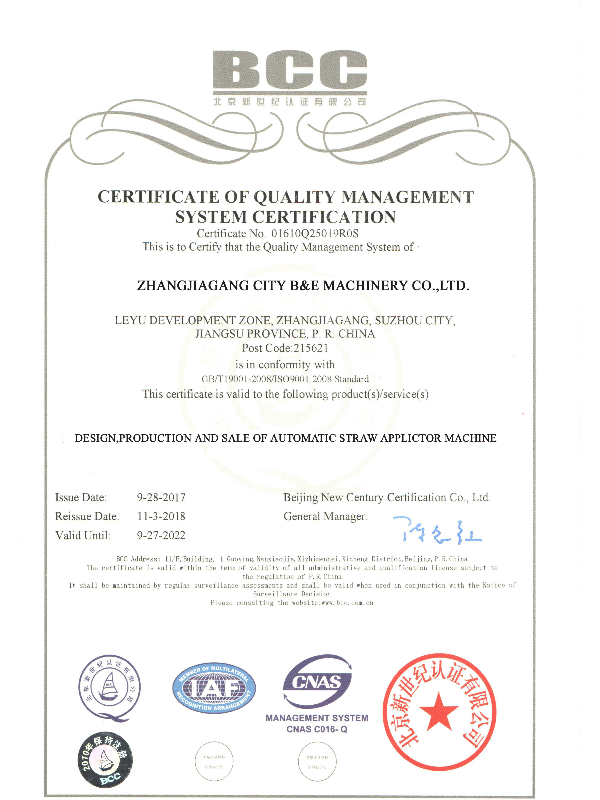
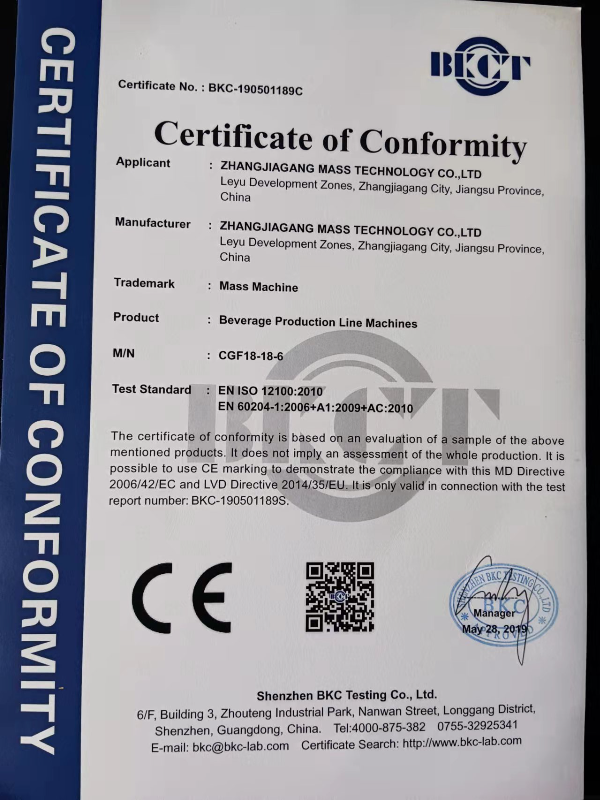
Service SLA — Masstech vs typical industry baseline
| Service axis | Masstech | Typical Chinese-OEM peer | Premium European OEM |
|---|---|---|---|
| Warranty (all parts) | 2 years | 1 year | 1–2 years |
| Engineer response window | 24 hours email / WeChat / WhatsApp | 48–72 hours typical | 24/7 with on-call premium |
| Spare parts shipping | 5 working days via international courier | 7–21 days | 1–3 days from regional warehouses |
| On-site installation | Included (10–25 days) | Often charged extra | Included |
| Operator training | Included (on-site) | Often charged extra | Included |
| Lifetime technical support | Yes (registry-confirmed) | Varies | Yes |
The 2-year warranty counts most for customers in delivering countries where parts logistics add 7-14 days each way. Combined with our dedicated 5-day international courier service for spare parts, this keeps mean-time-to-repair within acceptable plant-level downtime budgets—even on the longer trade lanes (Africa, Latin America, Pacific Islands).
Preventive maintenance reality check — cooling-channel scale buildup of just 0.5 mm acts as a thermal insulator and forces operators to slow the machine to prevent bottle warpage (industry maintenance studies in References). Masstech provides bi-annual descaling protocols and 40-bar pneumatic filter replacement schedules with each machine, plus the year-one spare parts kit.
Procurement Guide — Tier Pricing, Lead Time, and MOQ
Most of our SERP competitors publish “cost-efficient” or “competitive” prices without figures. Customers then triangulate from the Chinese OEMs reddit forums (r/InjectionMolding cites Chinese ISBM at USD 70k-120k for 4-cavity + molds), Alibaba listings, and B2B sourcing requirements. We publish indicative ranges right up front, with the cautions a procurement team needs.
Tier Pricing — Q-Series indicative USD ranges
| Tier | Model | BPH @ 500 ml | Indicative USD Range (FOB Shanghai) |
|---|---|---|---|
| Entry | Semi-Automatic MS-Series | 240–800 | USD 5,000 – 15,000 |
| Standard | Q3000 2-cavity | 3,500 | USD 20,000 – 50,000 |
| High-Volume | Q6000 4-cavity servo linear | 6,000–6,500 | USD 40,000 – 90,000 |
| Premium auto | Q-Series 6/9-cavity | 8,000–12,000 | USD 80,000 – 200,000 |
| 5-Gallon Special | MS 3-5 Gallon | 100–200 | USD 25,000 – 60,000 |
Auxiliary equipment cost band
- Air compressor + dryer + filter + tank
- about 10-18% of the machine CapEx; sized to match high-pressure air usage (e.g., 1,500 L/min for Q3000).
- Chiller
- about 3-6% of the machine CapEx; cooling water of 5,000 kcal/h capacity for the Q3000 mainline.
- Preform mould
- quoted separately, dependant on cavitys and neck-finish type (PPC 1810 / 1881 / 30/25 / 29/25).
- Auxiliary package
- estimated 15-25% of base machine cost.
Lead time, MOQ, payment, and shipment
- Production lead time
- 30-60 days from order acceptance and 30% deposit, depending on configuration.
- On-site installation
- 10-25 days to install: Masstech team will undertake commissioning, line balancing, and operator training.
- Minimum order quantity
- 1 machine. Our sales team supports both testing/trial line including full-blown bottle-filling plant.
- Transaction requirement
- 30% T/T paid with order, 70% T/T paid against shipping docs; irrevocable L/C; other arrangements as requested.
- Shipping method
- FOB Shanghai GSO direct; can be based on CIF in certain circumstances; proves of origin available for countries with free-trade-agreements.
Fully Auto Blowing Engineering Tools
q series model selector
Input your production requirements to instantly identify the optimal Q Series machine configuration for your manufacturing line.
Launch Toolroi tco estimator
Calculate the total cost of ownership and project your return on investment to make data-driven procurement decisions.
Launch Toolcross vendor equivalence
Compare our fully auto blowing machines against other industry brands to objectively evaluate technical specifications.
Launch ToolFrequently Asked Questions All Roles
How much does a fully automatic PET bottle blowing machine cost?
Indicative USD 5,000-15,000 (semi auto), USD 20,000-50,000 (Q3000 2-cavity), USD 40,000-90,000 (Q6000 4-cavity servo), USD 80,000-200,000 (6/9-cavity high-speed). FOB Shanghai GSO as-FOB-Shanghai standard, 2025-2026 configurations, auxiliary equipment 15-25%. Cavity count, degree of automation, neck-finish level, mould toolkit all factor into final quoting. See the Tier Pricing table above.
Which model should I choose: Q3000, Q6000, or large 5-gallon?
Horsepower capacity – match to model band. Under 4,000 BPH/ choice of means 4,000-7,000 BPH/ 500ml Q6000 servo series. 7,000 to 10,000 BPH/ integrated with filler line Q-Series 6/9-cavity. 3-4 GPH/ MS-series (Carboy / Water-Cooler). The other 5 choice point factors will map to the four bands explicitly, as supported in the Decision Matrix above.
What is the difference between fully automatic and semi-automatic blow molding, and when does each pay back?
Semi-auto requires an operator at the loading station (single- or dual-cavity at 240-800 BPH). Fully auto runs a preform-loading-to-bottle-discharge process under PLC control (2-9 cavity scale up). The break-even depends on local labor cost – a single operator in Thailand kept ten semi-auto machines rolling in 2020 and migrated to a fully automate line by 2025 once labor inflation crossed the threshold (case in References). In low-wage locations, semi-auto stands as capital-efficient for pilot or seasonal productions.
What is the difference between two-step and one-step ISBM processes?
Two-step injection-molds preforms manually and refrigerates them in the blow molder – lower CapEx per cavity, more SKU flexibility, simpler integration with externally sourced preforms. One-step ISBM processes resin to finished bottle in a single machine – smaller footprint, less preform handling, but higher CapEx per BPH and limited preform design flexibility. Q-Series is two-step. For coverage of process trade-offs, see the associated guide on PET bottle manufacturing processes.
What auxiliary equipment do I need (compressor, dryer, chiller)?
A typical fully auto line requires a high-pressure air compressor sized on your HP load (e.g. 1,500 L/min for Q3000), a low-pressure compressor for all action air, a refrigerated air dryer to condense out the moisture, and a particulate air filter, an air storage tank, and a chiller delivering ~10C cooling water at 30L/min for Q3000. Air recovery units are optional but pay back quickly via lowered compressor load.
What is the lead time and what is included in installation support?
Deliveries occur 30-60 days after the 30% deposit. Your install window is 10-25 days on site, installed by Masstech engineers, and includes mechanical erection, electrical commissioning, line balancing with your filling/capping equipment, and operator training. Travel and per diem are billed at standard industry rate; engineering time itself is free of charge.
How does Masstech’s 2-year warranty plus 24-hour engineer response compare to the industry baseline?
Most Chinese-OEM peers provide 1-year warranty and 48-72 hour engineer response with 7-21 day spare-parts delivery. Masstech guarantees 2-year warranty, 24-hour engineer response (email / WeChat / WhatsApp), and 5-working-day international courier on spare parts. For owners in Africa, Latin America and the Pacific where parts logistics is the cap on uptime, this selection criterion often settles the debate.
Can a Q-Series machine produce hot-fill or carbonated soft drink bottles where pressure is critical?
Yes. The Q3000 default blow pressure is 25-35 kg/cm ( 25-35 bar), aligning with the CSD industry default. Hot-fill Compatibility at 88C requires qualifying the right hot-fill PET preform spec and minuscule oven profiling change; we set that at RFQ stage based on your bottle SKU. The Q-Series mould set enables hot-fill, CSD and ambient-fill formats interchangeably with a simple mould change.