Get in Touch with Masstech

Wine Bottling Line — Industrial Glass-Bottle MSGF Series by Masstech
Five MSGF models cover the full mid-tier winemaker production curve, from 2,500 bottles per hour at boutique scale to 15,000 BPH multi-shift industrial output. A single automatic platform handles T-cork, wooden cork, crown, and screw caps on the same monoblock — built around isobaric or gravity filler valves, AISI 304 stainless steel construction, and PLC controls. Factory-direct from Zhangjiagang at 12–16 week lead, 2-year full-parts warranty across the wine bottling equipment range, and a wine filling machine platform that runs vinegar, soy sauce, and fruit-wine SKUs without retooling.
Request Configured Quote
Wine Production at Scale — Why Standard Lines Fall Short
Wine bottling line economics change in 2024-2025. World-wide wine output dropped 5.1 percent to 226 million hectolitres in 2024, the lowest since 1962. World-wide wine consumption fell 3.3%. In countertrend, both the U.S. and Switzerland increased their share of global wine production by 20-21 percent.
The Three Bottlenecks Mid-Tier Wineries Hit
01
Hand-filled bottles cap at 200-600 BPH.
At this level of volume, a winery using hand-bottle caps can ship no more than 85,000 bottles / week or 5,107 cases / week – aligning with the 17,366-acre aggregate estate of the top-15 small Oregon producers, according to the State of Oregon’s 2023 Small Winery industry-desk report.
02
Italian OEMs require 6-9 month lead times or premiums.
Co.Mac., GAI, and Bertolaso experience premium pricing and quotes are only available on quote-only terms. Lead times mean any given winery current-shortiment vintage is available to ship today, will not hold until long lead-time production.
03
Multi-cap line implementation often requires two lines.
T-cork/Flanged-Cage needs deck seal, mushroom shell, and wirehood. Crown and screwcap may need dedicated equipment containers to be suitable for shipped products. Most existing design offerings place an equipment dedicated exclusively to just one or two of these cap-families, not all four – on one line.
04
Highest proportion of winery expenses are packaging/rendering.
Oregon Wine Industry’s small-winery 2023 market-overlay documentation bodes packaging+bottling as comprising 38.2 percent of wine’s cost of goods; after grape cost (26.75 percent), so even just a fraction of percentage points of cost-of-goods saved here ripple across a volume-heavy winery’s cost structure.
How Masstech MSGF Closes the Gap
The MSGF series includes 2,500-15,000 BPH multi-models, with mono-platform support for all four cap-families. Lead time ships within 12-16 weeks ex-works China; pricing shipped either ex-works or factory-direct, no distributor mark-up. This series is designed exclusively for wine, including rice/wine/yellow/wine/varietal/protein-based beverages; this platform is not a variation of other beverage solutions.
Masstech MSGF Wine Bottling Line — 5 Models with Transparent Specs
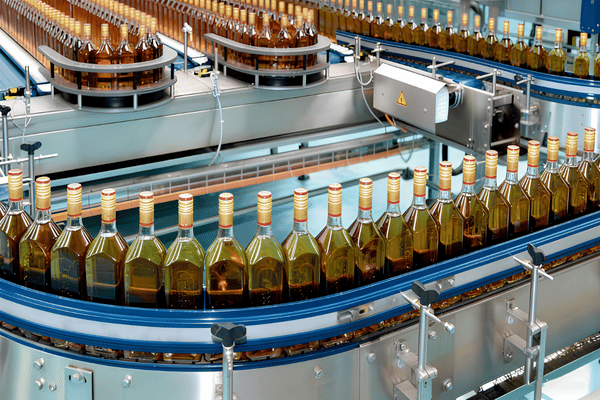
Our MSGF series is purpose-built for glass-bottle wine production, with rinser, automatic filler, capper, and corker integrated into a single monoblock chassis covering 2,500 to 15,000 BPH across five models. Filling principles are configurable as either micro-negative pressure or gravity filler, depending on whether your product needs oxidation control or simple cost-optimized throughput. This wine bottle filling machine is also a wine bottle filling equipment platform — the same chassis runs as a wine filling machine for vinegar, soy sauce, or fruit-wine SKUs without retooling.
At a Glance — Five Models from 2,500 to 15,000 Bottles per Hour
MSGF 14-12-5
2,500–3,000 BPHBoutique scaling wineries – first step from hand-barging (~250k cases/year at two shifts).
MSGF 18-18-6
4,500–5,000 BPHMid-small winery — 250K–500K cases/yr, multi-SKU bottling.
MSGF 24-24-8
8,000–9,000 BPHMid-tier core — 500K–1M cases/yr, our most-installed configuration.
MSGF 32-32-8
12,000–13,000 BPHIndustrial-scale single-shift — 1–1.5M cases/yr, lower headcount per case.
MSGF 40-40-10
14,000–15,000 BPHMulti-shift output — 1.5M+ cases/yr, regional consolidator coverage.
Full Spec Table — Eleven Rows × Five Models
| Specification | MSGF 14-12-5 | MSGF 18-18-6 | MSGF 24-24-8 | MSGF 32-32-8 | MSGF 40-40-10 |
|---|---|---|---|---|---|
| Production Capacity (330 ml) | 2,500–3,000 BPH | 4,500–5,000 BPH | 8,000–9,000 BPH | 12,000–13,000 BPH | 14,000–15,000 BPH |
| Suitable Bottle Height | 160–340 mm | 160–340 mm | 160–340 mm | 160–340 mm | 160–340 mm |
| Suitable Bottle Diameter | 50–100 mm | 50–100 mm | 50–100 mm | 50–100 mm | 50–100 mm |
| Rinsing Water Pressure | 0.25–0.3 MPa | 0.25–0.3 MPa | 0.25–0.3 MPa | 0.25–0.3 MPa | 0.25–0.3 MPa |
| Filling Method | Micro Negative Pressure / Gravity (configurable) | ||||
| Filling Temperature | 0–30 °C | 0–30 °C | 0–30 °C | 0–30 °C | 0–30 °C |
| Filling Pressure | 0.15–0.5 MPa | 0.15–0.5 MPa | 0.15–0.5 MPa | 0.15–0.5 MPa | 0.15–0.5 MPa |
| Main Motor Power | 2.2 kW | 3.0 kW | 4.0 kW | 7.5 kW | 7.5 kW |
| Total Power | 2.75 kW | 3.18 kW | 4.18 kW | 7.68 kW | 7.68 kW |
| Footprint (L × W × H) | 2700×1500×2300 mm | 3012×2012×3260 mm | 3280×2420×3200 mm | 4430×2800×3200 mm | 4650×3200×3200 mm |
| Machine Weight | 2,800 kg | 3,800 kg | 5,000 kg | 6,800 kg | 8,800 kg |
All series to include AISI 304 stainless steel throughout, PLC controls, and customizable fill temperature, fill pressure profile, clean and in place function, and customization options.
Cap-Compatibility Matrix — One Line, Four Closure Types
Single platform multi-cap support is the differentiator for wine producers managing mixed SKU portfolios. The following is the configuration matrix for our MSGF family.
| Cap Type | MSGF 14-12-5 | MSGF 18-18-6 | MSGF 24-24-8 | MSGF 32-32-8 | MSGF 40-40-10 |
|---|---|---|---|---|---|
| Crown cap (28 mm) | Standard | Standard | Standard | Standard | Standard |
| Screw cap (ROPP aluminum) | Optional head | Optional head | Optional head | Optional head | Optional head |
| T-cork (synthetic + natural) | Optional head | Optional head | Optional head | Optional head | Optional head |
| Wooden cork (still wine) | Optional head | Optional head | Optional head | Optional head | Optional head |
Capacity Sizing Guide — Match BPH to Annual Production Goal
Most costly sizing problems to own on a wine bottling line is over (or under) buying capacity for current volume-flip side is waiting eighteen months while growth eats over your targeted throughput: the Capacity Decision Matrix below maps annual case volume to MSGF model, plant footprint, workforce headcount, and indicative CAPEX tier, so the discussion with finance is based on a true model not just adjectives.
Decision Matrix — Annual Cases → Model · Footprint · Workforce · CAPEX Tier
| Annual Cases (2-shift × 250 days) | BPH range | Recommended Model | Footprint* | Workforce | Total Power | Indicative CAPEX Tier |
|---|---|---|---|---|---|---|
| < 250,000 cases/yr | 2,500–3,000 | MSGF 14-12-5 | ~4.05 m² | 3–4 | 2.75 kW | Entry — Tier 1 |
| 250K–500K cases/yr | 4,500–5,000 | MSGF 18-18-6 | ~6.06 m² | 4–5 | 3.18 kW | Entry — Tier 1+ |
| 500K–1M cases/yr | 8,000–9,000 | MSGF 24-24-8 | ~7.94 m² | 5–6 | 4.18 kW | Mid — Tier 2 |
| 1–1.5M cases/yr | 12,000–13,000 | MSGF 32-32-8 | ~12.4 m² | 6–8 | 7.68 kW | Mid — Tier 2+ |
| 1.5M+ cases/yr | 14,000–15,000 | MSGF 40-40-10 | ~14.9 m² | 8–10 | 7.68 kW | Premium — Tier 3 |
*Footprint shown is monoblock-only (L W); add 8-14 m for upstream depalletizer/rinser feed and downstream conveyor + capper accumulator. Workforce assumes 2-shift operation with one supervisor per shift.
What These CAPEX Tiers Include / Exclude
Tier 1-Entry (MSGF 14 / 18)
Monoblock generic (rinser + filler + capper) with one cap head, PLC, AISI 304 wetted parts, English-language HMI, ex-works Shanghai packaging.
Includes: no secondary cap heads, labeler, case packer, palletizer, integration with downstream depalletizer.
Tier 2-Mid (MSGF 24 / 32)
Includes two cap heads (T-cork + screw is the most common), in-line bottle inspection, conveyor accumulator pre-capper.
Includes: no labeler, secondary closure (capsule/foil), case packer.
Tier 3-Premium (MSGF 40+ full line)
Turnkey including labeler, secondary closure, case packer and palletizer.
Includes: no bottle blow-molding, water treatment.
MSGF vs Co.Mac. SAGITTA, Quinti Wine Smart, ViMEG Vi500-S — Cross-Vendor Reference
Most published wine-bottling-line Top SERP listings are from the distributor or broker side rather than OEM direct comparisons. As a result, buyers are making decisions with limited information, very often based on Italian-OEM brand visibility instead of functional data. Comparing below, Masstech is placed alongside three of the most often reviewed alternatives, sourced links to follow for due diligence.
Side-by-Side Vendor Comparison
| Dimension | Masstech MSGF | Co.Mac. SAGITTA 12-12-1 P | Quinti Wine Smart | ViMEG Vi500-S |
|---|---|---|---|---|
| Origin | China (Zhangjiagang) | Italy | Italy (via TCW Equipment US) | Italy |
| BPH range | 2,500–15,000 (5 models) | up to 3,000 | ~400 (33 cases/hr published) | 200–600 |
| Specs published | 11-row spec × 5 models | Bottle size + filler config | Pricing only | Partial |
| Wine specialization | Wine + rice wine + protein drinks named | Multi-beverage (beer, CSD, RTD, seltzer, wine) | Wine + spirits | Wine |
| Cap type support | 4 (T-cork · wood · crown · screw) | 4 (crown · screw · ROPP · cork mushroom) | 1–2 (cork + screw) | 1 (typically cork) |
| Pricing transparency | 3-tier indicative ranges | Quote-only | $34K MSRP visible (Wine Smart) | Not published |
| Lead time | 12–16 weeks | Quote-dependent | Distributor stock | Quote-dependent |
Vendor naming and configurations for the alternatives are often specific to end users parameters, cross-reference exactly any intention to use by requesting current spec sheets from each manufacturer.
Where Masstech Doesn’t Compete — 15K+ BPH Industrial Segment
Greater than 15,000 BPH the engineering decision becomes stratospheric. Co.Mac.’s MASTER G TECH platform reaches 80,000 BPH; Bertolaso, GAI and Sidel build full-rotary lines for the largest bottling plants. Those segments command quite different price ranges, lead times and service radius expectations-and Masstech is not the right solution in that space. Under 15000 BPH, which is very transparent specs+OEM direct lead-time- MSGF is engineered for that range.
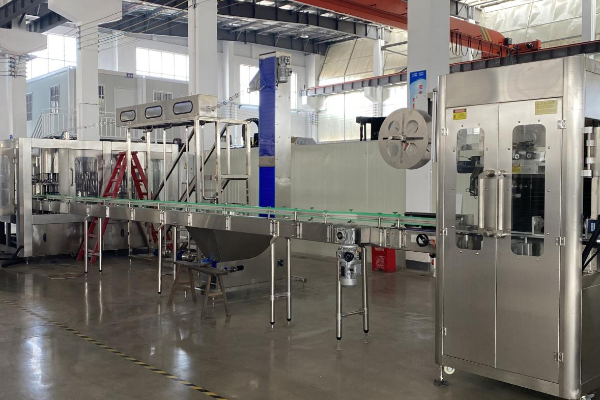
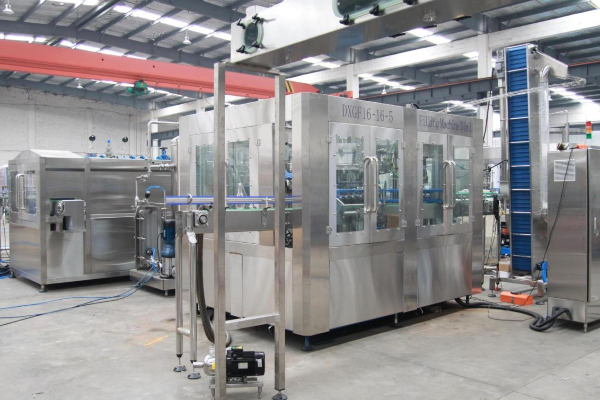
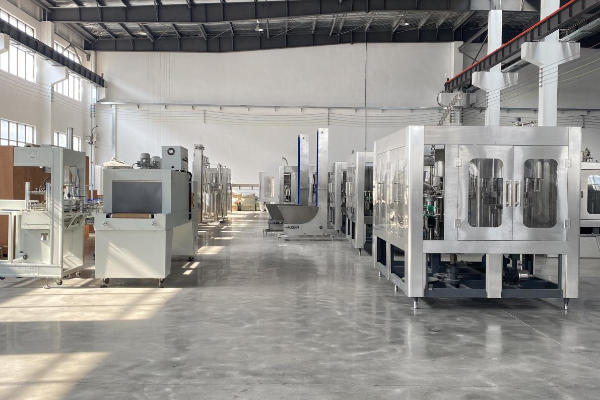
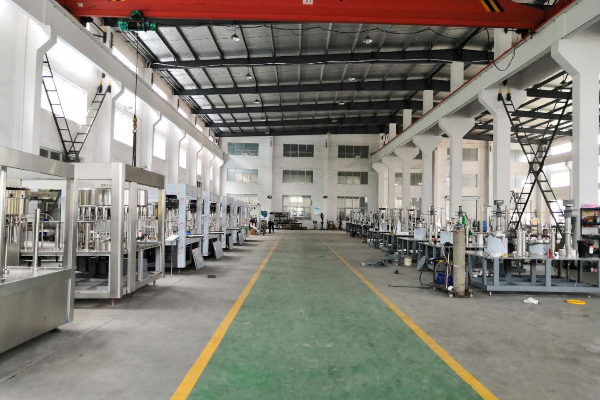
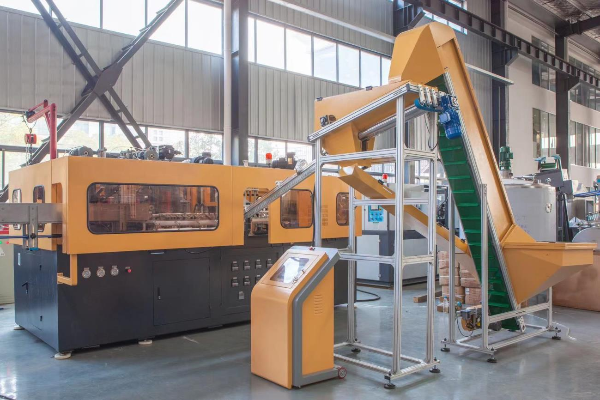
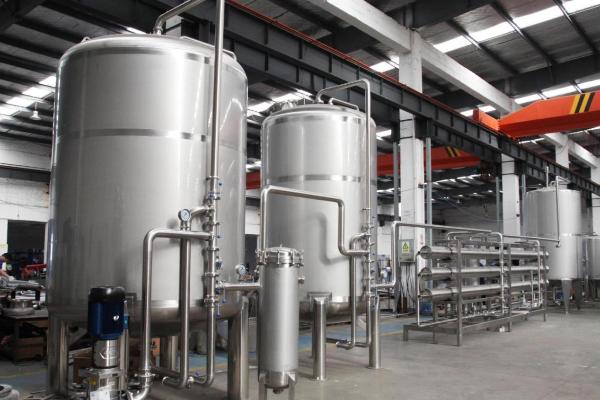
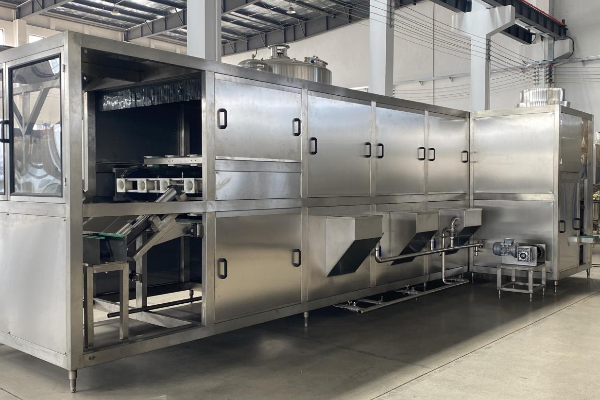
Manufacturing Facility & Assembly Floor
Zhangjiagang Production Base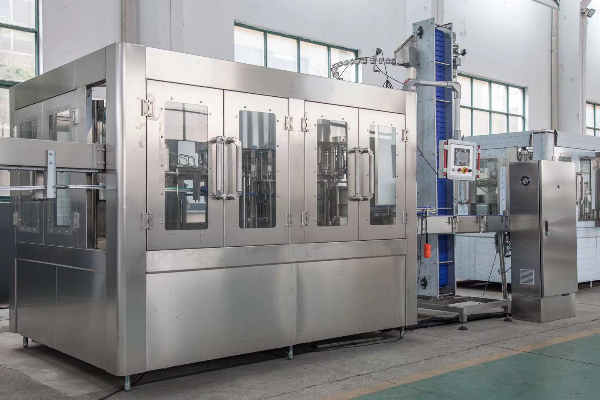
×
![Enlarged Factory View]()
Choosing the Right Filling Method for Your Wine Type
MSGF series is supplied with either one of two filling principles selected at purchase depending on your dominant SKU mix: the choice of mechanism has ramifications on three independent variables: oxidation level during fill, fill-volume variation, and CIP cleaning friction: all three have a different priority depending on category of wine.
Micro-Negative Pressure
— for Oxidation-Sensitive WinesMicro-negative pressure filling applies a slight vacuum in the bottle during the fill cycle, pushing displaced ambient oxygen ahead of the fill and reducing the amount of dissolved-oxygen pickup in that cycle. Choose it for any still wine (white or red), baijiu, rice wine, or product which age on shelf requires quality control by limiting oxidative influence. We trade a slightly more complex pneumatic circuit that benefits from deeper CIP attention after SKUs.
Gravity Filling
— for High-Viscosity and Cost-Optimized LinesGravity filling drops product through a specialized valve column by gravity alone; simplifying the valve mechanism reduces CIP friction. Use this mechanism for highly viscous liquid products, such as fruit wines, dessert wines, soy sauce and vinegar, where expert control of ambient oxygen during fill offer no benefit. For medium-tier producers with flexible, high 10s-of-thousands cases production lines, one mechanism enables compatibility with diverse products with minimum mechanical complexity.
| Wine / Product Type | Recommended Filling Method | Why |
|---|---|---|
| Still red / white wine, premium | Micro Negative Pressure | Oxidation control during 12–36-month aging |
| Sparkling wine, base wine | Isobaric (consult on customization) | CO₂ retention required |
| Rice wine, yellow wine, baijiu | Micro Negative Pressure | Aroma volatile retention |
| Fruit wine, dessert wine | Gravity | Higher viscosity, oxidation less critical |
| Vinegar, soy sauce, condiment line | Gravity | Maximum simplicity, easy CIP |
Customer Outcomes — Mid-Tier Wineries Using Masstech MSGF
Typical architectures in our MSGF projects can be depicted in two consolidated 3-value line-understanding diagrams. Both are filtered for client anonymity; the cost data derives from public sector benchmarks within the wine industry, not from client books.
Case PATTERN A
Boutique Scaling 5K → 80K Cases/yr (MSGF 18 → 24 upgrade path)
Imagine a five-year-old small-lot strategic winery comes to the ceiling of their hand bottling operation – roughly 5000 cases per year. They run the MSGF 18 in order to test capacity and bottle quality for a season or two, then deploy an MSGF 24 as the DTC program and wholesale side grow beyond 80,000 cases per annum. Total time from MSGF 18 commissioning to MSGF 24 installation is 30 to 36 months, and once retired from that line an MSGF 18 is more often transitioned into a secondary line rather than scrapped.
Case PATTERN B
Multi-Product Consolidation onto Single MSGF 24
Imagine a winery with one still wine line and one spirits / RTD line, both consolidated onto one MSGF 24 with two cap heads, runs efficiently by scheduling alternate caphead production based on different product application — screw cap or cork closures 100% of the time, rather than dedicating two physical lines and two operator teams to one or the other.
ROI Math — Hand-Bottling vs MSGF 24, 12-Month Window
Front end, based on public cost data, not internal projection estimates.
$50.63
Packaging+bottling cost per case (Oregon Pinot benchmark)
38.2%
Packaging share of total COGS — the largest single line
~10–15%
Typical efficiency gain replacing manual packaging steps
$640K–$960K
Annual cost reduction at 100K cases/yr (illustrative range)
From: Oregon Wine Industry – Small Winery Solutions OWS23 deck (public domain). Final ROI scales to your current employee count, regional wage levels, SKU cocktail blend complexity, and capacity-efficiency goals. Confirm final results with your CFO against your own proceedings.
Want this ROI math run against your specific case-volume forecast? We’ll plug in your current bottling labor cost and SKU mix.
Get a 12-month payback estimate →Standards & Hygienic Compliance
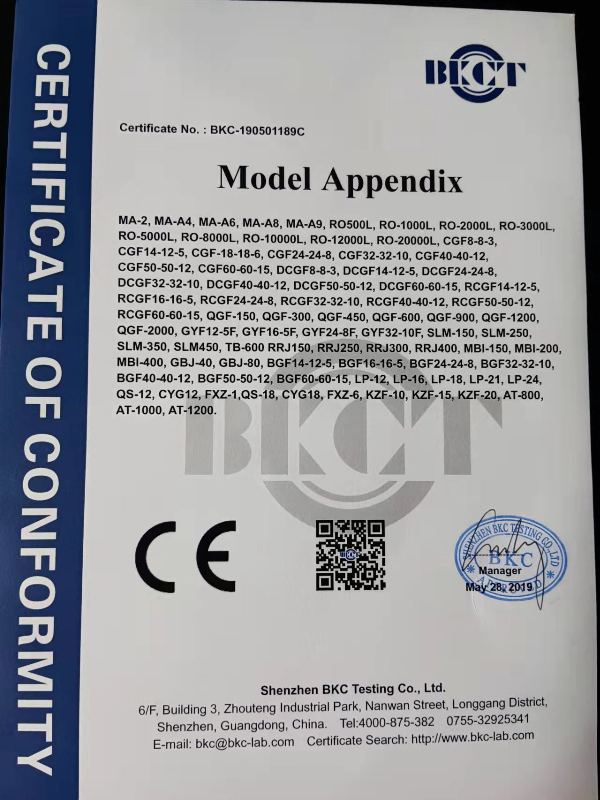
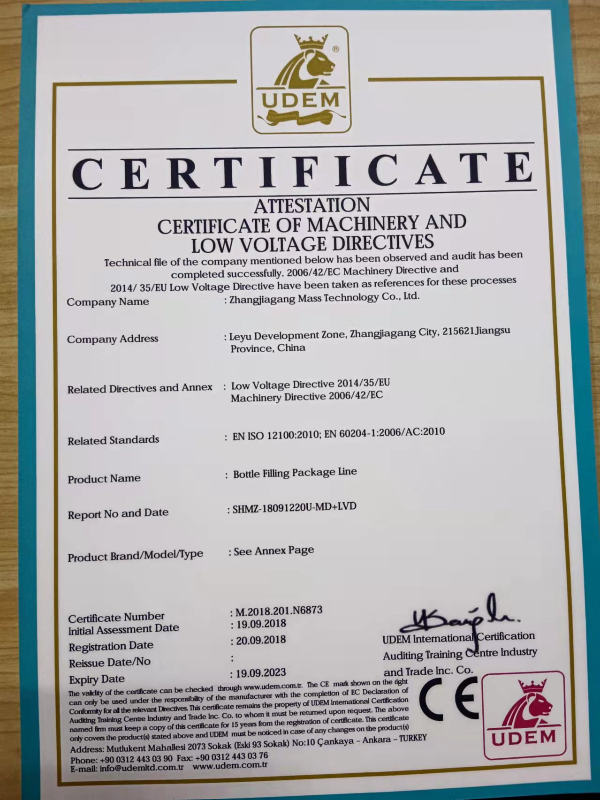
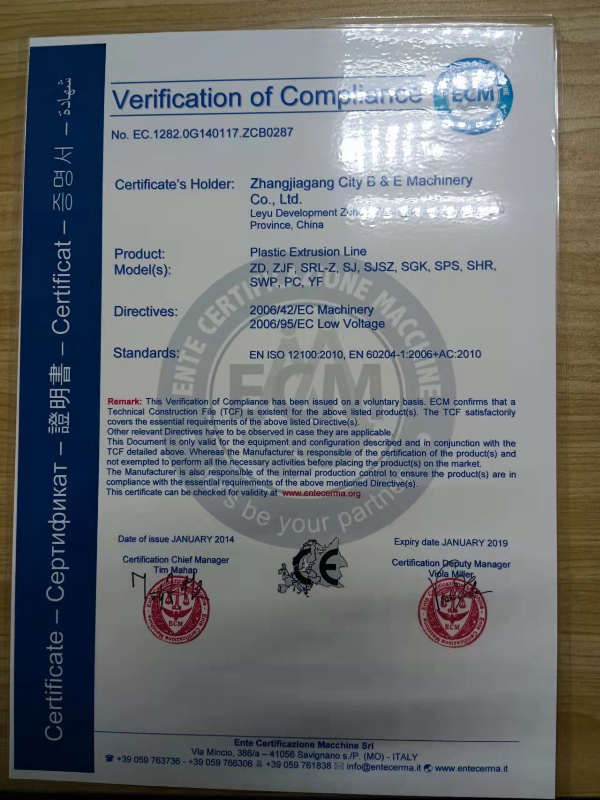
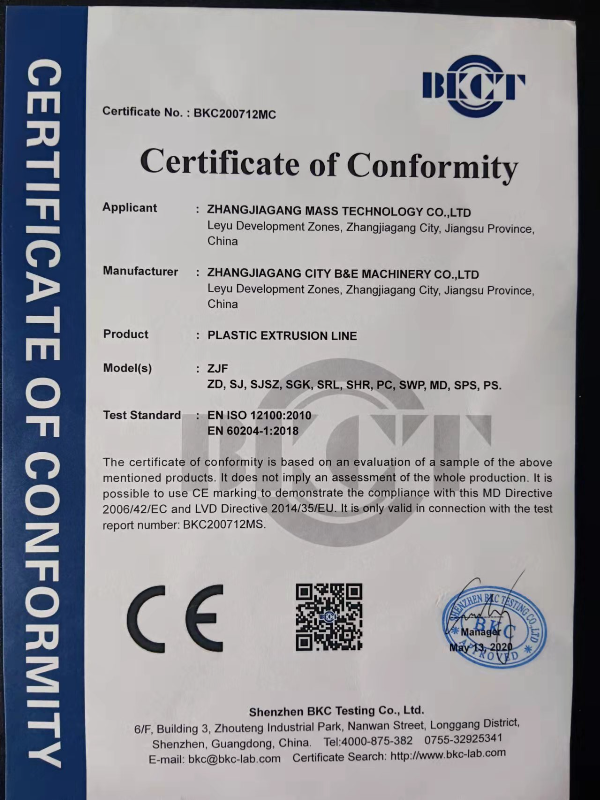
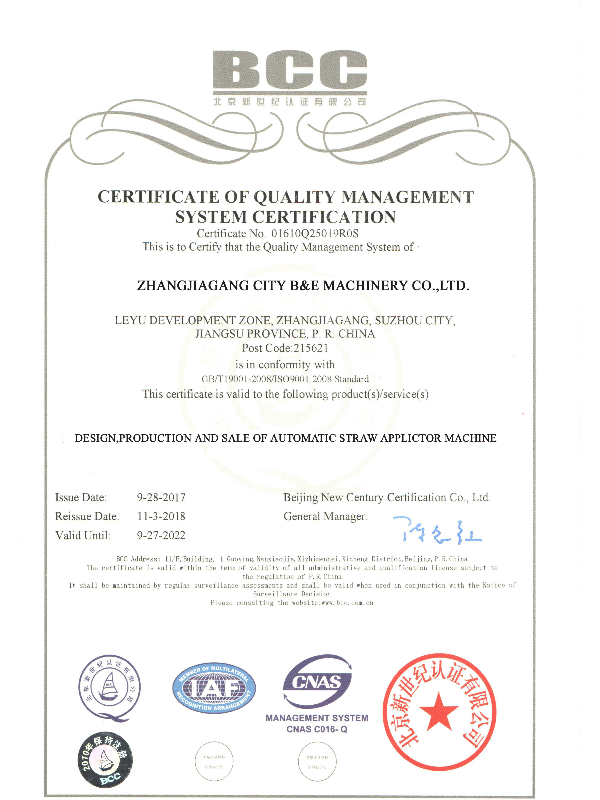
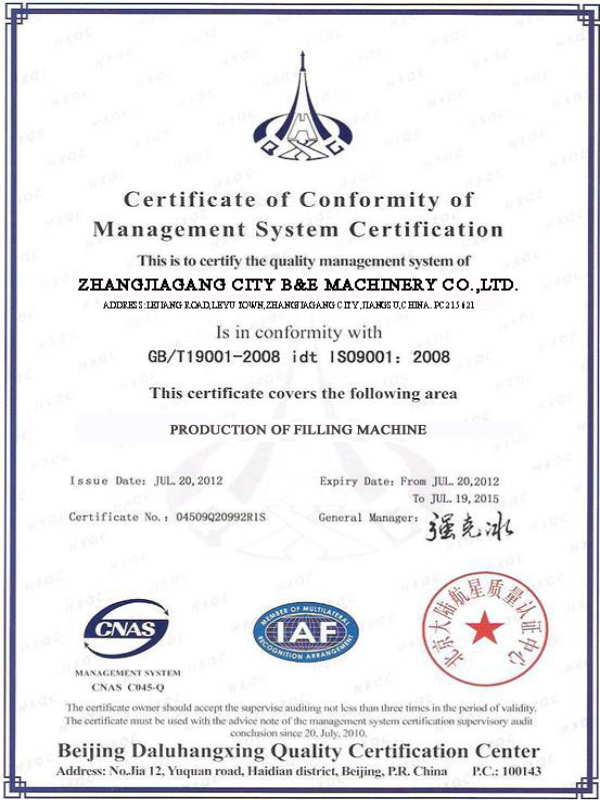
All export and tasting-room point-of-sale channels require compliance paperwork. Masstech MSGF lines align with the standards below, with the supporting package available on purchase order review.
AISI 304 SS
All wetted-surface parts; FDA 21 CFR 175.300 indirect food-contact.
EHEDG G-10
Hygienic design of closed liquid-food filling equipment.
CE Pathway
Available for EU export — Machinery Directive 2006/42/EC.
PLC Control
Siemens / Mitsubishi compatible HMI.
CIP Ready
Cleaning-in-place loops fitted at order.
Verified Certifications
×
![Enlarged Certification]()
Procurement Guide — Pricing, Lead Time, Installation, Aftersales
Procurement on a wine bottling line divides into four cost & time components: equipment CAPEX; import-transit; installation-train & aftersales; and supporting-costs. One of these components seldom is 1 cost as opposed to 4: and one group can be condensed into a single fixed total number.
Indicative Ex-Works CAPEX (3 Tiers)
Pricing on a configured wine bottling line moves with cap-head count, voltage region, scope of CIP integration, and whether labeling and case-packing are included. Rather than publish a single misleading number, Masstech publishes price-on request using three indicative price tiers – Entry / Mid / Premium – that relate to the above decision matrix. Your final quotation is assembled from those three pricing tiers plus your specification.
What Drives Your Final Price
- Cap-head count – 1 head (lowest CAPEX) vs 2-head (most common, T-cork + screw) vs full 4-cap-family compatibility
- Voltage and frequency – 380V/50Hz China-domestic, 440 V/60Hz North America, 690V/50Hz EU industrial
- Scope of integration – monoblock-only vs +labeler vs +secondary closure (capsule/foil) vs full turnkey (case packer + palletizer)
- CIP depth – manual rinse loop vs full automatic CIP with integrated dosing
- HMI tier – language pack, recipe library size, OEE / MES integration
- Spare-parts tier – 1-year kit (default) vs 2-year extended kit
Installation & Operator Training
Installation is performed by a Masstech engineer on-site, and normally lasts 5-10 working days for a monoblock-only and 10-18 days for a full line turnkey installation. Operator training runs 5-10 days concurrently with installation, and concentrates on filling-recipe management, cap-changeover, CIP fundamentals, and Tier-1 troubleshooting. Visa and travel arrangements are coordinated through our local service partner and are quoted with equipment purchase.
Aftersales Commitment
2-yr Warranty / 24h Response / 5-Day Intl Parts
The Masstech aftersales package covers all machine parts under a full two-year warranty starting from the day of commissioning. Technical issues will be responded to by our engineers within 24 hours worldwide, and new parts will be shipped through DHL or FedEx within 5 working days of dispatch authorization, against a restocked inventory held at Zhangjiagang.
Lead Time, Shipping & Container Fit
Production lead time is 12-16 weeks ex-works Zhangjiagang from PO confirmation and 30% deposit. Ocean freight time is an additional 4-6 weeks to most North American and European destinations, with destination port of entry clearance performed by your freight forwarder.
| MSGF Model | Container Fit | Typical Shipping |
|---|---|---|
| MSGF 14-12-5 | 1 × 20’GP (footprint OK, weight ~2.8t) | FCA Shanghai or FOB Shanghai |
| MSGF 18-18-6 | 1 × 40’HQ (height clearance OK) | FCA Shanghai or FOB Shanghai |
| MSGF 24-24-8 | 1 × 40’HQ | FCA / FOB / CIF |
| MSGF 32-32-8 | Break-bulk or 2 × 40’HQ | FCA / FOB / CIF, partial-container |
| MSGF 40-40-10 | Break-bulk required | RoRo or break-bulk vessel |
Interactive Engineering & Planning Tools
Leverage our data-driven calculators to model your exact production capacity, analyze closure compatibility, and project your return on investment.
MSGF Capacity Sizing Calculator
Input your current volume and projected growth to dynamically calculate the exact MSGF model engineered for your production scale.
Launch Calculator
Multi-Cap Compatibility Quiz
Analyze your diverse closure requirements to configure the optimal cap-head combination (T-cork, screw, crown) for mixed-SKU runs.
Start Assessment
Hand-Bottling vs MSGF TCO Comparator
Calculate the true total cost of ownership (TCO) by comparing manual filling labor costs versus automated MSGF line efficiency over time.
Compare ROI
Ready to size and price an MSGF wine bottling line?
Send us your annual case forecast, current SKU combination. We will send back within 3 business days a tailored quotation with capacity recommendation, footprint plan, and lead-time confirmation.
How much does a Masstech MSGF wine bottling line cost?
Because real-world cost will depend on cap-head count, voltage region, scope of CIP, and whether labeling/case-packing are included, pricing will always be configured per specification rather than announced as a single number. We publish 3 indicative pricing levels (Entry / Mid / Premium) that relate to MSGF model size, and an exact quote is returned within 3 business days of a completed RFQ. Request a configured quotation from the contact details above.
What is the lead time from order to delivery?
Assuming an order date, production is 12-16 weeks ex-works Zhangjiagang from confirmed Purchase Order and 30% deposit. Ocean freight time is normally an additional 4-6 weeks for most North American and European destinations. The total elapsed time to commissioning in your facility from date of P.O. usually ranges 18-26 weeks.
What capacity should I size for at my current production volume?
The above Decision Matrix maps your expected annual case volume to an MSGF model. Most other small-volume producers arrive at the best value with MSGF 18 or MSGF 24, because those models afford the most possible capacity growth 24 months out from their current output. The number one sizing error for a small-volume winery is purchasing equipment too large for current work volume, underestimating future growth and pricing the line according to the peak volume that is currently achievable.
Can one line handle T-cork, wooden cork, crown, and screw caps?
Yes — a Masstech MSGF line ordered with two installed cap heads handles roughly 90% of mixed-SKU wine bottle filling machine portfolios, since most wineries actually run two cap families in the same year (T-cork + screw, or wooden cork + crown for sparkling). Adding a third or fourth cap head is mechanically possible but rarely cost-justified relative to scheduling cork-days and screw-cap-days in alternating shifts. Cap-head changeover takes a trained operator approximately 15–30 minutes including torque re-zeroing on this wine bottle filling equipment.
How does Masstech MSGF compare to Co.Mac., GAI, or Quinti?
Co.Mac.’s SAGITTA line caps at 3,000 BPH and is designed as a multi-beverage chassis (beer, CSD, RTD, hard seltzer, and wine), not a wine-specialized platform. Quinti Wine Smart, distributed in the US through TCW Equipment, runs at roughly 400 BPH and serves boutique producers, while Masstech’s red wine and white wine bottle filling machine sits at industrial scale. Masstech MSGF is purpose-built for wine and adjacent fermented beverages, covers 2,500–15,000 BPH across five models, and publishes a full eleven-row spec table per model — see the Cross-Vendor Reference Matrix above for the side-by-side.
What is micro-negative pressure filling, and when does it matter?
Micro-negative pressure creates a micro-vacuum within the bottle during fill, pulling dissolved ambient oxygen out and pushing the residual ambient oxygen out. This effect is needed if the product is not being aged in bottle (traditionally 12+ months) because fill-rate oxidization is a well-established contributor to premature oxidative aging. Gravity-filling, with higher-viscosity products and short shelf life, is mechanically less-complex and more than sufficient.
Is the MSGF line CE-marked for EU export?
CE certification is possible; EU-export configuration alters the fuse/voltage combination to 380V/50Hz or 690V industrial, and ships with Machinery Directive 2006/42/EC technical dossier – specify the CE pathway on RFQ so it is integrated into the production schedule from the beginning, not afterwards.
What ongoing maintenance is required?
The MSGF series utilization in the base patent-pending design is built on 8,000-10,000 hour service interval standards used for bag-on-valve type beer/hard seltzer and wine applications. Daily CIP cleaning, weekly torque-spec verification on capping heads, and quarterly maintenance review procedures are routine. Spare parts are stocked at Zhangjiagang and DHL/FedEx within 5 working days under the standard aftersales agreement.
Can the line bottle multiple wine types in the same week?
Yes. Each model is engineer-designed for operation on a mixed-product line capable of red, white, rice, yellow, fruit, dessert, and fermented-protein beverage applications. Store recipes on the PLC for each SKU thereby controlling fill profile – a typical wine-to-wine exchange (same cap product, different procedure) is about 20-30 minutes including CIP cleaning and recipe loading.
What happens if a part fails during the warranty period?
Place a support ticket with the email or WhatsApp indicated on the equipment data block; our engineer team will respond in 24 hours anywhere in the world. Replacement parts under warranty will be shipped DHL or FedEx from Zhangjiagang in 5 working days, and onsite support is available in the event of any critical-component failure with the engineer coordinated through our service partner. 2-year warranty applies to all equipment following initial commissioning.