Get in Touch with Masstech

Industrial Basket Washing Machine for Crates, Trays & Reusable Containers
Configure an industrial basket washing machine around your container geometry, soil load, wash stages, conveyor path and discharge-moisture target. Mass Technology carries the approved concept through equipment manufacture, line installation, operator training and after-sales support.
- Three supplied wash and rinse stages
- Adjustable conveyor and guide rod
- 360° spray path with filtration
- Air knives for surface moisture
Specifications
304 stainless steel
Machine construction stated for the supplied reference unit
3 process stages
Hot alkaline water, hot clean water and tap-water rinse
Adjustable movement
Conveyor speed and guide rod set for the reviewed load carrier
Above 60°C
Wash-water condition stated in the supplied specification
1.0 MPa
High-pressure spray condition stated for the reference machine
Air-knife discharge
High-volume air removes excess surface moisture
Industrial Basket & Crate Washing Applications
These conveyorized washing solutions are intended for reusable load carriers that can move through a controlled spray path. We review the actual basket, crate, tray, lid or pallet before confirming a solution because containers in the same industry can have very different ribs, apertures and nesting profiles. Among industrial washing machines, a crate washer or tray washer must still be matched to the real baskets and boxes, not just a catalogue category.
Plastic crates, stainless steel trays, insulated boxes and turnover baskets can enter a fit review. Product residue, labels, corners and drainage paths determine the required pre-wash, main wash and rinse controls.
Freezing trays, meat-processing carts and poultry transport crates require close attention to protein soil, joints and retained water. Where hygiene validation is part of release, the buyer defines the sampling method and acceptance criteria.
Cake baskets, pastry moulds, plastic trays, baking trays and egg trays can be reviewed as separate families. The industrial tray washer setup follows the carrier material, baked-on soil, aperture pattern and residual-moisture target.
Automotive, electronics, printing and warehousing applications may involve boxes, blister trays, moulds, platforms or plastic crates. Oil, dust, adhesive and loose debris call for different washing process inputs.
Medical-waste bins, domestic-waste containers, agricultural trays and animal-husbandry cage equipment belong in a controlled application review. Soil classification, operator exposure and drainage planning are essential before layout approval. A pallet washing machine route also requires load, support and spray-access data for the actual pallet.
We use an adjustable guide rod and adjustable conveyor speed to support reviewed box sizes. A multi-format system still needs clearance checks for each container rather than a generic list of compatible types of crate.
Inputs Required Before Fit Approval
- Container length, width and height
- Photos of ribs, apertures, handles and lid profile
- Empty weight and retained product
- Material grade and temperature sensitivity
- Soil type and current cleaning cycles
- Required crates per hour and shift pattern
Three-Stage Flow & Water-Control Inputs
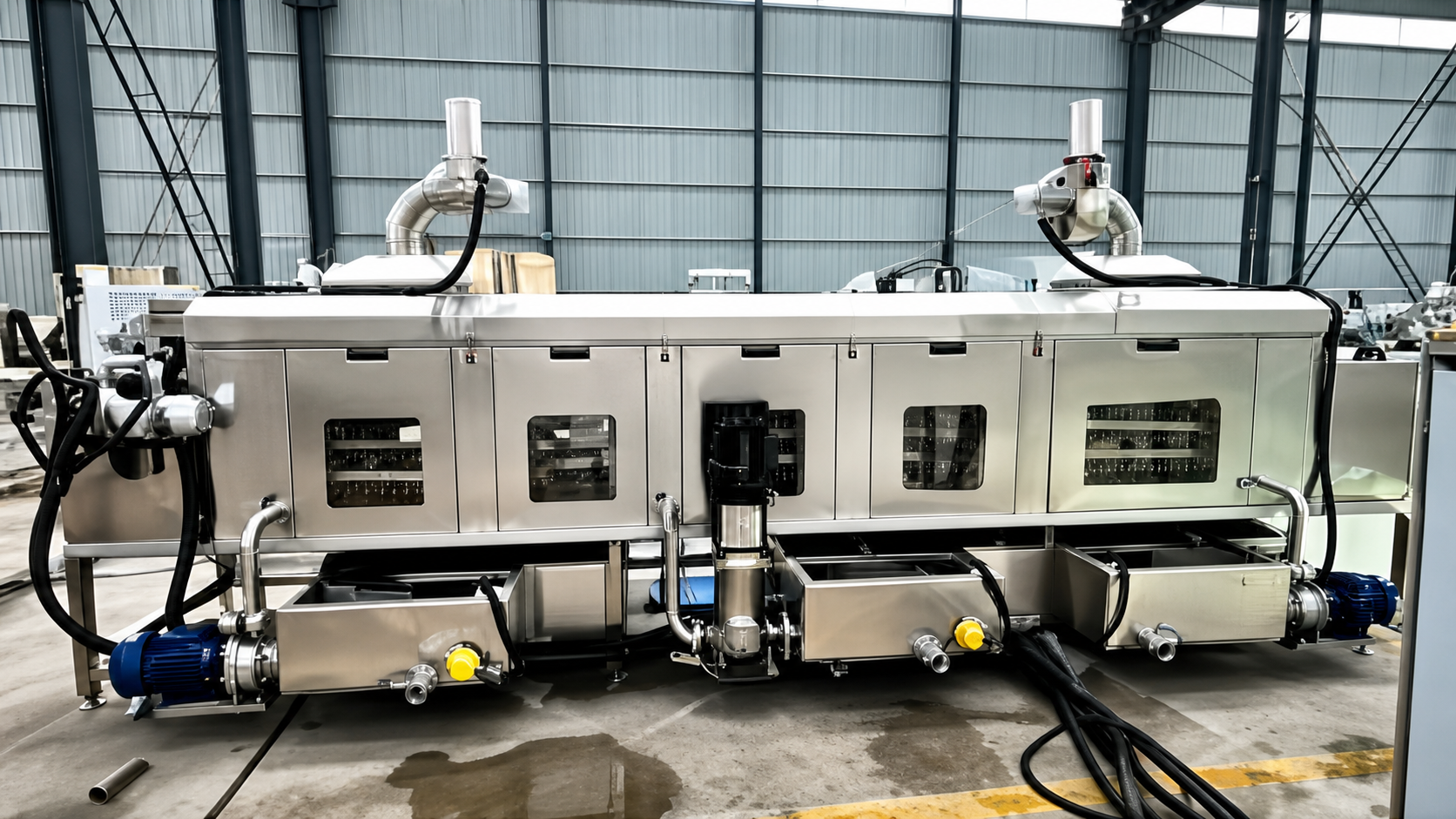
The supplied crate washing architecture uses independent circulating tanks for a hot alkaline stage, a hot clean-water stage and a tap-water rinse. Filtration and recycling keep water moving through the process, while control criteria determine when it remains suitable for its assigned stage. Inside the wash tunnel, each wash tank has a defined cleaning process duty rather than serving as an interchangeable reservoir.
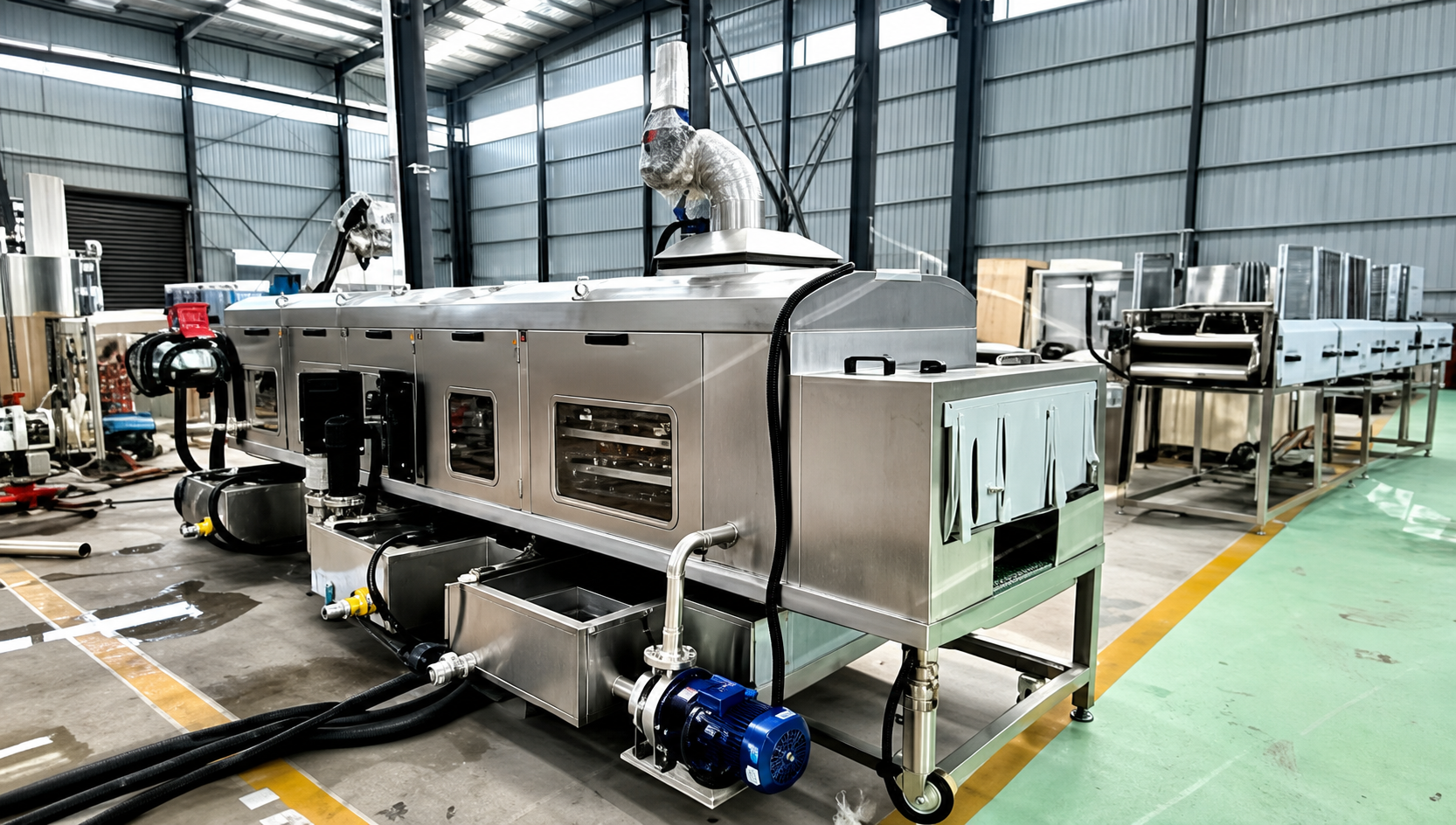
Three-Zone Flow & Rinse Control Map
-
Zone 1 · Main wash zone
Loosen and remove the defined soil with reviewed chemistry, temperature and spray exposure.
-
Zone 2 · Hot clean-water wash
Carry remaining detergent and released soil toward the next controlled rinse boundary.
-
Zone 3 · Tap-water rinse
Complete the specified rinse before air knives remove surface moisture.
Hygienic Design Review
Cleanability improves when joints, access, drainage and product-contact risks are addressed as a system. Define the required hygiene standards and acceptance method in the project specification so the washing systems can be evaluated against your use. Clear-looking tank water is not necessarily fit for final rinse and is not a substitute for defined change criteria.
Controls to Define in the Project Specification
| Control | What to define | Why it changes the result |
|---|---|---|
| Chemistry | Product, concentration, pH, temperature window and material compatibility | Soil release and safe handling depend on the full chemical condition, not heat alone. |
| Water condition | Make-up source, filter check, tank-change trigger and criteria for water you recirculate | Filtered water can still accumulate dissolved or fine contaminant load. |
| Mechanical action | Spray nozzles, angle, pressure, coverage and exposure time | Ribs and shielded surfaces need a reachable path rather than a nominal pressure value. |
| Final rinse | Water source, reuse boundary and buyer-approved acceptance condition | Clean-to-less-clean reuse planning protects the final stage from upstream soil carryover. |
| Verification | Visual criteria, residue checks and any application-specific sampling | Visual appearance alone may not represent microbiological condition. |
Temperature and Pressure Need a Reachable Path
Higher pressure is not always better, and temperature and pressure are not interchangeable with contact time, nozzle reach or contaminant removal. At 60°C and 1.0 MPa, a coverage gap creates contamination risk because sheltered ribs outside the spray path miss the intended mechanical action. Mass Technology engineers the zone layout around physical samples and buyer-defined acceptance criteria.
Reference Machine Specifications and Configuration Inputs
Our supplied reference configuration combines a 304 stainless steel enclosure, adjustable conveyor movement, 360° multi-directional spray, independent tanks, air knives and observation windows. The table separates its fixed reference dimensions from the inputs that are configured for your production line. The reference machine measures 3000 × 2000 × 2000 mm and weighs 700 kg.
| Specification | Supplied reference value | Project use |
|---|---|---|
| Overall length | 3000 mm | Reference-unit footprint; layout is reviewed for each project. |
| Overall width | 2000 mm | Reference-unit width; maintenance clearance is added during layout. |
| Overall height | 2000 mm | Reference-unit height; site access and services remain project inputs. |
| Machine weight | 700 kg | Reference-unit value for initial handling and floor review. |
| Wash-water condition | Above 60°C | Temperature is reviewed with soil, chemistry, material and exposure time. |
| Spray pressure | 1.0 MPa | Reference condition; nozzle placement and reachable surface coverage still matter. |
| Machine construction | 304 stainless steel | Construction stated for the supplied reference machine. |
| Spray path | 360° multi-directional | Coverage is checked against ribs, apertures and container orientation. |
Reference Values Are Not Certification — These values describe the customer-supplied reference configuration; ISO 14159 is used only as a hygienic-design review reference.
Pricing, Quote Scope and Delivery Drivers
Crate washing machine price follows the container family, soil, required flow, water-control design, drying scope, automation and site work. We return a configured quotation after reviewing the engineering inputs, with the machine and project scope stated together. Water and energy consumption affect operating costs, so the quote review separates those inputs from the purchase price.
| Quote driver | What changes | Input that prevents rework |
|---|---|---|
| Container range | Guide, tunnel clearance, loading pitch and spray access | Dimensions, photos, samples and annual format list |
| Soil and acceptance | Pre-wash, main wash, detergent, rinse and verification scope | Soil photos, current method and release criteria |
| Required flow | Conveyor arrangement, tank balance and integration | Units per hour, working shifts and changeover pattern |
| Heating and water | Heating source, filtration, make-up and water consumption plan | Utility data, reuse boundary and discharge limits |
| Drying scope | Air-knife position and discharge-moisture target | Next process and allowed surface moisture |
| Project delivery | Layout, installation, training, packaging and destination scope | Plant drawing, access limits, destination and responsibilities |
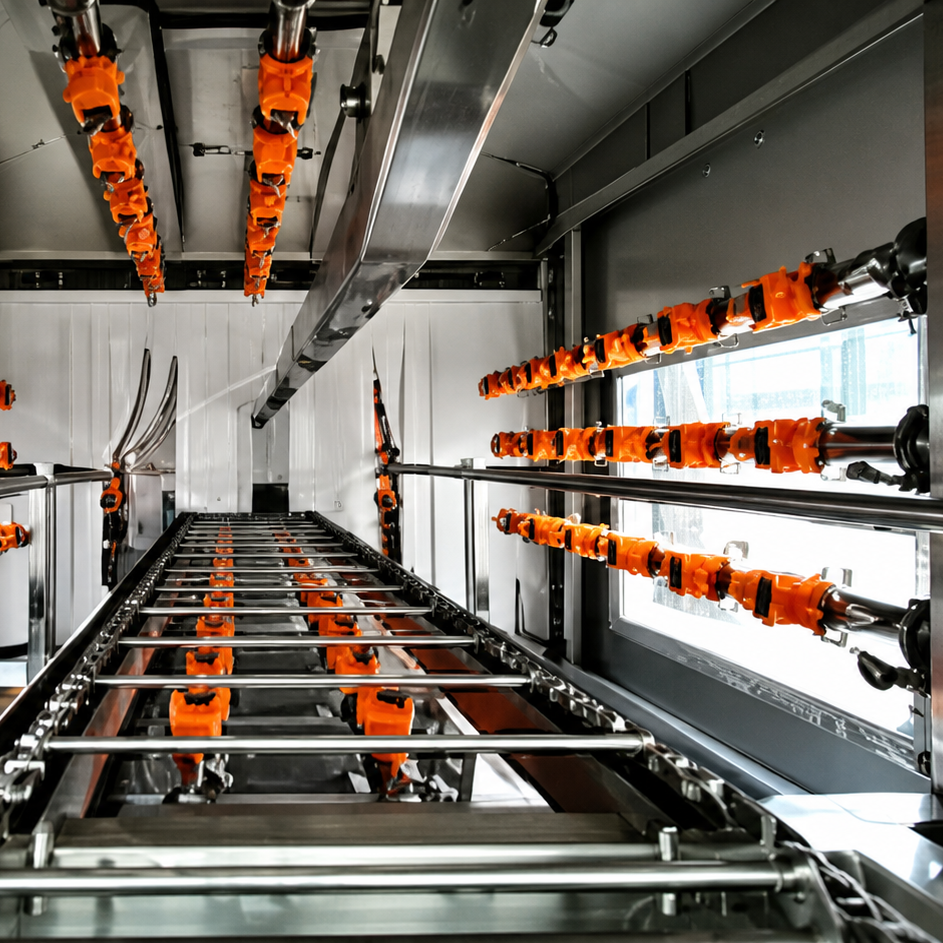
Machine Safeguards, Inspection & Maintenance Inputs
We fit removable observation windows to the supplied design, and opening a window triggers a sensing stop. That operating safeguard belongs inside a broader site review of electrical, conveyor, pump, hot-water, pressure, chemical and retained-energy hazards.
Observation windows support operating checks and can be removed for planned access. The access method, guarding and restart behavior belong in the approved operating procedure.
We use a stable conveyor slide and adjustable guide rod to keep reviewed containers moving through the spray path. Loading pitch and changeover steps are fixed during configuration.
Nozzle condition, filter loading and tank condition affect consistent operation. Maintenance points should remain reachable without inviting unsafe intervention while the machine is energized.
Interlock and Isolation Serve Different Jobs
A stopped conveyor is not necessarily isolated; a control-circuit device is not an energy-isolating device under OSHA’s hazardous-energy framework. The sensing stop is not a substitute for lockout-capable isolation. Specify stored-energy release for maintenance alongside the observation-window sensing function.
Hazardous-Energy and Service Review
- Identify electrical and mechanical energy-isolating devices.
- Define pump, pressure and retained-water release steps.
- Document hot-surface and hot-liquid controls.
- Review detergent safety data and operator exposure.
- Set safe cleaning, filter service and unjamming procedures.
- Align guarding and isolation with local site requirements.
Project Delivery, Installation & After-Sales Support
Mass Technology provides a customized one-stop service from plant-layout planning to equipment manufacture, production-line installation, operator training and after-sales coordination. We use one technical brief to keep container fit, wash controls, interfaces and responsibilities aligned. As a crate washer manufacturer, this workflow gives engineering, procurement and operations the same approved boundary.
Container and soil review
We examine drawings, photos, samples, soil and required flow before selecting the crate washer configuration.
Layout and utilities
We map the industrial washing equipment into the available footprint, services, drainage and line interfaces.
Engineering confirmation
We define stages, conveyor logic, guide adjustment, spray coverage, filtration and drying scope in the project documents.
Equipment manufacture
We manufacture the approved washing machine and coordinate the agreed pre-dispatch confirmation.
Installation and training
We support production-line installation and provide on-site operator training within the quoted project boundary.
After-sales coordination
We route operating questions, engineer response and replacement-parts dispatch through the agreed support contacts.
Client-Confirmed Support Commitments
2-year warranty
We cover machine parts for a full two years.
24-hour response
We provide an engineer response around the clock.
Within 5 working days
We dispatch replacement parts by international courier within five working days.
Product Details from the Supplied Reference
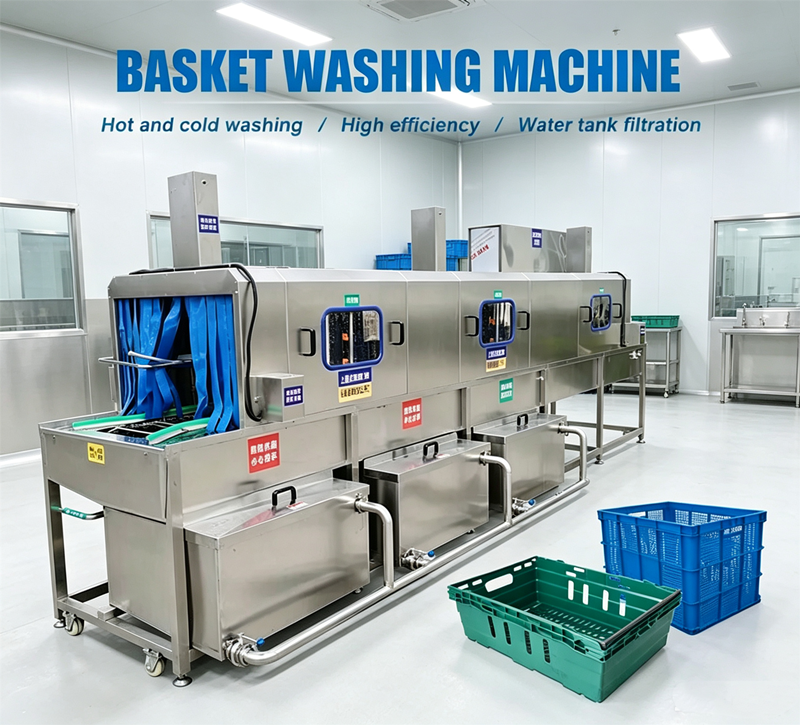
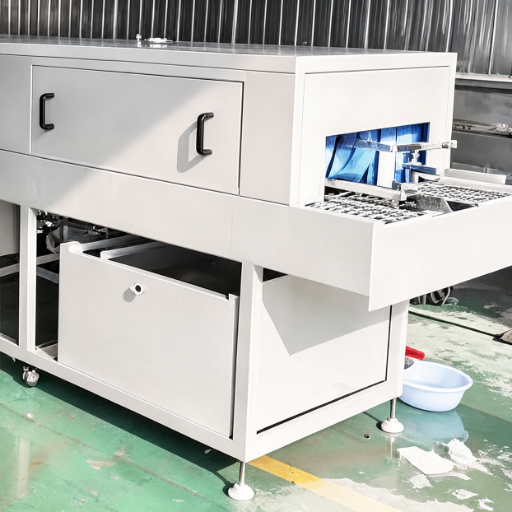
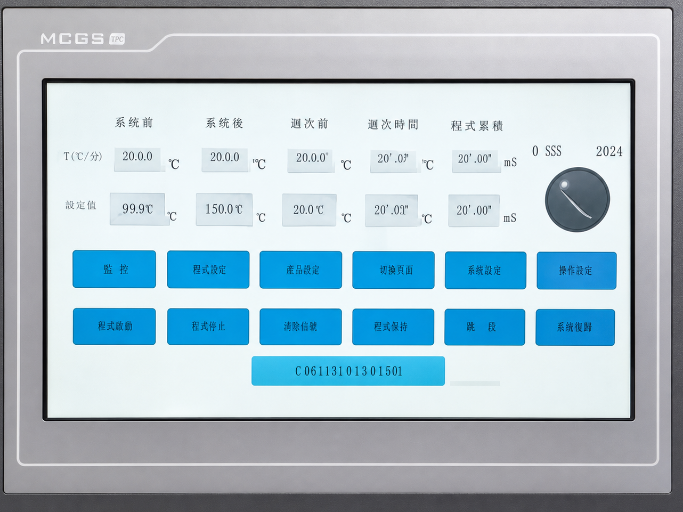
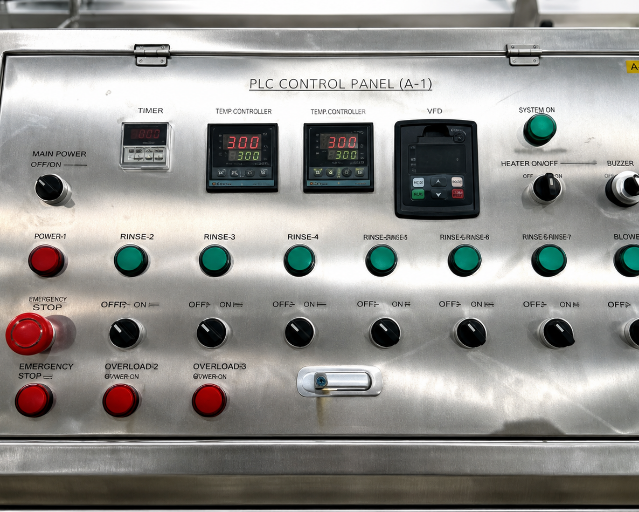
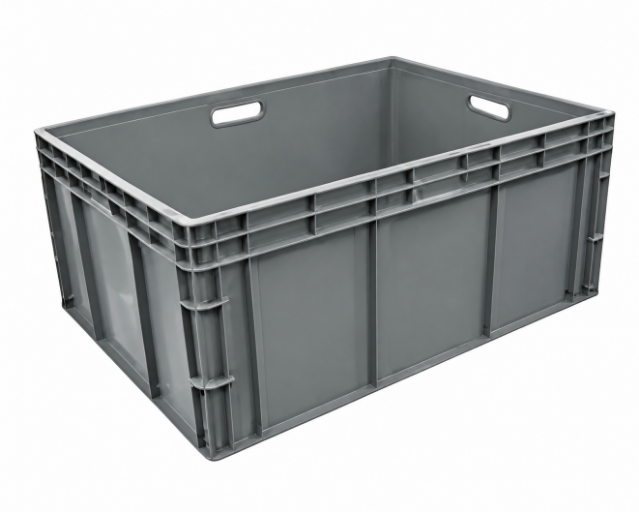
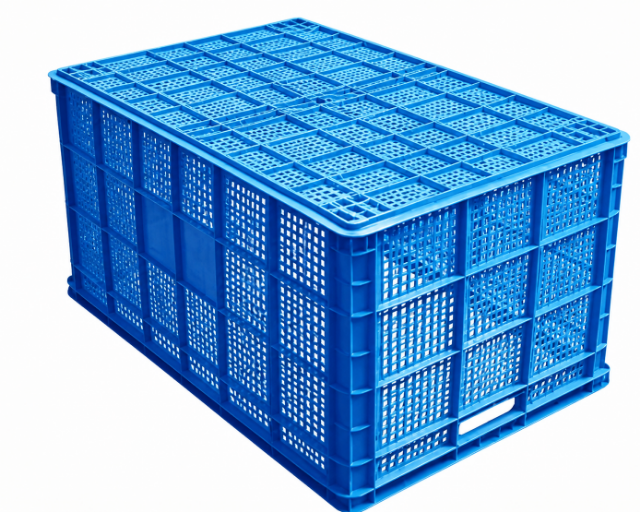
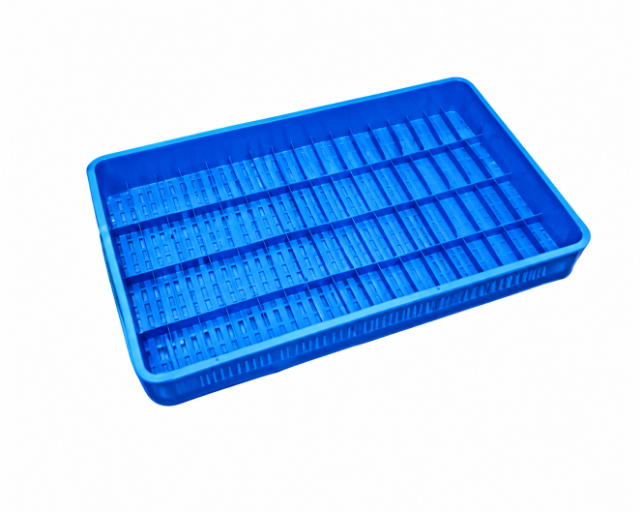
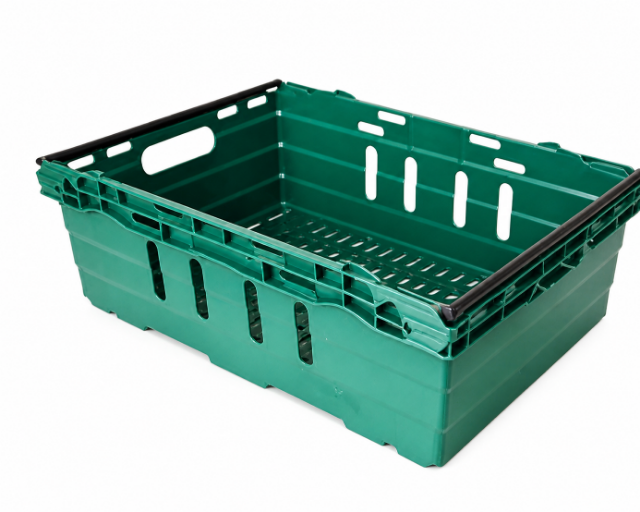
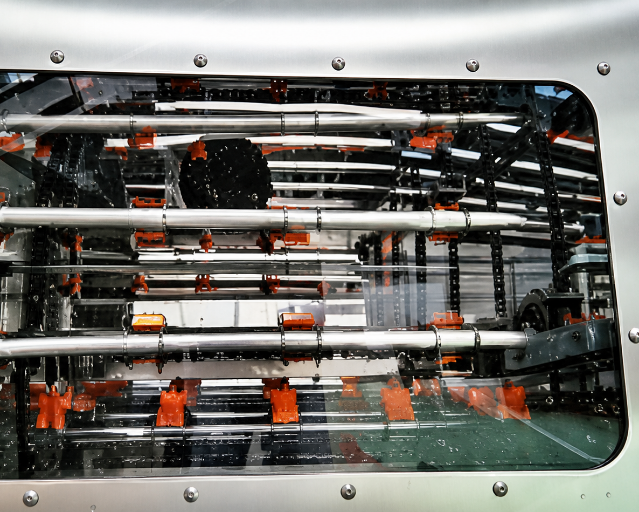
The customer-supplied reference images show the enclosed conveyor path, reusable container family and machine details used in this configuration discussion. They keep the engineering review tied to visible hardware rather than a generic industrial tray washing machine illustration.
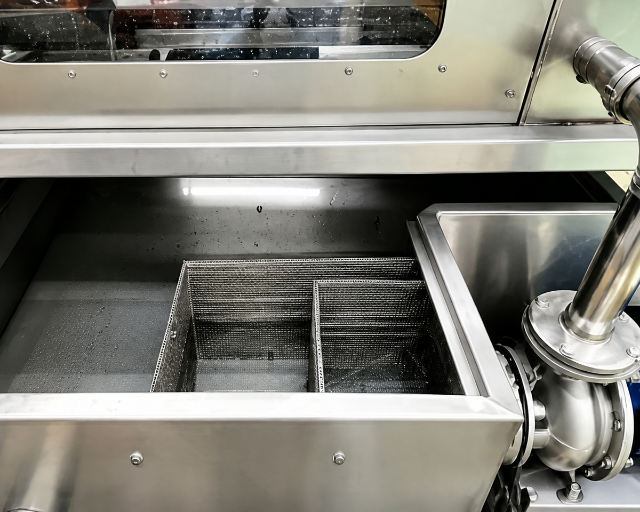
Visible Details Used in the Review
- The enclosure and loading area show how reusable containers enter the conveyor path.
- The container image makes ribs, handles, nesting and drainage points part of the fit discussion.
- The detail collage supports questions about access, tank arrangement, spray coverage and air-knife placement without assigning a factory location or customer result.
| Situation | Why it changes the design | Next action |
|---|---|---|
| Only a container name is available | Dimensions, ribs, apertures and nesting differ within the same name. | Send drawings, photos and samples for a fit review. |
| A fixed output is requested | Crates per hour depend on loading pitch, container geometry, exposure path and handling. | Enter the target in the throughput calculator and confirm it with samples. |
| Hot alkaline cleaning is planned | Chemistry, concentration, material compatibility and exposure controls shape the process. | Provide the detergent safety data and target operating window. |
| Water reuse reaches the final rinse | Upstream soil can alter the condition of reused water even after filtration. | Define tank-change, monitoring and final-rinse water criteria. |
| Site services are not mapped | Heating, electrical power, compressed air, water and drainage affect layout and operation. | Send a plant drawing and utility schedule before layout approval. |
RESOURCES & TOOLS
Engineering Calculations
Industrial Basket Washing Machine FAQ
What does an industrial basket washing machine do?
It moves reusable baskets, crates or trays through controlled wash, rinse and drying stages. This Mass reference uses three independent tanks, multi-directional spray and air knives, with the final configuration set around the actual load carrier.
Which baskets, crates and trays can be reviewed for this machine?
Plastic baskets, food-industry turnover boxes, stainless steel trays, insulated boxes, bakery trays, manufacturing carriers and selected pallets can enter the review. Fit depends on dimensions, ribs, openings, weight, material, soil and the way each item sits on the conveyor.
Can one washer handle several container sizes?
The adjustable guide rod and adjustable conveyor speed support a multi-format review. Send the smallest, largest and hardest-to-clean carrier so clearance, nozzle reach and changeover steps can be set around all three.
How does the three-stage wash and rinse path work?
The supplied sequence is hot alkaline water, hot clean water and a tap-water rinse, followed by air drying. Independent tanks, filtration and defined reuse controls help separate the duties of each stage.
What determines baskets or crates per hour?
Output follows loading pitch, conveyor speed, container geometry, spray exposure, drainage, changeovers and upstream handling. Enter the required units per hour in the on-page calculator, then use physical samples to confirm the engineered target. Continuous in-line washing also requires the wash cycles to stay balanced with loading and discharge handling.
Does the machine remove surface moisture after washing?
High-volume air knives are provided to remove excess moisture from the surface after the rinse. The discharge condition depends on container shape, retained pockets, line speed and the dryness required by the next process.
Which plant and utility inputs are needed for a quote?
Provide the available footprint, water source, heating source, electrical supply, compressed air, drainage and line-interface points. Add container data, required crates per hour, soil details and the acceptance condition to make the quotation technically useful. These inputs let the crate washer configuration reflect your actual washing needs.
What affects industrial basket washing machine price?
Price follows container formats, wash stages, required flow, heating, filtration, detergent controls, air drying, automation and site scope. The written quotation should state the configured machine, installation boundary, training and spare-parts package together.
What installation and training support is included?
Mass provides plant-layout design, equipment manufacture, production-line installation and on-site operator training as part of its one-stop service capability. The project quotation fixes the exact site activities and responsibility boundaries.
What warranty, response and spare-parts support does Mass provide?
Mass states a 2-year warranty covering machine parts and a 24-hour engineer response. Replacement parts are dispatched by international courier within 5 working days.
How should a hygiene target be specified?
Define whether acceptance is visual, residue-based, chemical or microbiological, then state sampling points and limits. Cleaning and sanitizing are separate control concepts, so any required validated result needs its own application-specific method.