Get in Touch with Masstech
ISO Certified System
Trash Bin Washing Machine
Trash Bin Washing Machine for Stationary Sanitation Sites
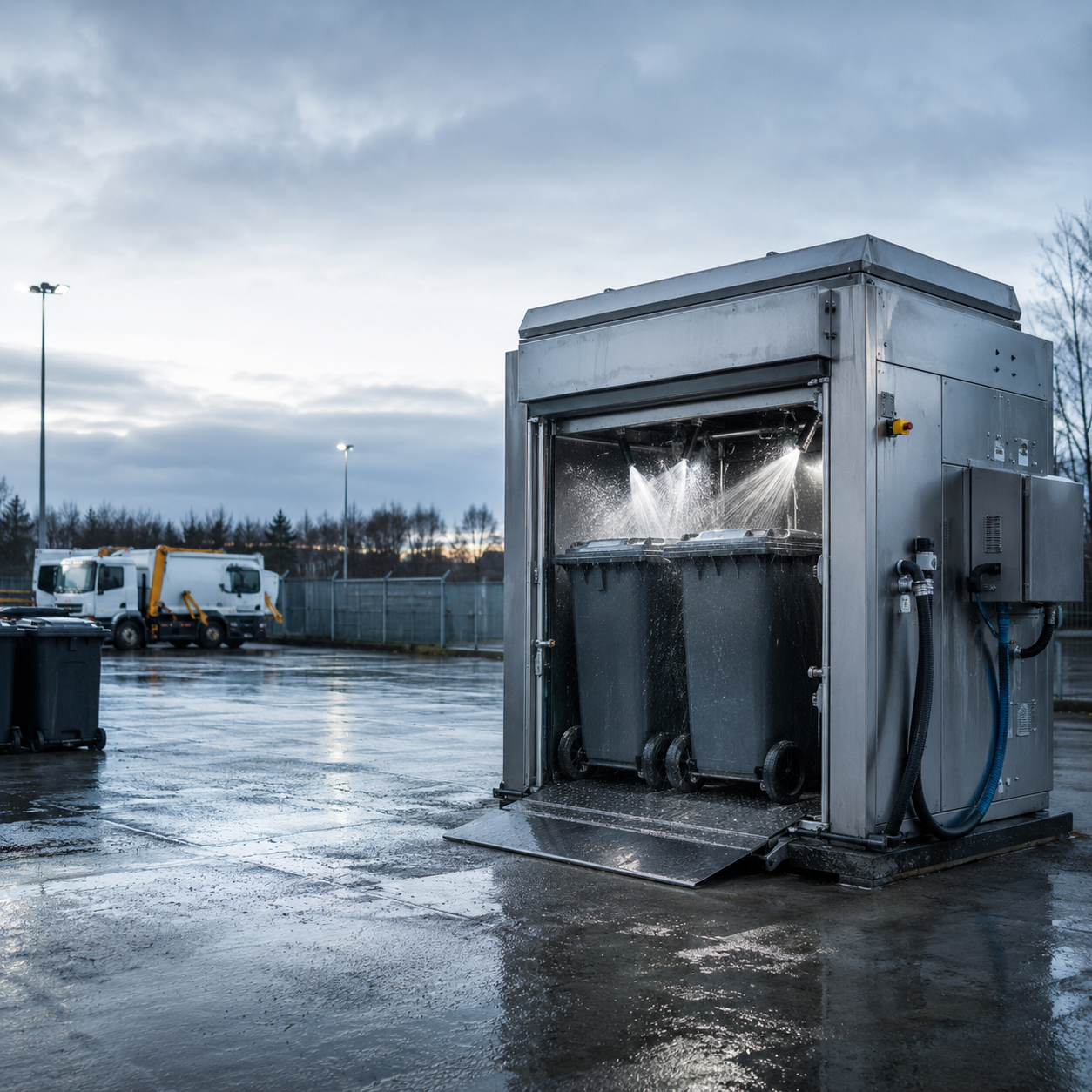
The MS-4700 is an enclosed trash bin washing machine for fixed sites. Its path covers bin handling, lid opening, conveying, inside-and-outside washing, brush scrubbing and chemical supply; it is not a mobile trailer, pressure-washer attachment or equipment for local bin cleaners.
- Stationary enclosed wash system
- Lid opening and conveying path
- Separate detergent and disinfectant tanks
- Wastewater collected without recycle
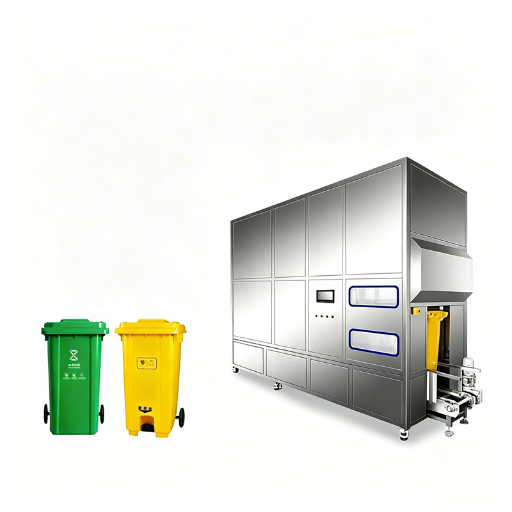
MS-4700
Reference model named in the customer product document.
4700 × 1450 × 3500 mm
Supplied overall reference-machine dimensions.
3 min/piece
Supplied single-piece processing reference, not shift output.
Power: 10 kW (Supplied equipment power)304 stainless steel
Fan-nozzle material stated in the customer source.
Safety: 2 emergency stops (Supplied control count)Closed-Chamber Washing, Chemical Supply and Wastewater Path
The customer process diagram traces the bin from entry through lid opening, conveying, clamping and turning, inside-and-outside washing, external brush cleaning, internal disinfectant spraying, return turning and discharge. These are machine and sequence facts; the supplied material includes no MS-4700 microbial validation result.
MS-4700 Closed-Chamber Wash Path
1 · Receive and open
Present the reviewed trash can or wheelie bin and open the lid for the handling sequence.
2 · Convey and turn
Move the bin into the enclosed chamber, then clamp and orient it for spray access.
3 · Wash and brush
Apply inside-and-outside washing plus external brush scrubbing through the supplied path.
4 · Chemical and discharge
Supply disinfectant to the internal path, turn the bin back and convey it out.
Fit Controls the Reachable Path
A handling mismatch creates a safety and cleaning risk because bin geometry changes clamp position, spray reach and discharge. Mass Technology must confirm each buyer application against the actual bin; unlike a mobile system, the MS-4700 reference values of 10 kW and 3 min/piece do not resolve fit by themselves.
A Sequence Is Not an Outcome Guarantee
The machine can supply mechanical action and chemical inputs, but a process label is not necessarily a verified disinfection result. A defined chemical, dilution, compatible surface, coverage, wet contact time and acceptance method are separate project controls.
Stationary-Site Readiness and Bin Interface Inputs
A bin may reach the site and still fail the handling path if its lid, wheels, handle or loading geometry was never captured. The Stationary-Site Readiness Ledger separates ready inputs from items that need confirmation or remain unresolved, without inventing a universal size threshold.
| Ledger input | Ready evidence | Confirm during review | Unresolved means |
|---|---|---|---|
| Bin body | Length, width, height and empty weight | Chamber clearance and support points | No fit approval from a bin name alone |
| Lid | Open/closed photos and hinge position | Opening access, lid travel and retained load | Opening path remains undefined |
| Wheels and handle | Spacing, projection and underside photos | Guide, clamp and turning interference | Handling stability remains unknown |
| Loading method | Operator side, feed height and available approach | Manual, lift or upstream interface boundary | Intake responsibility is not fixed |
| Soil and contents | Residue photos and waste-stream description | Chemical, exposure and operator-control needs | Cleaning equipment scope cannot be set |
| Water supply | Source, pressure and available connection | Automatic water replenishment interface | Utility compatibility remains open |
| Wastewater route | Receiving drain and local acceptance contact | Solids capture, sampling and pretreatment | No discharge assumption is allowed |
| Power and access | Electrical supply, doorway and floor information | 10 kW machine connection and installation path | Layout and delivery scope remain open |
| Operating pattern | Bin mix, loading rhythm and working schedule | Changeovers, faults and site flow | Three minutes cannot become shift output |
Architecture Varies with the Container
A reviewed third-party patent uses separate container and lid paths, sensors, inversion and multiple modules, illustrating how container geometry can change washer architecture. The patent is not Mass intellectual property or evidence of MS-4700 performance; the Mass configuration remains tied to the customer document and the buyer’s bin samples.
Water, Detergent and Disinfectant Boundaries
The customer source states that the MS-4700 has automatic water replenishment, separate detergent and disinfectant tanks, and separately collected wastewater with no recirculation. Dirty water still needs an accepted destination; a visible machine outlet does not make the receiving drain suitable.
| Boundary | Confirmed machine fact | Buyer or site input | What is not established |
|---|---|---|---|
| Water make-up | Automatic water replenishment | Source, connection, available conditions and shutoff | Consumption, savings or utility compatibility |
| Detergent | Separate detergent tank | Product label, safety data, concentration and material compatibility | Cleaning result for every soil |
| Disinfectant | Separate disinfectant tank and supplied internal spraying step | Approved use, dilution, coverage, contact time and verification | Microbial reduction, sterilization or compliance |
| Wastewater | Separate collection with no recirculation | Receiving drain, solids capture, sampling and local limits | Direct discharge permission or no-pretreatment status |
Controls Must Travel Together
A contamination risk remains when chemistry and wastewater decisions are split because one changes surface exposure while the other changes site acceptance. Mass Technology treats them as an engineering review; unlike a catalogue label, the supplied 3 min/piece reference does not establish either chemical efficacy or discharge permission.
Chemical Control
A disinfectant tank does not establish dilution, coverage or wet contact time. EPA guidance ties a registered product’s use to its approved label, including use site, method and full contact time.
Receiving-Drain Control
Separate wastewater collection is not a substitute for site discharge review. EPA explains that local limits may be numeric or narrative and are specific to the industrial connection and receiving system.
Three Contradiction Checks for the Project File
- A common assumption is that chemical supply proves disinfection; it does not.
- Non-recirculating rinse water is not always acceptable to the first available drain.
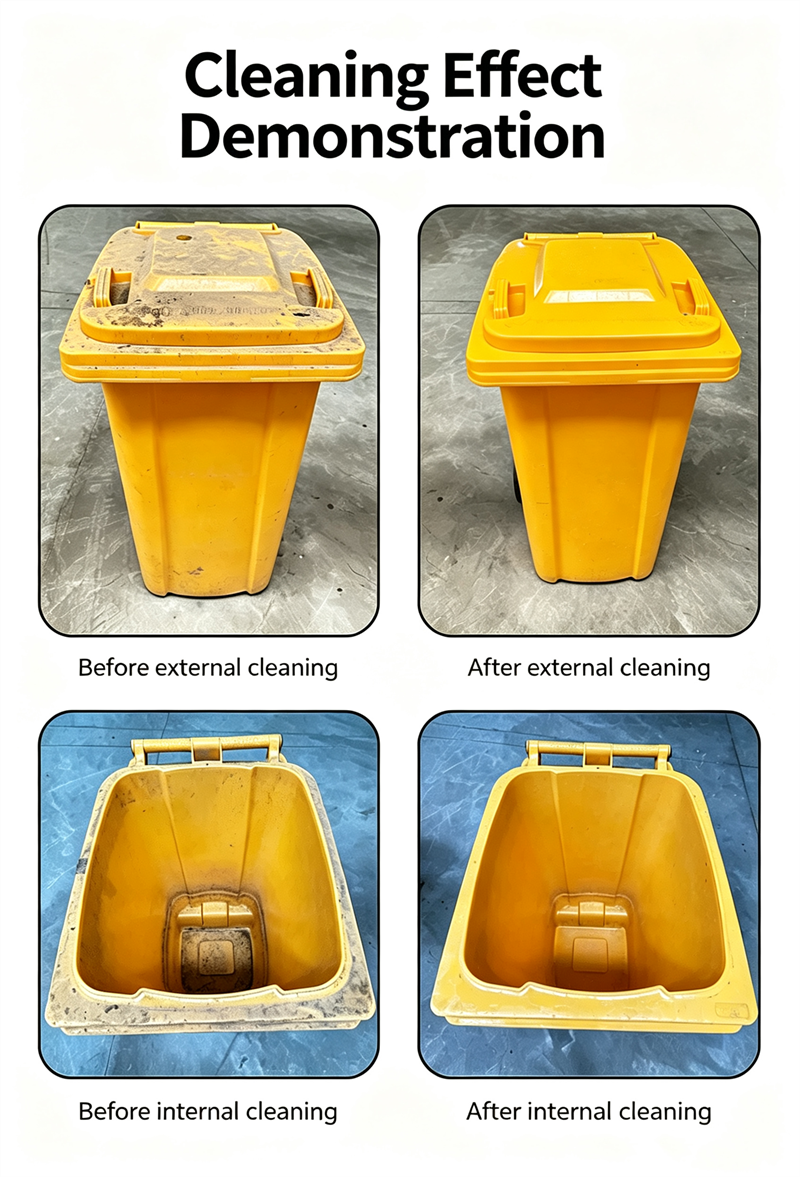
- A visibly clean bin is not necessarily a validated microbiological result.
- Review incompatible mixtures, exposure controls and operator training.
- Define solids handling and any wastewater sampling point.
- Keep the chemical label and safety data with the operating procedure.
MS-4700 Technical Specifications
The reference specification is useful for comparison only when each number keeps its stated boundary. The table separates supplied machine facts from engineering inputs that remain open.
| Specification | Supplied value | Qualification |
|---|---|---|
| Model | MS-4700 | Reference trash bin washer in the customer document |
| Overall dimensions | 4700 × 1450 × 3500 mm | Reference envelope; access and service clearances remain site inputs |
| Equipment power | 10 kW | Machine fact; electrical supply details require confirmation |
| Processing reference | 3 min/piece | Single-piece reference, not guaranteed hourly or shift output |
| Nozzles | 304 stainless-steel fan nozzles | Material and pattern fact; no unprovided pressure value is inferred |
| Water replenishment | Automatic | Connection and consumption data remain project inputs |
| Chemical supply | Detergent and disinfectant tanks | Input capability, not process-efficacy validation |
| Emergency controls | 2 emergency stops | Verified count, not proof of complete safety architecture |
| Wastewater | Separate collection; no recirculation | Machine route, not receiving-drain approval |
MS-4700 Cycle Boundary Card
Inside the reference
The supplied figure is three minutes per piece for the stated machine. It is the starting point for a technical discussion.
Outside the reference
Loading, lid presentation, bin mix, changeover, faults, cleaning, shift breaks and downstream handling sit outside that number.
Quote input
Provide a bin mix and site flow so Mass can review the required handling arrangement without turning a nominal cycle into a promise.
Three minutes per piece is not a shift-output guarantee because loading, changeover, faults and site flow sit outside the reference cycle. MS-4700 specification boundary
Mass Technology Project Handoff
Zhangjiagang Mass Technology Co., Ltd. supports the project from preliminary plant layout and equipment manufacturing through installation, on-site operator training and after-sales service. The handoff keeps bin geometry, utilities, chemical controls, drainage and responsibility boundaries visible to engineering and procurement.
Bin and soil intake
— collect dimensions, images, samples, residue details, the current cleaning method and required acceptance criteria.
Site readiness
— review footprint, access, water, power, wastewater route and the planned lift or loading method.
Configuration review
— resolve lid opening, conveying, turning, washing, brushing and chemical-supply boundaries.
Project documentation
— fix the agreed equipment, interfaces and responsibility split in the quotation and layout.
Installation and training
— coordinate production-line installation and on-site operator training within the agreed scope.
After-sales route
— use the confirmed warranty, engineer-response and replacement-parts contacts after handoff.
Project Misfit Signals and Alternative Next Steps
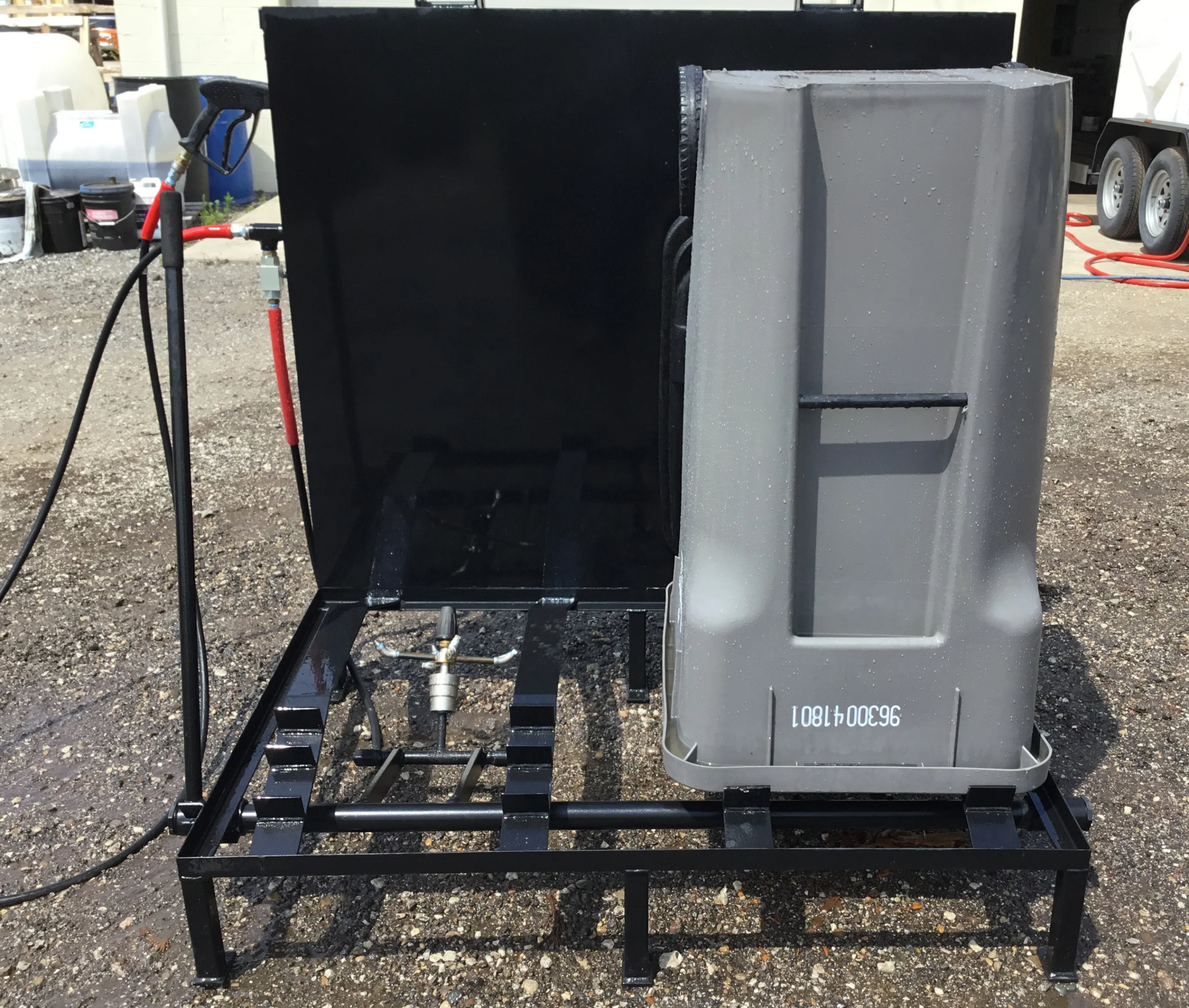
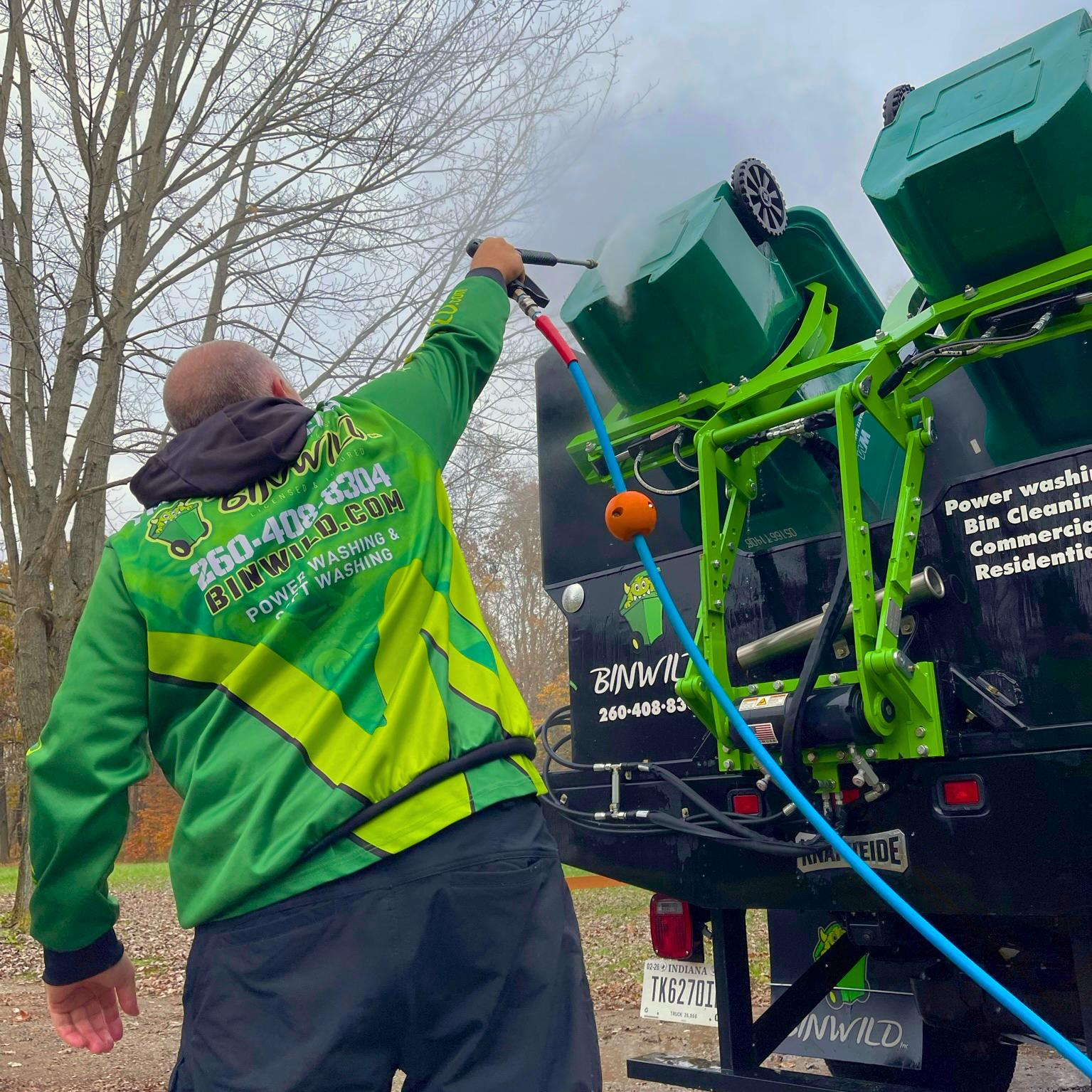
The MS-4700 is the wrong fit for a mobile roadside cleaning route, a pressure-washer accessory or a local bin-cleaning service. It also cannot be responsibly specified while bin geometry, waste class, utilities, drainage or chemical controls remain completely unknown.
| Misfit signal | Why it matters | Where to look instead |
|---|---|---|
| You need a mobile trailer or van-mounted route system | MS-4700 is positioned as a stationary enclosed industrial bin washer | Review mobile wheelie bin cleaning equipment rather than this fixed-site machine |
| You need a handheld garbage can washer | The enclosed conveying and turning path serves a different operating model | Review a manual or accessory-based cleaning method |
| No representative bin can be documented | Lid, wheel, handle and body geometry control the handling path | Collect drawings, photos or samples before fit approval |
| The receiving drain has not been identified | Non-recirculating wastewater still needs an accepted site route | Resolve local drainage, solids and pretreatment requirements first |
| A guaranteed microbial result is required | No MS-4700 validation report or project test method was supplied | Define the device/cycle-specific validation plan before making that claim |
| A guaranteed shift output is required from one cycle number | Loading, bin mix, faults, changeovers and site flow are outside the reference | Provide the complete operating pattern for engineering review |
One Clear Product Boundary
A static enclosed washer and a mobile route machine are not interchangeable. The first belongs in a fixed sanitation site with planned utilities and wastewater handling; the second belongs to a transport-led service model.
Trash Bin Washing Machine Implementation Tools
01
Stationary-Site Readiness Ledger
Mark each bin and site input as ready, confirm or unresolved. This tool organizes project evidence; it does not issue an automatic fit, safety or discharge approval.
Access Ledger Tools
02
MS-4700 Cycle Boundary Card
Separate the supplied 3 min/piece reference from the site factors that determine actual flow. The card measures input readiness and never calculates guaranteed hourly or shift capacity.
Access Boundary Card
03
Bin-to-Utility Handoff Sheet
Prepare the bin, soil, loading and utility notes needed for a configured MS-4700 enquiry. The sheet checks completeness; it does not upload data or approve the project.
Access Handoff SheetTrash Bin Washing Machine FAQ
It is a stationary enclosed machine for lid opening, conveying, cleaning and disinfection-input supply. The supplied sequence includes bin turning, inside-and-outside washing, external brush scrubbing, internal chemical spraying and discharge.
No. The page qualifies it as a fixed-site industrial bin washer, not mobile wheelie bin cleaning equipment, a trailer, a local cleaner or a route-business package.
No universal size range was supplied. Send bin body, lid, wheel, handle and loading dimensions so the stationary bin washer interface can be reviewed without guessing.
It is the supplied reference processing figure for one piece. It does not guarantee hourly or shift output because loading, changeovers, faults, bin mix and site flow remain outside the number.
The customer source states that wastewater is collected separately and does not recirculate through the machine. The receiving drain, solids capture, sampling and any pretreatment remain site decisions.
No. The tank supplies a chemical input; dilution, approved use, surface coverage, wet contact time and a device-specific validation method determine what outcome may be claimed.
Hospitals are a customer-supplied application setting, but the actual bin contents control qualification. Infectious, sharps, chemical, pharmaceutical/cytotoxic, radioactive and general wastes are not treated as one interchangeable stream.
No. The count is a verified machine fact, while guarding, interlocking, restart behavior, hazardous-energy isolation and stored-energy release require project and site review.
The quotation follows bin and lid geometry, soil, handling, utilities, wastewater, chemical controls, installation and training scope. Price, project schedule and responsibility boundaries are fixed after those inputs are reviewed.
Mass confirms a 2-year warranty covering all machine parts and a 24-hour engineer response. Replacement parts are delivered by international courier within 5 working days.
Start with bin dimensions and photos, lid and wheel details, soil or waste-stream description, water, power, drainage, loading method and operating pattern. The Bin-to-Utility Handoff Sheet groups these inputs for review.
No. Search results often mix a trash can cleaning machine, garbage can washer and local service equipment, while the MS-4700 is presented here as stationary industrial equipment.