Get in Touch with Masstech
Beer Filling Machine: Bottle, Can & Keg Production Lines for Microbreweries to Industrial Brewers — Mass Technology
Mass fill beer machinery – runs 2,000 24,000 BPH glass bottles, 2,000 18,000 CPH aluminum cans, or all keg formats designed around isobaric counter-pressure which preserves CO 2 rejects oxygen across every package size. ISO 9001:2015 engineering team customizes the line to your throughput, your bottle and can formats, and your facility footprint, ships, installs and trains your operators on site. CE compliance with BO 6 Sizabah, 2 year all parts warranty, 24 hr/S engineer response, and 5 day international parts shipping included.
Request a Quote →

Brewery Filling Bottlenecks — How a Modular Line Solves Bottle, Can & Keg Constraints
Beer filling machine is the complete combination of rinsing, isobaric filling, capping or seaming modules preserves carbonation and oxygen from tank to package. A Mass beer filling machine handles bottle, can and keg formats from one engineering platform size to meet the demands of microbreweries, regional craft brewers and commercial brewery industries. Technology choices in the following sections define your fill quality and format flexibility for the first ten years and determine your total landed cost for the next ten years.
Market for breweries in 2024-2025 is more difficult to read than the boom years prior. In 2024, for the first time in history, more breweries closed than opened. Second, less and less new entrants in the market, even new startups report increasing initial capital expense than $500,000 when they fill their first bottles.
Bottleneck #1 — Throughput
Manual fillers cap your growth around 800–1,200 BPH. If your weekly demand for finished cases exceeds one pallet in bottles hand-filled or can fillers cost you in labor oxygen pickup and uneven fill heights. A 4-6K BPH monoblock rinser-filler-capper is the first significant step up.
Bottleneck #2 — Format switching
Buying separate bottling and canning lines doubles capex and floor space. Many craft brewers call for both bottles and cans —but they include: two dedicated lines, two CIP cycles, two skill sets and two quote sheets. A single engineer designed, single hybrid canning & bottling mono-barreled the spend.
Bottleneck #3 — Hidden landed cost
Quoted prices routinely under-budget the real install by 40–80%. The—industry analysis indicates that a 1.2M canning line price estimate turns into a 2.1 M cost once designing for electrical upgrades, system integration, training and qualification is considered…lines without clear landed-cost support shift this burden back toward the brewery.
How Mass solves the bottleneck
Mass treats each project as an entire brewery filling line, not as individual machine sales. Our engineers start with your annual hectoliter goal, format mix and current plant limitations, and then recommend the rinser, filler, capper/seamer, and downstream packaging modules. One project lead guides you from factory acceptance testing to sea freight, through installation and operator training.
Our beer filling machine portfolio is modular by design. You can begin today with a 4,000 BPH bottle monoblock, and upon expansion, add a 6,000 CPH can filler in parallel, a keg washer or tunnel pasteuriser in a subsequent stage. Format flexibility is integral to the platform not appendaged onto it.
Mass Beer Filling Machines — Bottle, Can & Keg Lines & Models
Mass manufactures three fundamental beer filling machine families, each one optimized for package format and brewery output scale. Every line uses isobaric counter-pressure filling with food-grade 304 or 316 stainless steel on all product-contact surfaces, ships fully CIP-compatible, and runs on PLC controls behind a 10-inch HMI touchscreen. Use the links below to access the particular speclist page for each package format.
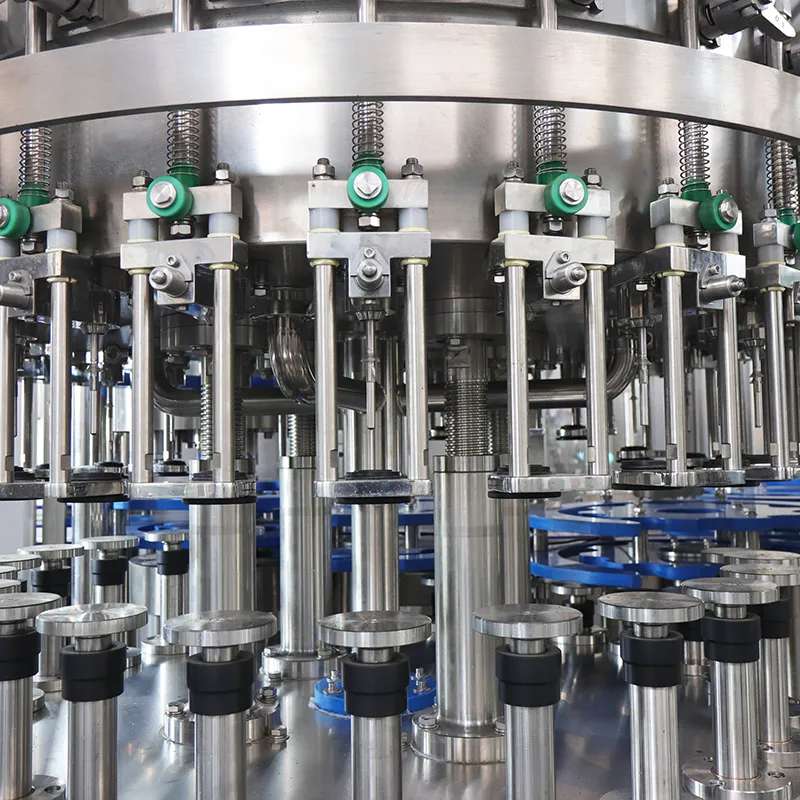
Beer Bottling Machine
Glass bottle filling for craft brewers and commercial brewery scale. Modular rinser isobaric filler crown capper monoblock.
- 2,000–24,000 BPH throughput
- 250 ml – 1,500 ml glass bottle range
- Crown cap or ROPP closure options
- ±0.3–0.5% fill accuracy
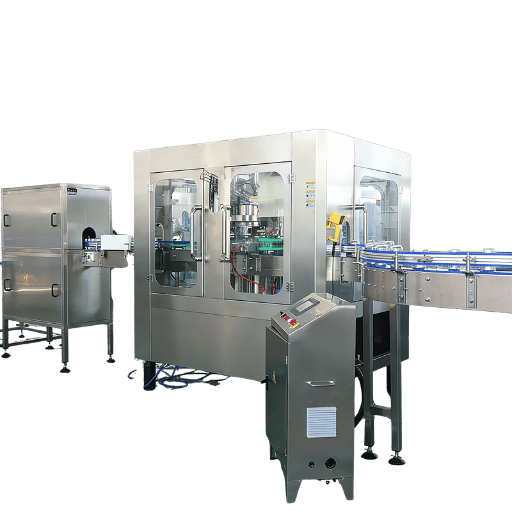
Beer Can Filling Machine
Counter-pressure rotary can fillers and seamer combos for aluminum cans in craft and commercial brewery beer canning output.
- CPH: 2,000–18,000
- Can sizes: 250 / 330 / 473 / 500 ml
- Seamer: servo-controlled double-seam
- O2 target: <50 ppb at fill
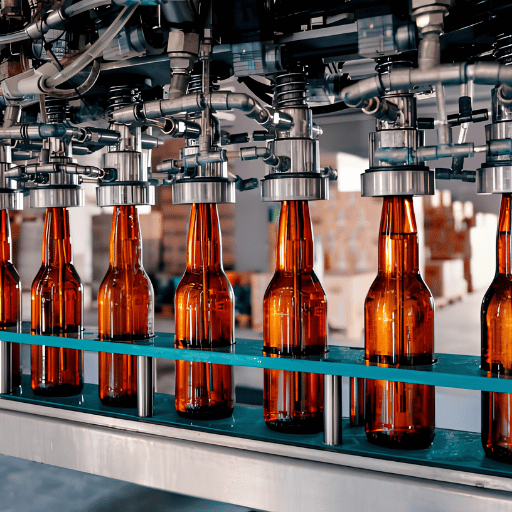
Beer Bottling Line
Complete end-to-end bottling line from depalletizer through labeler and shrink-wrap. Designed for breweries looking for one engineering group across all modules.
- Modules: depalletizer rinser filler capper labeler packer
- Footprint: 30–80 m² typical
- Integration: single PLC backbone
- Scalability: add modules in phases
Embedded Specification Tiers
Use this calculation matrix to determine the Mass tier that is most compatible with your annual throughput. Each Mass tier is a datum: your brewhouse can be optimized with fill heads, CIP automation, and material definition to your actual product specification sheet during the quote stage.
| Specification | Entry-Level | Mid-Range | Industrial |
|---|---|---|---|
| Bottle BPH | 2,000–4,000 | 4,000–12,000 | 12,000–24,000 |
| Can CPH | 2,000–4,000 | 4,000–12,000 | 12,000–18,000 |
| Fill heads (filler) | 8–12 | 12–40 | 40–60 |
| Fill accuracy | ±0.5% | ±0.4% | ±0.3% |
| Contact material | 304 SS | 304 / 316 SS | 316 SS + EP polish |
| CIP automation | manual | semi-auto | fully automatic |
| Footprint | 8–14 m² | 14–30 m² | 30–80 m² |
| Typical brewery scale | nano · taproom | regional craft | commercial · contract |
Decision Matrix — Bottle vs Can vs Keg by Brewery Scale
This table is the inflection point our app engineers guide each potential client through. Map your annual hectoliter volume with your format and each of the green cells is the most capital-efficient Mass configuration for new construction.
| Annual Volume | Bottle-First | Can-First | Hybrid (Bottle + Can) | Keg-Heavy |
|---|---|---|---|---|
| ≤500 hl (nano) | 2,000 BPH semi-auto monoblock | 2,000 CPH compact rotary | not recommended | manual keg filler 20–40 KPH |
| 500–5,000 hl (regional craft) | 4,000–6,000 BPH automatic | 4,000–8,000 CPH automatic | 4,000+4,000 hybrid monoblock | 40–80 KPH semi-auto keg |
| 5,000–50,000 hl (commercial) | 8,000–18,000 BPH | 8,000–12,000 CPH rotary | 8,000+8,000 dual line | 80–250 KPH automatic keg |
| ≥50,000 hl (industrial) | 18,000–24,000 BPH | 12,000–18,000 CPH | parallel dedicated lines | integrated keg plant |
Counter-Pressure (Isobaric) Filling Technology — Why It Matters for Beer
When deciding between open vs. isobaric filling it helps to understand why the technology works to provide a better beer without putting stress on your bottling line. All craft and commercial brewery lines we engineer run counter-pressure as default. Reasoning is compelling: open fillers introduce dissolved oxygen and lose CO2, both of which directly impact shelf life and aroma.
The technical steps are quite simple: the bottle or can is inserted at the filler, the filler tube mechanically seals against the vessel, the filler vents the headspace, and a short “sniff” step releases the headspace pressure before the closure presses on.

01
CO2 pre-purge
Container is sealed to the valve and filled with CO2 to displace ambient oxygen.
02
Pressurization
Container pressure equalizes to tank pressure — typically 2.0–3.5 bar for beer.
03
Liquid fill
Beer flows by gravity differential while displaced CO2 returns to the tank.
04
Snift & cap
Headspace pressure releases briefly, then the crown cap, ROPP, or can lid seals immediately.
The Numbers That Decide Shelf Life
Major industry established standards for open filling in craft and commercial brewing flatline at roughly 0.2-0.4ppm dissolved oxygen and a carbonic acid level at least 20% below target carbonation levels, while an advanced isobaric filler can adhere to less than 50 ppm dissolved oxygen and retain over 95% of setpoint carbonation levels.
| Performance Metric | Open Filling (typical) | Mass Isobaric (target) | Failure mode if missed |
|---|---|---|---|
| Total Package O2 (TPO) | 200–400 ppb | <50 ppb | Stale, papery flavor in 6–8 weeks |
| CO2 retention | 70–80% | ≥95% | Flat-tasting beer at retail shelf |
| Fill height accuracy | ±2% | ±0.3–0.5% | Underfill complaints, regulatory risk |
| Foam losses (filler exit) | 3–6% | <1.5% | Yield loss + sticky machine area |
BCA justifies the price step from open filling to isobaric by covering these number targets. For beer styles hop-forward, sour and super-sour, or very export shelf-stable, keep the oxygen numbers on the straight and narrow!
When to Step Up from Open to Counter-Pressure
If your shelf-life target is longer than 8 weeks, or you import to countries with longer transit times, a counter-pressure beer filling machine starts paying for itself via fewer returns and higher quality scores. For taproom-only nano breweries selling within two weeks, an open fill may still be an attractive proposition- but most growing brands will surpass this threshold within 2 years.
Mass Beer Filling Machines vs Industry Average — Performance Benchmark
The table below positions Mass against the industry-average craft equipment supplier, and against world-class European industrial plant (namely Krones AG). The values below draw from a combination of published specs and real-world operating envelopes, for each of these 3 industry bands.
| Indicator | Mass Technology | Industry Average | Top-Tier (Krones-class) |
|---|---|---|---|
| Fill accuracy | ±0.3–0.5% | ±0.5–1.0% | ±0.2% |
| Total Package O2 | <50 ppb | 100–200 ppb | <30 ppb |
| CO2 retention | ≥95% | 85–90% | ≥96% |
| Warranty (all parts) | 2 years | 1 year | 1 year |
| Engineer response | 24 hours | 48–72 hours | 24 hours |
| Int’l parts delivery | 5 working days | 2–4 weeks | 5–7 working days |
| Relative price index | 100 | 130–180 | 350+ |
The trend that counts
Mass delivers much of the top-tier european equipment gap, while staying below the average industry price index. Our 5-day international parts delivery in particular reduces the spare-parts inventory you need to keep in house.
Request a Custom Comparison vs your shortlisted brand →“During final validation, we benchmarked our isobaric fillers against three well-known european systems before settling on our current valve design. Total package oxygen remains under 50 ppb across our 4,000 BPH to 12,000 BPH lines, and each CIP is completed in under 35 minutes- that is the combination our customers request, and the level of performance we strive for.”
Customer Results — Quantified Production & Loss Reduction
The case profiles below tell stories of Mass beer filling machines, water, and carbonated beverage lines working in recent customer installations. Specific brewery names and private KPI data are held under NDA; the metrics below give a sense of typical outputs from our throughput tiers.
Nano · 500 hl/yr
European craft brewery — bottle line replacement
+180%
throughput vs manual
14 wks
commission-to-fill
Replaced 600-cases-per-hour hand-filling line with 4,000 BPH semi-automatic mono-block. Headspace oxygen went from out-of-spec to below 80 ppb, enabling export markets that had previously been out of reach.
Regional · 5,000 hl/yr
Southeast Asian brewery — bottle + can hybrid
−65%
filling losses
12,000
peak BPH equivalent
Added a combined 6,000 BPH can and 6,000 BPH bottle mono-block to existing 2 x 3,000 BPH lines. CIP cycles fell from 1.5 hours to 45 minutes across lines, reclaiming 5-6 hours per week.
Commercial · 50,000+ hl/yr
South American commercial brewery — dual format plant
28 mo
payback period
24,000
BPH bottle line
Mass supplied a 24,000 BPH bottle line and 12,000 BPH can line on the same PLC backbone. Production capacity tripled 9 months after commissioning; spare-parts costs remained flat thanks to standardized component selection across both lines.
Adjacent · multi-product
Cross-product utilization — beer, cider, hard seltzer
3+
product types
±0.4%
fill accuracy held
Counter-pressure fillers designed for beer routinely accommodate separate hard seltzer, carbonated cider, or kombucha lines, while changeover is under an hour. This platform investment unlocks adjacent product categories without the need to purchase a secondary filler.
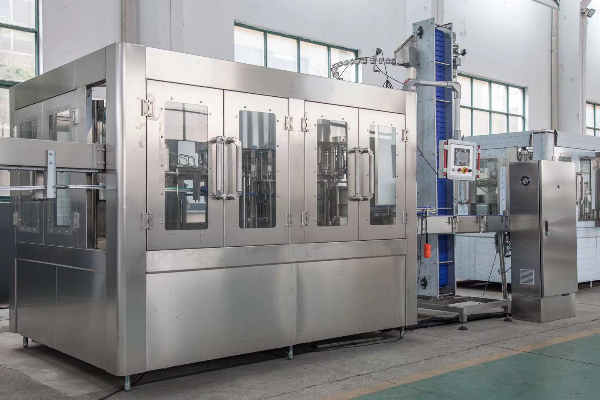
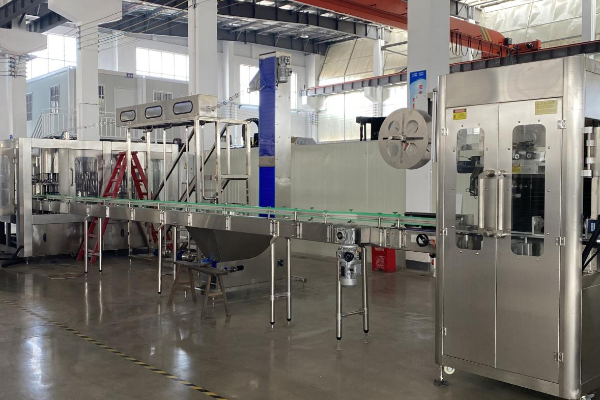
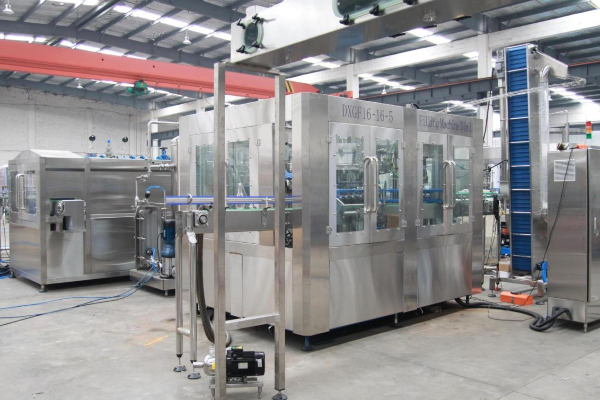
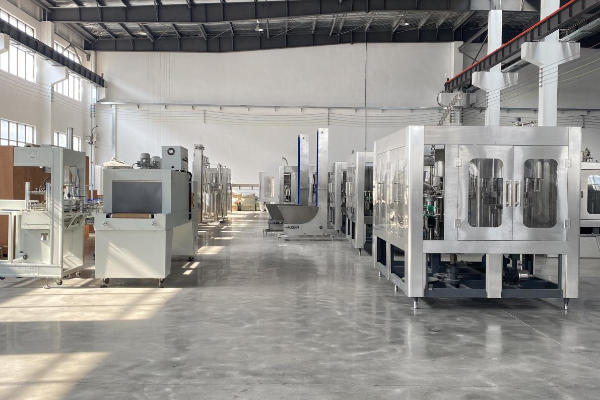
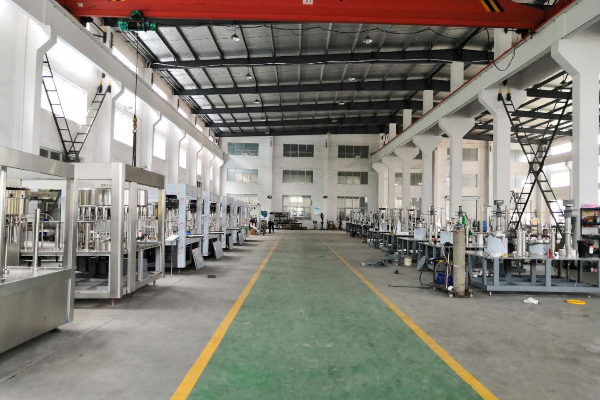
Mass Engineering & Manufacturing Facility
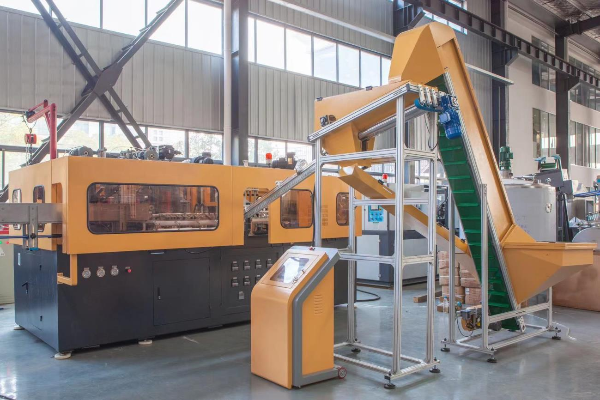
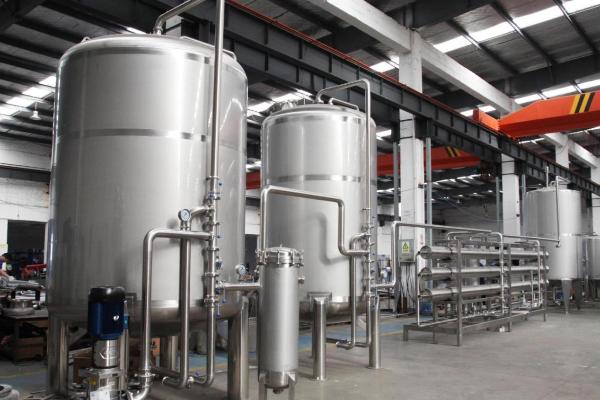
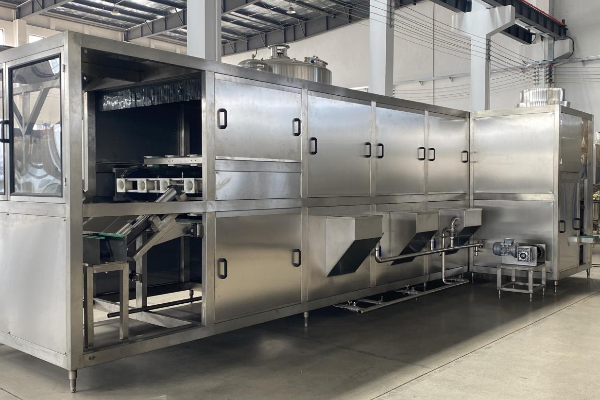
×
![Factory Image Enlarge]()
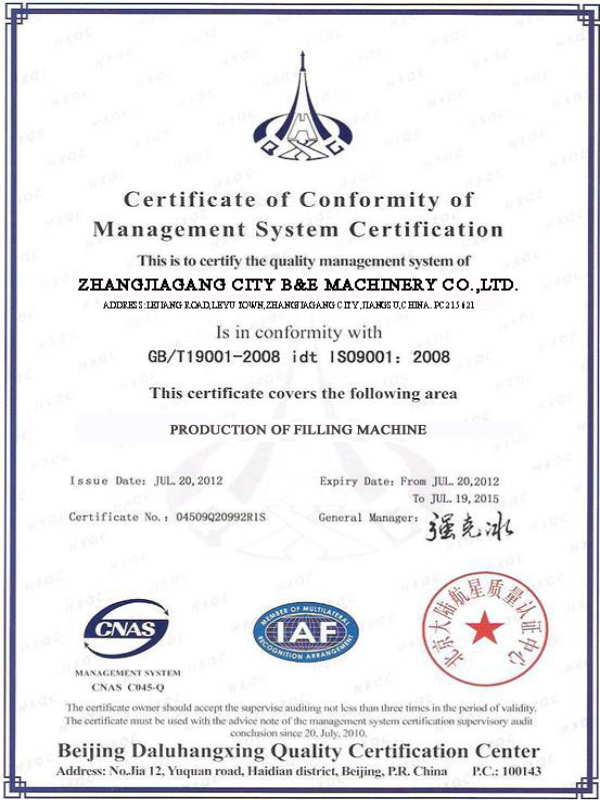
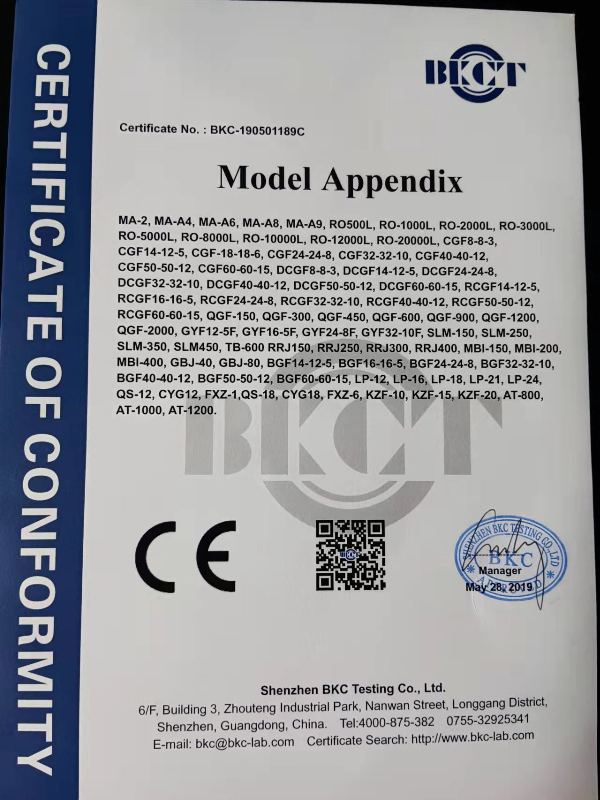
Certifications & Compliance Stack
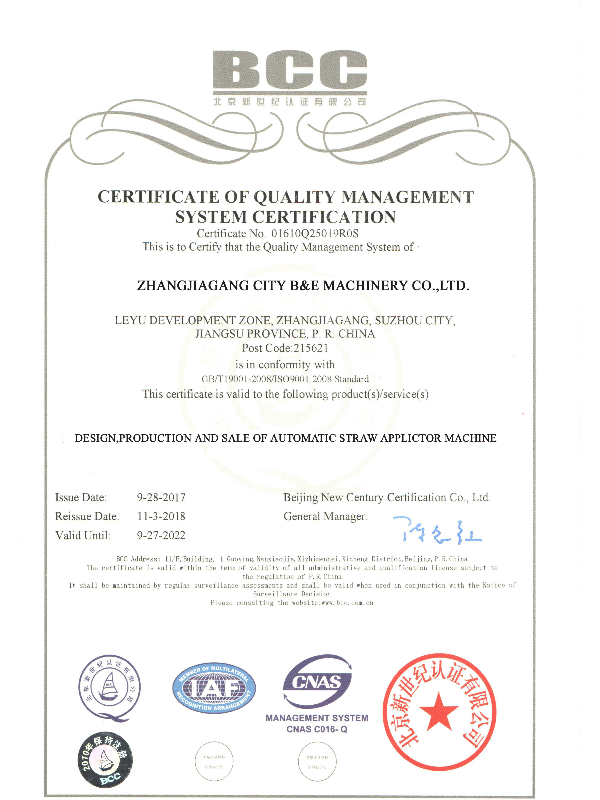
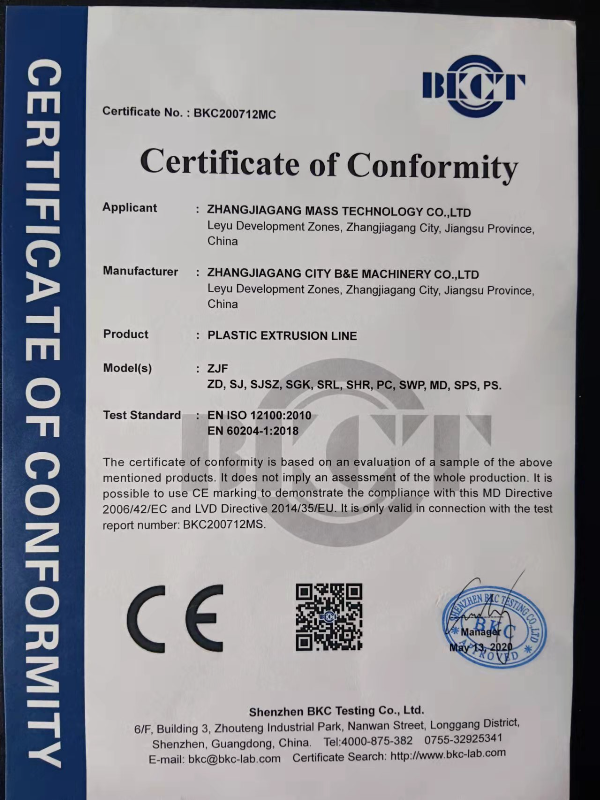
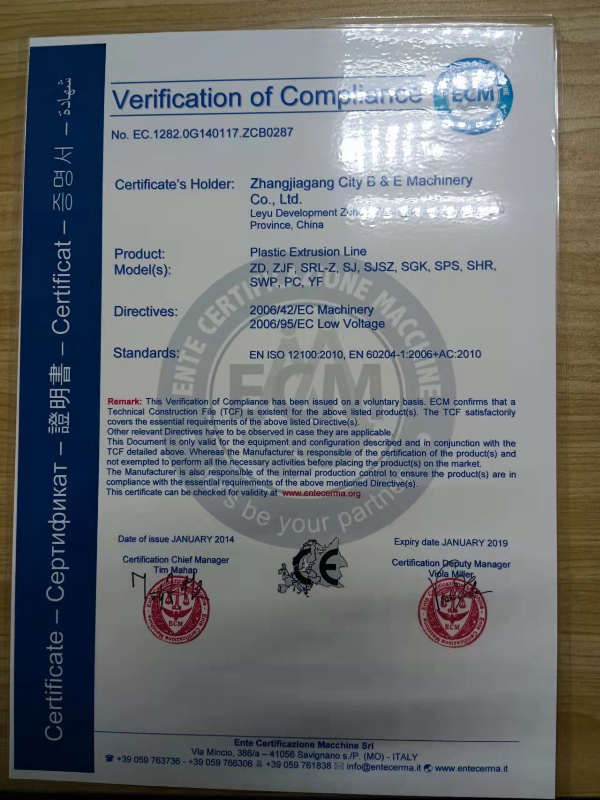
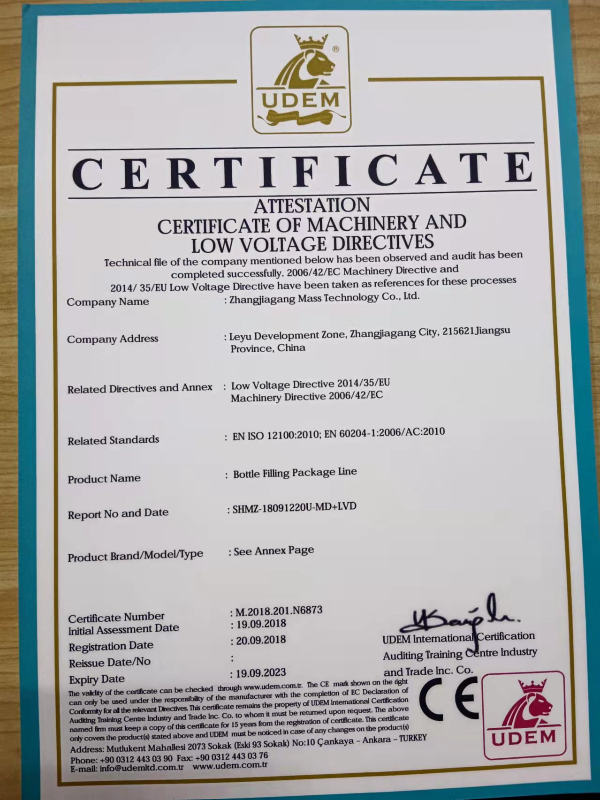
Mass beer filling machines carry the certifications your importer, distributor, and food-safety auditor will ask about up front. Each badge in the row below represents an active accreditation held at the corporate and product level.
CE
CE Marking
EU Machinery Directive 2006/42/EC
ISO 9001
ISO 9001:2015
Quality Management System
GMP
GMP-Aligned
Good Manufacturing Practice
FDA
FDA-Compatible
Food-grade contact materials
RoHS
RoHS
Hazardous substances control
Material Compliance — When 304 SS Suffices and When 316 Is Worth the Step Up
The choice of stainless-steel grade often goes unnoticed by buyers, but downstream corrosion resistance can turn out to be surprisingly important. AISI 304 stainless is the default approval grade, and works for most beer brands when run through standard CIP cycles. AISI 316 adds molybdenum, which is generally cost justifiable in high-chloride environments (such as coastal facilities, plants performing aggressive caustic CIP, or when working with sour-mash or kettle-sour beers).
We specify 304 SS for entry-level lines, blend 304/316 across mid-range, and employs 316 ubiquitously on industrial systems, where the total cost-of-ownership makes this a prudent choice.
Procurement Guide — Pricing, Lead Time & After-Sales
- 1. Pricing Benchmarks
- 2. Hidden Cost Framework
- 3. Project Timeline
- 4. After-Sales Guarantee
Most beer filling machine suppliers hold their prices behind in a quote form. Mass provides the working price ranges below because the brewery decisions you are about to make are too important to be made blindly. The numbers are FOB China, represent typical 2025 import-grade specifications, and corroborate independently against alibaba.com, made-in-china.com, ProBrewer classifieds, and US craft equipment vendors .
| Configuration | Throughput | Mass Price Range (USD, FOB China) |
|---|---|---|
| Entry-level semi-auto bottle monoblock | 2,000–4,000 BPH | $50,000 – $150,000 |
| Mid-range automatic bottle monoblock | 4,000–12,000 BPH | $150,000 – $400,000 |
| Industrial automatic bottling line | 12,000–24,000 BPH | $400,000 – $1,500,000 |
| Compact rotary can canning line | 2,000–8,000 CPH | $60,000 – $200,000 |
| Hybrid bottle + can monoblock | 4,000+4,000 / 6,000+6,000 | $200,000 – $600,000 |
To put this into perspective: small Chinese-built beer canning machine modules (~6-12K CPH) list at $20,000-$38,000 on made-in-china.com, while US-built craft canning systems start around $71,000 base from Twin Monkeys and other similar sources. Mass is priced within that range with tighter engineering tolerances than the former.
True Landed Cost — Hidden Cost Framework
Why Quoted Prices Routinely Under-Budget the Real Install by 40–80%
An industry-cited case study documented a $1.2M canning line quote ballooned into $2.1M Total Capital Investment after electrical, integration, and validation capital added. A Craft Beer Institute webinar series explores the unanticipated costs in canning equipment. Our quotations sort the costs so the excess does not unexpectedly increase your budget.
Electrical & utilities
Compressed air, chilled water, glycol, three-phase electrical regulation, dust management.
Civil & foundation
Ground drainage, pit sedation for depalletizers, bolt anchoring, seating pads.
Integration
Upstream tank termini, downstream pre-packer interface, labeler data transfer.
Approval & System sale
Factory Acceptance Test (FAT), Site Acceptance Test (SAT), HACCP plan integration, government approval.
Operator training
5–10 days on-site plus written multi-language SOPs.
Storing & handling consumables
For the first year: wear seals, valve cones, sensors.
Project Timeline — From Inquiry to First Filled Bottle
Inquiry → Quote
Application engineering reviews your hectoliter target, format, and facility footprint. 5–7 days.
Technical Design
Detailed line layout, P&ID, electrical and utilities map, FAT criteria. 10–14 days.
Manufacturing
Fabrication, assembly, factory wiring, PLC programming. 45–60 days standard, 60–90 days for custom configurations.
Factory Acceptance
Live water-fill FAT against contract criteria. Customer attendance encouraged. 5–7 days.
Sea Freight
Containerized shipping to your port. 30–45 days typical, depends on destination.
Site Installation
Mechanical install, electrical hook-up, utilities tie-in, water-fill SAT. 15–30 days.
Operator Training
On-site walk-through, CIP cycles, format changeover practice, troubleshooting drills. 5–10 days.
Why the Mass After-Sales Model Differs from the Industry Default
Buyers who have lived through imported-equipment frustration know the Reddit threads on poor instruction quality and slow parts response are not exaggerations. Our after-sales agreement is constructed expressly to eliminate those failure modes.
Worry-Free After-Sales Guarantee
2 Years
All-parts warranty across the entire machine — twice the industry default of 1 year
24 Hours
Engineer response on remote diagnostics, in your time zone
5 Days
International courier dispatch on stocked replacement parts
5–10 Days
On-site operator training with multi-language SOP manuals
Project Engineering & Planning Tools
Take the guesswork out of your capital expenditure. Utilize our data-driven engineering tools to calculate precise return on investment, select the optimal packaging formats, and map out your true landed costs.
Mass Beer Filling — ROI Calculator
Quantify your production efficiency. Input your current labor constraints and target throughput to calculate the exact payback period of transitioning to an automatic Mass isobaric filler.
Launch CalculatorBottle/Can/Keg Format Decision Quiz
Navigate our engineering decision matrix. Map your annual hectoliter volume and distribution strategy to determine the most capital-efficient starting format for your facility.
Start EvaluationTrue Landed Cost Estimator
Prevent budget overruns. Uncover hidden integration costs including electrical regulation, foundation work, and FAT/SAT validation to establish a 100% accurate capital expenditure.
Estimate CostsReady to Specify Your Beer Filling Line?
Send us your annual hectoliter target, format mix, and facility footprint. Our application engineers come back with a configuration recommendation, a transparent landed-cost estimate, and a Mass quotation within 5–7 working days.
Your ideal initial capacity is your maximal weekly demand divided by your desired hours of filling per week, with a 20-30% safety for changeovers and short stops. A 2,000 hl/year regional craft brewery would select 4,000 BPH or 4,000 CPH semi-automatic lines, while a 10,000 hl/year firm more naturally chooses 8,000 BPH or 8,000 CPH automatic ones. Mass application engineers perform this calculation against your actual case-pack profile and shift pattern as part of the quotation process, rather than as an afterthought.
Most fast-growing craft breweries begin with whichever style equipment their distribution channels require. Bottled packages still dominate on traditional retail and barroom accounts; canned formats have the edge on lightweight shipping, oxygen protection, and contemporary retail; keg systems maximize on-premise taproom profitability. Our Decision Matrix in the product line section maps recommendations for your annual volume levels. Mass hybrid platforms allow adding second format later without a second full second line, which the most common customer request from breweries seeking optionality.
Mid-range 4,000-12,000 BPH automatic bottling monoblocks are listed at $150,000-$400,000 FOB China, while industrial 12,000-24,000 BPH bottling lines are listed at $400,000-$1,500,000 depending on closure type, depalletizer scope, and CIP automation. Compact 2,000-8,000 CPH can canning lines are listed at $60,000-$200,000. These ranges are confirmed by published listings on alibaba.com, made-in-china.com and craft equipment US makers such as Twin Monkeys.
Standard configurations arrive in 4-6 months: 5-7 days quote, 10-14 days design, 45-60 days manufacturing, 5-7 days factory acceptance, 30-45 days sea freight and 15-30 days site install plus 5-10 days training. Custom layouts may add 15-30 days to the manufacturing time.
Every Mass beer filling machine warranty covers all machine parts for 2 years from commissioning, above the industry default of 1 year. Engineer response on remote diagnostics is committed at 24 hours globally, and stocked replacement parts shipped internationally within 5 working days. On-site visits are available under separate service agreements.
Yes. Mass hybrid bottling and canning monoblocks can use the same rinser, isobaric filler and PLC controls, with format-specific capper and seamer modules that are switched at changeover. The hybrid solution is optimal at 4,000+4,000 BPH/CPH or 6,000+6,000 BPH/CPH combined throughput. Across 8,000+8,000 BPH/CPH dual format throughput, smaller dedicated line running in parallel on the same PLC network often profits from a cost advantage.
Brewery automation industry analysis finds that actual installed systems typically run 40-80% higher than equipment quote when electrical upgrades, scope of integration, validation, training are included. A popular example reported a $1.2M canning line quote was $2.1M project total. The Hidden Cost Framework section above breaks down the six dimensions Mass quotes against – electrical & utilities, civil & foundation, integration, validation, training, and first-year spare parts – so surprises are all in line.
Getting lost in instructions, setup guides and language gaps is a common consumer complaint in Reddit reviews of imported homebrew-grade canning equipment. Mass is committed to 5-10 days of on-site operator training, multi-language written SOP manuals, video walk-throughs of each major procedure, and 24-hour engineer response channel for follow-up questions. Line documentation is not a checkbox at Mass; it is part of the line acceptance criteria.
Open filling introduces the beer to the ambient air during fill, absorbing 200-400 ppb oxygen and losing 20-30% of carbonation. Counter-pressure fills by pre-pressurizing the container with CO2 to match the fermenter, then under matched pressure fills with beer so neither CO2 nor O2 transfer across the meniscus. For beer reaching grocery shelf or export, counter-pressure is the only principle that can guarantee shelf life and aroma.