Get in Touch with Masstech

ALUMINUM CAN FILLING
Aluminum Can Filling Machine — 2,000 to 20,000 BPH | Masstech Manufacturer
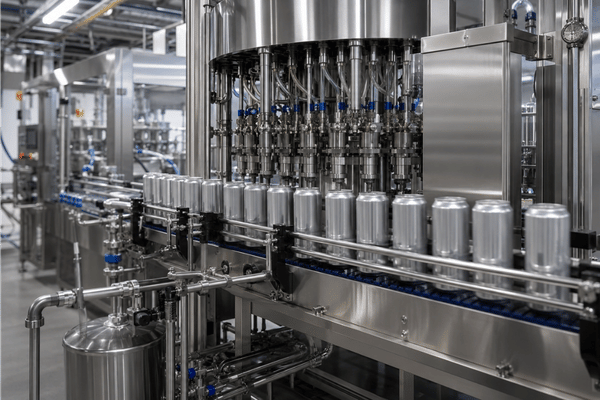
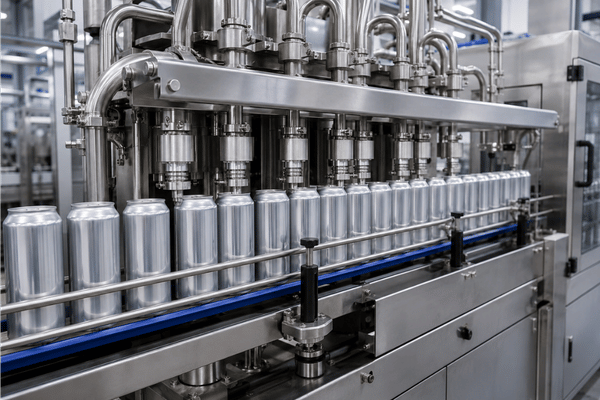
Aluminum can filling machines decide whether your carbonated soft drinks, beer, energy drinks, or juice arrive at distribution with target carbonation intact and dissolved oxygen below the staling threshold. Most foaming, CO2 loss, and short-shelf-life problems trace back to a mismatched filling method or an under-spec’d seamer, not to brand quality. Masstech’s CC GF series delivers 2,000-20,000 cans per hour across four filling methods on a single fully automatic hardware platform.
- 2 yr parts warranty
- 24 h / 5 d engineer response · spare parts SLA

2,000–20,000
BPH range
6 beverages
CSD · beer · juice · energy · tea · functional
4 methods
isobaric · counter pressure · flow meter · mechanical valve
±5 ml
fill accuracy
The Real Cost of Foaming, CO2 Loss, and Short Shelf Life — How Aluminum Can Filling Solves All Three
Three production losses quietly erode beverage canning margins more than capital cost ever does. Each has a specific upstream cause that the wrong filling method amplifies and the right one neutralizes.
/// 01
Foaming losses of 8-15% headspace volume when high-CO2 product hits a non-equalized can — the differential pressure flashes dissolved gas out of solution before the seamer arrives.
/// 02
Carbonation drop >0.3 vol within the filling window when the can is not pre-pressurized to match the product tank — measurable as flat mouthfeel by the second batch retest.
/// 03
Dissolved oxygen above 0.1 ppm accelerates staling reactions in beer and oxidative off-flavors in juice — industry research links 0.1 ppm to a 30-50% shelf-life reduction.
The three-stage solution
An aluminum can filling machine that addresses all three failures shares one design pattern: pre-fill CO2 purge, equalized chamber pressure during fill, and immediate seam after fill. The Masstech CC GF series implements this as a unified rinse-fill-seam monoblock with a star-wheel transfer that limits open-can dwell to under 4 seconds — the practical limit before atmospheric oxygen begins to ingress measurably.
Single-machine integration of rinsing, filling and seaming matters more for protecting product quality than raw filling speed. Two-machine layouts add transfer dwell that no upstream brewing or carbonation process can recover. Monoblock layout on the CC GF absorbs that risk by design.
Economically, the case is straightforward: every additional second between fill and seam adds measurable oxygen pickup and CO2 escape. A typical co-packer running 12,000 cans per hour over a single 8-hour shift fills 96,000 units; a 1% spoilage rate from foaming or DO ingress translates to roughly 960 cans of finished product written off per shift. Compounded over a quarter, that is a six-figure loss before any equipment cost is recovered.
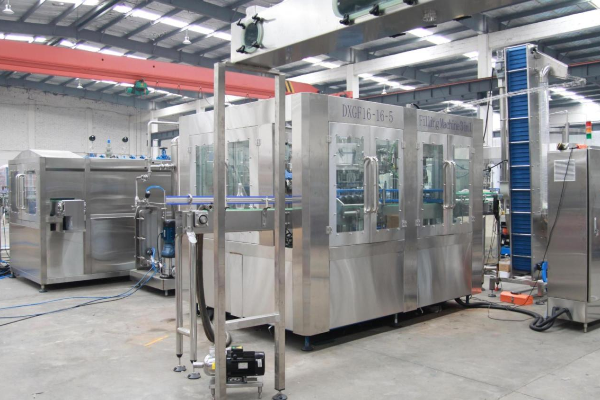
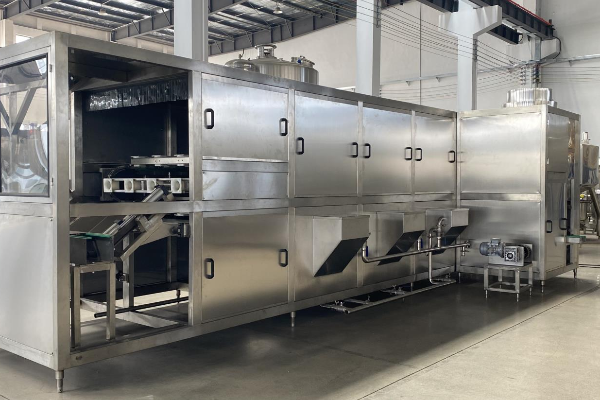
Masstech CC GF Series — Aluminum Can Filling Machine Specifications
The CC GF series ships in five filling capacity tiers from 2,000 BPH (single-head pilot scale) to 20,000 BPH (industrial CSD line). All models accept aluminum, tin, pop, and PET cans within the 50-99 mm diameter and 70-133 mm height envelope, covering 12 oz / 250 ml / 330 ml / 355 ml / 473 ml / 500 ml / 1 L can geometries. Each filling head and filling valve is independently calibrated at the factory acceptance test against the customer’s actual product.
| Model | Capacity (CPH) | Total Power (kW) | Footprint (m) | Weight (kg) | Best fit |
|---|---|---|---|---|---|
| CC GF 12-1 | 2,000 | 4.6 | 2.5 × 1.9 | 3,200 | Pilot / craft launch |
| CC GF 18-4 | 8,000 | 4.6 | 2.8 × 2.15 | 4,000 | Mid-volume CSD & energy |
| CC GF 24-4 | 10,000 | 5.4 | 3.1 × 2.5 | 4,500 | Regional beverage co-packers |
| CC GF 32-6 | 15,000 | 6.4 | 3.8 × 2.8 | 6,500 | National brand SKUs |
| CC GF 40 | 20,000 | 9.6 | 4.5 × 3.3 | 8,000 | High-throughput export lines |
Engineering note — material selection
Standard contact parts ship in SUS304 stainless steel, which meets food-contact regulations for water, CSD, beer, juice, and most energy drinks. Upgrade to SUS316 when your product contains chlorides above 200 ppm — examples include sports drinks with electrolyte blends and sodium-rich functional beverages — because molybdenum content (2-3% in 316) prevents pitting corrosion that 304 cannot withstand long-term in those chemistries.
Cross-Vendor Model Code Cheat Sheet
Aluminum can filler model codes diverge across major manufacturers — what King Machine calls GDF, Zonesun ships as ZS-CFS, XpressFill labels XF, and Masstech codes as CC GF. Buyers comparing quotes routinely struggle to map equivalent capacity tiers. Five vendor lineups appear below by realistic CPH band.
| Capacity (BPH) | Masstech | King Machine | Zonesun | XpressFill | Comac / Other |
|---|---|---|---|---|---|
| ~300 | — | — | — | XF4500C | Tapcooler Nanocanner |
| 2,000–3,000 | CC GF 12-1 | GDF 12-1 | — | — | Pegasus 8-1 V2 |
| 4,500–8,000 | CC GF 18-4 | GDF 18-4 | ZS-CFS 18-4 (4,500) | — | — |
| 10,000–15,000 | CC GF 24-4 / 32-6 | GDF 32-6 | — | — | Twin Monkeys Mancos CP |
| 20,000+ | CC GF 40 | GDF 40-6 / 54-6 | — | — | — |
Naming conventions and model lineups change year over year. Verify current model codes with each vendor before issuing an RFQ. This table is published as a buyer-side comparison aid and is not an endorsement of any vendor.
Filling Method Decision Matrix — Isobaric vs Counter Pressure vs Mechanical Valve vs Flow Meter
The four production-grade filling methods on the CC GF platform each solve a different combination of carbonation, accuracy, and capital constraints. Choosing the wrong method costs more than the equipment itself, because corrective rework on a misfilled batch can wipe out a quarter of margin in one shift.
Isobaric filling — sometimes labeled equal-pressure filling — is the workhorse of beverage canning. It pre-pressurizes the empty can with CO2 to match the product tank, then opens the fill valve so liquid flows under zero pressure differential. That eliminates the gas flash that drives foaming on standard atmospheric machines.
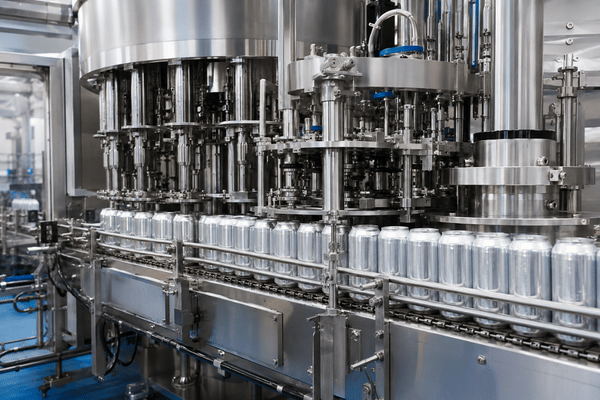
Isobaric
- Best fit beverage CSD, beer, energy
- CO2 tolerance Up to 4.5 vol
- Fill accuracy ±5 ml
- Speed/head High
- Capex tier $$$
- Maintenance Medium

Counter pressure
- Best fit beverage Premium beer, kombucha
- CO2 tolerance Up to 5.0 vol
- Fill accuracy ±3 ml
- Speed/head Medium
- Capex tier $$
- Maintenance Medium
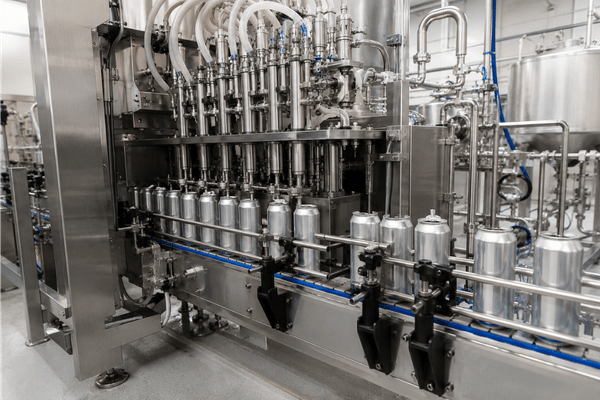
Mechanical valve
- Best fit beverage Still juice, tea, water
- CO2 tolerance None
- Fill accuracy ±10 ml
- Speed/head High
- Capex tier $
- Maintenance Low
Flow meter
- Best fit beverage Premium energy, functional
- CO2 tolerance Low
- Fill accuracy ±2 ml
- Speed/head High
- Capex tier $$$
- Maintenance Higher
“Counter pressure machines typically take more CO2 and compressed air to run than atmospheric lines.”
The dissolved-oxygen myth most filling vendors won’t address
One claim repeats across vendor brochures: “counter pressure filling delivers lower dissolved oxygen.” Industry-side research from Twin Monkeys, Wild Goose Filling, and Craft Brewing Business contradicts this directly — DO is decided primarily by your upstream brewing or de-aeration process, not by the filler type.
Counter pressure does help when CO2 retention is the priority and your product can absorb a 15-25% higher gas-and-air consumption budget. For most carbonated drink co-packers running CSD and energy drinks, isobaric filling on the CC GF 18-4 hits the same outcome with a leaner utility load and faster filling speed per head.
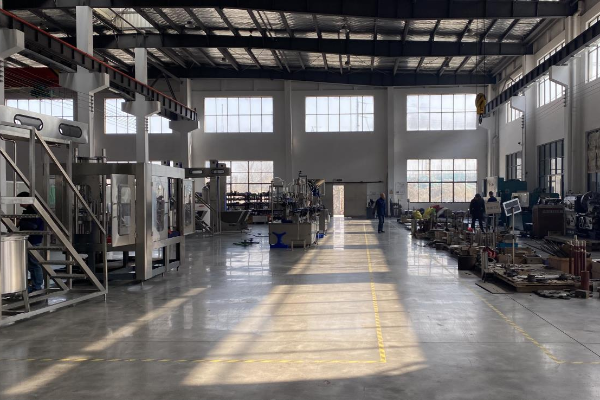
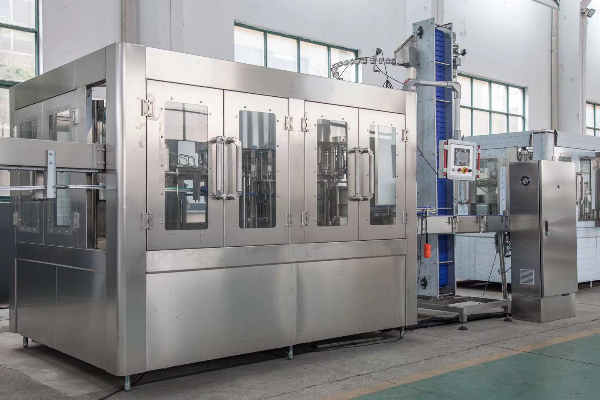
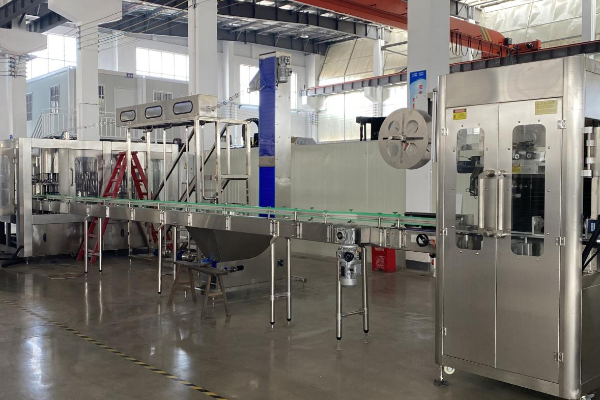
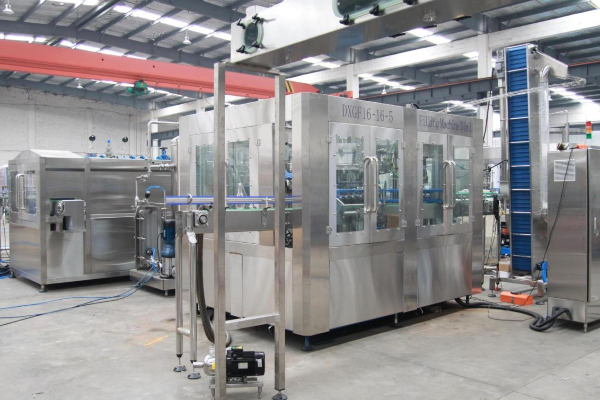
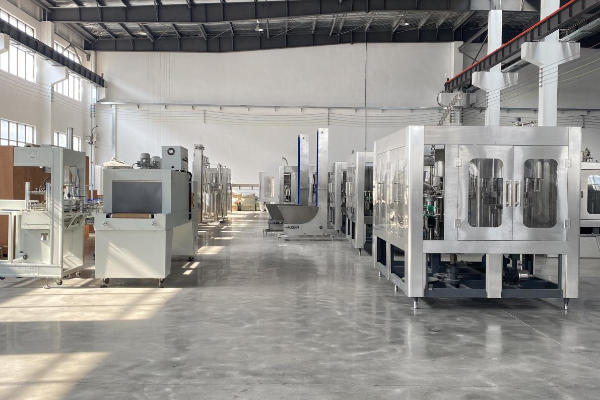
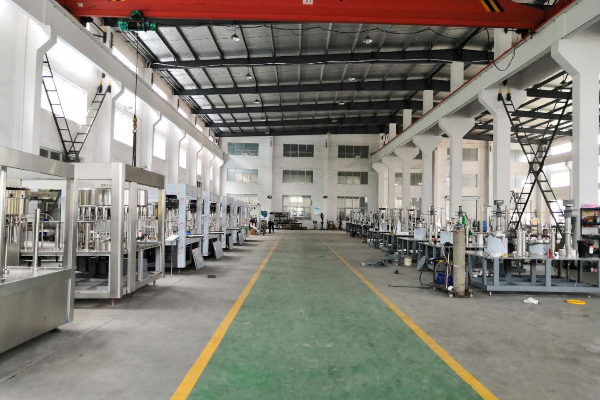
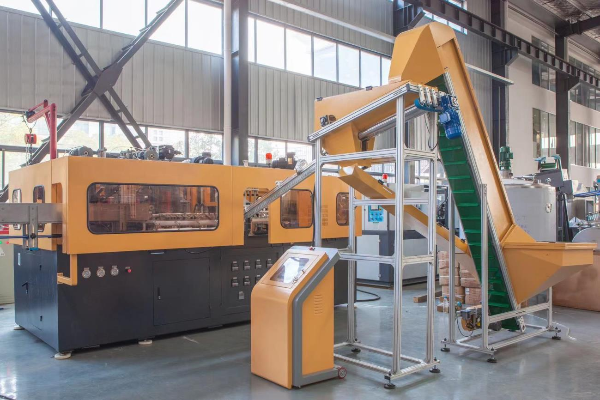
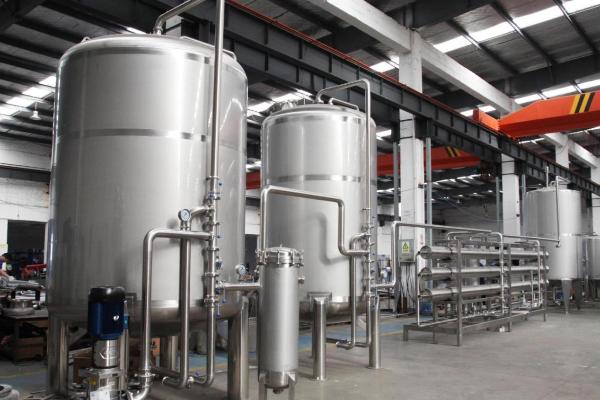
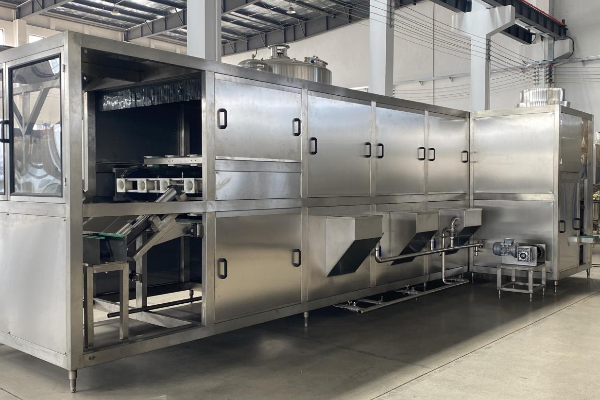
Aluminum Can Filling Manufacturing Facility
Aluminum Can Filling vs PET Bottle Filling — Performance Comparison
Container choice changes filling-line economics more than most operations forecasts capture. Aluminum carries higher unit material cost than PET in most regions, but extends shelf life by 3-6 months on light-sensitive beverages and recycles at roughly twice the rate. Trade-offs rarely turn on the filler itself — they turn on distribution and brand positioning.
Aluminum can (CC GF)
Unit material cost
USD 0.06–0.12 per 12 oz can
Light-block protection
100% opaque (full shelf-life benefit)
Transport weight per 1,000 units
~14 kg (12 oz)
Recyclability rate (US 2024)
~45% (Aluminum Association)
CO2 retention to retail shelf
3-9 months typical
Capex parity (filler equivalent)
CC GF series
Best fit
Premium CSD, beer, energy
PET bottle (Masstech DC GF)
Unit material cost
USD 0.03–0.07 per 500 ml bottle
Light-block protection
Requires UV-block additive or sleeve
Transport weight per 1,000 units
~22 kg (500 ml empty + cap)
Recyclability rate (US 2024)
~29% (NAPCOR PET)
CO2 retention to retail shelf
2-4 months typical (PET permeability)
Capex parity (filler equivalent)
DC GF series same tier
Best fit
Water, juice, mass-market CSD

For a beverage launching with premium positioning or a 6+ month shelf life expectation, aluminum is usually the cheaper container after spoilage and remerchandising costs. PET wins on raw unit price and on bottle shapes that reinforce brand silhouette in matched PET filling lines.
Customer Results — Turnkey CSD, Beer, Energy & Juice Lines
Co-packers and beverage manufacturers shipping with Masstech production lines fall into three operating profiles: brand owners moving from contract canning to in-house, regional CSD producers expanding from PET into aluminum, and craft brewers stepping from a 300 CPH starter machine to a 4,500-8,000 BPH industrial filler.
$0.10–$0.18
/ can
In-house aluminum can filling cost (after CapEx) for 12-16 oz beverages — versus an industry-cited $0.35-$0.50 / can for mobile or contract canning. Mobile-to-in-house break-even is typically reached in the 3,000-6,000 cans/week production range, depending on labor cost and packaging negotiated rates.
Get Instant QuoteIndustry-average benchmark from Brewery CPA canning-line ROI analysis. Verify with your own labor and utility cost inputs before sizing.
Beverage Applications
- Carbonated soft drinks
- Beer & ale
- Energy drinks
- Fruit juice & tea
- Functional & sports beverages
- Sparkling water & kombucha
Platform Operating Decisions
Two operating decisions repeatedly drive higher actual ROI on the CC GF platform: pairing the filler with the matching depalletizer to keep the line fed at full speed, and validating SUS grade selection against your actual product chemistry rather than against a generic “food-grade” specification. Both decisions are covered in the Masstech turnkey scope.
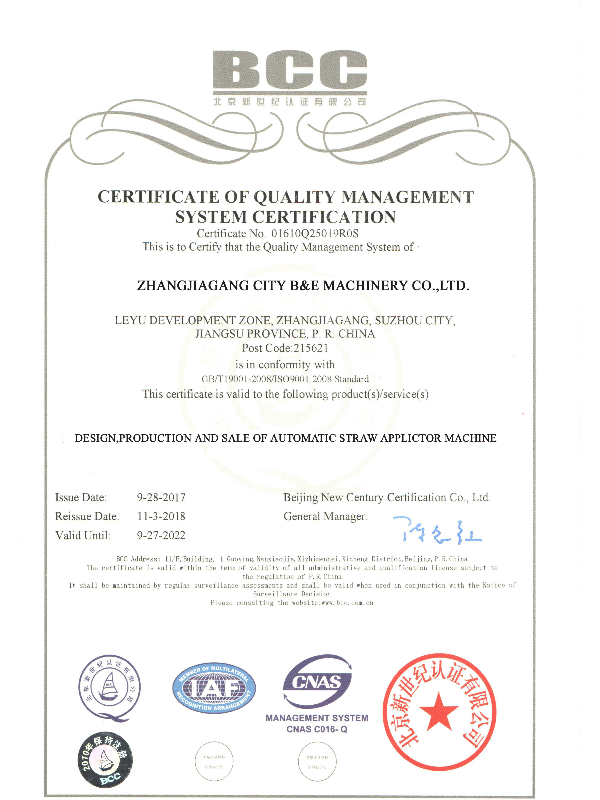
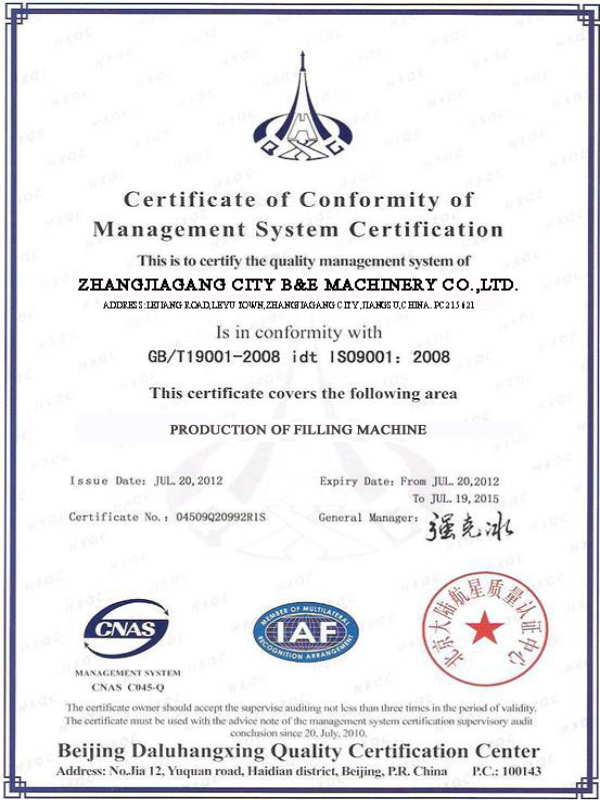
Certifications, Materials, and Compliance
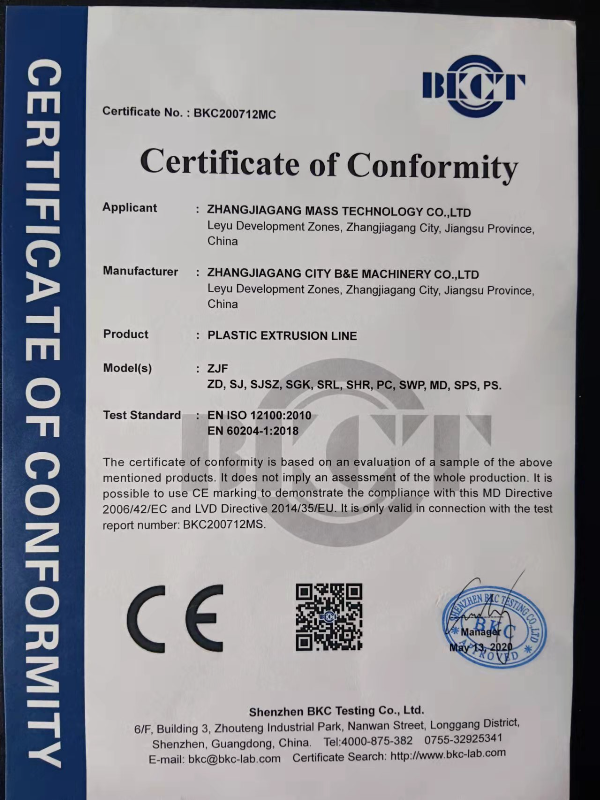
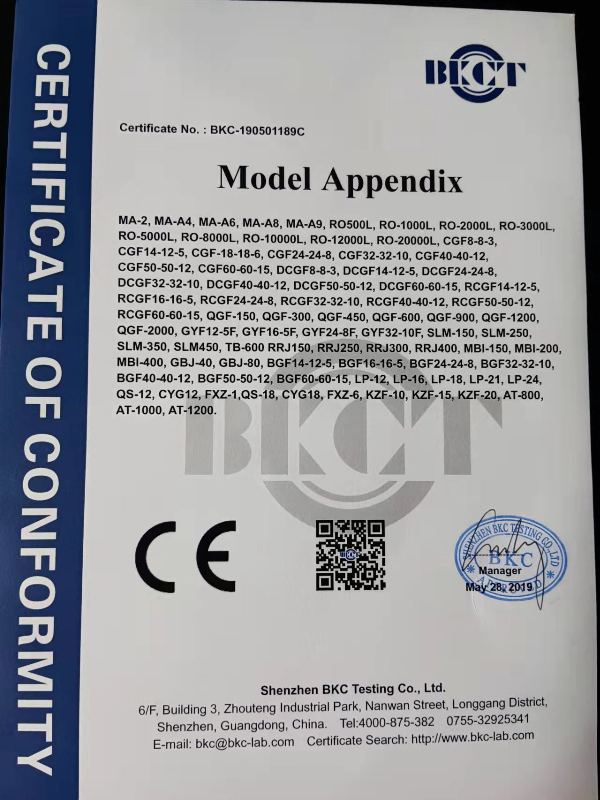
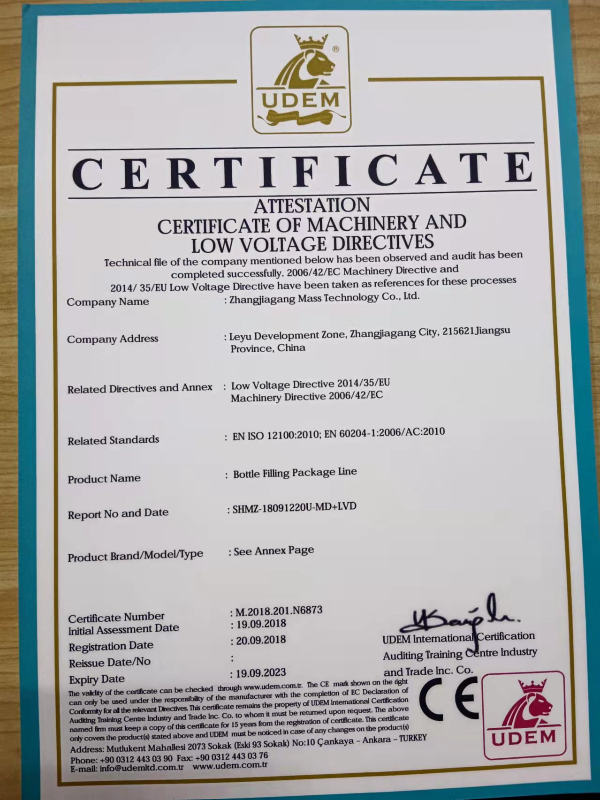
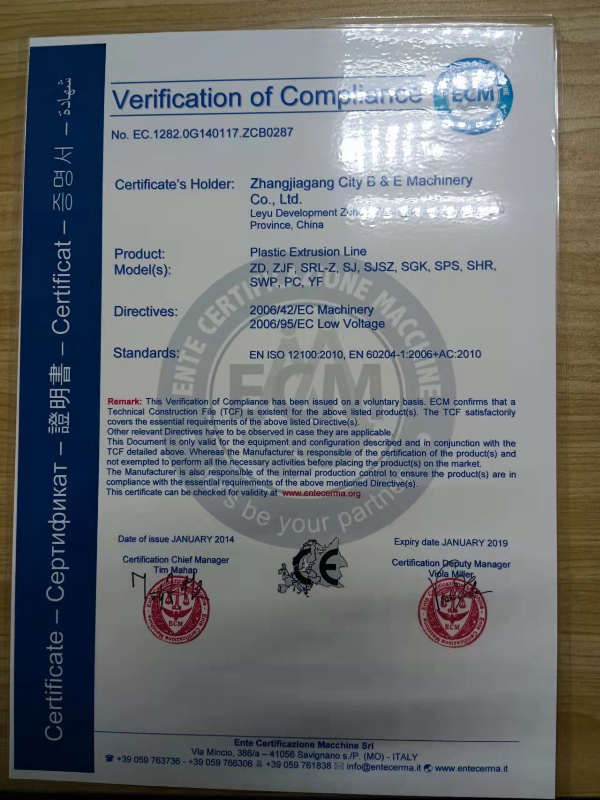
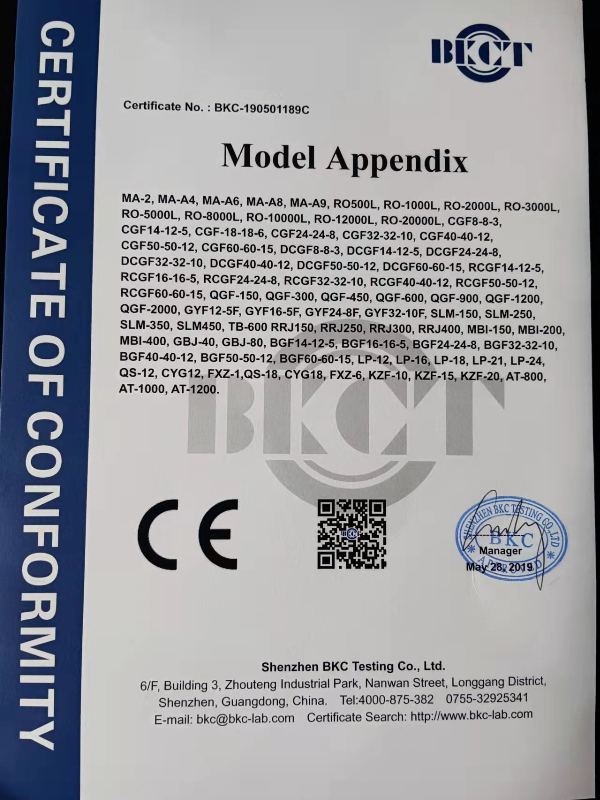
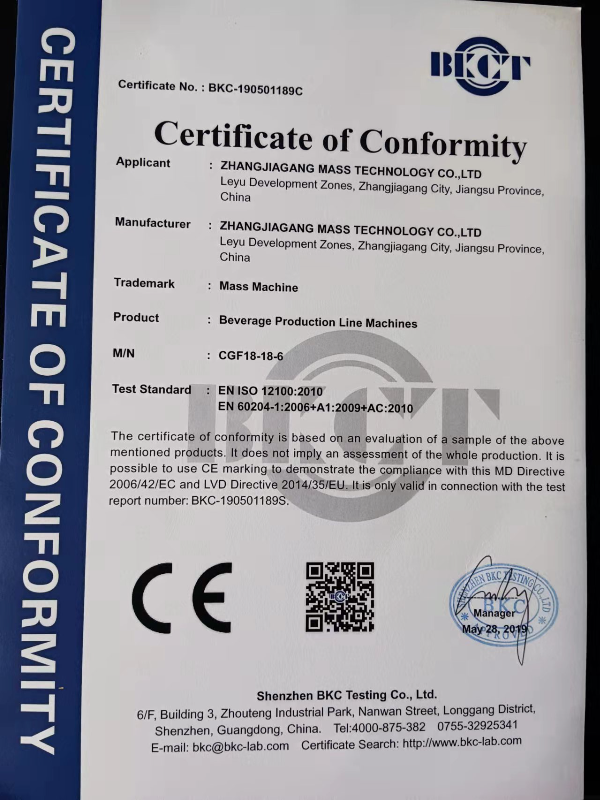
Beverage filling equipment must meet contact-material, electrical, and pressure-vessel standards in the destination market — buyers who skip the verification step often re-do their due diligence under audit pressure. Masstech ships every CC GF unit with a full document set tied to the specific machine serial number.
CE marking
Machinery Directive 2006/42/EC
ISO 9001
Quality Management System
SUS304 / 316
Food-contact stainless steel
CMI 202 / 211
Can Manufacturers Institute spec
FDA 21 CFR 175
Indirect food additives compliance
“We test every CC GF filler on a 24-hour run with the customer’s actual product before final shipment. The factory acceptance test is what catches the 1-in-15 issues that bench testing alone misses — undersized seamer torque on lid suppliers we haven’t run before, or a CIP cycle that needs an extra 20 minutes for a high-pulp juice.”— Masstech Engineering Team, Zhangjiagang facility
Procurement Guide — Pricing, Lead Time, and After-Sales
Three buyer questions decide whether a beverage filling machine becomes a quoted line or a paid-for-and-installed asset: what is the realistic price band, when does the line ship, and what happens when something breaks at 2 AM. Masstech publishes a tier pricing range so buyers can budget before requesting a custom quote.
| Tier | Capacity range | Indicative installed price (USD) | Typical buyer profile |
|---|---|---|---|
| Basic | 2,000-3,000 BPH (CC GF 12-1) | $25,000-$60,000 | Pilot launch, craft brewer step-up |
| Mid | 8,000-15,000 BPH (CC GF 18-4 to 32-6) | $80,000-$180,000 | Regional brand & co-packer |
| High-End | 20,000+ BPH (CC GF 40) | $200,000-$320,000 | National SKU & export volume |
Indicative ranges include the filler-seamer monoblock, integrated rinser, and basic conveying. Final price varies with depalletizer scope, automation level, regional duties, and FOB vs CIF terms. Industry references for canning-line totals: $100-300K for fully installed and integrated systems is widely cited by brewery operations forums.
| Stage | Working days | Notes |
|---|---|---|
| Order confirmation & deposit | 1-3 | 30% deposit standard |
| Production & assembly | 45-75 | CC GF 12-1 to 32-6 typical |
| Factory acceptance test | 3-5 | Live run on customer-supplied product |
| Sea freight (origin to port) | 15-45 | Asia-EU 30-40 days; Asia-NA 18-25 days |
| On-site installation & training | 5-10 | Masstech engineer dispatched |
What separates the Masstech aluminum can filling line from same-platform alternatives
Masstech ships with quantified service SLAs that buyers can hold the supplier to in writing:
24-hour engineer response window
Replacement parts dispatched via international courier within 5 working days
And a 2-year parts warranty on the full machine.
Interactive Aluminum Can Filling Engineering Tools
Capacity Calculator
Accurately estimate your production throughput based on can size and machine specifications. Optimize your packaging line efficiency instantly.
ROI Calculator
Evaluate the financial viability of your equipment investment. Easily calculate payback periods and project long-term profitability.
Filling Method Selector
Find the optimal filling technology tailored to your specific beverage types, carbonation levels, and hygiene requirements.
FAQ — Aluminum Can Filling Machine
How much does an aluminum can filling machine cost?
Indicative installed pricing runs $25,000-$60,000 for 2,000-3,000 BPH pilot lines, $80,000-$180,000 for 8,000-15,000 BPH mid-tier production, and $200,000-$320,000 for 20,000+ BPH high-throughput configurations. Industry forums regularly cite $100,000-$300,000 as the realistic full-installation total for craft and regional production lines.
Can the machine fill both aluminum and PET cans?
Yes — the CC GF series accepts aluminum, tin, pop, and PET cans within the 50-99 mm diameter and 70-133 mm height envelope. Switching between can materials requires a recipe change on the HMI plus a 15-30 minute mechanical changeover for height adjustment.
What is the difference between isobaric and counter pressure filling?
Isobaric and counter pressure both maintain equalized gas pressure between the product tank and the can during fill, preventing carbonation flash-off. Counter pressure typically delivers a slightly tighter ±3 ml accuracy and handles up to 5.0 vol CO2, at the cost of higher gas and compressed-air consumption. Isobaric is the standard choice for CSD and most beer applications running ≤4.5 vol CO2.
How does the line handle high-CO2 beverages without foaming?
Three settings drive foam-free filling on high-carbonation product: pre-fill CO2 purge to displace air from the can, equalized chamber pressure during fill within ±0.05 MPa, and a controlled venting rate at the end of fill. All three settings ship calibrated to your declared CO2 volume on the FAT (Factory Acceptance Test) prior to shipment of the CC GF series. Downstream, the can seamer is timed to receive the filled can within 4 seconds, sealing the lid before measurable oxygen ingress occurs.
Can the line scale from a pilot batch up to a national-distribution volume later?
Yes — the CC GF platform is designed for staged capacity expansion. A buyer launching at CC GF 12-1 (2,000 BPH) can later upgrade to CC GF 18-4 or CC GF 24-4 by adding fill heads, replacing the seamer turret, and extending the conveying. Many co-packers and regional brands choose this path rather than buying overcapacity on day one. Same upstream depalletizer, rinser, and downstream packaging integrate with all five CC GF capacity tiers.
What is the dissolved oxygen target after sealing?
Industry research links 0.1 ppm dissolved oxygen to a 30-50% shelf-life reduction in beer and to oxidative off-flavors in juice. Most production-grade aluminum can filling lines target ≤0.1 ppm post-seal; advanced craft breweries push to parts-per-billion using upstream de-aeration. Filler choice is one input among several — your brewing or carbonation process drives the larger share of the final DO outcome.
How is the machine cleaned (CIP)?
CC GF units support automated CIP (clean-in-place) cycles run from the HMI, typically a 45-90 minute sequence of caustic, intermediate rinse, acid, and final rinse. CIP frequency depends on product changeover schedule — daily for high-pulp juices, every 2-3 days for filtered CSD and beer.
What is the warranty and parts lead time?
Every CC GF unit ships with a 2-year parts warranty and a 24-hour engineer response window. Replacement parts are dispatched via international courier within 5 working days of confirmed need. Both terms are written into the supply contract, not stated as best-effort.
How does the Masstech CC GF compare to King Machine GDF or Zonesun ZS-CFS?
CC GF, GDF, and ZS-CFS lines share the Zhangjiagang OEM platform and deliver comparable hardware specifications at equivalent capacity tiers. Differentiation runs through service-level commitment, factory acceptance testing on customer product, and the published tier-pricing transparency above. Buyers should request the same FAT scope from any OEM-platform vendor before comparing quotes.