Get in Touch with Masstech


A working brewer’s side-by-side comparison of the two prevailing fill methods – built around dissolved o×ygen pickup, throughput, real CapE× tiers, and the operational pitfalls that would only appear in the ever-shrinking universe of forum threads.
Quick Specs
| DO pickup, counter pressure (well-tuned) | 10–50 ppb |
| DO pickup, gravity / atmospheric | 100–300+ ppb |
| Counter pressure CPM, small commercial | 20–30 cans/min |
| Counter pressure CPM, rotary commercial | 60–300+ cans/min |
| Fill pressure (typical) | 8–12 psi, range 3–15 psi |
| Reference standard (DO) | ASBC Beer 34 — Dissolved Oxygen |
| 2025 BA craft can share | 78% of packaged volume |
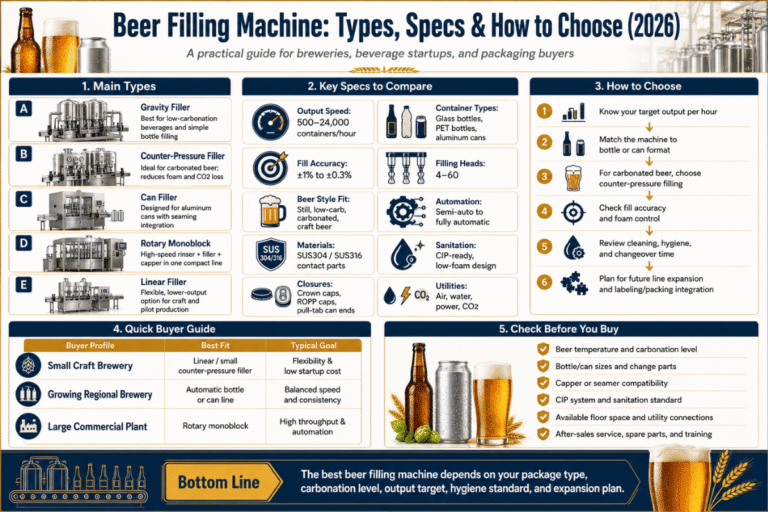
Counter pressure versus gravity beer filling is the decision that quietly determines how a brewery’s product tastes three months later. The choice influences oxygen pickup, carbonation retention, capital costs, operator skills, and what containers a craft packaging line can pack. This comparison proves both methods in seven categories, with exact figures and a tier-aware CapEx framework, to tell brewers, homebrewers, and engineers what system best fits a given batch.
If you want the equipment side of things and not the comparison, click here to shop professional brewing equipment for commercial through industrial scales of craft CP and atmospheric filling.
At a Glance: Counter Pressure vs Gravity Beer Filling
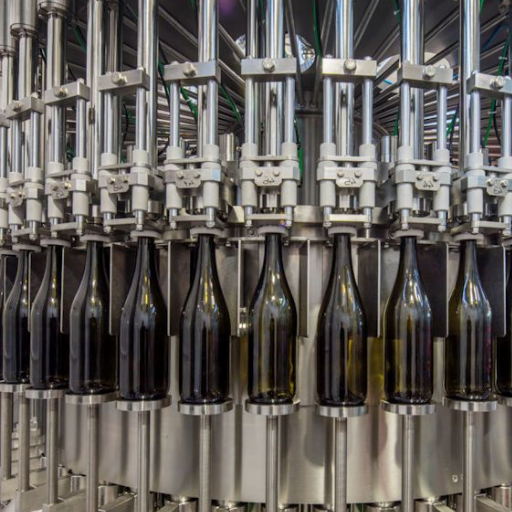
The headline differences are found in four properties: beer oxygenation, fill rate, equipment CapEx, and skill required. Counter pressure (sometimes called by trade names like isobaric or counter flow filling) first seals the container, fills it with carbon dioxide to displace air, puffing it up to match the pressure in the fermenter or run tank, then scores the beer into the container. Gravity and atmospheric fillers push beer into an open container under head pressure, with the container venting a mixture of oxygen and nitrogen into the room.
| Dimension | Counter Pressure | Gravity / Atmospheric |
|---|---|---|
| DO pickup (typical) | 10–50 ppb (well-tuned) | 100–300+ ppb |
| Carbonation loss | Near-zero with snift cycle | 2–10% per fill (foam-driven) |
| Throughput, small commercial | 20–30 CPM (4-head) | 40–60+ CPM (6-head atmospheric) |
| CapEx, homebrew | ~$50–$1,000 | ~$30–$200 |
| CapEx, commercial | $5,895–$99,000+ | ~$10,000–$30,000 |
| Operator skill curve | Steep at first, repeatable after | Feel-based, longer to master |
| Best-fit beverages | Hoppy / nitro / high-carb / warm product | Cold, low-carb, stable styles |
It all boils down to this: counter pressure can pay for itself over time in product loss, dissatisfaction, and shelf life, so long as you are concerned with operational volumes that won’t bankrupt the CapEx. Gravity always wins speed per dollar at small commercial scale unless using a style where pathophysiology doesn’t need to be part of the equation.
How Each Method Works: The Mechanics of Counter Pressure, Counterflow, and Gravity Filling
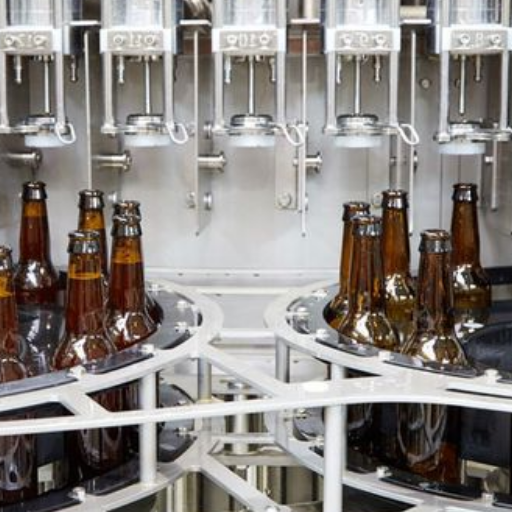
Counter pressure filling- also called isobaric or counterflow- involves closing the fill-off valve on a CO2 blanket and bottle to get it to match the brewery pressure before beer ever moves from source vessel to container. Gravity filling- and at some loss or profit the atmostpheric process- pours beer into an open vessel, relying on flow restrictors and skill to avoid excessive raucousness.
What is counter pressure filling?
Counter pressure filling involves evacuating the package of the ambient air with CO2, pressingurizing it to match the fill vessel, then filling while monitoring the pressure through the vent, and optionally reducing it slowly via a vent sleeve. It never actually allows the package to see ambient, so DO pickup is added as insignificantly as the operator drives it to be. The match (literally the “counter” in counter pressure) keeps CO2 dissolved in the beer until package depressurization after the seal.
Here is the canonical 8-step CP can-filling sequence used across craft brewery and commercial lines:
- The beer is pumped through a cavitated pneumatic pump, into a bowl or direct fill spud.
- The can or bottle moves under the fill head.
- The package is sealed around the fill head with an inflatable gasket.
- The package is flushed with co2. Since heavier than air, the co2 will sink to the bottom of the package relative to the surrounding atmosphere, thus pushing the residual oxygen lift.
- A CO2 valve pressurizes the vessel to brite tank pressure. According to Henry’s LawCO2 solubility in beer is directly proportional to the gas pressure above the beer — so matching pressure maintains carbonation.
- The fill valve opens. Beer flows in and a vent valve releases the displaced gas while pressure is maintained.
- Once the vessel is filled the snift valve gradually lowers pressure to atmospheric, controlling foam outflow.
- The container moves to the seamer or capper.
📐 Engineering Note — Why Pressure Matching Holds Carbonation
Henry’s Law states that the solubility of a gas in a liquid is proportional to the partial pressure of the gas above the liquid. A 12 psi brite tank provides enough pressure to keep CO2 dissolved in beer, when the headspace is then depressurized to atmospheric (0 psi gauge) a certain amount of CO2 will break out as foam. Counter pressure fills work by simultaneously maintaining the same fill-side and headspace pressure during fill, preventing foam outflow, then slowly depressurizing to allow the dissolved CO2 to stay in solution.
Gravity filling is a process similar to the one described here, where beer is drawn into an open vessel from a fill head near the bottom of the vessel and a bottom -mounted fill head instead of a side-fed. Beer is pushed through from a pressurized vessel by CO2, but the vessel itself is exposed to atmospheric pressure at the mouth, so contact is with “normal” air rather than circulating inert gas. Although a little more leeway and user input is involved, the same parameters apply, and the system is roughly equivalent to a counter-pressure canning line.
A close relative sometimes applied to bottles is the term “counter flow bottle filler”. Homebrewers on homebrewtalk and similar forums suggest “you displace all the air with CO2 and fill to the top of the neck, under the sealing stopper” — which is also a counter pressure fill, on the smallest scale. European-born labels like “isobaric” are also applied to commercial atomizers, from Italian and German engineers.
⚠️ “Gravity” Has Two Unrelated Meanings in Brewing
Gravity filling is the general pressureless field to which these descriptors apply; beer flows into an open container due to its internal hydrostatic pressure with no gas pressure equilibrium between fill head and fill vessel. Original gravity and low gravity both describe metrics of unfermented wort or finished beer density. The two have almost the same word, and otherwise nothing in common. If you arrived here looking for either reading, those are wort-density issues, not packaging issues — the topics are discussed elsewhere.
Dissolved Oxygen Pickup: The Defining Quality Difference
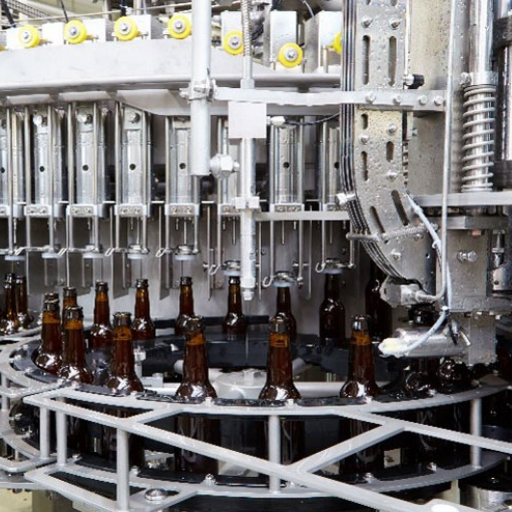
If a brewer chose only one aspect of filling pressure to demonstrate the importance of counter pressure fills they should choose dissolved oxygen pickup. Oxygen is the number one factor influencing stales in packaged beer and counter pressure fills deliver the most measurable advantage over other filling techniques in this metric.
How much oxygen does gravity filling add?
Laboratory data and vendor metrics keep the best measures of this gap in the 100-300+ ppb range, depending on beer temperature, pack-out speed, vessel shape, and operator skill. Counter pressure systems consistently have values in the ten-fourty ppb range. Both are wide gaps, one so wide that it amounts to a double, and from the shelf-life decade perspective, this difference translates directly to weeks.
10–50 ppb
Counter pressure, well-tuned
100–300+ ppb
Gravity / atmospheric
<100 ppb
Brite tank target before filling
The <0.05 ppm (50 ppb) as a typical brewery DO target shows up in the Hach dissolved oxygen brewing reference, with premium brewers going even lower. A 2016 paper from the World Brewing Congress on which Bigham et al presented at ASBC records a “Finish beer in brite tank <100 ppb O2″ target – that is whatever the fill method is adding, the brewer is starting at 100 ppb and the fill head has yet to touch the container.
Commercial CP performance can go much lower than textbook targets. People on r/TheBrewery have experienced”roughly 10-15 ppb pickup during canning, measured from shaken cans five minutes after fill” – only achievable with well-maintained counter pressure gear, multiple CO2 purges, and disciplined operators.
“When carbonated beer is bottled, the shelf-life clock starts ticking. With very few exceptions, dissolved oxygen in beer increases when beer is transferred to a bottle.”
Total Package Oxygen, or TPO, is what breweries now use to combine dissolved oxygen and headspace contribution into a single number. TPO is not a single ASBC standard – it is derived from a DO measurement (per ASBC Beer 34) plus a headspace measurement, often from inline instrumentation like the Anton Paar series or Hach Orbisphere 6110. When brewers compare fill methods, TPO is the more complete and honest single-number comparison; looking only at DO pickup underestimates a significant disadvantage of gravity fills due to the higher air volume left in the headspace after gravity fill.
📐 Engineering Note — TPO Target by Style
Different style sensitivities call for different industry-recommended TPO values. Shelf-stable lagers and pilsners can handle higher TPO (100-200 ppb) and shelf for 6-9 months with acceptable quality. Hoppy IPAs, where hop aroma compounds are highly oxidation-sensitive, need sub-50 ppb TPO to retain aroma for more than 3 months. Hazy IPAs, the most demanding segment, drive the biggest investment in premium CP equipment.
Throughput, Carbonation, and Foam Control: A Performance Comparison

On a per fill head basis, atmospheric / gravity fill is faster. Per acceptable unit of product, the photo reverses – for foaming or DO-sensitive products the more rapid atmospheric is slower. The important numbers are both and choosing wrong one for your product line banks either cash or inventory.
| Class | CPM (cans/min) | Notes |
|---|---|---|
| Single-head atmospheric (entry) | 8–15 CPM | 1 operator, smallest footprint |
| 4-head counter pressure (small commercial) | 20–30 CPM | 1–2 operators, ~55″×20″ footprint |
| 6-head atmospheric (scaled) | 40–60+ CPM | 2–3 operators, dual-lane configurations exist |
| Rotary counter pressure (industrial) | 60–300+ CPM | Multi-operator, dedicated line |
A 4-head 25 CPM CP system yields 1,500 cans/hour. A 6-head 60 CPM atmospheric yields 3,600 cans/hour. The atmospheric appears more than twice as fast on paper – but if that atmospheric is producing 5% foam-driven product loss versus the CP’s 1% the perceived output difference diminishes and the DO difference increases. Over a 30-bbl IPA batch with shelf life considerations in mind, the slightly slower CP line is the better long term investment.
Which leads to carbonation retention is a direct side effect of the mechanism. It’s a fact that counter pressure glass handling equipment can hold “up to 100%” of the beer carbonation (when used properly, same pressure level throughout doesn’t cause the CO2 to come out of solution). Gravity fillers will lose 2-10% carbonation depending on fill temperature/turbulence, and will need upstream overshoot to balance losses. As Chris Colby states in the Brew Your Own CPTechnical Guide, fill pressure for counter pressure is typically 8-12 psi, varying from 3-15 psi depending on style. Either way the pressure level is a value tradeoff of fill time speed versus foam production.
Foam prevention is a different matter on each side. On gravity, the operator discovers a “feel” by adjusting fill-head height, flow restrictor, and pressure – and the first-new operator can ruin up to 15% of the batch getting that feel. On counter pressure, foam suppression is procedural – the snift cycle slowly drops pressure to keep that beer in solution. The learning curve is much quicker as the process is repeatable once learned.
Container & Format Match: Cans, Bottles, Kegs, Growlers, and Crowlers
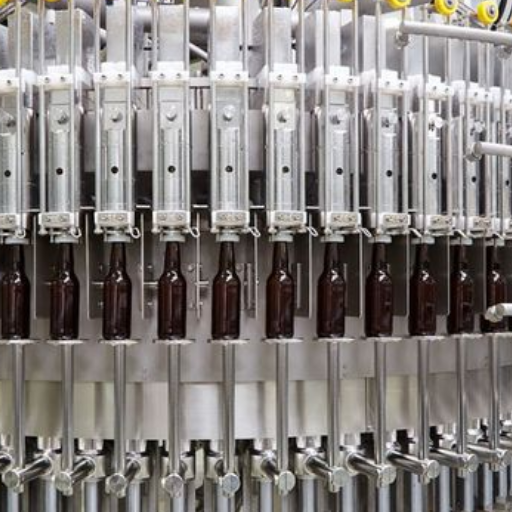
Which vessel you intend to fill largely determines whether either process is practical. Some combinations are used widely; others require adapters/workarounds so cost economics are different.
| Container | Counter Pressure | Gravity / Atmospheric |
|---|---|---|
| 12 oz can | Native fit, all classes | Native fit, all classes |
| 16 oz can | Native fit | Native fit |
| 19.2 oz “stovepipe” can | Most modern CP machines, verify head height | Standard on newer atmospheric, retrofit on older |
| 12 oz bottle | Native fit (counterflow / isobaric bottle fillers) | Native fit, faster per head |
| 22 oz / 750 ml bottle | Bottle CP filler with adjustable depth | Common in wine-derived gravity fillers |
| Growler (32 / 64 oz) | Dedicated growler CP filler exists, slower | Bottom-up taproom fillers dominate this segment |
| Crowler (32 oz can) | Some CP nano-canners support, most are atmospheric | Dominant on this format |
| Keg (5 / 15.5 gal) | Separate keg-fill counter pressure systems | Not applicable — kegs are pressure-filled by definition |
Two trends affect this matrix. First, the Brewers Association 2025 Value Quest report measures that aluminum cans now account for 78% of the BA craft packaged volume – and that 19.2 oz single step single is now the fastest-growing format single pack volume (up to 60%). Packed CP equipment must confirm stovepipe compatibility, not assume it. Second, the crowler format – a 32 oz can seamed on a line at the taproom on demand – has become a retail/production hybrid where atmospheric fillers dominate for economics, even if hop-forward beers would benefit from CP.
Cost of Ownership: CapEx, OpEx, and the Production Crossover Point
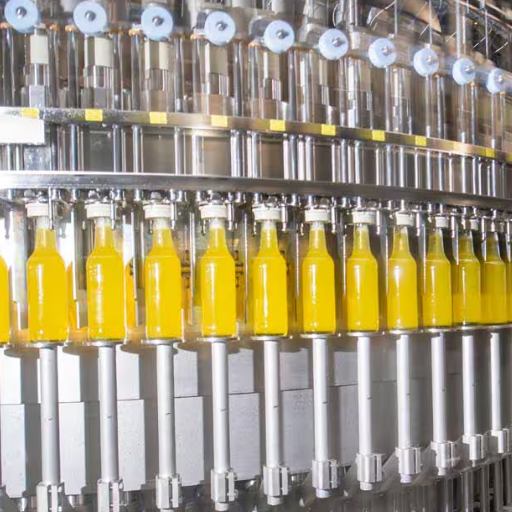
Counter pressure CapEx ranges across roughly four orders of magnitude — a $50 homebrew filler at one end, a $99,000-plus rotary commercial unit at the other. Framing “counter pressure is more expensive than gravity” as single ratio hides the decision; which tier within your expected production volume provides your best economy?
Is counter pressure or gravity better for canning?
For canning at any scale where shelf life and hop aroma matter, counter pressure is the correct answer. The New Zealand caveat is that “correct” matches “cost-effective” above roughly 1,000 shelf-life-sensitive cans/day. Below that volume, the CapEx difference between gravity and CP can often dwarf the lifetime product-loss savings claim of a brewery, especially in fast-turn ranges for taproom-to-distribution. Any commercial scale over 5000 cans/day will need rotary CP so gravity throughput isn’t a bottle neck and DO buildup looks like a brand problem.
| Tier | CP CapEx (USD) | Comparable Gravity |
|---|---|---|
| Homebrew (CP filler kit) | ~$50–$200 | $30–$75 (beer gun / bottling wand) |
| Prosumer / nano (canning station) | $500–$1,500 | $300–$900 |
| Small commercial (2–4 spout) | $5,895–$25,000 | $5,000–$15,000 |
| Mid commercial (4–6 head) | $35,000–$75,000 | $20,000–$45,000 |
| Rotary industrial (12+ head) | $80,000–$179,000+ | Rarely deployed at this tier |
Cost comparisons graphs show the range: XpressFill XF4500C 2 spout CP is $5,895, Twin Monkeys starter cost canning equipment is $71,000, GAI CP commercial can-filler list from Beverage Equipment Traders is $99,000, MIC rotary CP can fillers run from $80,000-$179,000. In homebrew scale, the Brew Your Own counter pressure technique guide estimates counter pressure filler cost at “roughly fifty dollars” which makes the gap on gravity-style fillers trivial.
OpEx is the aspect the majority of cost models don’t account for. Counter pressure systems use more CO2 per fill (purge+pressurize+snift) and more compressed air in valves than atmospheric systems of comparable head count. A CP line generally uses 1.5-2.5x the CO2 per case of a comparable atmospheric line. Water and electricity use are similar at smaller scale; labor is comparable for entry-tier equipment and lower for CP at rotary scale via automation. The OpEx-CapEx tradeoff is why the Production Crossover Point is more important than the CapEx column alone.
📐 Production Crossover Point Framework
A bare-minimum decision lens: as it relates to capital cost, at what daily production does counter pressure CapEx break even in product-loss reduction?
- Less than 200 cans/day: gravity or beer gun beats. A CP CapEx multiplier is too high against such a small fill volume to recover losses through reduction at small scale.
- 200-1,000 cans/day: small commercial CP (XpressFill / Tapcooler class) can start to payback assuming your style mix is hoppy or distribution radius extends beyond 30 days.
- 1,000-5,000 cans/day: mid-tier CP (Twin Monkeys class) becomes a necessity if shelf-life is to be predictable for distribution customers.
- 5,000+ cans/day: rotary CP (GAI / MIC) are de facto for throughput. Gravity creates DO pooling at this scale that becomes a product-quality issue.
For hop-forward IPAs and hazy IPAs – where DO sensitivity is greatest – every threshold drops down approximately a tier.
Choosing by Production Scale: Homebrew → Prosumer → Craft → Industrial
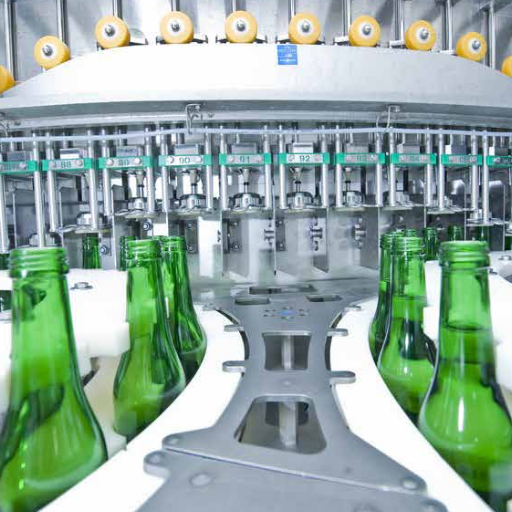
This Production Crossover Point gives a financial decision-making lens. Applying this across actual brewer segments produces a clear recommendation matrix.
| Segment | Volume | Recommended Method |
|---|---|---|
| Homebrew (single batch) | 5–10 gal / batch | Beer gun or homebrew CP filler — CP for shipping to comps |
| Nano-brewery / taproom | <1 bbl-day equiv. | Atmospheric for crowlers; small CP if distributing IPAs |
| Regional craft | 5–50 bbl/day | Mid CP (4–6 head) or premium atmospheric for non-hoppy styles |
| Industrial / contract | >50 bbl/day | Rotary CP, mandatory for hoppy / nitro lines |
Brewers working in the regional craft segment often find that the right answer is two machines: a primary CP line for hoppy and DO-sensitive styles, plus a faster atmospheric or simpler gravity line for shelf-stable lagers, ciders, and seltzers. Mobile canning services — a segment ProBrewer covers in great detail — fill the gap between nano and regional tiers by bringing trailer-mounted CP equipment to breweries that can’t justify owning a line.
An award-winning brewer on r/TheBrewery offered this blunt summary for new operators: If you’re a novice, counter pressure is a little easier to start with. That may seem counterintuitive given counter pressure’s reputation for complexity, but it mirrors the observation that procedural systems are more teachable than feel-based ones. Factor in your own staffing reality and either choice can work at the right tier.
View brewing FILLER machine options from small commercial CP up to rotary industrial classes, with stovepipe-compatible heads and integrated seamer options for craft and regional breweries.
Common Mistakes & Field Lessons from Brewers
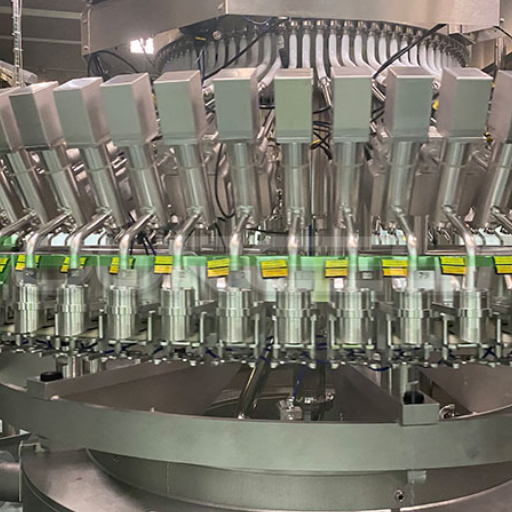
Spec sheets describe machines under perfect conditions. Brewer forums describe the reality when machines break. The pitfalls listed below come from public threads on r/TheBrewery, homebrewtalk, brewersfriend, and the Homebrewers Association forum, along with operator anecdotal observations based on ProBrewer conversation.
⚠️ Pitfall 1: Single CO2 Purge Is Not Enough
First-time counter pressure users often run just one cycle and live with the DO pickup. Brewers of hoppy-IPAs have found that two or three cycles before fill cuts the usual ~30 ppb of DOC to ~10-15 ppb, measurable in three-month shelf-life panels.
⚠️ Pitfall 2: Beer Temperature Too Warm at Fill
The solubility of CO2 drops precipitously with temperature. Beer at 38F retains carbonation through a CP cycle; beer at 50F foams on snift release whether or not the SNMT valve is throttled carefully. Brewer feedback: fill stations need active cooling or a chiller jacket on the fill bowl when ambient warehouse temps exceed 70F.
⚠️ Pitfall 3: Counter Pressure Cleanup Is More Involved
A homebrewtalk thread captures prosumer experience: counter pressure fillers have interior valve spaces that can accumulate deposits if not scrubbed scrupulously. Operators recommend an TSP or PBW soak immediately after each session, then hot-water rinse. Neglecting the scrub step is the most common complaint after CP installation.
⚠️ Pitfall 4: Beer Gun Misclassified as Counter Pressure
A beer gun is a bottom-fill CO2-purge filler it purges with CO2 but fills at atmospheric inside the bottle. Some retailers & operators confuse it with true counter pressure. The DO gap is real: beer gun typically hits at 50-150 ppb pickup versus 10-50 ppb for true counter pressure. The difference is measurable for hop-forward styles.
⚠️ Pitfall 5: Carbonation Set Too Low Pre-Fill
Even correctly run CP exits a trace of carbonation across the cycle. Brewers report best results when conditioning the brite tank 2-3 psi above target serve pressure before fill overshoot the actual target to account for the cycle. Skipping this step results in flat-tasting beer that passes DO QA but flunks consumer perception.
⚠️ Pitfall 6: Snift Valve Released Too Fast
The single greatest contributor to overfilled foam wreckage reported by multiple forum users is operators rushing the snift release. Reducing the snift adds 1-2 seconds per fill. It also prevents the 5-8% product loss when foam-over-rim. Newer CP machines incorporate automatic snift timing; older models rely on operator discipline.
2025–2026 Industry Outlook: Where Beer Filling Tech Is Heading
Three forces are changing fill-method decision making investments over the next five years. Each favors the CP-guided-over-gravity choice differently:
1. Can-share plateau, still no add-on growth. The Brewers Association estimates 2025BA craft packaged volume 78% cans, 22% glass, acknowledges can-share growth now up sloped 2 percentage points per year, means trend lines are stabilizing e.g. “a trendline at 17% growth would need to be 87.2% [cans] today to linearly get to 90% in 2025″ – so 80% public-facing line capacity expansion in 2026 no longer a guess on continued grow-than-ever for cans. Bottles still relevant for the 22% glass segment.
2. Stovepipe (19.2 oz) singles decimating the single-can category. Brewers Association reports 60% share 19.2 oz “stovepipe” single pack volume in 2025, up from 55% in 2024 – a +5% volume shift while 12 oz and 16 oz single packs declined. Singles are 69% hoppy ipas (Imperial IPA, IPA, Hazy IPA, Imperial Hazy). Any CP investment project in 2026 should confirm stovepipe head-height fit; some legacy CP machines are 19.2 oz stovepipe-specific.
3. TPO as a continuous QA standard. Inline TPO monitoring—combining DO measurement (per ASBC Beer 34) with headspace O 2 measurement—is migrating from a premium-segment differentiator to a standard QA practice. Equipment vendors are bundling inline DO/TPO sample ports into CP machines for 2025–2026 model year availability. Apology draft “atmospheric” fillers—structurally limited in the TPO achievable in the bottle/line—will lose share to the hop-forward segment as TPO QA programs become table stakes.
4. Nitrogenated and adjacent beverage expanding CP demand beyond beer. Cold-brew coffee, nitro tea, ready-to-drink cocktails, and nitro hard seltzers are pressurizing through the same CP infrastructure originally designed for beer. Investment in CP equipment increasingly returns ROI across beverage categories—improving the economics of a CP-line decision for breweries diversifying their product slate.
For planning a 2026 capital budget: confirm stovepipe compatibility, specify TPO sample port options, and verify that the CP line is rated for the broader CO 2 /N 2/mixed-gas applications you may add in the coming 5 years.
Frequently Asked Questions
Q: What PSI should I pour beer at?
View Answer
The pour psi at a tap (10-14 psi for regular length beer lines, readjusted by length and style) is a different number than the fill psi used for a counter pressure filler. Fill psi sits at 8–12 psi for counter pressure filling, ranging 3–15 psi by style and equipment, dialed-in to match brite tank pressure. If you have come looking for serving psi, that is discussed in dispense and balancing—separate from fill.
Q: Can I use a counter pressure filler for non-beer beverages?
View Answer
Yes. CP technology translates to kombucha, hard cider, hard seltzer, cold-brew coffee, ready-to-drink cocktails, and nitrogen-infused beverages including nitro coffee and nitro tea. Any carbonated or gas-injected beverage benefits from CP’s pressure-match advantage. Equipment specs should verify gas compatibility—some machines handle N 2 and CO 2/N 2 mixes while others do not.
Q: How does counterflow bottle filling differ from counter pressure?
View Answer
Counter flow bottle filling is a near-equivalent to counter pressure bottle filling at the homebrew and prosumer level. Both use a CO 2 purge plus pressure match to fill bottles with minimal oxygen pickup. The term “counter flow” sometimes implies a particular bottom-up fill geometry in which the CO 2 flow pushes air up and out as the beer rises through the post. At the commercial level, the umbrella term is “counter pressure”; “counter flow” is a defined configuration.
Q: Do I need a CO2 purge before counter pressure filling?
View Answer
Absolutely—the CO 2 purge is the step that displaces free air in the vessel prior to pressure. Bypassing it results in as much as 20% oxygen in the headspace, negating the purpose of counter pressure filling. Most commercial systems are capable of a handful of programmable purge cycles; two to three are typical for hoppy IPAs where oxygen control is most critical. The snift cycle at the end of the fill is a pressure release, not an additional purge step, and will not displace oxygen.
Q: What is TPO and why does it matter for shelf life?
View Answer
Total Package Oxygen (TPO) is a derived number representing dissolved oxygen in beer combined with headspace oxygen in a package expressed in ppb. TPO describes the total (packaged) oxygen available to support oxidation reactions through the package shelf life. As BC 2025 packaging trends define it, ASBC Beer 34 defines the DO measurement; instrument manufacturers Anton Paar and Hach Orbisphere extend the concept to TPO through production inline headspace measurement. Hoppy IPAs need sub-50 ppb TPO to 3-months aroma stability; shelf-stable lagers can hold 100-200 ppb for 6-9 months.
Q: When does atmospheric filling actually win over counter pressure?
View Answer
Atmospheric filling succeeds when three factors add up: your production volume is less than the Production Crossover Point for your style blend, your beer style is shelf-stable and not hop-aroma sensitive (lagers, sours, and ciders distributed within 30-60 days), and CapEx is not at issue. At small commercial scale, a 6-head atmospheric filler with disciplined operators delivers 40-60 CPM at 80-150 ppb DO pickup – fine for non-hop sensitive styles distributed in fast-turn local markets. The challenge is upscale hop-forward beer and downstream reduction with antioxidants or freshness dating.
About This Analysis
The dissolved oxygen ranges, throughput benchmarks, CapEx tiers, and Production Crossover Point template compiled in this report stems from BA 2025 packaging trends, ASBC Beer 34 dissolved oxygen paper, How to Brew episode articles, Hach, Mettler-Toledo, Anton Paar press materials, commercial equipment listings, and brewer-website feedback on r/TheBrewery, homebrewtalk, brewersfriend, and ProBrewer threads. Equipment prices listed as of Q1 2026 and may have moved as subsequent supply or material costs changed since then – ask your equipment supplier. The Production Crossover Point lines in the sand are our ways of relating brewery size to method choice – your mileage may vary. By approval of the MassTechX fabrication team for equipment confirmation.
References & Sources
- ASBC Methods of Analysis — Beer 34: Dissolved Oxygen — American Society of Brewing Chemists
- World Brewing Congress 2016 — DO Measurement (Bigham et al.) — American Society of Brewing Chemists
- Value Quest: 2025 Packaging Trends – Brewers Association (Matt Gacioch, Staff Economist)
- Counter-Pressure Bottling Techniques (Chris Colby) – Brew Your Own Magazine
- Storability of Counter-Pressure Filled Bottles — Mr Wizard — Brew Your Own Magazine
- How to Measure Dissolved Oxygen in the Brewery – Hach
- Dissolved Oxygen in Brewing Applications – Mettler-Toledo
- State of the Mobile Canning Industry – ProBrewer
- Total Package Oxygen (TPO) — Anton Paar
Related Articles
- Beer filling machine product lineup — small commercial, mid, and rotary CP options