Get in Touch with Masstech


Whether sizing a beverage line or shortlisting a co-packer, from hot fill vs cold fill juice processes during nearly every downstream decision—bottle material, label adhesive, FDA filing route, cold-chain expense, shelf life limits—you can put on your carton, most public guides only offer 1 or 2 paragraphs of definitions. This article walks the full decision: the temperature physics, pH 4.6 rule, container limits (including the vacuum paneling failure mode that very few competitors mention), how aseptic (roughly the third option), what a line actually costs, and what the industry forecast looks like in 2026. Specific numbers are tied backed to FDA, FSIS and packaging-industry resources so you can fact-check every assertion.
Quick Specs — Hot Fill / Cold Fill / Aseptic at a Glance
| Parameter | Hot Fill | Cold Fill | Aseptic |
|---|---|---|---|
| Fill temperature | 85–96 °C (185–205 °F) | 4–15 °C (39–59 °F) | Ambient, sterile zone |
| Hold time | 15–30 sec at temp | None (cold-chain dependent) | UHT 135–150 °C / 2–5 sec upstream |
| pH window | < 4.6 (high-acid) | High-acid (refrigerated) | Any (acid + low-acid) |
| Container | Heat-set PET, glass, HDPE | Any (incl. standard PET) | PET, glass, aluminum, carton |
| Shelf life | 12–18 months ambient | 35–90 days refrigerated | 6–18 months ambient |
| Typical CAPEX | $$ medium | $ low | $$$ high |
| Best for | Premium clean-label juice, ambient retail | Fresh-pressed / NFC chilled | Low-acid juice, plant milk, export |
What Are Hot Fill, Cold Fill, and Aseptic Filling?

The beverage preservation methods can be divided into three filling families. Hot fill is a heated juice (85-96 C), fed for a short time, then injected hot in a container; the material cooling down in cool-down phase sterilizes and provides vacuum inside. Cold fill feed cold processed products in space, either pre-sterilized container or cooled supply chain; preservation is chemical (pH or preservatives); using resistant (HPP), or by keeping end to end cold chain.
Aseptic filling sterilized package and product, place in sterile site and hermetic sealing. Package doesn’t see heat after the upstream UHT pulse.
For aseptic process, the aseptic filler sterilizing the package, filling sterile product to the sterile pack, and then hermetically sealing the pack. Aseptic filling is suitable for high-acid products, which has a shelf-life of up to 18 months. It is suitable for glass, Aluminum and PET for dairy and beverages.
— BevSource, on beverage industry terminology
What is the difference between hot filling and aseptic filling?
Hot filling employs the product as the means of sterilization, sterilizing the container at time of fill, one thermal pass, no clean-room operation in addition. Aseptic separates process from filling operation: juice is ultra-high-temperature treated in lead-up, 135-150 °C for 2-5 sec, container and cap are sterilized separately (using H₂O₂ or peracetic acid plus heat) and both are held at positive pressure under a HEPA filter. Any difference in practice is the heat load on the finished package: because the hot fill juice cools within its bottle, the aseptic juice was cooled down before it was inserted into its package.
That bio-thermal profile would be critical for heat-sensitive nutrients, color, or polymer assurance, in a “normal” PET preform operated on traditional juice filler, etc.
✔ Hot Fill — Advantages
- Single thermal step — no sterile room required
- Ambient-stable for 12–18 months once sealed
- Lower CAPEX than aseptic for the same throughput
- Vacuum on cool-down acts as an integrity seal indicator
⚠ Hot Fill — Limitations
- Limited to pH<4.6 products (acidified or in above-with high acid naturally)
- Demands heat-set PET, glass or HDPE—cannot be normal PET.
- Heat exposure can dull color and reduce thermolabile vitamins
- Vacuum paneling risk on under-engineered PET
A prevalent misunderstanding—expressed by a beverage R&D scientist on Reddit r/startups—is that hot fill works for carbonated beverages. It doesn’t, as CO escapes the product above approximately 50 °Celsius, meaning any carbonated SKU must be processed cold or under counter-pressure.
Temperature & Pasteurization Mechanism
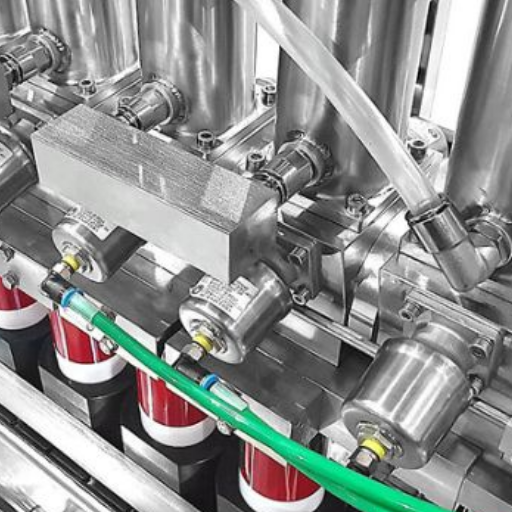
The number that’s most significant in “hot fill or cold fill” arguments over juice is the temperature of fill. most industry guidances agree on a hot fill of 85-96 C (185-205 F) the moment the product moves from vessel to bottle, with a 15-30sec hold. It must stay hot enough through capping that the head-space and under-side of the cap are also sterilized. It is not arbitrary – it is calibrated to deliver a specific F-value against the spoilage organisms of greatest concern in acidic juice.
Pasteurization Technologies Compared
| Method | Temperature | Hold Time | Typical Use |
|---|---|---|---|
| Vat (LTLT) pasteurization | 63 °C / 145 °F | 30 min | Small-batch craft juice, milk |
| HTST / flash pasteurization | 72–90 °C / 162–194 °F | 15–30 sec | Continuous juice flow, plate exchanger upstream of fill |
| Hot fill / hot-fill-hold | 85–96 °C / 185–205 °F | 15–30 sec in bottle | Shelf-stable juice, acid sauces, sports drinks |
| UHT (upstream of aseptic) | 135–150 °C / 275–302 °F | 2–5 sec | Low-acid beverages, plant milk, dairy |
The U.S. Food and Drug Administration’s Juice HACCP Hazards and Controls Guidance refers to hot-fill-hold as an accepted method to achieve a five-log pathogen reduction for shelf-stable juice. Codex Alimentarius CAC/RCP 23-1979 – the international code for low-acid and acidified canned products – offers more premptive sterility benchmarks adopted by the majority of export markets.
What temperature is considered hot fill?
For juice, the working definition is a fill that maintains 85 C or higher in the container long enough to achieve target commercial sterility – in practice 85-96 C with a 15-30 second hold at temperature, then inverted to sterilize the cap. Anything below ~82 C is generally treated as warm fill or LTLT vat pasteurization with cold packing, not hot-fill. Anything above 100 C requires pressurized vessels and an entirely separate regulatory pathway.
📐 Engineering Note — F₀ explained
The F-value is the percentage number of minutes at the reference temperature (generally 121.1 C for low-acid foods, 93.3 C for high-acid juice) needed to accomplish a specific log reduction. For most high-acid juices, an F of 0.7-1.0 at 93 C reference, plus a five-log reduction of relevant microorganisms, satisfies HACCP requirements. The exact F-value your process requires depends on formulation, total-time-to-cool, and rate of cooling – do the calculations first.
Shelf Life Outcomes Compared
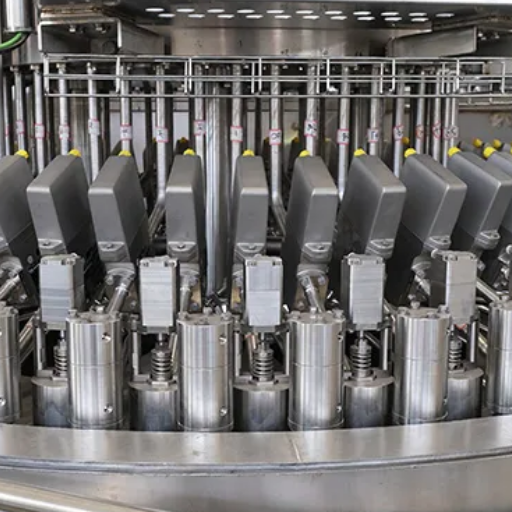
Shelf life expectations are the second determiner that rules hot- fill from cold fill. The basics: hot-filled juice in heat-set PET stays 12-18 months ambient; refrigerated cold-filled juice stays 35-90 days inside the cold chain; aseptic-filled juice stays 6-18 months ambient based on package barrier and formulation.
How long does hot fill juice last?
Twelve to eighteen months shelf life at ambient temperature is the common claim for heat-set PET or glass hot filled high-acid juice if the seal remains intact and it does not get exposed to regular sunlight. The maximum (16-18 months) assumes oxygen-barrier closures, moderate storage temperatures – over 30 C in a warehouse accelerates browning and degranulation of ascorbic acid even in sterile juice. Once a bottle is opened the countdown time reverts to refrigerated days, not months: heat treatment no longer active, only the rate of new contamination growth active.
✔ Cold Fill — Advantages
- Retains fresh color, aroma, and heat-sensitive vitamins
- Works with standard PET, glass, or cartons
- Lowest CAPEX path for small-volume producers
- No vacuum paneling, no thermal-shock cracking
⚠ Cold Fill — Limitations
- Cold-chain reliant- keep below 4 C (39.2 F)
- 35-90 day shelf life unless combined with HPP or aseptic processing
- Refrigerated low-acid juice carries an explicitly flagged FDA botulism risk.
- Preservatives or HPP may be essential to meet retailer shelf life.
Here’s a popular myth: cold fill is “automatically safer” because heat destroys nutrients. While a pH 4.6 hurdle still applies, the FDA emphatically disagrees in the case of refrigerated low-acid juices – the agency’s Refrigerated Carrot Juice Guidance exists because Clostridium botulinum spores can germinate in cold-stored low-acid juice if the chain breaks. Cold is no substitute for the pH 4.6 boundary that I will address below. The brutally real world trumps – voiced by a beverage entrepreneur on Reddit: a 100% fresh juice product is going to have four days of unrefrigerated shelf life – there’s no process you can ignore to get there.
Container Compatibility: PET, Glass, HDPE, Aluminum
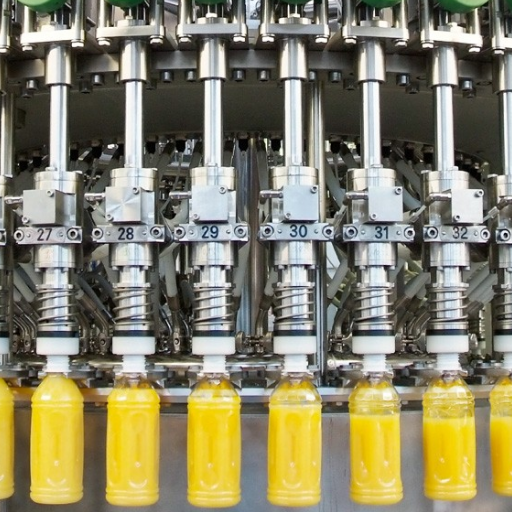
Container thermal tolerances quietly end most “let’s switch to hot fill” disagreements. Headline: standard PET tears at glass-transition temperature (roughly 76 C), above that the polymer chains mobilize and the bottle flexes. Hot filling at 85 to 96 C falls well in the hot heat for unmodified PET.
| Container Type | Hot Fill | Cold Fill | Aseptic |
|---|---|---|---|
| Standard PET (Tg ~76 °C) | No — distorts | Yes | Yes (cold contact) |
| Heat-set PET (Tg 85–90 °C) | Yes (up to ~92–95 °C) | Yes (over-spec) | Yes |
| HDPE | Yes (selected grades) | Yes | Yes (with barrier) |
| Glass | Yes (ΔT < 40 °C) | Yes | Yes |
| Aluminum can | Yes (lined) | Yes | Yes |
Heat-set PET is the workhorse of shelf-stable fresh juice. The bottles are blown against a heated mold that cristallizes away 25-35% of the polymer – pushing the Tg from an average of roughly 76 C to an average of 85-90 C – then the containers are suitable for 92-95 C direct contact straight after molding. Packaging Europe and NatureWorks both document this thermal-window push and it is the reason a heat-set preform costs roughly 15-30% more than a standard preform of the same weight.
📐 Engineering Note — Vacuum Paneling
Walls cave inward; no external impact, no cracks – that is vacuum paneling, and it is the failure mode that kills first-time hot-fill players. As the hot-fill beverages cools inside a sealed PET bottle, the head-space gas contracts and pulls the side walls inward. The remedy: structural – vacuum-absorbing panels built into the bottle, nitrogen dosing at fill, vacuum-absorbing closures. Propacks documents this defect as one of the most common causes of pre-launch bottle rejection at hot-fill lines.
Labels are the second silent killer. Hot fill at 90+ C softens dozens of adhesives, and causes shrink-sleeve labels to slide or wrinkle. Pressure-sensitive labels intended for ambient installation can melt completely. Remedied with heat-resistant adhesives and spot-melts/laminate films rated for the fill temperature; not something you can save on when the label is also the regulatory info panel.
Product pH & Acid Compatibility (FDA 21 CFR Rules)

The single most important number in this entire comparison is pH 4.6. The FDA uses 4.6 as the pH level that separates acidified/acid foods from low-acid foods. Per the FDA in its acidified-low-acid-canned-foods-guidance-documents-regulatory-information”>Acidified & Low-Acid Canned Foods Guidance: “An acidified food is a low-acid food to which acid(s) or acid food(s) are added and which has a finished equilibrium pH of 4.6 or below.”
pH Pathway Summary
- Naturally acidulous juice (pH <4.6): orange, apple, grape, pineapple, cranberry. Falls under standard juice HACCP. Hot fill or cold fill both feasible.
- Acidified juice (pH adjusted to <4.6): carrot juice with citric acid, beet juice with lemon, low-acid blends with malic acid. Falls under 21 CFR 114 – process has to be scheduled by a Process Authority.
- Low-acid juice (pH 4.6 and water activity > 0.85): unacidified carrot, melon, coconut water, smoothies with dairy. Falls under 21 CFR 113 low-acid canned foods or requires aseptic / cold chain pathway.
The practical impact: any juice processor planning a shelf-stable low-acid product is looking at aseptic filling, retort canning, or refrigerated distribution – not hot fill. Conversely, any acidified juice processor (e.g. acidified carrot juice) must register a scheduled process with FDA under 21 CFR 114 and identify a Process Authority. Both pathways also sit under the FSMA-era 21 CFR 117 preventive controls framework for human foods.
Water activity is the second axis. The FDA Guide to Inspections of Low-Acid Canned Food applies the low-acid classification to “any products with a finished equilibrium pH above 4.6 and a water activity greater than 0.85.” That nuance matters for fruit purees, smoothies, and pulpy juices that may straddle the boundary.
Equipment & CAPEX Comparison
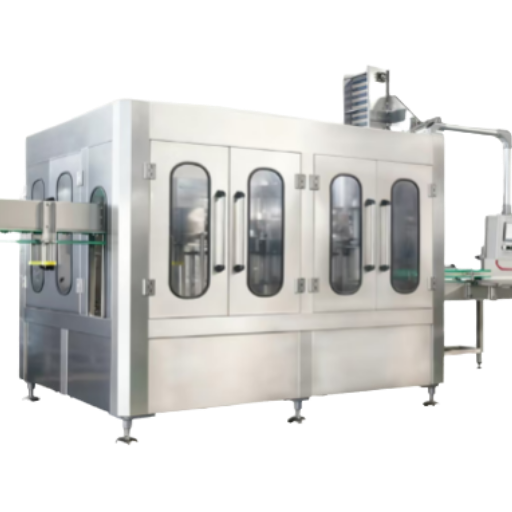
Equipment selection follows from the three constraints already covered: temperature, pH, and shelf-life target. The ranges in this section are compiled from public quotes and industry references; vendor-specific numbers vary by automation, container type, and target throughput, so treat these as planning brackets, not bid prices.
| Tier | Throughput | Hot-Fill Line (USD) | Cold-Fill Line (USD) |
|---|---|---|---|
| Small (entry) | 2,000–6,000 BPH | $120k–$280k | $70k–$180k |
| Mid (commercial) | 6,000–20,000 BPH | $280k–$900k | $180k–$550k |
| Large (industrial) | 20,000+ BPH | $900k–$3M+ | $550k–$1.8M+ |
A hot fill juice machine on a complete line typically includes a plate or tubular heat exchanger, a balance / surge tank with deaerator, a rotary filler rated for the fill temperature, an in-line capper with steam-sterilized cap pickup, an inversion conveyor (so hot juice contacts the cap underside), and a tunnel cooler. Cold-fill lines drop the heat exchanger and tunnel cooler – saving both CAPEX and floor space – but add CIP intensity and a cold-room conditioning step.
A subsystem checklist a buyer should confirm in any quote: heat exchanger capacity vs flow rate (avoid undersized exchangers that bottleneck the line), filler nozzle material certification for hot service, cap sterilization method (steam vs hot-juice inversion), tunnel cooler conveyor speed control, CIP loop coverage, and the brand of PLC / HMI for spare-parts ecosystem. For a turnkey hot fill bottling line, integrators bundle these subsystems with a shared electrical cabinet and a single PLC architecture. For a separate upstream processing enquiry, food processing machinery from Shengtu provides a product-family starting point; define preparation, thermal processing and filling as distinct scopes in the line specification.
💡 Need a sizing estimate?
Request a 1-page line spec sheet keyed to your BPH target, bottle format, and product pH. Useful before issuing an RFQ to multiple integrators.
Process Verification & Quality Control
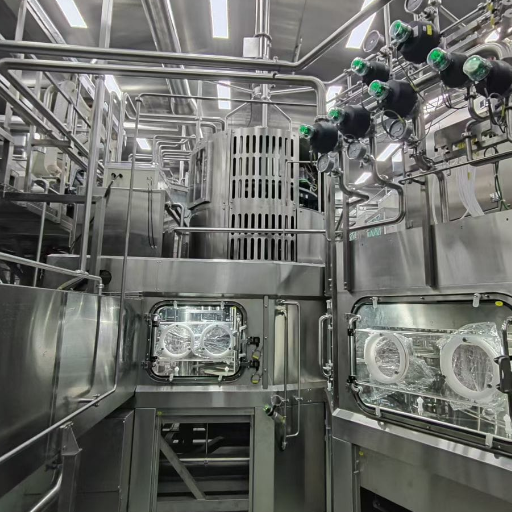
A hot-fill line that runs without verification is a recall waiting to happen. The QC framework below tracks the critical control points the FDA Juice HACCP Guidance and FSIS thermal-process references identify as load-bearing for shelf-stable juice.
- ✔
Fill temperature continuous record: two independent probes (filler bowl + cap conveyor) logging at ≥1 Hz, alarm threshold typically 85 °C minimum, 96 °C maximum. - ✔
F₀ calculation: integrate temperature-time curve in the slowest-cooling bottle to confirm F₀ ≥ process target (typically 0.7–1.0 min at 93 °C reference for high-acid juice). - ✔
Headspace volume: typically 3–6% of container volume to allow vacuum formation without paneling. - ✔
Cap seal integrity: sample 1/hour for vacuum reading on PET (typically 5–15 inHg) or click-down on twist-off metal closures. A failed sealing check is the most common rejection point on pre-launch hot-fill audits. - ✔
pH and Brix at fill: log every 30 minutes to confirm the batch remained acidified or naturally below pH 4.6. - ✔
Incubation challenge: hold finished bottles at 30 °C for 7–14 days, look for swelling or pH drift — a pre-release spoilage filter.
Co-packers running multiple SKUs on shared lines deserve extra scrutiny. Operators on Reddit r/TheBrewery describe the lengths required – dedicated tanks, lines, gaskets, and clamps – to keep allergen and product cross-contamination off shared canning equipment. Validate the cleaning protocol, not just the equipment list.
Decision Framework: Which Should You Choose?

The decision stair-steps to 3 numbers and a question. The numbers: product pH, target shelf life, container thermal rating. The question: do you have a cold chain you trust end to end?
The 4.6 / 85 / 30 Rule — a memory shortcut for filling-process selection
- 4.6- the “FDA pH threshold”; if it is below this you are locking in hot fill
- 85-the minimum fill temperature (C) for authentic hot fill
- 30 – the minimum hold time (sec) at fill temperature to deliver target F
Miss any of the three and hot fill is not the process; it is another process with a different regulatory pathway.
Decision Tree
- Is your product pH < 4.6 (naturally or acidified)?
- Yes → go to step 2.
- No aseptic filling (UHT + sterile zone) OR retort canning. hot fill is out
- Is your shelf-life target > 90 days?
- Yes → go to step 3.
- No cold fill+refrigerated chain is the lowest-CAPEX route
- Is your container heat-resistant to 92 °C (heat-set PET, glass, or HDPE)?
- Yes hot fill is the best fit. Choose a hot fill system for juice sized to your BPH
- No, either make a switch to heat-set PET, or switch to aseptic filling
For most premium ambient-shelf clean-label juice in PET, the decision tree ends with hot fill. For fresh-pressed never-pasteurized juice available within 7-14 days at retail, cold fill+tight cold-chain handling. For long-haul export or vegetable-based products, aseptic.
Industry Outlook 2026: Where Hot Fill, Cold Fill, and Aseptic Are Heading
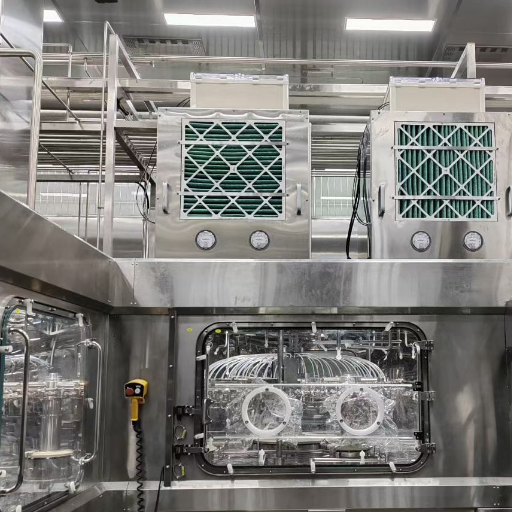
The hot-fill food package market- led by juice as the largest segment- is predicted to grow 3.76% CAGR between 2025-2035, from $53.66B in 2025 to $77.62B in 2035, per packaging studies by Towards Packaging. This is a growth rate that signifies ROI to researchers, not a decline to the end. Hot fill is the back bone of shelf-stable acidic beverages in every geography.
Search data paints a richer mosaic. U.S. search queries for “aseptic filling” and similar variants have increased 43-56% YoY, even as “hot fill process” and many hot-fill specific PET queries have decreased in volume. Interest in “shelf life of juice” is up 86% YoY – meaning consumers are paying attention to what is in their bottles and how long it has been there. The cross-reference is this: hot fill is staying level in current dollar revenue, aseptic is stealing the discretionary launch share. If you are planning a three-year CAPEX instillation for a premium low-acid or plant-based SKU, consider designing an aseptic compatible chassis even if a hot fill is the in-market launch for now.
Regarding regulatory considerations, the implementation of 21 CFR 117, FSMA-era preventative controls is still increasing by iterations across U.S. juice manufacturing facilities, including imports. Schedule QC processes and Process Authority involvement as elements of essential control, not optional extras. For export manufactures, plan for consistent comparison to Codex CAC/RCP 23-1979 protocols with inspecting agencies internationally, even for in-line hot fill production.
Frequently Asked Questions
Q: What is the purpose of hot filling?
View Answer
Hot filling achieves a lesson in two and one half steps: it pasteurizes the juice to a targeted log reduction and sterilizes the cleaned insides of the container through the same thermal mechanic. The result is a food that is therefore shelf ready without the need for de-heating or re-cooling, requiring a single cycle in the manufacturing process that costs less than aseptic and less in operation than an extended cold chain.
Q: Can regular PET bottles be used for hot fill?
View Answer
No. Standard PET has a glass-transition point at about 76 C and when filled with juice at 85-96 C will warp and distort. Hot fill demands heat-set PET, which is blown against a heated mold that pushes crystallinity up to 25-35% to raise Tg to 85-90 C. Heat-set preforms are 15-30% more than standard preforms.
Q: Why is cold fill used for fresh juice?
View Answer
Cold fill locks in the color, flavor, and heat-sensitive nutrients that consumers prize about “fresh-pressed” or “not-from-concentrate”. The consequence is a refrigeration shelf life of 35-90 days and a cold-chain requirement. For brands that rely on fresh as the essence of their value, that consequence is the product, not something to be tolerated.
Q: Is hot fill safer than cold fill?
View Answer
Safer is not the right mental model. Both are FDA-approved techniques when chosen based on the product pH. Hot fill provides original-pack diseased product sterility; cold fill depends on cold chain fidelity plus product chemistry. The real risk window is refrigerated low-acid juice – the FDA publishes a dedicated guidance for that scenario since Clostridium botulinum spores may germinate when the cold chain breaks.
Q: What is the typical CAPEX gap between hot fill and cold fill lines?
View Answer
Hot fill generally takes 40-70% higher initial investment CAPEX than cold fill for a line with similar capacity because of the heat exchanger, hot-rated rotary filler, inversion conveyor, and tunnel chiller. The OPEX advantage shifts the other way: hot fill removes the costs of the refrigerated distribution infrastructure that can dwarf cold-fill economics.
Our Perspective on This Comparison
This table consolidates process and equipment info from FDA guide lines 21 CFR 113/114/117, the Codex Alimentarius CAC/RCP 23-1979, and packaging-industry specs regarding heat set PET thermal limits. Where a range of CAPEX or shelf-life duration can be calculated for a given SKU, package, distribution partner, and temperature profile, we have chosen to give a range rather than a point value. Contact us when you are ready to define a hot fill, cold fill, or aseptic juice line with SKU specifics.
Review by the Masstechx professional engineers that design hot fill, cold fill, and aseptic juice processing lines for beverage companies.
References & Sources
- Guidance for Acidified & Low-Acid Canned Foods – FDA
- Guidance on Juice HACCP Hazards and Controls, First Edition – FDA
- Guidance for the Industry: Refrigerated Carrot Juice and Other Refrigerated Low-Acid Juices – FDA
- Guide to Inspections of Low Acid Canned Food, Volume 2 – FDA
- Microbiology of Thermally Processed Commercially Sterile and Shelf-Stable Foods – USDA FSIS
- Glossary of the 12 Most Commonly Misused Terms in the Beverage Business – BevSource
- Hot-Fill Food Packaging Market Trends & Forecast 2026-2035 – Towards Packaging