Get in Touch with Masstech
5 Gallon Water Bottle High Pressure Washer
5 Gallon Bottle Washer — High-Pressure Rinsing and De-Capping Systems
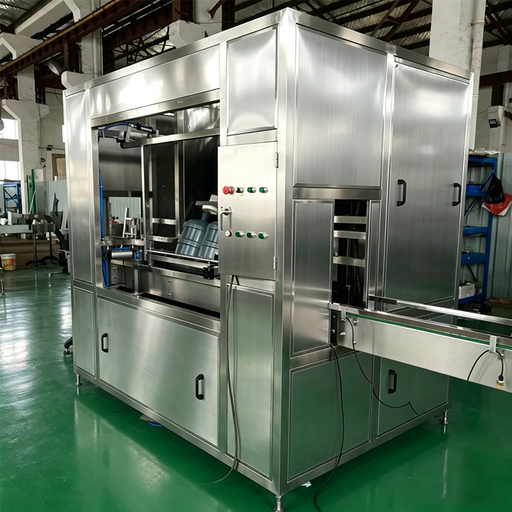
We build 5 gallon bottle washer systems for plants that refill the returned 18.9 L polycarbonate plastic container — semi-automatic single-station machines, cap-removal and wash stations, and fully automatic rinsers that feed a filling line directly. The same 5 gallon water bottle that sits on a water dispenser is the hardest container in the plant to clean, because it comes back sealed, opaque and used. Send us your target output and we will tell you which model fits it.
Your plant layout, production volume remains confidential and is used solely to size your machine.
CAPACITY
150–1,200 bottles per hour across seven models
TIMELINE
Quotes returned within one business day, reviewed by an engineer. Production scheduled at 30–60 days.
BOTTLE SPECS
3 and 5 gallon / Returnable barrels, 10 L and 18.9 L. 275 mm diameter (Nominal bottle envelope).
DIMENSIONS & WARRANTY
490 mm height (Nominal bottle envelope). Two-year warranty on all machine parts.
5 Gallon Bottle Washer Capability Snapshot
- 150–1,200 bottles per hour Automatic STNW range, seven models
- 100–150 BPH Semi-automatic single-station washer
- 18.9 L and 10 L barrels 3 and 5 gallon returnables
- Quote in one business day Reviewed by a process engineer, not a form robot
- 30–60 days Production lead time, confirmed with your quotation
- Two-year warranty Covering all machine parts
- 24-hour engineer response Technical support, any time zone
- Five working days Replacement parts dispatched by international courier
What To Check Against Another Quotation
Those last four lines are the ones worth putting side by side with any other offer you are holding. Lead time, warranty term, support response and parts dispatch are the costs that surface after the machine lands, not before. The containers these figures refer to are what 21 CFR 129.80 calls multiservice primary containers — the returnable kind that must be washed, rinsed and sanitized before every refill.
High-Pressure Bottle Washing Capabilities
The mistake buyers make is reading a headline pressure figure as a cleanliness figure. Raising wash pressure does not automatically produce a cleaner bottle, and a patent filed by Portola Packaging in 1998 records the trade-off directly: as the industry moved to lighter containers and from glass to plastic, operators cut water pressure and flow to stop bottles being lifted off the conveyor — and that reduction also cut washing effectiveness.[3] The real limit is bottle restraint rather than pump capacity, and our automatic range answers that mechanically.
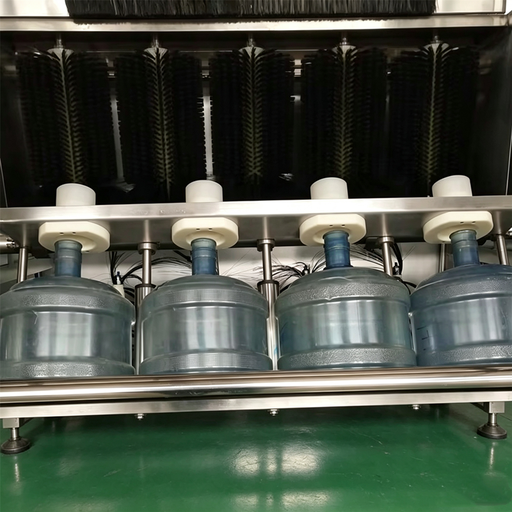
- Bottle holder instead of balance holder. Lifting device pushes the barrel upwards for washing position; then bottom brush lifts and holding mechanism closes before actuating high pressure pump.
- Because the barrel cannot lift, the rotating brush and the high-pressure jet work together instead of trading off against each other.
- Since the bottle rotates against the brush the inside as well as the outside body, neck, and bottom gets scrubbed. Bristles scrub over the body.
CONFIGURATION
360° internal rinsing with no dead angle
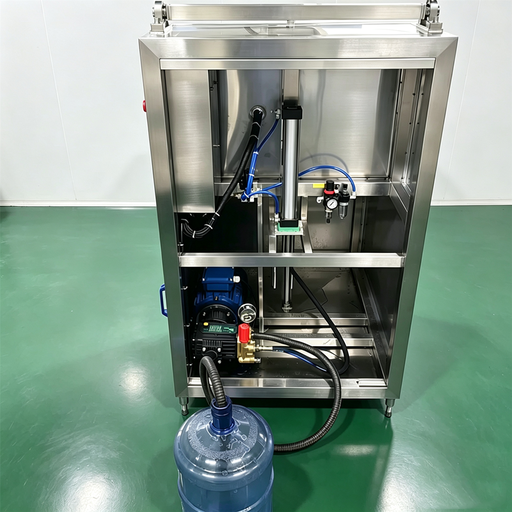
The internal rinse uses a 360° rotating high-pressure nozzle. On the semi-automatic machine that nozzle is adjustable from 2–15 MPa and turns inside the barrel while the external brushes rotate and spray.
DYNAMICS
Why jet and bristle run together
Jet plus physical bristle contact is the established engineering answer to stubborn inner-wall soil. A 2011 utility model describes the same principle: the brush body rotates, bristles brush the inner wall, and soiled water is drawn away through a suction hole and drained, repeating until the inner wall is clean.[4]
Incoming bottle inspection and rejection
Returned barrels are not uniform. Six conditions turn up on a returns route, and each one needs a different answer.
Heavy residues and stains that are not easily removed by simple washing
Established bacterial growth or molds in the interior bottle wall during storage.
Light dirt due to airborne contact from an unsealed top neck
Loose debris settled in the base after transport
Scuffing and crazing past the point of safe re-use
Foreign materials entered the bottles after departing your facility.
US federal rules make the consequence explicit: containers found to be unsanitary or defective by inspection must be reprocessed or discarded.[1] Build a triage point into the line before the washer, and a second look after it.
Not sure which pressure and brush configuration your bottles need?
Send us a photo of a returned barreland we will tell you what the wash cycle has to remove.
The Mass Technology Washer Range
Three classes of industrial bottle washer cover the range from a single-operator refill shop to a 1,200 barrel-per-hour plant. They are not scaled versions of one design — they solve different bottlenecks in bottle cleaning.
All three handle the same reusable large containers: the 10 L and 18.9 L returnable barrel, known in North America as a carboy or water jug.
A 5 gallon container and a 3 gallon container run on the same fixtures, so both barrel sizes run without a changeover.
We tailor supply voltage and frequency to your site rather than shipping one fixed build.
All three are designed for washing back dirty bottles not for rinsing new ones.
Only the automatic range is constructed to sit inside a continuous line of production.
MK-01
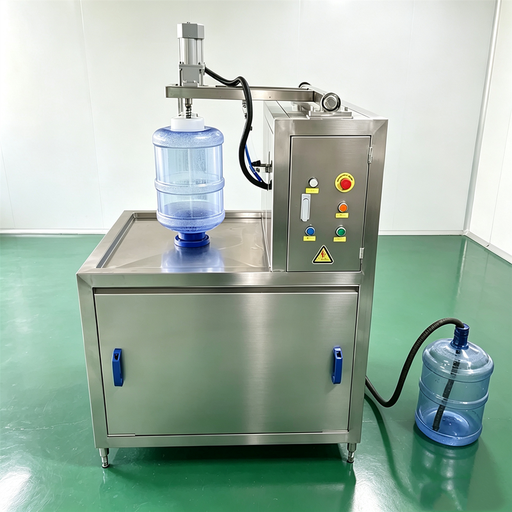
GYCX-1 semi-automatic high-pressure washer
One door cycle completes the wash. The operator loads, closes and the machine runs
- 100–120 BPH
- 4 kW water pump
- 0.6 tons per hour water use
- 1110 × 910 × 1710 mm
- 50 × 50 mm stainless steel square-tube welded frame
Three water-supply modes: circulating, non-circulating, or double supply.
MK-02
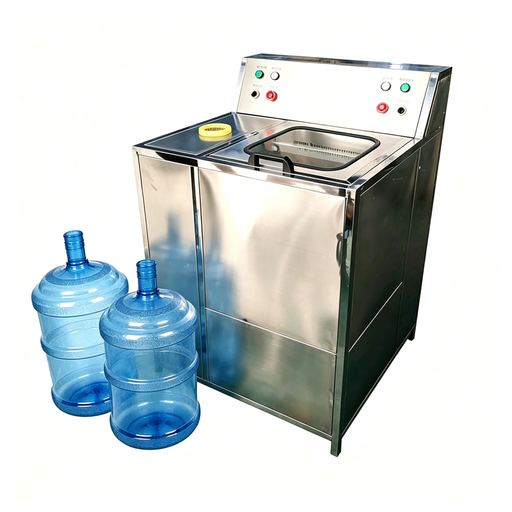
Cap-removal and wash station
Returned barrels arrive capped. This station pulls the used cap with an air cylinder then washes
- 1.12 kW without heating, 2.12 kW with heating
- 800 × 800 × 1200 mm, 110 kg
- 3 outer, 1 inner, 2 bottom and 2 top nylon brushes
- Heated water tank option
- Air compressor at 0.6–0.8 MPa required
Separating the cap means the barrel lid can be disinfected and re-used instead of scrapped, and it opens the neck so the interior can actually be washed, rinsed and sanitized as 21 CFR 129.80 requires.
MK-03
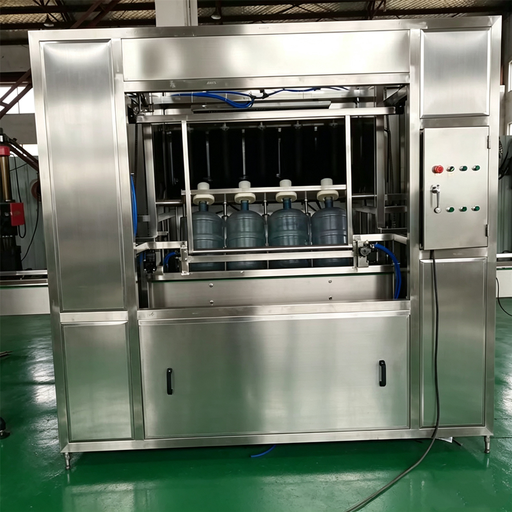
STNW automatic rinser series
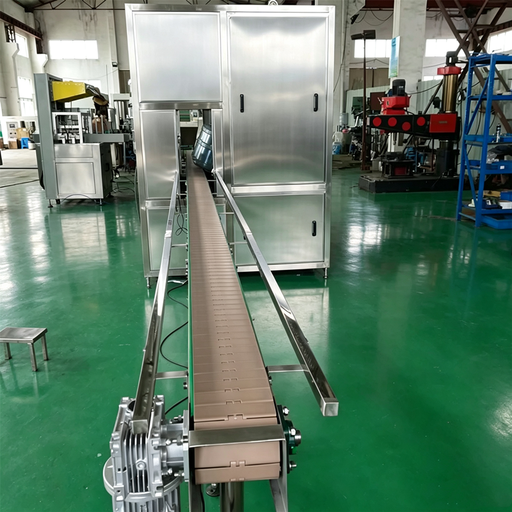
Seven models, PLC controlled, with an independent electrical box. Conveyor in, conveyor out.
- 150–1,200 bottles per hour
- Washing pressure 0.25 MPa
- Compressed air 0.3–0.7 MPa
- Washing medium: sterile water
- Enclosed frame to stop water spilling out
Designed to feed an automatic filling machine directly rather than run as an island
Semi-Automatic High-Pressure Brush Washer — Detailed Configuration
Specs MatrixApplicable bottle volume3–5 gallon
Bottle diameter275 mm
Bottle height490 mm
Production capacity100–150 BPH
High-pressure inner rinsing heads1
External brushes3
Air consumption500 L/min
Motor power4 kW
Washing water pump1 × 0.37 kW
High-pressure rinsing pump1 × 4 kW
Overall size1200 × 900 × 1700 mm
Weight150 kg
Wash Stages and Line Integration
A returned barrel passes through six stages before it is fit to fill. Each one removes a different source of contamination, and skipping one moves the problem downstream into your filler.
- Wash and rinse are distinct passes: the wash pass carries the cleaning solution, the rinse pass removes it
- Choice of cleaner is your decision. The machine circulates whatever cleaning solution your process demands so the equipment does not force you to use harsh chemicals
- Cleaning bottles ready for filling is the entire point. Product safety is determined here, not at the filler
01
Inspection and triage
Barrels that are cracked, deeply scuffed or carrying foreign material are pulled out before they consume a wash cycle — under 21 CFR 129.80 an unsanitary or defective container must be reprocessed or discarded rather than filled.[1]
02
Cap removal
An air cylinder pulls the dirty cap off the neck so the interior is clear to the nozzle
03
High-pressure internal rinse
The 360° rotating nozzle enters the neck and works the inner wall, base and shoulder.
04
External and base brushing
Rotating nylon brushes clean the outside wall as the bottle turns, bottom brushes lift into the base recess
05
Final rinse
The automatic range uses sterile water as the washing medium at 0.25 MPa.
06
Drain and transfer
The manipulator returns the barrel to the conveyor, upside down for drainage and it moves to filling
Water-supply modes and what they cost you
| Mode | How it works | Trade-off |
|---|---|---|
| Non-circulating | Fresh water to drain on every cycle | Highest cleaning consistency, highest water bill |
| Circulating | Wash water and detergent recovered, filtered and re-used | Lowest water use; cleaning solution condition must be monitored |
| Double supply | Recovered water for the wash pass, fresh water for the final rinse | Fresh water only where it decides the result |
Double supply is the way most plants settle. It keeps the recovered water in the bulk-soil stage where solution condition counts least, and reserves fresh supply for the final pass
Where the washer sits in the production line
A bottle washer is one step in a bottling machine sequence. Plants that automate the wash phase but leave bottle filling manual simply move the queue that one step further downstream
Upstream
a water treatment system producing the rinse water. We build these from 0.5–50 T/H.
Downstream
the QGF filling and capping line for 18.9 L barrels, where bottle filling and bottle capping happen in one fully automated frame.
Alongside
the wider water filling machine range for mineral water and purified water, plus bottle labeling machines for the finished barrel.
A different job
bottle blowing machines make new containers. A washer exists because the container is coming back.
Model Specifications and Throughput
Seven automatic models. The figures below are the machine parameters we build to, not a marketing range.
| Model | Capacity (18.9 L BPH) | High-pressure pumps | Main motor (kW) | Dimensions (mm) | Weight (kg) |
|---|---|---|---|---|---|
| STNW-2 | 150–200 | 2 | 1.5 | 1870 × 1550 × 2300 | 600 |
| STNW-3 | 200–300 | 3 | 9 | 2050 × 1590 × 2500 | 800 |
| STNW-4 | 400–450 | 4 | 12 | 2250 × 1620 × 2500 | 1000 |
| STNW-5 | 550–600 | 5 | 12 | 2430 × 1700 × 2300 | 1500 |
| STNW-6 | 750–800 | 6 | 14 | 2750 × 1720 × 2300 | 2000 |
| STNW-8 | 900–1000 | 8 | 18 | 3300 × 1750 × 2300 | 2500 |
| STNW-9 | 1000–1200 | 9 | 27 | 3300 × 2000 × 2500 | 3000 |
- Shared across the range: bottle sizes 10 L and 18.9 L, compressed air 0.3–0.7 MPa, washing pressure 0.25 MPa, sterile water as the washing medium.
- High outputs come from pump count rather than pump pressure. Washing pressure stays at 0.25 MPa from STNW-2 to STNW-9 while the pumps go from 2 to 9.
- Cleaning efficiency is set by dwell rather than by the headline figure. Nozzle precision and spray entry decide what the cycle actually removes.
Bottle Washer Sizing Table
Pick the row that matches your filling line, not your ambition. A washer that outruns the filler simply queues barrels; a washer that lags it starves the filler and sets your real plant output.
| Your filling line output | Model | Pumps | Motor | Floor space needed | Precondition to check |
|---|---|---|---|---|---|
| Under 150 BPH, or manual filling | GYCX-1 or semi-automatic brush washer | 1 rinse head | 4 kW | 約 1.2 × 0.9 m | One operator available full-time at the machine |
| 150–200 BPH | STNW-2 | 2 | 1.5 kW | 1.87 × 1.55 m | Conveyor infeed and outfeed on both sides |
| 200–300 BPH | STNW-3 | 3 | 9 kW | 2.05 × 1.59 m | Power supply steps up sharply from STNW-2 |
| 400–450 BPH | STNW-4 | 4 | 12 kW | 2.25 × 1.62 m | 2.5 m ceiling clearance |
| 550–600 BPH | STNW-5 | 5 | 12 kW | 2.43 × 1.70 m | Drain capacity at the higher cycle rate |
| 750–800 BPH | STNW-6 | 6 | 14 kW | 2.75 × 1.72 m | Air supply sized for continuous 0.3–0.7 MPa |
| 900–1000 BPH | STNW-8 | 8 | 18 kW | 3.30 × 1.75 m | Sterile rinse water volume at full rate |
| 1000–1200 BPH | STNW-9 | 9 | 27 kW | 3.30 × 2.00 m | Floor loading for 3000 kg |
The precondition column matters more than the capacity column. Most sizing mistakes we see are not about bottles per hour — they are about drain capacity, air supply or ceiling height discovered after the machine ships.
Throughput also has a regulatory ceiling that no specification table shows, because 21 CFR 129.80 fixes a minimum contact time for whichever sanitizing route you run, and a cycle short enough to beat it is not a faster line but a non-compliant one.
Pricing Mechanism, Lead Time and Quotation
We do not publish a machine price, because there is no single machine. Five variables move the figure, and they move it a long way.
What moves the price
How the quotation works
-
01.
Quotes are returned within one business day, reviewed by an engineer rather than generated by a form.
-
02.
Production runs are scheduled at 30–60 days, confirmed with your quotation.
-
03.
It breaks out equipment, training, and installation so instead of getting one total number, you see exactly how much money is spent in each area.
Build Quality and Inspection
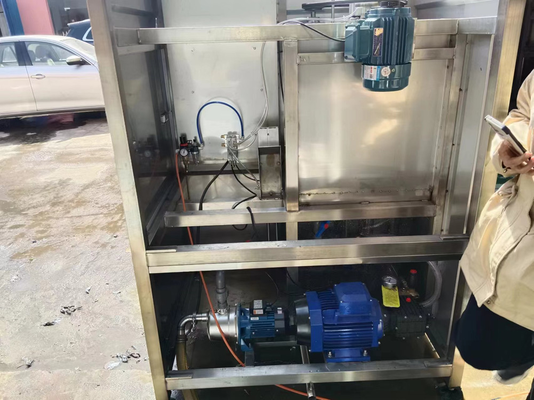
Construction
- 50 × 50 mm stainless steel square-tube welded frame
- Nylon brush material throughout the brush set
- CNP water pump
- Enclosed body on the automatic range to contain spray
- PLC control with an independent electrical box
The parts that fail first on bottle cleaning machines are the ones in contact with cleaning solution all day. Those are the ones worth naming, because they set cleanliness, long-run maintenance cost and the reliability of your workflow.
Before it ships
Every machine is signed off against fixed acceptance criteria, because a fault found on our floor costs hours and the same fault found in your plant costs a shift.
- Motor rotation direction confirmed under power
- Water tank filled and the wash cycle test-run
- Brush contact and nozzle rotation checked in position
- Air supply verified at rated pressure
- Machine runs on our Mass Technology floor before it is crated
- Cycle efficiency checked against the rated bottles-per-hour figure
All multiservice primary containers shall be washed, rinsed, and sanitized by mechanical washers or by any other method giving adequate sanitary results. — 21 CFR 129.80(b)(1)
The rules will define at least one mandatory minimum sanitizing treatment, and it is this at which you must design the washer around.
| Sanitizing route | Minimum treatment specified in 21 CFR 129.80(d) | What the machine has to provide |
|---|---|---|
| Steam | At least 170 °F for at least 15 minutes, or at least 200 °F for at least 5 minutes | Steam supply and dwell time; not a wash-cycle function |
| Hot water | At least 170 °F for at least 15 minutes, or at least 200 °F for at least 5 minutes | Heated tank capability and controlled contact time |
| Chemical | Equivalent to a 2-minute exposure of 50 ppm available chlorine at 57 °F for immersion or circulation; 100 ppm for spray or fog | Solution circulation path and consistent contact across the inner wall |
| Ozone | 0.1 ppm ozone water solution in an enclosed system for at least 5 minutes | Enclosed circuit and dosing, supplied separately from the washer |
Food processing rules put the outcome on the operator, not the machinery industry supplier. The machine performs the mechanical operations: cap removal, high-pressure internal rinsing, external and base brushing, final rinse and drainage. The heated tank option gives you the temperature capability the hot-water route needs.
| The machine does this | Your plant owns this |
|---|---|
| Cap removal, internal rinsing, brushing, final rinse, drainage | Sanitizer selection and concentration |
| Heated tank capability for the hot-water route | Contact time and cycle validation |
| Sterile water as the washing medium at 0.25 MPa | Solution sampling, testing and records |
| Drainage so barrels leave the machine dry rather than pooling | Confirming barrels are cleaned and sanitized before filling |
Solution testing
cleaning and sanitizing solutions must be sampled and tested by the plant as often as needed to assure adequate performance.
Records
everything required under Part 129 must be kept at the plant for not less than 2 years.
Rejection
containers found unsanitary or defective by inspection must be reprocessed or discarded.
Method
sterilizing bottles by steam, hot water, chemical solution or ozone is your plant’s choice from the four routes above.
One boundary is worth stating plainly. Equipment standards such as NSF/ANSI 169 cover materials, design, fabrication, construction and performance of special-purpose food equipment — construction and sanitation design for the food industry, not bactericidal efficacy. We publish machine parameters, not bacteria-reduction results, and you should read any supplier’s hygiene language the same way.
Compare the four routes side by side in the 21 CFR 129.80 sanitizing route selector, which shows the minimum treatment, what the washer must provide and what stays with your plant.
From Plant Layout to Operator Training
We take responsibility for the machine arriving, running and staying running. That is a wider scope than shipping a crate, and it is where most of the cost difference between suppliers actually sits.
-
01
You send your numbers: daily barrel output, bottle type, whether barrels arrive capped, and your available floor area.
-
02
We return an engineer-reviewed quotation within one business day, with equipment, installation and training priced separately.
-
03
Layout: We work to your existing or proposed plant layout to position your cleaning equipment in relation to fillers, drain and utility connections prior to any building.
-
04
Manufacture and factory test. The machine runs on our floor before crating.
-
05
Installation and commissioning. Our engineers install the line on your site.
-
06
On-site operator training. Your staff are trained on the machine they will actually run, in your plant, including the solution-testing and record-keeping duties 21 CFR 129.80 places on the operator rather than on us.
After Commissioning Support
Two-year warranty
Covering all machine parts for a full two years from delivery.
24-hour response
Technical support answered within 24 hours, around the clock.
Five working days
Replacement parts dispatched by international courier within five working days.
Buyer guidance for this equipment class tells purchasers to test exactly these three things before signing — warranty term, parts availability and support responsiveness — because downtime, not purchase price, is what a bottling plant actually pays for. We publish all three so you can hold us to them.
Production Gallery & Workshop
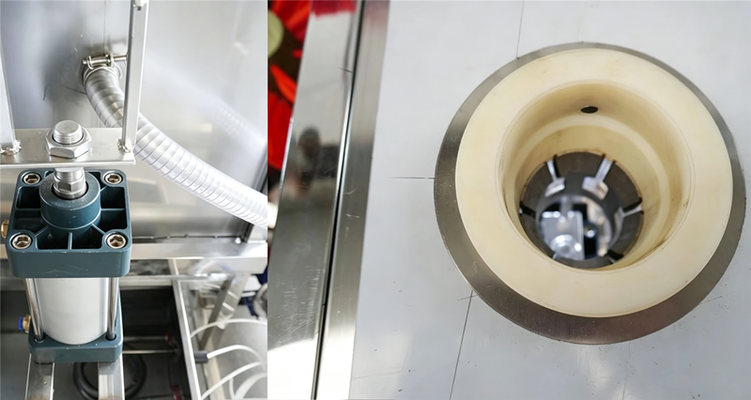
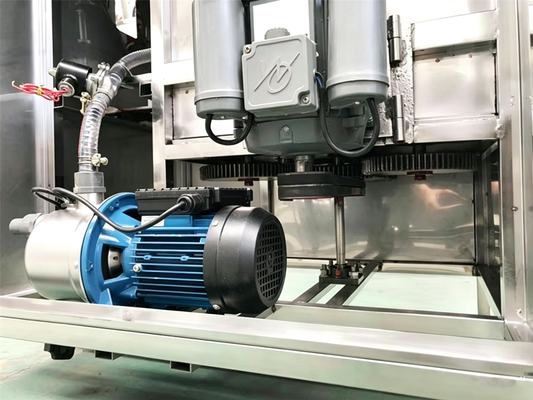
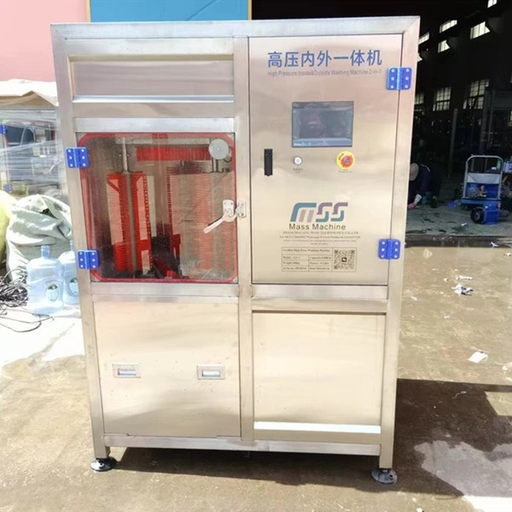
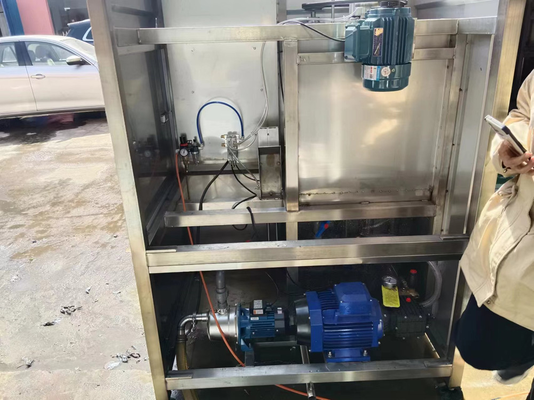
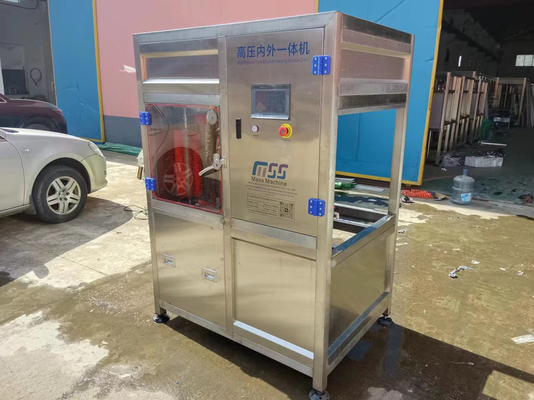
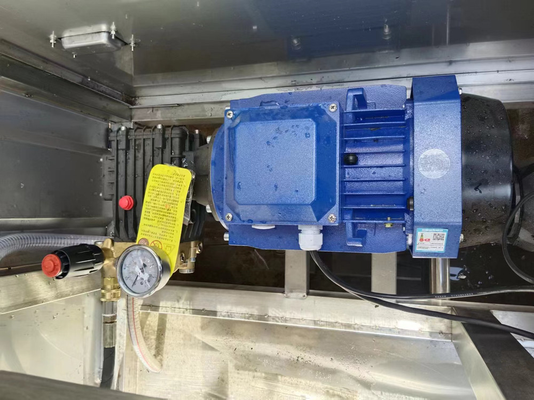
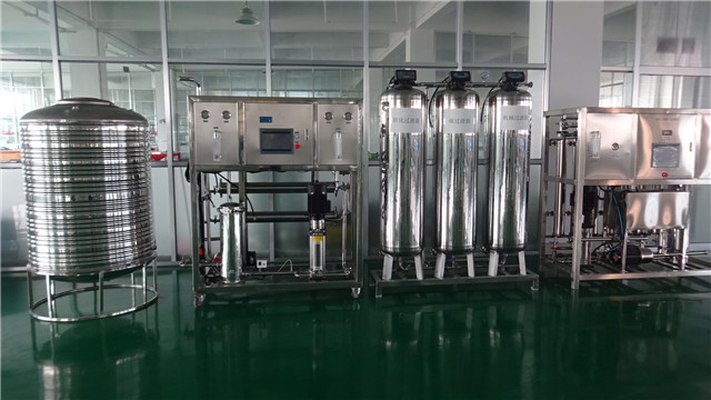
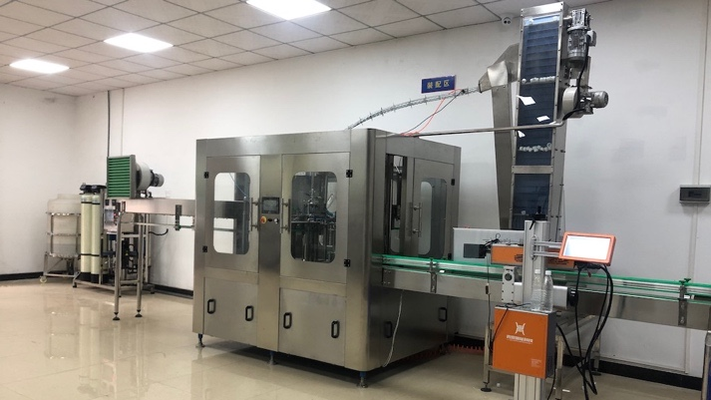
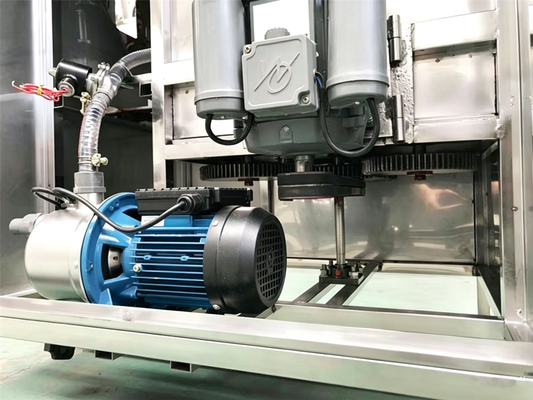
Machines are assembled, wired and test-run at our works in Leyu Development Zone, Zhangjiagang. These are our own machines and our own floor.
System Specifications
- Water bottling machine lines for 200 ml to 2 L PET bottles
- Bottle filling machine and capping machine stations for 3 and 5 gallon barrels
- Water treatment from 0.5–50 T/H feeding the rinse and the product
Beyond washers we build complete 5 gallon barrel filling lines rated 50–2,000 barrels per hour, and matching water treatment plant from 0.5–50 T/H to purify the supply. More background is on our company page.
Where a Semi-Automatic Washer Is the Wrong Choice
Four situations where we would tell you to buy something other than the machine you asked about.
-
Top-of-range throughput assumes drainage, spray dwell and solution condition all hold at that rate. Push the cycle faster than the drain and rinse allow and cleaning quality drops before the counter does.
Instead: size on the filling line’s real rate, then confirm drain capacity at that rate. -
A full 5 gallon bottle weighs approximately 48 pounds, and OSHA identifies frequent torso bending and repeated long reaches as the hazards in handling it.[6]
Instead: OSHA lists intermediate controls — bottle handles, racks at the point of use, two-person lifts, restricted reach distances and articulated lifting arms. A washer does nothing for a handling problem, and you may not need full automation to fix one. -
If your customer or regulator requires documented microbiological performance, that is a plant process qualification — sanitizer, concentration, contact time and test results — not a machine specification.
Instead: specify the machine to support your chosen sanitizing route, then validate the process in your plant. -
A glass bottle line has different breakage, fixture and handling requirements, and the machines on this page are built around the 275 mm by 490 mm plastic barrel envelope.
Instead: ask us about the glass bottle filling lines we build for beer and wine, which are a separate machine family. -
No wash cycle restores a barrel that is crazed, deeply scuffed or stress-cracked. A wash cycle is not a substitute for retiring a barrel, and washing one repeatedly costs you throughput while hiding the problem.
Instead: set a rejection standard at the inspection point and retire barrels against it.
5-Gallon Washer Engineering Tools
-
washer sizing calculator
Calculate the optimal machine dimensions and throughput capacity required for your 5-gallon bottling line based on target BPH.
-
sanitizing route selector
Configure the necessary sanitization stages, chemical contact times, and fluid temperatures to meet strict hygiene standards.
-
utility load planner
Estimate the facility water, electrical, and thermal energy consumption to prepare infrastructure for the washing system.
How much does a 5 gallon bottle washer cost?
There is no list price, because the build changes with throughput, automation level, cap removal and water heating. A single-station semi-automatic machine and a nine-pump STNW-9 are different machines, not different sizes of one machine.
- Send your daily barrel output to get a figure
- Quotation returned within one business day
- Equipment, installation and training priced as separate lines
- An industrial bottle washing machine price only compares fairly against another quotation with the same scope, so check whether installation and training are inside or outside the number you were given
How long is a bottle washer cycle?
Cycle time follows from throughput rather than being quoted directly. On the semi-automatic machines the washing time is pre-set and the machine stops when the timer finishes.
- STNW-2 at 150–200 BPH: roughly one barrel every 18–24 seconds
- STNW-9 at 1000–1200 BPH: roughly one barrel every 3–3.6 seconds across nine pumps
- Effective drainage and adequate spray soak set performance’s absolute minimum.
Does this washer sanitize bottles, or only wash them?
The machine performs the mechanical operations, and under 21 CFR 129.80 washing, rinsing and sanitizing are three distinct requirements. We publish machine parameters, not bacteria-reduction test results.
- Machine side: cap removal, high-pressure internal rinsing, brushing, final rinse, drainage
- Machine option: heated tank, which supports a hot-water sanitizing route
- Your side: sanitizer choice, concentration, contact time and validation
What sanitizer concentration does 21 CFR 129.80 require?
The regulation sets four alternative minimum treatments and your plant selects one.
- Chemical, immersion or circulating: equivalent to a 2-minute exposure of 50 ppm available chlorine at 57 °F
- Chemical, spray or fog: 100 ppm available chlorine at 57 °F or equivalent
- Steam or hot water: at least 170 °F for 15 minutes, or at least 200 °F for 5 minutes
- Ozone: 0.1 ppm ozone water solution in an enclosed system for at least 5 minutes
What records does a US bottled water plant keep for bottle washing?
Record-keeping sits with the plant rather than the equipment supplier, and the retention period is fixed in the regulation.
- Cleaning and sanitizing solutions sampled and tested as often as needed to assure adequate performance
- Records required under Part 129 kept at the plant for not less than 2 years
- Containers found unsanitary or defective on inspection reprocessed or discarded rather than filled
Which model matches my filling line?
Match the washer to the filler’s real output, not its nameplate. The sizing table above maps filling-line BPH to model, pump count, motor rating and floor area.
- A washer faster than the filler just queues barrels
- A washer slower than the filler becomes your real plant output
- Refer to precondition column – drainage capacity, air supply, floor loading and ceiling height are contributing to more sizing failure then throughput
Can the washer be integrated into an existing filling line?
Yes, our STNW line comes with conveyor loading in and out and has PLC automation with its own standalone electrical box. The whole line is also set up to feed directly onto an automatic filler.
- Send your existing conveyor height
- Send your control interface type
- Send the available run length between existing machines
Do returned barrels need the caps removed first?
Sure, and its a seperate function than washing in. The cap and washer pull the cap off with an air cylinder, the cap is pulled off before the barrel wash is done.
- Air compressor at 0.6–0.8 MPa required for the de-capper
- Station draws 1.12 kW without heating, 2.12 kW with heating
- By keeping the cap whole and discarding the top, we can have the lid disinfected and use again without just throwing it away
How much water does a bottle washer use?
Water consumption is as much of a supply-mode decision as a machine choice – so be ready to tell us the cost of your water whenever you request an estimate.
- Non-circulating: the GYCX-1 uses 0.6 tons per hour, fresh to drain each cycle
- Circulating: wash water recovered and re-used, lowest consumption
- Double supply: recovered water for the wash pass, fresh water for the final rinse
What utilities does the machine need?
Utility the sizes change over the range with the greatest change being in step 2 to 3.
- Compressed air at 0.3–0.7 MPa on the automatic range
- 500 L/min air consumption on the semi-automatic brush washer
- Electrical requirements: 220 V / 380 V, 50/60 Hz – customized for your premises.
- Connected load from 1.12 kW on the wash station to 27 kW on the STNW-9
What is the warranty and how fast are spare parts?
All three of these are published so you can hold us to them rather than discover them after commissioning.
- Two-year warranty covering all machine parts
- 24-hour engineer response on technical support
- Replacement parts dispatched by international courier within five working days of the request being confirmed
Is a barrel washer the same thing as a bottle washer?
For 18.9 L returnable water containers, yes — buyers in many markets say barrel washer or bucket washer for this same machine. If you searched for a high pressure barrel washer for drinking-water barrels, this is the page you wanted.
- In US English, barrel more often means a 55 gallon drum or a wine cask
- That is different equipment with different pressures and fixtures
- This page covers the 3 and 5 gallon returnable water barrel only
What else is this machine called?
The same equipment is listed under several names, which makes comparing quotations harder than it should be. These all describe machines in the class on this page.
- Industrial bucket washing machine, or a small industrial bottle washing machine at the lower capacities
- Commercial bottle washer and sterilizer — note that the sterilizing half is a plant process, whichever name a supplier uses
- Barrel washer, bucket washer or jar washer in markets that translate the Chinese trade term directly
- A glass bottle washer and sterilizer is not in this class; that is a separate machine family for returnable glass
Should I buy new or look for used 5 gallon bottling equipment?
Used equipment can be the right call when your output is settled and you can inspect the machine running. It becomes the wrong call when the pump set, brushes and seals are already near replacement, because those are the parts that decide wash quality.
- Ask what a rebuild costs before comparing against a new 5 gallon bottling equipment price
- Check whether spare parts are still supplied for that model at all
- A manual water bottling machine or a small scale water bottling machine may fit better than a used automatic line you cannot support
Do you supply the filling machine as well?
Yes. We build the stages either side of the washer, so the line can be quoted as one project.
- Complete 5 gallon barrel filling lines rated 50–2,000 barrels per hour
- Water treatment from 0.5–50 T/H
- See the 5 gallon water filling machine page for the filling side
How many times can a polycarbonate barrel be re-used?
Service life depends on handling, wash chemistry and storage than a fixed count, so figures that are industry-typical for one operation rarely transfer to another. Set your own rejection standard and apply it at the inspection point.
- Judge on scuffing depth, crazing and neck damage rather than trip count
- Retire barrels before they consume another wash cycle
- A wash cycle does not restore a barrel that is already past service life
What information do you need to quote?
Five items are enough for a first quotation, and a sixth makes it accurate.
- Daily or hourly barrel output
- Bottle type and size
- Whether barrels arrive capped
- Available floor area and ceiling height
- Power supply available on site
- Optional but useful: the make and rate of your existing filler, so we match the washer to it instead of guessing