Get in Touch with Masstech
What Does WTP Mean? Water Treatment Plant (WTP) Engineering, Business Economics, and Slang Definitions

Contents
show
Quick Multi-Domain Engineering & Reference Summary, WTP Meaning (TL;DR):
- Civil, municipal, and beverage engineering: The primary WTP meaning is Water Treatment Plant. Under US EPA 40 CFR Part 141 drinking water standards, filtered utilities must keep finished turbidity within the 0.3 NTU limit (never exceeding 1 NTU) and hold free chlorine below 4.0 mg/L.
- Plant classification boundary: A potable Water Treatment Plant purifies raw surface water or groundwater for supply. A Sewage Treatment Plant (STP) treats domestic sewage, and an Effluent Treatment Plant (ETP) treats industrial process wastewater.
- Beverage RO plant sizing & investment share: Per Stark Water’s 1,000 LPH (1 m³/h) RO sizing benchmarks, industrial reverse osmosis plants operate at 50% to 75% recovery. On a turnkey bottling line, MassTech small-scale bottling project data shows the filling machine accounts for 40% of capital investment while water treatment and auxiliary systems account for 60%.
- Business, blueprints, and texting: In economics, the acronym refers to Willingness to Pay, or consumer surplus (equal to Willingness to Pay less market price). On blueprints for construction, it denotes a Water Treatment Plant, Work to Permit, or Wall Tie Placement. In text messages, it represents “What’s the Plan?” or “What’s the Point?”
What Does WTP Stand For Across Engineering, Business, and Everyday Texting?
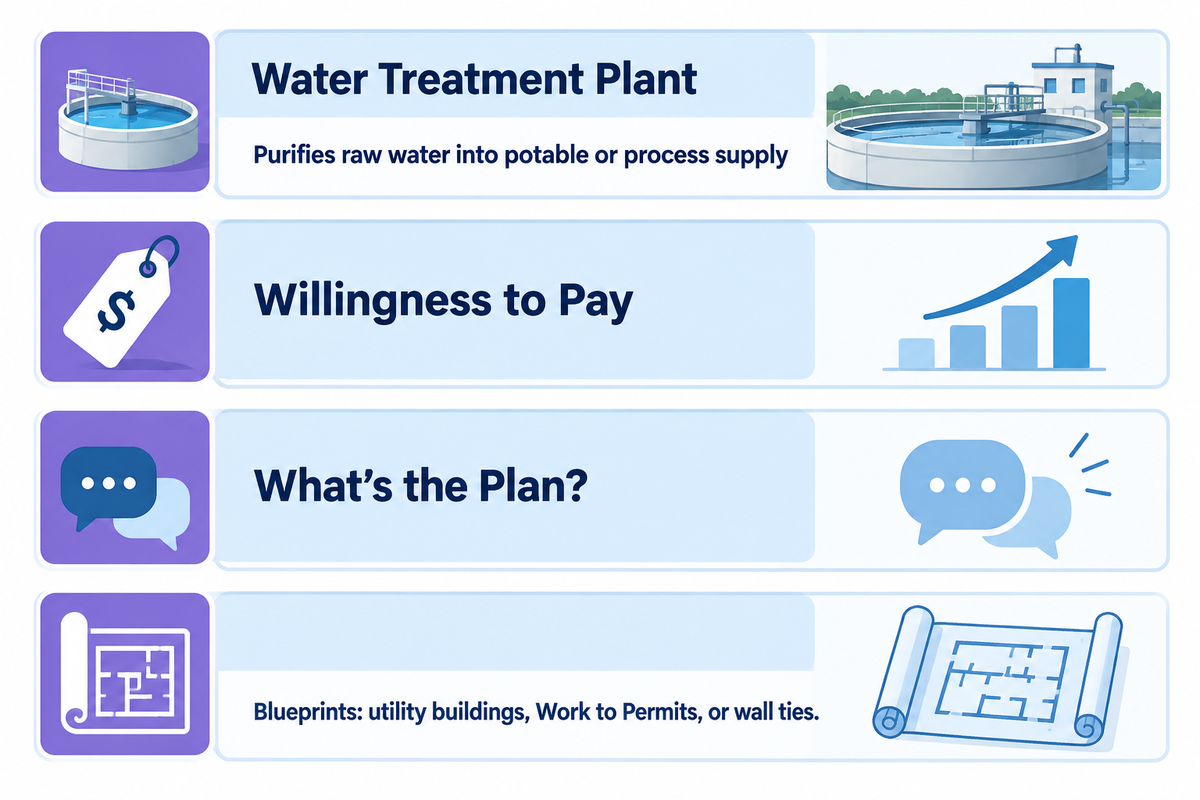
The primary WTP meaning is Water Treatment Plant in civil and industrial engineering (where a facility purifies raw water into potable or process supply), Willingness to Pay in business and microeconomics, and “What’s the Plan?” in common texting. On blueprints for construction, the same letters denote utility buildings, safety Work to Permits, or wall ties.
Readers searching for the meaning of “wtp” commonly come across pages containing lists of economic formulae and chat abbreviations. While technical buyers, utility planners and students encounter this three-letter word across nine distinct sub-contexts. You can define which expansion applies by looking at the surrounding measurement units and adjacent acronyms in your document.
Within utilities and beverage manufacturing, the letters are always in conjunction with flow rates, e.g. LPH or MLD. Utility reports also provide information on nephelometric turbidity units (NTU) and total dissolved solids (TDS, e.g. in ppm or mg/L). With the same letters appearing in a pricing deck or Harvard Business School case study, with dollar signs, demand curves and reservation prices, it’s clear that different areas of Economics rely on the use of the acronym.
The abbreviation appears within MEP legends or site safety checklists on architectural blueprints. Across smartphone messaging apps, lowercase letters appear inside short social questions without technical numbers. Below we have the 4-Domain WTP Disambiguation & Document Marker Matrix from nine industry categories. It’s based on primary references from the U.S. Centers for Disease Control and Prevention (CDC) drinking water treatment guide and the Harvard Business School Online’s Willingness to Pay framework
| Context Category & Domain Type | Full Form Expansion | Core Function or Definition | Diagnostic Unit Markers in Text | Adjacent Acronyms in Same Document |
|---|---|---|---|---|
| 1. Municipal Civil & Environmental Engineering | Water Treatment Plant (or Works) | Public utility purifying river, lake, or aquifer water into safe drinking water | ≤0.3 NTU turbidity (95% monthly), 4.0 mg/L chlorine MRDL | DWTP, SWTR, STP, WWTP, EPA, NTU |
| 2. Beverage & Bottled Water Manufacturing | Water Treatment Plant (Industrial Skid) | Sanitary filtration, reverse osmosis (RO), or ultrafiltration (UF) train feeding fillers | 1,000 LPH (1 m³/h), ≥250 ppm TDS, <0.1 ppm Cl2, ≤0.010 mg/L bromate | RO, UF, CIP, SDI, BPH, SS316L, GAC |
| 3. Industrial Utility & Wastewater Comparison | Water Treatment Plant (vs. STP / ETP) | Upstream raw water purification contrasted against downstream sewage and effluent plants | 50%–75% recovery, SDI ≤ 5, 99.8% salt rejection | STP, ETP, WWTP, BOD, COD, TSS, ZLD |
| 4. Business, Marketing & Microeconomics | Willingness to Pay | Maximum reservation price a customer is prepared to pay for a product or service | Consumer Surplus (CS = WTP − P), reservation price curves | WTA (Willingness to Accept), ATP, CS, PSM |
| 5. Civil & MEP Construction Blueprints | Water Treatment Plant / Wall Tie Placement | Utility building callout on site plans or structural masonry veneer tie schedule | Drawing legends, elevation callouts, anchor grid spacing | MEP, P&ID, HVAC, BoQ, CSI |
| 6. Site EHS & Industrial Safety Management | Work to Permit (or Work-to-Proceed) | Safety gate requiring a signed Permit to Work before confined-space or hot work begins | Lockout/tagout sign-off logs, gas test clearances | PTW, EHS, LOTO, JSA, OSHA |
| 7. Everyday Texting & Social Media Slang | What’s the Plan? / What’s the Play? / What’s the Point? | Informal message asking about social plans or expressing frustration in a chat | Question marks, casual time prompts (“tonight?”), chat emojis | WYD, WBU, LMK, HMU, ETA, TBD |
| 8. Online Gaming & Multiplayer Lobbies | Want to Play? (or Welcome to the Party) | Quick squad invite sent in Discord, console messages, or multiplayer match queues | Lobby invite codes, match tags, voice channel pings | LFG, AFK, GG, GLHF, PVP |
| 9. U.S. Civics & Constitutional History | We the People | Opening three words of the 1787 U.S. Constitution Preamble and civic petition portals | Constitutional Article citations, petition signature counts | POTUS, SCOTUS, FOIA |
The acronym table covers the domains of civil engineering and the social and economic sciences.
What Is a Water Treatment Plant (WTP) in Civil and Environmental Engineering?
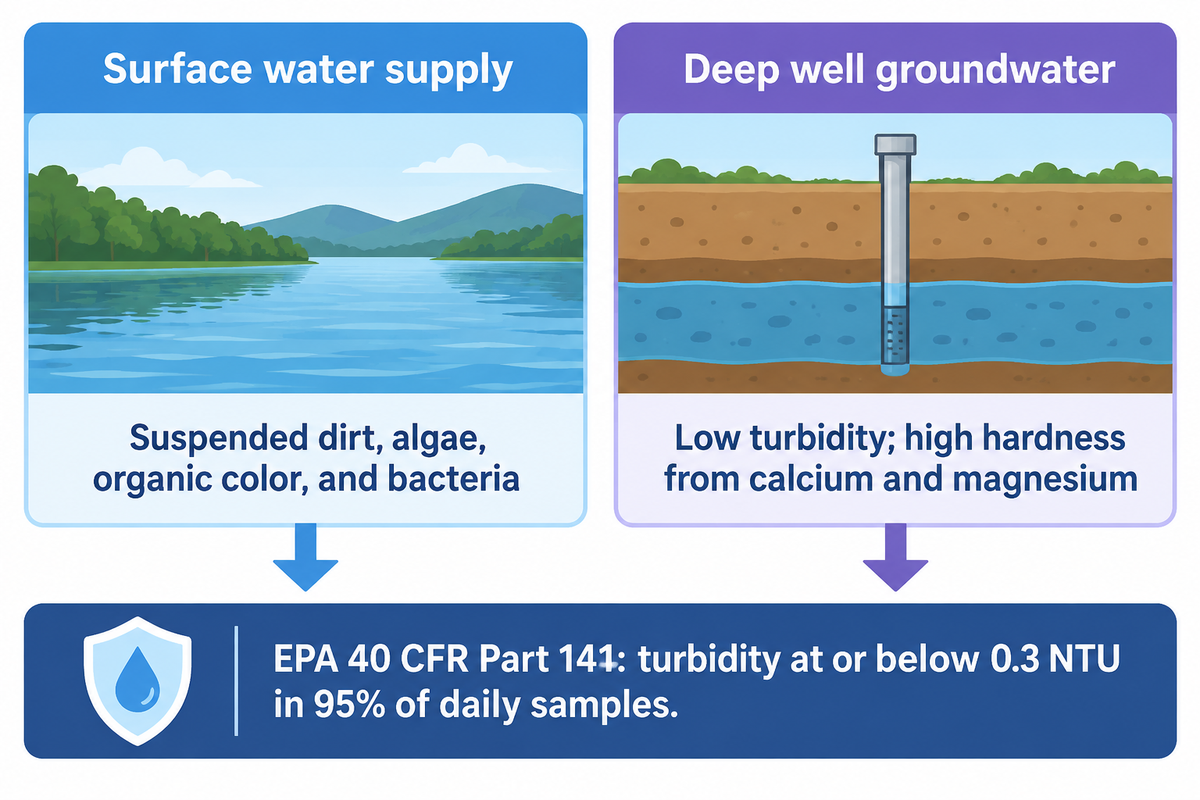
A Water Treatment Plant is an infrastructure facility that purifies raw water from rivers, lakes, or underground aquifers into safe potable or process water. Per the US EPA National Primary Drinking Water Regulations (40 CFR Part 141), facilities with filtered plants must keep turbidity at or below 0.3 NTU in 95% of daily samples in any month.
All municipal or factory facilities begin with the chemistry of its raw intake supply and its target water quality. The raw water supply from rivers and reservoirs often contains high levels of suspended dirt, algae, organic color, and seasonal bacteria loads or virus. Each natural impurity and harmful pathogen must be removed prior to distribution. However, surface water supplies often has low dissolved mineral salts.
By contrast, groundwater pumped from deep wells passes through natural rock strata that filter out large suspended solids. As a result, well water has low turbidity but may have high levels of hardness due to the dissolved forms of calcium and magnesium, dissolved iron and manganese and even brackish salts. The design of the treatment system plants is based on the specific parameters of the raw water used for the production of potable water and high-speed beverage bottling. A major benefit of multi-barrier filtration is consistent output quality across seasonal source shifts.
According to 40 CFR Part 141 drinking water regulations, finished water turbidity shouldn’t exceed 1 NTU. The plant must achieve 99.9% removal or inactivation of Giardia lamblia cysts and 99.99% removal of viruses. When utilities disinfect distribution pipes with chlorine or chloramines, the Maximum Residual Disinfectant Level (MRDL) is 4.0 mg/L, while the MCL for bromate is 0.010 mg/L.
Demand for advanced purification equipment continues to increase in the public sector as well as in private industries. According to Mordor Intelligence’s 2026-2032 Water and Wastewater treatment Technologies Report, the global market size was USD 69.08 billion in 2026 and is expected to be USD 97.43 billion by 2032 (5.87% CAGR). While municipal applications hold 57.59% share in 2026, the food and beverage segment is growing fastest at 7.4% CAGR.
WTP vs. STP vs. ETP vs. WWTP: What Is the Difference Between Water Treatment Plants?
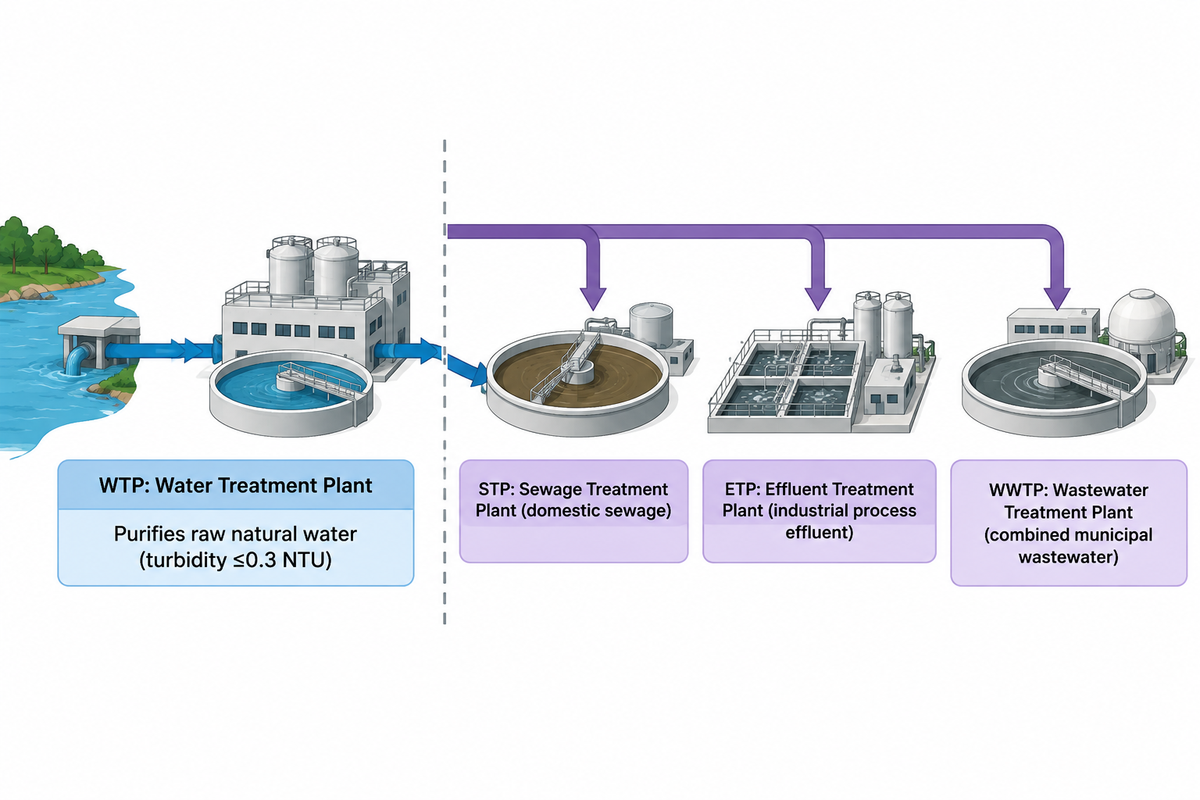
A Water Treatment Plant (WTP) purifies raw natural water at the start of the utility cycle to give safe drinking or factory ingredient water with turbidity (≤0.3 NTU) while a Sewage Treatment Plant (STP) treats domestic sewage, an Effluent Treatment Plant (ETP) neutralizes industrial process effluent, and a Wastewater Treatment Plant (WWTP) manages the combined municipal wastewater after usage.
What Is WTP and STP?
Water and wastewater engineers use WTP (Water Treatment Plant) to clean raw surface and well water for a community or factory, while an STP (Sewage Treatment Plant) treats domestic wastewater from homes, hotels and offices. The STP releases treated domestic wastewater for environmental release or non-potable reuse after the organic wastes are digested by biological aeration.
When preparing industrial building permits, project managers must distinguish four different types of plant classifications. The border separating these classifications is based on the influent source, the type of pollutants, and the regulatory discharge limits, as described in Inter.Globe’s engineering comparison of STP, ETP, and WTP facilities. A potable water plant removes natural clay, odor, taste, and trace metal, as well as microbes and pathogens to provide clean water to the supply lines.
The effluent downstream of consumption is delivered to an STP (or WWTP) which receives domestic wastewater with biodegradable organics, suspended solids, ammonia, and fecal coliforms. A biological activated sludge process (or MBRs) are used to biologically oxidize organics. An ETP receives beverage CIP washes, textile dyeing, and pharmaceutical and chemical industry process wastes. Because of the synthetic chemicals and pH shifts associated with industrial waste, an ETP uses a combination of chemical neutralization, DAF, and biological polishing.
A modern commercial beverage plant actually operates two water plants under one roof. An upstream sanitary purification skid purifies incoming well or municipal water into sterile product water for the filling machine. A downstream ETP neutralizes alkaline caustic soda and acid rinse and syrup washdowns from CIP tanks prior to municipal sewer discharge. To keep facility Piping and Instrumentation Diagrams (P&IDs) clear, we structured the 4-Facility Water Streams and Regulatory Boundary Matrix below.
| Facility Acronym & Name | Influent Water Source | Primary Target Contaminants | Core Unit Operations | Typical Output / Regulatory Limit | Role in a Beverage Factory |
|---|---|---|---|---|---|
| WTP (Water Treatment Plant) | Raw river, lake, reservoir, borehole, or municipal tap water | Turbidity, colloids, dissolved salts (TDS), hardness, iron, bacteria, viruses | Coagulation, sand & GAC filtration, softening, RO / UF membranes, UV / ozone | Turbidity ≤0.3 NTU (never >1 NTU); 99.9% Giardia & 99.99% virus removal | Upstream clean ingredient and bottle-rinsing water supply |
| STP (Sewage Treatment Plant) | Domestic blackwater and greywater from washrooms, kitchens, and offices | Biodegradable domestic organics (BOD), suspended solids (TSS), ammonia, coliforms | Bar screening, grit removal, biological aeration (MBBR / MBR / SBR), secondary clarifier | Meets municipal secondary biological discharge and non-potable landscape reuse codes | Treats employee sanitary sewage and canteen wastewater |
| ETP (Effluent Treatment Plant) | Industrial manufacturing process discharge, CIP caustic/acid flushes, reject brines | High chemical oxygen demand (COD), alkaline/acidic pH swings, process chemicals | pH neutralization, chemical coagulant dosing, dissolved air flotation (DAF), biological + RO | Meets local industrial trade-effluent COD, pH, and heavy-metal discharge permits | Downstream neutralization of CIP chemical washes and syrup rinses |
| WWTP (Wastewater Treatment Plant) | Combined municipal sewer networks and pre-treated industrial wastewater streams | Combined organic loads, nitrogen, phosphorus, suspended solids, and micropollutants | Primary settling, biological nutrient removal (BNR), tertiary filtration, UV/chlorine disinfection | NPDES or national river/ocean discharge compliance or indirect aquifer recharge | Municipal receiving utility accepting pre-treated factory sewer outflow |
How Does a Water Treatment Plant Work? The 6 Core Purification Stages
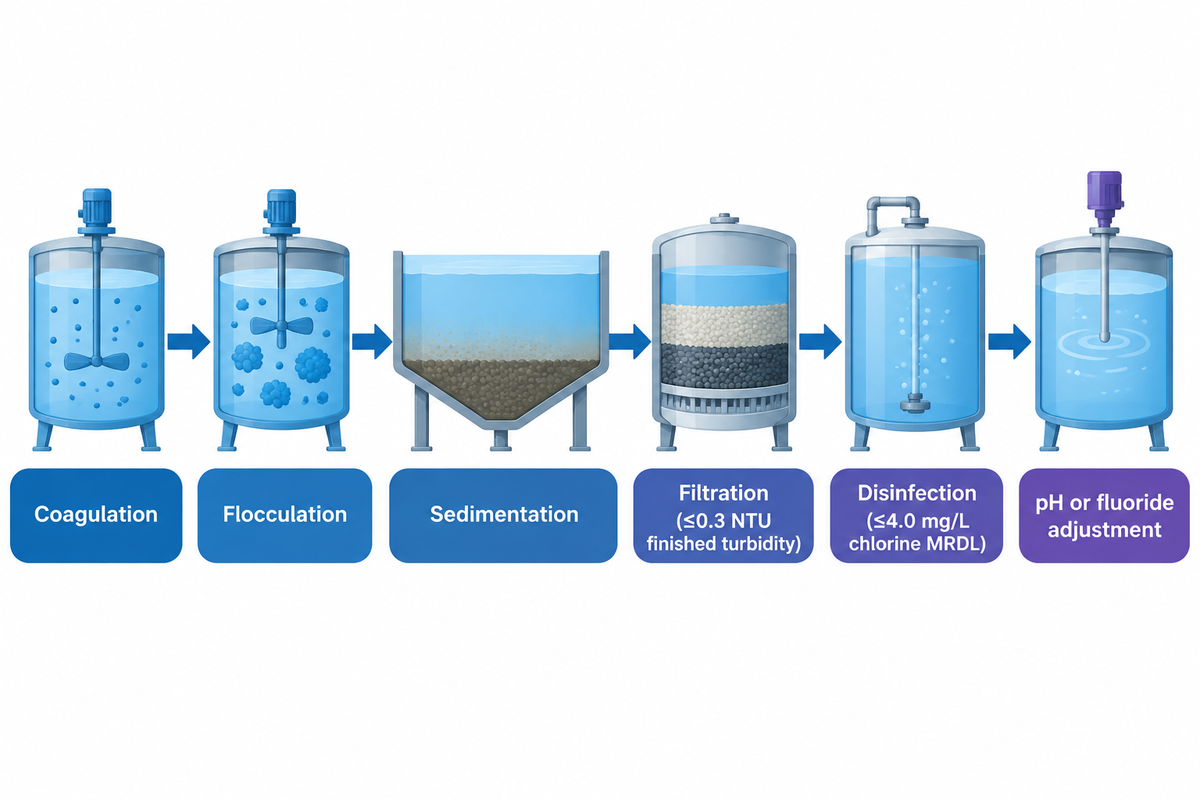
As mentioned in the U.S. CDC’s official six-stage drinking water treatment process, a typical plant includes coagulation, flocculation, sedimentation, filtration, disinfection and pH or fluoride adjustment. In the case of large-scale industrial beverage plants, engineers adapt this water treatment process and combine granular media pretreatment with high-pressure membrane filtration and ozone sterilization.
Sequencing coagulation, flocculation, sedimentation, media filtration (≤0.3 NTU finished turbidity), and disinfection (≤4.0 mg/L chlorine MRDL) around raw water solids and pathogen loads prevents equipment misconfiguration. First, during Coagulation, dosing pumps inject positively charged aluminum sulfate (alum) or iron salts into raw water. These positive ions neutralize the negative surface charge of suspended clay and dissolved organic dirt. Second, during Flocculation, gentle paddle mixers stir the water so neutralized particles collide and bind into visible clumps called flocs.
Third, during Sedimentation, the water flows into large clarification basins. Heavy flocs then settle to the bottom by gravity. Fourth, during Filtration, clarified water is passed through layers of quartz sand, gravel and/or activated carbon (or Hollow Fiber Membranes) to remove microscopic particles, parasite cysts, and chemical odor. Under the US EPA Surface Water Treatment Rule Turbidity Guidance Manual, conventional media filters must reduce effluent turbidity to 0.3 NTU or less.
Fifth, during Disinfection, utilities add chlorine or chloramine (or use ultraviolet light and ozone) to kill remaining bacteria, viruses and parasites. The CDC states UV light and ozone are very effective in treating water within the plant; however, they don’t provide a lasting residual and leave miles of city water distribution lines unprotected. Because of this, municipal water treatment plants keep a chemical chlorine residual (up to the 4.0 mg/L of the EPA MRDL) to treat the water in transit. Sixth, utilities perform pH and Fluoride Adjustment so finished water does not corrode plumbing.
An industrial beverage plant reverses that chlorine logic. Because municipal free chlorine destroys polyamide reverse osmosis (RO) membranes, beverage plants install (complete beverage water treatment system configurations) that strip free chlorine to below 0.1 mg/L (<0.1 ppm) using granular activated carbon before the membrane skid. After RO membrane purification, the bottling plant uses ozone or UV before the sterile filler, therefore, sealing bottles without chemical chlorine taste.
| Stage Order | Municipal Drinking Water WTP (CDC / EPA Train) | Industrial Bottled Water & Beverage RO WTP Train | Critical Control Threshold |
|---|---|---|---|
| Stage 1 | Coagulation (adding positively charged aluminum or iron salts) | Raw Water Buffer Tank + Sanitary SS304 Booster Pump | Steady positive feed flow into pretreatment vessels |
| Stage 2 | Flocculation (gentle mixing to form larger, heavier flocs) | Quartz Sand Multimedia Filter (graded silica sand & anthracite) | Filtration turbidity ≤0.3 NTU (never >1 NTU per EPA SWTR) |
| Stage 3 | Sedimentation (gravity settling of heavy floc solids) | Granular Activated Carbon (GAC) Filter + Antiscalant / Softener | Free chlorine tolerance <0.1 ppm (DuPont FilmTec Manual 45-D01504-en) |
| Stage 4 | Filtration (sand, gravel, charcoal, UF, or RO media beds) | Micron Security Cartridge Filter upstream of high-pressure pump | Feedwater Silt Density Index (SDI Max. level 5 per DuPont FilmTec) |
| Stage 5 | Disinfection (chlorine/chloramine residual up to 4.0 mg/L MRDL) | High-Pressure Thin-Film Composite RO Skid (or Hollow-Fiber UF) | 99.8% stabilized salt rejection (BW30XHR-440) or ≥250 ppm TDS (UF) |
| Stage 6 | pH & Fluoride Adjustment for distribution corrosion control | Ozone Mixing Tower + UV Sterilizer + Sealed SS316L Pure Water Tank | Bromate ≤0.010 mg/L (10 μg/L per 21 CFR 165.110); pH 8 to 6 control |
How Industrial RO and UF Water Treatment Plants Feed Bottled Water and Beverage Lines
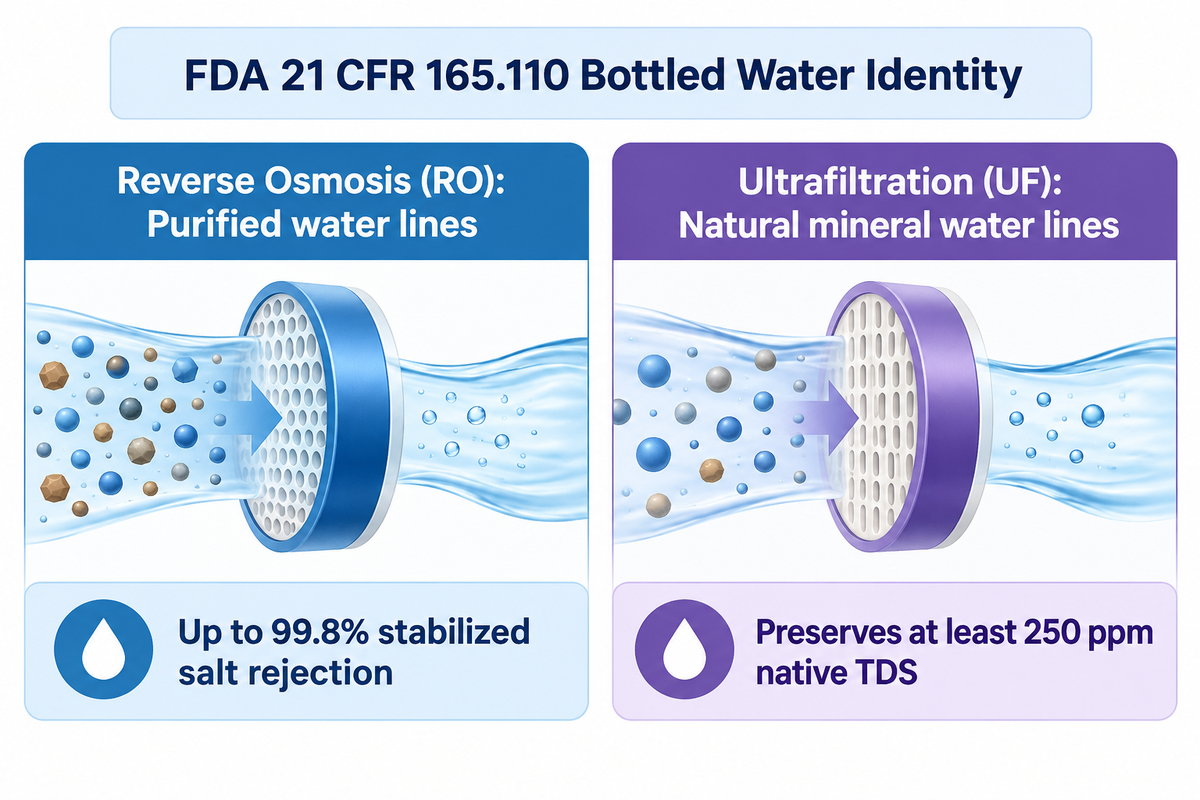
Industrial beverage plants select between Reverse Osmosis (RO) and Ultrafiltration (UF) based on legal water identity under US FDA 21 CFR 165.110 bottled water regulations. Purified water lines use thin-film composite RO membranes (up to 99.8% stabilized salt rejection) to meet USP purified water standards. Natural mineral water lines must preserve at least 250 ppm native TDS, so they use hollow-fiber UF membranes.
A frequent procurement mistake is ordering a high-rejection RO machine for a natural spring or mineral water project. Under 21 CFR 165.110(a)(2)(iii), mineral water must originate from a protected underground source containing not less than 250 parts per million (ppm) total dissolved solids, and no minerals may be added to this water. Passing spring water through an RO membrane strips out the natural calcium and magnesium ions, and, therefore, disqualifies it from being classified as mineral water. You can trace how FDA 21 CFR 165.110 mineral and purified bottled water standards evolved in our dedicated regulatory history guide.
When the aim is to produce United States Pharmacopeia (USP) grade purified water or to produce standardized soft drink syrup water, the industry relies on the membrane architecture by John E. Cadotte. Granted U.S. Patent 4,277,344 (Interfacially synthesized reverse osmosis membrane) on July 7, 1981 (assigned to FilmTec Corp.), Cadotte polymerized an aqueous aromatic polyamine with trimesoyl chloride on a microporous polysulfone support. That interfacial reaction created an ultrathin polyamide barrier (0.05 to 5 μm) delivering over 98% to 99% salt rejection at 15 gfd water flux.
Brackish water elements constructed per Cadotte’s chemistry (as described in the DuPont FilmTec BW30XHR-440 membrane element product data sheet) allow for 99.8% stabilized salt rejection. Within beverage manufacturing plants, industrial reverse osmosis water treatment systems are built in either single or double pass configurations. Engineering companies such as Krones, Sidel and GEA, construct mega-plant water rooms. Meanwhile, turnkey bottling integrators such as MassTech engineer sanitary SS304/SS316L RO and UF skids directly synchronized with rotary rinsing-filling-capping monoblocks.
How to Size an Industrial WTP (LPH and m3/h) to Match Bottling Line Throughput
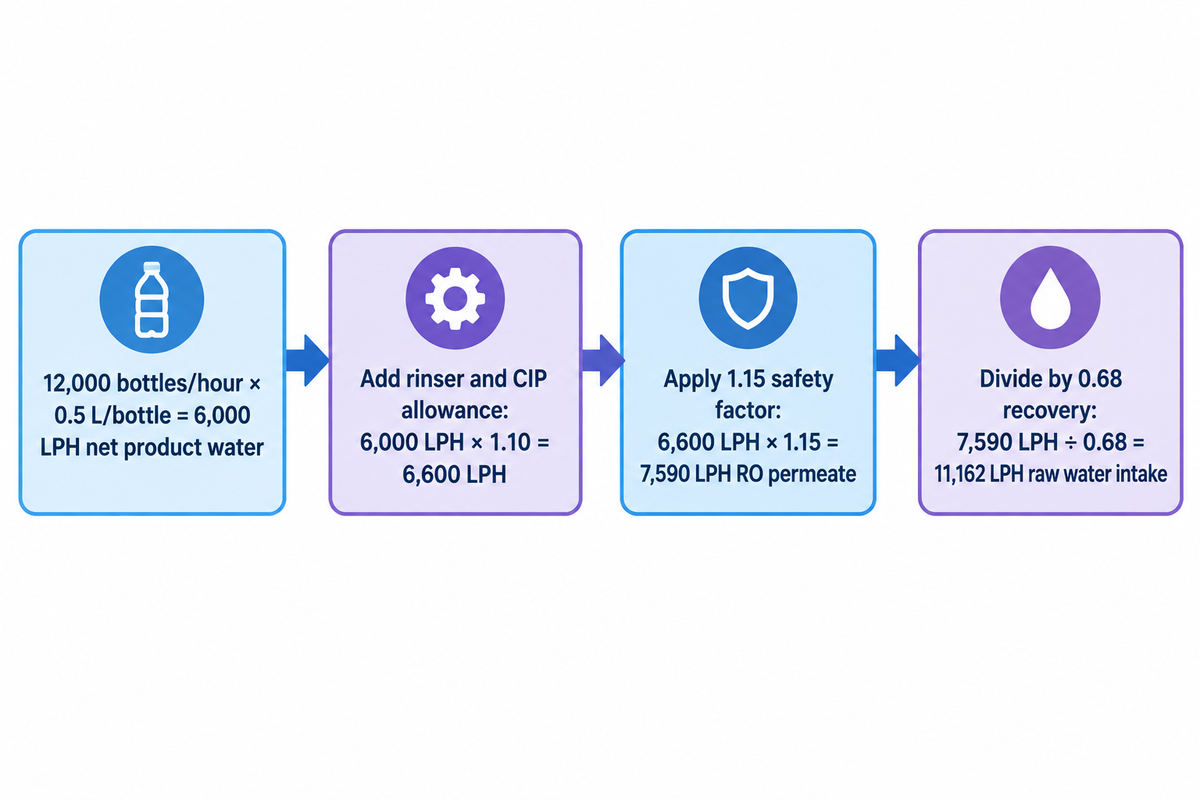
To size an industrial RO plant for a bottling line, consider the total amount of bottle fill, added with rinsing and CIP allowances, and multiplied by a peak safety margin. Divide the total by the single-pass membrane recovery rate (50% to 75% per the Stark Water 1,000 LPH RO system sizing guide and the DuPont FilmTec Reverse Osmosis Membranes Technical Manual 45-D01504-en). The answer will give you the required capacity of the raw water pump.
If a water plant is sized only for the net liquid in the bottles, it would result in filler starvation during peak production. For example, a 12,000 BPH filler running 500 mL (0.5 L) PET bottles puts 6,000 LPH of product water into bottles. However, a rotary rinse water demand exists as well as membrane flush and CIP preparation.
Further, variations in raw water temperature and gradual membrane fouling lead to reduction in permeate flux between chemical cleanings. Design safety factors are built to ensure the pure water storage tank never runs dry. Your line’s hourly bottle output and utility demand can be corroborated with our online water bottling line capacity calculator, or you can use the Bottling-Line-to-WTP Mass-Balance Sizing Framework in the worked example below.
Worked Engineering Calculation, Bottling-Line-to-WTP Mass-Balance Sizing Framework (12,000 BPH Line):
- Step 1 (Net Bottle Fill Demand): 12,000 bottles/hour × 0.5 L/bottle = 6,000 LPH (6.0 m³/h) net product water.
- Step 2 (Add Rinser & CIP Process Allowance): 6,000 LPH × 1.10 (rotary rinser & auxiliary allowance factor) = 6,600 LPH.
- Step 3 (Required RO Permeate Capacity with 1.15 Safety Factor): 6,600 LPH × 1.15 = 7,590 LPH (7.59 m³/h) → Specify an 8,000 LPH (8 m³/h) RO WTP skid with a sanitary SS304/SS316L buffer tank.
- Step 4 (Operating Raw Feedwater & Concentrate Stream at 0.68 Single-Pass Recovery within the 50%–75% range, based on required permeate demand): Operating Raw Feed Flow = 7,590 LPH ÷ 0.68 = 11,162 LPH (11.16 m³/h) raw water intake; Concentrate Reject = 11,162 − 7,590 = 3,572 LPH (reclaimed for cooling towers or crate washing).
The 12,000 BPH mass-balance calculation reflects 500 mL PET bottle filling at a 68% single-pass reverse osmosis recovery rate. The same mass-balance math applies when sizing pretreatment and RO skids for bulk returnable jugs on 5-gallon barrel water washing, filling, and capping lines. Use the lookup matrix below (aligned with AMPAC USA industrial RO 6K, 100K+ GPD capacity ratings and Stark Water’s 1,000 LPH / 1 m³/h recovery benchmarks) to match filler speed to WTP ratings.
| Bottling Line Tier & Speed (500 mL) | Net Product Fill Flow | Required Permeate (×1.10 Rinse, ×1.15 Safety) | Recommended RO Skid Rating | Published Reference Benchmark |
|---|---|---|---|---|
| 1,500 BPH (T1 Starter Ceiling) | 750 LPH (0.75 m³/h) | 949 LPH (0.95 m³/h) | 1,000 LPH (1 m³/h) | Stark Water 1,000 LPH (1 m³/h) permeate at 50%–75% recovery |
| 2,000+ BPH (T2 Automatic Entry) | 1,000+ LPH (1.0+ m³/h) | 1,265+ LPH (1.27+ m³/h) | 3.18 m³/hr (20,000 GPD) | AMPAC USA Model AP20K-LX (20,000 GPD / 3.18 m³/hr rating) |
| 12,000 BPH (Commercial Rotary Line) | 6,000 LPH (6.00 m³/h) | 7,590 LPH (7.59 m³/h) | 8,000–10,000 LPH (8–10 m³/h) | Worked mass-balance example (11,162 LPH raw feed at 0.68 recovery) |
How Much Does an Industrial RO Water Treatment Plant Cost (1,000 to 20,000 LPH)?
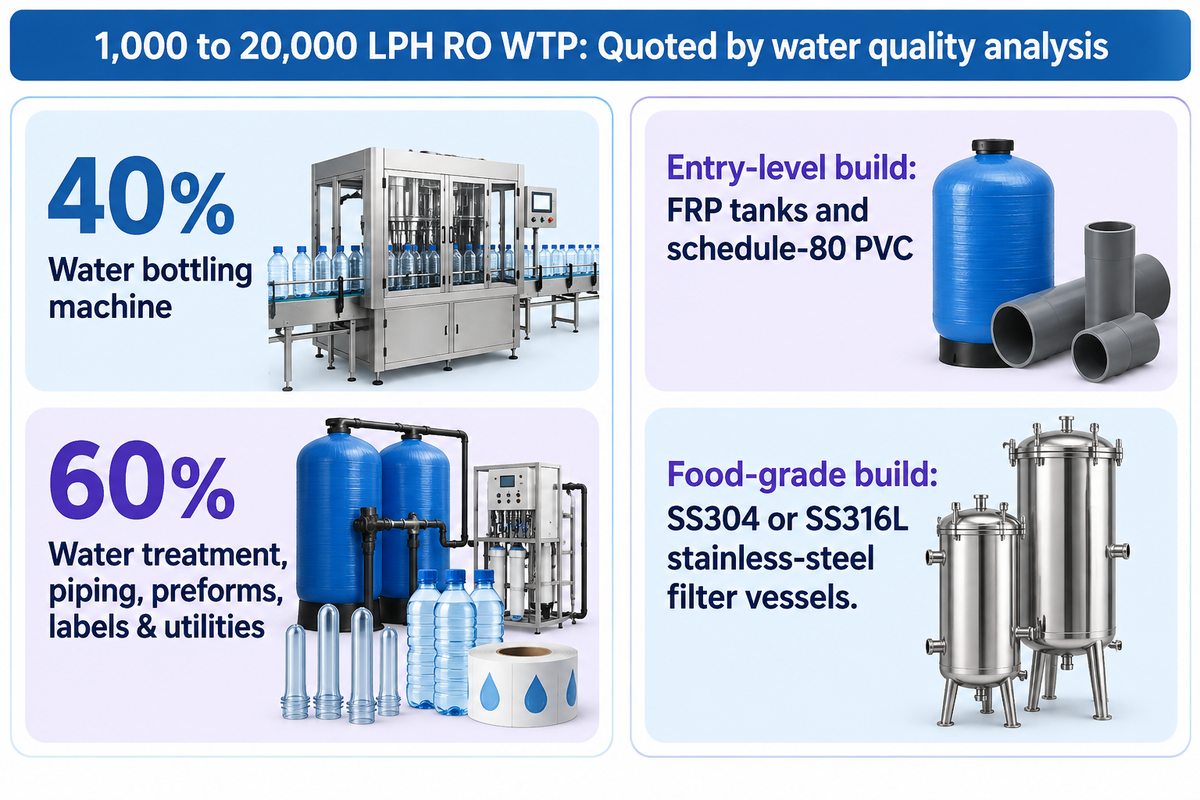
Commercial reverse osmosis Water Treatment Plant pricing from 1,000 to 20,000 LPH is quoted by OEM water quality analysis because vessel metallurgies and membrane staging vary by raw feedwater TDS. Across turnkey installations of small- and mid-scale commercial water bottling machines the water bottling machine accounts for only 40% of the total project investment, and the remaining 60% is accounted for by water treatment, piping, preforms, labels and upgrades to the utility infrastructure.
Why do quotes for industrial RO systems vary so widely for the same hourly flow rating? For entry-level commercial quotes, the tank and main-manifold are made of fiberglass-reinforced plastic (FRP) and schedule-80 PVC, and multi-port valves are manual. Ozone sterilization isn’t provided. That configuration is acceptable for boiler make-up water or agricultural irrigation, but it fails food-grade beverage audits.
A beverage-grade sanitary package includes internally polished SS304 or SS316L stainless-steel filter vessels, sanitary tri-clamp manifolds, automated pneumatic butterfly valves, and inline conductivity and ORP sensors. Additionally, it includes a stainless-steel mixing tower and a sealed buffer tank, along with an ozone generator. As outlined on MassTech’s small-scale bottling engineering webpage, under-specifying the remaining 60% water treatment and the auxiliary scope is where first-time investors lose 3 to 6 months of commissioning before selling their first bottle. Below 1,500 BPH, semi-automatic bottling delivers reliable economics, whereas at T2 capacity (2,000+ BPH), automatic monoblocks are required so manual handling does not bottleneck the water plant.
| RO WTP Capacity Class | Standard FRP / PVC Commercial Skid | Sanitary SS304 / SS316L Beverage WTP Package | Matched Bottling Line Threshold | Turnkey Project Capital Share (MassTech Benchmark) |
|---|---|---|---|---|
| 1,000 LPH (1 m³/h) | FRP media vessels + PVC piping (Per OEM quote) | Single-pass SS304 + UV/Ozone skid (Per OEM quote) | Below 1,500 BPH (Semi-automatic starter tier) | 40% bottling machine / 60% WTP & plant auxiliaries |
| 3,180 LPH (20,000 GPD) | AMPAC AP20K-LX class brackish skid (Per OEM quote) | Sanitary SS304/SS316L + automated PLC (Per OEM quote) | T2 capacity (2,000+ BPH automatic monoblock) | Prevents 3–6 months of auxiliary commissioning delay |
| 10,000–20,000 LPH (10–20 m³/h) | Industrial utility RO array (Per OEM quote) | Single or Two-Pass SS316L + CIP + Ozone tower (Per OEM quote) | High-speed commercial rotary PET & 5-gallon lines | Custom quote per raw water TDS lab report |
Commercial reverse osmosis WTP equipment budgets are dependent on the raw feed water TDS, types of materials of construction, FRP vs. sanitary SS316L, and single-pass vs. double pass membrane configurations.
Critical WTP Operating Risks: Membrane Fouling, Free Chlorine Damage, and Bromate Limits
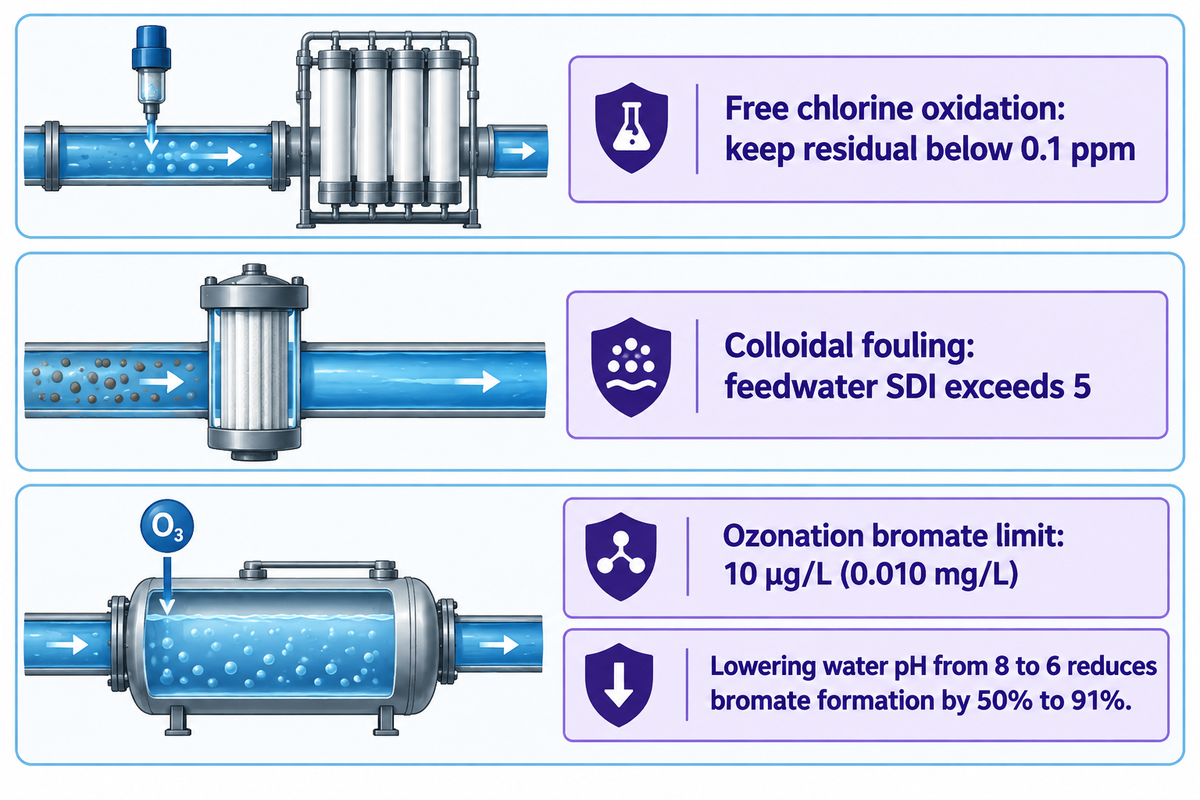
These failures are free chlorine oxidation of polyamide RO membranes, colloidal fouling when feedwater SDI exceeds 5, and bromate formation above 10 μg/L (0.010 mg/L) during ozonation.
Many assume that reverse osmosis removes all chemical hazards. This isn’t the case. As documented in the University of Nebraska, Lincoln Extension’s reverse osmosis technical bulletin G1490 and in DuPont’s FilmTec manual, polyamide membranes can’t tolerate free chlorine. Chlorine attacks the amide bond (-CO-NH-) of the thin-film barrier, causing permanent salt leakage that is excluded from membrane warranties. Plants must verify that residual chlorine is below the DuPont FilmTec 0.1 ppm tolerance after activated carbon filtration, or dose sodium metabisulfite (SMBS) upstream of the high-pressure pump.
Second, ozonating water that contains natural bromide ions (Br−) creates a severe regulatory trap. According to a 2023 peer-reviewed Environmental Science & Technology review on bromate formation (NIH PMC10690720) and Health Canada’s drinking water bromate assessment, molecular ozone oxidizes bromide at a second-order rate constant of k = 258 M−1 s−1 at 25 °C. The reaction forms hypobromous acid and hypobromite (HOBr/OBr−, which sit in equilibrium at pKa = 8.8) before generating stable bromate (BrO3−).
Because only the unprotonated OBr− ion reacts rapidly with ozone and hydroxyl radicals, water pH dictates bromate yield. Per Table 1 of the NIH PMC10690720 review, lowering water pH from 8 to 6 shifts the equilibrium toward unreactive HOBr and reduces bromate formation by 50% to 91%. You can also review pH and conductivity behavior in deionized and low-TDS water to understand why low-mineral RO permeate shifts pH rapidly when exposed to dissolved carbon dioxide. Keeping operation and maintenance logs for feedwater SDI, dechlorination, and ozone pH protects both membrane life and FDA compliance.
What Does WTP Stand For in Business and Economics? Willingness to Pay Explained
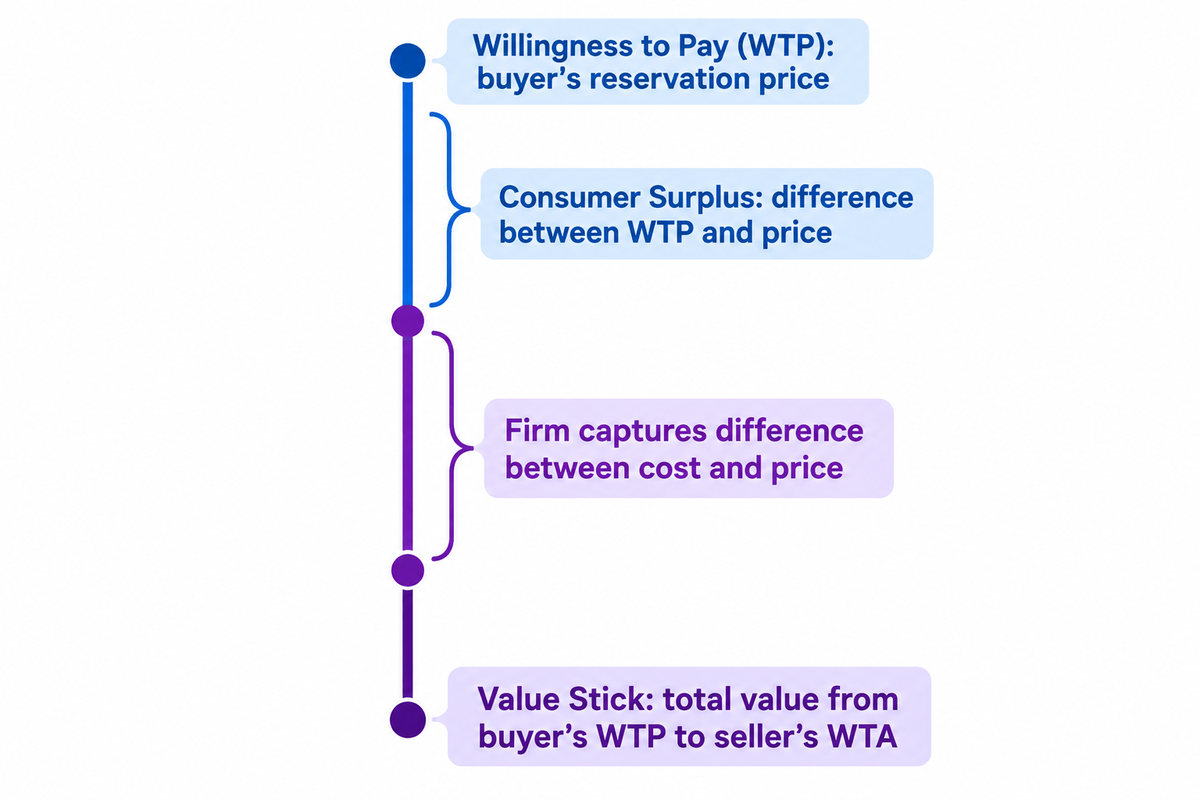
In the field of business strategy and pricing economics, Willingness to Pay (WTP) represents the highest price a customer is willing to pay for a good or service. According to the Willingness to Pay guide published by Harvard Business School Online, the market is defined as the intersection of what a consumer will pay for a good or service and its market price. The difference between Willingness to Pay and price is referred to as Consumer Surplus.
What Does WTP Stand For in Business and Pricing Strategy?
Business and pricing strategy refer to WTP as willingness to pay, or the buyer’s reservation price. Harvard Business School’s “Value Stick” depicts total economic value as the difference between buyer’s WTP and seller’s WTA. Companies capture the difference between cost and price, and buyers capture consumer surplus between price and WTP.
There are four main empirical methods used by pricing analysts and infrastructure economists to measure customer reservation prices:
- Of these, revealed preference and Vickrey auctions analyze purchase data, A/B price experiments, or sealed-bid, second-price auctions, respectively, during which bidders have a direct, financial incentive to bid their true maximum value.
- Stated preference and contingent valuation ask consumers what they would be willing to pay for a new feature or service, respectively, and are used by water utilities and the World Bank to fund municipal Water Treatment Plant upgrades.
- Conjoint analysis takes a trade-off approach to price by using product bundles to assess the price an individual would be willing to pay for a specific feature of the product.
- Lastly, the Van Westendorp Price Sensitivity Meter (PSM) uses four questions to determine the price range at which a product or service is perceived to be too cheap, a good value, too expensive, or too high.
What Does WTP Mean in Text Messaging, Slang, and Construction Drawings?
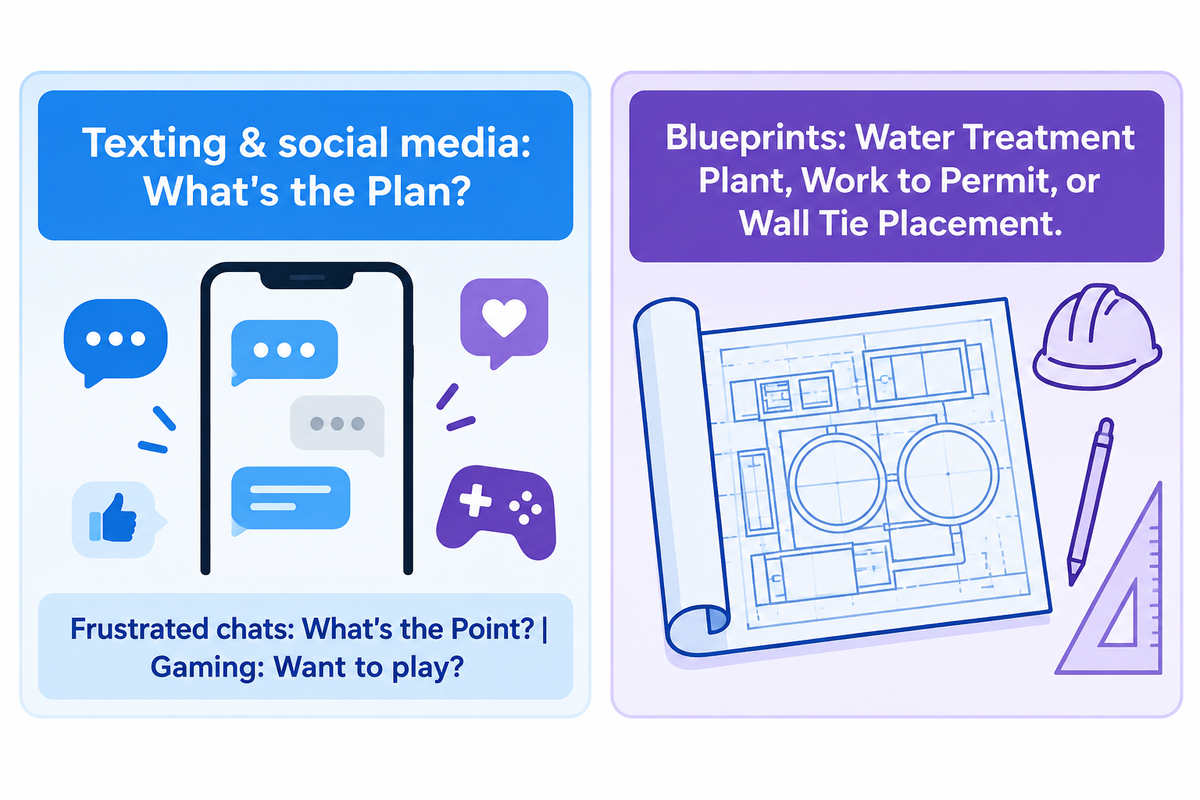
Nowadays, when people use text message and social media slang, “WTP” is most likely to refer to “What’s the Plan?” when people are coordinating plans or events, or it’s used in frustrated responses to express “What’s the Point?” on blueprints it might refer to a Water Treatment Plant, a Work to Permit safety gate, or Wall Tie Placement.
What Does WTP Mean in Text and on Social Media?
In text messaging and on social media apps such as Snapchat, Instagram, and WhatsApp, “WTP” almost always stands for “What’s the plan?”, per Dictionary.com’s acronym dictionary entry and InkGrammar’s texting usage guide. For example, a friend texting “WTP tonight?” is asking where the group is meeting. In gaming lobbies, players use the informal phrase for “Want to play?”, whereas in frustrated chats it means “What’s the point?”
Unlike “WYD” (What are you doing?, which asks about your current activity) or “WBU” (What about you?), “What’s the plan?” focuses on scheduling the next action. In more formal English, listening to “What’s the Plan?” means something else entirely. For example, a listener of urban pop culture will recognize “W.T.P.” as “White Trash Party” from Eminem’s 2010 album “Recovery.”
What Does WTP Mean in Construction and Building Plans?
On civil, industrial, and commercial construction drawings, the letters stand for Water Treatment Plant on civil and MEP utility layouts, Work to Permit (or Work-to-Proceed) on site EHS schedules, and Wall Tie Placement on structural masonry schedules:
- Water Treatment Plant on civil and MEP utility drawings shows the dedicated building pad, raw water intake manifold, or package RO/STP utility room on master site layouts.
- On site EHS and project management schedules, Work to Permit (or Work-to-Proceed) indicates high-risk tasks (e.g. welding in a confined space tank or connecting to a high-voltage panel) that can’t be initiated until a Permit to Work (PTW) is issued.
- In structural masonry schedules, Wall Tie Placement specifies the vertical and horizontal anchor spacing connecting an exterior brick veneer to an adjacent structural backing wall.
Frequently Asked Questions
What is the full form of WTP in water treatment and industrial manufacturing?
In water engineering and manufacturing, Water Treatment Plant is the full form of WTP. A municipal water treatment plant uses coagulation, sedimentation, filtration and chlorination to clean raw water (river, lake or well water) for public consumption. An industrial beverage plant uses ultra-pure water by employing multi-media filtration, activated carbon, reverse osmosis and/or ultrafiltration membranes and/or ozonation to meet their product water quality standards.
Why must free chlorine be removed before water enters an RO WTP membrane?
Thin-film composite polyamide reverse osmosis (RO) membranes can’t tolerate free chlorine in the feedwater and are not completely stable below 0.1 ppm. At 0.1 ppm, free chlorine begins to cause irreversible, rapid loss of salt rejection of the RO membranes. Industry practice is to employ either a granular activated carbon (GAC) filter or a sodium metabisulfite dosing station prior to the high-pressure pump in order to remove the residual chlorine in the feedwater.
When should a bottled water plant choose ultrafiltration (UF) instead of reverse osmosis (RO)?
Choose hollow-fiber ultrafiltration when bottling natural spring water or natural mineral water (containing not less than 250 ppm total dissolved solids under FDA 21 CFR 165.110) where native calcium and magnesium ions must be preserved. Choose single-pass or two-pass reverse osmosis when producing USP purified drinking water or standardized soft-drink ingredient water.
How much raw water does a 1,000 LPH reverse osmosis WTP consume?
With a single-pass recovery rate of 50% to 75%, 1,000 LPH (1 m³/h) reverse osmosis system requires 1,333 to 2,000 LPH of raw feedwater to produce 1,000 LPH of purified permeate.
What is the difference between single-pass and double-pass RO in a water treatment plant?
Single-pass reverse osmosis plants remove 98% to 99.8% of dissolved solids at a 50% to 75% recovery rate. In a double-pass (2-pass) plant, permeate from the first stage is pumped through a second array of membranes to polish high total dissolved solids (TDS) raw water for production of ultra-pure water for beverages.
What does WTP mean in US government and civic history?
In civics, public petitions, and law of the United States, the acronym stands for “We the People”, the initial three words of the Preamble to the United States Constitution.
References & Sources
- U.S. Centers for Disease Control and Prevention (CDC). How Water Treatment Works – Public Drinking Water Systems. https://www.cdc.gov/drinking-water/about/how-water-treatment-works.html
- U.S. Environmental Protection Agency (EPA). National Primary Drinking Water Regulations (40 CFR Part 141 – Turbidity, Disinfectant MRDLs, Bromate, and PFAS MCLs). https://www.epa.gov/ground-water-and-drinking-water/national-primary-drinking-water-regulations
- U.S. National Archives and Records Administration / Food and Drug Administration (FDA). Electronic Code of Federal Regulations: 21 CFR § 165.110 – Bottled Water Standards of Identity and Quality. https://www.ecfr.gov/current/title-21/chapter-I/subchapter-B/part-165/subpart-B/section-165.110
- United States Patent and Trademark Office (USPTO). Patent US4277344A: Interfacially synthesized reverse osmosis membrane (Inventor: John E. Cadotte; Assignee: FilmTec Corp.; Granted July 7, 1981). Available at: https://https://patents.google.com/patent/US4277344A/en.net (Accessed: 06 March 2023).
- DuPont Water Solutions. FilmTec Reverse Osmosis Membranes Technical Manual (Form No. 45-D01504-en) & BW30XHR-440 Product Data Sheet (45-D03498-en). https://www.dupont.com/content/dam/water/amer/us/en/water/public/documents/en/RO-NF-FilmTec-Manual-45-D01504-en.pdf
- MORRISON, C.M., HOGARD, S., PEARCE, R., MOHAN, A., PISARENKO, A. N., DICKENSON, E. R. V., VON GUNTEN, U., & WERT, E. C. (2023). Critical Review on Bromate Formation during Ozonation and Control Options for its Minimization. Environmental Science & Technology, 57(47), 18393-18409 (NIH PMC10690720). https://pmc.ncbi.nlm.nih.gov/articles/PMC10690720/
- University of Nebraska, Lincoln Extension. Drinking Water Treatment: Reverse Osmosis (NebGuide G1490). https://extensionpubs.unl.edu/publication/g1490/na/html/view
- Harvard Business School Online (Stobierski, T.). What’s Willingness to Pay (WTP)? How to Calculate It & Why It Matters. https://online.hbs.edu/blog/post/willingness-to-pay
- Mordor Intelligence. Water and Wastewater Treatment Technologies Market Size & Share Analysis, Growth Forecasts (2026–2032). https://www.mordorintelligence.com/industry-reports/water-and-wastewater-treatment-technologies-market
WHY WE WRITE THIS
MassTechX publishes practical engineering guides for beverage producers, plant owners, procurement teams, and packaging line buyers who need to compare filling, blowing, labeling, water treatment, and end-of-line equipment with less guesswork. Our goal is to explain the real production constraints behind capacity, liquid type, container format, hygiene requirements, spare parts, and after-sales service before a buyer commits to a bottling line.
ABOUT OUR BUSINESS
Mass Technology is a Zhangjiagang-based beverage filling machine manufacturer in Jiangsu, China. We design and manufacture complete bottling line solutions for water, carbonated drinks, juice, beer, wine, cans, bottle blowing, bottle labeling, water treatment, and related packaging systems. Our published equipment range covers 2,000–36,000 BPH production lines, with deployment experience across 60+ countries.
OUR SERVICES
We support buyers through plant layout design, equipment selection, manufacturing, factory acceptance testing, shipping coordination, on-site installation, operator training, and long-term after-sales service. MassTechX projects are supported by a 2-year warranty, 24-hour engineer response, and 5-working-day international spare parts dispatch commitment.
DATA MATRIX // MANUFACTURER PROFILE
NAMEMass Technology Engineering Team
ROLEBeverage Filling Line Manufacturer
BRAND NAMEMassTechX / Mass Technology
COMPANYZhangjiagang Mass Technology Co., Ltd.
LOCATIONZhangjiagang, Jiangsu, China
CAPACITY RANGE2,000–36,000 BPH
PRODUCT RANGEWater Filling, CSD Filling, Juice Filling, Beer Filling, Wine Filling, Can Filling, Bottle Blowing, Bottle Labeling, Water Treatment
GLOBAL REACH60+ Countries
WARRANTY2 Years
SERVICE SLA24-Hour Engineer Response / 5-Working-Day Spare Parts Dispatch
WEBSITEmasstechx.com
Related Posts
Trending now