Get in Touch with Masstech

How Is Alcohol Made? From Raw Sugar Fermentation to Commercial Distillation and Bottling

Contents
show
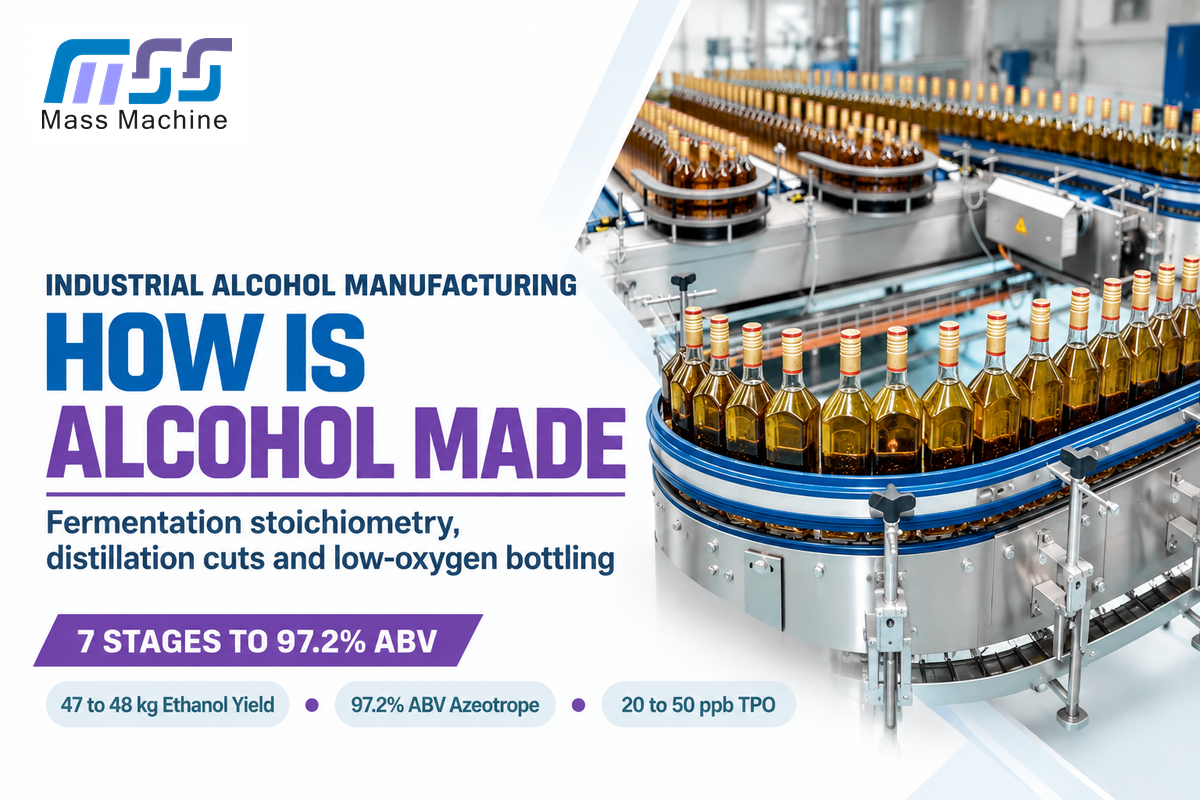
Beverage ethanol is produced when yeast cells ferment dissolved plant sugars into ethyl alcohol and carbon dioxide, which explains how is alcohol made. According to stoichiometric fermentation data, one hundred kilograms of glucose commonly yields up to 51.1 kilograms of pure ethanol. Finished fermented beverages have product-dependent alcohol by volume (ABV) ranges. According to Encyclopædia Britannica, beer generally contains 2% to 8% ABV and natural wine 8% to 14% ABV, whereas high-sugar washes can reach the 14% to 20% ABV ethanol-tolerance range discussed below. Distillation can concentrate ethanol up to the atmospheric azeotropic limit of 97.2% ABV, equivalent to 95.6% ethanol by weight.
Commercial alcohol production strictly separates potable agricultural ethanol from synthetic industrial solvents. In the United States, 27 CFR Part 5 governs the labeling and advertising of distilled spirits and defines categories of spirits produced from fermented fruits, grains, sugar, or honey. Beverage producers that make alcohol for human alcohol consumption rely on agricultural sugars rather than petrochemical ethylene hydration. Rubbing alcohol (isopropyl alcohol or denatured ethanol) contains toxic solvents or bitterants. Potable ethanol instead follows a biological pathway called fermentation from raw harvest to sealed glass bottles and cans.
What Are the 7 Stages of Alcohol Production from Raw Feedstock to Sealed Bottle?
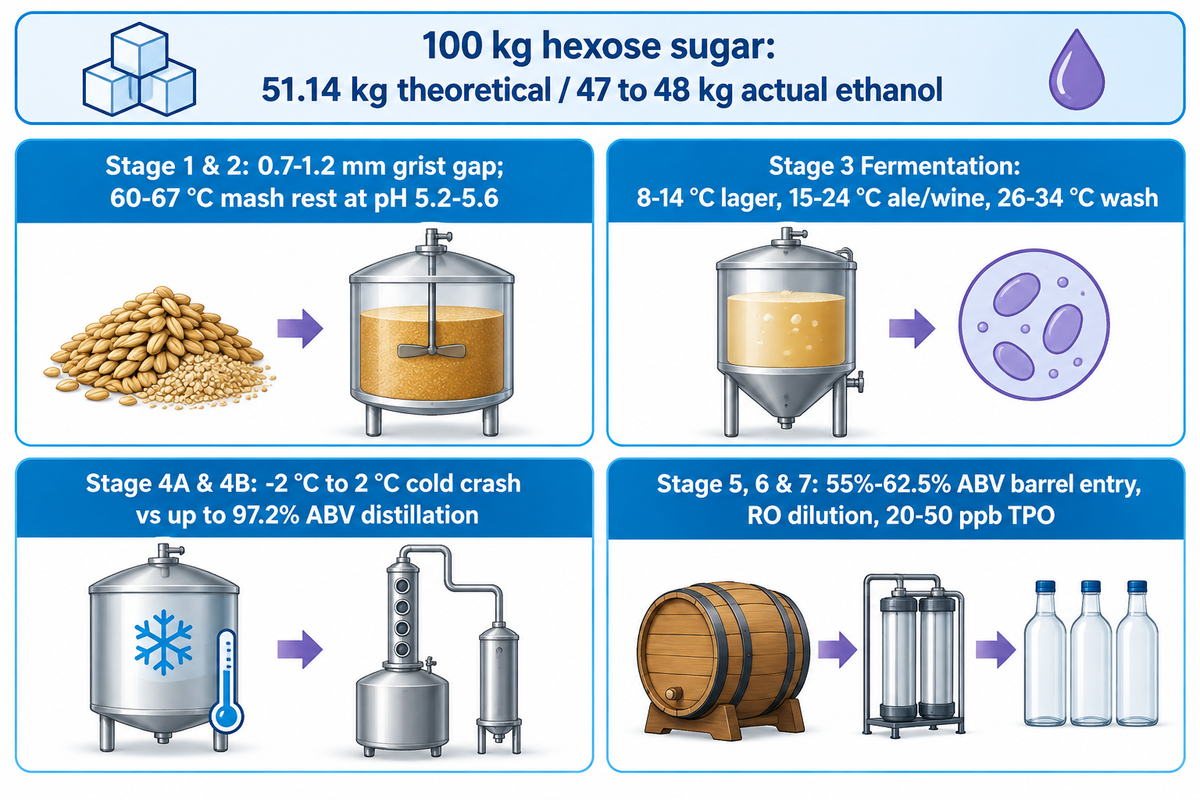
Alcohol production consists of feedstock preparation and fermentation, and includes mashing for starch-based feedstocks, distillation for spirits, maturation for aged spirits, dilution for spirits bottled below distillation strength, and packaging. Fermented beer and wine skip distillation after stage three. The seven-stage framework includes various product-dependent operations. Direct sugar feedstocks bypass mashing, and maturation is spirit style dependent.
Understanding alcohol production involves tracking mass conversion from agricultural carbohydrates to alcohol. This pathway is governed by The Saccharification-to-Proof Mass Balance. In the Gay-Lussac chemical equation, 100 kilograms of hexose sugar has a theoretical limit of about 51.14 kilograms of ethanol, and 48.86 kilograms of carbon dioxide. In an active brewery or distillery, living yeast usually diverts about 6% to 8% of the available carbon into new cell biomass, glycerol, and organic acids. Therefore, actual Pasteur yield is about 47 to 48 kilograms of ethanol, from 100 kilograms of fermentable sugar.
Regulatory boundaries also affect how alcohol is manufactured, whether in an industrial or domestic setting. In the United States, adults may ferment limited quantities of beer and wine at home for personal use. However, Alcohol and Tobacco Tax and Trade Bureau (TTB) enforcement rules under United States Code sections 5601 and 5602 prohibit unlicensed home spirit distillation. Operating a home still without a federal permit carries criminal penalties of $10,000 in fines and 5 years imprisonment. Meanwhile, commercial beverage plants are expanding rapidly into dealcoholized formats. According to Grand View Research (2025), the global non-alcoholic beverages market reached USD 1,391.4 billion in 2025. That market is projected to hit USD 2,551.1 billion by 2033, implying a compound annual growth rate of approximately 7.9% from 2025.
What Raw Materials Separate Direct-Sugar Fermentation from Grain Mashing?
Grape must, apple juice, diluted honey, and diluted sugarcane molasses can provide fermentable sugars without the starch-saccharification step needed for grain feedstocks. Starch-rich cereal grains like barley, corn, rye and wheat, lock their glucose in long chain polymer structures. These grains need thermal gelatinization and enzyme hydrolysis for fermentation to begin.
When ripe grape harvests are crushed, the resulting grape juice (must) contains about 18% to 26% simple sugars (sugar) by weight. Yeast invertase and hexokinase enzymes metabolize those sugars directly to produce alcohol without pre-cooking. Mead makers dilute honey with water and rum distilleries dilute sugarcane molasses with treated water before pitching yeast. Across the Americas, indigenous people made traditional drinks by fermenting agave or cactus sap into pulque. Early brewers also made natural fermentation using fruits.
“From Neolithic rice-honey beverages in Jiahu, China, to Andean chicha and Mesoamerican agave pulque, early societies independently discovered natural fermentation.”
Unlike making beer or grain whiskey, the start of behind beer and other grain spirits is Beer made from yeast which yeast cannot directly digest. For barley, create beer involves mashing, an enzymatic hydrolysis step, which converts insoluble starch in the barley into soluble sugars which yeast can digest. The conversion of starch to soluble sugars is followed by fermentation of the soluble sugars to ethanol. As documented in Britannica’s technical overview of mashing, crushed malt is mixed with warm water at 60 to 67 °C (140 to 153 °F). This warm rest converts insoluble starch in barley to soluble sugars which yeast can digest. For barley to be digested, the barley must either be malted or treated with glucoamylase enzymes. Raw corn, on the other hand, requires a separate cereal cook to be digested. Unmalted barley and wheat, on the other hand, can be gelatinized during mashing. Pregelatinized grains need no separate cook. Malting barley or using commercial glucoamylase enzymes break the starch chains to sugar fermentable.
Tequila producers steam blue Weber agave cores for 24 to 48 hours to hydrolyze inulin polymers into free fructose. In sour mash whiskey production, backset from a previous distillation is added to the next mash to lower pH and improve batch consistency. To add complexity, some distilleries inoculate the grain mash with lactic acid, and some home winemakers adjust the pH of the must using food-grade acid, or lemon juice.
How Do the 7 Industrial Stages Connect Upstream Brewing to Downstream Packaging?
These processes set downstream filtration and bottling requirements. Breakdown of beta-glucan in the second stage may leave high molecular weight polysaccharides that may increase viscosity, filter-clogging and foaming during CPF. The same polysaccharides may combine with other impurities to produce acids that may affect the downstream fermentation.
The industrial production chain from agricultural input to retail sale in integrated units and operations is shown in the nine-row unit-operation matrix below.
| Production Stage | Primary Unit Operation | Target Process Window | Key Biochemical or Physical Output | Downstream Failure Mode if Miscontrolled |
|---|---|---|---|---|
| Stage 1: Feedstock Prep | Roller milling (grain) or pneumatic pressing (fruit) | 0.7–1.2 mm grist gap; 1.2–1.8 bar press pressure | Exposed starch endosperm or clarified grape juice must | Stuck lauter tun runoff or harsh polyphenol tannin extraction |
| Stage 2: Mashing & Cooking | Thermal gelatinization and enzymatic hydrolysis (starch feedstocks) | 60–67 °C mash rest; pH 5.2–5.6; malt and water calcium | Sweet wort or grain mash rich in maltose and glucose | Unfermentable dextrins, low alcohol yield, and turbid haze |
| Stage 3: Fermentation | Anaerobic yeast metabolism in glycol-cooled tanks | 8–14 °C (lager), 15–24 °C (ale/wine), 26–34 °C (wash) | Product-dependent beverage ABV (commonly 2%–14%) or distiller’s wash | Stuck fermentation, solvent ethyl acetate, or fusel oil burn |
| Stage 4A: Clarification (Beer/Wine) | Centrifugation, fining, and crossflow filtration | -2 °C to 2 °C cold crash; 0.45 µm sterile membrane | Bright, microbiologically stable beer, cider, or wine | Post-bottling refermentation, bottle bombs, or protein sediment |
| Stage 4B: Distillation (Spirits) | Batch copper pot or continuous multi-tray column still | Hearts selected by distillate strength, composition, and sensory character; vapor temperature changes with mixture composition | Concentrated heart distillate separated from heads and tails (up to 97.2% ABV azeotrope limit) | Acetaldehyde bite, excess fusel oils, or methanol carryover |
| Stage 5: Maturation (Aged Styles) | Charred oak barrel aging or stainless steel conditioning | Commonly 55%–62.5% ABV barrel entry; 12–25 °C warehouse cycle | Vanillin, lactones, caramel color, and ester integration | Over-oaked astringency or excessive evaporative angel’s share |
| Stage 6: RO Proofing & Chill Filter | Reverse-osmosis water dilution and cold filtration | RO-treated water for dilution; chill filtration to remove haze-forming compounds | Spirit diluted to its target bottling strength; reduced mineral sediment and ester haze | Calcium oxalate white flock sediment or fatty-acid ester louche |
| Stage 7A: Vacuum Bottling | Micro-negative-pressure rotary monoblock filling | Low oxygen pickup; ±1.5 mm liquid fill level accuracy | Shelf-stable still wine, whiskey, vodka, and brandy bottles | Headspace oxidation, premature browning, and cork push |
| Stage 7B: Isobaric Packaging | Counter-pressure filling with pre-evacuation for vacuum-rated bottles and CO₂ purging for beverage cans | 2.0–3.5 bar CO₂ counter-pressure; typical canning TPO 20–50 ppb | Carbonated beer, cider, sparkling wine, and RTD cans | Fobbing foam overflow, flat carbonation, and papery staling |
How Does Yeast Fermentation Convert Sugar into Ethanol — and Why Does It Stop at 20% ABV?
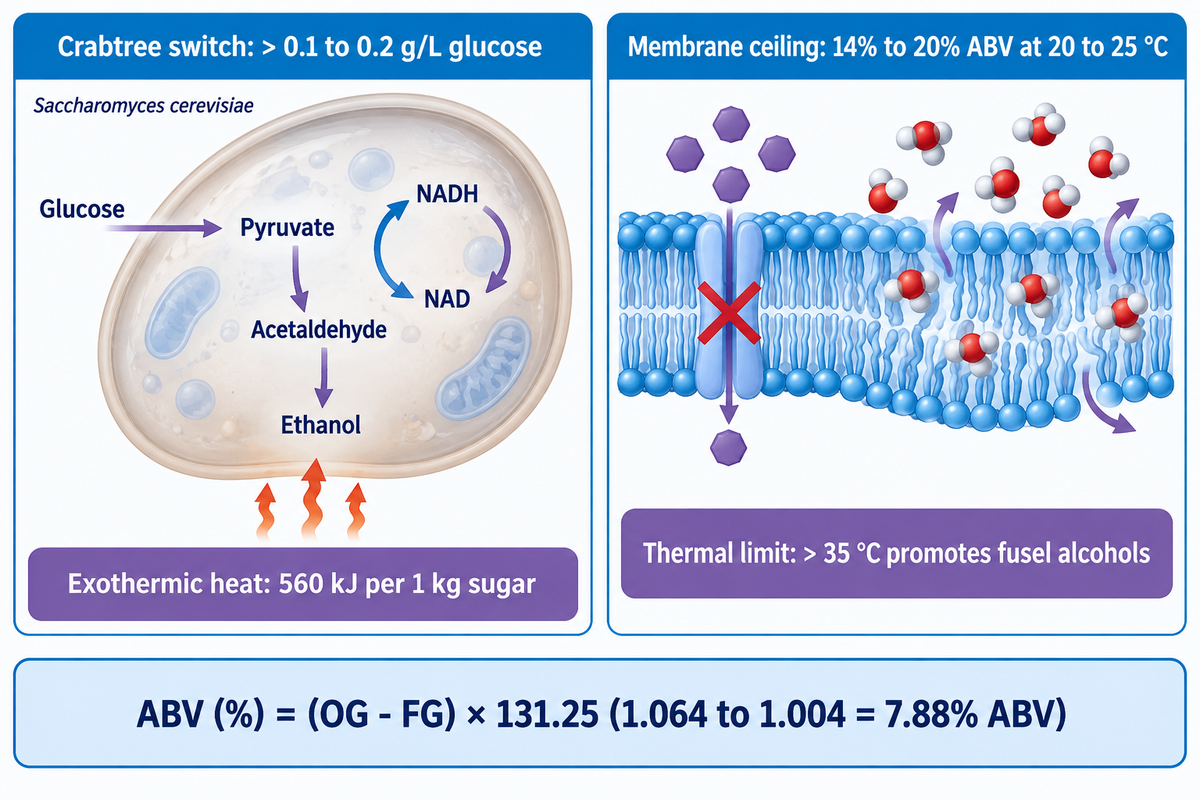
During alcoholic fermentation, yeast cells transport dissolved glucose across their plasma membrane and split each six-carbon sugar into two pyruvate molecules via glycolysis to produce ethanol, with standard dry fermentations stopping when sugar runs out and high-sugar washes stopping around 14% to 20% ABV because of ethanol membrane toxicity. Those tolerance limits align with generally observed brewing and winemaking yeast benchmarks. Alcohol dehydrogenase is the final enzyme in the ethanol fermentation process, turning acetaldehyde into ethanol.
To understand what happens during fermentation at the cellular level, brewers track the basic scientific redox loop inside Saccharomyces cerevisiae. During glycolysis, a baker’s yeast cell converts glucose into ethanol precursors and reduces NAD to NADH and produces two ATP energy molecules. Without oxygen to run mitochondrial respiration, yeast cells quickly deplete their NAD and stall. After pyruvate is converted via acetaldehyde, the cell oxidizes NADH to NAD, allowing the cell to continue producing ethanol during the fermentation process. Every rising bubble is released as carbon dioxide during this anaerobic process of fermentation.
This metabolic preference is governed by The Crabtree & Lipid-Membrane Toxicity Ceiling. Even when oxygen is present, Saccharomyces cerevisiae switches to fermentative ethanol production whenever dissolved glucose exceeds roughly 0.1 to 0.2 grams per liter. Biochemists call this overflow pathway the Crabtree effect. However, as the amount of alcohol rises inside the tank, ethanol acts as an amphiphilic solvent against the yeast cell membrane. According to membrane physiology research indexed on PubMed, ethanol concentrations usually above 14% to 16% ABV hyper-fluidize the phospholipid bilayer. High ethanol also triggers passive proton leakage and inhibits hexose transporter proteins.
Standard dry beer worts and table wine musts stop fermenting when their fermentable sugar runs out. Ethanol toxicity can stop fermentation while fermentable sugar remains, especially in high-sugar batches or when nutrient deficiency, heat, or organic acids reduce yeast tolerance. As UC Davis Enology fermentation management guidelines establish, standard dry beer worts and table wine musts stop because all fermentable sugar is converted into alcohol and carbon dioxide. In those standard batches, sugar runs out before the yeast reaches its ethanol toxicity limit. Ethanol toxicity can stop fermentation while fermentable sugar remains, especially in high-sugar batches or when nutrient deficiency, heat, or organic acids reduce yeast tolerance. Meanwhile, the UC Davis diagnostic guide for sluggish fermentations notes that most yeast strains tolerate 11% to 12% ethanol, while commercial strains often tolerate 14% to 18% or more at 20 to 25 °C. Under heat shock or nutrient stress, a strain normally tolerant to 16% ethanol may stall at 12% to 13% ABV.
How Do Temperature and Yeast Strain Control Esters, Fusel Alcohols, and Fermentation Speed?
Yeast strain genetics influence fermentation speed and aroma formation, while cool fermentations at 8 to 14 °C suppress volatile esters for crisp lagers, warm fermentations at 26 to 34 °C complete distiller’s washes within 48 to 72 hours, and uncontrolled temperatures above 35 °C promote harsh fusel alcohols and solvent-like esters.
Choosing the right yeast strain is the most critical part of flavor design when yeast is added to a fermenter. In traditional wine making, wild natural yeast on grape skins can start spontaneous fermentation. Most commercial wineries instead pitch cultured Saccharomyces cerevisiae to guarantee predictable sugar attenuation. As noted in fermentation kinetics studies on PMC, bottom-fermenting lager strains (Saccharomyces pastorianus) function best at 8 to 14 °C. Ale and wine strains function at 15 to 24 °C, while specialized strains for distilleries ferment at 26 to 34 °C.
Because alcoholic fermentation is strongly exothermic, converting 1 kilogram of sugar releases roughly 560 kilojoules of heat. In industry, this is known as the sugar Effect. Brewers and distillers must circulate chilled glycol through stainless steel tank jackets to remove that heat. Thermal stress at temperatures above 35 °C accelerates the Ehrlich pathway. The extremely harsh fusel alcohols (isobutanol, isoamyl alcohol, propanol) and esters then permanently affect the flavor.
How Do Producers Calculate ABV from Original and Final Specific Gravity?
As documented in standard brewing alcohol-by-volume equations, producers multiply the drop between Original Gravity (OG) and Final Gravity (FG) by 131.25. Brewers and winemakers estimate ABV (%) as (Original Gravity − Final Gravity) × 131.25, using a hydrometer or digital U-tube densitometer to measure the liquid’s specific gravity before and after fermentation. Because dissolved sugar is denser than water (1.000) and ethyl alcohol is less dense (0.789), specific gravity falls steadily as yeast converts sugar into alcohol.
As documented in standard brewing alcohol-by-volume equations, producers multiply the drop between Original Gravity (OG) and Final Gravity (FG) by 131.25. A factor of 135 also applies near the center of the 0.000 to 0.179 gravity-drop range.
ABV (%) = (OG – FG) × 131.25
Consider a brewer making beer from malted barley wort with an Original Gravity of 1.064 (15.7 °Plato). After seven days of active fermentation, yeast converts the maltose into ethanol and carbon dioxide, dropping Final Gravity to 1.004. Subtracting 1.004 from 1.064 gives a density drop of 0.060. Multiplying 0.060 by 131.25 yields an alcohol concentration of approximately 7.88% ABV.
Fermented vs. Distilled Alcohol: How Do Beer, Wine, and Spirits Diverge After Fermentation?
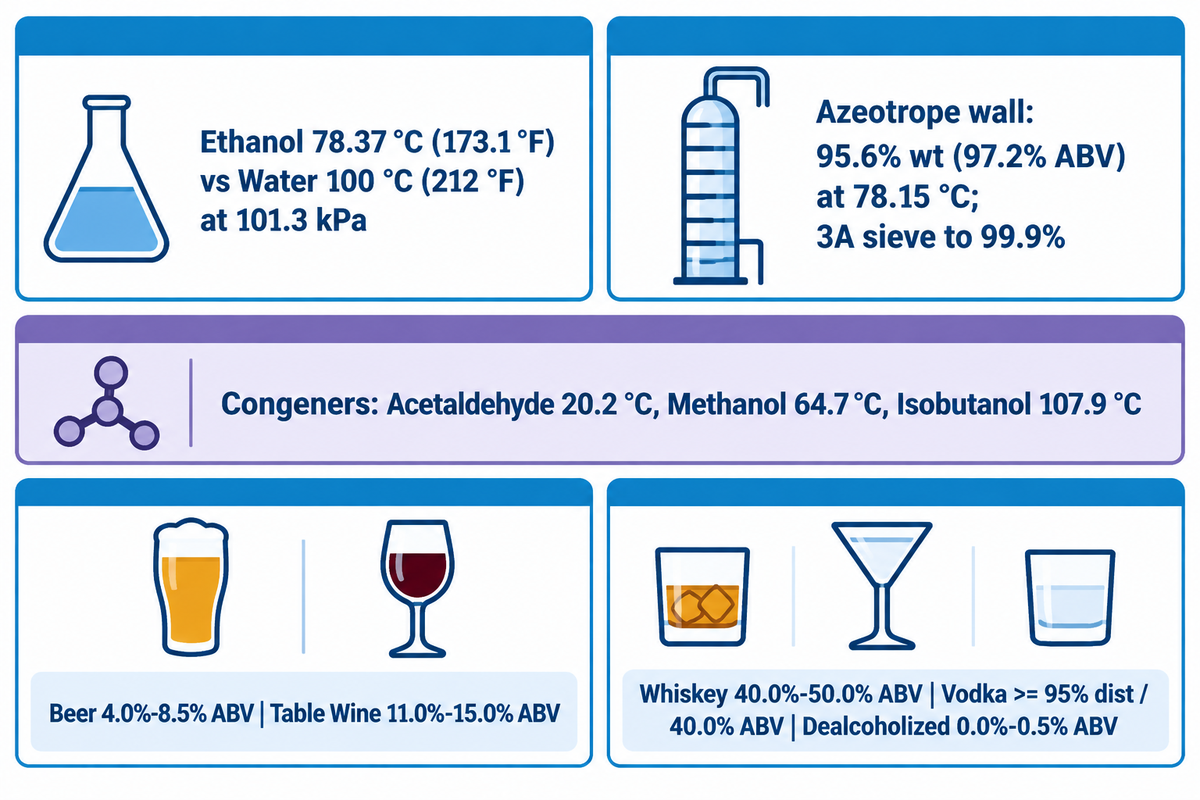
Beer, wine, cider, and mead all finish alcohol generation within the fermenter and move on to clarification and packaging. According to Encyclopædia Britannica, beer commonly finishes at 2% to 8% ABV and natural wine at 8% to 14% ABV. Distilled spirits move the fermented wash over a heated copper pot or continuous column still. Distillation concentrates ethanol, with repeated rectification approaching the ethanol–water azeotrope described below.
When people ask how booze or hard liquor is separated from a low-strength fermented beverage, the answer is a physical process called distillation. At standard atmospheric pressure (101.3 kPa), pure ethyl alcohol boils at a lower temperature than water. Specifically, ethanol boils at 78.37 °C (173.1 °F) while water boils at 100 °C (212 °F). When a distiller heats a generally 7% to 10% ABV fermented grain wash or wine must, the rising vapor holds a much higher ethanol fraction than the boiling liquid. Condensing that vapor inside a water-cooled shell-and-tube condenser yields concentrated liquid alcohol.
Industrial fractionation is more complex than simple boiling-point sorting, as captured by The Heads-Hearts-Tails Thermal Cut Window. A fermented wash contains hundreds of volatile fermentation byproducts. These include acetaldehyde (pure boiling point 20.2 °C), ethyl acetate (77.1 °C), methanol (64.7 °C), ethanol (78.37 °C), isobutanol (107.9 °C), and isoamyl alcohol (131.1 °C). Because ethanol and water form hydrogen-bonded mixtures, congener volatility is governed by hydroalcoholic solubility rather than pure boiling points alone.
Standard atmospheric distillation also eventually hits a thermodynamic wall. As stated by azeotropic phase equilibrium data, at approximately 95.6% ethanol by weight (about 97.2% ABV), there exists a positive binary azeotrope with water at 78.15 °C. The vapor and the liquid in the still reach the same azeotropic composition and boil off at the same ratio. Boiling cannot purify the ethanol any further, and producing roughly 99.9% anhydrous ethanol requires either extractive distillation or 3A zeolite molecular sieve dehydration.
How Does Fractional Distillation Separate Methanol, Ethanol Hearts, and Fusel Oils?
Distillers separate clean ethanol hearts from harsh congeners by adjusting reflux ratios, regulating copper surface contact, and making timed fraction cuts across foreshots, heads, hearts, and tails. Congener separation works differently in batch alembic pot stills vs. continuous multi-tray column stills.
A common myth claims that methanol always boils off first simply because its pure boiling point is 64.7 °C (148.5 °F). Gas chromatography refutes this oversimplification. As shown in hydroalcoholic distillation studies, a 50% ABV mixture begins boiling simultaneously at about 180 °F. Higher alcohols like isobutanol (boiling point 226 °F / 107.9 °C) have low water solubility and distill early in the foreshots and heads. Polar methanol forms strong hydrogen bonds with water and concentrates in the late, low-ABV tails during batch pot distillation. When methanol is reported in milligrams per 100 milliliters of anhydrous ethanol (SciELO mezcal distillation analysis), tail figures rise sharply as ethanol depletes. In continuous column stills (Springer 2025 brandy fractionation study), methanol appears across all fractions. Commercial distilleries can limit methanol formation by controlling pectin breakdown during feedstock handling and fermentation; some rectification systems also use dedicated demethylizing columns.
Under US federal standards (27 CFR Part 5), neutral spirits and vodka are usually distilled at or above 95% ABV (190 proof). They are then bottled at not less than 40% ABV (80 proof). Whisky and fruit brandy retain fermentation-derived congeners during distillation, while rum production includes both congener-rich pot distillation and higher-strength column rectification for lighter styles. Charred white oak barrels then impart virtually all of bourbon’s amber colour and flavour notes of vanillin and caramel. Still, master distillers note in Beverage Industry technical reports that grain mash bills and yeast esters supply the foundational spirit character before barrel aging.
How Are Beer, Wine, Whiskey, Vodka, Rum, and Dealcoholized (0.0% ABV) Drinks Made Differently?
Wine ferments crushed grapes, beer uses mashed malted barley, spirits add distillation, and dealcoholized drinks strip ethanol under vacuum. Each of these sectors use different feedstocks, fermentation temperatures, and post-fermentation pathways. Unlike beer and wine that finish inside the fermenter, spirits undergo thermal concentration, and dealcoholized drinks in this category typically have a final bottled alcohol content of 0.0%-0.5% ABV.
The nine-row comparison matrix below contrasts commercial manufacturing parameters for fermented, distilled, traditional, and dealcoholized beverage categories.
| Beverage Category | Primary Raw Feedstock | Sugar Preparation Method | Fermentation Strain & Temp | Post-Fermentation Step | Final Bottled ABV |
|---|---|---|---|---|---|
| Beer (Lager & Ale) | Malted barley, wheat, corn, hops | 60–67 °C enzymatic mashing into wort | S. pastorianus (8–14 °C) or S. cerevisiae (15–22 °C) | Cold conditioning, filtration, isobaric carbonation | Generally 4.0%–8.5% ABV |
| Table & Sparkling Wine | Crushed wine grapes (Vitis vinifera) | Direct pressing of 18–26 °Brix grape juice | Wine S. cerevisiae at 12–18 °C (white) or 22–30 °C (red) | Malolactic conversion, oak aging, sterile 0.45 µm filtration | Usually 11.0%–15.0% ABV |
| Mead (Honey Wine) | Raw floral honey and demineralized water | Direct dilution to 1.080–1.120 OG + staggered yeast nutrients | High-tolerance wine or champagne yeast at 15–20 °C | Bentonite fining, cold stabilization, still or sparkling fill | Often 8.0%–16.0% ABV |
| Whiskey / Bourbon | Corn, malted barley, rye, or wheat | Cereal cooking + 60–67 °C malt enzyme conversion | Distiller’s S. cerevisiae at 26–32 °C for 48–96 hours | Copper pot or column distillation (commonly ≤80% ABV) + charred oak aging | Commonly 40.0%–50.0% ABV |
| Vodka & Neutral Grain Spirit | Cereal grains, potatoes, or sugar beet molasses | High-temperature liquefaction + glucoamylase saccharification | High-gravity distiller’s yeast at 28–34 °C | Continuous multi-column rectification (generally ≥95% ABV) + carbon filtration | Generally 40.0% ABV (80 proof) |
| Rum | Sugarcane juice or blackstrap molasses | Clarification, dilution, and optional dunder acidifying | Distiller’s yeast or wild Schizosaccharomyces at 28–35 °C | Pot or column distillation + optional charred barrel maturation | Usually 40.0%–57.0% ABV |
| Brandy & Cognac | Acidic white wine grapes or orchard fruit | Direct fruit pressing and low-pH wine fermentation | S. cerevisiae at 16–22 °C without sulfur dioxide addition | Double Charentais copper pot distillation + French oak aging | Often 40.0%–45.0% ABV |
| Tequila, Mezcal & Pulque | Blue Weber agave cores or fresh maguey sap | Raw sap fermentation (pulque) or 90–110 °C steam hydrolysis | Agave-adapted S. cerevisiae at 25–32 °C | Direct bottling (pulque) or double distillation (tequila/mezcal) | Commonly 4.0%–7.0% (pulque) / 40.0% (tequila) |
| Dealcoholized Drinks | Fully fermented beer or finished table wine | Standard mashing or grape pressing prior to full fermentation | Standard brewing/winemaking yeast (retains natural fermentation esters) | 35–45 °C vacuum distillation or reverse-osmosis dealcoholization | Generally 0.0%–0.5% ABV |
Why Does Water Treatment Dictate Fermentation Health and Spirit Proofing Clarity?
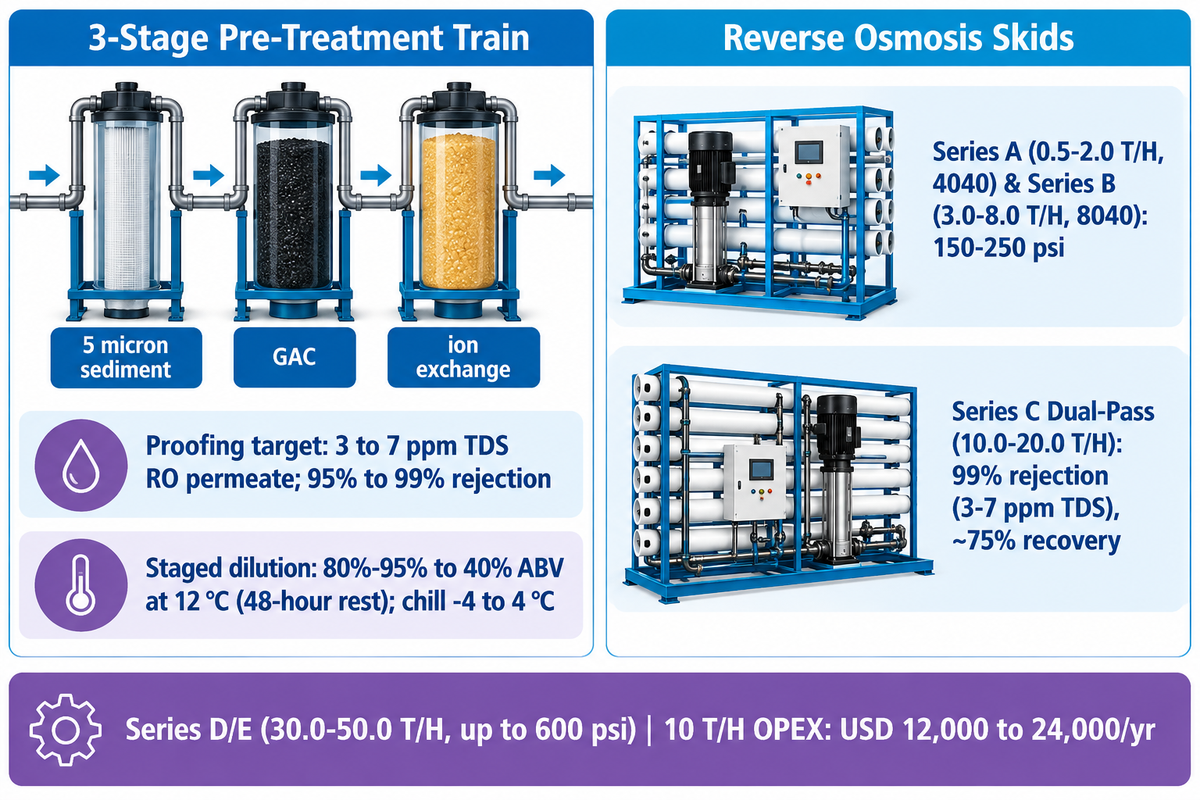
Water makes up the majority of the liquid volume in beer and about half of the liquid volume in bottled spirits. As noted in Armen’s Barrels vodka proofing guide, distillers dilute cask-strength spirits (which typically range from 80%-95% ABV off the still) to a 40% ABV bottling strength. Untreated municipal or well water introduces chlorine that creates medicinal off-flavors during fermentation. Dissolved Calcium and Magnesium ions can also precipitate out as a cloudy, white sediment during dilution.
In commercial distilleries, high-strength spirit often leaves the still or aging barrel between 60% and 95% ABV. Cellar teams dilute spirits with purified water to the product-specific bottling strength; the examples in this guide range from 40% to 57% ABV. This dilution step is governed by The Calcium Oxalate Proofing Flock Threshold. As documented in distillery proofing chemistry analyses, dropping spirit from 80%–95% ABV to 40% ABV in three staged dilutions at 12 °C with a 48-hour rest prevents mineral shock. Calcium ions react with oak-extracted oxalic acid to form crystalline calcium oxalate white flock in high-proof alcohol. Rapidly dumping cold hard water into cask-strength spirit also releases exothermic heat and forces fatty acid ethyl esters into a milky louche haze (PMC whisky dilution amphiphilic clustering study).
Commercial distilleries gradually dilute spirits using reverse osmosis permeate water to prevent post-bottling sediment. According to Mass Technology RO permeate data, municipal water treatments often polish the water to a 3 to 7 ppm total dissolved solids (TDS) level. Producers then marry the spirit to a tank for chill filtration. The spirit is then chilled to a temperature of -4 to 4 °C.
What Permeate TDS and Pre-Treatment Stages Are Required for Distillery Proofing vs. Brewery Mashing?
To minimize the risk of dissolved ions in bottling water, spirits are proofed using demineralized reverse osmosis (RO) permeate (between 3-7 ppm TDS) prior to bottling. Calcium and magnesium help stabilize alpha-amylase and lower mash pH through reactions with malt phosphates. To achieve target mineral profile in wort, brewers blend or remineralize RO permeate.
Unlike wine, which takes its water from crushed grapes, beer, and spirit producers primarily use treated plant water. Raw municipal and well water present four primary failure modes for alcohol plants.
- Free chlorine and chloramine can react with malt or fruit phenols during fermentation to form chlorophenols of an irreversible medicinal taste.
- Carbonate hardness and high alkalinity: Residual bicarbonate in the mash resists further acidification, while malt acidity, the addition of calcium, and the addition of acid also influence mash pH. An elevated mash pH extracts tannins from husk and can inactivate beta-amylase.
- Calcium and magnesium proofing haze: Hard dilution water can introduce calcium and magnesium into cask-strength whiskeys and vodkas. Flock formation in retail bottles is dependent on the type of ions present, their concentration, and the temperature of storage.
- Silica and iron membrane fouling: According to Mass Technology RO engineering engineering datasheets, excess calcium carbonate scale without a softener or antiscalant section reduces membrane water recovery from 75% to under 50%.
Modern beverage plants pass the raw feedwater through a three-stage pre-treatment train before the reverse osmosis membranes. This pre-treatment train combines: 5 micron sediment filtration, granular activated carbon (GAC), and either a cation or anion exchange resin.
How Do Commercial Bottling Plants Size Reverse Osmosis Skids?
Beverage engineers size reverse-osmosis skids by summing peak hourly mashing, spirit proofing, bottle rinsing, and Clean-in-Place (CIP) makeup water demand, then adding a typical 25% membrane flux safety margin. Commercial systems range from 0.5 tons per hour (T/H) for craft distilleries to 50 T/H for industrial breweries.
Plants can evaluate complete membrane skid skid setups through commercial reverse osmosis water treatment systems built with Toray or DuPont FilmTec 4040 and 8040 membranes. These systems span 0.5 to 50 T/H, with model-specific TDS rejection and water recovery figures listed below. According to Mass Technology’s industrial RO water treatment sizing guide, an optimized membrane bank generally removes 95% to 99% of dissolved solids. For a 10 T/H plant, annual variable operating cost runs approximately USD 12,000 to 24,000 depending on pump efficiency and recovery. Turnkey system capital investment varies by membrane stage count and stainless-steel piping specification (request a quote).
| RO System Series | Permeate Output Capacity | Membrane Configuration | TDS Rejection & Recovery | Primary Alcohol Plant Application | Pressure Rating & Supply Basis |
|---|---|---|---|---|---|
| Series A (Light Craft) | 0.5–2.0 T/H (500–2,000 L/h) | 4040 polyamide TFC elements | Usually 95%–98% rejection; ~65%–70% recovery | Craft spirit proofing water & small microbrewery mashing | 150 psi municipal tap feed; request a quote |
| Series B (Mid-Scale Beverage) | 3.0–8.0 T/H (3,000–8,000 L/h) | 8040 high-rejection spiral membranes | Often 97%–99% rejection; ~65%–75% recovery | Regional winery bottle rinsing, RTD blending & regional brewery | 150–250 psi municipal/brackish feed; request a quote |
| Series C (Industrial Two-Pass) | 10.0–20.0 T/H (10,000–20,000 L/h) | Dual-pass 8040 AISI 304/316L skid | Commonly 99% rejection (3–7 ppm TDS); ~75% recovery | High-speed spirit bottling lines & automated CIP water makeup | 250 psi dual-pass skid; request a quote |
| Series D/E (Mega Brewery Plant) | 30.0–50.0 T/H (30,000–50,000 L/h) | Multi-bank 8040 with energy recovery | Generally 98%–99% rejection; up to 75% recovery | Large-scale beer, cider, and hard seltzer production complexes | Up to 600 psi high-recovery skid; request a quote |
How Are Alcoholic Beverages Filtered, Bottled, and Canned at Commercial Scale Without Oxidation?
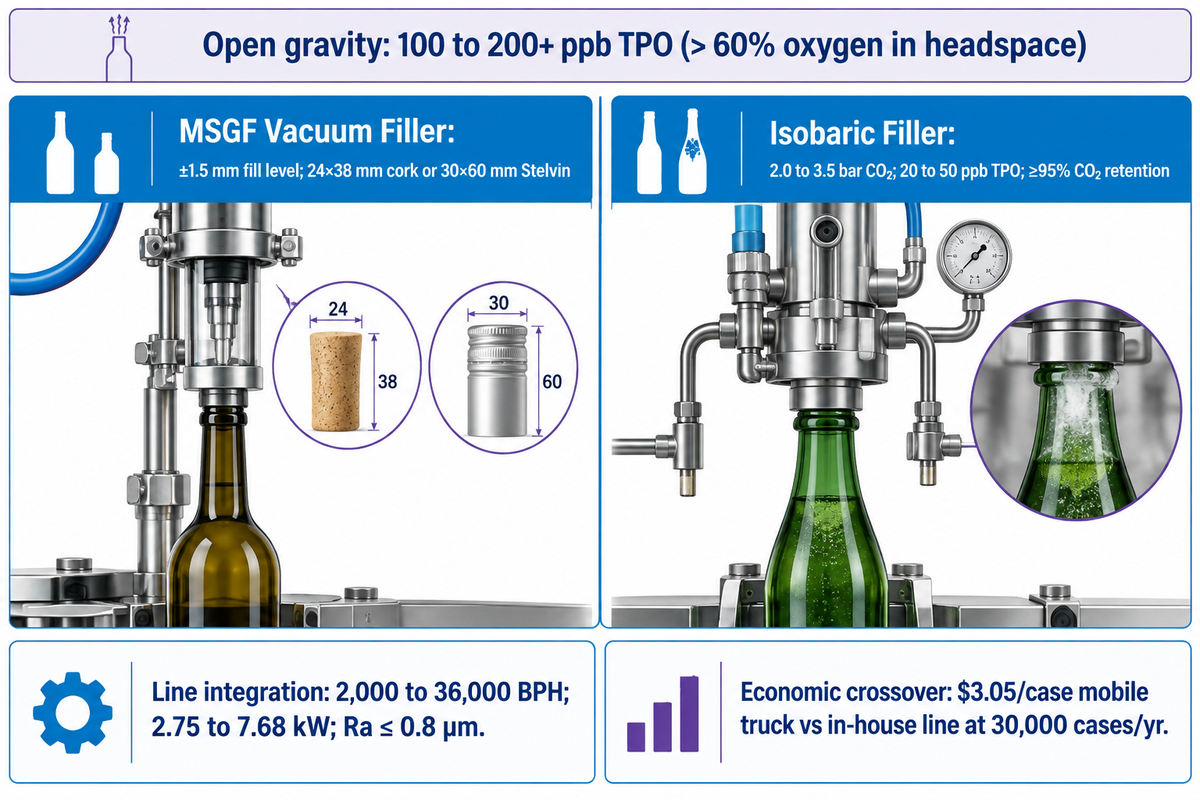
After maturation and sterile filtration, commercial packaging lines transfer alcoholic drinks into glass bottles or aluminum cans, using filling valves matched to carbonation and oxygen sensitivity. Still wines and spirits are filled using micro-negative-pressure vacuum fillers. Counter-pressure filling is commonly used for carbonated beer, cider and sparkling wine; a double-evacuation system is used for glass bottle filling of the latter. Canning systems in general, purge empty cans using CO₂.
Packaging is the final quality gate, and months of careful fermentation and aging can be ruined by exposure to air. This engineering trade-off is defined by The Isobaric vs. Micro-Negative-Pressure TPO Ladder. As documented in commercial counter-pressure canning benchmarks, open atmospheric or gravity systems usually leave 100 to 200+ parts per billion (ppb) of Total Package Oxygen (TPO). Well-run counter-pressure rotary systems usually achieve 20 to 50 ppb TPO with top rotary lines achieving single digits. Packaging audits by the Australian Wine Research Institute (AWRI), show that over 60% of bottle oxygen is in headspace immediately after sealing. Achieving low TPO is achieved by coupling low dissolved oxygen (DO) liquid transfers with inert gas purging or high-pressure water fobbing, before sealing.
When Should a Producer Choose Gravity, Micro-Negative-Pressure Vacuum, or Isobaric Counter-Pressure Filling?
Non-carbonated beverages, like still wines, whiskey, vodka, and brandy, are susceptible to drip loss. For consistency, these beverages are filled under a vacuum, or micro-negative-pressure. Counter-pressure filling is used for carbonated beverages. Carbonation levels for different products vary according to the beverage type. For example, the carbonation level for whiskey is greater than vodka, which is greater than brandy.
For non-carbonated alcoholic beverages like still wine, rice wine and distilled spirits, plants use micro-negative-pressure wine filling machines (MSGF Series). The MSGF series maintains oxygen pickup low, and fill accuracy within ±1.5 mm, with minimal negative-pressure rotary monoblocks that combine aseptic rinsing, laminar vacuum filling and sealing. Winery and distillery clients who are building turnkey packaging halls are integrating complete glass-bottle wine bottling lines across modular monoblocks that range from 2,000 to 36,000 bottles per hour (BPH). Motor ratings span 2.75 to 7.68 kW, while turnkey pricing depends on speed and closure tooling (request a quote). A single monoblock turret can change over from natural wine corks (24 × 38 mm) to T-corks for spirits, ROPP aluminum closures, or Stelvin closures (30 × 60 mm) in 15-30 minutes.
Carbonated drinks cannot be filled under vacuum or open gravity without violent CO₂ breakout. Breweries and cideries rely on isobaric counter-pressure beer filling machines. These systems pre-evacuate glass bottles (or CO₂-purge cans) and equalize headspace pressure to 2.0 to 3.5 bar. In commercial beer bottling lines integrating across 2,000 to 36,000 bottles per hour (BPH), this sequence holds fill accuracy to ±0.3%–0.5%. It also commonly keeps foam loss below 1.5%, retains ≥95% of dissolved CO₂, and caps bottles within 1.5 seconds. Multi-beverage co-packers are rapidly expanding SKU counts (Beverage Industry packaging report). Engineering teams can consult Mass Technology’s guide on how to choose the right beverage filling machine to match valve architecture to each drink.
| Beverage Category | Recommended Filling Technology | Target Oxygen & CO₂ Spec | Compatible Closure Systems | MassTech Line Integration Speed | Commercial Supply Basis |
|---|---|---|---|---|---|
| Still Table Wine (Red, White, Rosé) | Micro-negative-pressure vacuum + N₂/Ar purge | Low oxygen pickup; ±1.5 mm fill level | Natural cork (24×38 mm) or Stelvin screw cap (30×60 mm) | MSGF Monoblock Series (2,000–36,000 BPH plant integration) | Configuration-dependent (request a quote) |
| Distilled Spirits (Whiskey, Vodka, Gin, Rum) | Explosion-proof micro-negative-pressure / volumetric | Zero drip loss; generally ±0.5%–1.0% volume accuracy | T-cork stopper, ROPP aluminum cap, tamper-evident glass | MSGF Spirit Monoblock Series (2,000–36,000 BPH plant integration) | Configuration-dependent (request a quote) |
| Craft & Commercial Beer (Glass Bottles) | Double-vacuum CO₂ isobaric counter-pressure | Usually 20–50 ppb TPO; ≥95% CO₂ retention; <1.5% foam loss | 28 mm crown cap (≤1.5 s transfer + high-pressure water fobbing) | Mass Isobaric Bottle Series (2,000–36,000 BPH plant integration) | Configuration-dependent (request a quote) |
| Beer, Hard Cider & RTD Cocktails (Cans) | Isobaric counter-pressure rotary can filler + seamer | Often 20–50 ppb TPO; ±0.3%–0.5% fill accuracy | 202/206 aluminum can ends via servo double-seamer | Mass Can Filling & Seaming Series (2,000–36,000 BPH plant integration) | Configuration-dependent (request a quote) |
How Do Bottling Line Speed (BPH), Closure Tooling, and CIP Sanitization Scale with Annual Output?
Plants size bottling line nameplate speed (BPH) so peak-month production runs usually occupy 60% to 70% of single-shift capacity, leaving 30% to 40% headroom for bottle size changeovers and Clean-in-Place (CIP) sanitization. Wine & Beer Supply’s cost breakdown places the economic crossover between mobile bottling and an in-house line at around 30,000 cases per year.
“Wineries considering in-house bottling versus mobile bottling must consider per-case costs, how well total package oxygen can be controlled, and how flexible their schedules are.”
Economic indicators show owning a packaging line is better than contract mobile bottling in the long-term. As shown in breakdowns of winery bottling costs, hiring a mobile bottling truck at $3.05/case is economical for smaller runs. According to Wine & Beer Supply, the economic crossover between using a mobile bottling truck and owning a bottling line is about 30,000 cases per year. Every Mass Technology filling monoblock uses sanitary AISI 304 or AISI 316L stainless steel fluid paths (weld roughness Ra ≤ 0.8 µm). Automated CIP uses caustic soda, followed by water rinsing and a peracetic acid sanitizing step.
Scope Limitations & Process Boundaries
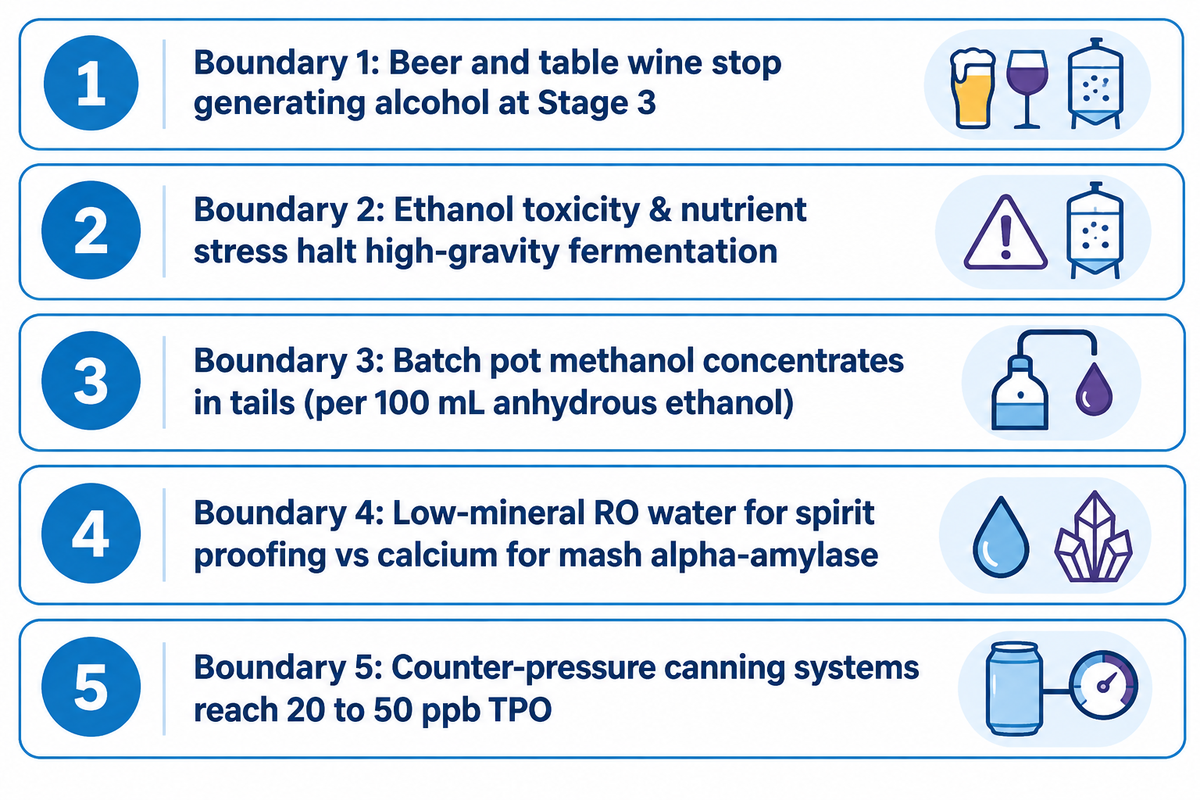
When using these parameters for a business, engineers and beverage entrepreneurs need to think about five process boundaries:
- Pathways for Beer and Table Wine: Beer and table wine stop generating alcohol at stage 3, continue on through clarification, any required conditioning and packaging.
- Ethanol toxicity can halt fermentation while fermentable sugar remains in both high-gravity and fed-batch fermentations; nutrient deficiency and temperature stress can lower yeast ethanol tolerance.
- methanol is concentrated mainly in batch alembic pot distillation, with respect to relative tail-end concentration (normalized to 100 mL of anhydrous ethanol). Low-pectin feedstocks decrease potential for methanol formation. Dedicated demethylizing columns capture methanol in the spirit streams.
- Low-mineral reverse-osmosis water reduces the mineral load introduced during spirit proofing; dilution can also produce haze when oily congeners become less soluble. Addition of calcium in grain mash helps stabilize alpha-amylase, and the grist itself provides the mash with some calcium.
- According to ZANZ, well-functioning counter-pressure canning systems can reach total package oxygen levels of 20 to 50 ppb.
Frequently Asked Questions (FAQ)
How is liquor produced compared to beer and wine?
Liquor adds copper-still distillation to concentrate ethanol up to the atmospheric azeotropic limit of 97.2% ABV (95.6% by weight), whereas beer and wine proceed directly from fermentation to clarification and packaging. Both paths start with yeast fermenting grain wort, fruit juice, or molasses to create a wash that is typically 6% to 12% ABV.
What are the 7 stages of alcohol manufacturing in a commercial plant?
There is a difference in the steps commercial alcohol producers take to manufacture alcohol vs. the steps home alcohol producers take, and those steps vary by the type of alcohol being produced. Cereal grains need to be cooked and enzymatically mashed to create wort. Apple juice and diluted honey and molasses do not require starch mashing to make alcohol. After sugar fermentation, alcohol is clarified, cold conditioned, and low-oxygen packaged. For distilled alcohols, sugar is further concentrated by condensation. In addition, oak barrels, which have been charred, can provide color and flavor. Also, reverse osmosis water can be added before bottling.
Is it legal to distill your own alcohol at home in the United States?
No, unlicensed home spirit distillation is a federal felony under 26 U.S.C. 5601 carrying $10,000 fines.
Why does yeast fermentation naturally stop around 15% to 20% ABV?
High ethanol concentrations act as an amphiphilic solvent that hyper-fluidizes the yeast phospholipid cell membrane and leaks intracellular protons. Most yeast strains tolerate 11% to 12% ethanol, while commercial strains generally tolerate 14% to 20% ABV at 20 to 25 °C. Heat stress, organic acids, or nutrient deficiency lower that ceiling and halt glycolysis even when residual sugar remains.
What is the difference between beverage ethanol, denatured alcohol, and rubbing alcohol?
Beverage alcohol is food grade ethyl alcohol (C₂H₅OH) produced by the fermentation of agricultural starches. Denatured alcohol is a mixture of ethanol and methanol or denatonium benzoate for tax-exempt industrial use. Rubbing alcohol can contain isopropyl alcohol (C₃H₈O) or denatured ethanol; neither formulation is suitable as an ingredient in alcoholic beverages.
How does alcohol damage DNA and why is methanol removed during distillation?
Liver enzymes oxidize ethanol to acetaldehyde, which is DNA damaging. In distillation, pectin residues are removed via column fractionation.
Engineer Your Turnkey Alcohol Water Treatment & Bottling Line
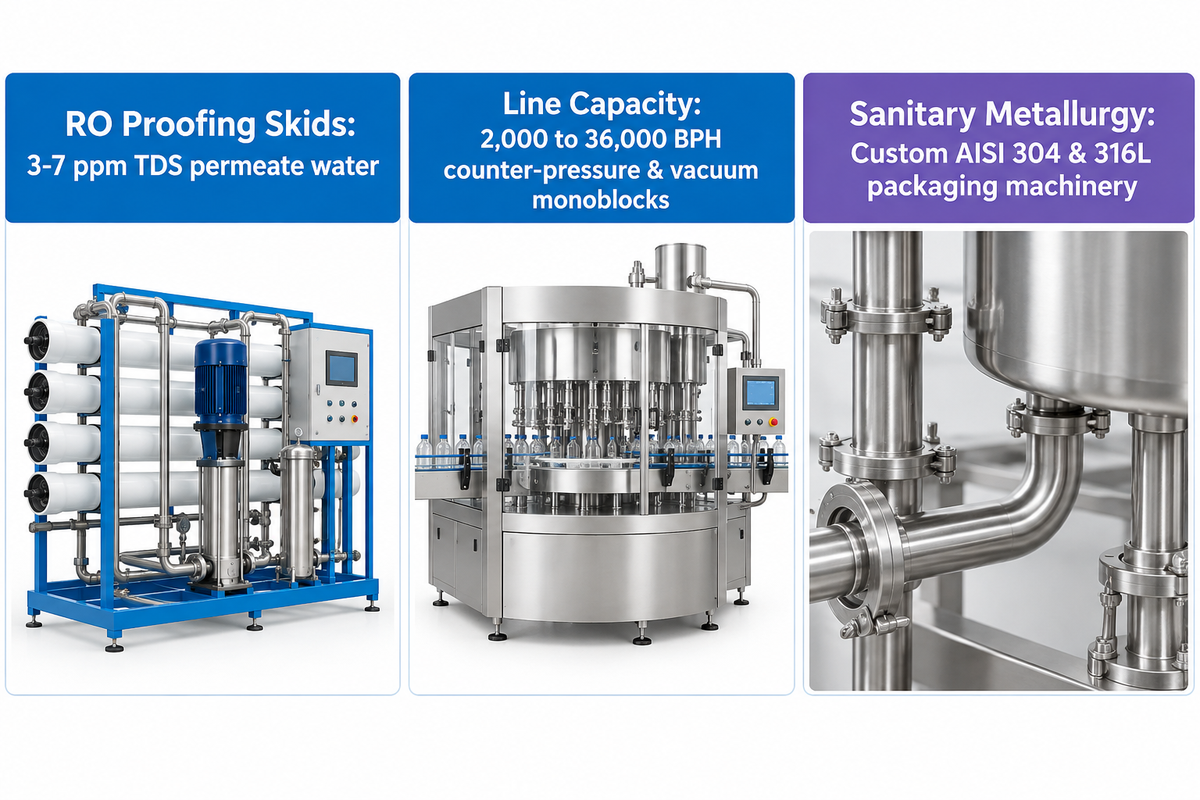
Scaling a boutique winery, a spirits distillery with 3–7 ppm TDS reverse-osmosis proofing skids, or a 2,000 to 36,000 BPH counter-pressure beer plant requires precision low-oxygen engineering. Mass Technology manufactures custom AISI 304 & 316L packaging machinery. For a customized bottling line layout & quote, click here.
References & Sources
- U.S. National Archives and Records Administration. 27 CFR Part 5 — Labeling and Advertising of Distilled Spirits (Amended by Treasury Decision TTB-199, Dec 2024).
- Alcohol and Tobacco Tax and Trade Bureau (TTB). Penalties for Illegal Distilling Under United States Code Sections 5601 and 5602.
- University of California, Davis — Department of Viticulture and Enology. https://wineserver.ucdavis.edu/industry-info/enology/fermentation-management-guides/wine-fermentation/fermentation-management-practices. Wine Fermentation Management Practices & Diagnostic Key for Sluggish Fermentations.
- National Center for Biotechnology Information (PubMed / PMC). Yeast Plasma Membrane Fluidity and Ethanol Tolerance Mechanisms & Fermentation Temperature Kinetics.
- National Center for Biotechnology Information (PMC). Amphiphilic Clustering and Sensory Chemistry in Diluted Whisky.
- Australian Wine Research Institute (AWRI). Oxygen Pick-Up During Packaging: Understanding Total Package Oxygen (TPO).
- Grand View Research. ” Non-Alcoholic Beverages Market Size, Share & Trends Report (2025–2033).”
- Beverage Industry Magazine. Filling Equipment Evolves to Accommodate Expanding SKU Counts & Bourbon Barrel Aging Traditions.
- ZanzCan & Wine and Beer Supply Technical Library. Counter-Pressure Canning TPO Benchmarks & Mobile vs. In-House Bottling Cost Breakdown.
These “Zegbrks” are sourced from our reference library. We rank sources in the following order, if applicable: (1) primary research (i.e. experiments, surveys, etc.); (2) peer-reviewed research; (3) government documents (particularly those from regulatory agencies and bureau of land management); (4) trade / industry publications; (5) business publications / trade rags.
WHY WE WRITE THIS
MassTechX publishes practical engineering guides for beverage producers, plant owners, procurement teams, and packaging line buyers who need to compare filling, blowing, labeling, water treatment, and end-of-line equipment with less guesswork. Our goal is to explain the real production constraints behind capacity, liquid type, container format, hygiene requirements, spare parts, and after-sales service before a buyer commits to a bottling line.
ABOUT OUR BUSINESS
Mass Technology is a Zhangjiagang-based beverage filling machine manufacturer in Jiangsu, China. We design and manufacture complete bottling line solutions for water, carbonated drinks, juice, beer, wine, cans, bottle blowing, bottle labeling, water treatment, and related packaging systems. Our published equipment range covers 2,000–36,000 BPH production lines, with deployment experience across 60+ countries.
OUR SERVICES
We support buyers through plant layout design, equipment selection, manufacturing, factory acceptance testing, shipping coordination, on-site installation, operator training, and long-term after-sales service. MassTechX projects are supported by a 2-year warranty, 24-hour engineer response, and 5-working-day international spare parts dispatch commitment.
DATA MATRIX // MANUFACTURER PROFILE
NAMEMass Technology Engineering Team
ROLEBeverage Filling Line Manufacturer
BRAND NAMEMassTechX / Mass Technology
COMPANYZhangjiagang Mass Technology Co., Ltd.
LOCATIONZhangjiagang, Jiangsu, China
CAPACITY RANGE2,000–36,000 BPH
PRODUCT RANGEWater Filling, CSD Filling, Juice Filling, Beer Filling, Wine Filling, Can Filling, Bottle Blowing, Bottle Labeling, Water Treatment
GLOBAL REACH60+ Countries
WARRANTY2 Years
SERVICE SLA24-Hour Engineer Response / 5-Working-Day Spare Parts Dispatch
WEBSITEmasstechx.com
Related Posts
Trending now