Get in Touch with Masstech

Contact Form 使用中
ISO 9001:2015 ✓

PET Preform Injection

PET Preform Injection Molding Machine — 140-800T Servo + Hydraulic Solutions

Mass tech 8-cavity to 96-cavity systems for water, carbonated beverage, juice, edible oil and specialty bottle preforms – also encountered as PET preform injection moulding machine or preform mould systems in UK markets. CE approval and EUROMAP 67 robot interface ship standard.

  • EUROMAP 67 robot interface ✓
  • CE Marked ✓
  • 2-Year Warranty (parts inclusive) ✓
  • 24-Hour engineer response ✓
Request Tonnage Match + Quote
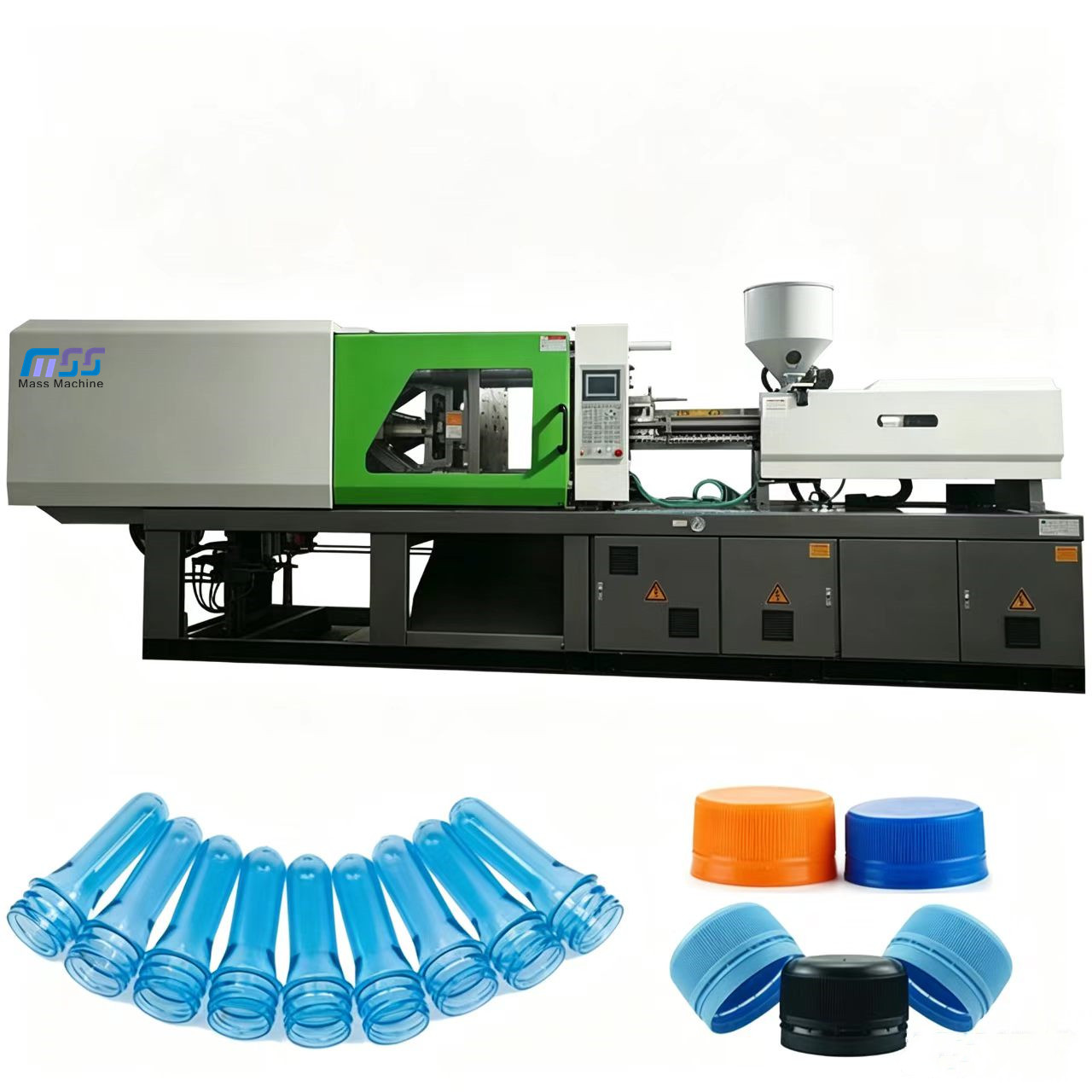
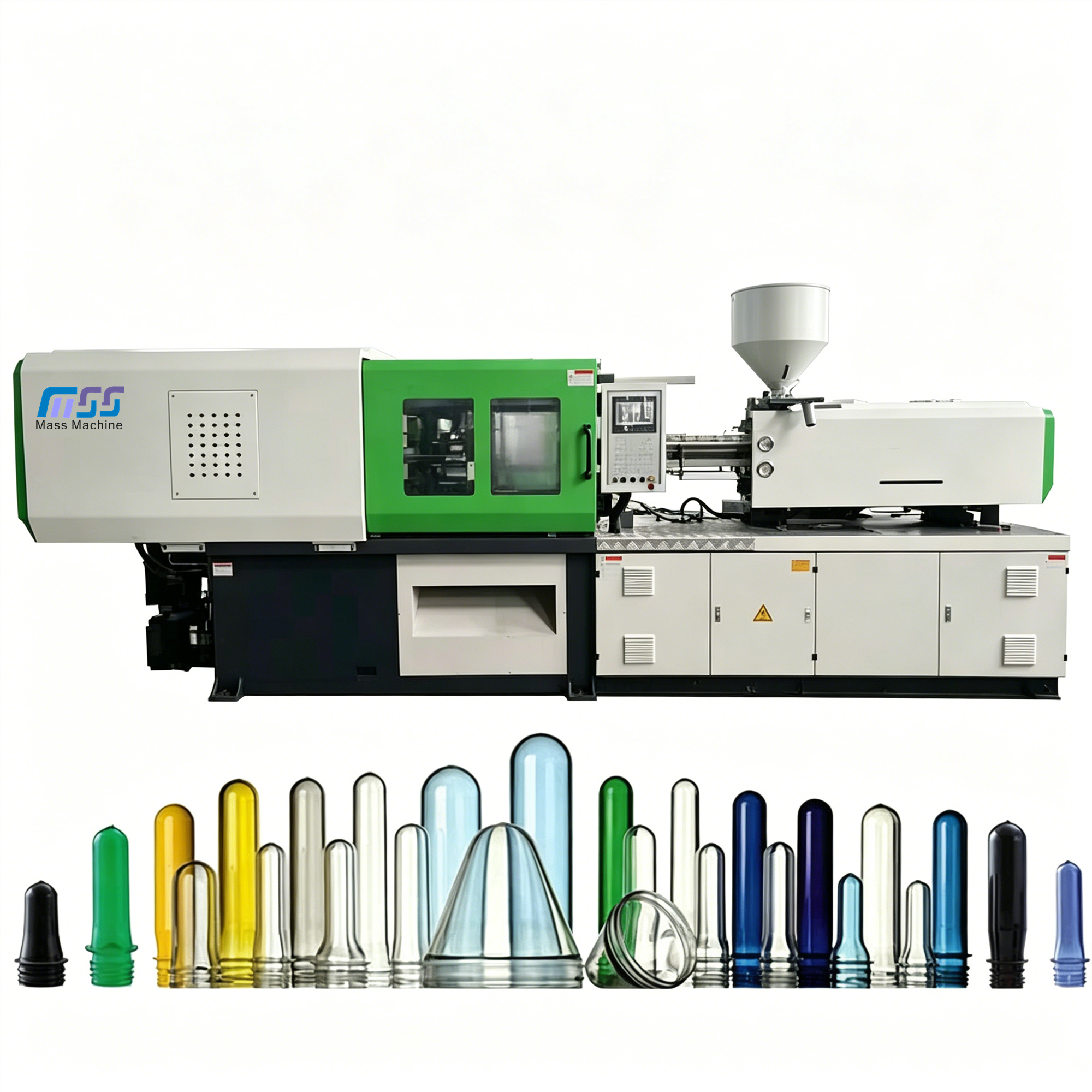
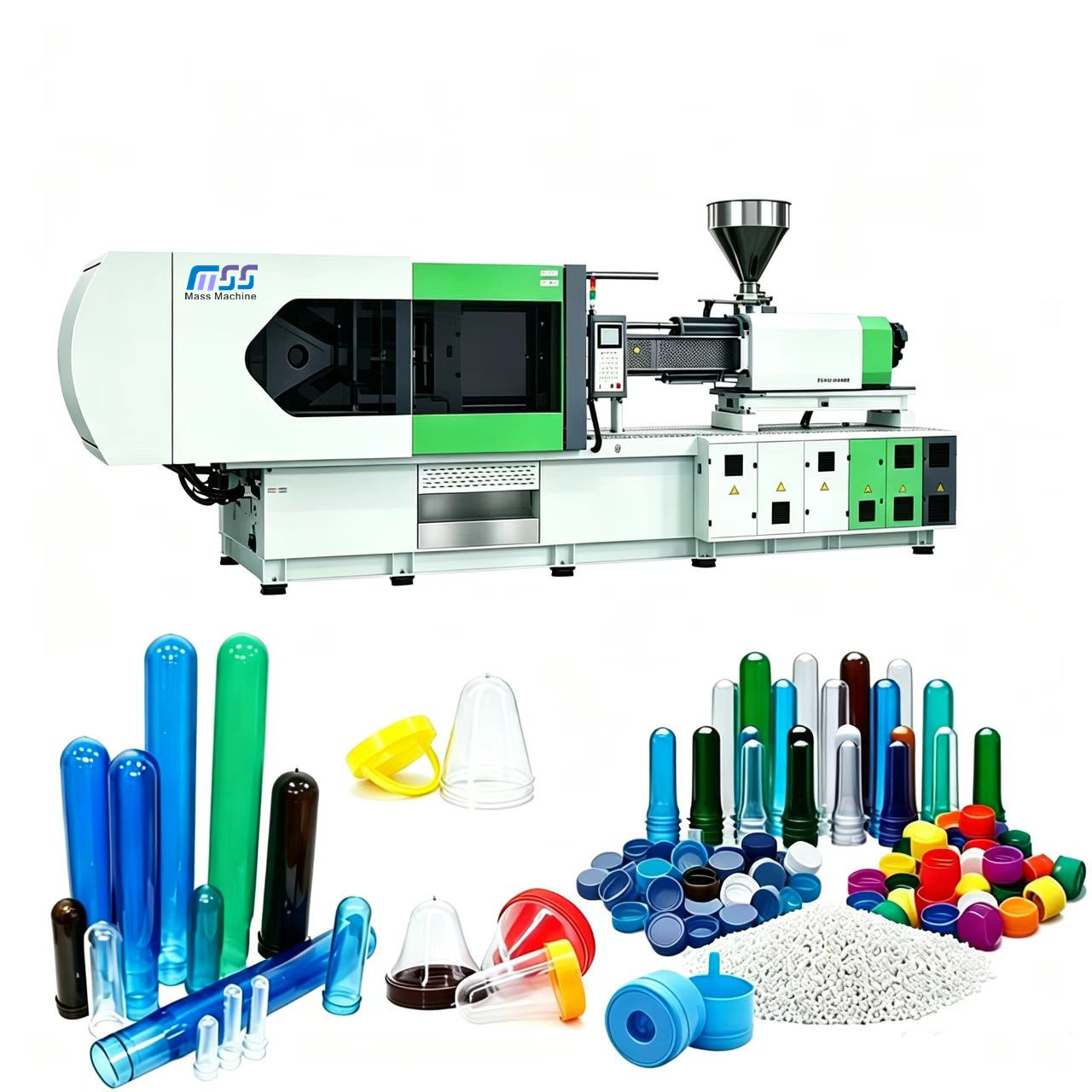
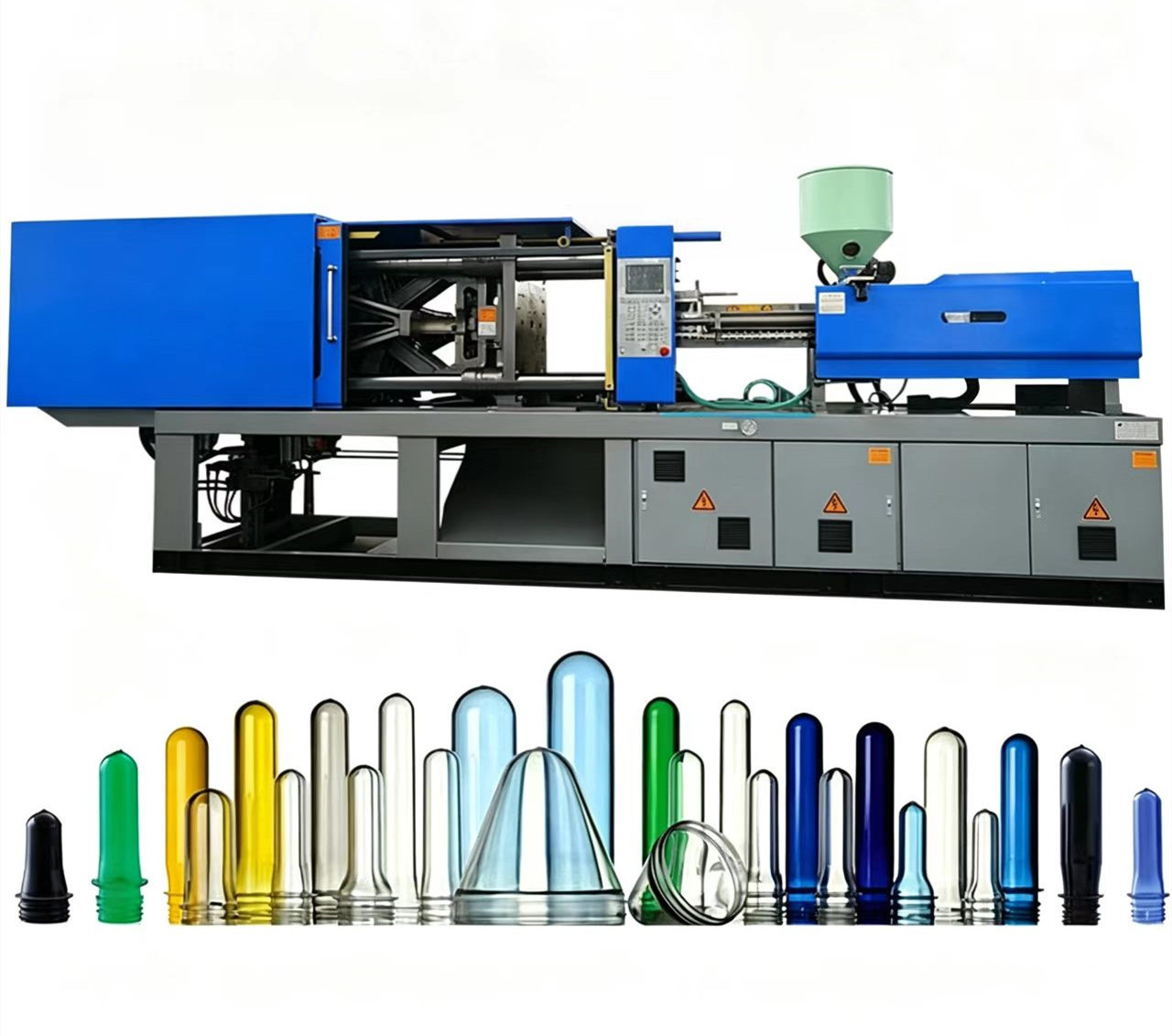
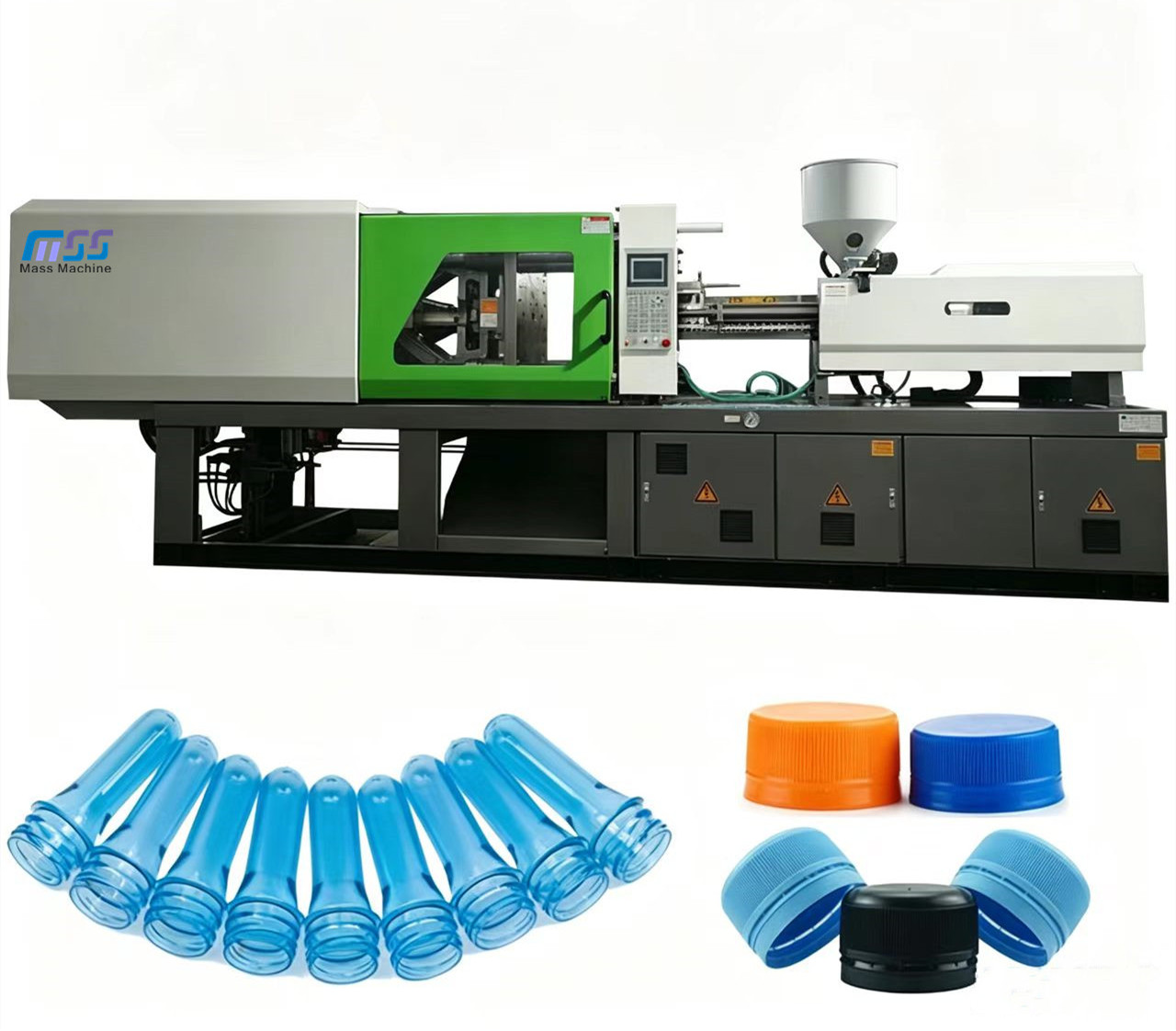
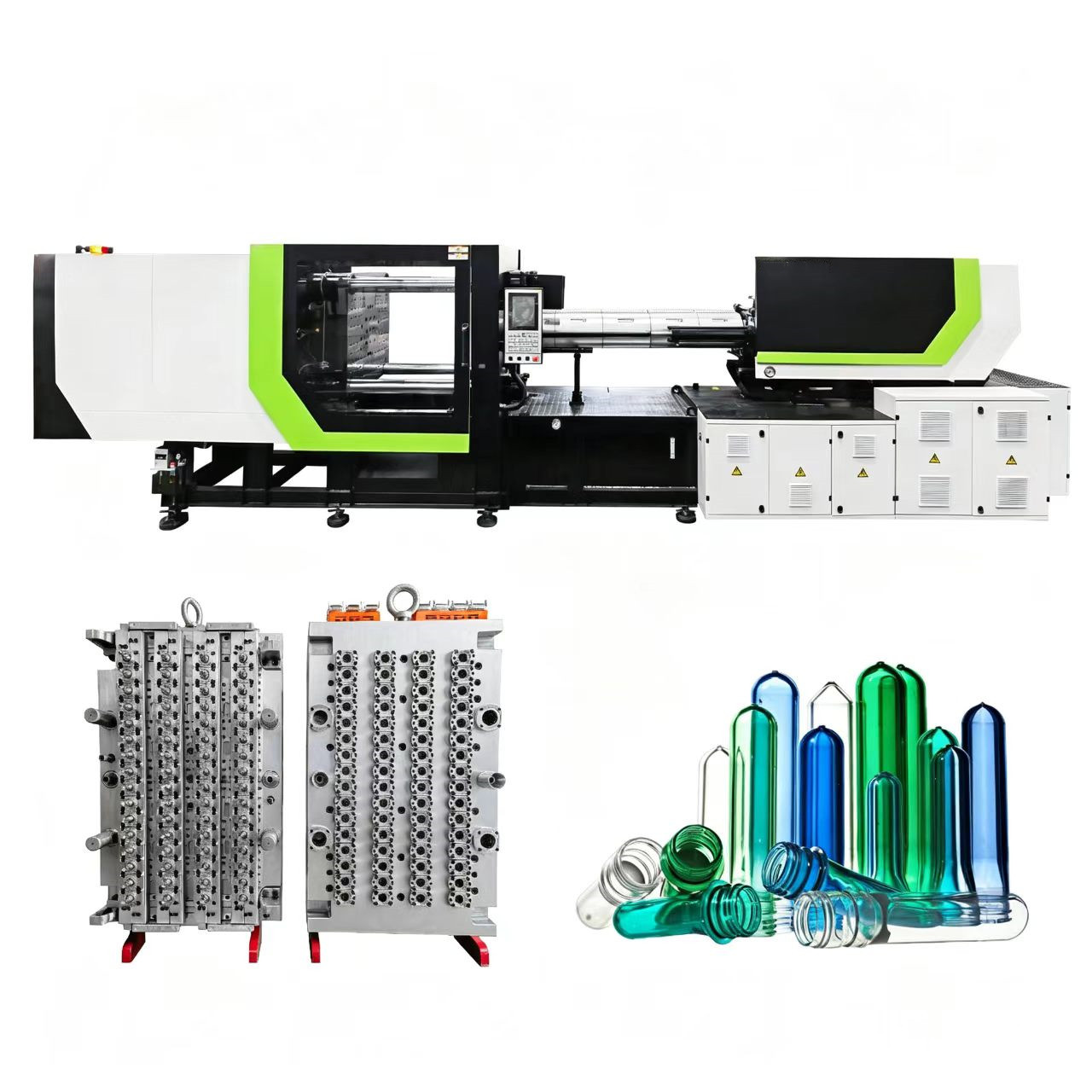
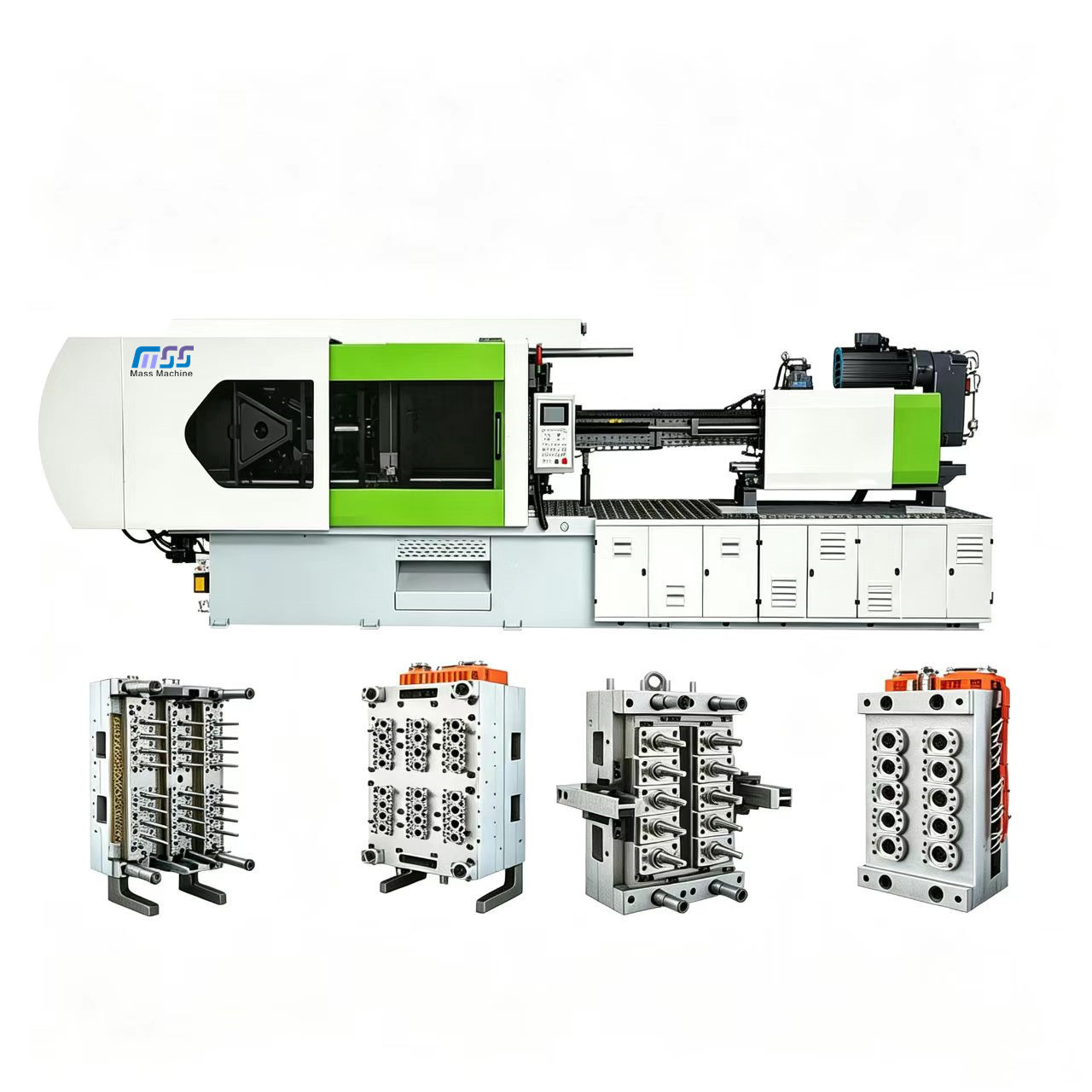
PET Preform Solution 1 PET Preform Solution 2 PET Preform Solution 3
140-800T
Clamping force range
8-96
Cavities per tonnage
30-50%
rPET stable processing
9-22 s
Cycle time (neck-finish dependent)

PET Preform Production — The Four Manufacturing Pain Points We Engineer Around

PET preform injection moulding appears routine from a brochure and seldom functions that way on a shop floor. Acetaldehyde concentration migrates, rPET shifts color, cycle time extends by 2 seconds and the power invoice rises. Every trouble we itemize here originates from production lines we have fabricated and delivered from Zhangjiagang since 2024.

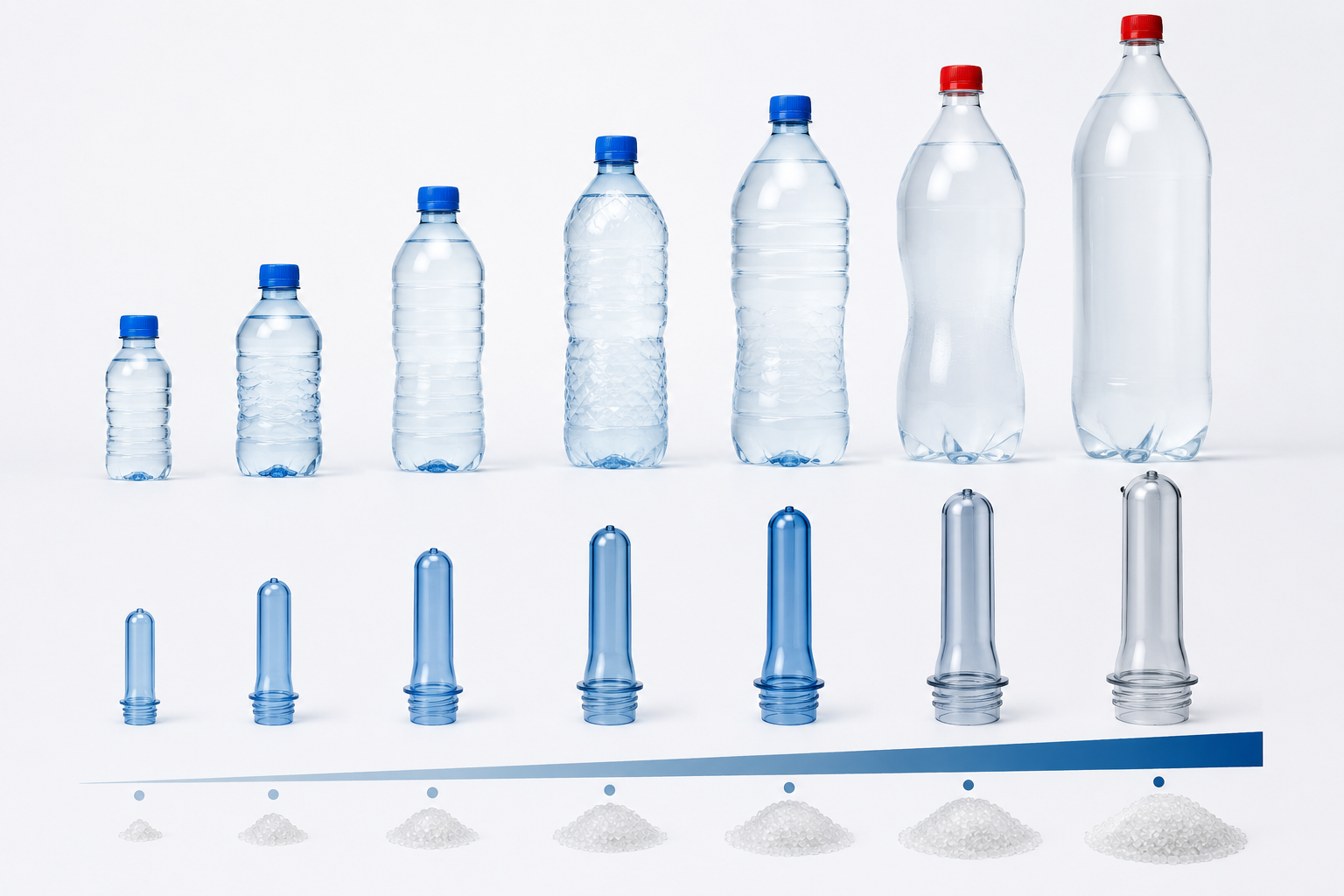
A PET preform is the test-tube-shaped intermediate component that gets stretch-blown into a complete consumer beverage or cosmetic bottle. PETplanet describes the standard thread-finish-and-body profile; what the brochure omits is just how narrow the window of tolerance actually is.

AA drift triggers lot rejection
01
Pain 01 — Quality
AA drift triggers lot rejection

Beverage consumers will not buy preforms that have concentration above ~4 ppm AA, cosmetics consumers above ~8 ppm. PET produces acetaldehyde as a by-product of degradation anytime residence time, screw shear or barrel zone temperature gets out of range.

rPET batch instability
02
Pain 02 — Material
rPET batch instability

Recycled PET material arrives with intrinsic-viscosity scatter and trace contaminants. Without PID-actuated barrel zones and the appropriate screw L/D, colour changes and IV decline materialize within the first hour of a 30-50% blend trial.

Cycle-time variance kills forecasting
03
Pain 03 — Output
Cycle-time variance kills forecasting

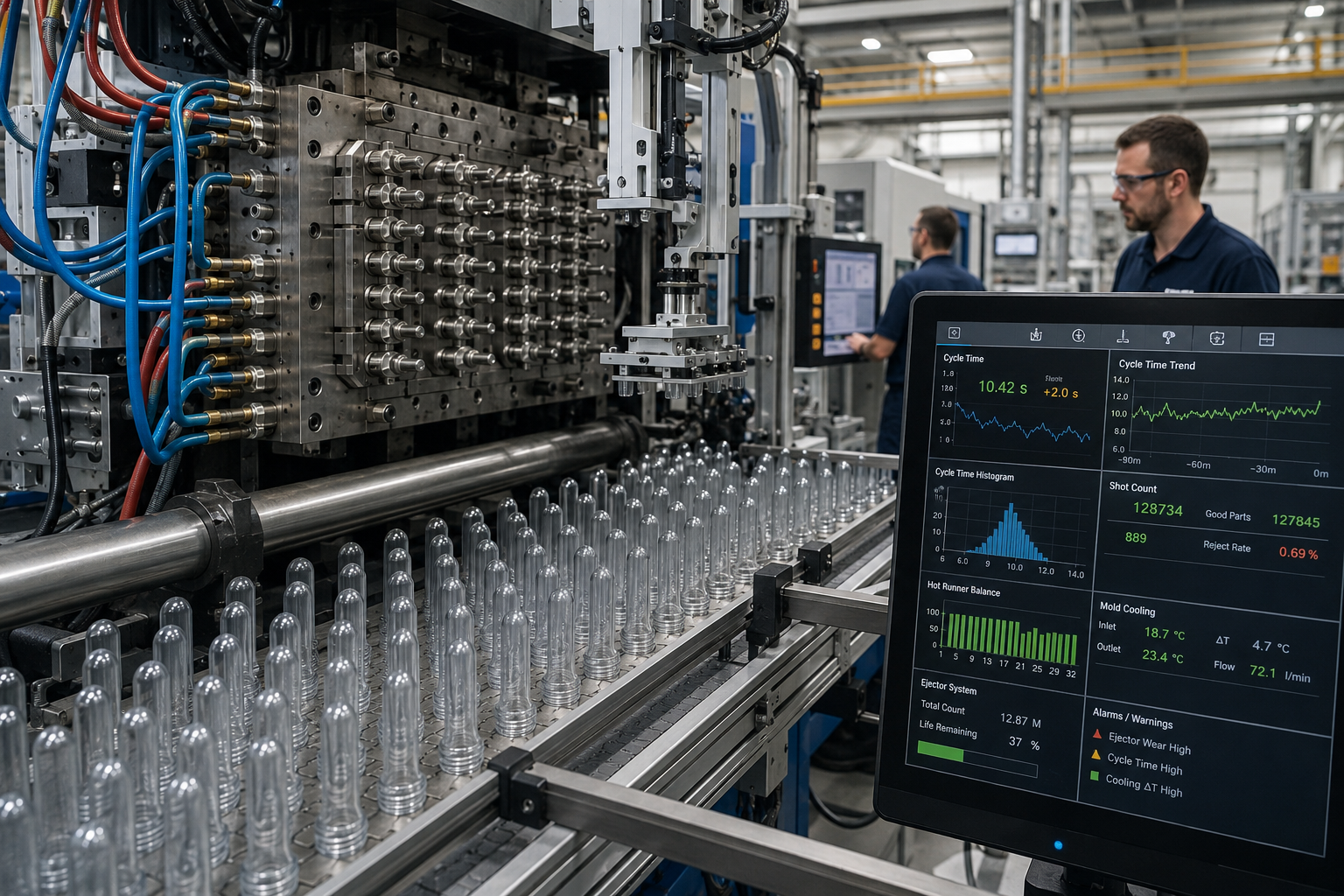
A 2 second window of cycle time drift on a 32-cavity tool totals to about 1,800 preforms per hour. Mold cooling ability, hot-runner balance and ejector life all require isolated communication at the PLC level, not bolted on after FAT.

Hydraulic pump-idle waste
04
Pain 04 — Energy
Hydraulic pump-idle waste

A fixed-displacement hydraulic solution consumes 70-80% of its total work cycle at pressure-relief idle. A servo-motor actuating the pump exists on-demand, so power usage per thousand preforms drops considerably between cycles.

Brand-owner gram-target pressure
05
Pain 05 — Lightweighting
Brand-owner gram-target pressure

Beverages majors continue volumetric reduction in preform weight to optimize resin cost and Scope-3 carbon. A 12 g water preform manufactured in 2018 is a 9 g preform today, and that reducing puts additional thermal and mechanical strain on the screw, hot runner and cooling channels simultaneously.

The Standard / How we engineer around them
Every Masstech 140-800T machine ships with PID temperature control across four or more barrel zones, double-proportional valve pressure-and-flow control, hydraulic oil cooling, and an APID-controlled injection barrel — the same hardware tier that Tier-1 Husky and Netstal class their entry systems with, packaged at mid-tier price tiers.

Masstech 140-800T PET Preform Series — Specifications & Tonnage Matrix

The Masstech PET preform family continues into four convenience tonnage ranges, each matched to a bottle family as opposed to one chassis for the whole program. Material purchasers matching an RFQ to a quote will want to inquire about clamp tonnage, maximum cavity number and screw L/D – those three variables comprise nearly the entire comparison sheet.

Each chassis is equipped with a toggle-type three-platen clamp equipped with finite-element-modelled tie-bar geometry, a single- or twin-screw injection station ( you select on order) and an APID-equipped-temperature-controlled barrel. Roaming HMI, manual/semi-automatic/full-automatic operation modes and a EUROMAP 67 robot interface accompany the platform.

140-200T PET Machine Showcase
140
140-200T
Compact preform bottle line
  • Cavities16-48
  • Typical preform9-18 g
  • Target bottle0.3-1L water
  • Cycle9-14 s
  • Servo optionYes
250-350T PET Machine Showcase
250
250-350T
Mainstream beverage
  • Cavities32-64
  • Typical preform14-32 g
  • Target bottle1-2L water/CSD
  • Cycle11-16 s
  • Servo optionYes (Recommended)
400-550T PET Machine Showcase
400
400-550T
Mid-large beverage
  • Cavities24-48
  • Typical preform30-60 g
  • Target bottle2-5L beverage
  • Cycle13-18 s
  • Servo optionYes
650-800T PET Machine Showcase
650
650-800T
Large & specialty
  • Cavities8-32
  • Typical preform60-150 g
  • Target bottle5L+ jars, edible oil, specialty
  • Cycle15-22 s
  • Servo optionYes
Reading the spec sheet. Clamping force is published in ton (metric ton or “T”) across the global injection molding industry — 1 ton ≈ 9.81 kN. A “250T” machine therefore delivers about 2,450 kN of clamping force on the moving platen. Sales sheets sometimes mix ton and kN; we publish both to avoid confusion at RFQ time.
Common platform features (all tonnages)
What it does
Why it matters
APID temperature control
Closed-loop PID across barrel + nozzle + mold zones
Holds AA value below the ~4 ppm beverage-grade window even on 30-50% rPET blends
Double-proportional hydraulic valve
Pressure and flow controlled independently
Faster, smoother response than single-stage valving; protects mold during low-pressure mold-close
Triple-interlock safety door
Hydraulic + mechanical + electrical interlocks
CE compliance plus protection against unintended clamp during mold change
Flexible tie-bar nut
Eliminates fatigue fracture under cyclic load
Tie-bar service life matches the chassis service life, not 18-24 months
Automatic mold-change clamp adjustment
Parameter-driven clamp-force recalibration
Mold change in under one shift, not a two-day commissioning
EUROMAP 67 robot interface
Standardized electrical interface to take-out robot
Plug-and-play integration with any major handling robot — no custom wiring

How to Size Your Machine — Tonnage × Cavity × Cycle Time Decision Framework

Most PET preform RFQs we receive come to us with an erroneous tonnage in the header field. Buyers latch onto cavity number with seductive reliance on a competitor brochure and work backwards to estimate tonnage, when the right process is inverse. Begin with bottle volume, then preform weight, finally projection area – tonnage drops as the third derivative.

Four-step decision flow
Bottle volume to preform weight
01
Bottle volume → preform weight.
On average water bottles are in the range of 0.5-1.2 g/ 100 ml of finished bottle, CSDs are heavier because of required wall strength. A 600 ml water preform weighs in the region of 9-12 g while a 2L CSD preform is around 48-55 g.
Preform weight + cavities to projection area
02
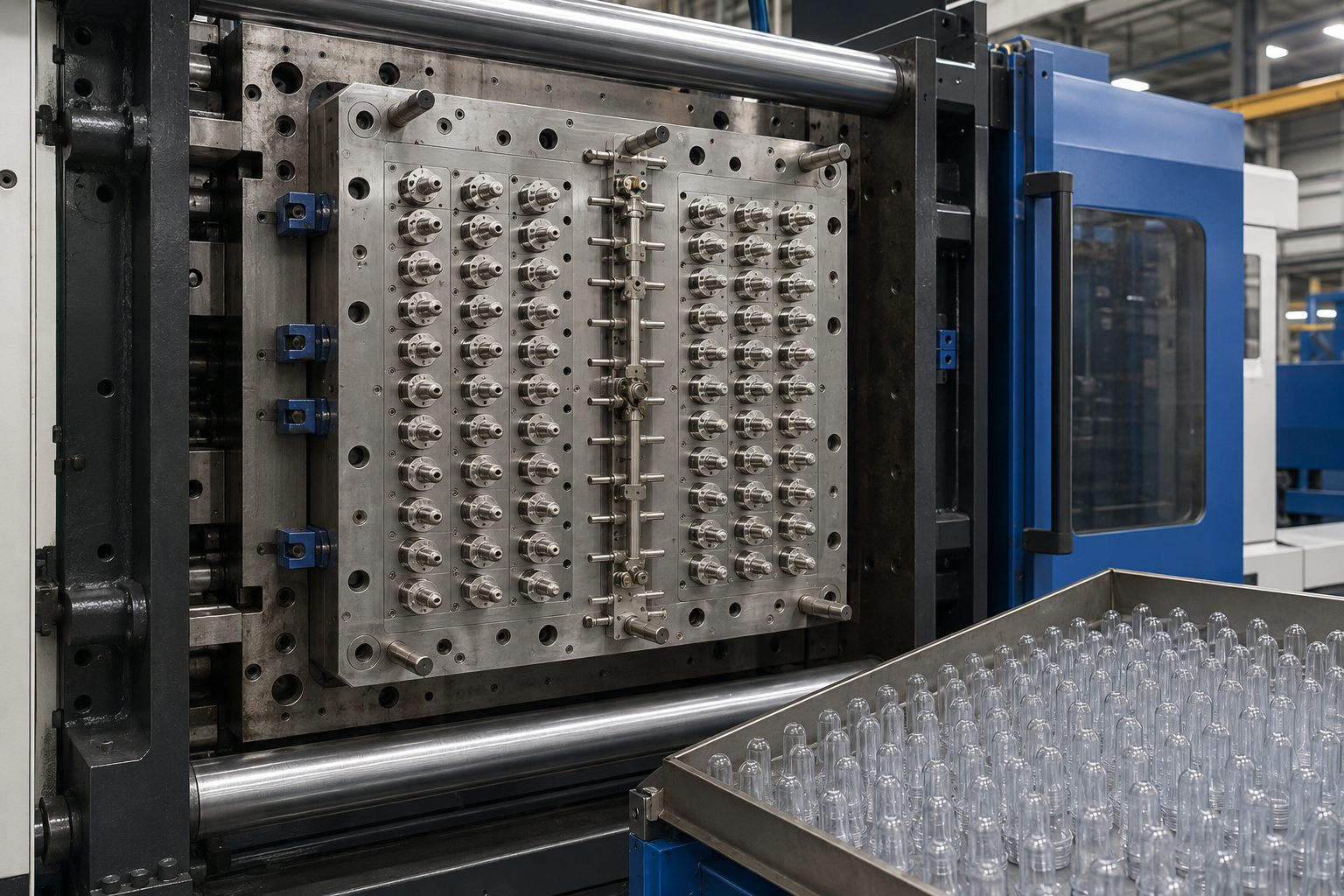
preform weight + number of cavities → projection area.
Approximately 3-4cm of clamp area is needed per cavity, and a runner is also needed. A 12g water preform mold consisting of 32 cavities is about 700-900cm.
Cross section area to melt pressure
03
Cross section area → melt pressure needed for clamping force.
PET is around 800-1,100 bar, times up by the cross section area to give the floor of the clamping force then add 20-30% for safety.
Utilization to machine class
04
10. Required clamping utilization → machine class.
Select the tonnage class that is one step above the calculated floor—this will keep cycle time consistent when the mold gets older or the rPET blend becomes more difficult.
Recommended tonnage by bottle class (4-row decision table)
Bottle class
Recommended tonnage
Cavity range
Cycle (sec)
Output (preforms/hr)
1L water (PCO 1881 neck)
200-300T
24-48
10-14
9,000-15,000
2L CSD (PCO 1810 neck)
300-400T
16-32
12-16
5,000-8,000
5L bulk / water dispenser
500-650T
8-16
14-22
1,800-4,000
Specialty (oil, cosmetic, pharma)
250-450T
8-24
12-18
2,500-7,000
Output formula:
Another example is preforms/hr =
(3,600 / cycle/sec) × cavity_count × utilization_factor (~0.85)
One worked out example walks the math. A 32-cavity, 12 sec cycle 250T line at 85% utilization produces a rate of (3,600 / 12) × 32 × 0.85 = 8,160 preforms/hr. That is about 6.5 million preforms/month in a three shift operation.
Common sizing mistakes (and the fix)
The Error
There are two errors responsible for much of the wrong-tonnage RFQ we receive. One is the red herring of a competitor brochure “200-cavity” headline in the face of bottle volumes justifying 32-48 cavities—that’s over-cavitating which wastes capital and makes it harder to go from one cavity to the next more easily, as a number of the existing bottle-makers found with more or less identical 1881/1810 neck finishes and the resulting injection-area packsizes.
The Fix
The fix is to work out by bottle volume then check against your real Three-shift demand of the next 24 months. If growth is uncertain, then choose the lower ton class which has a servo motor option – the servo flex allows you 10-15% headroom on cycle time later without a chassis change.
Need this number for your specific neck finish and resin grade?
Request a custom output calculation →

Masstech vs Husky HyPET / Netstal PET-Line / SIPA XFORM / DKM PET — Cross-Vendor Reference

When it comes to procurement, most team short-list across the Tier-1s European OEMs, North American Husky and Chinese mid-tier OEMs before the deal is signed. Comparing them all is what is tragically missing publication from almost any vendor—and we understand why. We source from public 2024-2025 datasheets to give you the first pass at screening.

Disclaimer: Naming conventions, cavity-count methodologies and “typical cycle” assumptions vary across vendors. Figures below are synthesized from Husky HyPET6e, Netstal PET-Line, SIPA XFORM and DKM PET III public datasheets dated 2024-2025 and may differ from current OEM offerings.
Husky HyPET6e
32-200
Up to 100% (vacuum dryer)
Industry-leading (specific # not published)
Tier 1 — Premium
$300K+ new, $150-250K used
Canada
Netstal PET-Line
Up to 192
Up to 100% (PETX screw)
Kinetic energy recuperation pitch — # not published
Tier 1 — Premium
Switzerland (Krones group)
SIPA XFORM / XTREME
Up to 200
Up to 100% (XFORM Renew, washed leaves)
Not published on LP
Tier 1 — Premium
Italy
DKM PET III
250-650 kN tonnage class
Not specified
Not published
Tier 2 — Mid
China
Masstech 140-800T
8-96 across four classes
30-50% stable, 60% pilot
9-22 sec by tonnage (published)
Tier 2 — Transparent Mid
$16K-$120K
China (Zhangjiagang)
What this means for you.

Tier-1 fits beverage majors running 100% rPET mandates at 200-cavity scale with 24/7 redundancy budgets. Mid-tier fits private-label, regional bottlers, edible-oil and cosmetic packagers running 30-50% rPET at 8-64 cavities — where the capital-cost gap (5-10×) outweighs the marginal cycle-time gain. The honest answer is: match the system to the bottle volume and the rPET mandate, not to the OEM logo.

Want this matrix mapped to your specific preform spec?
Request a custom comparison →
We experimented with the fourteen different barrel-zone PID profiles we devised (over a dozen now, we finally settled on the four-zone profile that is the standard for our 250-350T class) until we nailed a one that kept AA below the 4ppm beverage window with a 30-50% rPET blend without any AA reducer additive (that is the exact figure that made it into every chassis we are currently building).
Masstech Engineering Team, Zhangjiagang R&D, 2025 production trials

Procurement Guide — Engineering-Rationale Tier Pricing, Lead Time & After-Sales

Tier-1 OEMs do not list PET preform machine pricing and we see why: ranges are too inclusive—there would not be one price for one ton (US$). We publish ranges so the procurement team has at least a budget envelope before it engages in the technical discussion, and so each range below it is linked to a specific bottle class and cavity count — not a one-to-one ton (US$) price-to-tone conversion.

5-Tier transparent pricing (engineering-rationale)
1
140-200T
0.3-1L water, pharma vials
24-48
9-14 sec
$16,000-$24,000
2
250-350T
1-2L water / CSD
32-64
11-16 sec
$25,000-$42,000
3
400-550T
2-5L beverage
24-48
13-18 sec
$42,000-$72,000
4
650-800T
5L+ specialty, edible oil
16-32
15-22 sec
$72,000-$120,000
5
Servo variant (any class)
All
All
~10-15% faster than hydraulic
+15-25% premium
Ranges include Ex-works model with standard configurations. Mold and hot runner are quoted seperately – see below. Independent Sunbun Machine market data confirms the similar Chinese mid-tier tonnage-to-price banding.
Lead time, mold and warranty
Standard lead time
  • Standard configuration: 60-90 days FOB
  • SKU stock items: 30-45 days
  • Custom-spec: 90-120 days
Mold & hot runner
  • Sold separately by mold partner
  • Typical range: $8,000-$45,000
  • Cavity count drives most of the variance
Warranty SLA
  • 2 years parts-inclusive
  • 24-hour engineer response
  • Spare parts via international courier within 5 working days
One-stop service
  • Plant layout design
  • Equipment manufacturing
  • Production line installation
  • On-site operator training
Servo Payback — Silver-Tier TCO Frame SILVER
The premium of about +15-25% for a servo motor versus capital normally generates return-on-investment within 18-30 months on three-shift operation in Tier 2-4 power auctions. A 300T servo line consumes 60% less idle current than its equivalent hydraulic machine and saving around 35,000-55,000 kWh annually depending on cycle time utilization.
This energy efficiency gap is the prime TCO lever which has greater impact over 5-year life than mold cost or warranty value combined. Use the formula in Section 3 locally using kWh rate to size your own payback period. Actual figures depend on bottle class, three-shift count and rPET proportion, but significant energy efficiency improvement remains to be key feature on any configuration that we ship.
Need the payback math for your specific kWh rate?
Get a budget-range quote →

PET Preform Quality Engineering — AA Value, IV Retention, rPET Processing

Acetaldehyde (AA) figures, intrinsic viscosity (IV) retention and rPET-blend quality stability will determine whether a preform line ships product or backlog. The first knocks out the contract; the second drops bottle strength; it is the third feature above which determines whether or not a brand owner will achieve a 2026-2030 ESG goal without undercut Tier-1 capacity.

AA value (beverage)
≤ 4 ppm typical
≤ 4 ppm on virgin + 30-50% rPET
4-zone PID barrel control + APID nozzle + residence-time tuning
IV value retention
0.78-0.82 dL/g typical
0.78-0.82 dL/g across blend
L/D ratio 22-25:1, single or twin screw, nitride / dual-metal barrel options
rPET blend stability
30-50% (mid-tier), 100% (Tier-1 PETX class)
30-50% stable, 60% in pilot trials
Twin-screw FIFO plasticizing path + AA-reducer-compatible barrel materials
Engineering Rationale
Technical Architecture
Why L/D ratio and screw choice matter

The L/D ratio of PET screw selection determines both the residence duration of resin at melt temperature and the uniformity of its plasticsization. Shorter residence time means unmelted gels may pass through to the cavity; longer residence time means AA formation rises. Masstech 140-800T runs a 22-25:1 L/D ratio with adaptable single-screw, twin-screw or extra-long screw architecture.

The mold cooling circuit is as equally important – every two-second cycle time reduction we have shipped back to the customer can be traced to the cooling system, not the injection unit. Our system employs a high-flow chiller loop connected to mold-side baffles, and a dedicated post-molding cooling stage.

Executive Summary
Honest range statement.

30-50% rPET runs stably on Masstech 140-800T with the twin-screw + extended L/D ratio option. 60-70% is achievable in pilot but needs careful resin pre-screening and barrel-zone retuning.

100% rPET on washed-leaves feedstock is presently a Tier-1 capability — SIPA’s XFORM Renew is positioned as the first technology to do that economically, and Netstal’s PETX screw class is the parallel Tier-1 offer. If your roadmap requires 100% in 2026-2028, the honest mid-tier answer is: match the system to today’s mandate, plan an upgrade when the cost gap closes.

Design Decisions
Lightweighting calculations also drive quality design decisions.

A 9 g water preform creates less wall width margin than 12 g preform, meaning AA window control, cooling fluid balance and a narrower IV value window become non-negotiable. Our hot runner and mold flow path design, and our barrel and zone configurations are EUROMAP-67 robot-compatible, Behigop Sizerabah authenticated, and designed to meet FDA-21-CFR-177.1630 fresh-food PET material policies covering all designated resin grades.

Engineering Calculators & Procurement Tools

Access our proprietary suite of interactive engineering tools to instantly map bottle specifications to tonnage, forecast line output, and validate servo-motor ROI for your next PET project.

Output Calculator

Estimate precise preforms-per-hour and monthly production volume based on cavity count, cycle time, and your facility’s shift utilization.

Open Calculator
Servo Payback Estimator

Compare standard hydraulic vs. servo-driven line TCO (Total Cost of Ownership) over a 5-year horizon based on your local electricity rates.

Calculate ROI
Bottle-to-Tonnage Matcher

Input your bottle volume, neck type, and monthly demand to instantly find the recommended machine tonnage, cavity range, and budget band.

Find Your Match

PET Preform Injection Molding Machine — Buyer FAQ

A PET preform is the traditional test-rod form injection-molded from polyethylene terephthalate resin. Down the line, it is reheated and stretch-blown into a finished bottle – mineral water, soft drinks, oil, cosmetics, medical. Exporting small, dense preforms separately from the filled bottle allows bottlers to look and store them easily and affordably, then blow on demand at the filling station.

Masstech 140-800T lines operate $16,000-$120,000 FOB Zhangjiagang depending upon size class, cavity set and servo configuration. Tier-1 lines (Husky HyPET, Netstal PET-Line and SIPA XFORM) usually cost over $300,000 new; used Tier-1 32-cavity HyPET equipment trades at $150,000-$250,000 on the secondary market. Mold and hot runner prices are quoted separately at $8,000-$45,000.

Dried PET resin (held below 50 ppm moisture in the post-production storage silos) is conveyed into a screw-barrel assembly, heated to melt, then injected into a multi-cavity preform mould—a single cavity weighs 17/22/25/28 gr depending on bottle size/tooth ratio/weight target—and ejected as the part cools and solidifies. Cycle time ranges 9-22 seconds depending on preform size—preform weight and neck finish—and machine class, with a 24/7 take-out robot—interfaceable using EUROMAP 67—removing the preforms onto post-mould cooling tubes.

“Best” is a highly volume-dependent metric. For 200-cavity, 100% rPET, 24/7 beverage major lines, the top filers are Husky HyPET, Netstal PET-Line and SIPA XFORM; for 8-96 cavity private label, edible-oil, and specialty bottle forays at 30-50% rPET, mid-tier Chinese OEMs (Masstech, DKM, Huayan, NPC) offer Tier-1-grade PID control and EUROMAP 67 compatibility at 20-35% of the Tier-1 capital investment

Going servo on all new three-shift lines is true grid parity on top-tier four cavity 300T machines. The servo premium payment rate is +15-25% on installed capital investment, coming slighter faster than “grid parity” on pump-idle energy savings—generally 35000-55000kWh/annum off a 300T multi-cavity line—18-30 months later. Fixed-displacement hydraulic power level still wins on single-shift, low volume specialty lines with marginally tighter capital budgets and lower energy consumption budgets.

The frontal honest answer is no. We have common rides based off 30-50% rPET in the process continuity portfolio, holding 30-50% stable across 140-800T ranges, with 60-70% tested as part of our pilot program portfolio.

100% rPET on washed leaves feedstock is a Tier-1 competence—this is a current day SIPA XFORM Renew and Netstal PETX screw class market norm. If your 2026-2028 ESG directive is going to be 50% rPET, we help; if it going to be 100% rPET next year, then your mid-tier OEM market segment still lacks a consistent Day 1 solution.

Preform wall thickness is heavily dependent on bottle volume and target stretch ratios prior to blowing. Many of these shapes for both drinking waters and edible-oil containers by differentiation, are in the 2.5-4.5 mm range; the thicker the wall, the longer the cooling cycle—and going beyond 4.5 mm begins to give us an effects of AA formation, from translating longer dwell-time in the cooling system. Thin wall staple designs where AA formation is a concern—long dwell-times in the cooling system—prohibits wall thickening beyond 4.5 mm

Standard configuration can be shipped FOB/FOI in 60-90 days from purchase order and deposit. The finished form delivery timeline depends on line configuration—SKU stock runs 30-45 days, while minimum quote process custom spec/moulds runs 90-120 days.

All factory-supplied parts are two-year, parts-inclusive with 24-hours response time from Buyer. Spare parts are would resorted from factory with int’l courier 5 business days of receipt. The complete one-stop equipment supply/balance-of-plant project delivery and commissioning footprint—this includes plant layout design, equipment supply, installation, operator/cycle management training, and final commissioning and document delivery—is the same for all 140-800T product lines regardless of the object size.

For all factory-supplied parts, all 140-800T payloads, this is a two-year parts inclusive with 24-hour Engineer responsive SLA—the hot runner supplied by the OEM in the turnkey for raw package and center-labelling modules are likewise two-year parts inclusive and warranty; hot runners procured separately are subject to the original manufacturer’s warranty SLA.