Get in Touch with Masstech

Industrial Drum Cleaning Machine
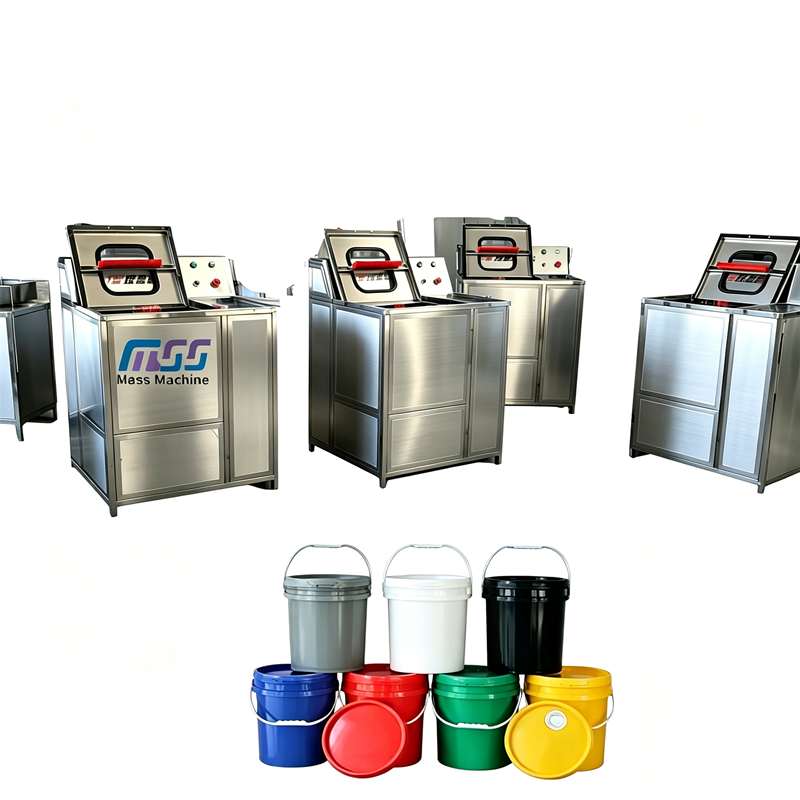
An industrial drum washing machine earns its place when your plant turns barrels around faster than people can scrub them. We build two series of open-top container washers that clean the inner wall, outer wall and base of plastic and stainless steel turnover barrels. Motor-driven brushes and high-pressure fan-jet rinsing run together inside a closed chamber.
Send us your barrel for a trial wash
Get a Quote in 24 Hours
Tell us the barrel and the residue. We will say plainly whether it is inside our envelope before anyone talks about price.
SYS_ACTIVE
Technical Specifications
Barrel envelope
50-200 L open-top round barrels
25-50 L open-top square buckets
25-50 L open-top square buckets
Throughput
100 bph (round-barrel series)
100-200 bph (square-bucket series)
100-200 bph (square-bucket series)
Wash chamber
SUS 304 stainless steel
Corrosion Resistant
Corrosion Resistant
Rinse timer
10-60 seconds
Adjustable on control panel
Adjustable on control panel
Power supply
Three-phase four-wire
Confirmed to local voltage
Confirmed to local voltage
Warranty
24-month warranty
Covering all machine parts
Covering all machine parts
One Question Tells You Which Machine Class You Are Looking At
Search for a drum washer in English and you land in four or five unrelated equipment categories at once. Google’s own AI summary splits the term apart and then asks the searcher which one they meant. One question sorts every result you will see.
Is the drum the thing being cleaned, or is the drum part of the machine? Answer that and every product page in your search results falls into place. It also works on the next category that appears, which is why we prefer it to a fixed list of meanings.
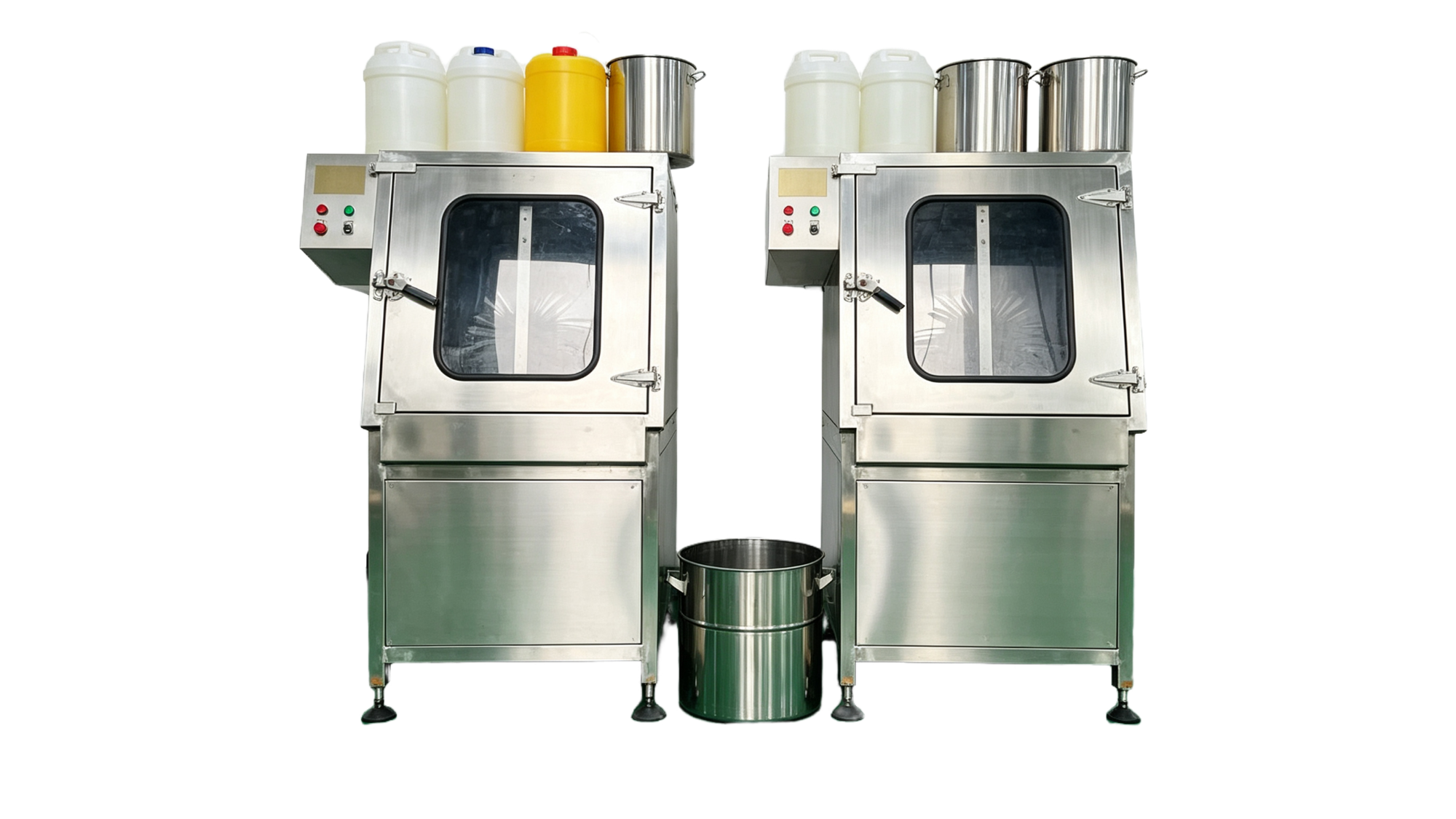
Container washing is a real and regulated activity, not a category we invented for a web page. The US Environmental Protection Agency describes reconditioning operations that accept used drums and totes from other companies and wash or burn out the residual chemicals inside them.
What Getting This Wrong Costs
These machine classes are not interchangeable, and the mistake is expensive in a specific way. A plant that specifies a rotary drum washer expecting a container washer receives equipment that tumbles parts, and the barrels it bought the machine for still leave the site for contract cleaning.
- A buyer searching for an industrial drum washer lands on parts-washer pages ranked for the same words.
- A quotation for a steel drum washing machine can arrive from a supplier building a completely different machine.
- Phrases like rotary drum washer and 55 gallon drum washer sit in more than one world, so the words alone settle nothing.
Not sure which class you are looking at? The drum washer class selector settles it in three questions. If your barrels are the thing that needs cleaning, the next section tells you whether yours fit.
Discuss Your Production LineBarrel Envelope and Loading Geometry
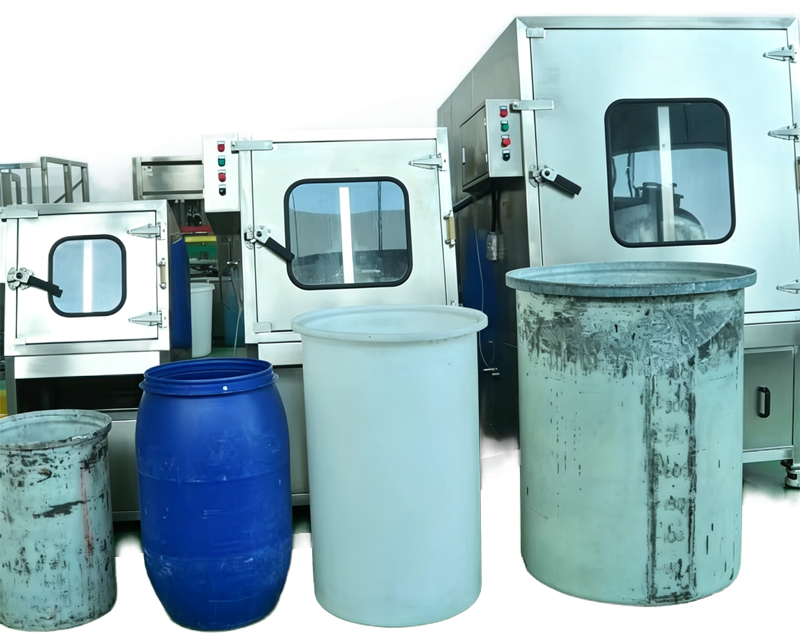
Two things decide whether a barrel can be washed on our machines: how big it is, and how it opens. Size sets the chamber. The opening sets the entire cleaning method.
Sizes We Build For as Standard
| Barrel type | Capacity envelope | Machine series | Loading |
|---|---|---|---|
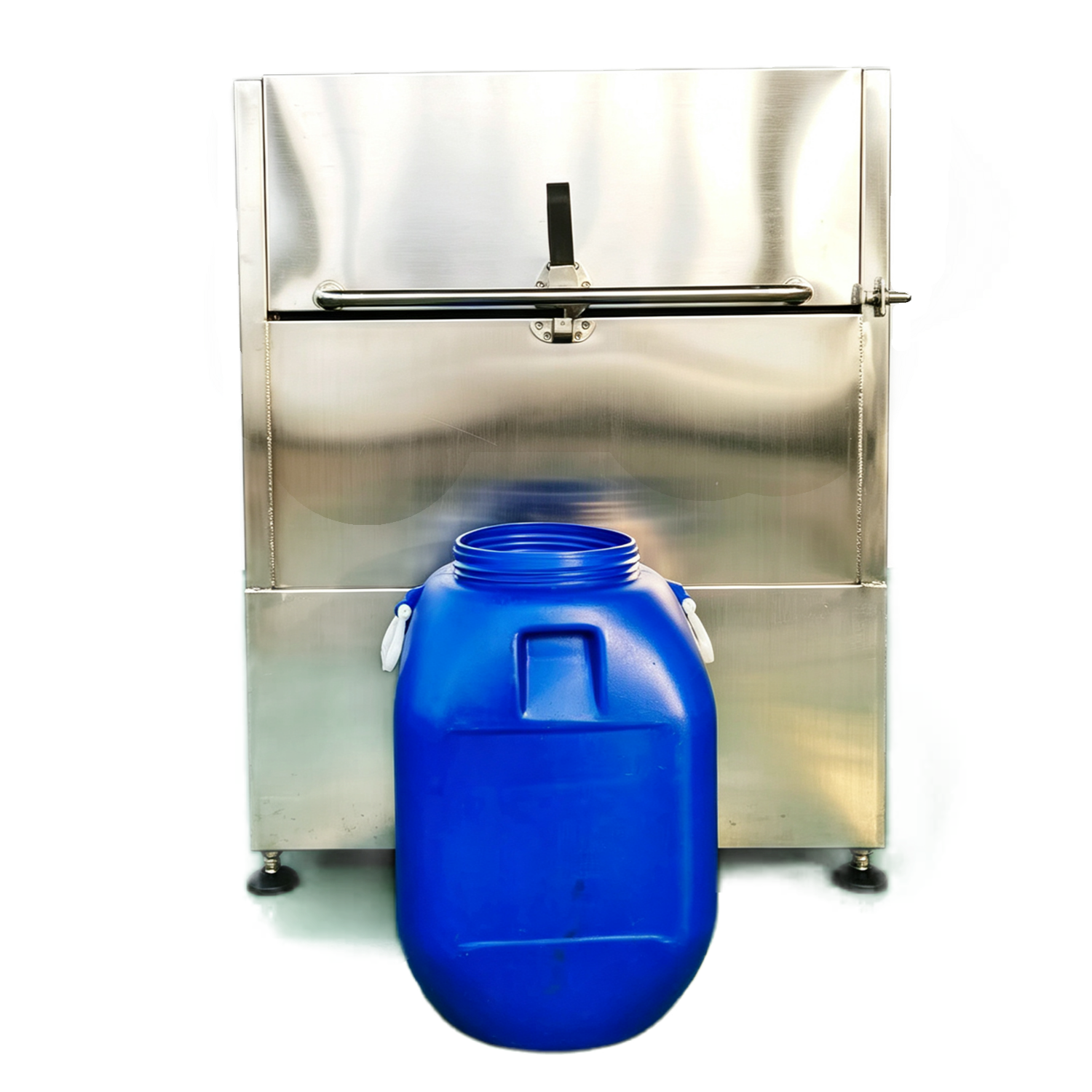
| Open-top round barrel, plastic or stainless steel | 50-200 L (13-53 US gal) | MS / HX round-barrel washer | Inserted into the wash chamber, clamped, door closed and locked |
| Open-top square bucket | 25-50 L (6.6-13 US gal) | FS / FS-NC square-bucket washer | Placed on the rotating rack, door closed and locked |
| Closed-head drum with a bung opening | Outside our standard build | Not covered | Needs a lance or bung-inserted jet head, a different machine class |
| Standard open-head steel drum to ISO 15750-1 | 208, 210 and 216.5 L minimum total capacity | Above the 200 L standard envelope | Send the outside diameter and height; barrel geometry is customisable |
Why the Opening Matters More Than the Material
An open-top barrel gives brushes and nozzles direct line of sight to every internal surface. A closed-head drum does not, so it has to be cleaned through a bung with a rotating jet head. Those are two different machines, not two settings on one machine.
- We ask about the opening before we ask about litres.
- A 200 L closed-head drum and a 200 L open-top barrel need entirely different equipment.
- Barrel material changes brush selection; it never changes which machine class applies.
- Barrels are washed for reuse, so the finish that matters is the one that lets you refill the container.
- Plastic turnover barrels, including HDPE and PP
- Stainless steel turnover barrels
- Plastic square buckets and crates used in food and chemical plants
- Barrels carrying scale and dried process residue that need descaling as well as washing
Barrel geometry and wash programme are both built to your container. The brush head is shaped to the barrel profile by our designers rather than fitted from a catalogue.
What an Envelope Mismatch Costs on the Floor
A barrel that does not seat properly is the most common reason a plant ends up washing by hand next to a machine it already paid for. The clamp cannot locate it, the brush head misses the base radius, and every barrel needs a second pass.
- Too tall and the cabin door will not close on it.
- Too wide and the outer brushes cannot reach the wall at working pressure.
- A plastic drum washing machine and a stainless-barrel build differ in brush stiffness, not only in frame.
- Food, chemical, new materials and environmental plants all run barrels that look alike and seat differently.
Check your container against the standard envelope with the barrel fit and throughput checker before you ask for a price.
Request a Quote
The Brush-and-Spray Cleaning Mechanism
CORE PRINCIPLE
“Higher pressure is not automatically cleaner. Writing in Chemical Engineering, Richard Packman of inTank Technologies sets out why: cleaning relies on kinetic energy transfer, and a high-velocity jet delivers impact force proportional to the fluid velocity squared.”
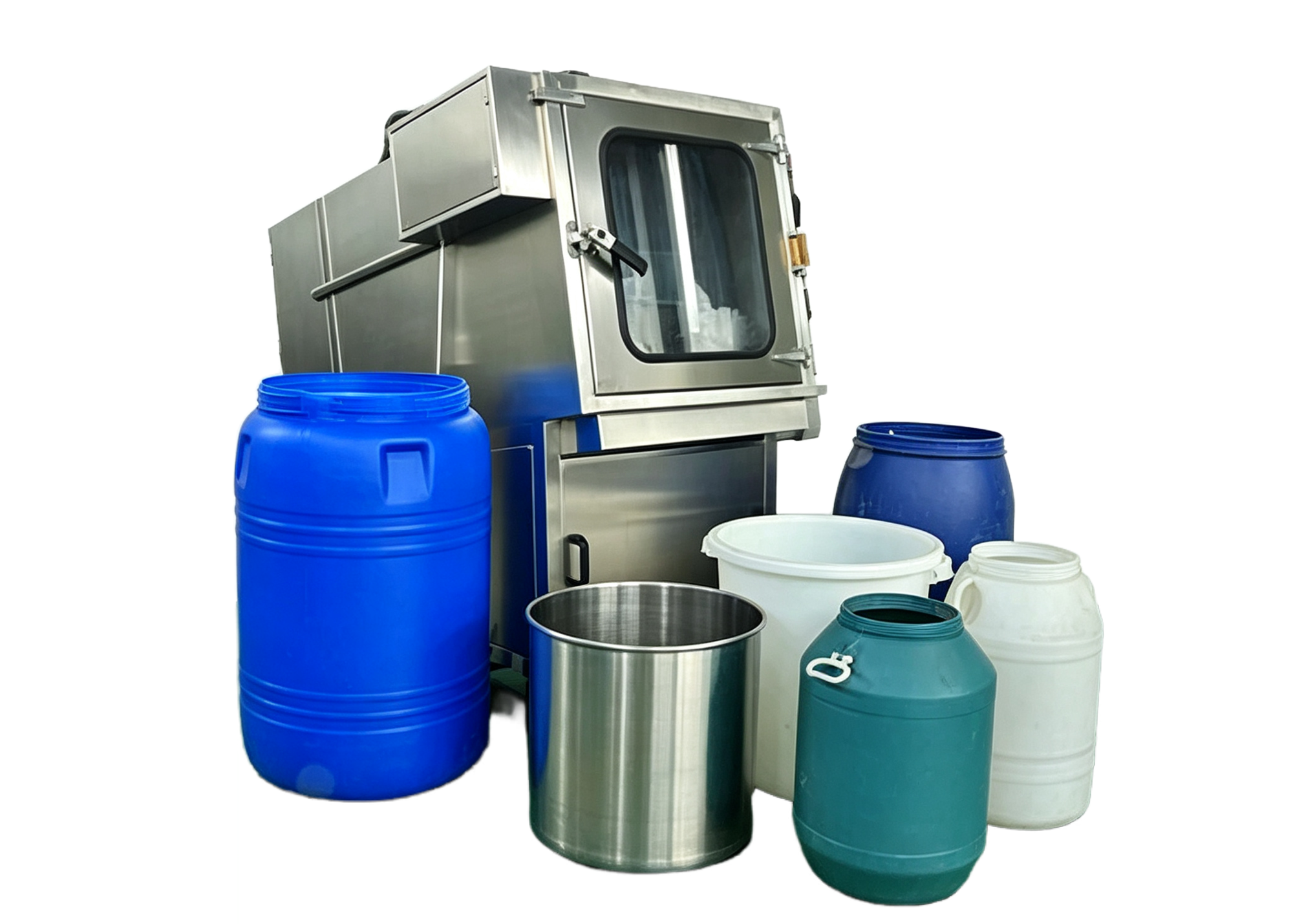
- Hard, brittle deposits such as dried polymer or cured coating respond well to that concentrated impact.
- Soft, tacky residue behaves the opposite way: lower pressures with higher flowrates work better, because they flush material away without smearing it across the surface.
- On soft soil the goal is to lift and transport the residue rather than to fracture it.
What This Means for a Barrel Washer
Residue form, not pressure, decides the method. That is the reason our rinse timer is adjustable from 10-60 seconds and the reason brushes stay in the machine rather than being replaced by more nozzles.
- A jet reaches a point.
- A brush sweeps a surface.
- Raising pressure does nothing for a tacky film, and a smeared barrel costs you a second pass.
- Running both means the machine is not betting the result on one mechanism.
How the Round-Barrel Machine Runs
01
The barrel is placed into the chamber and registered using a positioning clamp.
02
The cabin door is shut and locked before anything starts turning.
03
Inner and outer brushes and the rinse pump come on together, scrubbing the inner face, the outer wall and the inside bottom.
04
The rinsing water stays within the machine casing and exits towards the separation waste tank.
05
The cabin opens, the washed barrel comes out, and the next one goes in.
How the Square-Bucket Machine Runs
01
The bucket is set on the rack and the cabin door is closed and latched securely.
02
The bucket itself turns counter-clockwise at low speed inside the spinner.
03
The main brush turns clockwise at high speed against that direction, so brush and bucket meet in relative motion rather than travelling together.
04
Internal and external pumps feed high-pressure fan-shaped nozzles for 360-degree flushing while the brushes work.
05
Wash water is captured within the body and sent into waste separation tank.
An Old Mechanism, Deliberately Chosen
Rotating a barrel against brushes is not a new idea, and that is exactly why we kept it. The published record for the principle goes back more than a century, and the particular arrangement our two series use was described in a patent application in 1988.
US443751A
1890
The barrel is supported on india-rubber rollers on two parallel shafts and rotated into contact with brushes at its ends and top.
US637854A
1899
A brush arrangement whose stated object was that a thorough cleansing is effected and objectionable wear avoided.
DE3715305A1
1988
A washing chamber with a spinning brush whose axis of rotation runs parallel to the container axis, together with spray devices that spray both the containers and the brushes.
Cleaning hard without damaging the barrel was already the design problem in 1899. It is still the trade-off a brush head has to solve on a barrel you intend to put back into service.
Drum Washer Specifications
Every figure below is what we build to. Where a number depends on your container or your residue, the table says so, rather than quoting one value that will not survive contact with your plant.
SPECS.MATRIX // ISO 15750 REF
| Specification | MS / HX round-barrel washer | FS / FS-NC square-bucket washer |
|---|---|---|
| Barrel type | Open-top round barrel | Open-top square bucket |
| Capacity envelope | 50-200 L (13-53 US gal) | 25-50 L (6.6-13 US gal) |
| Throughput | 100 barrels per hour, varying with how contaminated the container is | 100-200 barrels per hour |
| Wash chamber and frame material | SUS 304 stainless steel | SUS 304 stainless steel |
| Cleaning mechanism | Fixed three-rod brush set, inner and outer brushes, rinse pump | Counter-rotating bucket and main brush, internal and external high-pressure fan nozzles |
| Rinse timer | 10-60 seconds, adjustable | Set per wash programme |
| Working mode | Automatic | Automatic or multi-mode |
| Power supply | Three-phase four-wire | Three-phase four-wire |
| Wash water handling | Collected in the machine case, discharged to the waste separation tank | Collected in the machine case, discharged to the waste separation tank |
| Barrel-specific build | Barrel geometry and wash programme built to your container | Barrel geometry and wash programme built to your container |
| Standard machine lead time | 25-40 working days | 25-40 working days |
| Customised or line-integrated build | 30-60 days | 30-60 days |
| Reference standard for open-head drum capacity | ISO 15750-1:2002 lists 208, 210 and 216.5 L, all above our 200 L standard chamber | Not applicable to square buckets |
Two Machine Series and Which One Fits Your Barrel
The two series are not a good-better pairing. They are built around two different barrel geometries, and around two different ways of creating motion between container and brush.
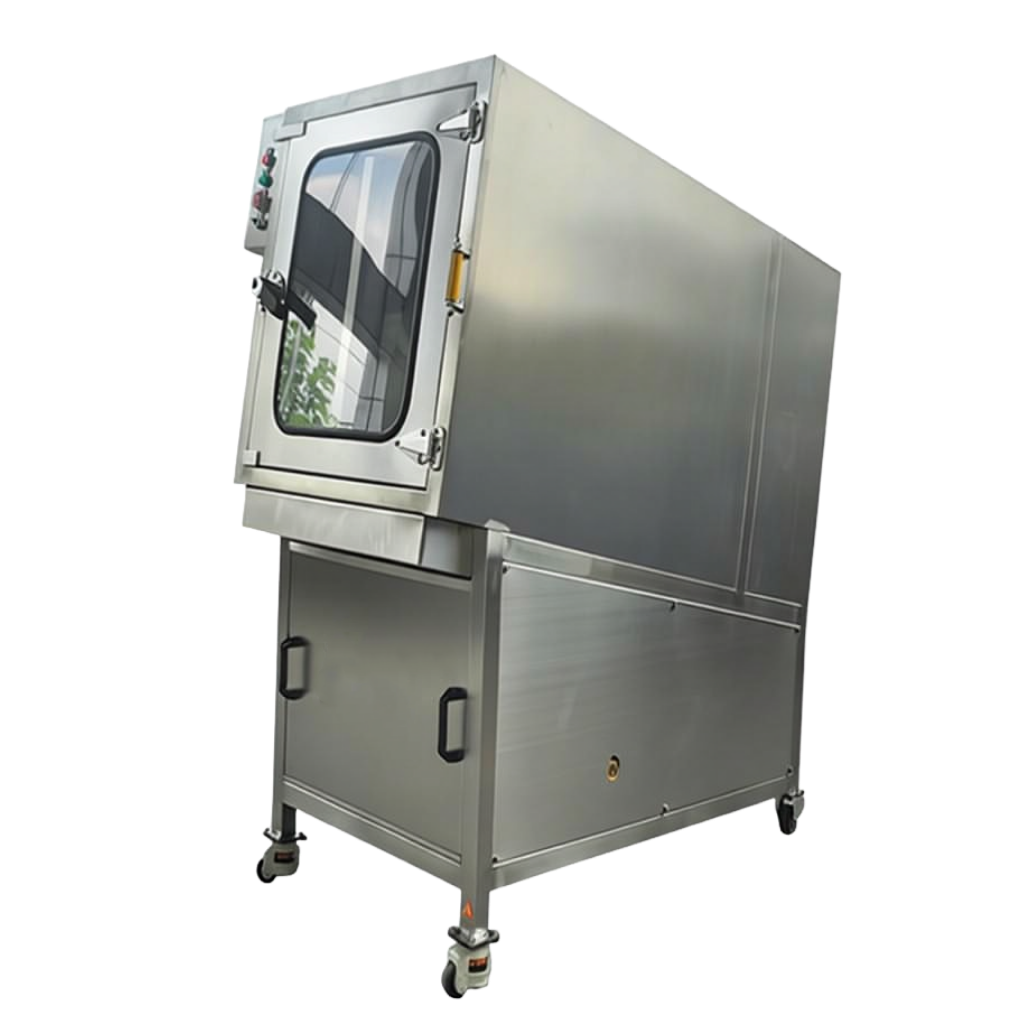
MS / HX Round-Barrel Washer
Built for 50-200 L open-top round barrels in plastic or stainless steel. A fixed three-rod brush set works together with inner and outer brushes and a rinse pump.
- The brushes travel while the barrel stays held in a positioning clamp.
- Rinse duration is set on the panel from 10-60 seconds to suit the residue.
- Barrels come off the machine ready for reuse rather than for disposal.
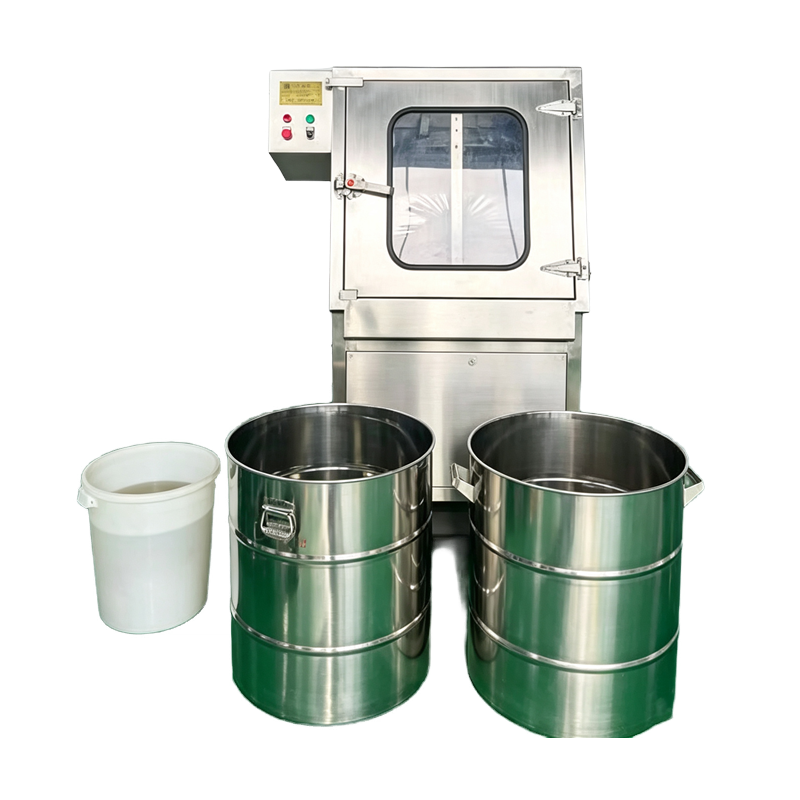
FS / FS-NC Square-Bucket Washer
Built for 25-50 L open-top square buckets. The bucket itself rotates counter-clockwise at low speed while the main brush turns clockwise at high speed.
- The two parts revolve in opposite directions to maintain smooth contact against a flat wall.
- Corners that a stationary brush would shadow are swept as the bucket turns past.
- Internal and external fan nozzles run alongside the brushes throughout the cycle.
Selection criterion
MS / HX round-barrel
FS / FS-NC square-bucket
Container geometry
Open-top round
Open-top square
Capacity per container
100-200 L per barrel
25-50 L per bucket
Suitable barrel range
50-200 L
25-50 L
Rated throughput
100 barrels per hour
100-200 barrels per hour
Relative motion
Brushes rotate, barrel held
Bucket and brush counter-rotate
Rinse control
10-60 seconds, adjustable
Set per wash programme
Working mode
Automatic
Automatic or multi-mode
Frame and chamber
SUS 304
SUS 304
Where it earns its place
Food, chemical, new materials and environmental plants running large round turnover barrels
Plants cycling high volumes of small square buckets
Pricing Mechanism, Lead Times and Terms
There is no price list for this equipment, because a barrel washer is built around a container rather than sold off a shelf. Price follows the series, the number of wash positions, the barrel envelope, the degree of automation and how the machine sits inside your existing layout.
What Moves Your Price
Driver
Effect on cost
How to bring it down
Barrel geometry range
One fixed profile is the cheapest build; a machine that must take several barrel shapes costs more in tooling and brush sets.
Send the barrels you actually run today, not the full range you once considered.
Wash positions
Each additional position adds structure, drive and pump capacity.
Size positions to real hourly demand rather than to peak-day demand.
Degree of automation
Manual load and unload is the lowest cost point; conveyor feeding and automatic transfer raise it.
Start with manual loading if an operator is already on that station.
Water handling
Simple collection to a separation tank costs less than recirculation with filtration.
Tell us your discharge route early so the machine is not over-specified.
Local supply conditions
Voltage, frequency and incoming water pressure all shape component selection.
Confirm your site voltage in the enquiry so the machine is built right the first time.
Lead Times
Lead time starts when the barrel drawing or sample is approved and excludes freight. Tell us the date you are working to and we confirm feasibility at barrel review, not after the order is placed.
25-40 working days
Standard configuration machine
Build, assembly and factory test on a standard barrel envelope.
30-60 days
Customised or line-integrated
Barrel-specific brush tooling, non-standard chamber, integration with existing handling.
Pre-order Stage
Trial wash before order
Arranged on receipt of your barrel. Your own container and residue run on the machine.
Reading the Throughput Figure Honestly
The rated figures on this page are cycle rates: 100 barrels per hour on the round-barrel series and 100-200 barrels per hour on the square-bucket series. They are what the machine does, not what a shift produces.
Factors shifting real-world output:
- Loading and unloading time
- Changeover between barrel types
- How heavy the residue is on the barrels coming in
- Brush cleaning between runs
- Rewash rate on the barrels that do not come clean on the first pass
Action: Send your barrel count per shift and your residue type and we will work the arithmetic through with you, rather than publish a cycle rate multiplied by eight.
How Your Quote Is Produced
Send the barrel details and an engineer returns a quote within 24 hours on business days. The reply names the series that applies and spells out what the machine covers, so you can rule it in or out before the commercial conversation starts.
Payment and What Ships
Orders run on a 30% deposit with the balance due before shipment, settled by bank transfer. Each machine ships with an operation manual, electrical drawings and the standard export document set.
Documents, Warranty and Support With Every Machine
A washer that stops on week three costs more than the quote saved. These are the terms we carry, stated here so you can hold us to them.
| Commitment | What it covers |
|---|---|
| 24-month warranty | All machine parts |
| 24-hour engineer response | Technical support after commissioning |
| Spare parts within 5 working days | Replacement parts dispatched by international courier |
| Documents with the machine | An operation manual, electrical drawings and the standard export document set |
| Trial wash before you order | Your own barrel and residue run on the machine |
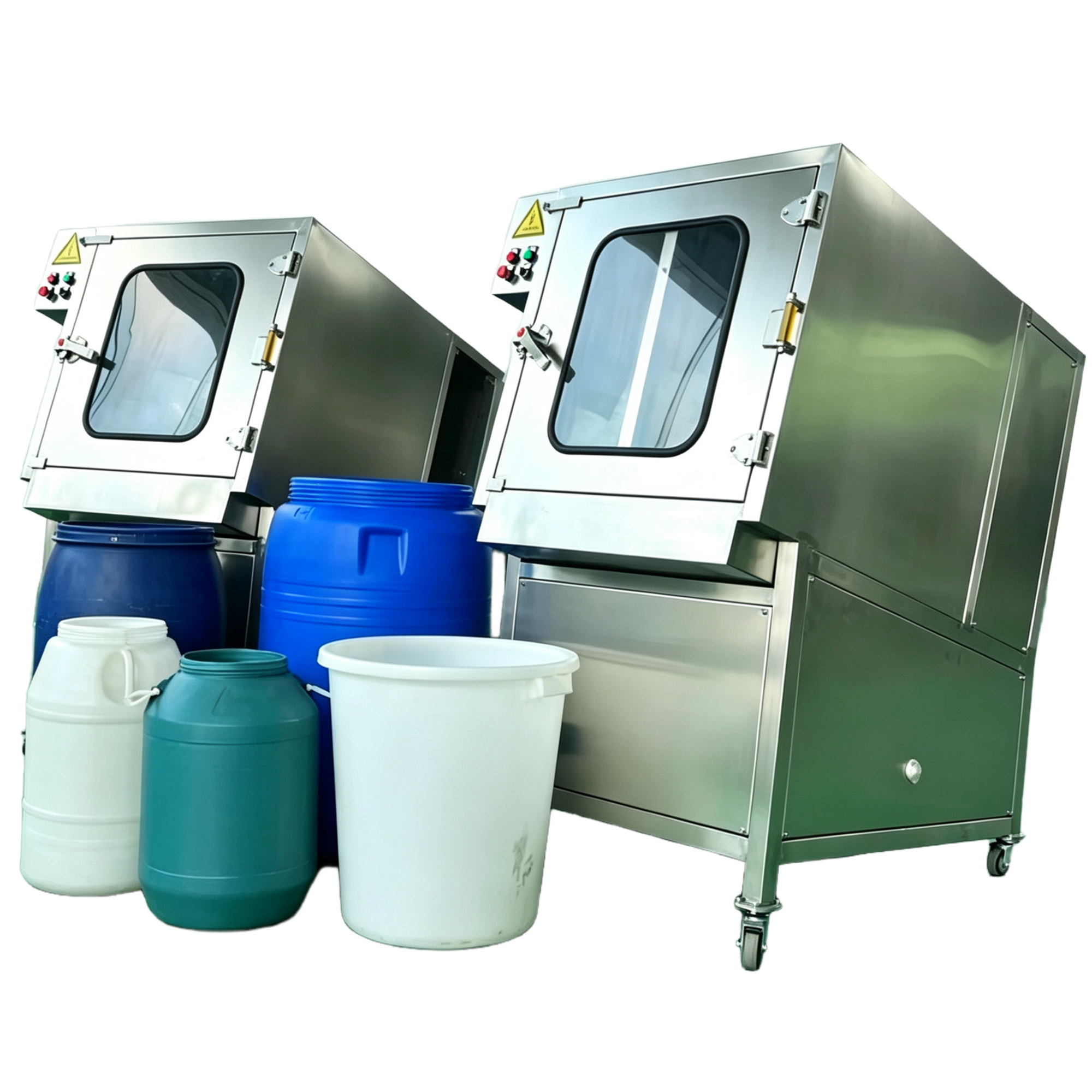
Voltage Is Confirmed Before the Machine Is Built
Both series run on a three-phase four-wire supply. We confirm your site voltage and frequency in the enquiry rather than after the crate is opened, because motor selection follows from it.
- State your voltage and frequency in the enquiry, not at commissioning.
- Order the spare parts you want held on site together with the machine.
- Shipping spares with the machine costs a fraction of shipping them alone against a stopped line.
Turnkey Scope When You Need It
For plants installing a washer as part of a wider line, we cover plant layout design, equipment manufacture, production line installation, on-site operator training and after-sales support.
Ask for the two-series specification sheet if you want the MS/HX and FS data side by side before you raise an enquiry.
Request a QuoteThe Order Process, From Your Barrel to Commissioning
What to Send So the First Quote Is the Right One
When This Is Not the Right Machine
Ruling yourself out early is cheaper than discovering it at commissioning. These are the cases where our machine is the wrong call, and a different machine or a different supplier is the right answer.
Situation
Why our machine is the wrong fit
What to look for instead
Closed-head drums with a bung opening
Our machines load from the top and clean with brushes that need line of sight to the wall.
A bung-inserted rotating jet head, sized to your bung diameter.
Solvent residue, flammable media, or an area needing explosion protection
We supply no explosion-protection documentation for these two series, so they should not be specified into that duty.
Equipment supplied with the explosion-protection certification your area classification requires.
A validated sanitising or sterilising endpoint
These two series are built for brushing and descaling. They are not supplied with a validated disinfection cycle.
Equipment specified and validated against your own hygiene protocol, or our trash bin washer where a disinfection stage is fitted.
Barrels above 200 L, including standard ISO 15750-1 open-head steel drums at 208-216.5 L
Above the standard chamber envelope.
Send the outside diameter and height — barrel geometry is customisable, so this is a build question rather than a refusal.
IBC totes or beer kegs
We do not build machines for these containers.
A tote washer or keg washer from a supplier that specialises in them.
Two Boundaries That Sit With the Operator
Machine safety acceptance in your jurisdiction
The square-bucket series rotates the container during the wash cycle. In the United States, OSHA 29 CFR 1910.212(a)(4) requires that revolving drums, barrels and containers be guarded by an enclosure interlocked with the drive mechanism, and 1910.212(b) requires machines designed for a fixed location to be securely anchored.
- Machine safety acceptance is settled on your site against your own regulations.
- We supply the electrical drawings that acceptance work needs.
- Ask and we will state exactly how the machine is configured before you order.
Hazardous residue and where the wash water goes
Barrels that held hazardous material have to satisfy the empty-container conditions in your jurisdiction before they are washed. In the United States that is the provision at 40 CFR 261.7, under which residues remaining in a container are exempt from regulation only when a set of conditions is met.
- Our machines collect rinse water in the case and discharge it to a waste separation tank.
- Collection is not treatment.
- Lawful treatment and discharge of contaminated wash water remains the operator’s responsibility under local rules.
Engineering Calculation & Selection Tools
Barrel Fit Checker
Core Function
Verify chamber compatibility against specific barrel dimensions and opening geometry.
Open Fit CheckerResidue Cycle Planner
Core Function
Map required wash stages, water pressure, and chemical dosing based on residue type.
Open Cycle PlannerDrum Washer Class Selector
Core Function
Determine the applicable machine series based on container format and target throughput.
Open Class SelectorIndustrial Drum Washing Machine FAQs
What barrel sizes and shapes can this machine wash?
Open-top round barrels from 50-200 L (13-53 US gal) on the MS/HX series, and open-top square buckets from 25-50 L (6.6-13 US gal) on the FS series. Barrel geometry is customisable, so a container outside those bands is a build question rather than an automatic no.
Can it take a standard 55-gallon (208 L) drum?
Not as a standard build. Our standard round-barrel chamber is sized to 200 L, and a US 55-gallon drum is 208 L; ISO 15750-1 puts removable-head steel drums at 208, 210 and 216.5 L minimum total capacity. Send the outside diameter and height of your actual drum and we will confirm whether a customised chamber covers it, since barrel geometry and wash programme are both built to your container.
Can plastic barrels be washed, or only stainless steel?
Both. The machines are built for cleaning and descaling plastic and stainless steel turnover barrels, and the brush head is shaped to the barrel profile in either material.
How many barrels per hour can be cleaned?
100 barrels per hour on the round-barrel series and 100-200 barrels per hour on the square-bucket series. Those are cycle rates and they vary with how contaminated the container is, so treat them as machine capability rather than as shift output.
Can one machine handle both round barrels and square buckets?
The two geometries are handled by two different series, because the way relative motion is created differs. A machine that must take several barrel shapes can be built, and it costs more in tooling and brush sets than a single-profile build.
How does the brush-and-spray cycle actually work?
On the round-barrel machine, the barrel is clamped in position and inner and outer brushes run together with the rinse pump. On the square-bucket machine, the bucket rotates counter-clockwise at low speed while the main brush turns clockwise at high speed, with internal and external fan nozzles giving 360-degree flushing throughout the cycle.
Why does residue type matter more than water pressure?
Because impact and flow do different jobs. Hard, brittle deposits respond to concentrated impact pressure, while soft, tacky residue is removed better at lower pressure and higher flow, which lifts it away instead of smearing it. That is why the rinse timer is adjustable from 10-60 seconds rather than the machine being sold on a pressure figure.
Is this a batch machine or a continuous system?
Both series are batch machines: one container is loaded, the cabin is closed and locked, the cycle runs, and the container comes out before the next goes in. Throughput comes from cycle time and the number of wash positions rather than from a conveyor running continuously.
How much water does it use, and is that quoted in GPM or L/min?
Water flow is set by the machine configuration and your incoming supply pressure, and it is stated in the quotation for the build you are getting. We give it in litres per minute and in US gallons per minute, because plant drawings in North America generally carry GPM while our engineering documents carry L/min.
What does the price depend on?
Series, number of wash positions, barrel envelope, degree of automation, water handling arrangement and how the machine ties into existing handling. There is no fixed price list for barrel-specific equipment; your figure comes back in a written quotation within 24 hours.
What maintenance does the machine need?
Brush inspection and replacement as bristles wear, nozzle checks so spray pattern stays even, and clearing the waste separation tank on your own schedule. Brushes are built on nylon rods with bristles selected for corrosion and ageing resistance so they hold shape rather than shedding into the barrel.
Which industries use these machines?
Food, chemical, new materials and environmental protection plants that run reusable turnover barrels and need them cleaned and descaled between uses. The square-bucket series also runs in plants cycling high volumes of small containers. Buyers reach us searching for a barrel washing machine or a chemical drum washer, and both phrases describe the same open-top container duty.
Can I send my own barrel for a trial wash before ordering?
Yes, and we would rather you did. Send us your actual container with its residue and we run it on the machine, so brush profile and rinse duration are set against the real soil instead of an assumption.
Is a cleaning machine for industrial drums the same thing as an industrial parts washer?
No, and mixing them up is the most expensive mistake in this category. In a container washer the drum is the item being cleaned; in a rotary drum parts washer the drum is part of the machine and loose components tumble inside it. We build the first kind.
What voltage do the machines run on?
Three-phase four-wire. We confirm your site voltage and frequency during the enquiry, before motor selection is fixed, so the machine arrives matched to your supply rather than adapted after delivery.